Aime
Éma (Savoyard) | |
|---|---|
Part of Aime-la-Plagne | |
.JPG/1280px-Aime_et_son_%C3%A9glise_en_automne_(novembre_2022).JPG) A general view of Aime | |
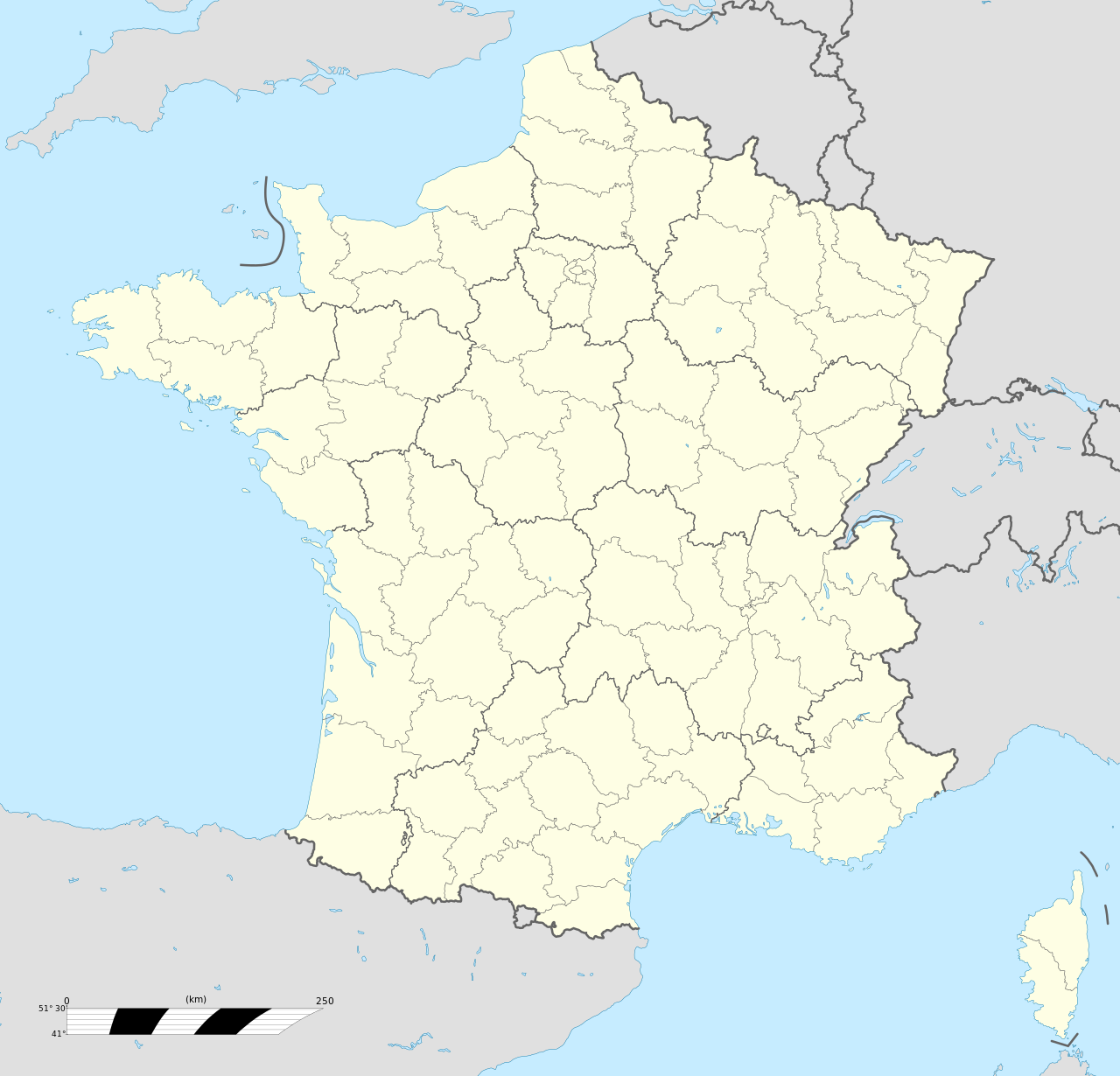
Location of Aime | |
| Coordinates: 45°33′22″N 6°38′58″E / 45.5561°N 6.6494°E / 45.5561; 6.6494 | |
| Country | France |
| Region | Auvergne-Rhône-Alpes |
| Department | Savoie |
| Arrondissement | Albertville |
| Canton | Bourg-Saint-Maurice |
| Commune | Aime-la-Plagne |
Area 1 | 50.74 km2 (19.59 sq mi) |
| Population (2021)[1] | 3,596 |
| • Density | 70.87/km2 (183.6/sq mi) |
| Time zone | UTC+01:00 (CET) |
| • Summer (DST) | UTC+02:00 (CEST) |
| Postal code | 73210 |
| Elevation | 596–2,589 m (1,955–8,494 ft) (avg. 680 m or 2,230 ft) |
| 1 French Land Register data, which excludes lakes, ponds, glaciers > 1 km2 (0.386 sq mi or 247 acres) and river estuaries. | |



Aime (French pronunciation: [ɛm] ⓘ; Savoyard: Éma) is a former commune in the eastern French department of Savoie. Its most well known mayor was Pierre Borrione, who created the local ski resort and historical society.
On 1 January 2016, it was merged into the new commune of Aime-la-Plagne.[2] In 1972, the former communes of Longefoy, Tessens and Villette were merged with Aime.
History
In ancient time, Aime was the capital city center of the gallic tribe called the Ceutrons. Conquered by Rome, probably around 20 BC, it became Axima, the capital city of the roman province of the Graian Alps (Latin:: Alpes Graiæ ; French: Alpes grées) which became later the Alpes Atrectianae et Poeninae.
Its main landmark is the Basilica of Saint Martin.
Geography
The commune lies in the Tarentaise Valley, partly overlapping the ski resorts of La Plagne and Les Arcs.
Population
| Year | Pop. | ±% p.a. |
|---|---|---|
| 2006 | 3,369 | — |
| 2011 | 3,541 | +1.00% |
| 2021 | 3,596 | +0.15% |
| Source: INSEE[3][1] | ||
Transportation
The town is served by the Aime-La Plagne railway station, with rail connections to Bourg-Saint-Maurice, Albertville, Chambéry, Lyon and further.
See also
- Communes of the Savoie department
- SHAA (Historical Society of Aime) - Official web site
References
- ^ a b "Populations légales 2021" [Legal populations 2021] (PDF) (in French). INSEE. December 2023.
- ^ Arrêté préfectoral 17 November 2015
- ^ Populations légales 2011, INSEE


.JPG)


