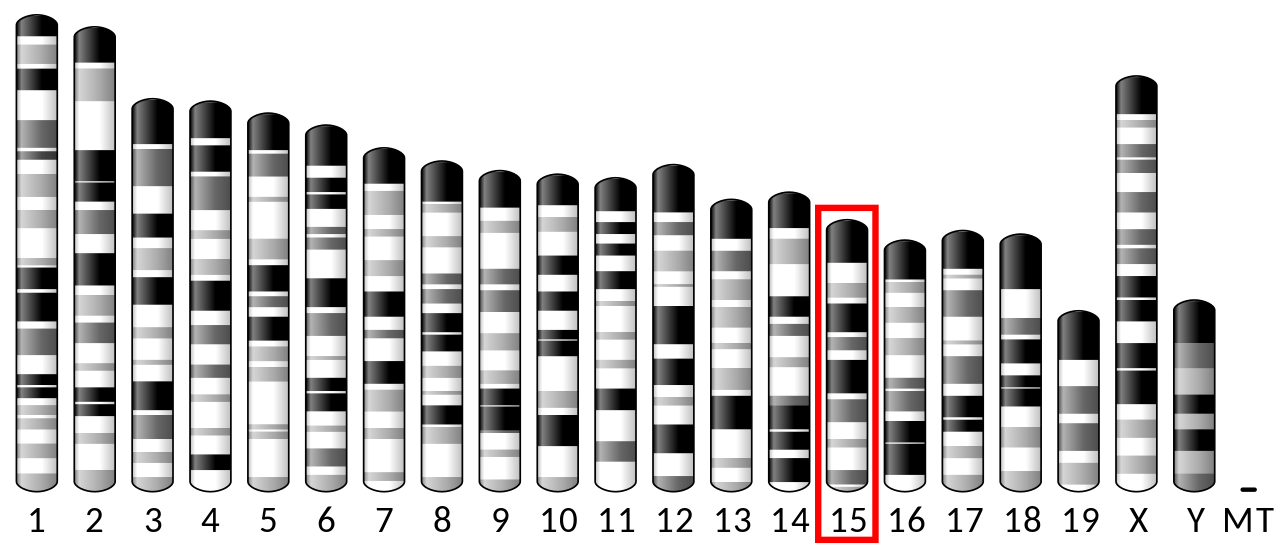
Protein odd-skipped-related 2 is a protein that in humans is encoded by the OSR2gene.[5] In mice, it is involved in the development of the palate and in suppressing the formation of teeth after the eruption of adult teeth.
References
^ a b cGRCh38: Ensembl release 89: ENSG00000164920 – Ensembl, May 2017
^ a b cGRCm38: Ensembl release 89: ENSMUSG00000022330 – Ensembl, May 2017
^"Human PubMed Reference:". National Center for Biotechnology Information, U.S. National Library of Medicine.
^"Mouse PubMed Reference:". National Center for Biotechnology Information, U.S. National Library of Medicine.
^"Entrez Gene: OSR2 odd-skipped related 2 (Drosophila)".
Further reading
Kawai S, Kato T, Inaba H, Okahashi N, Amano A (2005). "Odd-skipped related 2 splicing variants show opposite transcriptional activity". Biochem. Biophys. Res. Commun. 328 (1): 306–11. doi:10.1016/j.bbrc.2004.12.173. PMID 15670784.
Gerhard DS, Wagner L, Feingold EA, Shenmen CM, Grouse LH, Schuler G, Klein SL, Old S, Rasooly R (2004). "The status, quality, and expansion of the NIH full-length cDNA project: the Mammalian Gene Collection (MGC)". Genome Res. 14 (10B): 2121–7. doi:10.1101/gr.2596504. PMC528928. PMID 15489334.
Lan Y, Ovitt CE, Cho ES, Maltby KM, Wang Q, Jiang R (2004). "Odd-skipped related 2 (Osr2) encodes a key intrinsic regulator of secondary palate growth and morphogenesis". Development. 131 (13): 3207–16. doi:10.1242/dev.01175. PMID 15175245. S2CID 17503942.
Ota T, Suzuki Y, Nishikawa T, Otsuki T, Sugiyama T, Irie R, Wakamatsu A, Hayashi K, Sato H (2004). "Complete sequencing and characterization of 21,243 full-length human cDNAs". Nat. Genet. 36 (1): 40–5. doi:10.1038/ng1285. PMID 14702039.
Strausberg RL, Feingold EA, Grouse LH, Derge JG, Klausner RD, Collins FS, Wagner L, Shenmen CM, Schuler GD (2003). "Generation and initial analysis of more than 15,000 full-length human and mouse cDNA sequences". Proc. Natl. Acad. Sci. U.S.A. 99 (26): 16899–903. Bibcode:2002PNAS...9916899M. doi:10.1073/pnas.242603899. PMC139241. PMID 12477932.
Katoh M (2003). "Molecular cloning and characterization of OSR1 on human chromosome 2p24". Int. J. Mol. Med. 10 (2): 221–5. doi:10.3892/ijmm.10.2.221. PMID 12119563.
Lan Y, Kingsley PD, Cho ES, Jiang R (2001). "Osr2, a new mouse gene related to Drosophila odd-skipped, exhibits dynamic expression patterns during craniofacial, limb, and kidney development". Mech. Dev. 107 (1–2): 175–9. doi:10.1016/S0925-4773(01)00457-9. PMID 11520675. S2CID 14286470.