| Pakistan Atomic Research Reactor | |
|---|---|
| Operating Institution | Pakistan Institute of Nuclear Science and Technology |
| Location | Nilore, Islamabad, Pakistan |
| Coordinates | 33°39′13″N 73°15′30″E / 33.65361°N 73.25833°E / 33.65361; 73.25833 |
| Type | MTR (PARR-I) MNSR (PARR-II) SPR (PARR-III) |
| Construction and Upkeep | |
| Construction Cost | PARR-I US$600,000 ($5.99 million in 2024) |
| Time to Construct | 6-months (PARR-I) 4-years (PARR-II) 2024-Present (PARR-III) |
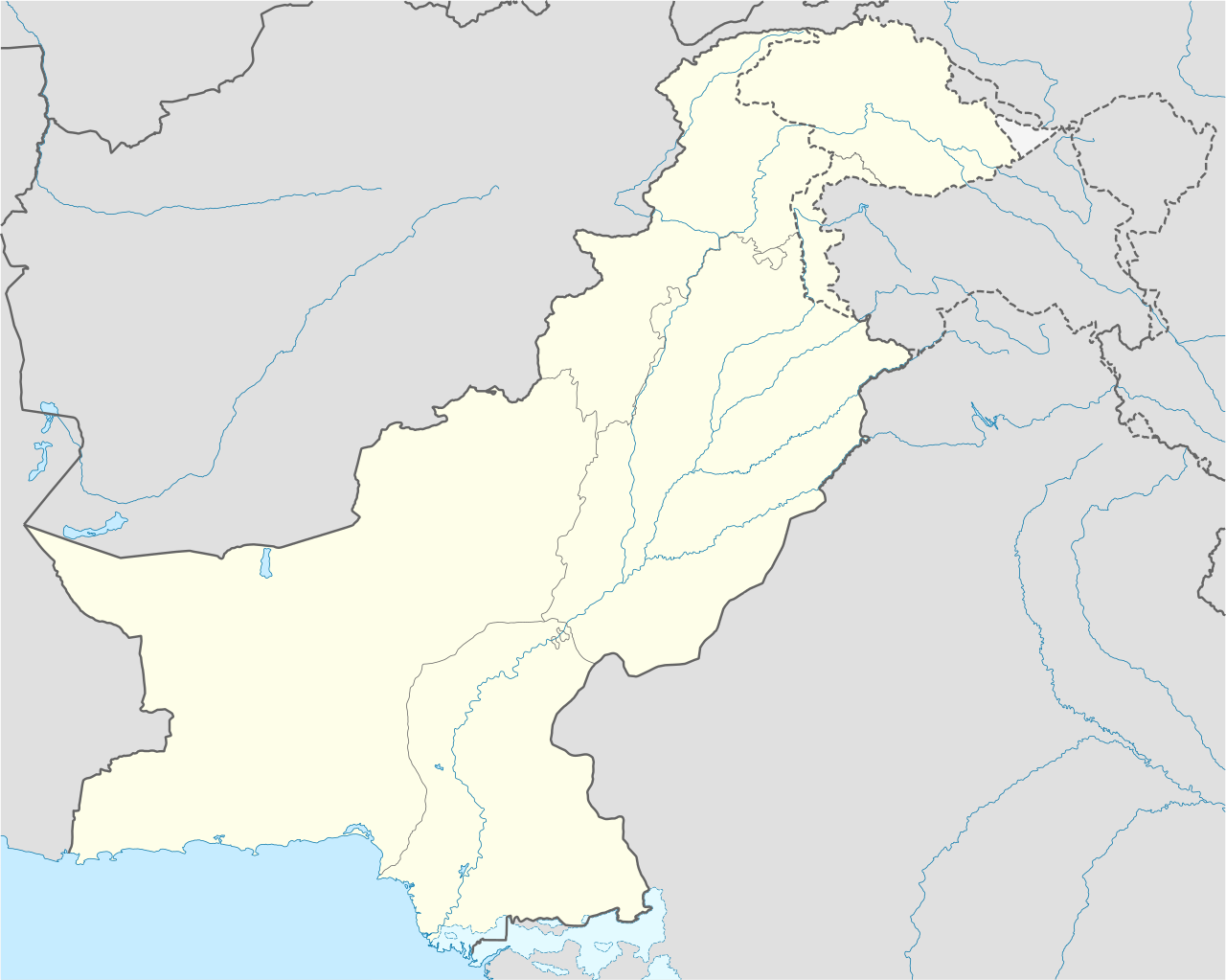


The Pakistan Atomic Research Reactor or (PARR) are two nuclear research reactors and two other experimental neutron sources located in the PINSTECH Laboratory, Nilore, Islamabad, Pakistan.
In addition a reprocessing facility referred to as New Labs also exists for nuclear weapons research and production.
The first nuclear reactor was supplied and financially constructed by the Government of United States of America in the mid 1960s. The other reactor and reprocessing facility are built and supplied by Pakistan Atomic Energy Commission (PAEC) in the 1970s and 1980s, respectively. Supervised by the United States and International Atomic Energy Agency (IAEA), the first two reactors are subject to IAEA safeguards and its inspections.[1]
History
The acqusition of the PARR-I was culiminated from a tense negotiation between the Pakistan Atomic Energy Commission and the Planning Commission.: 18 [2] The United States Atomic Energy Commission had earlier offered the CP-5 research reactor at the Argonne National Laboratory (ANL) at the price tag of 1 million USD ($9.98 million in 2024) but the matter was shelved due funding issues.: 18 The PAEC then showed interest in acquiring the Canadian NRX installed at the Chalk River Laboratories which was priced at 7 million USD ($69.8 million in 2024) but the Planning Commission deferred this initiative by prioritizing the funding to build the Warsak Dam– hydroelectric power dam in Khyber-Pakhtunkhwa, Pakistan.: 19 [2]
In 1959, the Pakistan Atomic Energy Commission (PAEC) decided to submit its own design for the swimming–pool reactor and was budgeted to be at US$600,000 ($5.99 million in 2024) of Pakistani taxpayers, which was approved for the funding and paved away for establishing the Pakistan Atomic Research Reactor (PARR).: 19 [2] Direct negotiation took place between the governments of Pakistan and the United States under the Atoms for Peace program and the contract was awarded to the American Machine and Foundry (AMF) as reactor supplier with Peter Karter its design engineer.[3]
In 2009, the PARR-I became a focal point of controversy between the Obama administration and the Gillani administration when United States attempted to recover vintage PARR-I reactor and the HEU bundles that it shipped to Pakistan under the IAEA oversight.[4] Though the PARR-I and its HEU bundles remained in Pakistan under IAEA, the Obama administration recovery attempts reportedly harmed the United States relations with Pakistan.[5]
PARR Reactors
PARR-I
| PARR-I | |
|---|---|
| Generation | I |
| Reactor concept | Materials Test |
| Reactor line | PARR |
| Status | Active |
| Main parameters of the reactor core | |
| Fuel (fissile material) | U235 LEU |
| Fuel state | U3Si2–Al |
| Neutron energy spectrum | Thermal |
| Primary control method | 8 intermetallic rods (Ag (80%), In (15%), Cd (5%)) |
| Primary moderator | Graphite |
| Neutron reflector | Be4 |
| Primary coolant | Light water Swimming pool |
| Reactor usage | |
| Primary use | Power reactor research, radioisotope production |
| Power (thermal) | 5 megawatts (0.0050 GW) |
| Power (electric) | 0.15 megawatts-hour |
| Max thermal flux | 1.05E+13 n/cm2-s |
| Max fast flux | 1.70E+14 n/cm2-s |
| Criticality (date) | 21 December 1965 (1965-12-21) |
| Operator/owner | PAEC |
The PARR-I is a materials testing-type research reactor that was purchased and obtained under the United States' Atoms for Peace program.: 12 [6][7]: 193 [8] The American Machine and Foundry (AMF) built the reactor site with Peter Karter who served its reactor design engineer.: 8–9 [9]: 75 [10]
Originally from the AMF and Karter's design, the PARR-I used highly-enriched uranium (HEU) as its fuel bundle that was imported from the United States with a power output limited and designed at 5 megawatts (0.0050 GW) (thermal).: 13 [6] Light water in a swimming pool setting is used as a coolant source and acts as a means of radiation shielding while the Graphite, in thermal square column geometry, is used as moderator.: 13 [6] The Beryllium is used as a primary reflector in the PARR-I reactor core.: 13 [6]
The PARR-I core lattice has 54 circular 9×6 array with 81-mm x 77.11-mm latice spacing and containing the 79.63-mm x 75.92-mm physical standard fuel elements (SFEs), which are also the identical dimensions for the control fuel elements (CFEs) with the intermetallic silver rods, which is composed of the 80% of Ag, 15% of In, and 5% of Cd.: 14–16 [6] The standard fuel element is sandwiched between the aluminium cladding of 0.38-mm thickness.: 15 [6]
On December 21, 1965, the PARR-I went into critical under the supervision of team of physicists led by Naeem Ahmad Khan, and attained full power on 22 June 1966.: 12 [6] With HEU core, the PARR-I operated at 30,000-hours (3-years) produced about 93,000 megawatts (93 GW) of energy.[11]
The PARR-I is a source of producing plutonium and has been used in research to understand the science of tritium, solid-state physics, fission studies, and neutron diffraction investigations.[11]: 88–89 [12]
In 1990, the PARR-I was shut down for engineering modifications that converted the PARR-I from its original design to increase its power output to 10 megawatts (0.010 GW) (thermal), which is three-times less than the megawatt (electric), but this modification had to scaled down on the HEU fuel and now uses the low-enriched uranium (LEU) as its fuel bundle which is locally produced, thus ending the concerns of nuclear proliferation and the dependence on the imports.: 193 [13][11]
The increased power output, however, led to the higher burn-up rates and produces only 100 grams (0.22 lb) of plutonium, which is insufficient for an amount for fissile material (weapons-grade plutonium).: 193 [13]
The PARR-I went critical with < 20% LEU fuel on 31 October 1991, and attained power 10 megawatts (0.010 GW) (thermal) on 7 May 1992.[11] With an LEU core, the PARR-I has operated at 10,000-hours (1-year) produced about 66,000 megawatts (66 GW) of energy, according to the technical data provided in 1995 to the IAEA.[6] The core configuration attained its equilibrium configuration in February 1995.: 13 [6]
The PARR-I is still and also utilized for irradiation of fissile HEU Targets to produce the Mo99 radioisotopes for cancer research.[7][14]
The Pakistan Nuclear Regulatory Authority (PNRA) regularly inspects the reactor and reports it to the International Atomic Energy Agency (IAEA) as part of the agreement with the United States.[14] The PARR-I has a design life and its operating license is valid up to 1 December 2031.: 6–7 [15]
The PARR-I holds a unique distinction for providing the training to many of nation's scientists and engineers, and its services were recognized in a "Golden Jubilee Conference" that was held in reactor's honor in 2015.: 1–5 [16]
PARR-II
| PARR-II | |
|---|---|
| Generation | I |
| Reactor concept | Miniature Neutron Source |
| Reactor line | PARR |
| Status | Active |
| Main parameters of the reactor core | |
| Fuel (fissile material) | U235 HEU |
| Fuel state | UAl4 |
| Neutron energy spectrum | Thermal |
| Primary control method | 1 Cd |
| Primary moderator | Light water |
| Neutron reflector | Be4 |
| Primary coolant | Light water Swimming pool |
| Reactor usage | |
| Primary use | Power reactor research |
| Power (thermal) | 30 kilowatts (0.030 MW) |
| Power (electric) | 879 kilowatt-hours |
| Max thermal flux | 1.00E+12 n/cm2-s |
| Max fast flux | 5.00E+11 n/cm2-s |
| Criticality (date) | 2 November 1989 (1989-11-02) |
| Operator/owner | PAEC |
The PARR-II is a miniature neutron source-type reactor that is based mostly on the Chinese design with Pakistani engineering and research modifications.: 3 [17] The PARR-II is used for primarily used for neutron activation analysis as well as providing training and teaching on reactor power operations.[18] The China Institute of Atomic Energy contributed in building the reactor under the International Atomic Energy Agency (IAEA) guidelines.: 161 [19]
Originally, the Pakistan Atomic Energy Commission's concept and design was based on the Canadian SLOWPOKE reactor design for neutron activition studies and has been safely in operations since 1974.[14] Under the IAEA oversight, China joined the project to to help expand its operational capabilities, which is now mostly based on the miniature neutron source.: 143 [20]
With a maximum thermal neutron flux of 1.00E+12 n/cm2-s, the PARR-II is a small reactor and limited at power output of 30 kilowatts (0.030 MW) (thermal) presently.[14][21] In past, the reactor was reportedly rated at 27 kilowatts (0.027 MW) and reached maximum power output of 76 kilowatts (0.076 MW) (thermal).: 3 Light water in tank-in-pool configuration is used as a coolant source.: 6 This demineralized light water is also primary moderator for PARR-II.: 6 Unlike the PARR-I, the PARR-II is located underground with reinforced concrete ceiling located above which serves as the radiation shielding.: 7–8 The Beryllium is a primary reflector in the PARR-II core.: 5
The reactor core of the PARR-II is under-moderated array with hydrogen–to-Uranium-235 atomic ratio of about 193.7 and the loading of the 991 grams of uranium-235 is uniformly distributed in 344 fuel pins.: 5–6 The fuel pins are 5.5-mm in diameter with 250-mm length.: 5 The PAR-II is fueled with highly-enriched uranium (HEU) pins, which are > 90% enriched in uranium-235.: 5 The fuel state is uranium aluminide (UAL4) wrapped with the aluminum claddding (Al-303-1).: 5 Only one control rod, which is made up of cadmium, is used to prevent the reactor core meltdown due to self-limiting power characteristics featured in the PARR-II.: 8–9
The PARR-II is primarily used for understanding and advancing the detector studies in temperature scaling, radiation tranport pheonomenon, and neutron activation analysis.[21] Although, the PARR-II has been operationalized and operated by the Atomic Energy Commission since 1974.[14], the reactor actually reported to be critical on 2 November 1989 to the IAEA.[22]
The Pakistan Nuclear Regulatory Authority (PNRA) regularly inspects the reactor and reports it to the International Atomic Energy Agency (IAEA) as part of the agreement with China.[7] The PARR-II has a design life and its operating license is valid up to 1 December 2034.: 6–7 [15]
PARR-III
The PARR-III is a swimming pool-type research reacrtor that is currently in under construction since 2024.[23] It is rated at power output at 10 megawatts (0.010 GW) (thermal).: 6–7 [15] Not much has been publicized but it expected to be completed in 3-years project lifetime.[24]
New Labs
Unlike the PARR-I and PARR-II the New Labs is not subject to IAEA inspections.[citation needed] and is completely different from its parent reactors. It is a plutonium-fuel reprocessing plant and works as a pilot 94Pu reprocessing facility with a capability to use the ~7% 239Pu, to handle the isotopes and use the 86Kr emissions and radiation.[25] It is also a reprocessing plant to change <~7% 239Pu into <~7% weapon-grade 240Pu fuel.[26] New Labs were designed and constructed indigenously by Pakistan Atomic Energy Commission (PAEC) under its chairman Munir Ahmad Khan whereas it project-director was a mechanical engineer, Chaudhry Abdul Majeed. The construction of the facility was led by NESPAK.
In the 1960s PAEC contracted the project with British Nuclear Fuels (BNFL), and Saint-Gobain Techniques Nouvelles (SGN).[citation needed] PAEC engineers and scientists led the initial design for a large-scale reprocessing plant with a capacity to re-process 100 tons of fuel per year, while BNFL and SGN provided funds, technical assistance, and nuclear fuel. However, after the India's Operation Smiling Buddha nuclear test, both British and French consumer companies immediately cancelled their contracts with PAEC.
The plant was completed in 1981 and cold reprocessing tests for producing plutonium took place at New Labs in 1986. The New Labs came into limelight when Pakistan had secretly tested its plutonium weapon-based nuclear device in Kirana Hills.[27] On 30 May 1998, the PAEC scientists, under renowned nuclear physicist Dr. Samar Mubarakmand, had tested a miniaturised nuclear device that is believed to be a Plutonium devices for which plutonium was most likely reprocessed by the Pakistani scientists into weapon-grade at the New Labs. The test yield of a nuclear devices was reported to be 12–40 kt.
Charged Particle Accelerator
In early 1983, Pakistani nuclear physicist Dr. Samar Mubarakmand developed and established a neutron particle and nuclear accelerator to conduct the research of explosions of nuclear elements and isotopes in a nuclear device. Known as a Charged Particle Accelerator (CPA), the nuclear accelerator is a 250 keV Ion accelerator which can deliver all Gaseous ions such as +H, +N, +O, +He, +Ne, +Ar, +Kr, +Xe or molecular ions. The accelerator's energy range is highly flexible and ions between 50 and 250 keV can be delivered to a target of dimensions ranging from few mm to many cm.[28]
The particle facility is designed to implantation of 42+Mo, 51+Sn, and 46+Pb ions into steel, friction can be reduced by up to ~50%. During the process of ion implantation, the oxidation is inhibited by suitable ions such as 5+B,20+Ca into metals. The PINSTECH accelerator can be used by mutual arrangement between PINSTECH and industry or any other organisations.[28]
Fast-Neutron Generator
In 1961, the United States Government led the establishment of ICF-based Fusion power experimental source near at Nilore, before the establishment of PINSTECH Institute.[29] The neutron generator was bought by the PAEC from Texas A&M Nuclear Science Center.[29] The facility is capable of producing mono-energetic neutrons at 3.5–14.7 MeV from deuterium-tritium fusion reaction.[29] This fusion experimental devices has capability to capture the low neutron flux on the order of 105 to 108 neutrons per cm2 per second, resulting in nucleosynthesis by the s-process (slow-neutron-capture-process).[29] It is designed and planned to do fast neutron activation for elements such as oxygen and nitrogen as well as some rare earth isotopes.[29]
References
- ^ Unknown. "See:Pakistan's Nuclear Infrastructure" (google docs).
- ^ a b c Ahmed, Mansoor (2022). Pakistan's Pathway to the Bomb: Ambitions, Politics, and Rivalries (google books). Washington DC: Georgetown University Press. p. 304. ISBN 978-1-64712-231-7. Retrieved 13 January 2026.
- ^ Mastermind of the MRF Logsdon, Gene. BioCycle. Emmaus: April 1993. Vol. 34, Iss. 4; pg. 49, ff.
- ^ "U.S. attempts to remove spent research reactor fuel from Pakistan". IPFM Blog. 1 December 2010. Retrieved 16 January 2026.
- ^ Perlez, Jane; Sanger, David; Schmitt, Eric (30 November 2010). "Nuclear Fuel Memos Expose Wary Dance With Pakistan (Published 2010)". Retrieved 16 January 2026.
- ^ a b c d e f g h i "PARR-I Program Crticality" (PDF). 1995. Archived from the original (PDF) on 3 March 2016.
- ^ a b c "Nuclear Power in Pakistan - World Nuclear Association". world-nuclear.org. Retrieved 13 January 2026.
- ^ "PARR-! Research Reactor". www.pnra.org/. Retrieved 13 January 2026.
- ^ Power Plant Engineering. Technical Publishing Company. 1963. Retrieved 13 January 2026.
- ^ Applebaum, Diane K. (2007). Taps: A Supplement to Assembly Magazine. Association of Graduates, United States Military Academy. Retrieved 13 January 2026.
- ^ a b c d Pervez, S.; Latif, M.; Bokhari, I.; Bukhtyar, S. (2004). "Performance of PARR-I with LEU" (pdf). www.anl.gov. Nilore, Islamabad: Argonne National Laboratory. Retrieved 12 January 2026.
{{cite web}}: CS1 maint: url-status (link) - ^ "§Nilore". Pakistan Army Weapon Systems Handbook Volume 1 Strategic Information and Weapon Systems (google books). USA: Lulu.com. 21 April 2011. ISBN 978-1-4330-6184-4. Retrieved 12 January 2026.
{{cite book}}: CS1 maint: url-status (link) - ^ a b Khan, Feroz (7 November 2012). "§Mastery of the Plutonium Production". Eating Grass: The Making of the Pakistani Bomb (google books). Stanford, CA, USA: Stanford University Press. p. 550. ISBN 978-0-8047-8480-1. Retrieved 12 January 2026.
{{cite book}}: CS1 maint: url-status (link) - ^ a b c d e "Research Reactors". www.pnra.org. PNRA. Retrieved 12 January 2026.
- ^ a b c Mansoor, F. (1 September 2024). "PNRA: Annual Report 2024" (pdf). www.pnra.org. Islamabad: Pangraphics. p. 50. Retrieved 12 January 2026.
{{cite web}}: CS1 maint: url-status (link) - ^ Khan, S. Riaz (2015). "PINSTECH celebrates Golden Jubilee of PARR-I criticality" (pdf). www.paec.gov.pk. Islamabad, Pakistan: PAEC. p. 10. Retrieved 12 January 2026.
{{cite web}}: CS1 maint: url-status (link) - ^ Wyne, M. F.; Meghji, J. H.; Pakistan Inst. of Nuclear Science and Technology, Islamabad (Pakistan) Centre for Nuclear Studies (December 1990). "PARR-2: reactor description and experiments" (PDF). www.inis.iaea.org. Islamabad, Pakistan: Pakistan Inst. of Nuclear Science and Technology and the Centre for Nuclear Studies. p. 50. Retrieved 15 January 2026.
- ^ "R&D". www.paec.gov.pk/RnD/. Retrieved 15 January 2026.
- ^ Pakistan Air Force Handbook: Strategic Information and Contacts. Lulu.com. 20 March 2009. ISBN 978-1-4387-3702-7. Retrieved 15 January 2026.
- ^ Commission, U. S.-China Economic and Security Review (2004). Report to Congress of the U.S.-China Economic and Security Review Commission. U.S.-China Economic and Security Review Commission. Retrieved 16 January 2026.
- ^ a b Wasim, M.; Zaidi, J. H.; Arif, M.; Fatima, I. (1 September 2008). "Development and implementation of k0-INAA standardization at PINSTECH". Journal of Radioanalytical and Nuclear Chemistry. 277 (3): 525–529. doi:10.1007/s10967-007-7100-8. ISSN 1588-2780. S2CID 99794444.
- ^ "RRDB". nucleus.iaea.org. Retrieved 16 January 2026.
- ^ "PNRA granted license to PAEC". 2024. Retrieved 16 January 2026.
- ^ "Radioisotopes & Radiopharmaceuticals in Pakistan" (PDF). Retrieved 16 January 2026.
- ^ Albright, David (1 June 1998), Technical Assessment: Pakistan's Efforts to Obtain Unsafeguarded Plutonium are Nearing Fruition
- ^ "Rawalpindi New Labs - Pakistan Special Weapons Facilities". nuke.fas.org. Retrieved 6 April 2022.
- ^ How Pakistan Made Nuclear Fuel" by Munir Ahmad Khan, former chairperson of the Pakistan Atomic Energy Commission: Islamabad The Nation 7 February 1998, page 7
- ^ a b "-- Facilities -- PINSTECH". Archived from the original on 30 October 2009. Retrieved 3 July 2010.
- ^ a b c d e Fast Neutron Physics Group (FNPG). "Fast Neutron Generator". PINSTECH Institute's Media Research Cell (Note: For more information click on Physics Research Division.). Atomic and Nuclear Radiation Group (ANR Group). Archived from the original on 19 June 2006.
External links
- PARR Reactors
- PARR-I
- PARR-II
- PARR Nuclear Reactors Archived 3 March 2016 at the Wayback Machine
