Sar-e-Pol
سر پل Anbar | |
|---|---|
| Coordinates: 36°13′17″N 65°55′40″E / 36.22139°N 65.92778°E / 36.22139; 65.92778 | |
| Country | Afghanistan |
| Province | Sar-e Pol |
| District | Sar-e Pol |
| Government | |
| • Type | Municipality |
| • Mayor | Qari Abdul Vakil Moaz |
| Area | |
| • Land | 30 km2 (12 sq mi) |
| Elevation | 657 m (2,156 ft) |
| Population (2025)[1] | |
| 134,809 | |
| • Density | 4,500/km2 (12,000/sq mi) |
| • Urban | 39,668 |
| • Rural | 66,932 |
| Time zone | UTC+04:30 (Afghanistan Time) |
| ISO 3166 code | AF-SRP |
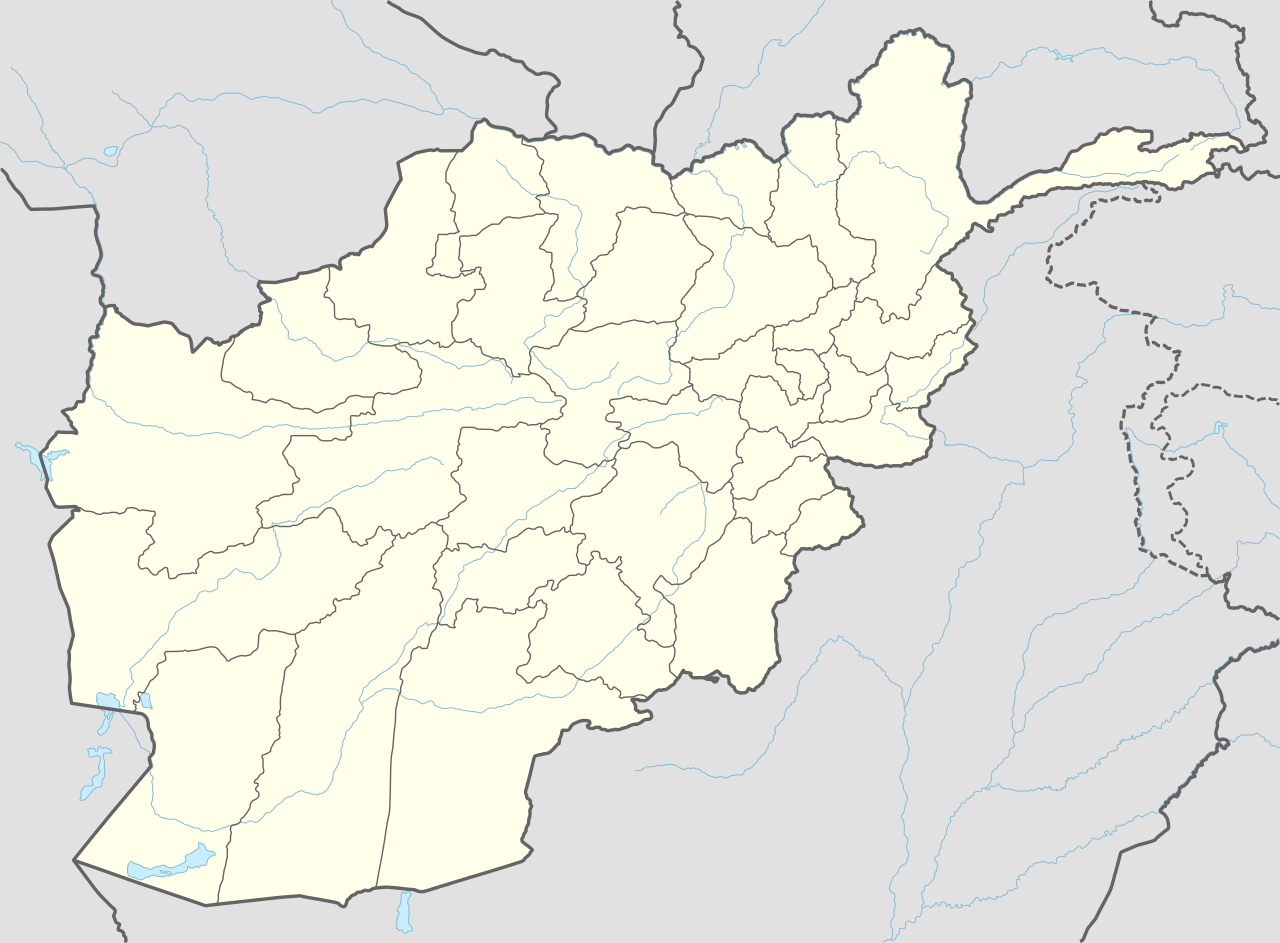


Sar-e-Pol (Pashto[a], Dari[b]: سر پل; lit. 'bridge head'), also written as Sar-i-Pul, and historically known as Anbar (Pashto[c], Dari[d]: انبر), is a city in northern Afghanistan, serving as the capital of Sar-e-Pol Province.[2] The city is within the jurisdiction of Sar-e-Pol District and has an estimated population of 134,809 people.[1] Qari Abdul Vakil Moaz serves as the mayor of the city.[3]
Sar-e-Pol sits at an elevation of about 2,155 ft (657 m) above sea level.[4] It is connected by a road network with Sheberghan to the north, Tukzar to the southeast, and Maimana to the southwest. Its distance from Kabul is about 349 km (217 mi).[5] Security is provided by the Afghan National Police.
Sar-e-Pol is home to the historic Imam Yahya Shrine, which is located in the eastern part of the city.[6] There are also a number of bazaars, business centers, public parks, stadiums, banks, hotels, restaurants, mosques, hospitals, universities, and places to relax.
Demographics
Sar-e-Pol has an estimated population of 134,809 people.[1] In 2015, the city of Sar-e Pol had an estimated population of 115,000 people.[7] There were 5,675 total number of dwellings in a total land area of 2,990 hectares.[8]
A 1983 estimate had put the population as 40% Uzbeks, 25% Pashtuns (10% Durrani, 5% Eastern Pashtuns, 10% non-Durrani Pashtuns), 10% Hazaras, 20% Aimaqs and Tajiks, and 5% Arabs.[9]
See also
Notes
- ^ Pashto pronunciation: [sa'ri.pul]
- ^ Dari pronunciation: [sä.ɾɪ.pʰʊl]
- ^ Pashto pronunciation: [ʔan.bar]
- ^ Dari pronunciation: [ʔäm.bǽɾ]
References
- ^ a b c "Estimated Population of Afghanistan 2025-26" (PDF). National Statistics and Information Authority. September 2025. p. 79. Retrieved 3 January 2026.
- ^ "12 years on, Sar-i-Pul City residents yet to get their plots". Pajhwok Afghan News. 19 May 2022. Retrieved 4 January 2025.
- ^ "57 million revenues of Sar-e-pul province municipality in the past year". Afghan Voice Agency. 23 March 2023. Retrieved 4 January 2025.
- ^ Cohen, Saul Bernard; Cohen, Saul (2008). The Columbia Gazetteer of the World: A to G. ISBN 9780231145541.
- ^ "Sar-e Pul Distances Afghanistan". www.distancecalculator.net. Retrieved 16 May 2020.
- ^ "Cultural Figures Urge Completion of Imam Yahya Shrine Restoration". TOLOnews. 26 February 2025. Retrieved 26 February 2025.
- ^ "State of Afghan Cities report 2015 (Volume-I English)". UN-Habitat. p. 12. Retrieved 4 January 2025.
- ^ "State of Afghan Cities report 2015 (Volume-II)". UN-Habitat. p. 114. Retrieved 22 October 2015.
- ^ Tapper, Nancy (February 1983). "Acculturation in Afghan Turkistan: Pashtun and Uzbek women". Asian Affairs. 14 (1): 35–44. doi:10.1080/03068378308730096. ISSN 0306-8374.
External links
- زیباترین تصاویر از ولایت سرپل - Beautiful pictures FHD 1080 of Sar-e-Pul province on YouTube
 | This Sar-e Pol Province, Afghanistan location article is a stub. You can help Wikipedia by adding missing information. |

