Virac | |
|---|---|
.jpg/1280px-81322_VIRAC_1_(1).jpg) White church bell tower topped with a slate spire, round turret attached. | |
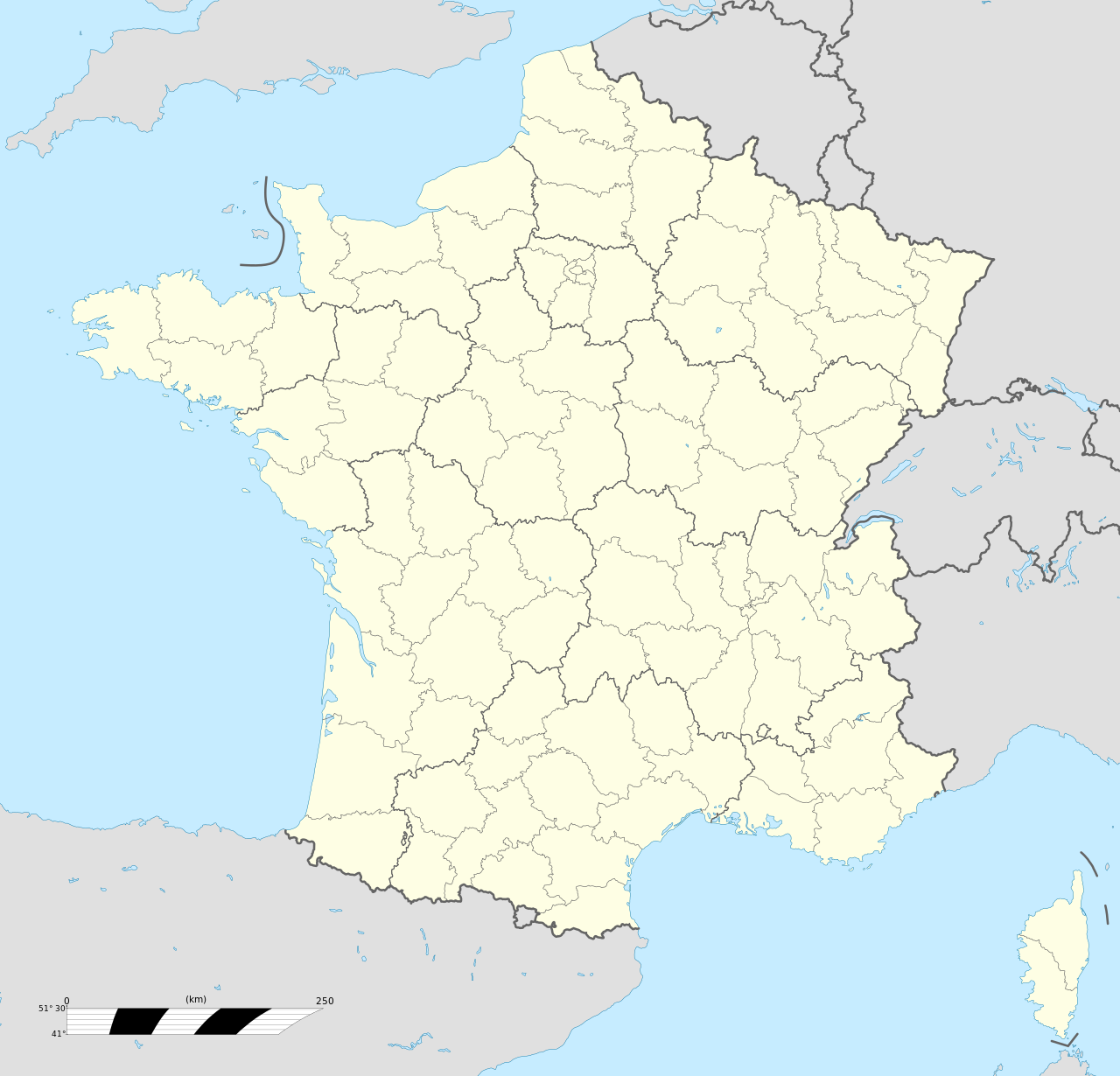
Location of Virac | |
| Coordinates: 44°02′51″N 2°02′44″E / 44.0475°N 2.0456°E / 44.0475; 2.0456 | |
| Country | France |
| Region | Occitania |
| Department | Tarn |
| Arrondissement | Albi |
| Canton | Carmaux-2 Vallée du Cérou |
| Government | |
| • Mayor (2020–2026) | Aline Redo[1] |
Area 1 | 11.44 km2 (4.42 sq mi) |
| Population (2023)[2] | 252 |
| • Density | 22.0/km2 (57.1/sq mi) |
| Time zone | UTC+01:00 (CET) |
| • Summer (DST) | UTC+02:00 (CEST) |
| INSEE/Postal code | 81322 /81640 |
| Elevation | 200–340 m (660–1,120 ft) (avg. 320 m or 1,050 ft) |
| 1 French Land Register data, which excludes lakes, ponds, glaciers > 1 km2 (0.386 sq mi or 247 acres) and river estuaries. | |
.svg/1280px-Blason_ville_fr_Virac_(Tarn).svg.png)


Virac (French pronunciation: [viʁak]) is a commune in the Tarn department and Occitanie region of southern France.
Etymology
The old forms are Viragio, towards 1100, Virag, in 1135, and according to Negre, Virac comes from the Latin name of man Virius with the suffix -acu-, Latinization of the Welsh suffix -āco(n). Virac was therefore perhaps an old great ancient property that had for teacher Virius. The choice of Black supposes the absorption of the second -i- by -r-. Always with -acum, Dauzat and Rostaing consider that the name of person is a Welsh name of man, *Viros, choice that is not far from that of Xavier Delamarre, Vīrios (from the adjective vīro-, "fair, true", different from viro-, "man"); for Delamarre, the name of origin would be Uīriācon (this also supposes the later absorption of the second -i-, a phenomenon that, always for Delamarre, does not seem automatic: the same etime leads according to him to Viriat and Virieu, Arpitan places).
See also
References
- ^ "Répertoire national des élus: les maires". data.gouv.fr, Plateforme ouverte des données publiques françaises (in French). 2 December 2020.
- ^ "Populations de référence 2023" (in French). National Institute of Statistics and Economic Studies. 29 December 2025.


.jpg)
.svg)


