.jpg/1280px-Yankee_hurricane_weather_map_11-4-1935_(700432158).jpg) Surface weather analysis of the storm nearing South Florida on November 4 | |
| Meteorological history | |
|---|---|
| Formed | October 30, 1935 (1935-10-30) |
| Extratropical | November 8, 1935 |
| Dissipated | November 8, 1935 (1935-11-09) |
| Category 2 hurricane | |
| 1-minute sustained (SSHWS/NWS) | |
| Highest winds | 105 mph (165 km/h) |
| Highest gusts | 130 mph (210 km/h) (highest directly measured) |
| Lowest pressure | 964 mbar (hPa); 28.47 inHg |
| Overall effects | |
| Fatalities | 21 (+2 indirect) |
| Injuries | ±150 |
| Damage | >$5.5 million (1935 USD) |
| Areas affected |
|
| IBTrACS | |
Part of the 1935 Atlantic hurricane season | |
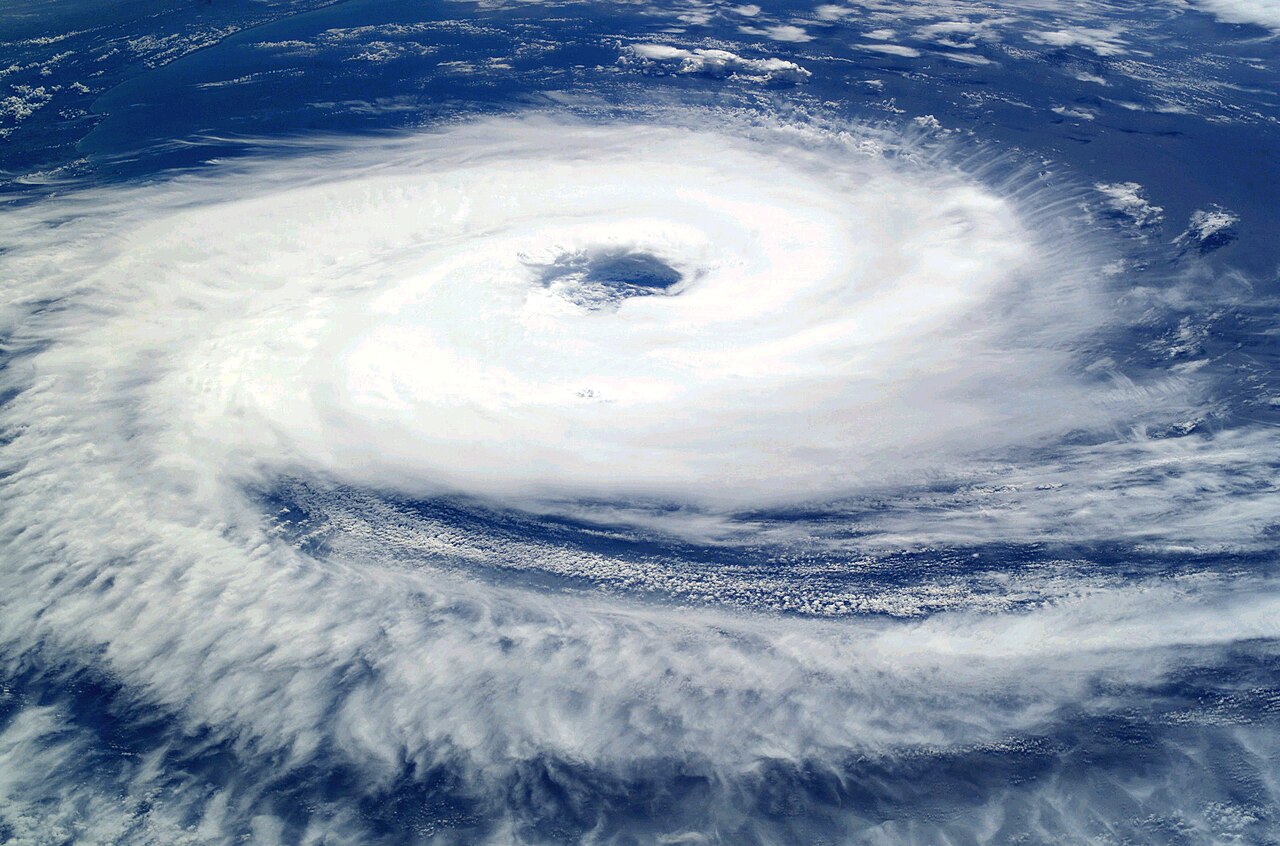
The 1935 Yankee hurricane was a rare Atlantic hurricane that afflicted the Bahamas and South Florida in November, with its heaviest impact befalling the Miami metropolitan area. It was one of two hurricanes to make landfall on Florida in 1935, following a devastating cyclone in September, and one of only a few intense storms to strike the state from the northeast. The seventh tropical cyclone and fifth hurricane of the annual season, it developed east of Bermuda on October 30, in an area not usually known for hurricane formation. A day later it strengthened into a hurricane, initially posing a threat to the Carolinas, but subsequently turned southwest and south, confounding forecasters. Tracking parabolically, it attained its peak intensity of 105 mph (165 km/h) on November 3, and shortly afterward its small inner core lashed the northern Bahamas with hurricane-force winds, causing moderate damage—mostly to shipping—and 14 fatalities in the island chain.
The following day it veered more to the west, striking the contiguous United States just north of Miami Beach at a slightly lower intensity. In Florida the storm's peak winds cut a 30-mile (48 km) swath below Fort Lauderdale, causing the worst damage to the area since the 1926 Miami hurricane. Wind gusts of 130 mph (210 km/h) swept Miami and adjourning cities, unroofing well-constructed buildings and razing hundreds of flimsy houses. Besides the strong winds, prolific rainfall, flash floods, and high tides combined to damage coastal installations, ships, and crops. Casualties from the storm—limited to nine fatalities and mostly mild injuries—were fairly low, due in part to precautionary measures such as advance warnings and building codes. Its unparalleled route toward Florida and late arrival earned it the nickname Yankee hurricane, making it one of only three November hurricanes to strike Florida, behind Kate in 1985 and Nicole in 2022.
Meteorological history

Tropical storm (39–73 mph, 63–118 km/h)
Category 1 (74–95 mph, 119–153 km/h)
Category 2 (96–110 mph, 154–177 km/h)
Category 3 (111–129 mph, 178–208 km/h)
Category 4 (130–156 mph, 209–251 km/h)
Category 5 (≥157 mph, ≥252 km/h)
Unknown


 Extratropical cyclone, remnant low, tropical disturbance, or monsoon depression
On October 25 a quasi-stationary low-pressure area formed about 330 mi (530 km) east of Bermuda, along a weather front between the Faroe Islands, an archipelago in the North Sea, and the Lesser Antilles. The disturbance meandered over warm ocean waters, wedged between a trough to its east and a ridge to its north. Modulated by the Icelandic Low, the ridge–trough interplay drew a polar air mass southward over the warm water, generating easterly trade winds and rising atmospheric instability. The unstable atmosphere, dominated by clashing winds, produced convection, allowing a well-defined circulation to emerge on October 29, followed by a concentrated wind field a day later. At 06:00 UTC on October 30, a tropical storm first appeared in the Atlantic hurricane database (HURDAT) about 230 mi (370 km) east of Bermuda, characterized by uniform air temperatures, although its oblong circulation and uneven precipitation pattern more closely resembled a subtropical cyclone. Based on ship observations, it headed just north of due west and intensified for a few days, strengthening into a minimal hurricane—equal to Category 1 on the Saffir–Simpson scale—on November 1. Reports from weather stations in its path showed a smaller-than-usual storm, marked by a compact radius of hurricane-force winds.[1][2]

Late on November 1 a high-pressure area over the eastern United States deflected the storm from the Outer Banks, causing it to swerve southwestward with time, a rare "hairpin"-shaped trajectory that baffled contemporary forecasters, mirroring another storm a few weeks prior. The storm intensified as it turned away, and further strengthening occurred next morning, as shown by barometer readings down to 28.94 inHg (980 mb) aboard a few ships in the eye of the storm, implying sustained winds of 85 mph (137 km/h) based on pressure–wind relationships. During the day the storm bent south, toward the northern Bahamas. On November 3 the ship Queen of Bermuda entered the calm center for an hour and recorded 28.46 inHg (964 mb), the lowest pressure in the storm, which suggested a peak intensity of 105 mph (165 km/h). Overnight the storm slowed and curled southwest, threading Elbow and Green Turtle cays in the Abaco Islands, just north of Hope Town, as a Category 2 cyclone.[1][2]
Afterward it curved west-southwest and accelerated toward Florida on November 4, defying initial forecasts—a shift meteorologist Ivan Ray Tannehill found inexplicable, owing to weak atmospheric currents. It then struck between present-day Bal Harbour and Sunny Isles in Dade County, Florida, at 18:00 UTC. Crossing the coastline and the Miami city limits, the 15-mile (24 km) eye was heralded by an hour-long lull, or relative pause in the winds. A minimum pressure of 28.73 inHg (973 mb) in the Miami Weather Bureau office correlated with winds of 100 mph (155 km/h)—low-end Category 2 status—as deduced by the Atlantic hurricane reanalysis project, given a smaller-than-average eye size, offset by factors favoring a lower intensity estimate, such as eye elongation, weaker wind reports, and increasing pressures. Heading swiftly inland, the hurricane transited the Everglades with winds of 75–80 mph (120–130 km/h) and reached the Gulf of Mexico a short distance north of Cape Sable early on November 5. Once over water it failed to restrengthen, degenerating into a tropical storm within 18 hours, likely due to an influx of dry, stable air from the west. A day later ships in the gulf clocked peak winds of 52 mph (84 km/h) and pressures no lower than 1,008 mb (29.8 inHg). Within a few days the storm arced west-northwestward and then eastward, shedding gale-force winds. It became extratropical at 12:00 UTC on November 8, and six hours later ended about 95 mi (155 km) west of the entrance to Tampa Bay.[1][2][3]
Warnings and precautions

At 02:30 UTC on October 31, the United States Weather Bureau advised interests between Boston, Massachusetts, and Cape Hatteras, North Carolina, to prepare for brisk winds or gales.[4] A day later it issued storm warnings from the Delaware Breakwater to Boston.[5] Fearing strong winds, mariners hastened offshore, including at Newport News, Virginia.[6] On November 2 the Weather Bureau suspended warnings north of the Virginia Capes, instead expanding them to near New Bern, North Carolina,[7] while noting "dangerous conditions" at sea.[8] The agency expanded its warnings later that day to Charleston, South Carolina, and cautioned interests farther south. At first it only anticipated above-normal tides in Florida, projecting a path offshore.[9]: 1 [10]
A day later, nonetheless, it relayed information about the storm to marine and other concerns in or near Florida. On November 4, prompted by changes in the storm path, it posted hurricane warnings from Stuart, Florida, to Miami, along with storm warnings up to Titusville,[11] predicting landfall between Miami and West Palm Beach.[12] Hurricane warnings eventually reached Naples on the state's west coast, as well as storm warnings at Fort Myers;[13]: 1 later advisories included Tarpon Springs in the warned area.[14]: 1 Areas from Key West to St. Augustine closely monitored the storm,[15] though the suddenness of its approach prevented some Miami citizens from adequately boarding up their properties, including several hundred who were installing plywood when the storm commenced;[16]: 11 as the eye passed overhead residents who had failed to complete storm preparations hurriedly did so.[17]: 7 As soon as the storm entered the Gulf of Mexico, the Weather Bureau believed it would turn landward and reenter the state north of Tampa. Accordingly, it issued storm warnings from Carrabelle to Cedar Key, while advising mariners to monitor the weather.[18]: 1 A few days later, due to a west shift in the projected landfall toward Pensacola, the area covered by the warnings was enlarged to include the entire Florida panhandle.[19]

As the storm closed in on land, Bahamian officials, according to press reports, "took all precautions" to prevent damage.[12] Government authorities notified islanders, including 1,500 sponge fishermen,[20] by air, wireless, and courier networks.[9]: 1 People in the capital Nassau barricaded their homes and all shops.[12] In the United States a brand-new regional hurricane warning service alerted the populace through telecommunications and news media.[a][11] South Floridians secured watercraft, shuttered windows, and closed schools; locals besieged newspapers with storm-related questions.[13]: 2 Shipping was instructed to avoid hazardous waters, and the United States Coast Guard dispatched amphibious aircraft to apprise fishermen in the Florida Keys.[23] Beachfront communities such as Palm Beach erected makeshift sandbag barriers to forestall erosion,[24] while diverting vehicles from vulnerable roads and bridges.[25]: 1, 3 Residents on the west coast of the state conveyed fishing boats to sheltered areas and secured waterside belongings. Road engineers fortified a new bridge over Apalachicola Bay days before its planned opening.[19]
To avoid a repeat of the Labor Day disaster, which claimed hundreds of lives, the Public Works Administration transferred its workers from the Florida Keys to Homestead and Miami.[26] In the upper Keys officials relocated more than 200 laborers by truck from the Snake Creek area to the mainland.[13]: 1 The Miami News reported that thousands of people "packed the lobbies" at local hotels, while tenders kept drawbridges open "almost continuously" to let boaters flee, limiting vehicle access to downtown Miami.[27]: 10 Everglades dwellers left floodplains for highlands,[28] while the South Florida Red Cross Safety committee ordered a special train on standby to transport evacuees.[25]: 3 Pan Am flights to and from affected areas were briefly discontinued,[13]: 2 while the China Clipper, just returned from a round trip, flew from Miami to Kingston, Jamaica, to evade the winds.[29] In Havana, Cuba, the P&O steamship Florida was held at port for a day.[13]: 2
Impact
| Region | Total deaths |
Damage (USD) |
Source(s) |
|---|---|---|---|
.svg/1280px-Flag_of_Florida_(1900%E2%80%931985).svg.png) Florida Florida |
9 | >$5.5 million | [30] |
.svg/1280px-Flag_of_the_Bahamas_(1904%E2%80%931923).svg.png) The Bahamas The Bahamas |
14 | N/a | [31] |
| Totals: | 23 | >$5.5 million | [32] |
| Because of differing sources, totals may not match. | |||
The edges of the storm sideswiped North Carolina and Bermuda, with gales buffeting Cape Hatteras and winds reaching 35 mph (56 km/h) on the latter. In the Bahamas, the storm produced a brief period of hurricane-force winds, one to three hours in duration.[31][33] As it sliced through the Abaco Islands, it brushed the settlement of Hope Town, attended by air pressures as low as 29.00 inHg (982 mb), though the fiercest winds likely missed the area.[20]: 1 On Great Abaco Island the storm mauled eight sponge fishing vessels, and 11 people drowned there, including Abaco commissioner John Eldridge Russell, who was pushed overboard by a boom while aiding victims of a previous storm.[34] Clipping Grand Bahama, the storm blew at 60 mph (97 km/h) there,[12] and generated a pressure of 29.45 inHg (997 mb).[13]: 2 Damage to the Bahaman archipelago was modest overall,[b][36] yet despite its brevity, the cyclone claimed 14 lives in the Bahamas.[31]
All communities have, by force of circumstances, reverted to the kerosene lamp stage and in many instances to candles for illumination of homes.
— Miami Herald, [37]
The storm inflicted $51⁄2 million in losses on Florida, exclusive of agriculture,[38] mainly from Broward County southward and centered on Miami.[39] Most of the destruction occurred within 30 mi (48 km) and north of the eye,[38] ending near Fort Lauderdale,[37][40]: 1 due to the limited,[39] asymmetric extent of hurricane-force winds;[35][41]: 4-A inclement weather occurred no farther north than the Palm Beaches.[25]: 3 [42] Statewide six deaths resulted from the storm, along with two from cardiac arrest due to storm stressors and one from uncertain causes linked to the storm.[c][30] 137 Floridians received injuries,[27]: 1 mostly slight,[40]: 7 out of about 150 people in the entire storm area.[45] Over 100 hospitalizations for minor incidents took place.[46] A rare event,[47] the storm was the first of three November hurricanes in Florida—behind 1985's Kate and 2022's Nicole—and the only one to hit Greater Miami from the northeast;[48][49] it was also the first of two severe hurricanes to hit Florida from that direction, alongside 1965's Betsy.[50] Its origin and track reminded people of northern visitors,[48][49] lending the storm its moniker Yankee hurricane.[51][52] Notwithstanding its characteristics, readiness on the part of residents in the Miami–Fort Lauderdale area, an outcome of improved weather warnings and building codes, reduced its overall impact;[26][49] in most cases damage was merely cosmetic,[53]: 1 confined to shallowly-rooted trees and broken windows.[54]

In Miami wind gusts peaked at 130 mph (210 km/h),[16]: 1, 11 [27]: 8 unroofing large buildings such as a Florida East Coast Railway (FEC) station and a hardware shop.[55] The winds shattered several hundred windows, especially storefront plate glass.[56] Many building interiors were drenched with rainwater due to roof or window damage,[16]: 11 including the Morning Herald and Daily News offices.[46] Debris cluttered downtown Miami, with Flagler Street resembling a World War I battlefield, but the heaviest wind damage centered around Hialeah on the northwestern outskirts of the city, where most people lived.[16]: 11 [41]: 5-A There the winds razed dozens of stucco and frame dwellings, pinning down residents beneath walls and roofs.[16]: 11 Most of the leveled buildings in Greater Miami were frail,[26] including 150 "negro" shacks in Hialeah's "colored" (African-American) residential section.[41]: 5-A [57]: 1 The storm also mangled vegetation in Miami and its environs, notably at Tropical Park and Miami Beach.[27]: 10 Fallen wires crippled communication between the city and the outside world,[55][58] with power poles in the Miami–Fort Lauderdale area strewn across Federal Highway, the main artery linking the towns.[40]: 1, 7 Law enforcement urged people to avoid streets due to live wires.[46] The storm bisected or toppled several antenna towers, some designed for 100-mile-per-hour (160 km/h) velocities, forcing WIOD, WQAM, and Tropical Radio stations to rely if possible on backup communications or scaled-down power generation.[59] The severity of the storm lessened south of Miami, demarcated by Homestead.[41]: 4-A At Coconut Grove winds splintered coconut palms and flattened small buildings.[60]

The worst of the storm impacted Broward County,[61]: 7 [37] especially areas in and south of Fort Lauderdale.[41]: 4-A Countywide 40 or more homes were uninhabitable and 350 required fixes.[41]: 4-A Damage equaled or exceeded the 1926 hurricane in multiple communities, among them Dania and Hollywood.[27]: 10 [56] Tours by U.S. Representative J. Mark Wilcox and others showed a greater loss at Dania than any other place in South Florida, with over half the buildings damaged,[62][17]: 7 including almost every home.[43] Many incurred severe losses,[61]: 7 [63] including well-built structures.[64]: 1 Among the seriously affected buildings was the mayor's residence,[43] while a parsonage, pharmacy, hotel, and school building were in need of rebuilding. Additionally, the storm wrecked a cannery, a few garages, and frame homes.[63] In Hollywood the storm smashed 70 homes in the Liberia district.[65] It also seriously damaged retailers and 20 houses, while flipping parked vehicles.[62][66]: 1, 8 The fringe of damaging winds impacted Fort Lauderdale,[13]: 1 tearing at roofs, windows, and automobiles,[67][68]: 1 one of which was hit by a fallen palm.[63] Roads between the city and Miami to its south were choked by storm debris,[64]: 9 [69]: 1 including pieces of hovels, blocking traffic.[27]: 10 Aerial surveys determined Deerfield to be the northern outpost of severe damage,[70] with extensive damage to signage and buildings in nearby Pompano.[37] Lesser damage occurred in neighboring Palm Beach County, mostly in the southern parts, consisting of overturned garages and knocked-down lampposts.[71] Damage in the Palm Beaches was slight, aside from a number of uprooted royal palms.[25]: 1, 3

The storm dropped locally heavy rainfall, mainly over Dade and Monroe counties,[72] with a rain gauge on Long Key collecting 11.80 in (300 mm), the most in the state.[73] As shown by station data, the storm exhibited a lopsided rain shield, with the heaviest downpours falling southeast of the track,[38] a quirk described as atypical of a tropical system by meteorologists at the time. Miami measured 4.04 in (103 mm), most of which followed the eye passage.[39] The rain fell in torrents,[14]: 2 combining with storm tides to push the Miami River over its rim.[26] Freshwater flooding stranded cars on the Tamiami Trail, compelling motorists to abandon their vehicles,[40]: 7 and caused canals to overflow, inundating farmland in the Pompano area.[40]: 1 [27]: 10 In Fort Lauderdale floodwaters invaded downtown streets, with 1-foot-deep (0.30 m) overflow backing up for several blocks.[14]: 1 In Hollywood lakes overflowed their banks, drowning neighborhoods.[26] At Dania a bridgetender drowned while fording a canal in a boat during the storm.[43]
Storm tides along the Florida coast rose 2 ft (0.61 m) higher than usual as the storm neared,[20] with fluctuations of 5 to 6 ft (1.5 to 1.8 m) in secluded water bodies such as coves and outlets.[38] Storm surge rose highest at Fort Lauderdale due to onshore winds,[39] hitting the 8-foot (2.4 m) mark,[35][74] with a maximum tide of 8.8 ft (2.7 m) at Port Everglades.[75] The tides extensively damaged waterfront structures there and to the south,[35] flooding beachfront neighborhoods near Las Olas Boulevard, along with the port itself. The tides beached the flotel Amphitrite across New River Sound and damaged watercraft along the river, which spilled over its rim, raising fear among storm refugees.[68]: 1, 6 [64]: 9 Seawater depths of 4 ft (1.2 m) covered portions of Miami Beach,[26] flooding low ground and depositing layers of sand, including on Ocean Drive and Collins Avenue.[70][27]: 8 In Miami high water overtopped the County Causeway, the main avenue tying the beach and the mainland, halting traffic. Scores of vessels—both small and great—grounded on the barrier island and in Biscayne Bay,[55] including the freighter Elizabeth off Miami Beach, the Bull Line freighter Dorothy, and a pair of yachts that drifted onto the causeway, sustaining severe damage. In Miami the yacht basin accounted for most of the $100,000 in losses to city property. Wreckage was carried a few blocks inland across Biscayne Boulevard, piling up 2 ft (0.61 m) deep.[27]: 8, 10 [46] Three men were rescued on Soldier Key after spending the night there due to their boat capsizing.[70]

Rough seas, including very high waves,[28] preceding the storm battered the entire east coast of the state, barring motorists from the shoreline and adjacent roads.[76][14]: 2 The surf caused beach erosion from the Palm Beaches southward,[71] including 10-foot (3.0 m) gouges,[26] forming washouts in roadways such as Highway A1A,[70][68]: 6 while effacing coastal erections such as boardwalks and lifeguard towers.[71][77] Among the abraded roadbeds was the County Causeway, which was closed to traffic.[26] Near Fort Lauderdale half the beach road was torn so badly as to be irreparable,[37] while throughout the storm area raging seas turned oceanside cabanas and cottages into twisted mounds of debris.[70][77] The effects of the ocean were visible as far north as the First Coast. The sea left behind or unearthed objects, including beach wrack and late-18th-century Spanish silver coins,[78][76] while pounding beaches into a smooth state.[9]: 2 Stormy conditions whipping the Lake Worth Lagoon caused a ferryboat to break free from its berth,[24]: 2 and unmoored a pair of steel barges outside Jupiter,[20]: 2 spurring the Coast Guard, based on a false rumor of people onboard, to send five vessels in a search-and-rescue operation.[79] Off Southwest Florida the storm incapacitated the tugboat Lapwing, one of whose crew died after being rescued; officials were unable to discern a cause of death.[80]

Loss of communication stymied efforts to locate the eye of the storm or warn people, as the storm disabled transmitters and downed hurricane signals.[58][14]: 2 The storm paralyzed utilities and made roads unserviceable across the storm-hit region,[26] while collapsed buildings such as a packing house were blown onto the FEC railroad, delaying trains.[27]: 10 In Broward and Dade counties winds felled 1,000 telephone poles,[56] with Florida Power & Light officials likening infrastructure damage in the worst-hit zone to the 1926 storm.[53]: 4 The storm hit the Seminole, an indigenous people who lived in lightweight huts called chickees,[17]: 7 hard, flattening entire encampments in Collier County.[81]: 2 Severe crop damage resulted from the storm in South Florida,[82] notably to grapefruit,[55] citrus, and vegetables from Broward County south,[17]: 7 [37] such as tomatoes, peppers, and snap beans.[82][38] In Dade County the storm downed three-fourths of the mature avocado trees, along with 80% of citrus stands. Potato harvests—a quarter of the total in the southern peninsula—were submerged and feared lost,[41]: 4-A as was the Dania bean crop.[64]: 1 In Davie citrus groves suffered a loss of $200,000 and were believed unsalvageable,[83] with other crops receiving heavy damage.[64]: 9 [65] At the Redlands, where total crop losses reached $1 million,[27]: 8 the storm sheared off a quarter of the local citrus crop,[62] and did much damage to fruit crops at Homestead.[84]: 7
Aftermath
Following the storm, boil-water advisories were effected in Miami due to sewerage disruptions.[46] Supplies of lanterns and candles ran low in some areas due to power outages, while cracks in water mains imperiled the flow of potable water by lowering pressure.[66]: 1, 8 One-way traffic was enacted on the County Causeway after the storm due to a dredge collision that removed 40 ft (12 m) of roadway.[46] P&O scrapped ferry service between Port Everglades and Havana, stranding racehorses—originally slated to perform at Oriental Park Racetrack—in two railcars on a siding south of Fort Lauderdale.[63][64]: 9 American Red Cross Florida relief director George E. Meyer headquartered in the McAllister Hotel, where 400 relief appeals circulated. 600 Miamians solicited the Red Cross for necessities, while 200 individuals volunteered aid. Aged recipients and women with infants were lodged at hotels, while Hialeah officials ordered food for 30 families. Relief equipment arrived by truck from elsewhere in Florida, along with aid workers from Birmingham, Alabama. Two veterans' organizations, the Veterans of Foreign Wars and the American Legion, fielded volunteers to help police curb looting.[27]: 8, 10 A shortage of cots at the county arsenal led the local National Guard to requistion additional beds from Tampa.[17]: 7
Notes
- ^ In 1935 the United States Hurricane Warning Service, first instituted in 1898, was reorganized, with new local offices and a 24-hour warning service being established.[21][22]
- ^ Hurricane historian Jay Barnes differed, describing it as "heavy".[35]
- ^ The direct deaths were as follows: four from drowning, one from a collapsed home, and one from flying debris.[18]: 1, 3 [43][44]
See also
- Hurricane Gordon – Looped and struck Florida a second time as a weaker cyclone
- Hurricane Jeanne (1980) – Rare November Gulf hurricane
- Hurricane Jeanne (2004) – Reversed course and impacted Florida
- List of Florida hurricanes (1900–1949)
References
- Citations
- ^ a b c "Atlantic hurricane best track (HURDAT version 2)" (Database). United States National Hurricane Center. April 4, 2025.
 This article incorporates text from this source, which is in the public domain.
- Landsea, Chris (April 2022). "The revised Atlantic hurricane database (HURDAT2) - Chris Landsea – April 2022" (PDF). Hurricane Research Division – NOAA/AOML. Miami: Hurricane Research Division – via Atlantic Oceanographic and Meteorological Laboratory.
- ^ a b c View expanded list of sources
- Barnes, pp. 159–161
- Bennett
- Byers
- Landsea, Chris; Anderson, Craig; Bredemeyer, William; et al. Documentation of Atlantic Tropical Cyclones Changes in HURDAT: Storm 7 (originally 6), 1935. Re-Analysis Project (Report). Miami, Florida: Atlantic Oceanographic and Meteorological Laboratory, Hurricane Research Division. Retrieved January 16, 2026.
- Best Track Committee (March 2012). — (ed.). "Best Track Committee Re-Analysis Comments for 1935 (Replies to the Comments in Bold Face and [Bracketed] – CWL March 2012)". HURDAT Re-analysis. Miami: Hurricane Research Division. Retrieved 29 November 2025.
- Douglas, Marjory Stoneman (1958). Wilkinson, Jerry (ed.). "The Florida Keys, 1935". 1935 Hurricane Douglas' article. Rinehart and Company. Archived from the original on 10 December 2006. Retrieved 13 February 2024 – via Keyshistory.org.
- Hurd 1935a
- Written at Jacksonville, Florida. "Great Abaco Island Raked By Hurricane". Fort Myers News-Press. Vol. 51, no. 349. Fort Myers, Florida (published November 4, 1935). Associated Press. November 3, 1935. p. 1 – via Newspapers.com.
- P. 2
- Written at Jacksonville, Florida. "Hurricane Off Coast Reverses Normal Course". The Charlotte Observer. Vol. 67, no. 213. Charlotte, North Carolina (published November 3, 1935). Associated Press. November 2, 1935. p. 13 – via Newspapers.com.
- Landsea, Hagen & Bredemeyer, p. 6112
- Tannehill, pp. 106, 216
- Written at Havana. "Hurricane Is 'Freak'; Course Southward Is the Reverse of the Usual Direction". New York Times. Vol. 85, no. 28409 (Late City ed.). New York City (published November 5, 1935). Associated Press. November 4, 1935. p. 12. ProQuest 101308741.
- Barnes, pp. 159–161
- ^ Landsea, Chris; Anderson, Craig; Bredemeyer, William; et al. (September 2025). Detailed List of Continental United States Hurricane Impacts/Landfalls 1851–1970, 1983–2024. Re-Analysis Project (Report). Miami, Florida: Atlantic Oceanographic and Meteorological Laboratory, Hurricane Research Division.
- ^ Written at Washington, D.C. "Virginia Capes warned of approaching storm". The Charlotte Observer. Vol. 67, no. 211. Charlotte, North Carolina (published November 1, 1935). Associated Press. October 31, 1935. p. 14 – via Newspapers.com.
- ^ "Storm warning". The Press of Atlantic City. Vol. 41, no. 80. Atlantic City, New Jersey. November 1, 1935. p. 2 – via Newspapers.com.
- ^ "Storm signals up; rainfall forecast". Daily Press. Vol. 40, no. 291. Newport News, Virginia. November 1, 1935. p. 10 – via Newspapers.com.
- ^ Written at Washington, D.C. "Storm Warnings Still Up". The Charlotte News. Vol. 48. Charlotte, North Carolina. Associated Press. November 2, 1935. p. 1 – via Newspapers.com.
- ^ Written at Jacksonville, Florida. "Hurricane Rages Off N.C. Coast". The Daily Dispatch. Vol. 22. Henderson, North Carolina. Associated Press. November 2, 1935. p. 1 – via Newspapers.com.
- ^ a b c Written at Nassau, Bahamas. "Freak Storm Misses Florida Coast; Isles In Path of Hurricane". Orlando Sentinel. Vol. 23, no. 54. Orlando, Florida. United Press International. November 4, 1935. p. 1 – via Newspapers.com.
- Part 2
- P. 2
- ^ Written at Jacksonville, Florida. "'Yankee' storm heads southward toward Bahamas". Palm Beach Post. Vol. 27, no. 266. West Palm Beach, Florida (published November 3, 1935). Associated Press. November 2, 1935. p. 1 – via Newspapers.com.
- ^ a b Hurd 1935a, p. 318.
- ^ a b c d Written at Miami. "Florida is Menaced by Hurricane". The Piqua Daily Call. Vol. 53, no. 15. Piqua, Ohio. Associated Press. November 4, 1935. p. 1 – via Newspapers.com.
- ^ a b c d e f g Written at Miami. "Hurricane Passes Over Miami". Ironwood Daily Globe. Vol. 16, no. 296. Ironwood, Michigan. Associated Press. November 4, 1935. p. 1 – via Newspapers.com.
- P. 2
- ^ a b c d e Written at Miami. "Expect center to move inland north of Miami". Sarasota Herald-Tribune. Vol. 11, no. 26. Sarasota, Florida. Associated Press. November 4, 1935. p. 1 – via Newspapers.com.
- P. 2, Part 1
- P. 2, Part 2
- P. 2, Part 3
- P. 2, Part 1
- ^ Barnes, p. 159.
- ^ a b c d e "130-mile blasts shatter houses". Miami Tribune. Vol. 2, no. 276. Miami. November 5, 1935. p. 3 – via Newspapers.com.
- P. 11, Part 1
- P. 11, Part 2
- P. 11, Part 3
- P. 11, Part 4
- P. 11, Part 5
- P. 11, Part 1
- ^ a b c d e Written at Miami. "Freak Storm Out In Gulf Last Report". Palm Beach Post. Vol. 27, no. 268. West Palm Beach, Florida (published November 5, 1935). Associated Press. November 4, 1935. p. 1 – via Newspapers.com.
- P. 7, Part 1
- P. 7, Part 2
- P. 7, Part 3
- P. 7, Part 1
- ^ a b Written at Miami. "Storm Moves Toward Coast North of Here". Tampa Morning Tribune. Vol. 42, no. 310. Tampa, Florida (published November 6, 1935). Associated Press. November 5, 1935. p. 1 – via Newspapers.com.
- P. 3
- ^ a b Written at Jacksonville, Florida. "Hurricane heads again for Florida". New York Times. Vol. 85, no. 28412. New York City (published November 8, 1935). Associated Press. November 7, 1935. p. 3. ProQuest 101317300.
- ^ a b c d Written at Jacksonville, Florida. "Great Abaco Island Raked By Hurricane". Fort Myers News-Press. Vol. 51, no. 349. Fort Myers, Florida (published November 4, 1935). Associated Press. November 3, 1935. p. 1 – via Newspapers.com.
- P. 2
- ^ Dunn & Miller, pp. 142, 144.
- ^ WBT.
- ^ Written at Jacksonville, Florida. "Hurricane rakes Bahamas again". New York Times. Vol. 85, no. 28408. New York City (published November 4, 1935). Associated Press. November 3, 1935. p. 1. ProQuest 101280637.
- ^ a b "High tide here result of storm 200 miles away". Palm Beach Post. Vol. 37, no. 267. November 4, 1935. p. 1 – via Newspapers.com.
- P. 2
- ^ a b c d Keyes, Emilie C. (November 5, 1935). "Palm Beaches Slightly Buffeted By Winds But Damage Is Meagre". Palm Beach Post. Vol. 27, no. 268. West Palm Beach, Florida. p. 1 – via Newspapers.com.
- P. 3, Part 1
- P. 3, Part 2
- P. 3, Part 1
- ^ a b c d e f g h i Written at Miami. "Rescue, Survey Parties Search Debris of Miami". Oshkosh Daily Northwestern. Vol. 68. Oshkosh, Wisconsin. United Press International. November 5, 1935. p. 3 – via Newspapers.com.
- ^ a b c d e f g h i j k l "Rebuilding need told in plea for quick aid". Miami News. Vol. 40, no. 330 (Home ed.). Miami. November 5, 1935. p. 1 – via Newspapers.com.
- P. 8, Part 1
- P. 8, Part 2
- P. 8, Part 3
- P. 8, Part 4
- P. 8, Part 5
- P. 10, Part 1
- P. 10, Part 2
- P. 8, Part 1
- ^ a b Written at Jacksonville, Florida. "Storm Will Miss Stuart". Stuart News. Vol. 10, no. 234. Stuart, Florida. Associated Press. November 4, 1935. p. 1 – via Newspapers.com.
- Part 2
- ^ Written at Miami. "Big Clipper Plane Sent To Jamaica To Avoid High Waves". Vol. 27, no. 267. West Palm Beach, Florida (published November 4, 1935). Associated Press. November 3, 1935 – via Newspapers.com.
- P. 2
- ^ a b View expanded list of sources
- Written at Miami. "Storm Moves Toward Coast North of Here". Tampa Morning Tribune. Vol. 42, no. 310. Tampa, Florida (published November 6, 1935). Associated Press. November 5, 1935. p. 1 – via Newspapers.com. : 1, 3
- P. 3
- Written at Fort Lauderdale, Florida. "Body Washed Ashore At Fort Lauderdale". Tampa Morning Tribune. Vol. 42, no. 310. Tampa, Florida (published November 6, 1935). Associated Press. November 5, 1935. p. 6 – via Newspapers.com.
- Written at Fort Lauderdale, Florida. "Hurricane damage is severe at Dania". Miami Herald. Vol. 25, no. 338. Miami (published November 5, 1935). November 4, 1935. p. 1 – via Newspapers.com. : 1
- P. 9
- "Dania Bears Brunt Of Hurricane; One Dead, Numerous Injured". Palm Beach Post. Vol. 27, no. 268. West Palm Beach, Florida. November 5, 1935. p. 1 – via Newspapers.com.
- "Rebuilding need told in plea for quick aid". Miami News. Vol. 40, no. 330 (Home ed.). Miami. November 5, 1935. p. 1 – via Newspapers.com. : 1, 8
- P. 8, Part 1
- P. 8, Part 2
- P. 8, Part 3
- P. 8, Part 4
- P. 8, Part 5
- P. 10, Part 1
- P. 10, Part 2
- P. 8, Part 1
- Written at Miami. "Storm Moves Toward Coast North of Here". Tampa Morning Tribune. Vol. 42, no. 310. Tampa, Florida (published November 6, 1935). Associated Press. November 5, 1935. p. 1 – via Newspapers.com.
- ^ a b c Hurd 1935a, pp. 316–7.
- ^ View expanded list of sources
- Written at Miami. "Storm Moves Toward Coast North of Here". Tampa Morning Tribune. Vol. 42, no. 310. Tampa, Florida (published November 6, 1935). Associated Press. November 5, 1935. p. 1 – via Newspapers.com. : 1, 3
- P. 3
- Written at Fort Lauderdale, Florida. "Body Washed Ashore At Fort Lauderdale". Tampa Morning Tribune. Vol. 42, no. 310. Tampa, Florida (published November 6, 1935). Associated Press. November 5, 1935. p. 6 – via Newspapers.com.
- Written at Fort Lauderdale, Florida. "Hurricane damage is severe at Dania". Miami Herald. Vol. 25, no. 338. Miami (published November 5, 1935). November 4, 1935. p. 1 – via Newspapers.com. : 1
- P. 9
- "Dania Bears Brunt Of Hurricane; One Dead, Numerous Injured". Palm Beach Post. Vol. 27, no. 268. West Palm Beach, Florida. November 5, 1935. p. 1 – via Newspapers.com.
- Written at Miami. "Storm Moves Toward Coast North of Here". Tampa Morning Tribune. Vol. 42, no. 310. Tampa, Florida (published November 6, 1935). Associated Press. November 5, 1935. p. 1 – via Newspapers.com.
- ^ Landsea, Chris; Anderson, Craig; Bredemeyer, William; et al. Documentation of Atlantic Tropical Cyclones Changes in HURDAT: Storm 7 (originally 6), 1935. Re-Analysis Project (Report). Miami, Florida: Atlantic Oceanographic and Meteorological Laboratory, Hurricane Research Division. Retrieved January 16, 2026.
- ^ Written at Nassau, Bahamaas. "Toll of hurricane rises to 19 deaths". New York Times. Vol. 85, no. 28413 (Late City ed.). New York City (published November 9, 1935). Associated Press. November 8, 1935. p. 31. ProQuest 101290655.
- ^ a b c d Barnes, p. 160.
- ^ Written at Nassau, Bahamas. "Official drowned in Great Abaco storm". Miami Herald. Vol. 25, no. 341. Miami (published November 9, 1935). Associated Press. November 10, 1935. p. 9A – via Newspapers.com.
- ^ a b c d e f Written at Fort Lauderdale, Florida. "Repair work begun in Broward County". Miami Herald. Vol. 25, no. 338. Miami. Herald bureau. November 5, 1935. p. 5 – via Newspapers.com.
- ^ a b c d e Bennett.
- ^ a b c d Hurd 1935a, p. 317.
- ^ a b c d e Penick, Tom (November 5, 1935). "Survey Finds Dania Center Of Big Blow". Palm Beach Post. Vol. 27, no. 268. West Palm Beach, Florida. p. 1 – via Newspapers.com.
- P. 7
- ^ a b c d e f g "Work begins on removing storm scars". Miami Herald. Vol. 25, no. 338. Miami. November 6, 1935. p. 1 – via Newspapers.com.
- P. 4
- P. 5
- ^ Written at Tallahassee, Florida. "Okeechobee region undamaged by blow". Miami News. Vol. 27, no. 330. Miami. Associated Press. November 5, 1935. p. 1 – via Newspapers.com.
- ^ a b c d "Dania Bears Brunt Of Hurricane; One Dead, Numerous Injured". Palm Beach Post. Vol. 27, no. 268. West Palm Beach, Florida. November 5, 1935. p. 1 – via Newspapers.com.
- ^ Written at Fort Lauderdale, Florida. "Body Washed Ashore At Fort Lauderdale". Tampa Morning Tribune. Vol. 42, no. 310. Tampa, Florida (published November 6, 1935). Associated Press. November 5, 1935. p. 6 – via Newspapers.com.
- ^ "The nation". New York Times. Vol. 85, no. 28414. New York City. November 10, 1935. p. E1. ProQuest 101273588.
- ^ a b c d e f Written at Miami. "Four Known Dead in Area". New York Times. Vol. 85, no. 28409 (Late City ed.). New York City (published November 5, 1935). Associated Press. November 4, 1935. p. 12. ProQuest 101310696.
- ^ Douglas, Marjory Stoneman (1958). Wilkinson, Jerry (ed.). "The Florida Keys, 1935". Rinehart and Company. Archived from the original on 10 December 2006. Retrieved 13 February 2024.
- ^ a b Bickel, Mark H. (November 8, 2022). "November Pain: Hurricane making landfall in Florida this late in season very rare". Fort Myers News-Press. Fort Myers, Florida: Gannett. Retrieved 29 November 2025.
- ^ a b c "80th Anniversary of the Yankee hurricane". NOAA's Atlantic Hurricane Blog. Miami: Atlantic Oceanographic and Meteorological Laboratory. 2015. Retrieved 24 February 2025.
- ^ Barnes, p. 224.
- ^ Doehring, Duedall & Williams, p. 19.
- ^ Tannehill, p. 106.
- ^ a b "Three Die as Yankee Storm Hits Miami". Miami Herald. Vol. 25, no. 338. Miami. November 5, 1935. p. 1 – via Newspapers.com.
- P. 4
- ^ "Miami Stands the Test". Miami News. Vol. 40, no. 330. Miami. November 5, 1935. p. 1 – via Newspapers.com.
- ^ a b c d Written at Miami. "3 dead, 64 hurt in Miami as hurricane hits city; it sweeps out into Gulf". New York Times. Vol. 85, no. 28409 (Late City ed.). New York City (published November 5, 1935). November 4, 1935. pp. 1, 12. ProQuest 101310428.
- ^ a b c Written at Palm Beach, Florida. "Inspector tells of storm". New York Times. Vol. 85, no. 28409 (Late City ed.). New York City (published November 5, 1935). November 4, 1935. p. 12. ProQuest 101310265.
- ^ "Yankee hurricane hits Hialeah hard". Miami Herald. Vol. 25, no. 338. Miami. November 5, 1935. p. 1 – via Newspapers.com.
- P. 8
- ^ a b "Bulletins". Sarasota Herald-Tribune. Vol. 11, no. 26. November 4, 1935. p. 1 – via Newspapers.com.
- ^ "Radio towers torn down by hurricane". Miami Herald. Vol. 25, no. 338. November 5, 1935. p. 8 – via Newspapers.com.
- ^ Douglas, Marjory Stoneman (November 5, 1935). "Storm laughed at by Coconut Grove". Miami Herald. Vol. 25, no. 338. Miami. p. 11 – via Newspapers.com.
- Part 2
- ^ a b Valier, Biron (November 5, 1935). "Fire fear expressed by Miami fire chief". Palm Beach Post. Vol. 27, no. 268. West Palm Beach, Florida. p. 1 – via Newspapers.com.
- P. 7
- ^ a b c Written at Miami. "Florida Storm Swings Into Gulf". Kokomo, Indiana. Associated Press. November 5, 1935. p. 1 – via Newspapers.com.
- ^ a b c d "Broward Makes Fast Strides In Removal Of Traces Of Storm". Fort Lauderdale News. Vol. 25, no. 49. Fort Lauderdale, Florida. November 5, 1935. p. 1 – via Newspapers.com.
- ^ a b c d e f Written at Fort Lauderdale, Florida. "Hurricane damage is severe at Dania". Miami Herald. Vol. 25, no. 338. Miami (published November 5, 1935). November 4, 1935. p. 1 – via Newspapers.com.
- P. 9
- ^ a b Written at Fort Lauderdale, Florida. "Storm relief makes headway in Broward". Miami News. Vol. 40, no. 332 (Home ed.). Miami. Daily news bureau. November 7, 1935. p. 17 – via Newspapers.com.
- ^ a b Written at Hollywood, Florida. "Hollywood to Miami strewn with debris". Miami Herald. Vol. 25, no. 338. Miami (published November 5, 1935). November 4, 1935. p. 1 – via Newspapers.com.
- P. 8, Part 1
- P. 8, Part 2
- P. 8, Part 1
- ^ "Tropical storm crosses Florida at Miami 1:15 blowing 72 miles hour". Fort Pierce News-Tribune. Vol. 32, no. 279. November 4, 1935. p. 1 – via Newspapers.com.
- ^ a b c Written at Fort Lauderdale, Florida. "Ft. Lauderdale Hard Hit, Losses Heavy". Miami News. Vol. 2, no. 276. Miami (published November 5, 1935). November 3, 1935. p. 2 – via Newspapers.com.
- P. 6
- ^ Written at Hollywood. "Roofs, Trees Hurtle Through Air at Hollywood and Dania". Miami Tribune. Vol. 2, no. 276. Miami (published November 5, 1935). November 4, 1935. p. 2 – via Newspapers.com.
- P. 6
- ^ a b c d e "Three Rescued at Soldier Key". Miami News. Vol. 40, no. 330. Miami. November 5, 1935. p. 10 – via Newspapers.com.
- ^ a b c Written at Lake Worth, Florida. "Palm Beach County shore line lashed". Miami Herald. Vol. 25, no. 338. West Palm Beach, Florida. Herald bureau. November 5, 1935. p. 8 – via Newspapers.com.
- Part 2
- ^ "Florida Truck Damage Light". Orlando Sentinel. Vol. 23, no. 59. November 9, 1935. p. 13 – via Newspapers.com.
- ^ Schoner & Molansky.
- ^ Bush, Neal & Longo.
- ^ Turpin, pp. XIX-18–20.
- ^ a b "Boiling surf rolls high on the beach here". Daytona Beach News-Journal. Vol. 9, no. 307. November 4, 1935. p. 1 – via Newspapers.com.
- ^ a b "Hollywood Loss Estimated $250,000 By City Manager". Fort Lauderdale News. Vol. 25, no. 49. Fort Lauderdale, Florida. November 5, 1935. p. 2 – via Newspapers.com.
- ^ "Old Spanish Coins Found On Beach". Fort Lauderdale News. Vol. 25, no. 49. Fort Lauderdale, Florida. November 5, 1935. p. 2 – via Newspapers.com.
- ^ "Storm's waves toss barges on coast here". Stuart News. Vol. 10, no. 234. November 4, 1935. p. 1 – via Newspapers.com.
- ^ "Sailor on Lapwing Dies in Hospital". Fort Myers News-Press. Vol. 51, no. 353. Fort Myers, Florida. November 8, 1935. p. 1 – via Newspapers.com.
- ^ "Lee County Truck And Citrus Crops Escape in Storm". Fort Myers News-Press. Vol. 51, no. 350. Fort Myers, Florida. November 5, 1935. p. 1 – via Newspapers.com.
- P. 2, Part 1
- P. 2, Part 2
- P. 2, Part 1
- ^ a b Written at Orlando. "Heavy Crop Damage Reported In State". Palm Beach Post. Vol. 72, no. 37. West Palm Beach, Florida (published November 9, 1935). Associated Press. November 8, 1935. p. 1 – via Newspapers.com.
- ^ Written at Hollywood, Florida. "South Broward Tabulates Hurricane Loss at $500,000". Miami Tribune. Vol. 11, no. 277. Miami (published November 6, 1935). Special. November 5, 1935. p. 9 – via Newspapers.com.
- ^ Written at Miami. "Freak Storm Out In Gulf Last Report". Palm Beach Post. Vol. 27, no. 268. West Palm Beach, Florida (published November 5, 1935). Associated Press. November 4, 1935. p. 1 – via Newspapers.com.
- P. 7, Part 1
- P. 7, Part 2
- P. 7, Part 3
- P. 7, Part 1


.jpg)


- Sources
- Barnes, Jay (1998). "Hurricanes in the Sunshine State, 1900–1949". Florida's Hurricane History (1st ed.). Chapel Hill: UNC Press. pp. 159–61, 224. ISBN 0-8078-2443-7 – via Internet Archive.
- Bennett, W. J., ed. (November 1935). Written at Jacksonville, Florida. "The Tropical Storm of Oct. 30 to Nov. 8, 1935". Florida section. Climatological Data. 29 (11). Washington, D.C.: United States Weather Bureau: 47.
- Bush, David M.; Neal, William J.; Longo, Norma J.; et al. (2004). "The Nitty-Gritty Coast: Evaluating Your Coastal Site". In Pilkey, Orrin H.; Neal, William J. (eds.). Living with Florida's Atlantic Beaches: Coastal Hazards from Amelia Island to Key West. Living with the Shore. Durham, North Carolina: Duke University Press. p. 218. ISBN 978-0-822-33289-3 – via Internet Archive.
- Byers, H. R. (November 1935). Written at Washington, D.C. "On the meteorological history of the hurricane of November 1935" (PDF). Monthly Weather Review. 63 (11). Boston: United States Weather Bureau: 318–320. Bibcode:1935MWRv...63..318B. doi:10.1175/1520-0493(1935)63<318:OTMHOT>2.0.CO;2. Archived from the original (PDF) on 3 March 2017 – via American Meteorological Society.
- Part II
- Doehring, Fred; Duedall, Iver W.; Williams, John M. (June 1994). Florida Hurricanes and Tropical Storms, 1871–1993: An Historical Survey (Technical report). Technical Paper. Gainesville, Florida: Florida Sea Grant. 71, Florida Hurricanes and Tropical Storms – via National Oceanic and Atmospheric Administration.
- Dunn, Gordon; Miller, Banner I. (1960). "The Hurricane-Warning System". Atlantic Hurricanes. Louisiana State University Press. pp. 142–4. LCCN 60-10630 – via Internet Archive.
- Hurd, Willis E. (December 1935) [November 1935]. Written at Washington, D.C. "The Atlantic–Gulf of Mexico hurricane of October 30 to November 8, 1935". Monthly Weather Review. 63 (11). Boston: United States Weather Bureau: 316–318. Bibcode:1935MWRv...63..316H. doi:10.1175/1520-0493(1935)63<316:TAOMHO>2.0.CO;2 – via American Meteorological Society.
- Landsea, Christopher W.; Hagen, Andrew; Bredemeyer, William; et al. (15 August 2014). "A Reanalysis of the 1931–43 Atlantic Hurricane Database" (PDF). Journal of Climate. 27 (16). Boston: American Meteorological Society: 6093–6118. Bibcode:2014JCli...27.6093L. doi:10.1175/JCLI-D-13-00503.1 – via Atlantic Oceanographic and Meteorological Laboratory.
- Schoner, R. W.; Molansky, S. (July 1956). "Storms in the south Atlantic coastal region". Storm of October 30–November 8, 1935 (PDF) (Technical report). National Hurricane Research Project. Washington, D.C.: United States Weather Bureau. p. 194. 3, Rainfall Associated with Hurricanes – via Weather Prediction Center.
- "Severe local storms". Monthly Weather Review. 63 (11). Boston: United States Weather Bureau. Bibcode:1935MWRv...63..338.. doi:10.1175/1520-0493(1935)63<338:SLSN>2.0.CO;2 – via American Meteorological Society.
- Staff (June 1959). "WB Hurricane Forecasting Service" (PDF). Weather Bureau Topics. 18 (6). United States Weather Bureau: 102–104. Archived from the original (PDF) on October 20, 2011. Retrieved 13 February 2024.
- Tannehill, I. R. (1952) [1938]. Hurricanes: Their Nature and History (8th ed.). Princeton, New Jersey: Princeton University Press. pp. 106–8, 216–7. OCLC 3024697 – via Internet Archive.
- Turpin, Roger J. B. (1982). "Analysis of the Tropical Cyclone Threat at Port Everglades". In Brand, Samson (ed.). Hurricane Havens Handbook for the North Atlantic Ocean (PDF) (Technical report). Hurricane Havens Handbook. Monterey, California: Naval Research Laboratory. pp. XIX-7–18. TR 82-03. Retrieved 14 December 2024.