| Augustus | |||||
|---|---|---|---|---|---|
| Princeps | |||||
.jpg/1280px-Augustus_of_Prima_Porta_(inv._2290).jpg) The Augustus of Prima Porta, a Roman marble statue created c. AD 15 (based on a c. 20 BC bronze original), found at the Villa of Livia, now in the Vatican Museums[1] | |||||
| Roman emperor | |||||
| Reign | 16 January 27 BC – 19 August AD 14 | ||||
| Successor | Tiberius | ||||
| Born | Gaius Octavius 23 September 63 BC Rome, Italy | ||||
| Died | 19 August AD 14 (aged 75) Nola, Italy | ||||
| Burial | Mausoleum of Augustus, Rome | ||||
| Spouses | |||||
| Children |
| ||||
| |||||
| Dynasty | Julio-Claudian | ||||
| Father |
| ||||
| Mother | Atia | ||||
| Occupation |
| ||||
| Military service | |||||
| Allegiance | Roman Republic Roman Empire | ||||
| Years of service | 43–25 BC | ||||
| Battles/wars | |||||
| Roman imperial dynasties | ||
|---|---|---|
 | ||
| Julio-Claudian dynasty | ||
| Chronology | ||
|
Augustus 27 BCE – CE 14 |
||
|
CE 14–37 |
||
|
CE 37–41 |
||
|
CE 41–54 |
||
|
CE 54–68 |
||
|
||
Augustus (born Gaius Octavius; 23 September 63 BC – 19 August AD 14), also known as Octavian (Latin: Octavianus), was the founder of the Roman Empire and the first Roman emperor from 27 BC until his death in AD 14.[a] The reign of Augustus initiated an imperial cult and an era of imperial peace (the Pax Romana or Pax Augusta) in which the Roman world was largely free of armed conflict. The principate, a style of government where the emperor showed nominal deference to the Senate,[3] was established during his reign and lasted until the Crisis of the Third Century.
Octavian was born into an equestrian branch of the plebeian gens Octavia. After his great-uncle, the dictator Julius Caesar, was assassinated in 44 BC, Octavian, whom Caesar named as his primary heir in his will, inherited Caesar's estate and assumed his name. He fought for the loyalty of Caesar's legions. He was made a senator during a state emergency and seized power by marching on Rome in 43 BC, becoming its youngest elected consul. He, Mark Antony, and Marcus Lepidus formed a triumvirate regime with legally sanctioned powers to outlaw and oppose the assassins of Caesar and their allies. Following their victory at the Battle of Philippi in 42 BC, the triumvirate divided the Roman Republic among themselves and ruled as de facto autocrats. The triumvirate was eventually torn apart by the competing ambitions of its members; Lepidus was exiled in 36 BC for opposing Octavian in Sicily, while Antony was defeated in Greece by Octavian's naval commander Marcus Agrippa at the Battle of Actium in 31 BC. Antony and his wife Cleopatra, the Ptolemaic queen of Egypt, killed themselves during Octavian's invasion of Egypt, which then became Octavian's personal property.
After the demise of the triumvirate, Augustus reached an accord with the remaining Roman elite: he would restore the facade of a free republic, centered around the Senate, the executive magistrates and the legislative assemblies. But his control of the military and half of Rome's provinces meant he maintained autocratic power legitimized by his appointment as commander-in-chief of most Roman armies. To avoid the appearance of monarchy or dictatorship, he eventually refused to stand for reelection to the consulship, but was granted the powers of the tribunate and censorship by the Senate. A similar ambiguity is seen in his chosen names, the implied rejection of monarchical titles whereby he called himself princeps ('first citizen'), juxtaposed with his acceptance of the name Augustus ('the revered'). The Senate also granted him the title of pater patriae (lit. 'father of the country'), and named the month of August after him. After the death of Lepidus, Augustus also assumed the title of pontifex maximus ('supreme pontiff').
Augustus dramatically enlarged the empire, annexing Egypt, Dalmatia, Pannonia, Noricum, and Raetia, expanding possessions in Africa, and completing the conquest of Hispania. His expansionism, however, suffered a major setback in Germania. Beyond the frontiers, he secured the empire with a buffer region of client states and negotiated peace treaties with the Parthian Empire and Kingdom of Kush. He reformed the Roman system of taxation and currency, developed networks of roads with an official courier system, established a standing professional army, established the Praetorian Guard as well as official police and fire-fighting services for Rome, and renovated much of the city during his reign. Augustus was a writer and patron of poets such as Virgil, and has been featured in various works of art from ancient to modern times. Augustus died in AD 14 at age 75 from natural causes, and the Senate posthumously deified him. Persistent rumors have claimed his wife Livia poisoned him. He was succeeded as emperor by his stepson and adoptive son, Tiberius.
Name
Augustus (/ɔːˈɡʌstəs/ aw-GUST-əs) was known by many names throughout his life:[4]
- Gaius Octavius:[5] (/ɒkˈteɪviəs/ ok-TAY-vee-əs; Latin: [ˈɡaːiʊs ɔkˈtaːwiʊs]). According to Suetonius, the cognomen Thurinus (Latin: [tʰuːˈriːnʊs], 'of Thurii') given in his infancy to commemorate his father's victory there.[6][b] Marcus Junius Brutus, one of the assassins of Julius Caesar, referred to Octavian as Octavius, rejecting Octavian's claim to testamentary adoption.[8]
- Gaius Julius Caesar:[9] After his adoption by Julius Caesar on the latter's death in 44 BC, he took Caesar's nomen and cognomen.[10] He was often distinguished by historians from his adoptive father by the addition Octavianus (Latin: [ɔktaːwiˈaːnʊs]) after the name,[11] denoting that he was a former member of the gens Octavia. There is no evidence that Augustus did this himself,[12] although Cicero and some other contemporaries called him Gaius Octavius,[13] Gaius Julius Caesar Octavianus,[14] as well as "young Caesar".[8] In English he is mainly known as Octavian (/ɒkˈteɪviən/ ok-TAY-vee-ən) for the period between 44 and 27 BC.[15]
- Imperator Caesar:[16] Octavian's early coins and inscriptions all refer to him simply as Gaius Caesar, but by 38 BC he had replaced Gaius with the victory title imperator ('commander').[17] His family line would continue the use of the name Caesar, a cognomen for one branch of the Julian family, and eventually this would form a standard imperial title.[18]
- Imperator Caesar Augustus:[19] In 27 BC the Senate granted him the honorific Augustus (Latin: [au̯ˈɡʊstʊs]) ('the revered').[20] Historians use this name, or its converse Augustus Caesar, to refer to him from 27 BC until his death in AD 14.[21]
Early life

Octavian was born Gaius Octavius in Rome on 23 September 63 BC.[23][c] His paternal family was from the Volscian town of Velitrae,[26] approximately 40 kilometres (25 mi) south-east of the city.[27] He was born at a small property on the Palatine Hill.[28] In his childhood, he may have received the cognomen "Thurinus" to commemorate his father's victory at Thurii over a rebellious band of slaves who had been followers of Spartacus.[29] Roman histories gloss over the childhood of Octavian. Some details about Octavian's upbringing from his now-lost autobiography were preserved by Suetonius,[30] while the majority of information is preserved in a biography composed by Nicolaus of Damascus around 20 BC that survives only partially in 10th-century Byzantine excerpts.[31]
Octavian was raised for at least part of his childhood in his father's hometown of Velitrae.[32] Octavian's homonymous father came from a moderately wealthy equestrian family of the gens Octavia.[33] His father ascended the Cursus honorum as quaestor c. 73, aedile c. 64, and praetor in 61 BC,[34] before being made proconsular governor of Macedonia,[35] where he was proclaimed imperator.[36] His mother, Atia, was the niece of Julius Caesar.[37]

Octavian was four years old when his father died in 59 BC[38] or 58 BC.[39] In 58 BC his mother married Lucius Marcius Philippus.[40] Philippus came from a leading family and was elected consul in 56 BC.[41] As Octavian's stepfather, Philippus served as a role model in how to delicately navigate troubled political waters while preserving his personal wealth.[42] Octavian was partly raised by his grandmother, Julia, the sister of Julius Caesar.[43] When Julia died in 52 or 51 BC, Octavian delivered her funeral oration in his first public appearance.[44]
A Greek slave tutor named Sphaerus educated Octavian in reading, writing, arithmetic, and the Greek language. Octavian later freed Sphaerus from slavery and honored him with a state funeral in 40 BC.[45] As a teenager he studied philosophy under the tutelage of Areios of Alexandria and Athenodorus of Tarsus, Latin rhetoric under Marcus Epidius, and Greek rhetoric under Apollodorus of Pergamon.[46]
Julius Caesar had been part of an informal alliance with Pompey and Crassus from 60 BC.[47] But by the year 49, it had fallen apart: Pompey and Caesar were by then fighting a protracted civil war.[48] In 47 BC Octavian donned the toga virilis at the age of 16.[49] At Caesar's initiative, that year, he filled a pontificate in place of Lucius Domitius Ahenobarbus who was killed in the civil war. Octavian was elected to the College of Pontiffs in 47 BC.[50] The following year he was put in charge of the Greek games put on to commemorate the opening of Caesar's Temple of Venus Genetrix.[51] Octavian also wished to join Caesar's staff for his campaign in Africa but gave way when his mother Atia protested over his poor health.[52] Treating him as a son, Caesar had Octavian proceed next to his chariot during his triumph celebrating the campaign, and had him awarded with military decorations as if he had been present for it.[53]
In 45 BC Octavian traveled to Hispania to join Caesar's camp during the fight against the lingering forces of Gnaeus Pompeius Magnus the Younger (son of Pompey).[54] Caesar then deposited a new will with the Vestal Virgins. In it he named Octavian as the prime beneficiary and his principal heir on 13 September 45 BC.[55][d]
Rise to power
Heir to Caesar

In 44 BC, Octavian was at Apollonia, Illyria, when Julius Caesar was made Rome's first dictator perpetuo ('dictator in perpetuity') in February,[59] and then assassinated on the Ides of March (15 March).[60] Octavian consulted with Caesar's officers in Macedonia and ultimately decided to sail to Italy to ascertain his political fortunes.[61] Caesar had no living legitimate children under Roman law.[62] His will made Octavian his main heir with the condition that he take up the dead dictator's name.[63] After landing at near Brundisium in southern Italy,[64] Octavian received a copy of the will, which made him heir to three-quarters of Caesar's estate.[65][e] Octavian's stepfather Philippus advised him against accepting Caesar's will, but Octavian ultimately accepted it on 8 May 44 BC.[68]
Accepting the inheritance before the urban praetor,[69] Octavian purported that he was adopted as Caesar's son, a legally spurious but politically powerful claim, and assumed the name Gaius Julius Caesar.[70] There is no evidence that Octavian himself used the name Octavianus, seeking to portray himself more closely as Caesar's son;[71] however some of his contemporaries did refer to him as Octavianus, such as his stepfather and Cicero.[72] Historians usually refer to him as Octavian during the time between his adoption and his assumption of the name Augustus in 27 BC,[73] to avoid confusing the dead Caesar with his heir.[74]
Octavian could not rely on his limited funds to make a successful entry into the political elite.[75] After a warm welcome by Caesar's soldiers at Brundisium,[76] Octavian demanded a portion of the funds allotted by Caesar for his war against the Parthians in the Middle East.[75] This amounted to 700 million sesterces stored at Brundisium, the staging ground in Italy for military operations in the east.[77][f] Octavian made another bold move in 44 BC when, without official permission, he appropriated the annual tribute that had been sent from Rome's province of Asia to Italy.[79]
Octavian also began to bolster his personal forces with Caesar's veterans and men designated for the Parthian war, emphasizing his status as heir to Caesar.[80] On his march to Rome through Italy, Octavian's presence and newly acquired riches won over many, including Caesar's veterans stationed in Campania.[81] By June, he had gathered an army of 3,000 men, paying each a bonus of 500 denarii,[82] which was more than twice a soldier's annual pay.[83]
Growing tensions
.jpg/1280px-Octave_(13668015683).jpg)
Arriving to Rome on 6 May 44 BC,[84] Octavian found consul Mark Antony, Caesar's former colleague, in an uneasy truce with the dictator's assassins. A general amnesty on 17 March pardoned the assassins in exchange for recognition of Caesar's legal acts.[85] Soon afterwards, Antony succeeded in driving most of them out of Rome with an inflammatory eulogy at Caesar's funeral, mounting public opinion against the assassins.[86]
Mark Antony was amassing political support, but Octavian challenged him as the leader of the Caesarians. Antony had lost the support of many Romans and supporters of Caesar when he initially opposed the motion to elevate Caesar to divine status.[87] He also refused to give Octavian the money due him as Caesar's heir, possibly on grounds that it would take time to disentangle it from state funds.[88] It was also a delaying tactic by Antony to halt Octavian from dispersing 300 sesterces per capita to the urban plebs of Rome in accordance with Caesar's will.[89] As consul, Antony blocked the curiate assembly from hearing Octavian's petition to legitimize his supposed adoption by Caesar,[90] Octavian's attempts to reinstate Caesar's golden throne for public view at games staged in April and June, and Octavian's attempts to have Caesar formally deified after a comet seen in July during games honoring Caesar (and Venus) was widely interpreted as a sign of his divinity.[91] During Caesar's victory games, Octavian distributed some of the funds in Caesar's will and combined this with his own money, enhancing his popularity while damaging Antony's.[92]
During the summer of 44 BC, Octavian won the support of more veterans and also made common cause with those senators—many of whom were themselves former Caesarians—who perceived Antony as a threat to the state.[93] Antony had lictors drag Octavian away from a hearing over the reinstatement of private property seized by Caesar in 49 BC, after which Octavian claimed Antony threatened his life as retribution for distributing money to the plebs in Caesar's will. Caesar's veterans then convinced Antony to publicly reconcile with Octavian in the Temple of Jupiter Optimus Maximus.[94] Thereafter, Antony's bellicose edicts against Brutus and Cassius alienated him from the moderate Caesarians in the Senate, who feared a renewed civil war.[95] In September, Marcus Tullius Cicero, now a political ally of Octavian, began to attack Antony in a series of speeches portraying him as a threat to the republic.[96]
First conflict with Antony
.jpg/1280px-Marble_bust_of_Mark_Antony_(Vatican_Museums).jpg)
With opinion in Rome turning against him and his consulship concluding, Antony illegally passed a law that would assign him the province of Cisalpine Gaul in northern Italy, rather than the province of Macedonia.[97] Octavian meanwhile built up a private army in Italy by recruiting Caesarian veterans,[98] and in early November entered Rome with this private force to challenge Antony.[99] However, they vacated the city shortly afterwards,[100] due to some veterans choosing to quit once it became clear they were involved in a Caesarian squabble rather than a revenge campaign against Caesar's assassins.[101] Nevertheless, on 28 November, Octavian won over two of Antony's legions with the enticing offer of monetary gain.[102]
In the face of Octavian's large and capable force, Antony saw the danger of staying in Rome and, to the relief of the Senate, he left Rome for Cisalpine Gaul,[103] which was to be handed to him on 1 January 43 BC.[104] However, the province had earlier been assigned to Decimus Junius Brutus Albinus, one of Caesar's assassins, who now refused to yield to Antony.[105] Antony besieged him at Mutina,[106] and ignored senatorial decrees demanding an end to the fighting. With the Senate largely disarmed, this provided an opportunity for Octavian, whose private army was at hand.[107] Cicero also defended Octavian against Antony's taunts about Octavian's lack of noble lineage and aping of Julius Caesar's name.[108][g]
.jpg/1280px-M._Tullius_Cicero,_Capitoline_Museum,_Rome_(cropped).jpg)
At Cicero's urging, Octavian was inducted as a senator on 1 January 43 BC, given the power to vote alongside the former consuls, and the privilege to stand for election at an earlier age than usual.[110] In addition, he was granted imperium pro praetore, which legitimized his command, and was dispatched with the consuls to relieve the siege of Mutina.[111] He assumed the fasces on 7 January,[112] a date that he would later commemorate as the beginning of his public career.[113] Antony retreated to Transalpine Gaul after his forces were defeated at the battles of Forum Gallorum (14 April) and Mutina (21 April). Both consuls were killed, however, leaving Octavian in sole command of their armies.[114] These victories earned him his first acclamation as imperator, a title reserved for victorious commanders.[115]
The Senate heaped many more rewards on Decimus Brutus than on Octavian for defeating Antony and then attempted to give command of the consular legions to Decimus Brutus.[116] In response, Octavian stayed in the Po Valley and refused to pursue Antony.[117] In July, an embassy of centurions sent by Octavian entered Rome; they demanded the now-vacant consulship for Octavian,[118] with Cicero as co-consul,[119] and the rescission of the decree declaring Antony a public enemy.[120] When this was refused, he marched on the city.[121] He encountered no military opposition in Rome and, on 19 August 43 BC aged 19, was made consul with his relative Quintus Pedius as colleague.[122]
Pedius passed legislation creating a special tribunal to try Caesar’s assassins; on one day with Octavian presiding, the tribunal tried, convicted, and exiled the assassins and alleged associates in absentia.[123][h] Octavian also induced the curiate assembly to have him adrogated into Caesar's family, legitimizing his dubious claim of testamentary adoption.[125] Meanwhile, Antony formed an alliance with Marcus Aemilius Lepidus, then governor of Gallia Narbonensis.[126] The Senate branded Lepidus, a fellow Caesarian, as a public enemy for joining Antony.[127] While Octavian marched north to fight Decimus Brutus and meet with Antony, Pedius convinced the Senate to revoke the law branding Antony and Lepidus as outlaws.[128]
Second Triumvirate
In a meeting near Bononia in October 43 BC, Octavian joined with Antony and Lepidus to form the triumvirate, ostensibly for the putting together of the republic.[129] Their agreement, legitimized by law for five years, was then enacted by the lex Titia on 27 November that year.[130] The triumvirate, unlike the unofficial "first triumvirate" of Caesar, Pompey, and Crassus, was a formal office; it gave the three men consular power, the right to appoint magistrates, and allowed their division among themselves of the provinces not under the control of the liberatores in the east.[131] Octavian had previously been engaged to Servilia, daughter of Publius Servilius Isauricus, but instead became engaged to Claudia, stepdaughter of Antony, to solidify their political union.[132] Octavian also relinquished the consulship to Antony's ally Publius Ventidius.[133]
Proscriptions

The triumvirs then set in motion proscriptions, in which some 300 men were targeted as outlaws, divided roughly evenly between senators and equestrians.[137] Thousands more had their properties confiscated.[k] Contemporary Roman historians provide conflicting reports as to which triumvir was most responsible for the proscriptions and killing.[141] However, the sources agree that enacting the proscriptions was a means by all three to eliminate political enemies.[142][l] Plutarch described the proscriptions as a ruthless and cutthroat swapping of friends and family among Antony, Lepidus, and Octavian.[143] For example, Octavian allowed the proscription of his ally Cicero,[147] Antony the proscription of his maternal uncle Lucius Julius Caesar (the consul for 64 BC), and Lepidus his brother Paullus.[148] Plutarch insisted that Octavian initially defened Cicero but gave way to Antony, but Octavian may also have sought Cicero's death.[149]
The proscriptions were motivated in part by a need to raise money to pay the salaries of their troops for the upcoming conflict against Caesar's assassins, Marcus Junius Brutus and Gaius Cassius Longinus, but the main intention was the removal of wartime rivals.[150] The property of the prosripts were seized by the triumvirs.[151] However much money was raised was insufficient, possibly due to the few bidders for properties of proscript victims.[152] The triumvirs then introduced a range of new taxes to fund their war. They reinstituted property taxes (in abeyance since 167 BC) and created new imposts on slaves, before also demanding property assessments for taxes on rich women that were reduced after a public protest of women in Rome.[153]
Battle of Philippi and division of territory

On 1 January 42 BC, with Lepidus as consul,[154] the Senate posthumously recognized Julius Caesar as a divinity of the Roman state, divus Iulius. Octavian was able to further his cause by emphasizing the fact that he was divi filius ('son of the divine').[155] Antony and Octavian then led twenty-eight legions east against Brutus and Cassius.[156] After two battles at Philippi in Macedonia in October 42 BC, the Caesarians were victorious; Brutus and Cassius both died by suicide.[157]
Antony used the battles of Philippi to belittle Octavian, as both engagements were decisively won by Antony's forces. Claiming responsibility for both victories, Antony branded Octavian a coward for handing over his direct military control to Marcus Vipsanius Agrippa.[158] Octavian was bedridden with illness during the first battle,[159] allegedly removing himself from command over the camp per his doctor's advice,[160] but captured Brutus's camp during the second battle.[161]
,_the_oldest_portrait_known,_Moi,_Auguste,_Empereur_de_Rome_exhibition,_Grand_Palais,_Paris_-_14651195355.jpg/1280px-thumbnail.jpg)
After Philippi, the triumvirs again divided the provinces. Lepidus was suspected of colluding with Sextus Pompey,[162] the son of Pompey and renegade general who had been given command over all Mediterranean coastlines by the anti-Caesarian Senate in 43 BC.[163][m] Cisalpine Gaul was combined with Italia and given to Octavian along with the provinces of Hispania Citerior and Hispania Ulterior that Lepidus had to forfeit.[164] Antony travelled east to Egypt where he allied himself with Cleopatra, a Roman client ruler, former lover of Julius Caesar, and mother of Caesar's son Caesarion.[165] In addition to the eastern provinces, Antony also took Gallia Narbonensis from Lepidus, and already controlled Gallia Comata.[166] Lepidus was left with the province of Africa.[167]
Octavian was left to settle tens of thousands of discharged veterans in Italy.[168] Those who fought for Brutus and Cassius also required settlement for their pacification.[169] There was no more public land to allot, so Octavian chose to confiscate land from citizens, instead of alienating the soldiers who could mount a real threat to the regime in Italy.[170] Some eighteen cities were affected by the settlements, with entire populations driven out or partially evicted.[171]
Perusine War, marriage alliances, and Brundisium


There was widespread dissatisfaction with Octavian over these veteran settlements. The disaffected rallied to Mark Antony's brother Lucius Antonius, who was supported by a majority in the Senate.[172] Meanwhile, Octavian asked for a divorce from Claudia, Antony's stepdaughter. He returned Claudia to her mother, Fulvia, claiming that their marriage had never been consummated.[173] Fulvia decided to take action. She and Lucius Antonius raised an army in Italy to fight for Antony's rights against Octavian.[174] Lucius even briefly took Rome, forcing Lepidus and his two legions to flee the city.[175] Yet Lucius and Fulvia took a political and martial gamble in opposing Octavian, since the Roman army still depended on the triumvirs for their salaries.[176] Lucius and his allies ended up in a defensive siege at Perusia, where Octavian forced their surrender in February 40 BC.[177]
Octavian spared Lucius Antonius because he was Antony's brother, while Fulvia fled in exile to Sicyon in Greece.[178] She died shortly afterwards,[179] with blame for the revolt conveniently placed on her.[180] Octavian showed no mercy for Lucius's allies. On 15 March, the anniversary of Julius Caesar's assassination, he had 300 Roman senators and equestrians executed for allying with Lucius.[181][n] Perusia was also sacked,[183] though it is unclear if Octavian's troops or local inhabitants started the fires.[182] These reprisals sullied Octavian's reputation and were criticized by many, such as Augustan poet Sextus Propertius.[184]
Sextus Pompey affirmed his control of Sicily as part of an agreement with the triumvirate in 40 BC,[185] and gained control of Sardinia and Corsica in 39.[186] Both Antony and Octavian vied for an alliance with Pompey.[187] Octavian succeeded in a temporary alliance in 40 BC when he married Scribonia, a sister (or daughter) of Pompeius's father-in-law Lucius Scribonius Libo (hence an aunt of Sextus Pompey’s wife).[188] A year later, Scribonia gave birth to Octavian's only natural child, Julia, on the same day that he divorced her to marry Livia Drusilla.[189] Octavian's affair with Livia also began while she was already married and pregnant.[190]
While in Egypt, Antony had been engaged in an affair with Cleopatra and had fathered two children with her.[191][o] Antony's Gallic provinces also fell into Octavian's hands after the death of Antony's legate Quintus Fufius Calenus in 40 BC.[194] Aware of his deteriorating relationship with Octavian, Antony left Cleopatra; he sailed to Italy in 40 BC with a large force to oppose Octavian, laying siege to Brundisium. However, with both of their armies revolting, the men were forced to reconcile.[195]
In late 40, the triumvirs divided the empire between Antony in the east, Octavian in the west, and Lepidus in Africa.[196] Italy was left open to all for the recruitment of soldiers, but in reality this provision was useless for Antony in the East.[197] Octavian was in a stronger position due to the Parthian threat in Antony's provinces.[198] Octavian gave his sister, Octavia Minor, in marriage to Antony in late 40 BC.[199]
War with Sextus Pompey and exile of Lepidus

Before the battles of Philippi, Octavian had sent Salvidienus Rufus to remove Sextus Pompey from Sicily, but after Rufus's defeat, the triumvirs recognized Sextus's Mediterranean command at Brundisium in 40 BC.[200] When Sextus resumed his blockade, a starving angry mob in Rome blamed Octavian and Antony and attacked them in early 39 BC; Antony's forces rescued Octavian and dispersed the mob.[201] Another temporary peace agreement was reached in 39 BC at Misenum. Sextus lifted the blockade on Italy once Octavian granted him Sardinia, Corsica, Sicily, and the Peloponnese and ensured him a future position in the consulship.[202][p]
The agreement between the triumvirate and Sextus began to crumble when Octavian divorced Scribonia and married Livia in 38 BC.[208] After Antony refused to relinquish the Peloponnese, Sextus reimposed his blockade, starting food riots at Rome.[209] Sextus's naval commander Menas defected, handing over Corsica and Sardinia.[210] However, after Octavian's naval forces were defeated at Cumae,[211] Octavian lacked the resources to confront Pompey alone, so he sought Antony's help, extending their terms for another five-year period beginning in 37 BC.[212]
In supporting Octavian, Antony expected to gain support for his own campaign against the Parthians.[213] At Tarentum in mid-37 BC,[214] Antony provided 120 ships for Octavian to use against Sextus,[215] while Octavian was to send 20,000 legionaries to Antony for use against Parthia. Two years later Octavian sent only a tenth of those promised, which Antony viewed as a provocation.[216] Meanwhile, Agrippa was tasked with creating the artificial harbor Portus Julius near Cumae by joining the Lucrinus and Avernus lakes for the training and shipbuilding of Octavian's naval fleet.[217]
.jpg/1280px-Denarius_of_Lepidus_and_Octavian_(obverse).jpg)
Octavian and Lepidus launched a joint operation against Sextus in Sicily in 36 BC.[218] Octavian was shipwrecked in Sicily,[219] but Agrippa defeated Sextus at Mylae in August[220] before almost destroying Sextus's forces at Naulochus in September.[221] Sextus fled to the east but was executed at Miletus on Antony's initiative in 35 BC.[222]
As Lepidus and Octavian accepted the surrender of Sextus's troops, Lepidus attempted to claim Sicily for himself. However, enticed by Octavian's promises of money and unwilling to fight, Lepidus's troops deserted him.[223] Lepidus surrendered and, permitted to remain pontifex maximus, was forced into retirement.[224] Octavian ensured Rome's citizens of their rights to property, settled his discharged soldiers outside of Italy,[225] and returned 30,000 slaves to their former Roman owners after they had fled to join Pompeius's army and navy.[226] Octavian had the Senate grant him, his wife, and his sister tribunician immunity, or sacrosanctitas, in order to ensure the family's safety once he returned to Rome.[227]
After defeating Sextus, Octavian campaigned in Illyricum (in what is now Croatia).[228] During the first campaign, Octavian destroyed Segesta (modern Siscia) and was wounded by a collapsing siege ramp when he besieged Metulum (along the Kolpa River).[229] These efforts were lauded in the Senate, though Octavian postponed a triumph for his victories,[230] and only later acknowledged the contributions of commanders Agrippa and Statilius Taurus.[231] Nevertheless both Octavian and Antony's generals celebrated triumphs during the 30s BC,[232][q] such as Antony's general Publius Ventidius when granted a triumph for defending Roman Syria in 38 BC against the invasion of Pacorus I of Parthia.[233]
War with Antony and Cleopatra

In 36 BC, Octavian ostentatiously declared the civil wars at an end and offered to step down as triumvir if only Antony would do the same. Antony refused.[234] Antony's Parthian campaign in 36 BC turned into a debacle, tarnishing his image as a leader.[235] The mere 2,000 legionaries sent by Octavian to Antony, traveling with his wife Octavia, were hardly enough to replenish his lost forces.[236] On the other hand, Cleopatra, with her enormous wealth, could restore his army to full strength.[237] Her and Antony's third child, Ptolemy Philadelphus, was born in 36 BC,[238] so in 35 BC Antony decided to send Octavia back to Rome.[239] Octavian attacked Antony for his rejection of his Roman spouse to favor a foreign queen.[240]
Octavian also sought to convince the Senate that Antony had ambitions to diminish the preeminence of Rome.[241] He highlighted Antony's declaration of Alexander Helios as king of Armenia after its capture in 34 BC,[242] and Cleopatra's assumption of the title "Queen of Kings" with her son Caesarion.[243] When Octavian assumed the consulship of 33 BC, and he opened the Senate with a vehement attack on Antony's grants of titles and territories to his relatives and Cleopatra, later known as the Donations of Alexandria.[244]
In early 32 BC, amid an intense war of propaganda between him and Octavian, Antony divorced Octavia.[245] The new consuls Gaius Sosius and Gnaeus Domitius Ahenobarbus were Antonine loyalists who threatened to revoke Octavian's triumviral authority.[246] This prompted Octavian to enter the Senate house and denounce Antony and Sosius; both consuls and many a large portion of the senators then fled Rome for Antony.[247] However, Octavian received two key deserters from Antony in the autumn of 32 BC: Lucius Munatius Plancus and Marcus Titius.[248] They gave Octavian vital information as to Antony's will, which he published after marching on the Temple of Vesta. The will would have given away Roman-conquered territories as kingdoms for his sons to rule and designated Alexandria as the site of a tomb for him and Cleopatra.[249]

In late 32 BC, the Senate revoked Antony's consulship for the following year and declared war on Cleopatra.[250][r] He used emergency powers (tumultus) to have men of military age throughout the Republic swear an oath of loyalty to him. This oath was used as a mandate for assuming leadership over the campaign against Cleopatra and Antony.[253]
In early 31 BC, Antony and Cleopatra moved to Greece while Octavian's forces under Agrippa transited the Adriatic.[254] Agrippa cut off Antony and Cleopatra's main force from their supply routes in the Ionian Sea,[255] as Octavian landed in Epirus,[256] opposite the Greek island of Corcyra and marched south.[257] Trapped on land and sea, Antony's men started to desert as Octavian prepared for battle.[258]

Antony's fleet sailed through the bay of Actium along the Ambracian Gulf of western Greece to break the blockade.[260] There, they fought the Battle of Actium on 2 September 31 BC.[261] Cleopatra and her portion of the fleet withdrew early in the battle and were later joined by Antony;[262] Cleopatra's fleet spared Antony's remaining forces in a last-ditch effort.[263] All of Antony's nearby forces on land surrendered to Octavian after initially attempting a retreat through Macedonia.[264][s] Various client kings now defected to Octavian,[266] such as Herod the Great of Judea, who met Octavian at Rhodes and would help supply Octavian's forces at Ptolemais in Phoenicia during their march to Egypt.[267] Octavian would later establish a new city—Nicopolis ('victory city')—near the site of the battle at Actium.[268]
On 1 August 30 BC, Octavian defeated Antony at Alexandria; Antony then died by suicide.[269] After meeting with Octavian and refusing to be paraded in a triumph at Rome,[270] Cleopatra took her own life with poison.[271] Octavian had exploited his position as Caesar's heir to further his own political career, and he was well aware of the dangers in allowing another person to do the same.[272] He therefore ordered Caesarion's death.[273] He also had Antony's son Marcus Antonius Antyllus killed,[274] but spared Iullus Antonius and Antony's children by Cleopatra.[275] Octavian had previously shown little mercy to surrendered enemies, yet he pardoned many of his opponents after the Battle of Actium.[276] He also ensured that Cleopatra was buried with Antony in their tomb.[277] After Octavia arranged the marriage of Cleopatra's daughter Cleopatra Selene II to Juba II of Numidia, Augustus appointed the couple as the new co-rulers of Mauretania in 25 BC.[278]
Sole ruler of Rome

Control of Egypt
The conquest of Egypt greatly relieved Octavian's debts incurred from the civil wars.[280] He controlled Roman Egypt directly, forbade senators to travel there, and appointed equestrian governor Cornelius Gallus to supervise its administration and enormously lucrative taxation.[281] While in Alexandria in 30 BC, Octavian visited the tomb of Alexander the Great, the conqueror he emulated and associated with in artistic portraits.[282] Octavian's conquest of Egypt brought an end to the Hellenistic period;[283] it also led to the cultural formation of a Greek East and Latin West in the Mediterranean and a cosmopolitan universal monarchy centered on Rome.[284]
Octavian would become the first Roman emperor as Augustus and also the first Roman pharaoh of Egypt, though he did not partake in Egyptian coronation rites or worship of the Apis bull,[285] and he never traveled to Egypt again after 30 BC.[286] Before returning to Rome, Octavian wintered in 30 BC on the Greek island of Samos.[287] The next year, in August 29, he celebrated three triumphs in Rome for his victories in Illyria, Greece, and Egypt.[288] He and Agrippa were elected as the consuls for 28 BC,[289] and granted the powers of a censor so to conduct the census.[290]
Principate

After defeating Antony and Cleopatra, Octavian was in a position to rule the entire Republic under an unofficial principate, with himself as princeps ('leading citizen').[292][t] He achieved this incrementally by courting the Senate and people of Rome while purporting not to aspire to dictatorship or monarchy.[298] The term princeps was previously applied to influential aristocrats and Octavian would embrace this title as part of his self-representation as restorer of the Republic.[299]
Years of civil war had left Rome in a state of near lawlessness,[300] but republican tradition militated against an autocrat. At the same time, Octavian could not give up his authority without risking war.[301] The Senate and people desired a return to stability, traditional legality, civility, and the assurance of free elections—which would be conducted in name at least under Octavian, soon to be princeps Augustus.[302][u] The gradual fashioning of this regime involved trial by error and experimentation,[304] popular support for legally sanctioned moves,[305] and appointed term limits for offices in perhaps a cautious attemp to avoid the same fate as his great-uncle Julius Caesar.[306][v]
First settlement
On 13 January 27 BC, Octavian made a show of returning power to the Senate and relinquishing his provinces and armies.[308] Under his consulship, however, the Senate had little power in initiating legislation by introducing bills for senatorial debate. Octavian was no longer in direct control of the provinces and their armies, but he retained the loyalty of serving soldiers and veterans. The careers of many clients and adherents depended on his patronage, as his financial power was unrivaled.[309][w]
The public was largely aware of the vast financial resources that Octavian commanded. Other senators refrained from spending to build and maintain roads in Italy in 20 BC, but he undertook direct responsibility on their behalf. This was publicized on the Roman currency issued in 16 BC, after he donated vast amounts of money to the aerarium Saturni, the public treasury.[311]

According to historian H. H. Scullard, however, Octavian's power was based on the exercise of "a predominant military power and ... the ultimate sanction of his authority was force, however much the fact was disguised".[312] The Senate proposed to Octavian that he once again assume command of the provinces. Through the Senate, Octavian was able to continue the appearance of a still-functional constitution. Feigning reluctance, on 16 January 27 BC he accepted a ten-year responsibility of overseeing provinces that were considered chaotic.[313] The provinces ceded to Augustus for that ten-year period constituted much of the conquered Roman world, including all of Hispania and Gaul, Syria, Cilicia, Cyprus, and Egypt.[314] Moreover, command of these provinces provided Octavian with control over the majority of Rome's legions.[315]
Octavian became the most powerful political figure in the city of Rome and in most of its provinces, but he did not have a monopoly on political and martial power.[316] The Senate still controlled North Africa, an important regional producer of grain, as well as Illyria and Macedonia, two strategic regions with several legions.[317] However, the Senate had control of only five or six legions distributed among three senatorial proconsuls, compared to the twenty legions under Octavian's control, and their control of these regions did not amount to any political or military challenge to Octavian.[318] The Senate's control over some of the Roman provinces helped maintain a republican facade for the autocratic principate.[319]
While Octavian acted as consul in Rome, he dispatched senators to the provinces under his command as his representatives to manage provincial affairs and ensure that his orders were carried out. The provinces not under Octavian's control were overseen by governors chosen by the Senate.[320] However, by virtue of his imperium maius, the later reigning Augustus issued instructions and edicts not only to his own legates but also to independent proconsuls governing public provinces that were nominally under senatorial control.[321] Octavian's control of entire provinces followed Republican-era precedents for the limited objective of securing peace and creating stability. For instance, Pompey had been given a similar level of command across the Roman world.[322][x]
Change to Augustus

On 16 January 27 BC[328] the Senate gave Octavian the new title of augustus.[329][y] Augustus, from the Latin augere 'to increase',[333] can be translated as "illustrious one",[334] "sublime",[335] or "revered".[336][z] It was a title of religious authority rather than a political one, and it indicated that Octavian now approached divinity.[339] His name of Augustus was also more favorable than Romulus, the previous one which he styled for himself in reference to the story of the legendary founder of Rome, which symbolized a second founding of Rome.[340] The title of Romulus was associated too strongly with notions of monarchy and kingship, an image that Octavian tried to avoid.[340] The Senate also confirmed his position as princeps senatus ('leader of the Senate'), the member of the Senate with the highest precedence.[341] The honorific augustus was inherited by future Roman emperors, became the de facto main title of the emperor,[342] and by the late 2nd century became the title of the senior emperor, his junior partner titled as Caesar instead.[343]
Augustus styled himself as Imperator Caesar divi filius ('Commander Caesar son of the deified one').[344][aa] With this title, he boasted his familial link to deified Julius Caesar, and the use of imperator signified a permanent link to the Roman tradition of victory.[345][ab] He transformed Caesar, a cognomen for one branch of the Julian family, into a new family line that began with him.[345]
.jpg/1280px-thumbnail.jpg)
Augustus was granted the right to hang the corona civica ('civic crown') above his door and to have laurels drape his doorposts.[347] However, he renounced flaunting insignia of power such as holding a scepter, wearing a diadem, or wearing the golden crown and purple toga of his predecessor Julius Caesar.[348] If he refused to symbolize his power by donning and bearing these items on his person, the Senate nonetheless awarded him with a golden shield displayed in the meeting hall of the Curia, bearing the inscription virtus, pietas, clementia, iustitia ('valor, piety, clemency, and justice').[349] Augustus also did not feel the need to stay in Rome to retain these powers and privileges. For instance, he left for Gaul in the summer of 27 BC,[350] and from 26 to 24 BC governed the Empire from Tarraco in Roman Spain, overseeing military campaigns in the Iberian peninsula until his return to Rome.[351]
Second settlement

By 23 BC, some of the un-republican implications were becoming apparent concerning the settlement of 27 BC. Augustus's retention of an annual consulate drew attention to his de facto dominance over the Roman political system and cut in half the opportunities for others to achieve what was still nominally the preeminent position in the Roman state.[352] Further, he was causing political problems by desiring to have his nephew Marcus Claudius Marcellus follow in his footsteps and eventually assume the principate in his turn,[353][ac] alienating his three greatest supporters: Agrippa, Maecenas, and Livia.[354] He appointed noted republican Calpurnius Piso (who had fought against Julius Caesar and supported Cassius and Brutus[355]) as co-consul in 23 BC, after his choice Aulus Terentius Varro Murena died unexpectedly.[356]
Resignation from the consulship
In the late spring Augustus had a severe illness and on his supposed deathbed made arrangements that would ensure the continuation of the principate,[357][ad] while allaying senators' suspicions of his anti-republicanism. Augustus prepared to hand down his signet ring to his favored general Agrippa. However, Augustus handed over to his co-consul Piso all of his official documents, an account of public finances, and authority over listed troops in the provinces while Augustus's supposedly favored nephew Marcellus came away empty-handed.[360] This was a surprise to many who believed Augustus would have named an heir to his position as an unofficial emperor.[361]
Augustus bestowed only properties and possessions to his designated heirs, as an obvious system of institutionalized imperial inheritance would have provoked resistance and hostility among the republican-minded Romans fearful of monarchy.[362] With regards to the principate, it was obvious to Augustus that the 19-year-old Marcellus was not ready to take on his position.[363] By giving his signet ring to Agrippa, Augustus signaled to the legions that Agrippa was a potential successor who they should obey, constitutional procedure notwithstanding.[364]
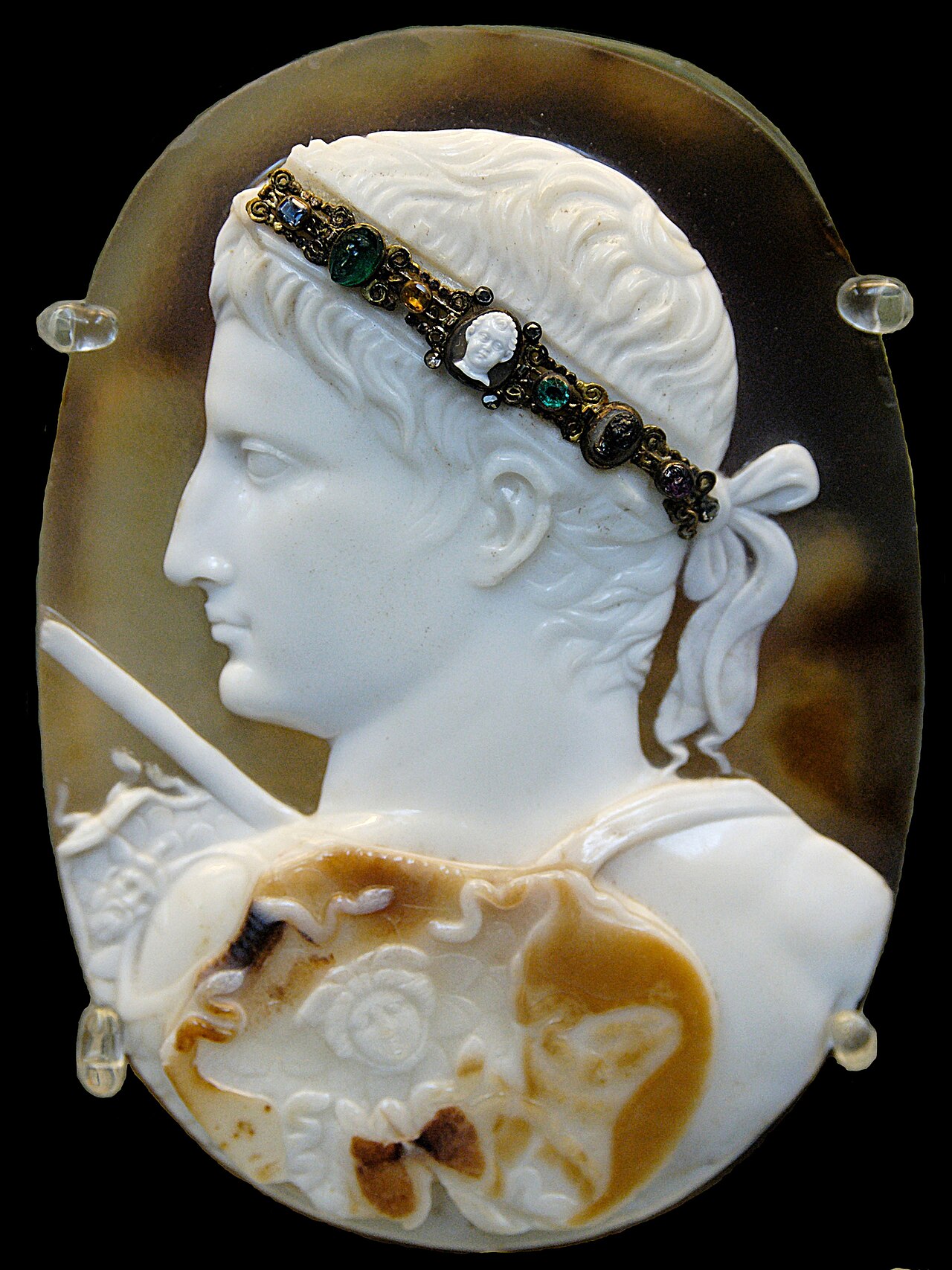
The emperor's illness subsided while under the care of his personal physician Antonius Musa,[366][ae] and soon afterwards on 1 July 23 BC Augustus gave up his consulship.[368] The only other times Augustus would serve as consul would be in the years 5 and 2 BC,[369] both times to introduce his grandsons into public life.[370] This was a clever ploy by Augustus; ceasing to serve as one of two annually elected consuls allowed aspiring senators a better chance to attain the consular position while allowing Augustus to exercise wider patronage within the senatorial class.[371] Although Augustus had resigned as consul, he desired to retain his consular imperium not just in his provinces but throughout the empire.[372] This desire, as well as the Marcus Primus affair, led to a second compromise between him and the Senate known as the second settlement.[373]
Marcus Primus affair
After Augustus relinquished the annual consulship, he was no longer in an official position to rule the state. However, his dominant position remained unchanged over his 'imperial' provinces where he was still a proconsul.[374] When he annually held the office of consul, he had the power to intervene with the affairs of the other provincial proconsuls appointed by the Senate throughout the empire, when he deemed necessary.[375]
A second problem later arose showing the need for the second settlement in what became known as the "Marcus Primus affair".[376] In late 24 or early 23 BC, charges were brought against Marcus Primus, the former proconsul (governor) of Macedonia, for waging a war without prior approval of the Senate on the Odrysian kingdom of Thrace, whose king was a Roman ally.[377] He was defended by Lucius Licinius Varro Murena who told the trial that his client had received specific instructions from Augustus ordering him to attack the client state.[378] Later, Primus testified that the orders came from the recently deceased Marcellus.[379] Such orders would have been considered a breach of the Senate's prerogative under the settlement of 27 BC and its aftermath—i.e., before Augustus was granted imperium proconsulare maius—as Macedonia was a senatorial province under the Senate's jurisdiction, not an imperial province under the authority of Augustus. This would rip away Augustus's veneer of republican restoration, and expose his fraud of merely being the first citizen, a first among equals.[380] The involvement of Marcellus provided proof that Augustus's policy was to have the youth take his place as princeps, instituting a form of monarchy—accusations that had already played out.[381]

The situation was so serious that Augustus appeared at the trial even though he had not been called as a witness. Under oath, he declared that he gave no such order.[382] Murena disbelieved Augustus's testimony and resented his attempt to subvert the trial by using his auctoritas. He demanded to know why Augustus had turned up to a trial to which he had not been called; Augustus replied that he came in the public interest.[383] Although Primus was found guilty,[384] some jurors voted to acquit, meaning that not everybody believed Augustus's testimony.[385]
Greater proconsular authority
The second settlement was completed in part to allay confusion and formalize Augustus's legal authority to intervene in senatorial provinces. The Senate granted Augustus a form of general imperium proconsulare ('proconsular power') that applied throughout the empire, not solely to his provinces. Moreover, the Senate augmented Augustus's proconsular imperium into imperium proconsulare maius ('greater proconsular power'). This form of proconsular imperium was applicable throughout the empire and in effect gave Augustus constitutional power superior to all other proconsuls.[386] Augustus stayed in Rome during the renewal process and provided veterans with lavish donations to gain their support, thereby ensuring that his status of proconsular imperium maius was renewed in 13 BC.[387]
Additional powers

_(finals_s._I_aC),_Museu_Nacional_Rom%C3%A0_(Palau_Massimo),_Roma.jpg/1280px-August_com_a_%22Pontifex_maximus%22_(detall)_(finals_s._I_aC),_Museu_Nacional_Rom%C3%A0_(Palau_Massimo),_Roma.jpg)
Powers of the tribune
During the second settlement, Augustus was also granted the power of a tribune (tribunicia potestas) for life, though not the official title of tribune.[388] For some years, Augustus had been awarded tribunicia sacrosanctitas, the immunity given to a tribune of the plebs. Now he decided to assume the full powers of the magistracy, renewed annually, in perpetuity.[389] Legally, it was closed to patricians, a status that Augustus had acquired when adopted by Julius Caesar.[371] This power allowed him to convene the Senate and people at will and lay business before them, to veto the actions of either the Assembly or the Senate, to preside over elections, and to speak first at any meeting.[390] The office of the tribunus plebis began to lose its prestige due to Augustus's amassing of tribunal powers, so he revived its importance by making it a mandatory appointment for any plebeian desiring the praetorship.[391]
Powers of the censor
Also included in Augustus's tribunician authority were powers usually reserved for the Roman censor; these included the right to supervise public morals and scrutinize laws to ensure that they were in the public interest, as well as the ability to hold a census and determine the membership of the Senate.[392] There was no precedent within the Roman system for combining the powers of the tribune and the censor into a single position, nor was Augustus ever elected to the office of censor.[393] Julius Caesar had been granted similar powers, wherein he was charged with supervising the morals of the state. However, this position did not extend to the censor's ability to hold a census and determine the Senate's roster.[391] Historian Walter Eder affirms that with the powers of censor, Augustus appealed to virtues of Roman patriotism by banning all attire but the classic toga while entering the Forum.[394] However, Goldsworthy casts doubt on Dio's garbled claims about the censorship and many of these powers may actually have been temporary or simply refused by Augustus.[395]
Imperium over the city of Rome
Augustus was granted sole imperium within the city of Rome in addition to being granted proconsular imperium maius and tribunician authority for life.[396] Traditionally, proconsuls (Roman provincial governors) lost their proconsular imperium when they crossed the Pomerium—the sacred boundary of Rome—and entered the city. In these situations, Augustus would have power as part of his tribunician authority, but his constitutional imperium within the Pomerium would be less than that of a serving consul, which meant that when he was in the city he might not be the constitutional magistrate with the most authority. Thanks to his prestige or auctoritas, his wishes would usually be obeyed, but there might be some difficulty. To fill this power vacuum, the Senate voted that Augustus's imperium proconsulare maius ('superior proconsular power') should not lapse when he was inside the city walls.[397] All armed forces in the city had formerly been under the control of the urban praetors and consuls, but this situation now placed them under the sole authority of Augustus.[398]
The Roman triumph
Credit was given to Augustus for every Roman military victory after the second settlement,[399] because the majority of Rome's armies were stationed in imperial provinces commanded by Augustus through the legatus who were deputies of the princeps in the provinces.[400] Moreover, if a battle was fought in a senatorial province, Augustus's proconsular imperium maius allowed him to take command of (or credit for) any major military victory.[401] With few exceptions Augustus was the only individual who could receive a triumph,[402] a tradition that began with Romulus, Rome's first king and first triumphant general.[400] For celebrating his victory against the Garamantes in Roman Libya in 19 BC, Cornelius Balbus was the last person outside the family of Augustus to receive a triumph.[403][af] Tiberius, Augustus's eldest stepson by Livia, received a triumph in 7 BC for victories in Germania in 8 BC,[406] and again for victories in Illyria (Pannonia) in AD 9,[407] celebrated in AD 12.[408] For that campaign, his nephew and fellow commander Germanicus was instead granted the ornamenta triumphalia ('triumphal honors'), a praetorship, and the ability to serve as a candidate for the consulship despite his young age.[407]
Diplomacy
Augustus received emissaries from as far east as India,[409] and his court included political exiles from as far north as the British Isles with the chieftains Dubnovellaunus and Tincomarus.[410][ag] Foreign embassies typically came to Augustus directly rather than to the Senate,[412] though Augustus was careful to show respect to the Senate in certain cases. For instance, when the Parthians sent ambassadors to Augustus in 20 BC, he referred them to the Senate, but the latter sent them back to Augustus so they could negotiate solely with him instead.[413] Petitions to Augustus from provinces and semi-autonomous municipalities were handled similarly to embassies of Roman client states and foreign countries, traveling to the court of the emperor as his administration moved to different locations across the Empire.[414] In AD 8, the elderly Augustus assigned the exhausting work of managing foreign embassies to three ex-consuls, granting them the power to make all decisions that did not require serious debate in the Senate or oversight by the emperor.[415]
Conspiracy, titles, and the share of power
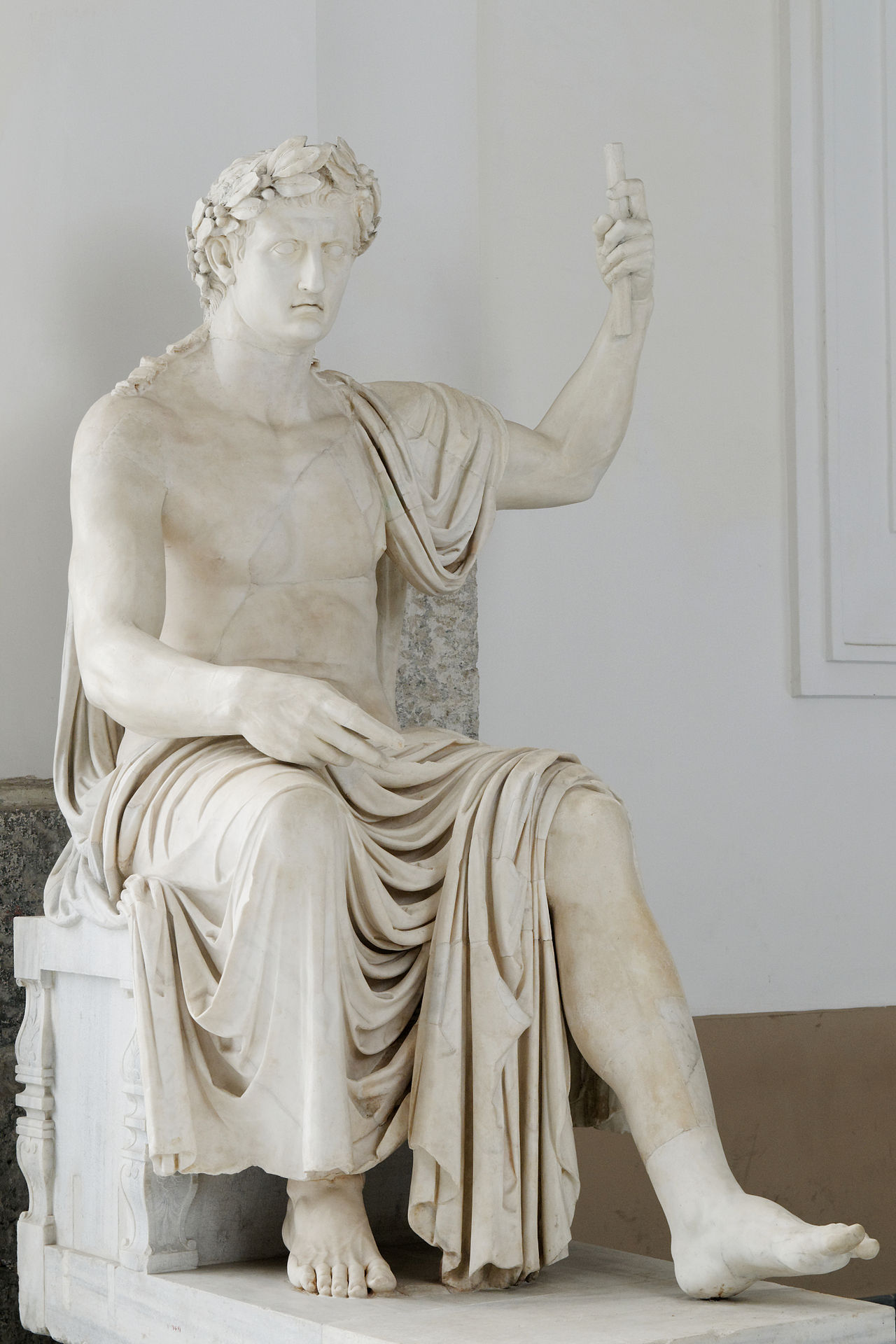
Many of the political subtleties of the second settlement seem to have evaded the comprehension of his supporters in the plebeian class, leading them to insist upon Augustus's participation in imperial affairs and form violent mobs on occasion.[416] When Augustus refused to stand for election as consul in 22 BC and instead traveled to Sicily on yet another tour of the Empire, the Comitia centuriata voted in his absence to have him serve as co-consul for the following year, despite not being one of the candidates.[417] A riot occurred in Rome when only a single consul Marcus Lollius assumed office on 1 January 21 BC and the factions of the two remaining candidates fought each other. Infuriated, Augustus summoned both candidates to Sicily, admonished them, had them banned from serving as candidates in future elections, and settled on having one of them serve out the year as co-consul.[418]
A food shortage in Rome during 22 BC sparked widespread panic, as many urban plebs called for Augustus to take on dictatorial powers to personally oversee the crisis. After a theatrical display of refusal before the Senate, Augustus finally accepted authority over Rome's grain supply through the use of his existing proconsular imperium, and ended the crisis almost immediately.[419] It was not until AD 8 that a food crisis of this sort prompted Augustus to establish a praefectus annonae, a permanent prefect who was in charge of procuring food supplies for Rome.[420]
There were some who were concerned by the expansion of powers granted to Augustus by the second settlement, and this came to a head with the apparent conspiracy of Fannius Caepio.[421] Some time prior to 1 September 22 BC, a certain Castricius provided Augustus with information about a conspiracy led by Fannius Caepio.[422] Murena, the outspoken consul who defended Primus in the Marcus Primus affair, was named among the conspirators. The conspirators were tried in absentia with Tiberius acting as prosecutor; the jury found them guilty, but it was not a unanimous verdict.[423] All the accused were sentenced to death for treason and executed as soon as they were captured—without ever giving testimony in their defense.[424] Augustus ensured that the facade of Republican government continued with an effective cover-up of the events.[425]
In 19 BC, the Senate granted Augustus a form of general consular imperium, similar to the imperium consulare maius proconsular powers he had received in 23 BC, in yet another instance of gaining power from offices that he did not actually hold.[426] To assuaged the restless populace, Augustus was allowed to wear the consul's insignia in public and before the Senate,[398] as well as to sit in the symbolic chair between the two consuls and hold the fasces, an emblem of consular authority.[427] On 6 March 12 BC, after the death of Lepidus, he additionally took up the position of pontifex maximus, the high priest of the College of Pontiffs.[428][ah] On 5 February 2 BC, Augustus was also given the title pater patriae ('father of the country'), which was then inscribed in various places in Rome such as the Senate chambers in the Forum Romanum.[431]
.jpg/1280px-Glyptothek_M%C3%BCnchen_%E2%80%93_18.04.2022_%E2%80%93_Augustus_Bevilacqua_(4).jpg)
In terms of constitutional stability, historian Ronald Syme wrote that if Augustus were to die from natural causes or fall victim to assassination, Rome could be subjected to another round of civil war, given the public memory of the Battle of Pharsalus, the Ides of March, the proscriptions, Philippi, and Actium.[432] Possibly during the 20s BC and certainly by 18 BC,[433] proconsular imperium was conferred upon Agrippa for five years, similar to Augustus's power, in order to accomplish this constitutional stability. The exact nature of the grant is uncertain but it probably covered Augustus's imperial provinces if not authority over senatorial provinces.[434] Like Augustus, Agrippa was also granted the powers of the tribunate.[435]
War and expansion
By AD 13, Augustus boasted 21 occasions where his troops proclaimed him imperator after a successful battle.[436] Almost the entire fourth chapter in his publicly released memoirs of achievements known as the Res Gestae is devoted to his military victories and honors.[437] Augustus also promoted the ideal of a superior Roman civilization, a sentiment the poet Virgil attributed to a legendary ancestor of Augustus: tu regere imperio populos, Romane, memento ('Roman, remember to rule the Earth's peoples with authority!').[394] The impulse for expansionism was apparently prominent among all classes at Rome, and it is accorded divine sanction in Virgil's Aeneid, in which Jupiter promises Rome imperium sine fine ('sovereignty without end').[438][ai]
By the end of Augustus's reign, his armies had conquered northern Hispania (modern Spain and Portugal) and the Alpine regions of Raetia and Noricum (modern Switzerland, Bavaria, Austria, Slovenia), Illyricum and Pannonia (modern Albania, Croatia, Hungary, Serbia, etc.), and had extended the borders of Africa Proconsularis to the east and south.[440] Judea was added to the province of Syria when Augustus deposed the client king Herod Archelaus.[441] After the Senate assigned Syria to Augustus in 27 BC it was initially governed by legates under Agrippa,[442] and then by a high prefect of the equestrian class rather than by a proconsul or legate of Augustus (much like Egypt after Antony).[440] In AD 6 Augustus also appointed an equestrian governor in Sardinia after pirate raids necessitated the presence of troops stationed there.[443]

No military effort was needed in 25 BC when Galatia (part of modern Turkey) was converted to a Roman province shortly after the murder of its king, Amyntas.[444] In 19 BC, Agrippa finally quelled the rebellious tribes of Asturias and Cantabria in modern-day Spain, and the territory fell under the provinces of Hispania and Lusitania.[445] This region proved to be a major asset in funding Augustus's future military campaigns, as it was rich in mineral deposits that could be fostered in Roman mining projects, especially the very rich gold deposits at Las Médulas.[446]
Conquering the peoples of the Alps in 15 BC after the disastrous defeat of Lollius in 17/16 BC was another important victory for Rome,[447][aj] since it provided a large territorial buffer between the Roman citizens of Italy and Rome's enemies in Germania to the north.[448] Horace dedicated an ode to the victory, while the monumental Trophy of Augustus was built in La Turbie near Monaco to honor the occasion.[449] The capture of the Alpine region also served the next offensive in 12 BC, when Augustus's stepsons Tiberius and Drusus launched offensives against the Pannonian tribes of Illyricum and against the Germanic tribes of the eastern Rhineland, respectively. Both campaigns were successful, as Drusus's forces reached the Elbe River by 9 BC—though he died shortly after from an injury sustained by falling off his horse.[450] Tiberius rushed from Italy to Germany to see Drusus just before he died,[451] and escorted his brother's body back to Rome,[452] where he and Augustus provided eulogies for Drusus.[453] After Illyrian tribes revolted in Illyricum in AD 6, their rebellion was quelled by forces under Tiberius and Germanicus in AD 9.[454] This was the only major rebellion within Roman provincial territory since Augustus had become emperor, and by this point he had reduced the standing Roman army from roughly 500,000 soldiers during the civil wars down to 300,000 soldiers used primarily for foreign conquests.[455]
To protect Rome's eastern territories from the Parthian Empire, Augustus relied on the client states of the east to act as territorial buffers and areas that could raise their own troops for defense. To ensure security of the empire's eastern flank, Augustus stationed a Roman army in Syria, while Tiberius negotiated with the Parthians as Rome's diplomat to the East.[456] Tiberius then restored Tigranes V to the throne of the Kingdom of Armenia in 20 BC, personally placing the crown on his head.[457]
Arguably Augustus's greatest diplomatic achievement was negotiating with Phraates IV of Parthia in 20 BC for the return of the battle standards lost by Crassus in the Battle of Carrhae, a symbolic victory and great boost of morale for Rome.[458] Historians Werner Eck and Sarolta Takács claim that this was a great disappointment for Romans seeking to avenge Crassus's defeat by military means.[459] However, Augustus used the return of the standards as propaganda symbolizing the submission of Parthia to Rome.[460] The event was celebrated in art such as the breastplate design on the statue Augustus of Prima Porta and in monuments such as the Temple of Mars Ultor ('Mars the Avenger') built to house the standards.[461] After Phraates V of Parthia managed to cleave Armenia away from Roman control, Augustus dispatched his grandson Gaius Caesar with an army to Syria in 1 BC, mounting a diplomatic pressure campaign that in AD 2 convinced Phraates V to concede to Roman demands.[462]
_at_the_battle_of_the_Teutoburg_Forest_in_9_CE_by_Peter_Jannsen,_1873,_with_painting_creases_and_damage_removed.jpg/1280px-Hermann_(Arminius)_at_the_battle_of_the_Teutoburg_Forest_in_9_CE_by_Peter_Jannsen,_1873,_with_painting_creases_and_damage_removed.jpg)
Parthia posed a threat to Rome in West Asia, but the more pressing concern was the battlefront along the Rhine and Danube rivers.[463] Before the final fight with Antony, Octavian's campaigns against the tribes in Dalmatia were the first step in expanding Roman dominions to the Danube.[464] Victory in battle was not always a permanent success, as newly conquered territories were constantly retaken by Rome's enemies in Germania.[463] A prime example of Roman loss in battle was the Battle of the Teutoburg Forest in AD 9, where three entire legions led by Publius Quinctilius Varus were destroyed by Arminius, leader of the Cherusci, a Roman citizen and apparent Roman ally.[465] Augustus retaliated by dispatching Tiberius and Drusus to the Rhineland to pacify it in AD 10 and AD 11, and these campaigns had some success.[466] However, Augustus advised Tiberius against further conquests after the loss at Teutoburg,[467] and the Romans abandoned expansion into Germany beyond the Rhine.[468] Augustus lamented the loss,[469] but it is glossed over entirely in his Res Gestae, which merely states that he pacified Germania up to the mouth of the Elbe.[470][ak] Under Augustus's successor Tiberius, Roman general Germanicus took advantage of a Cherusci civil war between Arminius and Segestes; at the Battle of Idistaviso in AD 16, he defeated Arminius.[472]

Rome also experienced loss to the south in Arabia Felix against the Kingdom of Saba (in modern Yemen). In 26 BC Augustus had Gaius Aelius Gallus, prefect of Egypt, invade South Arabia with Roman troops supported by Jewish and Nabataean Arab auxiliaries.[473] They aimed to conquer the Sabaeans or force them to accept client state status so that Rome could gain a share of their profitable trade with India.[474] Roman forces laid siege to Marib,[475] but retreated to Hejaz (under allied Nabataean control) after a shortage of water supplies.[476] Southern suggests that this campaign might have been part of a failed two-pronged assault to flank the Parthian Empire, considering how Augustus encouraged Tiridates II of Parthia to invade Mesopotamia and reclaim his throne the same year.[477]
Gaius Petronius, who replaced Aelius Gallus as prefect of Egypt, was ordered by Augustus to invade Aethiopia,[478] after Queen Amanirenas of the Kingdom of Kush (in modern Sudan) invaded Roman Egypt in 24 BC and sacked Aswan and Philae.[479] The Romans counterattacked, sacking Napata in Nubia before withdrawing,[480] but Amanirenas invaded Roman Egypt again in 22 BC and threatened Primis (modern Qasr Ibrim).[481] Petronius bolstered its defenses and withstood a Kushite assault, after which Amanirenas sent diplomats to negotiate a favorable peace treaty with Augustus while he was on the island of Samos.[482] The treaty established Maharraqa as the new border with Kush (previously set at Aswan),[483] and lessened the amount of Roman tribute gathered from Kush.[442] It also guaranteed peaceful trade relations between Roman Egypt and Nubia for the next three centuries.[484] Rome had better fortunes further west in the Maghreb of North Africa, where Cossus Cornelius Lentulus put down a rebellion of the Gaetuli against Rome's Mauretanian client ruler Juba II in AD 6.[443]
Death and succession
The vague illness suffered by Augustus in 23 BC brought the problem of succession to the forefront.[485][al] To ensure stability, he needed to designate an heir. This also needed to be done subtly so that it did not trigger fears of monarchy. If someone was to succeed to Augustus's position of power, he would first have to be recognized as meritful.[487]
The search for an heir
Some historians argue that indications pointed toward his sister's son Marcellus, who had married Augustus's daughter Julia.[488] Other historians argue that Augustus's will, read to the Senate during his illness in 23 BC, indicated a preference for Marcus Agrippa,[489] who was Augustus's second in charge and arguably the only one of his associates with the necessary military prestige.[490]
After the death of Marcellus in 23 BC, Augustus remarried his daughter Julia to Agrippa in 21 BC.[491] This union produced five children, three sons and two daughters: Gaius Caesar, Lucius Caesar, Vipsania Julia, Agrippina, and Agrippa Postumus.[492] In 18 BC (and perhaps also earlier),[433] Agrippa was granted a five-year appointment to the eastern provinces with proconsular imperium and also the tribunicia potestas that Augustus had,[493] This grant showed Augustus's favor but upset some senators.[494]
Augustus's intent to make his grandsons Gaius and Lucius his heirs became apparent when he adopted them.[495] He served as consul in 5 and 2 BC so that he could personally usher them into their political careers.[496] Gaius was consul for AD 1; although he had won election in 6 BC, Augustus had him wait until he turned 21.[497][am] Lucius, however, died before his designated consulship.[499] Augustus also showed favor to his stepsons Tiberius and Drusus, Livia's children from her first marriage, granting them public offices, though seeming to favor Drusus.[500] After Agrippa died in 12 BC, Tiberius was ordered to divorce his own wife, Vipsania Agrippina, for Augustus's widowed daughter, Julia, as soon as a period of mourning for Agrippa had ended.[501] Drusus's marriage to Augustus's niece Antonia was considered an unbreakable affair, whereas Vipsania, the daughter of the late Agrippa from his first marriage, was deemed less important.[502]
Tiberius, heir to Augustus
.jpg/1280px-thumbnail.jpg)
Tiberius shared in Augustus's tribunician powers from 6 BC but shortly thereafter withdrew into retirement, reportedly wanting no further role in politics.[504] No specific reason is known for his departure, though it could have been a combination of reasons: a failing marriage with Julia,[505] who in 2 BC was banished to the island of Pandateria (modern Ventotene) by Augustus for adultery,[506] or his envy for the younger Gaius and Lucius.[507] Gaius and Lucius joined the college of priests at an early age, were presented to spectators in a more favorable light, and were introduced to the army in Gaul.[508]
After the deaths of Drusus in 9 BC, Lucius in AD 2, and Gaius in AD 4, Augustus recalled Tiberius to Rome in June AD 4 and adopted him, on the condition that Tiberius adopt his nephew Germanicus.[509] This continued the tradition of presenting at least two generations of heirs.[510] In AD 4 Tiberius was also granted the tribunicia potestas and a proconsular post in Germany; for his efforts there and in Illyricum, he eventually triumphed.[511] By AD 13, he had received the imperium maius proconsulare equalling that of Augustus.[512]

The only other possible claimant was Agrippa Postumus. However, Augustus had exiled him to Sorrento in AD 6 and then to Planasia AD 7.[513] Agrippa's banishment was made permanent by senatorial decree,[514] and Augustus officially disowned him for his lack of good character and alleged involvement in a conspiracy.[515] After Tiberius succeeded Augustus, he was most likely the one who had Agrippa killed in exile.[516]
Death of Augustus
On 19 August AD 14, Augustus died at Nola, where his father had died.[517] Both Tacitus and Cassius Dio claimed Livia poisoned him. Many historians dismiss the alleged poisoning, however, as a fabrication to discredit her son Tiberius. Livia had long been the target of similar rumors of poisoning, most or all of which are unlikely to have been true.[518] If poisoning is accepted, it is possible that Livia supplied a poisoned fig to assist death.[519] Augustus's health had been in decline in the months before his death and he had made significant preparations for a smooth transition in power to Tiberius.[520] It is likely that Augustus did not expect to return Nola, but it has been speculated that Augustus's health improved and Livia ended his life so not to endanger the smooth accession of Tiberius.[519]
.jpg/1280px-Photographs_of_the_Mausoleum_of_Augustus_14_(cropped).jpg)
Augustus's famous last words were, "Have I played the part well? Then applaud as I exit" (Acta est fabula, plaudite)—referring to the play-acting and regal authority that he had put on as emperor.[521] An enormous procession of mourners travelled with Augustus's body from Nola to Rome, with all business closed on his funeral.[522] Tiberius and his son Drusus delivered the eulogy while standing atop two rostra.[523] Augustus's body was coffin-bound and cremated on a pyre close to his mausoleum.[524]
Deification
On 17 September 27 BC the Senate proclaimed Augustus to have joined the company of the gods and his adoptive father Julius Caesar as a member of the Roman pantheon.[525] People in Rome's eastern provinces had worshipped him as a living deity since his victory at Actium.[526] There was even limited worship of him as a living god in some of Rome's western provinces, primarily at Lugdunum (Sanctuary of the Three Gauls in modern Lyon, France) and Oppidum Ubiorum (Ara Ubiorum in modern Cologne, Germany),[526] but not at Rome where such worship remained taboo. Only his genius (spirit or general divine nature) was allowed worship there.[527]
Legacy
Overview
Augustus created a regime that maintained relative peace and prosperity in the Latin West and Greek East for two centuries,[529] initiating the celebrated Pax Romana (or Pax Augusta),[530] though an "Augustan Golden Age" may obscure the complicated political challenges that Augustus had to face during his reign.[531] His regime laid the foundations of a concept of universal monarchy in the Byzantine and the Holy Roman Empires down to their dissolutions in 1453 and 1806, respectively.[532] The reign of Augustus was viewed favorably by later Romans, embodied by the Senate's formal wish to every emperor after Trajan that they "be more fortunate than Augustus and better than Trajan".[533] This positive overall image was also helped by his successors copying a lot of Augustus's policies and forms of self-promotion, which modern research calls imitatio Augusti.[534]
Augustus's adoptive surname, Caesar, and his title augustus became the permanent titles of the rulers of the empire for fourteen centuries after his death, in use both at Rome and Constantinople following the reign of Constantine I and the empire's division.[535] His adoptive name Caesar formed the root of later regnal titles such as the German kaiser and Russian czar.[536] His title of civilis princeps was preferred by emperors for three centuries until they adopted the title domini ('lords'), beginning with Diocletian.[537] His adoptive name Imperator ('victorious general') served as the etymological root of the word 'emperor', though it did not possess this connotation in Augustus's lifetime.[538] The office of pontifex maximus retained solely by the emperors until the fall of the Western Roman Empire, after which it was adopted by the papacy.[539]

Written works
Augustus composed an account of his achievements, the Res Gestae Divi Augusti, to be inscribed in bronze in front of his mausoleum.[540] Copies of the text were inscribed throughout the empire upon his death.[541] The inscriptions in Latin featured translations in Greek beside it, were inscribed on many public edifices such as the temple in Ankara dubbed the Monumentum Ancyranum, and were called the "queen of inscriptions" by historian Theodor Mommsen.[542] The Res Gestae is the only major work by Augustus to have survived, though he is also known to have composed poems entitled "Sicilia", "Epiphanus", and "Ajax", an autobiography of 13 books, a philosophical treatise, and a written rebuttal to Brutus's Eulogy of Cato.[543] Historians are able to analyze excerpts of letters penned by Augustus, preserved in various works of antiquity that reveal additional facts or clues about his personal life.[544] The poet Martial preserved a sexually crude poem allegedly written by Octavian during the Perusine War, which pokes fun at Glaphyra, Antony, and Fulvia.[545] Pliny the Elder suggested that Augustus displayed and allegedly finished Agrippa's world map publicly exhibited in the Porticus Vipsania.[546] This map would later form the basis of various medieval world maps.[547]
In his Res Gestae, Augustus defined the relative peace established by his reign as a peace "born of victories" (parta victoriis pax)[548] in the civil wars.[549] It ensured Romans and subjugated peoples within their Empire upheld a cohesive social pact: the latter would relinquish their sovereignty and pay taxes in exchange for the preservation of their customs and the protection of Rome.[548] This theme of peace being rooted in conquest is also featured prominently in Augustan artwork.[550] By boasting of his many conquests, the Res Gestae of Augustus emphasizes the same code of honor found in Republican funerary inscriptions such as those of the Scipios, a key element in elevating the political reputation of Roman families.[551]

Enduring institutions

Urban Rome was thoroughly transformed under Augustus, a permament police force, firefighting force, and praefectus ('municipal prefect').[552] Established in AD 6 and based on previous firefighting services established in 22 and 7 BC,[553] the vigiles was a combined fire brigade and police force divided into cohorts of 500 to 1,000 men each, with seven units assigned to fourteen divided city sectors.[552] A praefectus vigilum ('prefect of the watch') was put in charge of the vigiles,[554] whereas vicomagistri officials had previously been in charge of each district following the fire of 7 BC.[555] Augustus was created a standing army,[556] fixed at a size of 28 legions of about 170,000 soldiers,[557] reduced from 60 legions at the end of the civil wars in 30 BC.[558] This was supported by many auxiliary units of 500 non-citizen soldiers each, often recruited from recently conquered areas.[559]
With his finances securing the maintenance of roads throughout Italy, Augustus installed an official system of relay stations overseen by a military officer known as the praefectus vehiculorum.[560] Besides speeding communication in Italy, his extensive road construction allowed Roman armies to march swiftly across the country.[561] In the AD 6 Augustus established the aerarium militare, donating 170 million sesterces to the new military treasury that provided for both active and retired soldiers.[562]
One of the most enduring institutions of Augustus was the establishment of the Praetorian Guard in 27 BC,[563] commanded by two praetorian prefects (later one) after this office was created by Augustus in 2 BC.[564] Originally a personal bodyguard unit on the battlefield, the praetorians evolved into an imperial guard as well as an important political force in Rome.[565] The last emperor they served was Maxentius, as it was Constantine I who disbanded them in the early 4th century and destroyed their barracks, the Castra Praetoria.[566]
Revenue reforms

Augustus's tax reforms had a great impact on the subsequent success of the Empire. Augustus brought much of the larger empire under direct taxation from Rome. This greatly increased Rome's revenues from its territories, stabilized its flow, and regularized the financial relationship between Rome and its provinces. It also avoided sparking provincial resentments with arbitrary exaction.[567] An equally important reform was the abolition of tax farming, which was replaced by salaried tax collectors. Private tax farmers during the republic, called publicani, were infamous for their depredations and great wealth.[567]
The measures of taxation in the reign of Augustus were determined by censuses with fixed quotas for each province. Citizens of Rome and Italy paid indirect taxes, while direct taxes were exacted from the provinces. Indirect taxes included a 4% tax on the price of slaves, a 1% tax on goods sold at auction, and a 5% tax on the inheritance of estates valued at over 100,000 sesterces by persons other than the next of kin.[568] Due to protest from equestrians, the suffect consuls for 9 AD modified and lessened penalties in the Lex Papia Poppaea that affected the inheritance of estates by celibate, unmarried, or childless individuals, though it continued to generate revenues with properties of the deceased seized by the state.[569]
Augustus' annexation of Egypt allowed him to use divert its immense wealth for imperial purposes.[570] Considered Augustus's private property rather than a province, it became part of each succeeding emperor's patrimonium.[571] Instead of a legate or proconsul, Augustus installed a prefect from the equestrian class to administer Egypt and maintain its lucrative seaports.[572] This position became the highest political achievement for any equestrian besides becoming praetorian prefect.[573] Gold and silver found in the Ptolemaic royal treasury was melted down for coins.[574] In his will, Augustus left money his family but also 43 million sesterces to the Roman people, 1,000 sesterces to every praetorian, 500 sesterces to every soldier in urban cohorts, and 300 sesterces to each soldier.[575]
Month of August
The month of August (Latin: Augustus) was named after Augustus in 8 BC.[576] Until his time it was called Sextilis (or Sextilus), named because it was the sixth month of the original Roman calendar.[577] Sextilis was chosen by Augustus as it was the month of his first consulship and of his various victories.[578] In comparison, the month of July (Latin: Iulius) was named after his adoptive father Julius Caesar,[579] the only other month in the Roman calendar named after a Roman.[580]
Building projects
Remodeling of Rome
On his deathbed, Augustus boasted that he converted Rome from a city of bricks into one of marble.[583] Marble could be found in buildings of Rome before Augustus, but it was not extensively used as a building material Augustus's reign.[584] This did not apply to the Subura slums, which were still as rickety and fire-prone as ever. However, he did leave a mark on the monumental topography of the city's center, as well as on the Campus Martius with the Ara Pacis (Altar of Peace) and monumental sundial, whose central gnomon was an obelisk taken from Egypt.[585] The relief sculptures decorating the Ara Pacis visually augmented the written record of Augustus's triumphs in the Res Gestae. Its reliefs depicted the imperial pageants of the praetorians, the Vestals, and the citizenry of Rome.[586]
The Corinthian order of architectural style originating from ancient Greece was the dominant architectural style in the age of Augustus.[587] Suetonius once commented that Rome was unworthy of its status as an imperial capital, yet Augustus and Agrippa set out to dismantle this sentiment.[584] They did so by transforming the appearance of Rome upon the Greek model,[588] incorporating both Classical and Hellenistic elements with many Athenian monuments as direct inspirations.[589]

Augustus was responsible for the erection of the temples Caesar, the Jupiter Tonans, and the Apollo Palatinus as well as the Baths of Agrippa and the Forum of Augustus with its Temple of Mars Ultor. Other projects were either encouraged by him, such as the Theatre of Balbus, and Agrippa's construction of the Pantheon, or funded by him in the name of others, often relations (e.g. Portico of Octavia, Theatre of Marcellus).[590] Even his tomb in Rome was built before his death to house members of his family.[591] To celebrate his victory at the Battle of Actium, the Arch of Augustus was built in 29 BC near the entrance of the Temple of Castor and Pollux, and widened in 19 BC to include a triple-arch design.[592] He also completed projects left unfinished by his uncle,[593] such as the Curia Julia (a senatorial meeting house), the Forum of Caesar, and the Temple of Venus Genetrix.[594] He also rebuilt the Basilica Aemilia by 2 BC (previously burned down in a fire of 35 BC).[595]
Augustus also provided grand spectacles in Rome. The amphitheater constructed by Statilius Taurus from 34 to 29 BC was the first stone amphitheater built in Rome, and opened with gladiator games around the time that Octavian staged shows of live combat and the first ever killing of a rhino and hippopotamus for entertainment at Rome.[596] In addition to staging lion hunts in the Circus Maximus, Augustus temporarily flooded the Circus Flaminius so that hunters could slaughter crocodiles for entertaining crowds and held gladiatorial bouts in the Saepta Julia.[597] In 2 BC he also staged an elaborate mock naval battle, the naumachia Augusti, by creating an artificial lake on the west bank of the Tiber, its waters fed by a newly built aqueduct, the Aqua Alsietina that stretched for over twenty miles. In a lethal performance, the combatants reenacted the 480 BC Battle of Salamis between the Greek city-states led by Athens and the Persian Achaemenid Empire.[598][an]
Public works

Augustus put Agrippa in charge of Rome's water supply, sanitation, drainage system, public baths, and roads.[600] This came about because it was overseen by Agrippa when he served as aedile in 33 BC,[601] and was even funded by him afterwards when he was a private citizen paying at his own expense.[602] In 33 BC Agrippa built the Aqua Julia aqueduct, along with new cisterns and water towers.[603] After the death of Agrippa in 12 BC, a solution had to be found in maintaining Rome's water supply system.[604] In 12 BC, Augustus arranged a system where the Senate designated three of its members as prime commissioners in charge of the water supply and to ensure that Rome's aqueducts did not fall into disrepair.[602]
During the triumvirate and early reign of Augustus, Agrippa was responsible for overseeing the construction of new roads for military purposes to the Rhine frontier.[605] Augustus created the senatorial group of the curatores viarum ('supervisors for roads') for the upkeep of roads; this senatorial commission worked with local officials and contractors to organize regular repairs.[560] Augustus repaired all bridges in Rome except the Milvian and Minucian ones, and paved the Via Flaminia between Rome and Ariminum.[606] In the late Augustan era, the commission of five senators called the curatores locorum publicorum iudicandorum ('Supervisors of Public Property') was put in charge of maintaining public buildings and temples of the state cult.[602]
Residences
.jpg/1280px-House_of_Augustus,_North-east_corner_of_the_Lower_cubiculum_with_architectural_decoration,_Palatine_Hill,_Rome_(20659554676).jpg)
The official residence of Augustus was the Domus Augusti ('House of Augustus') on the Palatine Hill, though its identification is not certain.[607] According to Suetonius the home was somewhat modest,[608] though if the home should be identified archaeologically with the Carettoni house west of the Palatine temple of Apollo, Augustus's residence would have been substantially larger and more luxurious than the literary sources admit.[609] Galinsky asserts that it is no coincidence that Augustus is often shown on coinage wearing the civic crown with laurels highly associated with Apollo, having dedicated this temple to Apollo near his home in 28 BC.[610] The Domus Augusti is also located near the Casa Romuli ('House of Romulus'), purportedly that of Rome's legendary founder Romulus.[611] The House of Livia is also located nearby, identified with an inscription on a lead water pipe, though it is unclear if Augustus's wife occupied the residence before his death.[612]
Outside of Rome, Augustus owned three countryside villas, which were not extravagant by contemporary standards but did have ornamental gardens.[613] Augustus built the Palazzo a Mare palace on the island of Capri,[614] where he hosted a sizable collection of fossils and what may have been dinosaur bones.[615] At the Villa Giulia on the island of Ventotene, where Augustus exiled his daughter Julia, he constructed a sophisticated hypocaust central heating system for two large bathtubs and a caldarium hot plunge bath.[616] The family home of Augustus was a villa located in Nola, where he and his father died.[617] This residence was probably the villa discovered at Somma Vesuviana.[618]
Critical analysis
Ancient and contemporary views

For his rule of Rome and establishing the principate, Augustus has been praised but also subjected to criticism throughout the ages. The contemporary Roman jurist Marcus Antistius Labeo, fond of the days of pre-Augustan republican liberty in which he had been born, openly criticized the Augustan regime. In his Annals, Tacitus wrote that Augustus had cunningly subverted Republican Rome into a position of slavery, and that the people of Rome traded one slaveholder for another with the succession of Tiberius.[620] Tacitus was of the belief that emperor Nerva (r. 96–98) successfully "mingled two formerly alien ideas, principate and liberty".[621] The 3rd-century historian Cassius Dio acknowledged Augustus as a benign, moderate ruler, yet like most other historians after the death of Augustus, Dio viewed Augustus as an autocrat.[620] The 1st-century poet Marcus Annaeus Lucanus was of the opinion that Caesar's victory over Pompey and the death of Cato the Younger in 46 BC marked the end of traditional liberty in Rome.[621]
Debate still exists among modern academics about the extent to which Augustus censored criticism of him.[622] As triumvir Octavian, he destroyed all public records dating from the Ides of March 44 BC to the defeat Sextus Pompeius in 36 BC, a convenient political move for him that seemed to align with popular sentiment of purging painful memories about the proscriptions.[623] Some of the poetry of Augustan poets Virgil and Horace has been interpreted as praising their patron Augustus as an upholder of moral justice, and for maintaining the Empire.[624] Octavian was Virgil's patron when the latter penned his Eclogues, which express the discontented views of impoverished farmers and landowners during the triumvirate.[625] Through private letters it appears that Augustus maintained genuine friendships with Virgil and Horace, with no evidence that he intervened directly in their writing of poems.[626][ao] Yet Augustus was responsible for the exile of the poet Ovid in c. AD 8,[628] and banning of his literature.[629] Ovid suggested that this was in reprisal for writing a poem and making a mistake, perhaps being a witness to a sexual scandal involving either Julia the Elder (Augustus's daughter) or Julia the Younger (Augustus's granddaughter).[630]
Tacitus claimed that the discipline of history declined under Augustus due to flattery of the emperor by historians rather than by active suppression.[631] Livy wrote his highly influential and encompassing history of Rome during Augustus's reign. Despite championing many of the emperor's views, Livy wrote independently and Tacitus later claimed that Augustus even lightly criticized Livy for glorifying the career of Pompey.[632] Goldsworthy insists that there were only a few rare instances of Augustus censoring literature, which perhaps included Antonia Minor pressuring Claudius, her son with Drusus and a future emperor, to refrain from writing a history on Rome's civil wars.[633]
Middle Ages and Renaissance
Augustus became a revered figure in Christendom during the Middle Ages due to his depiction by church fathers Orosius, Ambrose, and Bede as a divinely ordained peacemaker who created a stable realm for the arrival of Christ.[634] The c. 1250 Golden Legend hagiographical anthology promoted the legend of the Tiburtine Sibyl, in which Augustus had an alleged vision of Jesus and his mother Mary.[635] Petrarch viewed Augustus as a righteous ruler, an idea widely accepted in Renaissance humanist literature until the 16th century when more negative views found acceptance.[636][ap]
Early modern and modern perspectives
.jpg/1280px-Gaius_Iulius_Caesar_(Vatican_Museum).jpg)
Views on Augustus varied during the early modern period. The Anglo-Irish writer Jonathan Swift criticized Augustus for installing tyranny over Rome, and likened what he believed Great Britain's virtuous constitutional monarchy to Rome's moral Republic of the 2nd century BC. The Scottish admiral and historian Thomas Gordon compared Augustus to the puritanical tyrant Oliver Cromwell.[638] Thomas Gordon and the French political philosopher Montesquieu both remarked that Augustus was a coward in battle,[639] his alleged cowardliness also hinted at strongly by English playwright William Shakespeare in his portrayal of 'Caesar' in the 1607 play Antony & Cleopatra.[640] Scottish scholar Thomas Blackwell deemed Augustus as a bloodthirsty, Machiavellian usurper and tyrant,[639] and Voltaire and Montesquieu held similar views.[641] During the 19th century Augustus was viewed favorably as a reformer who brought peace and prosperity after the chaos caused by a failed Republic,[642] though Napoleon Bonaparte emulated Julius Caesar as a role-model and was slightly dismissive of Augustus, refusing to use his name as a title.[643]
Attitudes about Augustus shifted once again during the 20th century,[644] as scholarship during the upheavals of fascism in the 1930s and 1940s generally held negative views about Augustus's seizure of power.[645] Subsequently more peaceful times have led to a greater focus on the art and literature produced in the Augustan age.[646] In 1937–1938, Benito Mussolini held an 'Augustan exhibition' in Rome to celebrate the bimillenary of the birth of Augustus, an event which influenced architectural trends of Fascist Italy.[647] Ronald Syme expressed apprehension about Mussolini's espousal of Augustus.[648] He sparked debate by publishing the then controversial The Roman Revolution (1939) at the onset of the second world war, acknowledging the political climate that impacted his research.[649] He rejected fascist appropriations of ancient Rome while examining deceptive political terminology employed by totalitarian regimes.[650]
Mussolini styled himself as Il Duce after dux Augustus.[651] Goldsworthy cautions against the temptation to compare Augustus to Mussolini, Hitler or Stalin, deeming these comparisons anachronistic and inaccurate. He highlights how Augustus was no more ruthless than "other warlords" even when considering the lethal proscriptions against his rivals, some of whom had been pardoned by Julius Caesar before betraying the latter, a fact the triumvirs had strongly emphasized.[652] Goldsworthy stresses, though, that Augustus was essentially a military dictator whose supremacy relied on his control of the army.[653]
The Roman Revolution was not widely circulated in continental Europe until 1952,[654] but this and other works by Syme left a major impact on scholarship in the English-speaking world and its views on Augustus in particular.[655] Syme viewed Octavian as a "sickly and sinister youth," and the so-called "party of Augustus" as an entity somewhat analogous to a modern crime syndicate.[656] Syme criticized some academics for attributing to Octavian various political achievements that were initiated by Julius Caesar, their ready acceptance of Augustan propaganda about Mark Antony, and the view of Augustus as a flawless organizer and peacemaker.[657] Goldsworthy largely agrees with Syme, but argues that he was "extremely charitable in his judgements of Antony and deliberately harsh in his comments on Augustus's supporters, especially the majority who came from outside the established aristocracy".[652] Modern academics debate whether or not Augustus attempted to distance himself from Julius Caesar the man and dictator when embracing the deified Caesar.[658] Southern contends that Augustan literature implies this by portraying Julius Caesar as divine while rarely mentioning his acts as dictator, and that Octavian-Augustus placed less emphasis on Divus Julius and more on his own role as princeps over time.[659]

Historians Eck and Takács assert that the attrition of civil wars on the republican aristocracy and the longevity of Augustus's reign must be seen as major contributing factors in the transformation of the Roman state into a de facto monarchy.[660] He was responsible for establishing a standing professional army stationed along the frontiers, the dynastic principle of the imperial succession, and the embellishment of the capital at the emperor's expense. Augustus's ultimate legacy was the peace and prosperity he initiated for the next two centuries.[660]
Eder contends that Augustus desired to promote Republican Roman virtues and norms, and address the concerns of the plebs by means of generosity and cutting back on lavish excess. In the year 29 BC, Augustus gave 400 sesterces (equal to one-tenth of a Roman pound of gold) each to 250,000 citizens, 1,000 sesterces each to 120,000 veterans in the colonies, and spent 700 million sesterces in purchasing land for his soldiers to settle upon.[661] He also restored 82 different temples to display his care for the Roman pantheon of deities.[661] In 28 BC, he melted down 80 silver statues erected in his likeness and in honor of him, an attempt of his to appear frugal and modest.[661]
Cultural depictions
Physical appearance and official images
In The Twelve Caesars, Roman historian Suetonius provided a biography on Augustus and wrote about his appearance.[aq] According to Goldsworthy, descriptions of hair color in ancient Roman sources are difficult to decipher, and Suetonius' comment that Augustus's curly hair was inclined towards golden (subflavum) could mean "slightly blond" or "simply mean brown rather than black" hair.[663] Scientific analysis of traces of paint found in his official statues shows that he most likely had naturally light brown hair.[664] Given descriptions by Suetonius, it is estimated that Augustus was about 5 feet 9 inches (1.75 m) tall, and, conscious of his short stature, may have worn built-up soles to appear taller.[663]
Among the best known of many surviving portraits of Augustus are the Prima Porta Statue,[665] his sculpted relief on the Ara Pacis,[666] and the sculpted Via Labicana Augustus, the latter which depicts him in his role as pontifex maximus.[667] Prominent cameo portraits include the Blacas Cameo and Gemma Augustea.[668] The official imagery was tightly controlled and idealized, drawing from a tradition of Hellenistic portraiture rather than republican verism. Archaeologist Susan Walker and numismatist Andrew Burnett assert that Octavian first appeared on coins by the age of 19, and from c. 29 BC his portraits proliferated across the Roman world.[669] The early images depicted a young man and, although there were gradual changes, his images remained youthful until he died in his seventies.[670]
Personalized portraits of living individuals were first introduced on Roman coins by Julius Caesar in the 40s BC, and Augustus's image on coins is perhaps one means by which he emulated Caesar.[671] It is still unclear who precisely controlled images and legends seen on coins, or how they were fully perceived by people across the Empire, though it is possible Augustus personally dictated how these portraits appeared.[672] Augustus's name and image became universal on coinage throughout the Empire. Goldsworthy notes how the 'Caesar' mentioned by the prophet Jesus in the New Testament in reference to the figure on silver coins used by Jews and others for paying taxes was most likely Augustus rather than Tiberius.[673]
Post-classical visual artworks

Augustus has also been depicted in various artworks following classical antiquity. For instance, he is featured on the Hereford Mappa Mundi dated c. 1300 wearing a papal tiara as he orders geographers to create a survey of the world.[674] In 1765 French painter Charles-André van Loo was commissioned by Louis XV to create a painting depicting Augustus closing the gates of the Temple of Janus in the Forum, a signal that Rome was at peace. Although Louis XV disliked this and other paintings of monarchical virtue, having them removed from his royal hunting lodge, historian Mary Beard contends that van Loo's painting served as "an appropriate backdrop" during the signing of the 1802 Treaty of Amiens during the Napoleonic Wars.[675] Napoleon III commissioned French painter Jean-Léon Gérôme to create the painting titled The Age of Augustus, the Birth of Christ (c. 1852–1854), which blends classical and gothic elements and depicts Augustus on an imperial dais above a nativity scene, juxtaposing the birth of Jesus with the peace brought about by the reign of Augustus. It was exhibited in Paris at the 1855 Universal Exposition world's fair.[676]
Theater, film, televised series, and novels
Augustus is not as widely known as his great-uncle Julius Caesar and is often sidelined as a minor character or brooding villain in theatrical plays, films, TV series, comics, and novels.[677] Goldsworthy attributes this to the fact that Shakespeare never wrote a play centered around him.[678] Shakespeare's 1599 play Julius Caesar features the character of Octavius, and Augustus is named as Caesar in the 1607 play Antony and Cleopatra, in which he plays a foil to Antony as a weak, cowardly, and manipulative foe.[640] Goldsworthy claims this view is based on ancient primary sources that reflect the propaganda war waged between Antony and Octavian, and is also manifested in the cold performance of actor Roddy McDowall as Octavian in the 1963 film Cleopatra.[678] The 1934 historical fiction novel I, Claudius by Robert Graves and its subsequent 1976 television series depict the older Augustus in a far more sympathetic light as he is outmaneuvered by his murderous wife Livia, though he plays only a supporting character.[679]
See also
Notes
- ^ The dates of his rule are contemporary dates; Augustus lived under two calendars, the Roman Republican until 45 BC and the Julian after 45 BC. Due to departures from Julius Caesar's intentions, Augustus finished restoring the Julian calendar in March AD 4 and the correspondence between the proleptic Julian calendar and the calendar observed in Rome is uncertain before 8 BC.[2]
- ^ Cassius Dio instead gives him the name Caepias, probably a corruption of Scaptia, the name of Octavius' birth tribe.[7]
- ^ There is debate as to what day Augustus was born.[24] Suetonius and Velleius Paterculus report 22 September rather than 23; transition from the Roman republican calendar to the Julian one may explain the confusion.[25]
- ^ Octavian was not appointed magister equitum, contra Theodor Mommsen.[56][57] The title may stem from conflation in Greek between the magister equitum and praefectus urbi.[58]
- ^ Quintus Pedius and Lucius Pinarius were the remaining heirs, likely the children of Caesar's elder sister.[66] Contra Nicolaus Damascenus, 8.17–18, Octavian was not adopted by Caesar during the latter's life.[67]
- ^ A later senatorial investigation into the disappearance of the public funds took no action against Octavian since he subsequently used that money to raise troops against the Senate's enemy Mark Antony.[78]
- ^ In defense of Octavian against the taunts of Mark Antony, Marcus Tullius Cicero stated "we have no more brilliant example of traditional piety among our youth".[109]
- ^ Men such as Sextus Pompey not present in the city were also convicted, even if they had nothing to do with the assassination.[124]
- ^ aug refers to the religious office of augur, not the title augustus created in 27 BC.[134]
- ^ Marcus Barbatius was a moneyer.[134]
- ^ Ancient sources differ considerably as to how many men were targeted. Hinard 1985, pp. 266–269, reviews the evidence. Plutarch in three different lives – Brutus (27.6), Cicero (46.2), and Antony (20.2) – gives figures of 200, a bit more than 200, and 300 men, respectively. Livy, Periochae, 120.4, gave only 130 senators and many equites besides. Florus, 2.16.3, gave 140 senators. Appian, Bella Civilia, 4.7, gives 17 names at first before, in two rounds, 130 and 150 others were added. Appian, Bella Civilia, 4.5.7, also gives a total of 300 senators and some 2,000 equites,[138] but this figure describes all persons who were killed or had properties confiscated between 43 and the treaty of Misenum in 39.[139] The number of victims was not necessarily the number proscribed; figures given in Orosius (6.18.10) are corrupt. Around 160 of the proscribed are known by name.[140]
- ^ Velleius Paterculus asserted that Octavian tried to avoid proscribing officials whereas Lepidus and Antony were to blame for initiating them.[143] Cassius Dio defended Octavian as trying to spare as many as possible, whereas Antony and Lepidus, being older and involved in politics longer, had many more enemies to deal with.[144] This claim was rejected by Appian, who maintained that Octavian shared an equal interest with Lepidus and Antony in eradicating his enemies.[145] Suetonius said that Octavian was reluctant at first to proscribe officials but did pursue his enemies with more vigor than the other triumvirs.[146]
- ^ Ratified on 20 March 43 BC, the Senate bestowed Sextus Pompeius with the office of praefectus classis et orae maritimae for the Roman navy, granting him control over all coastal areas of the Mediterranean Sea.[163]
- ^ Historian Adrian Goldsworthy downplays this event as a potential exaggeration due to rumors and legend preserved in primary sources: "Rumour and hostile propaganda soon turned this into another ghastly massacre, with 300 leading citizens being sacrificed to Julius Caesar’s spirit – an invention no doubt inspired by Achilles' killing of Trojan prisoners at the funeral of his comrade Patroclus in the Iliad. Suetonius claims that pleas for mercy and excuses were met by the young triumvir with a laconic 'He must die' or 'You must die' – moriendum esse in Latin. Yet on the whole reprisals were limited. The rebel soldiers were spared, and many no doubt were recruited into Caesar's legions. Lucius Antonius was not only left unharmed, but was sent to govern one of the Spanish provinces".[182]
- ^ Mark Antony's children with Cleopatra were the twins Alexander Helios and Cleopatra Selene II born in 40 BC,[192] and their son Ptolemy Philadelphus born in 36 BC.[193]
- ^ According to Patricia Southern, other stipulations of the Treaty of Misenum included Sextus Pompey's position as consul designate for 38 BC (with Mark Antony assigned as consul for the same year), being allowed to join the college of augurs, and being made responsible for maintaining Rome's grain supply, but that he was not allowed to station any of his troops in Roman Italy.[203]
According to Klaus Bringmann, Sextus Pompey was guaranteed the consulship for 35 BC, and was made responsible for managing the grain supply to Rome.[204]
Both Southern and Bringmann relate how various proscribed republican liberatores were given amnesty and allowed to return to Rome.[205]
Citing Appian (BCiv 5.73), historian Kathryn Welch states that Sextus Pompey was consul designate with Octavian for 33 BC.[206]
Historian Adrian Goldsworthy agrees the claims about Sicily, Sardinia, Corsica, the Peloponnese, and the college of augurs, but says that "Pompey's son was scheduled to be consul in 33 BC in elections controlled by the triumvirate".[207] - ^ For instance, Statilius Taurus celebrated a triumph in 34 BC and later built Rome's first fully stone amphitheater.[232]
- ^ As historians Duane W. Roller, Adrian Goldsworthy, Patricia Southern, and Prudence Jones point out, war was declared specifically against Cleopatra and her Ptolemaic Kingdom, not against fellow citizen Mark Antony, which was easier to sell to the Roman people who were wary of further civil wars among Romans, but who could stomach a war against a foreign queen who posed a legitimate threat.[251] Additionally, Roller highlights how the legal grounds for the war were based on the fact that Cleopatra was illicitly arming and supplying troops to a private Roman citizen, Antony, whose triumviral authority had by now technically expired.[252]
- ^ After Actium, Octavian returned to Italy in order to settle affairs there with the legions that were formerly under Mark Antony, to pacify them with money or lands. Only a month after landing at Brundisium, Octavian set out again for the east, traveling first to Greece, then to Syria, and from there marched his forces into Ptolemaic Egypt.[265]
- ^ In his translation of Tacitus, Annals, 1.1.1, historian Klaus Bringmann prefers the term 'first citizen' for the Latin princeps used to describe Augustus.[293]
Likewise, historian Karl Galinsky states about Augustus: "his title was not king or dictator but princeps, first citizen".[294]
Historian John Stuart Richardson prefers the term 'leading citizen' as a translation for princeps.[295]
Werner Eck and Sarolta Takács describe princeps as "first or chief man in the state".[296]
Adrian Goldsworthy provides two different translations of princeps: 'first citizen' or 'leading citizen'.[297] - ^ Adrian Goldsworthy highlights this with the example of the Senate under consul Octavian decreeing that the doors to the Temple of Janus should be shut on 11 January 29 BC, a ritual that declared Rome was no longer at war, despite ongoing campaigns in Gaul and Hispania.[303]
- ^ Historian Adrian Goldsworthy stresses that Augustus did not have a carefully planned design in fashioning this principate regime, which was far from inevitable, and relied much on chance, experimentation, improvisation, and trial-by-error.[304] In his "Caesar Augustus: A Call to Order" historian T. P. Wiseman argues that, given the overwhelmingly positive reception of Augustus in contemporary Roman sources, Augustus should not be viewed as an unlawful usurper masking his monarchical intentions or autocratic wishes.[305] Patricia Southern surmises that Octavian needed to at least keep up the appearance of being bound by term limits for the consulship and other offices: "Octavian probably remembered very starkly that Caesar did not survive for more than a few weeks after accepting the appointment as dictator perpetuo".[307]
- ^ Historians Werner Eck and Sarolta Takács state the following about patronage and other matters: "The sum of his power derived first of all from various powers of office delegated to him by the Senate and people, secondly from his immense private fortune, and thirdly from numerous patron-client relationships he established with individuals and groups throughout the Empire. All of them taken together formed the basis of his auctoritas, which he himself emphasized as the foundation of his political actions.[310]
- ^ Pompey was given term limits for extraordinary proconsular authority that included legates who answered to him, not the Senate, during his campaign against Mediterranean pirates in 67 BC and the subsequent Third Mithridatic War against Mithridates VI of Pontus.[323]
- ^ The historian Duane W. Roller writes that Munatius Plancus was responsible not only for building the Temple of Saturn in Rome and leading the diplomatic negotiations that ensured peace with the Parthians in 20 BC, but also for recommending the title augustus to Octavian in 27 BC.[330]
Historians Werner Eck, Sarolta Takács, and Adrian Goldsworthy clarify that Munatius Plancus introduced the motion in the Senate for honoring Octavian,[331] and may have been operating on his instructions.[332] - ^ Historian Adrian Goldsworthy notes that the title for augustus in Ancient Greek is sebastos (Σεβαστός), which he translates as 'the reverend' or 'august one'.[337]
Goldsworthy explains further: "Augustus carried heavy religious overtones of the very Roman tradition of seeking divine guidance and approval through augury. Ennius, Rome’s earliest and most revered poet, spoke of the City being founded with 'august augury' in a passage as familiar to Romans as the most famous Shakespearean quotes are to us today".[338] - ^ Adrian Goldsworthy includes the title 'Augustus' in the emperor's full name, rendering it as Imperator Caesar Augustus divi filius.[338]
- ^ He was first proclaimed imperator on 16 April 43 BC, after the Battle of Forum Gallorum.[112]
- ^ Officers acted on the orders of Marcellus and Augustus.[353]
- ^ Adrian Goldsworthy notes that this illness involved liver problems that he had suffered periodically beforehand.[358]
Patricia Southern asserts that this illness was most likely caused by a liver abscess.[359] - ^ Adrian Goldsworthy notes how Antonius Musa, the personal physician of Augustus who most likely hailed from the Hellenized areas of the eastern half of the Roman Empire, reversed the typical treatment of warm compresses, favoring cold ones. After recovering from his illness, the emperor lavished Musa with gifts and the Roman Senate gave him additional money plus the right to wear a golden ring. In honor of his medical treatment of Augustus, he was also granted exemption from taxation and a statue of him was erected next to that of Asclepius, the god of healing.[367]
- ^ Licinius Crassus (grandson of the triumvir) was awarded a triumph for his victories in Thrace against the Germanic Bastarnae in 29–27 BC, but was denied other traditional honors.[399] Agrippa was awarded a triumph for his victories in Spain in 19 BC but he refused to celebrate it.[404] Marcus Vipsanius Agrippa had also refused to celebrate a triumph during his consulship of 37 BC during the triumvirate, after he returned from Gaul in 38 BC. Ancient historians claim that this was a move to avoid highlighting recent failures by Octavian. Patricia Southern states that it is equally likely that "the refusal was part of Octavian's wish to limit the numbers of men who were permitted to hold a triumph to immediate family members. Generals parading to the Capitol in their triumphant garb might just start to develop ideas above their station".[405]
- ^ The Roman historian Florus claimed that the silk-producing Seres, possibly the Han Chinese, visited the court of Augustus alongside emissaries from India. However, Augustus does not mention the Seres in his Res Gestae. The ancient Chinese historians do not mention any official attempts by the Han dynasty to establish contacts with Rome (referred to as Da Qin) before AD 97 when the military commander Ban Chao sent his ambassador Gan Ying on a diplomatic mission to Rome, though he never reached further than the Persian Gulf under Parthian control.[411]
- ^ The date is provided by inscribed calendars.[429] Dio reports this under 13 BC, probably as the year in which Lepidus died.[430]
- ^ Patricia Southern writes that this concept of imperium sine fine ('sovereignty without end') only came into doubt after the disastrous loss at the Battle of Teutoburg Forest in AD 9 and the withdrawal from Germania beyond the Rhine River, whereas the Romans had previously established their control as far as the Elbe.[439]
- ^ Patricia Southern writes that there was a follow-up campaign in the Alps by Tiberius as late as 6 BC.[404]
- ^ Historian Patricia Southern writes that "Tiberius retrieved the losses, remaining in Germany for another two years, in AD 10 watching in case the tribesmen penetrated to the Rhine and in AD 11 campaigning inside German territory — but not too far. Augustus wrote in the Res Gestae that he pacified Germany to the mouth of the Elbe, passing over in silence the losses of AD 9."[471]
Southern hints that "earlier versions of the Res Gestae, drafted before AD 9, would probably have stated 'I pacified Germany to the Elbe,' but after the disaster of Varus, the claims that German territory was overrun were reduced to the more modest 'to the mouth of the Elbe'.[471]
As for Augustus's territorial ambitions, Southern writes about his establishment of "an altar on the north bank" of the Elbe River in AD 1, and "perhaps at that date the concept of imperium sine fine was still valid, but whatever Augustus's initial intentions had been, dreams of conquest had faded. Augustus never recovered from the Varian disaster, and turned his back on expansion of the Empire. He was said to give vent to his feelings on occasion by shouting out loud, 'Quinctilius Varus, give me back my legions! and he certainly advised Tiberius not to attempt further conquests".[470] - ^ The cause of Augustus's health problems is not clear. It may have been feigned or psychosomatic; if real, some scholars have suggested a liver abscess.[486]
- ^ Patricia Southern argues that Augustus was testing public reaction to the 14-year-old Gaius Caesar as consul. Augustus insisted that this age was suitable enough, since Augustus had become consul at age 19 as Octavian, just before forming the triumvirate.[498]
- ^ Over two centuries later Dio wrote that some of the structures built for this occasion were still standing.[599]
- ^ However, it is possible that in 19 BC Augustus defied the deathbed wishes of Virgil to have the Aeneid burned, having the poet Lucius Varius Rufus preserve and publish it instead.[627]
- ^ Florentine authors began to develop negative views about Augustus during the Italian Renaissance, while the 1515 publication of Tacitus's Annals by Filippo Beroaldo advanced views that Augustus was a hypocritical and calculating destroyer of the Republic.[637]
- ^ Suetonius, Augustus, 79, described Augustus as "unusually handsome and exceedingly graceful at all periods of his life, though he cared nothing for personal adornment. He was so far from being particular about the dressing of his hair, that he would have several barbers working in a hurry at the same time, and as for his beard he now had it clipped and now shaved, while at the very same time he would either be reading or writing something ... He had clear, bright eyes ... His teeth were wide apart, small, and ill-kept; his hair was slightly curly and inclined to golden; his eyebrows met. His ears were of moderate size, and his nose projected a little at the top and then bent ever so slightly inward. His complexion was between dark and fair. He was short of stature, although Julius Marathus, his freedman and keeper of his records, says that he was five feet and nine inches [in modern units, just under 1.7 m or 5 ft 7 in], but this was concealed by the fine proportion and symmetry of his figure, and was noticeable only by comparison with some taller person standing beside him".
References
- ^ Galinsky 2012, pp. 75–76.
- ^ Blackburn & Holford-Strevens 2003, pp. 670–671.
- ^ Richardson 2012, p. 225; Cavalieri et al. 2022, p. 18.
- ^ Southern 2014, p. 1.
- ^ Southern 2014, p. 1; Goldsworthy 2014, p. 6, 88–89.
- ^ Luke 2015, pp. 242–266, but arguing instead that Octavius chose the name to identify himself with his father's pacification of the area.
- ^ Lindsay 2009, p. 89, citing Dio, 45.1.1.
- ^ a b Galinsky 2012, p. 16.
- ^ Southern 2014, p. 1; Goldsworthy 2014, pp. 6–7, 88–89.
- ^ Bringmann 2007, p. 283; Levick 2009, p. 209; Shotter 2005, p. 1; Goldsworthy 2014, p. 6.
- ^ Bringmann 2007, p. 283; Goldsworthy 2014, p. 6.
- ^ Fratantuono 2016, pp. xviii–xix, 154–155 (endnote 3); Goldsworthy 2014, pp. 6–7.
- ^ Southern 2014, p. 45.
- ^ Bringmann 2007, p. 283; Galinsky 2012, p. 16.
- ^ Shelton 1998, p. 58; Goldsworthy 2014, p. 6.
- ^ Southern 2014, pp. 34, 131; Goldsworthy 2014, p. 6.
- ^ Hammond 1957; Syme 1958, pp. 176, 179, 181–183, 185; Goldsworthy 2014, p. 6.
- ^ Eck & Takács 2007, p. 57.
- ^ Hammond 1957, pp. 21, 55; Galinsky 2012, pp. 66–67; Eck & Takács 2007, p. 57.
- ^ Bringmann 2007, pp. 304, 307.
- ^ Galinsky 2005, pp. 7–8; Galinsky 2012, p. 16; Goldsworthy 2014, p. 6.
- ^ Southern 2014, p. 24, Fig. 1.3.
- ^ Bringmann 2007, p. 283; Galinsky 2012, pp. xv, 2–3; Lewis 2023, pp. 21–23; Southern 2014, pp. 1, 5; Eck & Takács 2007, p. 7; Goldsworthy 2014, pp. 19, 23.
- ^ Lewis 2023, pp. 21–23.
- ^ Galinsky 2012, pp. 2–3.
- ^ Lewis 2023, pp. 34–35; Goldsworthy 2014, p. 32; Suetonius, Augustus, 5–6.
- ^ Shotter 2005, pp. 1–2; Galinsky 2012, pp. 2, 4–5; Southern 2014, p. 1.
- ^ Lewis 2023, p. 21; Southern 2014, p. 5; Goldsworthy 2014, p. 32.
- ^ Fratantuono 2016, p. xix; Southern 2014, p. 3; Goldsworthy 2014, p. 45; Luke 2015, pp. 246 (rejecting the story from Suetonius, Augustus, 7.1), 252–53 (arguing instead then-Octavius sought to associate himself with his father's successes in pacifying southern Italy).
- ^ Galinsky 2012, pp. 1–2; Goldsworthy 2014, pp. 13–14, 20–21, 23, 68.
- ^ Galinsky 2012, pp. 1–2; Southern 2014, p. 2; Goldsworthy 2014, pp. 13–14, 68.
- ^ Galinsky 2012, pp. 2, 5; Southern 2014, p. 5; Eck & Takács 2007, p. 6.
- ^ Lewis 2023, p. 34; Shotter 2005, pp. 1–2; Southern 2014, pp. 1–3; Eck & Takács 2007, p. 6; Goldsworthy 2014, p. 33.
- ^ Shotter 2005, pp. 1–2; Luc 2024, p. 133; Southern 2014, pp. 5–6; Goldsworthy 2014, pp. 32–33, 35–37, 40–44.
- ^ Galinsky 2012, p. 5; Southern 2014, p. 7; Eck & Takács 2007, p. 6; Goldsworthy 2014, pp. 44–45.
- ^ Goldsworthy 2014, p. 45; Eck & Takács 2007, p. 6; Richardson 2012, p. 5; Broughton 1952. Broughton cites the elogium for Octavius, ILS 47, throughout.
- ^ Shotter 2005, pp. 1–2; Lewis 2023, p. 34; Rowell 1962, p. 14; Southern 2014, p. 7; Eck & Takács 2007, p. 6–7; Goldsworthy 2014, pp. 20, 23.
- ^ Chisholm & Ferguson 1981, p. 23; Galinsky 2012, pp. xv, 5–6; Southern 2014, pp. 7, 9; Goldsworthy 2014, pp. 46–47.
- ^ Shotter 2005, pp. 1–2; Luc 2024, p. 133.
- ^ Galinsky 2012, p. 6; Shotter 2005, p. 2; Southern 2014, pp. 3, 9; Eck & Takács 2007, p. 7; Goldsworthy 2014, p. 48.
- ^ Galinsky 2012, p. 8; Southern 2014, p. 9; Eck & Takács 2007, p. 7; Goldsworthy 2014, p. 48.
- ^ Galinsky 2012, pp. 6, 8; Southern 2014, p. 10.
- ^ Shotter 2005, p. 2; Galinsky 2012, pp. 1, 14; Southern 2014, p. 5, 10; Goldsworthy 2014, p. 48.
- ^ Shotter 2005, p. 2; Galinsky 2012, pp. 1, 14; Southern 2014, p. 10; Goldsworthy 2014, p. 65–66.
- ^ Galinsky 2012, p. 10; Goldsworthy 2014, pp. 48, 544 n. 4.
- ^ Galinsky 2012, pp. 10–11.
- ^ Galinsky 2012, pp. 7–8; Southern 2014, pp. 8–9, 11–12, 91; Bringmann 2007, pp. 229–231; Goldsworthy 2014, pp. 20, 52–53.
- ^ Galinsky 2012, pp. 8, 14; Southern 2014, pp. 11–23, 91; Bringmann 2007, pp. 229–231, 249, 251–257; Goldsworthy 2014, pp. 52–53, 58–62.
- ^ Galinsky 2012, p. 9, but giving 48 BC; Southern 2014, pp. 23–24; Goldsworthy 2014, p. 67.
- ^ Rowell 1962, p. 16; Galinsky 2012, p. 14; Southern 2014, p. 25; Goldsworthy 2014, pp. 67–68.
- ^ Rowell 1962, p. 16; Galinsky 2012, p. 14.
- ^ Galinsky 2012, p. 9; Southern 2014, p. 27.
- ^ Galinsky 2012, p. 11; Southern 2014, p. 28; Goldsworthy 2014, pp. 65, 73.
- ^ Galinsky 2012, pp. 9, 14; Southern 2014, pp. 30–31; Goldsworthy 2014, p. 69–70, 87, 114.
- ^ Bringmann 2007, p. 283; Eck & Takács 2007, p. 8; Goldsworthy 2014, p. 86, though he provides the date of 15 September 45 BC instead.
- ^ Morstein-Marx, Robert (2021). Julius Caesar and the Roman People. Cambridge University Press. p. 491 n. 17. doi:10.1017/9781108943260. ISBN 978-1-108-83784-2. LCCN 2021024626. S2CID 242729962.
Mommsen's restoration of Fasti Capit. Cons. sub anno 44, making Octavius magister equitum designatus for 44, has now been disproved by the newly published fragments of the Privernum Fasti
. - ^ Zevi, Fausto; Cassola, Filippo (2016). "I Fasti di "Privernum"". Zeitschrift für Papyrologie und Epigraphik (in Italian). 197: 287–309. ISSN 0084-5388. JSTOR 43910005.
- ^ Southern 2014, pp. 26–27, 36–37, 44.
- ^ Southern 2014, pp. 49, 182; Goldsworthy 2014, pp. 70, 74, 83–84, the explanation about studying and military training on the latter two pages.
- ^ Eck & Takács 2003, p. 9; Galinsky 2012, pp. xv, 11, 14–15, 80; Southern 2014, pp. 36–37, 42–43; Goldsworthy 2014, pp. 78–79, 83–84.
- ^ Eck & Takács 2003, p. 9; Southern 2014, pp. 34, 42; Goldsworthy 2014, pp. 84–85; Rawson 1992, p. 471.
- ^ Roller 2010, p. 74; Burstein 2004, pp. xxi, 21.
- ^ Tatum 2024, p. 146, noting Caesar's condicio nominis ferendi ("action of taking a name") "must not be confused with actual adoption"; Lindsay 2009, p. 84–85, noting full adoption by testament was "impossible", 182ff.; Southern 2014, p. 37, asserting that in Caesar's will Octavian was entitled "if he so wished, to style himself Gaius Julius Caesar Octavianus".; Syme 1988, p. 159.
- ^ Southern 2014, pp. 42–43; Galinsky 2012, p. 15; Eck & Takács 2007, pp. 9–10; Goldsworthy 2014, p. 85.
- ^ Lindsay 2009, pp. 184–5, 186 n. 3 and Southern 2014, pp. 33–34, citing among others: Appian, Bella Civilia, 2.143; Cicero, Ad Atticum, 14.10.3; Dio, 44.35.2.3; Nicolaus Damascenus, 17.48. See also Tatum 2024, p. 130, Eck & Takács 2003, p. 9, Rowell 1962, p. 14, Galinsky 2012, pp. 9–10, 15, and Goldsworthy 2014, p. 86.
- ^ Richardson 2012, p. 7.
- ^ Lindsay 2009, pp. 184–5.
- ^ Galinsky 2012, pp. xv, 9–10, 15; Southern 2014, p. 43; Bringmann 2007, p. 283, without date; Goldsworthy 2014, p. 88, without date; Rawson 1992, p. 471, mentioning May.
- ^ Lindsay 2009, pp. 187–88, also rejecting claims (Appian, Bella Civilia, 3.13–14) that he presented himself before the praetor as Caesar's son.
- ^ Tatum 2024, p. 146, calling the claim of adoption "a transparent falsehood for anyone conversant with Roman law"; Lindsay 2009, p. 183, noting consensus that the adoption was legally dubious; Levick 2009, p. 209.
- ^ Fratantuono 2016, pp. xviii–xix, 154–155 (n. 3); Mackay 2004, p. 160; Eck & Takács 2003, p. 10; Southern 1998, pp. 20–21; Southern 2014, p. 37; Goldsworthy 2014, p. 88–89.
- ^ Lindsay 2009, p. 89, citing among others Cicero, Ad Atticum, 14.12, 15.12, 16.8–9, 16.12, 16.14; Southern 2014, p. 45, quoting Cicero, which also points out the example of stepfather Philippus; Galinsky 2012, p. 16, noting only the example of Cicero; Goldsworthy 2014, pp. 88–89, noting how "enemies called him Octavianus to stress that his real family was obscure" while also noting on p. 110 how Cicero started referring to him as Caesar after he recruited two legions that were previously loyal to Antony.
- ^ Shelton 1998, p. 58; Goldsworthy 2014, pp. 6, 89.
- ^ Southern 1998, p. 21; Southern 2014, p. 37; Goldsworthy 2014, pp. 6–7, 88–89.
- ^ a b Eck & Takács 2003, pp. 9–10.
- ^ Rowell 1962, p. 19; Eck & Takács 2007, pp. 9–10; Southern 2014, p. 55.
- ^ Rowell 1962, p. 18.
- ^ Rowell 1962, p. 19.
- ^ Eck & Takács 2003, p. 10; Eder 2005, p. 18.
- ^ Eck & Takács 2003, p. 9.
- ^ Eck & Takács 2003, p. 10; Goldsworthy 2014, p. 101–103.
- ^ Chisholm & Ferguson 1981, pp. 24, 27; Rowell 1962, p. 20; Goldsworthy 2014, pp. 101 for the 500 denarii, p. 103 for the raising of 3, 000 veterans.
- ^ Goldsworthy 2014, p. 101.
- ^ Eck & Takács 2003, p. 10; Galinsky 2012, p. 20.
- ^ Bringmann 2007, pp. 281–282; Galinsky 2012, pp. 21–22; Goldsworthy 2014, pp. 85–86; Southern 2014, pp. 55–56.
- ^ Eck & Takács 2003, p. 10; Bringmann 2007, pp. 281–283, 285; Goldsworthy 2014, p. 86; Southern 2014, pp. 56–57.
- ^ Eck & Takács 2003, p. 11.
- ^ Rawson 1994, p. 472, citing Appian, Bella Civilia, 3.94.
- ^ Bringmann 2007, pp. 283, 285; Rawson 1992, pp. 471–472.
- ^ Lindsay 2009, p. 188. "He had been pushing Antony for a lex curiata in order... to legalise his position as Caesar's son"; Southern 2014, pp. 62–63; Galinsky 2012, p. 22; Bringmann 2007, p. 285; Goldsworthy 2014, p. 98.
- ^ Galinsky 2012, pp. 21–24; Southern 2014, pp. 57–59, 61–62; Bringmann 2007, pp. 285–287; Goldsworthy 2014, pp. 98–100.
- ^ Galinsky 2012, p. 25; Rawson 1992, pp. 471–472.
- ^ Rawson 1994, pp. 474–476; Galinsky 2012, pp. 25–26; Bringmann 2007, p. 287.
- ^ Galinsky 2012, p. 25.
- ^ Rawson 1994, pp. 474–476; Bringmann 2007, pp. 286–287.
- ^ Chisholm & Ferguson 1981, p. 26; Rowell 1962, p. 30; Galinsky 2012, pp. 21, 26–27; Tatum 2024, pp. 159–60; Southern 2014, pp. 45–55, 58–59, 67–70, 89–90; Bringmann 2007, p. 287; Goldsworthy 2014, pp. 102, 110; Rawson 1992, pp. 477, 479–480.
- ^ Eck & Takács 2003, pp. 11–12; Rowell 1962, p. 21; Galinsky 2012, p. 28; Southern 2014, p. 65; Bringmann 2007, pp. 285–286; Goldsworthy 2014, pp. 101, 111; Rawson 1992, p. 474, noting its triple illegality.
- ^ Syme 1939, pp. 123–126; Eck & Takács 2003, p. 12; Rowell 1962, p. 23; Southern 2014, pp. 66–67; Bringmann 2007, p. 287; Goldsworthy 2014, p. 101–103.
- ^ Galinsky 2012, pp. 27–28; Southern 2014, p. 68; Bringmann 2007, p. 287; Goldsworthy 2014, p. 103–105.
- ^ Bringmann 2007, p. 287; Goldsworthy 2014, pp. 104–105.
- ^ Galinsky 2012, pp. 27–28; Southern 2014, p. 68; Goldsworthy 2014, pp. 104–105.
- ^ Syme 1939, pp. 123–126; Eck & Takács 2003, p. 12; Rowell 1962, p. 23; Galinsky 2012, p. 28; Southern 2014, p. 69; Bringmann 2007, p. 287; Goldsworthy 2014, pp. 105–109.
- ^ Rowell 1962, p. 23; Bringmann 2007, p. 287; Galinsky 2012, p. 28; Southern 2014, pp. 66–69; Goldsworthy 2014, pp. 109–111, 114–115.
- ^ Rowell 1962, p. 23; Goldsworthy 2014, pp. 111–112, 114–115.
- ^ Galinsky 2012, pp. 28–29; Southern 2014, pp. 66–67, 71; Goldsworthy 2014, pp. 114–115.
- ^ Rowell 1962, p. 24; Southern 2014, p. 69; Bringmann 2007, pp. 290–291; Goldsworthy 2014, p. 115; Golden 2013, p. 195; Rawson 1992, p. 479.
- ^ Eck & Takács 2003, p. 12; Galinsky 2012, pp. 28–29; Goldsworthy 2014, pp. 113–116; Rawson 1992, p. 477, 479; Golden 2013, p. 195.
- ^ Chisholm & Ferguson 1981, p. 29; Goldsworthy 2014, p. 112.
- ^ Chisholm & Ferguson 1981, p. 29.
- ^ Eck & Takács 2003, p. 13; Rowell 1962, p. 23; Galinsky 2012, p. 29; Southern 2014, pp. 69–70; Bringmann 2007, p. 289; Rawson 1992, p. 480.
- ^ Eck & Takács 2003, p. 13; Syme 1939, p. 167; Galinsky 2012, pp. 29–30; Southern 2014, pp. 69–70; Bringmann 2007, pp. 289–291; Goldsworthy 2014, pp. 114–116.
- ^ a b Fishwick 2004, p. 250.
- ^ Rowell 1962, p. 24; Eck & Takács 2003, p. 13; Gruen 2005, p. 160; Southern 2014, p. 71.
- ^ Syme 1939, pp. 173–174; Scullard 1982, p. 157; Galinsky 2012, p. 30; Southern 2014, pp. 71–72; Bringmann 2007, p. 291; Goldsworthy 2014, pp. 116–120; Golden 2013, p. 199.
- ^ Fishwick 2004, p. 250; Southern 2014, p. 72; Rawson 1992, p. 483.
- ^ Rowell 1962, pp. 26–27; Southern 2014, p. 72; Bringmann 2007, p. 291; Goldsworthy 2014, p. 121; Golden 2013, pp. 201–203.
- ^ Rowell 1962, p. 27; Golden 2013, pp. 201–203.
- ^ Chisholm & Ferguson 1981, pp. 32–33; Southern 2014, p. 74; Bringmann 2007, p. 292; Goldsworthy 2014, pp. 122–123.
- ^ Galinsky 2012, p. 30; Southern 2014, p. 74; Bringmann 2007, p. 292; Goldsworthy 2014, pp. 122–123.
- ^ Rowell 1962, p. 27.
- ^ Rowell 1962, p. 27; Southern 2014, p. 74; Goldsworthy 2014, pp. 123–124; Golden 2013, p. 203.
- ^ Eck & Takács 2003, p. 15; Rowell 1962, p. 28; Galinsky 2012, pp. 30–31; Southern 2014, pp. 83–86; Bringmann 2007, p. 292; Goldsworthy 2014, p. 124; Golden 2013, p. 204; Rawson 1992, p. 485.
- ^ Welch 2014, pp. 138–145, preferring the Greek narratives (Appian, Bella Civilia, 3.95.392–3, Dio, 46.48.2–4) to the streamlined versions in Latin (especially Augustus, RGDA, 2); Southern 2014, p. 88; Bringmann 2007, pp. 292–293; Goldsworthy 2014, pp. 124–125; Rawson 1992, p. 486.
- ^ Welch 2014, pp. 138–39 (RGDA), 142–43; Goldsworthy 2014, p. 125.
- ^ Lindsay 2009, pp. xi, 84; Southern 2014, pp. 87–88; Goldsworthy 2014, p. 124; Rawson 1992, p. 486.
- ^ Syme 1939, pp. 176–186; Southern 2014, pp. 79–80; Bringmann 2007, p. 292; Goldsworthy 2014, p. 121; Golden 2013, p. 201.
- ^ Southern 2014, pp. 79–80; Bringmann 2007, p. 292; Goldsworthy 2014, pp. 121, 125.
- ^ Southern 2014, pp. 89–90; Bringmann 2007, p. 292; Goldsworthy 2014, p. 125.
- ^ Eck & Takács 2003, p. 16; Galinsky 2012, p. 42; Burstein 2004, pp. xxi, 21–22; Bringmann 2007, p. 295; Southern 2014, pp. 90–92; Goldsworthy 2014, pp. 126–127.
- ^ Eck & Takács 2003, p. 16; Vervaet 2020, p. 24; Southern 2014, p. 97, 99; Bringmann 2007, p. 296; Goldsworthy 2014, pp. 127, 129, 502; Rawson 1992, p. 486.
- ^ Scullard 1982, p. 163; Galinsky 2012, p. 42; Burstein 2004, pp. xxi, 21–22; Eck & Takács 2003, p. 15; Southern 2014, pp. 91–92, 99; Bringmann 2007, pp. 295–296.
- ^ Galinsky 2012, pp. 31, 40; Bringmann 2007, pp. 295–296; Southern 2014, pp. 93–94; Goldsworthy 2014, pp. 134–135; Rawson 1992, p. 486.
- ^ Southern 2014, pp. 93, 100; Goldsworthy 2014, pp. 126–127.
- ^ a b Sear, David R. "Common Legend Abbreviations On Roman Coins". Archived from the original on 30 July 2007. Retrieved 24 August 2007.
- ^ Sear 2004, p. 89.
- ^ Einaudi 2014.
- ^ Hinard 1985, p. 269. « Au total... on trouve un chiffre d'environ 300 proscrits se répartissant également entre sénateurs et chevaliers. »; Southern 2014, pp. 97–98, pointing out the conflicting numbers reported by Appian and Livy, suggesting Appian's figure of 300 senators may have included those who fled and Livy's figure of 130 senators may have included only those who were killed
- ^ Southern 2014, pp. 97–98.
- ^ Hinard 1985, pp. 267–268. « Mais il n'est pas vraisemblable, compte tenu des chiffres que nous avons cru pouvoir établir pour la première proscription, que la seconde ait pu compter tant de victimes. »
- ^ Hinard 1985, pp. 275–292.
- ^ Southern 2014, pp. 94–95; Goldsworthy 2014, p. 131.
- ^ Scott 1933, pp. 19–20.
- ^ a b Scott 1933, p. 19.
- ^ Scott 1933, p. 19; Southern 2014, p. 94.
- ^ Scott 1933, p. 20.
- ^ Scott 1933, pp. 19–20; Southern 2014, p. 95; Goldsworthy 2014, p. 131.
- ^ Galinsky 2012, pp. 36–37; Bringmann 2007, p. 293; Southern 2014, pp. 94–95, 99; Goldsworthy 2014, pp. 130–131; Rawson 1992, p. 487.
- ^ Scott 1933, p. 19; Southern 2014, p. 98; Goldsworthy 2014, pp. 129–130.
- ^ Southern 2014, pp. 73, 94–95.
- ^ Galinsky 2012, pp. 36, 42; Scullard 1982, p. 164; Southern 2014, pp. 97, 100–101.
- ^ Eck & Takács 2003, p. 16; Southern 2014, pp. 96–97; Goldsworthy 2014, pp. 128–133.
- ^ Goldsworthy 2014, p. 133; Richardson 2012, p. 37.
- ^ Richardson 2012, p. 37. After protests led by Hortensia, the taxes on women were scaled back considerably. Southern 2014, p. 101 states that the list of roughly 1,400 women listed for making contributions to the state was reduced to about 400 women after protests led by Hortensia, which were supported by Octavian's sister and even Mark Antony's mother.
See also Goldsworthy 2014, pp. 133–134 for a similar description about the proposed tax on 1,400 wealthy women, Hortensia's protest, and the reduction of taxes levied from only 400 wealthy women. Tributum and abeyance since 167 BC: Burton 2012. - ^ Goldsworthy 2014, p. 134.
- ^ Syme 1939, p. 202; Southern 2014, pp. 101–102; Goldsworthy 2014, p. 134.
- ^ Eck & Takács 2003, p. 17; Southern 2014, pp. 80–82, 104; Bringmann 2007, pp. 290, 297; Goldsworthy 2014, pp. 115–116, 135–136.
- ^ Roller 2010, p. 75; Galinsky 2012, p. 42; Burstein 2004, pp. xxi, 22–23; Southern 2014, pp. 104–106; Bringmann 2007, p. 297; Goldsworthy 2014, pp. 137–142.
- ^ Eck & Takács 2003, pp. 17–18.
- ^ Southern 2014, pp. 104, 106; Galinsky 2012, p. 32; Goldsworthy 2014, pp. 136–137.
- ^ Galinsky 2012, p. 32; Goldsworthy 2014, p. 141.
- ^ Southern 2014, p. 106.
- ^ Bringmann 2007, p. 297; Southern 2014, p. 108; Goldsworthy 2014, p. 143–144.
- ^ a b Southern 2014, pp. 82–83, Fig. 3.2; Goldsworthy 2014, pp. 156–157.
- ^ Southern 2014, pp. 107–108; Bringmann 2007, pp. 296–298; Eck & Takács 2003, p. 18; Goldsworthy 2014, pp. 127, 143–144, 153.
- ^ Eck & Takács 2003, p. 18; Roller 2010, pp. 4–5, 69–71, 74, 76–83; Burstein 2004, pp. xxi–xxii, 20–21, 23–25; Southern 2014, pp. 63–64; Goldsworthy 2014, pp. 74–75, 143, 154, 180–181.
- ^ Southern 2014, p. 108; Bringmann 2007, pp. 296–297; Goldsworthy 2014, pp. 127, 143–144, 153.
- ^ Eck & Takács 2003, p. 18; Roller 2010, p. 76; Southern 2014, p. 108; Goldsworthy 2014, pp. 143–144.
- ^ Eck & Takács 2003, p. 18; Galinsky 2012, pp. 42–43; Southern 2014, p. 108; Bringmann 2007, p. 298; Goldsworthy 2014, p. 144.
- ^ Eck & Takács 2003, p. 18; Southern 2014, p. 108.
- ^ Eck & Takács 2003, pp. 18–19; Southern 2014, pp. 108–109; Bringmann 2007, p. 298; Goldsworthy 2014, p. 144.
- ^ Eck & Takács 2003, p. 19; Galinsky 2012, pp. 42–43; Bringmann 2007, p. 298; Goldsworthy 2014, p. 144.
- ^ Eck & Takács 2003, p. 19; Galinsky 2012, p. 43; Southern 2014, pp. 109–111; Bringmann 2007, p. 298; Goldsworthy 2014.
- ^ Eck & Takács 2003, p. 19; Galinsky 2012, p. 40; Goldsworthy 2014, pp. 134–135, 152–153.
- ^ Eck & Takács 2003, p. 19; Galinsky 2012, pp. 36, 40, 43; Goldsworthy 2014, p. 145.
- ^ Southern 2014, pp. 111–112; Goldsworthy 2014, p. 145.
- ^ Eck & Takács 2003, p. 19.
- ^ Eck & Takács 2003, p. 19; Galinsky 2012, pp. 36, 40, 43; Southern 2014, pp. 112–113; Bringmann 2007, p. 298; Goldsworthy 2014, pp. 145–146.
- ^ Rowell 1962, p. 32; Southern 2014, pp. 112–113, 129; Bringmann 2007, p. 298; Goldsworthy 2014, p. 146–147.
- ^ Southern 2014, p. 130; Goldsworthy 2014, p. 155.
- ^ Galinsky 2012, p. 44.
- ^ Eck & Takács 2003, p. 20; Galinsky 2012, p. 36; Southern 2014, p. 113; Goldsworthy 2014, p. 146.
- ^ a b Goldsworthy 2014, p. 146.
- ^ Eck & Takács 2003, p. 20; Rowell 1962, p. 32; Southern 2014, p. 113.
- ^ Eck & Takács 2003, p. 20.
- ^ Southern 2014, pp. 82–83, 131, 133, Fig. 3.2.
- ^ Scullard 1982, p. 162; Southern 2014, pp. 133; Bringmann 2007, p. 299.
- ^ Eck & Takács 2003, p. 20; Southern 2014, p. 130; Goldsworthy 2014, pp. 153–154, 156.
- ^ Eck & Takács 2003, p. 20; Galinsky 2012, pp. 40–41; Southern 2014, p. 123; Bringmann 2007, p. 299; Goldsworthy 2014, p. 156.
- ^ Eck & Takács 2003, p. 20; Galinsky 2012, p. 41; Southern 2014, pp. 123, 137–138; Bringmann 2007, p. 299, though he only mentions Octavian's divorce of Scribonia and marriage to Livia Drusilla, and not the birth of Julia the Elder.
- ^ Galinsky 2012, pp. 40–41; Southern 2014, pp. 123, 137–138; Bringmann 2007, p. 299, who mentions Tiberius Claudius Nero divorcing Livia Drusilla so she could marry Octavian, but does not mention Livia was already pregnant while courting Octavian.
- ^ Eck & Takács 2003, p. 21; Galinsky 2012, p. 46; Roller 2010, pp. 83–84; Burstein 2004, p. xxii, 25; Goldsworthy 2014, pp. 154, 181.
- ^ Galinsky 2012, p. 46; Roller 2010, pp. 83–84; Burstein 2004, p. xxii, 25; Goldsworthy 2014, pp. 154, 181.
- ^ Roller 2010, p. 96; Goldsworthy 2014, pp. 181–182; Burstein 2004, p. xxii, 25–26.
- ^ Bringmann 2007, p. 298; Goldsworthy 2014, p. 153.
- ^ Eck & Takács 2003, p. 21; Eder 2005, p. 19; Galinsky 2012, p. 44; Southern 2014, pp. 130–131; Goldsworthy 2014, pp. 153–156.
- ^ Eck & Takács 2003, p. 21; Galinsky 2012, p. 44; Southern 2014, pp. 130–131; Bringmann 2007, p. 299; Burstein 2004, p. 25; Goldsworthy 2014.
- ^ Eck & Takács 2003, p. 21.
- ^ Bringmann 2007, p. 299; Burstein 2004, pp. 24–25; Goldsworthy 2014, p. 154.
- ^ Eck & Takács 2003, p. 21; Galinsky 2012, p. 44; Southern 2014, pp. 4, 132; Bringmann 2007, p. 299; Burstein 2004, p. 25; Goldsworthy 2014, pp. 155–156, 181.
- ^ Southern 2014, pp. 82 (Fig. 3.2), 104, 133.
- ^ Goldsworthy 2014, pp. 158–159.
- ^ Eder 2005, p. 19; Eck & Takács 2003, p. 22; Galinsky 2012, p. 44; Southern 2014, pp. 133–134, Figure 4.3; Bringmann 2007, p. 299; Goldsworthy 2014, p. 159.
- ^ Southern 2014, p. 134.
- ^ Bringmann 2007, p. 299.
- ^ Bringmann 2007, p. 299; Southern 2014, p. 134.
- ^ Welch 2002, p. 51.
- ^ Goldsworthy 2014, p. 159.
- ^ Eck & Takács 2003, p. 23.
- ^ Southern 2014, pp. 138–139.
- ^ Scullard 1982, p. 163; Eck & Takács 2003, p. 24; Goldsworthy 2014, p. 165.
- ^ Southern 2014, p. 139.
- ^ Scullard 1982, p. 163; Eck & Takács 2003, p. 24; Southern 2014, pp. 139–140; Bringmann 2007, pp. 299–300; Roller 2010, pp. 89–90; Goldsworthy 2014, p. 166.
- ^ Eck & Takács 2003, p. 24; Roller 2010, pp. 89–90; Goldsworthy 2014, p. 166.
- ^ Southern 2014, pp. 139–140; Bringmann 2007, pp. 299–300; Roller 2010, pp. 89–90; Goldsworthy 2014, p. 166.
- ^ Eck & Takács 2003, p. 25; Galinsky 2012, p. 46; Southern 2014, pp. 139; Bringmann 2007, pp. 299–300; Goldsworthy 2014, p. 166.
- ^ Eck & Takács 2003, p. 25; Galinsky 2012, p. 46; Southern 2014, pp. 139, 154; Bringmann 2007, pp. 299–300; Burstein 2004, pp. 27–28; Roller 2010, pp. 97–98.
- ^ Southern 2014, p. 141; Galinsky 2012, p. 45; Bringmann 2007, p. 299; Goldsworthy 2014, pp. 166–167.
- ^ Eck & Takács 2003, pp. 25–26; Galinsky 2012, pp. 38, 44–45; Southern 2014, p. 141; Bringmann 2007, p. 300; Goldsworthy 2014, pp. 166–168.
- ^ Southern 2014, pp. 141–142; Goldsworthy 2014, pp. 167–169.
- ^ Southern 2014, pp. 141–142; Bringmann 2007, p. 300; Goldsworthy 2014, p. 168.
- ^ Galinsky 2012, pp. 44–45; Eck & Takács 2003, p. 26; Southern 2014, pp. 142, 145–146; Bringmann 2007, p. 300; Goldsworthy 2014, p. 168.
- ^ Galinsky 2012, p. 47; Eck & Takács 2003, p. 26; Southern 2014, p. 142; Bringmann 2007, p. 300; Roller 2010, p. 98; Goldsworthy 2014, p. 172.
- ^ Eck & Takács 2003, p. 26; Southern 2014, p. 142–143; Bringmann 2007, p. 300; Goldsworthy 2014, pp. 170–171; Galinsky 2012, p. 38.
- ^ Scullard 1982, p. 164; Eck & Takács 2003, p. 26; Galinsky 2012, p. 38; Southern 2014, pp. 143, 146; Bringmann 2007, p. 300; Roller 2010, p. 98; Burstein 2004, p. 27; Goldsworthy 2014, pp. 171–172.
- ^ Eck & Takács 2003, pp. 26–27; Southern 2014, p. 147; Bringmann 2007, p. 300.
- ^ Eck & Takács 2003, pp. 26–27.
- ^ Eck & Takács 2003, pp. 27–28; Southern 2014, pp. 143–145.
- ^ Southern 2014, pp. 148–150; Goldsworthy 2014, pp. 174–178.
- ^ Southern 2014, p. 149; Goldsworthy 2014, p. 175–177.
- ^ Southern 2014, pp. 149–150, 154; Goldsworthy 2014, pp. 177–178.
- ^ Southern 2014, pp. 149–150, 154.
- ^ a b Goldsworthy 2014, pp. 178–179.
- ^ Southern 2014, p. 150.
- ^ Eder 2005, p. 20; Bringmann 2007, p. 300.
- ^ Eck & Takács 2003, p. 29; Roller 2010, pp. 97–98; Burstein 2004, pp. 27–28; Southern 2014, pp. 151, 153–154; Goldsworthy 2014, pp. 172–173.
- ^ Eck & Takács 2003, p. 29; Roller 2010, pp. 97–98; Burstein 2004, pp. 27–28; Southern 2014, pp. 151, 153–154.
- ^ Eck & Takács 2003, pp. 29–30; Galinsky 2012, pp. 41, 46; Southern 2014, p. 151; Roller 2010, p. 97; Burstein 2004, pp. 27–28.
- ^ Roller 2010, p. 96; Burstein 2004, pp. xxii, 25–26; Goldsworthy 2014, pp. 181–182.
- ^ Eck & Takács 2003, pp. 29–30; Galinsky 2012, pp. 41, 46; Southern 2014, p. 154; Roller 2010, pp. 5, 97–98; Burstein 2004, pp. 27–28; Goldsworthy 2014, p. 182.
- ^ Eck & Takács 2003, p. 30; Roller 2010, pp. 5, 98; Southern 2014, pp. 153–154; Bringmann 2007, p. 301; Goldsworthy 2014, p. 182.
- ^ Eck & Takács 2003, p. 30; Bringmann 2007, p. 302; Southern 2014, pp. 125–126, 152–154; Goldsworthy 2014, pp. 183–185.
- ^ Eck & Takács 2003, p. 30; Bringmann 2007, p. 301; Roller 2010, pp. 99–100; Burstein 2004, pp. xxii, 28–29.
- ^ Roller 2010, pp. 99–100; Bringmann 2007, pp. 301–302; Burstein 2004, pp. xxii, 29; Southern 2014, p. 151; Goldsworthy 2014, pp. 183–185.
- ^ Eck & Takács 2003, p. 31; Bringmann 2007, p. 302; Galinsky 2012, pp. 46–47.
- ^ Galinsky 2012, pp. 47–48; Roller 2010, p. 135; Bringmann 2007, p. 303; Burstein 2004, p. xxii, 29; Southern 2014, pp. 152–154.
- ^ Galinsky 2012, pp. 48–50; Southern 2014, pp. 155, 157–158; Goldsworthy 2014, p. 186.
- ^ Galinsky 2012, pp. 48–50; Roller 2010, p. 134; Bringmann 2007, p. 303; Burstein 2004, pp. 29–30; Southern 2014, p. 158; Goldsworthy 2014, p. 186.
- ^ Eck & Takács 2003, pp. 32–34; Roller 2010, p. 135; Bringmann 2007, p. 303; Southern 2014, p. 159; Goldsworthy 2014, pp. 186–187.
- ^ Eck & Takács 2003, pp. 34–35; Eder 2005, pp. 21–22; Roller 2010, pp. 135–136; Galinsky 2012, p. 50; Burstein 2004, p. 29; Southern 2014, p. 159; Goldsworthy 2014, pp. 186–187.
- ^ Eck & Takács 2003, p. 35; Eder 2005, p. 22; Roller 2010, pp. 5, 136–137; Galinsky 2012, p. 50; Burstein 2004, pp. xxii, 30; Southern 2014, pp. 125–126, 160; Goldsworthy 2014, p. 188; Jones 2006, p. 147.
- ^ Goldsworthy 2014, p. 188; Roller 2010, pp. 136–137; Southern 2014, pp. 125–126; Jones 2006, pp. 147.
- ^ Roller 2010, pp. 136–137.
- ^ Galinsky 2012, pp. 51–52; Bringmann 2007, p. 303; Southern 2014, pp. 157, 160–161; Goldsworthy 2014, p. 188.
- ^ Eck & Takács 2003, p. 37; Galinsky 2012, p. 53; Bringmann 2007, pp. 303–304; Goldsworthy 2014, p. 189.
- ^ Galinsky 2012, pp. 53–55.
- ^ Goldsworthy 2014, p. 189.
- ^ Eck & Takács 2003, p. 37; Southern 2014, p. 162; Goldsworthy 2014, p. 189.
- ^ Eck & Takács 2003, p. 37; Roller 2010, p. 138; Galinsky 2012, pp. 53–55; Southern 2014, p. 163; Goldsworthy 2014, p. 189.
- ^ Roller 2010, p. 175; Walker 2008, pp. 35, 42–44.
- ^ Roller 2010, pp. 137, 139; Galinsky 2012, pp. 53–55; Bringmann 2007, pp. 303–304; Goldsworthy 2014, pp. 189–191.
- ^ Eck & Takács 2003, p. 38; Roller 2010, pp. 137, 139; Galinsky 2012, pp. 31, 53–55; Bringmann 2007, pp. 303–304; Burstein 2004, pp. xxii, 30; Southern 2014, pp. 163–164; Goldsworthy 2014, pp. 189–191.
- ^ Roller 2010, pp. 139–140; Galinsky 2012, p. 55; Bringmann 2007, p. 304; Burstein 2004, p. 30–31; Southern 2014, pp. 163–164; Goldsworthy 2014, p. 191.
- ^ Eck & Takács 2003, pp. 38–39.
- ^ Galinsky 2012, p. 55; Bringmann 2007, p. 304; Burstein 2004, pp. xxii–xxiii, 30–31; Southern 2014, pp. 164–165; Goldsworthy 2014, p. 191.
- ^ Southern 2014, pp. 165–166; Goldsworthy 2014, pp. 191–192.
- ^ Roller 2010, pp. 138–142, 144–145; Goldsworthy 2014, p. 192.
- ^ Roller 2010, pp. 138–142, 144–145.
- ^ Bringmann 2007, p. 304; Burstein 2004, p. 30.
- ^ Eck & Takács 2003, p. 39; Roller 2010, pp. 145–148; Galinsky 2012, pp. 31, 55–56; Burstein 2004, p. 31; Bringmann 2007, p. 304; Southern 2014, p. 166; Jones 2006, pp. 184–186; Goldsworthy 2014, pp. 192–193.
- ^ Roller 2010, pp. 146–147, 213, footnote 83; Galinsky 2012, p. 56; Bringmann 2007, p. 304; Burstein 2004, p. 31; Southern 2014, p. 173.
- ^ Eck & Takács 2003, p. 39; Roller 2010, pp. 147–149; Burstein 2004, pp. 31–32; Southern 2014, p. 173.
- ^ Eck & Takács 2003, p. 49.
- ^ Roller 2010, pp. 149–150, 153; Galinsky 2012, p. 56; Burstein 2004, p. xxiii, 32; Southern 2014, pp. 63–64, 159, 173; Eck & Takács 2003, p. 49; Goldsworthy 2014, p. 193.
- ^ Green 1990, p. 697; Scullard 1982, p. 171; Southern 2014, p. 173; Roller 2010, p. 150; Burstein 2004, pp. 128; Goldsworthy 2014, p. 193.
- ^ Roller 2010, pp. 152–153; Burstein 2004, pp. 32, 76–77, 131; Southern 2014, pp. 132–133, 173.
- ^ Eck & Takács 2003, p. 49; Goldsworthy 2014, p. 477.
- ^ Roller 2010, p. 147; Burstein 2004, p. 65; Jones 2006, pp. 194–195; Goldsworthy 2014, p. 207.
- ^ Roller 2010, pp. 153–154; Burstein 2004, pp. 32, 76–77; Southern 2014, p. 173.
- ^ Burstein 2004, p. 66.
- ^ Galinsky 2012, p. 56; Southern 2014, pp. 165, 173–174; Roller 2010, p. 151.
- ^ Bringmann 2007, p. 304; Galinsky 2012, pp. 56–58; Southern 2014, pp. 165, 173–174, 184–185, 236; Roller 2010, p. 151; Eck & Takács 2007, pp. 59–60.
- ^ Galinsky 2012, p. 56; Goldsworthy 2014, pp. 206–207.
- ^ Burstein 2004, pp. xxiii, 1.
- ^ Galinsky 2012, p. 59; Roller 2010, p. 151; Goldsworthy 2014, pp. 206–207, 408–409.
- ^ Burstein 2004, pp. 65–66.
- ^ Roller 2010, p. 151.
- ^ Galinsky 2012, pp. 63, 80.
- ^ Galinsky 2012, p. 72; Goldsworthy 2014, pp. 199, 211–212.
- ^ Goldsworthy 2014, pp. 212–213; Eck & Takács 2003, p. 45.
- ^ Goldsworthy 2014, pp. 212–213.
- ^ Southern 2014, p. 336; Galinsky 2012, pp. 67–68; Wiseman 2022, pp. 15–17.
- ^ Richardson 2012, p. 89; Goldsworthy 2014, p. 7.
- ^ Bringmann 2007, pp. 304–305.
- ^ Galinsky 2012, p. 70.
- ^ Richardson 2012, p. 89.
- ^ Eck & Takács 2007, pp. 57–58.
- ^ Goldsworthy 2014, p. 7.
- ^ Eder 2005, pp. 24–25; Gruen 2005, pp. 38–39; Galinsky 2012, pp. 63, 70–74; Eck & Takács 2007, pp. 57–58; Goldsworthy 2014, p. 237; Cavalieri et al. 2022, pp. 17–18.
- ^ Bringmann 2007, p. 305; Shotter 2005, p. 1; Galinsky 2012, pp. 70–71.
- ^ Eck & Takács 2003, pp. 44–45; Galinsky 2012, pp. 68–70; Goldsworthy 2014, p. 198.
- ^ Eck & Takács 2003, pp. 44–45.
- ^ Eck & Takács 2003, pp. 44–45; Galinsky 2012, pp. 68–71; Goldsworthy 2014, pp. 197–200, 237.
- ^ Goldsworthy 2014, pp. 199–200.
- ^ a b Goldsworthy 2014, pp. 3–4.
- ^ a b Westphal 2025.
- ^ Southern 2014, pp. 49, 182.
- ^ Southern 2014, pp. 49, 182, the quote is from the latter page.
- ^ Bringmann 2007, pp. 307, 317; Eck & Takács 2003, pp. 45–50; Galinsky 2012, p. 66.
- ^ Eck & Takács 2003, pp. 45–50.
- ^ Eck & Takács 2003, p. 113.
- ^ Eck & Takács 2003, p. 80.
- ^ Scullard 1982, p. 211.
- ^ Eck & Takács 2003, p. 46; Scullard 1982, p. 210; Galinsky 2012, pp. 62, 66.
- ^ Eck & Takács 2003, p. 46; Gruen 2005, p. 34; Goldsworthy 2014, p. 233.
- ^ Gruen 2005, p. 34; Eck & Takács 2003, p. 47; Southern 2014, pp. 355, 358; Goldsworthy 2014, p. 233.
- ^ Eder 2005, p. 24; Galinsky 2012, p. 66.
- ^ Eder 2005, p. 24; Goldsworthy 2014, p. 234, though without mentioning Illyria.
- ^ Eder 2005, pp. 24–25; Scullard 1982, p. 211.
- ^ Eder 2005, pp. 24–25; Goldsworthy 2014, pp. 233–235.
- ^ Eck & Takács 2003, pp. 47; Southern 2014, pp. 355–358; Goldsworthy 2014, p. 234.
- ^ Drogula 2015, p. 362; Southern 2014, p. 357–358.
- ^ Eder 2005, pp. 24–25; Southern 2014, pp. 13–16; Goldsworthy 2014, pp. 234–236.
- ^ Southern 2014, pp. 13–16, 358.
- ^ AE 1898, 14 = AE 2007, 312: XVII – Kalendas Februarias – c(omitialis) Imp(erator) Caesar [Augustus est a]ppell[a]tus ipso VII et Agrip[pa III co(n)s(ulibus)]
- ^ CIL X, 8375: [X]VII K(alendas) Febr(uarias) eo di[e Caesar Augustu]s appellatus est supplicatio Augusto
- ^ Ovid 587–590 Archived 8 June 2021 at the Wayback Machine: Id. [...] Populo provinciae redditae. Octaviano Augusti nomen datum
- ^ Censorinus XXI.8 : quamvis ex ante diem XVI kal. Febr. imperator Caesar. The number is right, but the phrasing is not.
- ^ Fasti Praenestini;[324]Feriale Cumanum.[325] Ovid's Fasti gives 13 January, the same date in which the Senate powers were "restored".[326] The 3rd-century De die Natali gives 17 January, a mistake.[327]
- ^ Eck & Takács 2007, pp. 3, 50, 55–57; Bringmann 2007, pp. 304–307; Galinsky 2012, pp. 62, 66–67; Goldsworthy 2014, pp. 235–236.
- ^ Roller 2010, p. 152.
- ^ Eck & Takács 2007, pp. 56–57; Goldsworthy 2014, p. 236.
- ^ Eck & Takács 2007, pp. 56–57.
- ^ Galinsky 2012, pp. 66–67.
- ^ Eck & Takács 2003, p. 55; Strothmann 2006.
- ^ Strothmann 2006.
- ^ Bringmann 2007, p. 304; Galinsky 2012, pp. 66–67, 71.
- ^ Goldsworthy 2014, p. 287.
- ^ a b Goldsworthy 2014, p. 236.
- ^ Eder 2005, p. 24; Galinsky 2012, pp. 66–67; Goldsworthy 2014, pp. 235–237.
- ^ a b Eck & Takács 2007, pp. 55–57; Galinsky 2012, p. 67; Goldsworthy 2014, pp. 235–236.
- ^ Eck & Takács 2007, p. 155; Roberts 2007, p. 858.
- ^ Hammond 1957, pp. 29–31; Southern 2014, p. 358; Strothmann 2006.
- ^ Southern 2014, p. 358.
- ^ Eck & Takács 2003, p. 50; Galinsky 2012, pp. 66–67; Goldsworthy 2014, p. 236.
- ^ a b Eck & Takács 2003, p. 50.
- ^ "Arco d'Augusto" [Arch of Augustus]. riminiturismo.it (in Italian). 18 March 2021. Archived from the original on 16 January 2024. Retrieved 16 January 2024.
- ^ Eder 2005, p. 24; Goldsworthy 2014, pp. 232–233.
- ^ Eder 2005, p. 13.
- ^ Eder 2005, p. 24; Eck & Takács 2003, p. 3; Galinsky 2012, p. 70; Goldsworthy 2014, p. 237.
- ^ Galinsky 2012, pp. 72, 80–81; Goldsworthy 2014, pp. 238, 241.
- ^ Galinsky 2012, pp. 72, 80–81; Eck & Takács 2007, pp. 127, 137, 151; Goldsworthy 2014, pp. 241–242, 244.
- ^ Wells 1995, p. 51; Southern 2014, pp. 182–183, 205; Galinsky 2012, pp. 72–73.
- ^ a b Southern 1998, p. 108; Eck & Takács 2003, p. 55.
- ^ Holland 2005, p. 294.
- ^ Davies 2010, p. 259; Goldsworthy 2014, p. 264.
- ^ Ando 2000, p. 140; Raaflaub & Samons 1993, p. 426; Wells 1995, p. 53; Galinsky 2012, pp. 73–74; Goldsworthy 2014, p. 264.
- ^ Southern 1998, p. 108; Holland 2005, p. 295; Goldsworthy 2014, pp. 265–266.
- ^ Goldsworthy 2014, p. 265.
- ^ Southern 2014, p. 203.
- ^ Eder 2005, p. 25; Eck & Takács 2003, p. 56; Goldsworthy 2014, pp. 264–266; Southern 2014, p. 203.
- ^ Gruen 2005, p. 38.
- ^ Gruen 2005, pp. 38–39.
- ^ Stern 2006, p. 23; Goldsworthy 2014, pp. 264–265; Southern 2014, pp. 203–204.
- ^ Holland 2005, pp. 294–295; Southern 1998, p. 108; Galinsky 2012, p. 74; Goldsworthy 2014, p. 265.
- ^ Southern 2014, p. 320.
- ^ Goldsworthy 2014, pp. 265–266; Southern 2014, p. 204.
- ^ Goldsworthy 2014, pp. 265–266.
- ^ Eck & Takács 2003, p. 56; Eder 2005, p. 26; Goldsworthy 2014, pp. 266–267, who provides the precise date of 1 July 23 BC on p. 266; Southern 2014, p. 204, though she only mentions July 23 BC and not a specific day.
- ^ Eck & Takács 2003, p. 56; Eder 2005, p. 26.
- ^ Davies 2010, p. 259; Scullard 1982, p. 217; Southern 2014, pp. 280, 288.
- ^ a b Gruen 2005, p. 36.
- ^ Eck & Takács 2003, p. 57; Goldsworthy 2014, pp. 265–268.
- ^ Eck & Takács 2003, p. 57; Southern 2014, p. 204, though without calling it the "second settlement" specifically.
- ^ Eck & Takács 2003, p. 56; Gruen 2005, p. 37.
- ^ Eck & Takács 2003, pp. 56–57.
- ^ Southern 1998, p. 109; Holland 2005, p. 299.
- ^ Wells 1995, p. 53; Galinsky 2012, p. 73; Goldsworthy 2014, pp. 278–279; Southern 2014, p. 204.
- ^ Southern 1998, p. 108; Goldsworthy 2014, pp. 278–279.
- ^ Holland 2005, p. 300; Goldsworthy 2014, pp. 278–279; Southern 2014, p. 204.
- ^ Southern 1998, p. 108; Galinsky 2012, pp. 73–74; Goldsworthy 2014, pp. 279–280.
- ^ Stern 2006, p. 23.
- ^ Syme 1939, p. 333; Galinsky 2012, pp. 73–74; Goldsworthy 2014, pp. 279–280; Southern 2014, p. 204.
- ^ Syme 1939, p. 333; Holland 2005, p. 300; Southern 1998, p. 108; Galinsky 2012, pp. 73–74; Goldsworthy 2014, pp. 279–280.
- ^ Southern 2014, p. 204.
- ^ Wells 1995, p. 53; Raaflaub & Samons 1993, p. 426; Galinsky 2012, pp. 73–74; Goldsworthy 2014, p. 280.
- ^ Eck & Takács 2003, p. 57; Eder 2005, p. 26; Goldsworthy 2014, pp. 267–268.
- ^ Eder 2005, p. 26.
- ^ Galinsky 2012, pp. 72–73; Eck & Takács 2003, p. 57; Southern 2014, p. 145; Goldsworthy 2014, pp. 268, 270–272.
- ^ Gruen 2005, p. 36; Southern 2014, pp. 143–145; Goldsworthy 2014, pp. 268, 270–272.
- ^ Eder 2005, p. 26; Eck & Takács 2003, pp. 57–58; Goldsworthy 2014, p. 268.
- ^ a b Bunson 1994, p. 427.
- ^ Eck & Takács 2003, p. 59; Goldsworthy 2014, pp. 277, 318–319.
- ^ Bunson 1994, p. 80.
- ^ a b Eder 2005, p. 30.
- ^ Goldsworthy 2014, pp. 318–319.
- ^ Galinsky 2012, pp. 73; Goldsworthy 2014, pp. 267–268.
- ^ Eck & Takács 2003, p. 60; Goldsworthy 2014, pp. 267–268.
- ^ a b Eck & Takács 2003, p. 60.
- ^ a b Bringmann 2007, p. 317.
- ^ a b Eck & Takács 2003, p. 61.
- ^ Eck & Takács 2003, p. 61; Bringmann 2007, p. 317.
- ^ Bringmann 2007, p. 317; Goldsworthy 2014, pp. 305–306.
- ^ Bringmann 2007, p. 317; Southern 2014, p. 236; Goldsworthy 2014, pp. 305–306, 384.
- ^ a b Southern 2014, p. 236.
- ^ Southern 2014, pp. 140–141.
- ^ Eck & Takács 2003, p. 117; Southern 2014, pp. 236, 307; Goldsworthy 2014, pp. 380–381, 383–384.
- ^ a b Southern 2014, pp. 236, 307; Goldsworthy 2014, p. 458.
- ^ Goldsworthy 2014, p. 458.
- ^ Southern 2014, p. 238; Goldsworthy 2014, pp. 240, 306, 406; Eck & Takács 2007, p. 137.
- ^ Southern 2014, p. 238; Goldsworthy 2014, p. 240.
- ^ Kolb & Speidel 2017, p. 35.
- ^ Southern 2014, p. 238; Eck & Takács 2007, p. 137.
- ^ Southern 2014, p. 238.
- ^ Goldsworthy 2014, pp. 256, 297–300.
- ^ Southern 2014, pp. 298–299.
- ^ Goldsworthy 2014, pp. 276–277, 285.
- ^ Goldsworthy 2014, pp. 284–285.
- ^ Goldsworthy 2014, p. 285.
- ^ Eder 2005, p. 26; Goldsworthy 2014, p. 276.
- ^ Eck & Takács 2003, p. 78; Goldsworthy 2014, p. 276, though without mentioning the specific date of AD 8.
- ^ Southern 1998, p. 109; Holland 2005, p. 299; Goldsworthy 2014, p. 280.
- ^ Swan 2004, p. 241; Syme 1939, p. 483.
- ^ Wells 1995, p. 53; Holland 2005, p. 301; Goldsworthy 2014, pp. 280–281; Southern 2014, pp. 204–205.
- ^ Davies 2010, p. 260; Holland 2005, p. 301; Goldsworthy 2014, p. 281; Southern 2014, pp. 204–205.
- ^ Holland 2005, p. 301; Goldsworthy 2014, pp. 281–282.
- ^ Eck & Takács 2003, p. 60; Gruen 2005, p. 43; Galinsky 2012, p. 73.
- ^ Gruen 2005, p. 43; Galinsky 2012, p. 73.
- ^ Bowersock 1990, p. 380; Southern 2014, p. 323; Goldsworthy 2014, p. 350; Eder 2005, p. 28.
- ^ Bowersock 1990, p. 380.
- ^ Bowersock 1990, p. 383; Eder 2005, p. 28.
- ^ Mackay 2004, p. 186; Eck & Takács 2007, pp. 3, 75–76; Goldsworthy 2014, pp. 394–396, 405; Southern 2014, pp. 291–292, though without mentioning the honorary inscriptions such as the one in the Roman Senate House, the Curia Julia in Rome.
- ^ Syme 1939, pp. 337–338.
- ^ a b Goldsworthy 2014, p. 322.
- ^ Gruen 2005, p. 44; Eck & Takács 2003, p. 58; Goldsworthy 2014, p. 322; Syme 1939, pp. 337–338.
- ^ Syme 1939, pp. 337–338; Gruen 2005, p. 44; Eck & Takács 2003, p. 58.
- ^ Eck & Takács 2003, p. 93.
- ^ Eck & Takács 2003, p. 93; Bringmann 2007, p. 316.
- ^ Eck & Takács 2003, p. 95.
- ^ Southern 2014, p. 309.
- ^ a b Eck & Takács 2003, p. 94.
- ^ Eck & Takács 2003, p. 94; Southern 2014, p. 306.
- ^ a b Southern 2014, p. 237.
- ^ a b Southern 2014, p. 306.
- ^ Eck & Takács 2003, p. 94; Southern 2014, p. 237.
- ^ Southern 2014, p. 236; Eck & Takács 2003, p. 97; Goldsworthy 2014, pp. 243–244, 253–255.
- ^ Eck & Takács 2003, p. 97.
- ^ Eck & Takács 2003, p. 98; Southern 2014, pp. 235–236; Goldsworthy 2014, pp. 334–335, 337, 339–340, 416.
- ^ Eck & Takács 2003, p. 98.
- ^ Eck & Takács 2003, pp. 98–99; Goldsworthy 2014, pp. 340–341.
- ^ Eck & Takács 2003, p. 99; Goldsworthy 2014, p. 373; Southern 2014, pp. 267, 269–270, 274–275.
- ^ Southern 2014, pp. 267, 274–275.
- ^ Bunson 1994, p. 416; Goldsworthy 2014, p. 373.
- ^ Goldsworthy 2014, pp. 373–374.
- ^ Southern 2014, pp. 306–307.
- ^ Galinsky 2012, pp. 71–72.
- ^ Eck & Takács 2003, p. 96; Southern 2014, p. 211.
- ^ Bunson 1994, p. 416; Southern 2014, p. 211.
- ^ Bunson 1994, p. 416; Eck & Takács 2003, p. 96; Brosius 2006, pp. 96–97, 136–138; Southern 2014, pp. 212–213.
- ^ Eck & Takács 2003, pp. 95–96.
- ^ Brosius 2006, p. 97; Southern 2014, p. 211–212.
- ^ Brosius 2006, p. 97; Bivar 1983, pp. 66–67; Southern 2014, pp. 212–213, Fig. 212, Fig. 213; Galinsky 2012, pp. 75–76; Bringmann 2007, pp. 317–319; Goldsworthy 2014, p. 303–305, 406; Cavalieri et al. 2022, p. 16, though without mentioning the Temple of Mars Ultor.
- ^ Southern 2014, pp. 285–286.
- ^ a b Eck & Takács 2003, p. 96.
- ^ Rowell 1962, p. 13.
- ^ Eck & Takács 2003, pp. 101–102; Southern 2014, pp. 270, 307–308, 328; Galinsky 2012, p. xvii; Goldsworthy 2014, pp. 446–454.
- ^ Bunson 1994, p. 417; Southern 2014, pp. 308–309; Goldsworthy 2014, pp. 454–457.
- ^ Southern 2014, pp. 308–309; Goldsworthy 2014, p. 473.
- ^ Bunson 1994, p. 417; Southern 2014, pp. 270, 308–309, 328; Goldsworthy 2014, p. 473.
- ^ Southern 2014, pp. 308–309; Goldsworthy 2014, pp. 454–455.
- ^ a b Southern 2014, pp. 308–309.
- ^ a b Southern 2014, p. 308.
- ^ Bunson 1994, p. 31.
- ^ Bowersock 1983, p. 46; Goldsworthy 2014, pp. 260–261; Southern 2014, pp. 200–201, 211; Eck & Takács 2007, pp. 136, 182.
- ^ Bowersock 1983, pp. 46–47; Goldsworthy 2014, pp. 260–261.
- ^ Bowersock 1983, pp. 47–49; Goldsworthy 2014, pp. 260–261; Eck & Takács 2007, p. 182.
- ^ Bowersock 1983, pp. 47–49; Goldsworthy 2014, pp. 260–261.
- ^ Southern 2014, pp. 201, 211.
- ^ Bowersock 1983, pp. 46, 49 (footnote 16); Goldsworthy 2014, pp. 261, 297, 300; Eck & Takács 2007, pp. 136, 182.
- ^ Welsby 1996, p. 69; Southern 2014, p. 236.
- ^ Welsby 1996, pp. 69–70; Southern 2014, pp. 236–237; Eck & Takács 2007, p. 182.
- ^ Welsby 1996, pp. 69–70; Southern 2014, pp. 236–237.
- ^ Welsby 1996, pp. 68–70; Southern 2014, p. 237; Goldsworthy 2014, p. 300; Eck & Takács 2007, p. 137.
- ^ Welsby 1996, pp. 68–70.
- ^ Welsby 1996, p. 70.
- ^ Gruen 2005, p. 50; Goldsworthy 2014, pp. 262–264; Southern 2014, pp. 203–204.
- ^ Goldsworthy 2014, pp. 262–263, 265; Southern 2014, p. 203.
- ^ Gruen 2005, p. 50; Goldsworthy 2014, pp. 262–265.
- ^ Eck & Takács 2003, pp. 114–115; Goldsworthy 2014, pp. 256, 262–264, 321, 359–360.
- ^ Eck & Takács 2003, p. 115.
- ^ Gruen 2005, p. 44; Goldsworthy 2014, p. 265.
- ^ Gruen 2005, p. 44; Eck & Takács 2003, p. 58; Goldsworthy 2014, pp. 275–276, 321; Southern 2014, pp. 231–232.
- ^ Gruen 2005, p. 44; Eck & Takács 2003, p. 58; Southern 2014, pp. 231–233, 293–294, 298, 304–306; Goldsworthy 2014, pp. 321–322, 353–354.
- ^ Gruen 2005, p. 44; Eck & Takács 2003, p. 58; Goldsworthy 2014, pp. 321–322.
- ^ Goldsworthy 2014, pp. 321–322; Eck & Takács 2003, p. 58.
- ^ Syme 1939, pp. 416–417; Goldsworthy 2014, p. 322–323, 356, 359–360; Southern 2014, pp. 232, 280.
- ^ Scullard 1982, p. 217; Southern 2014, pp. 280, 288.
- ^ Syme 1939, p. 417; Southern 2014, pp. 280, 288.
- ^ Southern 2014, p. 280.
- ^ Southern 2014, p. 288.
- ^ Eck & Takács 2003, p. 116; Goldsworthy 2014, pp. 356, 359–360.
- ^ Eck & Takács 2003, p. 116; Goldsworthy 2014, pp. 203, 256, 263–264, 321, 361–362, 379; Southern 2014, pp. 232–233, 268–269.
- ^ Eck & Takács 2003, p. 116; Goldsworthy 2014, pp. 361–362.
- ^ Southern 2014, p. 321, Fig. 9.4.
- ^ Eck & Takács 2003, p. 117; Gruen 2005, p. 46; Goldsworthy 2014, pp. 427–429; Southern 2014, pp. 280–284, 288.
- ^ Eck & Takács 2003, p. 117; Gruen 2005, p. 46; Southern 2014, pp. 281–283, 288, 292.
- ^ Southern 2014, pp. 123, 247–248, 281, 292; Beard 2021, pp. 95, 273, 296; Goldsworthy 2014, pp. 399–402.
- ^ Eck & Takács 2003, pp. 117–118; Gruen 2005, pp. 46–47; Southern 2014, p. 281–283.
- ^ Eck & Takács 2003, pp. 117–118; Gruen 2005, pp. 46–47.
- ^ Eck & Takács 2003, p. 119; Southern 2014, pp. 268–269, 293–294, 298; Goldsworthy 2014, pp. 374, 389–390, 426–431.
- ^ Eck & Takács 2003, p. 116.
- ^ Eck & Takács 2003, pp. 119–120.
- ^ Eck & Takács 2003, pp. 119–120; Goldsworthy 2014, p. 462; Southern 2014, p. 309, with specific mention of Velleius Paterculus as the source for the claim about Tiberius being granted the same level of imperium as Augustus, and of Suetonius claiming he governed the provinces jointly with Augustus to conduct a census.
- ^ Southern 2014, p. 304.
- ^ Gruen 2005, p. 49.
- ^ Gruen 2005, p. 49; Southern 2014, pp. 304–306.
- ^ Southern 2014, p. 306; Goldsworthy 2014, p. 472.
- ^ Eck & Takács 2003, p. 123; Southern 2014, pp. 310–311; Galinsky 2012, p. xvii; Goldsworthy 2014, pp. 464–465.
- ^ Eck & Takács 2003, p. 123; Southern 2014, p. 311; Goldsworthy 2014, p. 465.
- ^ a b Eck & Takács 2003, p. 123.
- ^ Eck & Takács 2003, p. 123; Southern 2014, pp. 293–294, 298, 308–311, 317; Goldsworthy 2014, pp. 461–465.
- ^ Eck & Takács 2003, p. 123; Goldsworthy 2014, pp. 465–466.
- ^ Eck & Takács 2003, p. 123; Southern 2014, p. 318; Goldsworthy 2014, pp. 466–469.
- ^ Eck & Takács 2003, p. 124; Southern 2014, p. 318.
- ^ Eck & Takács 2003, p. 124; Southern 2014, p. 318; Goldsworthy 2014, p. 468.
- ^ Eck & Takács 2003, p. 124; Goldsworthy 2014, p. 471, with the precise date of 17 September; Southern 2014, pp. 101–104, for the official deification of Julius Caesar in 42 BC, pp. 318, 323, for the official deification of Augustus, with Caesar mentioned.
- ^ a b Southern 2014, p. 323.
- ^ Southern 2014, pp. 323–324.
- ^ Setton 1976, p. 375.
- ^ Galinsky 2005, pp. 1, 6; Goldsworthy 2014, p. 1.
- ^ Southern 2014, p. 274; Eck & Takács 2007, pp. 123–124; Cavalieri et al. 2022, pp. 16–17.
- ^ Galinsky 2012, pp. 84–85.
- ^ Hammond 1965, p. 152.
- ^ Galinsky 2012, p. xxiv; Goldsworthy 2014, p. 476.
- ^ Brockkötter 2025, pp. 495–498.
- ^ Hammond 1957, pp. 21–54; Shotter 2005, p. 1; Southern 2014, p. 358; Eck & Takács 2003, p. 124.
- ^ Eck & Takács 2007, p. 57; Goldsworthy 2014, p. 6.
- ^ Galinsky 2012, p. 78.
- ^ Goldsworthy 2014, pp. 6–7.
- ^ Goldsworthy 2014, p. 350.
- ^ Southern 2014, p. 341; Eck & Takács 2007, p. 1; Goldsworthy 2014, p. 13; Cavalieri et al. 2022, pp. 27–28.
- ^ Eck & Takács 2003, pp. 1–2.
- ^ Eck & Takács 2003, p. 2; Cavalieri et al. 2022, pp. 27–28.
- ^ Bunson 1994, p. 47; Cavalieri et al. 2022, pp. 13–15, 26–27 which mentions the Res Gestae surviving, the lost autobiography, and the poems "Sicilia" and "Ajax", but not the poem "Epiphanus", the philosophical treatise, or the rebuttal to Brutus's Eulogy of Cato.
- ^ Bourne 1918, pp. 53–66; Ohst 2023, pp. 262–268; Shaw-Smith 1971, p. 213; Goldsworthy 2014, pp. 307–309, 417; Cavalieri et al. 2022, pp. 27.
- ^ Goldsworthy 2014, pp. 151–152.
- ^ Dilke 1987, pp. 205–208.
- ^ Dilke 1987, p. 207.
- ^ a b Galinsky 2012, p. 85.
- ^ Galinsky 2012, p. 85; Eck & Takács 2007, pp. 123–124.
- ^ Galinsky 2012, pp. 94–95.
- ^ Bringmann 2007, p. 316.
- ^ a b Eck & Takács 2003, p. 79; Southern 2014, pp. 302–304.
- ^ Southern 2014, pp. 302–303.
- ^ Bunson 1994, p. 345; Southern 2014, pp. 303–304.
- ^ Southern 2014, pp. 302–304.
- ^ Goldsworthy 2014, pp. 248–251.
- ^ Eck & Takács 2003, pp. 85–87; Southern 2014, pp. 348–350.
- ^ Southern 2014, pp. 349.
- ^ Eck & Takács 2003, p. 86.
- ^ a b Eck & Takács 2003, p. 81.
- ^ Chisholm & Ferguson 1981, p. 122.
- ^ Bunson 1994, p. 6.
- ^ Bunson 1994, p. 341.
- ^ Southern 2014, p. 250, 292–293.
- ^ Bunson 1994, p. 341; Eck & Takács 2007, pp. 54, 94.
- ^ Bunson 1994, pp. 341–342.
- ^ a b Eck & Takács 2003, pp. 83–84.
- ^ Bunson 1994, p. 404.
- ^ Goldsworthy 2014, pp. 458–459; Southern 2014, pp. 246–247, 310.
- ^ Bunson 1994, p. 144; Southern 2014, pp. 184–185; Galinsky 2012, pp. 56, 58.
- ^ Bunson 1994, pp. 144–145; Southern 2014, pp. 173–174, 184–185; Galinsky 2012, pp. 56, 58; Goldsworthy 2014, p. 193.
- ^ Bunson 1994, p. 145; Southern 2014, p. 185.
- ^ Bunson 1994, p. 145; Southern 2014, pp. 325–326.
- ^ Galinsky 2012, p. 56.
- ^ Southern 2014, p. 317; Goldsworthy 2014, p. 469.
- ^ Nothaft 2018, p. 122; Southern 2014, p. 86; Goldsworthy 2014, p. 2, 381–382; Hosch 2023.
- ^ Nothaft 2018, p. 122; Southern 2014, p. 86; Goldsworthy 2014, p. 7, 381–382; Hosch 2023; British Museum 2017.
- ^ Goldsworthy 2014, pp. 72, 381–382.
- ^ Nothaft 2018, p. 122; Southern 2014, p. 141; Goldsworthy 2014, p. 2, 381–382.
- ^ British Museum 2017.
- ^ Southern 2014, pp. 341–344, Fig. A1.10 on p. 344; Goldsworthy 2014, p. 374.
- ^ Eck & Takács 2007, pp. 128–129; Goldsworthy 2014, p. 340.
- ^ Bunson 1994, p. 34; Southern 2014, p. 331, citing Dio, 56.30.3, and Suetonius, Augustus, 28.3.
- ^ a b Bunson 1994, p. 34.
- ^ Eck & Takács 2003, p. 122; Southern 2014, pp. 273, 331, 341–345, Fig. A1.8, Fig. A1.9, Fig. A1.10; Goldsworthy 2014, p. 374.
- ^ Bunson 1994, p. 32.
- ^ Bunson 1994, p. 34; Cavalieri et al. 2022, pp. 9–10.
- ^ Bunson 1994, p. 34; Goldsworthy 2014, pp. 403–404.
- ^ Goldsworthy 2014, pp. 403–404, 408–409; Cavalieri et al. 2022, pp. 7–9, with Athenian models for inspiration mentioned specifically on p. 7, though only the Classical era influence is highlighted, not the Hellenistic era architecture as Goldsworthy also emphasizes.
- ^ Eck & Takács 2003, pp. 118–121; Southern 2014, pp. 289–291, 330, 333–334, 337–339, Fig. A1.5, Fig. A1.6; Goldsworthy 2014, pp. 304–305, 402–410.
- ^ Eck & Takács 2007, pp. 156, 159–160; Southern 2014, pp. 339–341, Fig. A1.7.
- ^ Bunson 1994, p. 34; Southern 2014, pp. 334–336, Fig. A1.3; Goldsworthy 2014, p. 305, noting that it was instead near the Temple of the Divine Julius in the Forum Romanum.
- ^ Southern 2014, pp. 330–334; Goldsworthy 2014, pp. 409–410.
- ^ Southern 2014, pp. 330–334, Fig. A1.1.
- ^ Southern 2014, p. 333, Fig. A1.2.
- ^ Goldsworthy 2014, pp. 178–179, 218–219.
- ^ Goldsworthy 2014, pp. 406–407.
- ^ Goldsworthy 2014, pp. 407–408.
- ^ Goldsworthy 2014, p. 408.
- ^ Southern 2014, pp. 330, 345–346; Goldsworthy 2014, pp. 179–180, 341, 478.
- ^ Eck & Takács 2003, p. 79; Southern 2014, p. 146; Goldsworthy 2014, pp. 179–180.
- ^ a b c Eck & Takács 2003, p. 79.
- ^ Goldsworthy 2014, p. 180.
- ^ Eck & Takács 2003, p. 79; Southern 2014, p. 146.
- ^ Goldsworthy 2014, pp. 341–342, 478.
- ^ Southern 2014, p. 345; Goldsworthy 2014, p. 262.
- ^ Southern 2014, p. 336; Galinsky 2012, pp. 67–68; Goldsworthy 2014, p. 418.
- ^ Richardson 1992, pp. 117–18, citing Suetonius, Augustus, 72.1.
- ^ Wiseman 2022, pp. 15–17; Bingham 2021, pp. 317–319.
- ^ Galinsky 2012, pp. 67–68.
- ^ Galinsky 2012, pp. 67–68, Map 2, Fig. 13; Southern 2014, p. 336.
- ^ Goldsworthy 2014, p. 418.
- ^ Goldsworthy 2014, p. 419.
- ^ Ring, Salkin & La Boda 1996, p. 121; Goldsworthy 2014, pp. 419, 464, 473.
- ^ Goldsworthy 2014, pp. 419, 464.
- ^ Amici 2015, pp. 658–663.
- ^ Goldsworthy 2014, pp. 32, 46, 465, 509; Southern 2014, pp. 7, 310–311.
- ^ Villa where Augustus probably died is unearthed. Associated Press (video). 16 November 2016. Archived from the original on 27 October 2021. Retrieved 9 April 2021.
- ^ Goldsworthy 2014, p. 307.
- ^ a b Starr 1952, p. 5.
- ^ a b Starr 1952, p. 6.
- ^ Southern 2014, pp. 319–320; Goldsworthy 2014, pp. 309–310.
- ^ Southern 2014, pp. 96–97.
- ^ Kelsall 1976, p. 120; Goldsworthy 2014, pp. 307–312.
- ^ Southern 2014, pp. 146–147.
- ^ Goldsworthy 2014, pp. 307–312.
- ^ Goldsworthy 2014, p. 312.
- ^ Southern 2014, p. 305; Goldsworthy 2014, pp. 396–397, 444.
- ^ Southern 2014, p. 305.
- ^ Southern 2014, pp. 305–306; Goldsworthy 2014, pp. 444–445.
- ^ Goldsworthy 2014, p. 411.
- ^ Goldsworthy 2014, pp. 411–413.
- ^ Goldsworthy 2014, pp. 411, 413.
- ^ Cavalieri et al. 2022, pp. 22, 28–29.
- ^ Arlington 2000, p. 35; Murray & Murray 2014, p. 41; Cavalieri et al. 2022, pp. 4, 18–19, 23.
- ^ Cavalieri et al. 2022, pp. 23–25, 28–29.
- ^ Cavalieri et al. 2022, p. 25.
- ^ Kelsall 1976, p. 118.
- ^ a b Kelsall 1976, p. 119.
- ^ a b Goldsworthy 2014, p. 2.
- ^ Brizzi 2022, pp. 39–40.
- ^ Goldsworthy 2014, p. 8.
- ^ Cavalieri et al. 2022, p. 19.
- ^ Goldsworthy 2014, p. 8; Cavalieri et al. 2022, pp. 19–20, 28.
- ^ Southern 2014, p. 319; Goldsworthy 2014, p. 8–9.
- ^ Southern 2014, p. 319.
- ^ Cavalieri et al. 2022, pp. 3, 5, 11–13.
- ^ Brizzi 2022, pp. 37–38.
- ^ Santangelo & Vitello 2025, pp. 34–35, 41–42, 45–46; Goldsworthy 2014, p. 8–9; Brizzi 2022, pp. 37–38.
- ^ Santangelo & Vitello 2025, pp. 34–35, 41–42, 44.
- ^ Goldsworthy 2014, pp. 8–9; Brizzi 2022, pp. 37–38.
- ^ a b Goldsworthy 2014, pp. 8–9.
- ^ Goldsworthy 2014, pp. 479–481.
- ^ Santangelo & Vitello 2025, pp. 45–46.
- ^ Santangelo & Vitello 2025, pp. 33–35, 45–46; Goldsworthy 2014, p. 8–9.
- ^ Santangelo & Vitello 2025, pp. 38–39, 44, 51.
- ^ Santangelo & Vitello 2025, pp. 38–44.
- ^ Goldsworthy 2014, pp. 10–11, 409–411, saying there is no explicit evidence for it on pp. 10–11; Cavalieri et al. 2022, pp. 13, 17–18, in the context of Augustus being overshadowed by Julius Caesar in popularity and the public's memory about Ancient Rome since the Late Middle Ages.
- ^ Southern 2014, pp. 103–104.
- ^ a b Eck & Takács 2003, p. 124.
- ^ a b c Eder 2005, p. 23.
- ^ Welsby 1996, p. 68; Southern 2014, p. 184, Fig. 5.7; Goldsworthy 2014, p. 300.
- ^ a b Goldsworthy 2014, p. 68.
- ^ Panzanelli 2008, pp. 116–117.
- ^ Galinsky 2012, pp. 75–76; Southern 2014, pp. 212–213, Fig. 212, Fig. 213.
- ^ Carter 1983, pp. 29–30; Galinsky 2012, pp. 94–95, 139; Southern 2014, p. 341; Goldsworthy 2014, pp. 357–359.
- ^ Carter 1983, p. 25.
- ^ Southern 2014, pp. 320–321; Carter 1983, p. 24; Galinsky 2012, pp. 132–133.
- ^ Walker & Burnett 1981, pp. 1, 18, 25 (quoted).
- ^ Southern 2014, p. 322; Goldsworthy 2014, p. 256.
- ^ Southern 2014, pp. 177–178.
- ^ Southern 2014, p. 322.
- ^ Goldsworthy 2014, pp. 287–288.
- ^ Dilke 1987, pp. 205–207, Figure 12.4; Arlington 2000, pp. 35–36.
- ^ Beard 2021, pp. 216–217, Figure 6.17.
- ^ Beard 2021, pp. 215–216, Figure 6.16.
- ^ Goldsworthy 2014, pp. 2–3, specifically mentions plays, films, TV series, and novels, and the comparison to Julius Caesar; Brizzi 2022, pp. 35–36, specifically mentions television, film, and comics, while pp. 38–39 mention films and comics as well as the greater popularity of Julius Caesar, and p. 40 continues this comparison to Caesar.
- ^ a b Goldsworthy 2014, pp. 2–3.
- ^ Goldsworthy 2014, p. 3.
Sources
Ancient sources
- Appian. Bella civilia.
- McGing, B. C. (2020). Appian: Roman History. Loeb Classical Library. Vol. IV–VI. Harvard University Press. ISBN 978-0-674-99647-2.
- White, Horace (1913–14). Loeb Classical Library – via LacusCurtius.
- Augustus. Res Gestae Divi Augusti.
- Cooley, Alison E. (2009). Res Gestae Divi Augusti: Text, Translation, and Commentary. Cambridge University Press. ISBN 978-0-521-84152-8.
- Shipley, Frederick W. (1924). Loeb Classical Library – via LacusCurtius.
- Cicero. Epistulae ad Atticum.
- Shackleton-Bailey, D. R. (1999). Loeb Classical Library. 4 volumes.
- Dio. Historia Romana.
- Cary, Earnest (1914–27). Loeb Classical Library – via LacusCurtius.
- Florus. Epitomae.
- Livy. Periochae.
- Lendering, Jona. (2003). Livius.org.
- Schlesinger, Alfred C. (1959). Loeb Classical Library.
- Nicolaus Damascenus. Life of Augustus.
{{cite book}}: CS1 maint: ref duplicates default (link)- Toher, Mark (2017). Nicolaus of Damascus: the life of Augustus and the autobiography texts, translations and historical commentary. Cambridge University Press. ISBN 978-1-107-07561-0.
- Hall, Clayton M. (1923). Northampton – via CSUN.edu. Archived 2007-07-14 at the Wayback Machine.
- Suetonius. Augustus.
- Wardle, D. (2014). Life of Augustus: Vita divi Augusti. Oxford University Press. ISBN 978-0-19-968645-2.
- Rolfe, J. C. (1913–14). Loeb Classical Library – via LacusCurtius
- Tacitus. Annales.
{{cite book}}: CS1 maint: ref duplicates default (link)- Woodman, A. J. (2004). The Annals. Indianapolis: Hackett. ISBN 978-0-87220-559-8.
- Jackson, J. (1931–37). Loeb Classical Library – via LacusCurtius
- Velleius Paterculus. Historia Romana.
- Woodman, A. J. (2025). Velleius Paterculus. Loeb Classical Library. Harvard University Press.
- Shipley, Frederick W. (1924). Loeb Classical Library – via LacusCurtius.
Modern sources
- Amici, Carla Maria (2015). "Unusual Examples of Sophisticated Iron Technology in the Heating Systems of Roman Imperial Baths". European Journal of Archaeology. 18 (4). Cambridge University Press: 658–678. doi:10.1179/1461957115Y.0000000002.
- Ando, Clifford (2000). Imperial Ideology and Provincial Loyalty in the Roman Empire. Berkeley, Los Angeles and London: University of California Press. ISBN 978-0-520-28016-8.
- Arlington, Gabriel (2000) [1996]. The Hereford Mappa Mundi: a Medieval View of the World (reprint ed.). Leominster: Gracewing. ISBN 0852443552.
- Beard, Mary (2021). Twelve Caesars: Images of Power from the Ancient World to the Modern. Princeton, New Jersey: Princeton University Press. ISBN 9780691222363.
- Bingham, Sandra (2021). "The House of Augustus: A Historical Detective Story by T P Wiseman (review)". Mouseion: Journal of the Classical Association of Canada. 62 (2): 317–319. ISSN 1913-5416.
- Bivar, A. D. H. (1983). "The Political History of Iran Under the Arsacids". In Yarshater, Ehsan (ed.). The Cambridge History of Iran. Vol. 3. London, New York, New Rochelle, Melbourne, and Sydney: Cambridge University Press. pp. 21–99. ISBN 978-0-521-20092-9.
- Blackburn, Bonnie; Holford-Strevens, Leofranc (2003) [1999]. The Oxford Companion to the Year (Reprinted with corrections ed.). Oxford and New York: Oxford University Press. ISBN 978-0-19-214231-3.
- Bourne, Ella (1918). "Augustus as a Letter-Writer". Transactions and Proceedings of the American Philological Association. 49: 53–66. doi:10.2307/282994. JSTOR 282994.
- Bowersock, G. W. (1983). Roman Arabia. Cambridge: Harvard University Press. ISBN 0-674-77755-7.
- Bowersock, G. W. (1990). "The Pontificate of Augustus". In Raaflaub, Kurt A.; Toher, Mark (eds.). Between Republic and Empire: Interpretations of Augustus and his Principate. Berkeley: University of California Press. pp. 380–394. ISBN 978-0-520-08447-6.
- Bringmann, Klaus (2007) [2002]. A History of the Roman Republic. Translated by Smyth, W. J. Cambridge: Polity. ISBN 978-0-7456-3371-8.
- British Museum (29 December 2017). "What's in a name? Months of the year". British Museum. Retrieved 6 October 2025.
- Brizzi, Giovanni (2022). "D'un anniversaire à l'autre: Auguste et la notion de pax entre Fascisme et époque moderne". In Cavalieri, Marco; Assenmaker, Pierre; Cavagna, Mattia; Engels, David (eds.). Augustus through the Ages: Receptions, Readings and Appropriations of the Historical Figure of the First Roman Emperor. Collection Latomus (in French). Vol. 366. Brussels: Peeters Publishers. pp. 35–50. doi:10.2307/jj.10574832.4. ISBN 978-90-429-4962-1.
- Brockkötter, Philipp (2025). Die imitatio Augusti in der frühen Kaiserzeit [The imitatio Augusti in the Early Imperial Age]. Göttingen: Verlag Antike. ISBN 978-3-911065-15-3.
- Broughton, Thomas Robert Shannon (1952). The magistrates of the Roman republic. Vol. 2. New York: American Philological Association.
- Brosius, Maria (2006). The Persians: An Introduction. London & New York: Routledge. ISBN 978-0-415-32089-4.
- Bunson, Matthew (1994). Encyclopedia of the Roman Empire. New York: Facts on File. ISBN 978-0-8160-3182-5.
- Burgess, Richard W. (2014). Roman Imperial Chronology and Early-Fourth-Century Historiography. Historia Einzelschriften. Stuttgart: Steiner. ISBN 978-3-515-10732-7.
- Burstein, Stanley M. (2004). The Reign of Cleopatra. Westport, Connecticut: Greenwood Press. ISBN 978-0-313-32527-4.
- Burton, Graham (2012). "tributum". Oxford Classical Dictionary. doi:10.1093/acrefore/9780199381135.013.6557.
- Carter, John M. (1983). "Augustus down the centuries". History Today. 33 (3): 24–30. ISSN 0018-2753. Retrieved 5 December 2025.
- Cavalieri, Marco; Assenmaker, Pierre; Cavagna, Mattia; Engels, David (2022). "Augustus through the Ages: Introduction". In Cavalieri, Marco; Assenmaker, Pierre; Cavagna, Mattia; Engels, David (eds.). Augustus through the Ages: Receptions, Readings and Appropriations of the Historical Figure of the First Roman Emperor. Collection Latomus. Vol. 366. Brussels: Peeters Publishers. pp. 3–32. doi:10.2307/jj.10574832.4. ISBN 978-90-429-4962-1.
- Chisholm, Kitty; Ferguson, John (1981). Rome: The Augustan Age; A Source Book. Oxford: Oxford University Press, in association with the Open University Press. ISBN 978-0-19-872108-6.
- Davies, Mark (2010). Aspects of Roman History 82 BC–AD 14. London and New York: Routledge. doi:10.4324/978020385665. ISBN 978-0-203-85665-9.
- Dilke, O. A. W. (1987). "Maps in the Service of the State: Roman Cartography to the End of the Augustan Era". In Harley, J. B.; Woodward, David (eds.). The History of Cartography: Cartography in Prehistoric, Ancient, and Medieval Europe and the Mediterranean (PDF). Vol. 1. Chicago: Chicago University Press. ISBN 0-226-31633-5.
- Drogula, Fred K. (2015). Commanders & Command in the Roman Republic and Early Empire. Chapel Hill: University of North Carolina Press. ISBN 978-1-4696-2126-5.
- Eck, Werner; Takács, Sarolta A. (2003). The Age of Augustus. Translated by Schneider, Deborah Lucas (first ed.). Oxford: Blackwell Publishing. ISBN 0-631-22957-4.
- Eck, Werner; Takács, Sarolta A. (2007) [2003]. The Age of Augustus. Translated by Schneider, Deborah Lucas (second ed.). Oxford: Blackwell Publishing. ISBN 978-1-4051-5149-8.
- Eder, Walter (2005). "Augustus and the Power of Tradition". In Galinsky, Karl (ed.). The Cambridge Companion to the Age of Augustus. Cambridge Companions to the Ancient World. Cambridge and New York: Cambridge University Press. pp. 13–32. ISBN 978-0-521-80796-8.
- Einaudi, Luca (February 2014). "Coins of the Month: The Struggle between Marc Antony and Octavian". Centre for History and Economics, Magdalene College, University of Cambridge. Retrieved 20 June 2025.
- Fishwick, Duncan (2004). The Imperial Cult in the Latin West III, Part 3. Leiden: Brill. p. 250. ISBN 978-90-474-1276-2.
- Fratantuono, Lee (2016). The Battle of Actium 31 BC: War for the World. Barnsley: Pen & Sword Military. ISBN 978-1-47384-714-9.
- Galinsky, Karl (2005). "Introduction". In Galinsky, Karl (ed.). The Cambridge Companion to the Age of Augustus (PDF). Cambridge Companions to the Ancient World. Cambridge and New York: Cambridge University Press. pp. 1–10. ISBN 978-0-521-80796-8.
- Galinsky, Karl (2012). Augustus: Introduction to the Life of an Emperor. New York: Cambridge University Press. ISBN 978-0-521-74442-3.
- Golden, Gregory K (2013). Crisis management during the Roman Republic. Cambridge University Press. ISBN 978-1-107-05590-2. OCLC 842919750.
- Goldsworthy, Adrian (2014). Augustus: First Emperor of Rome. New Haven: Yale University Press. ISBN 978-0-300-17827-2.
- Green, Peter (1990). Alexander to Actium: The Historical Evolution of the Hellenistic Age. Hellenistic Culture and Society. Berkeley: University of California Press. ISBN 978-0-520-05611-4.
- Gruen, Erich S. (2005). "Augustus and the Making of the Principate". In Galinsky, Karl (ed.). Cambridge Companion to the Age of Augustus. Cambridge Companions to the Ancient World. Cambridge, MA; New York: Cambridge University Press. pp. 33–52. ISBN 978-0-521-80796-8.
- Hammond, Mason (1957). "Imperial Elements in the Formula of the Roman Emperors during the First Two and a Half Centuries of the Empire". Memoirs of the American Academy in Rome. 25: 17–64. JSTOR 4238646.
- Hammond, Mason (1965). "The Sincerity of Augustus". Harvard Studies in Classical Philology. 69: 139–162. ISSN 0073-0688. JSTOR 310780.
- Hinard, François (1985). Les proscriptions de la Rome républicaine (in French). Ecole française de Rome. ISBN 978-2-7283-0094-5.
- Holland, Richard (2005). Augustus, Godfather of Europe. Stroud, Gloucestershire: Sutton. ISBN 978-0-7509-2911-0.
- Hosch, William L. (2023). "August". Encyclopedia Britannica. Retrieved 6 October 2025.
- Jones, Prudence J. (2006). Cleopatra: a sourcebook. Norman: University of Oklahoma Press. ISBN 978-0-8061-3741-4. Retrieved 18 December 2025.
{{citation}}: CS1 maint: postscript (link) - Kelsall, Malcolm (1976). "Augustus and Pope". Huntington Library Quarterly. 39 (2): 117–131. JSTOR 3816937.
- Kolb, Ann; Speidel, Michael (2017). "Imperial Rome and China: Communication and Information Transmission". In Elizalde, Maria Dolores; Wang, Jianlang (eds.). China's Development from a Global Perspective. Newcastle upon Tyne: Cambridge Scholars Publishing. pp. 28–56. ISBN 978-1-4438-1670-0.
- Levick, Barbara (2009). "Caesar's Political and Military Legacy to the Roman Emperors". In Griffin, Miriam (ed.). A Companion to Julius Caesar. Oxford: Blackwell. pp. 207–223. ISBN 978-1-4443-0845-7.
- Lewis, Anne-Marie (2023). "Nigidius Figulus and the Birth of a Future Dominus for the World: 63 B.C.". In Lewis, Anne-Marie (ed.). Celestial Inclinations: A Life of Augustus (online ed.). New York: Oxford University Press (Oxford Academic). pp. 19–35. doi:10.1093/oso/9780197599648.003.0002. ISBN 978-0-19-759967-9. Retrieved 29 April 2025.
- Lindsay, Hugh (2009). Adoption in the Roman World. Cambridge University Press. ISBN 978-0-521-76050-8.
- Luc, Ireneusz (2024). Roman Military Tribunes (First Century BC to Third Century AD): A Historical and Prosopographical Study: Prosopographical Catalogue, Part 1: Roman Military Tribunes (tribuni Militum in Exercitu) and in the Garrison of the Roman Capital (tribuni Militum in Praetorio). Vol. 1. Oxford: Archaeopress Publishing. ISBN 978-1-80327-853-7. Retrieved 8 May 2025.
- Luke, Trevor (2015). "Cultivating the memory of Octavius Thurinus". Journal of Ancient History. 3 (2): 242–266. doi:10.1515/jah-2015-0012. ISSN 2324-8106. S2CID 164329002.
- Mackay, Christopher S. (2004). Ancient Rome: A Military and Political History. Cambridge and New York: Cambridge University Press. ISBN 978-0-521-80918-4.
- Murray, Peter; Murray, Linda (2014). Devonshire Jones, Tom (ed.). The Oxford Dictionary of Christian Art & Architecture. Oxford: Oxford University Press. ISBN 9780199695102.
- Nothaft, C. Philipp E. (2018). Scandalous Error: Calendar Reform and Calendrical Astronomy in Medieval Europe. Oxford University Press. doi:10.1093/oso/9780198799559.001.0001. ISBN 978-0-19-879955-9.
- Ohst, Henning (2023). Die 'Epistulae ad familiares' des Kaisers Augustus. Studien zur Textgeschichte in der Antike, Edition und Kommentar [The 'Epistulae ad familiares' of Emperor Augustus. A Study of its Textual History in Antiquity, Edition and Commentary] (in German). Berlin & Boston: De Gruyter. doi:10.1515/9783111193595. ISBN 978-3-11-119151-5.
- Panzanelli, Roberta (2008). The Color of Life: Polychromy in Sculpture from Antiquity to the Present. Los Angeles: Getty Publications. ISBN 978-0-89236-917-1.
- Raaflaub, Kurt A.; Samons, Loren J. II (1993). "Opposition to Augustus". In Raaflaub, Kurt A.; Toher, Mark (eds.). Between Republic and Empire: Interpretations of Augustus and His Principate. Berkeley; Los Angeles: University of California Press. ISBN 978-0-520-08447-6.
- Rattini, Kristin (2019). "Augustus Caesar". National Geographic. Archived from the original on 25 February 2021.
- Rawson, Elizabeth (1992). "The aftermath of the Ides". In Crook, John; Lintott, Andrew; Rawson, Elizabeth (eds.). The last age of the Roman Republic, 146–43 BC. Cambridge Ancient History. Vol. 9 (2nd ed.). Cambridge University Press. pp. 468–90. ISBN 0-521-85073-8. OCLC 121060.
- Rawson, Elizabeth (1994). "The Aftermath of the Ides". In Crook, John; et al. (eds.). The Last Age of the Roman Republic, 146–43 BC. Cambridge Ancient History. Vol. 9 (2nd ed.). Cambridge and New York: Cambridge University Press. pp. 468–490. ISBN 0-521-85073-8. OCLC 121060.
- Richardson, John Stuart (2012). Augustan Rome, 44 BC to AD 14: the Restoration of the Republic and the Establishment of the Empire. The Edinburgh History of Ancient Rome. Edinburgh University Press. ISBN 978-0-7486-1955-9.
- Richardson, L (1992). A New Topographical Dictionary of Ancient Rome. Johns Hopkins University Press. ISBN 978-0-8018-4300-6.
- Ring, Trudy; Salkin, Robert M.; La Boda, Sharon La (1996). International Dictionary of Historic Places: Southern Europe. London and New York: Taylor & Francis. ISBN 978-1-884964-02-2.
- Roberts, John (2007). "Princeps senatus". Oxford Dictionary of the Classical World. Oxford Reference. p. 858. doi:10.1093/acref/9780192801463.001.0001. ISBN 978-0-19-280146-3.
- Roller, Duane W. (2010). Cleopatra: a biography. Oxford and New York: Oxford University Press. ISBN 978-0-19-536553-5.
- Rowell, Henry Thompson (1962). Rome in the Augustan Age. The Centers of Civilization Series. Vol. 5. Norman, Oklahoma: University of Oklahoma Press. ISBN 978-0-8061-0956-5.
{{cite book}}: ISBN / Date incompatibility (help) - Santangelo, Federico; Vitello, Eugenia (2025). "The Politics of Syme's Revolution". Revista de Historiografía (40): 31–56. doi:10.20318/revhisto.2025.9716. ISSN 1885-2718.
- Scullard, H. H. (1982) [1959]. From the Gracchi to Nero: A History of Rome from 133 B.C. to A.D. 68 (5th ed.). London; New York: Routledge. ISBN 978-0-415-02527-0.
- Scott, Kenneth (1933). "The Political Propaganda of 44–30 B.C.". Memoirs of the American Academy in Rome. 11: 7–49. JSTOR 4238573.
- Sear, David (31 December 2004). Roman Coins and Their Values: 4th Edition. London: Spink Books. ISBN 978-1-912667-41-3.
- Setton, Kenneth M. (1976). The Papacy and the Levant (1204–1571), Volume I: The Thirteenth and Fourteenth Centuries. Philadelphia: The American Philosophical Society. ISBN 978-0-87169-114-9.
- Shaw-Smith, R. (1971). "A Letter from Augustus to Tiberius". Greece and Rome. 18 (2): 213–214. doi:10.1017/S0017383500018118. S2CID 161104443.
- Shelton, Jo-Ann (1998). As the Romans Did: A Sourcebook in Roman Social History (2nd ed.). Oxford and New York: Oxford University Press. ISBN 978-0195089745.
- Shotter, David (1966). "Tiberius and the Spirit of Augustus". Greece and Rome. 13 (2): 207–212. doi:10.1017/S0017383500015539. S2CID 163628890.
- Shotter, David (2005) [1991]. Augustus Caesar (2nd ed.). London and New York: Routledge. ISBN 0-415-31935-8. Retrieved 7 May 2025.
- Smith, R. R. R. (1997). "The Public Image of Licinius I: Portrait Sculpture and Imperial Ideology in the Early Fourth Century". Journal of Roman Studies. 87: 170–202. doi:10.2307/301374. JSTOR 301374. S2CID 162898808.
- Southern, Pat (1998). Augustus. Roman Imperial Biographies (first ed.). London and New York: Routledge. ISBN 978-0-415-16631-7.
- Southern, Pat (2014) [1998]. Augustus. Roman Imperial Biographies (second ed.). London and New York: Routledge. ISBN 978-0-415-62838-9.
- Starr, Chester G. (1952). "The Perfect Democracy of the Roman Empire". The American Historical Review. 58 (1): 1–16. JSTOR 1844784.
- Stern, Gaius (2006). Women, children, and Senators on the Ara Pacis Augustae: A Study of Augustus's Vision of a New World Order in 13 BC. Berkeley, California: University of California Press.
- Strothmann, Meret (Bochum) (1 October 2006). "Augustus [2]". New Pauly. Brill. doi:10.1163/1574-9347_bnp_e12220040. ISSN 1574-9347.
- Swan, Peter Michael (2004). The Augustan Succession. Oxford and New York: Oxford University Press. ISBN 978-0-19-516774-0.
- Syme, Ronald (2002) [1st pub. 1939]. The Roman Revolution. Oxford: Oxford University Press. ISBN 978-0-19-280320-7.
- Syme, Ronald (1958). "Imperator Caesar: A Study in Nomenclature". Historia. 7 (2): 175–188. JSTOR 4434568.
- Syme, Ronald (1988). "Clues to testamentary adoption". Roman Papers. Vol. 4. Amsterdam: Gieben. pp. 159–73.
- Tatum, W. Jeffrey (2024). A Noble Ruin: Mark Antony, Civil War, and the Collapse of the Roman Republic. Oxford University Press. ISBN 978-0-19-769490-9.
- Vervaet, Fredrick (2020). "The triumvirate rei publicae constituendae". In Pina Polo, Francisco (ed.). The triumviral period: civil war, political crisis and socioeconomic transformations. Prensas de la Universidad de Zaragoza. ISBN 978-84-1340-096-9.
- Walker, Susan (2008). "Cleopatra in Pompeii?". Papers of the British School at Rome. 76: 35–46. doi:10.1017/S0068246200000404. S2CID 62829223. Archived from the original on 10 March 2018. Retrieved 10 March 2018.
- Walker, Susan; Burnett, Andrew (1981). The Image of Augustus. London: British Museum Publications. ISBN 978-0-7141-1270-1.
- Welch, Kathryn (2002). "Sextus Pompeius and the Res Publica in 42–39". In Powell, Anton; Welch, Kathryn (eds.). Sextus Pompeius. London: Classical Press of Wales. pp. 31–64. ISBN 0715631276.
- Welch, Kathryn (2014). "The lex Pedia of 43 BCE and its aftermath". Hermathena (196/197): 137–162. ISSN 0018-0750. JSTOR 26740133.
- Wells, Colin Michael (1995). The Roman Empire. Cambridge, Massachusetts: Harvard University Press. ISBN 978-0-674-77770-5.
- Welsby, Derek (1996). The Kingdom of Kush: the Napatan and Meroitic Empires. London: British Museum Press. ISBN 978-0-7141-0986-2. OCLC 34888835.
- Westphal, Heiko (2025). "The Julio-Claudian principate: tradition and transition, edited by Christina T. Kuhn (review)". Bryn Mawr Classical Review. 2025.12.21.
- Wiseman, T. Peter (2022). "Palace-sanctuary or pavilion? Augustus' house and the limits of archaeology". Papers of the British School at Rome. 90: 9–34. doi:10.1017/S0068246221000295. ISSN 0068-2462.
Further reading
- Bleicken, Jochen (2016). Augustus: A Biography. London: Penguin Random House. ISBN 978-0-14-029482-8.
- Buchan, John (1937). Augustus. Boston: Houghton Mifflin.
- Galinsky, Karl (1998). Augustan Culture. Princeton University Press. ISBN 978-0-691-05890-0.
- Grant, Michael (1985). The Roman Emperors: A Biographical Guide to the Rulers of Imperial Rome, 31 BC–AD 476. New York: Charles Scribner's Sons. ISBN 978-0-297-78555-2.
- Jones, A. H. M. (1951). "The Imperium of Augustus". Journal of Roman Studies. 41 (1–2): 112–119. JSTOR 298104. S2CID 162372767.
- Jones, A. H. M. (1970). Augustus. London: Chatto & Windus. ISBN 978-0-7011-1626-2.
- Levick, Barbara (2010). Augustus: Image and Substance. London: Longman. ISBN 978-0-582-89421-1.
- Massie, Allan (1984). The Caesars. New York: Franklin Watts. ISBN 9780531092835.
- Merivale, Charles (1878). . Encyclopædia Britannica. Vol. III (9th ed.). pp. 79–84.
- Osgood, Josiah (2006). Caesar's Legacy: Civil War and the Emergence of the Roman Empire. New York: Cambridge University Press. ISBN 978-0-521-85582-2.
- Reinhold, Meyer (1978). The Golden Age of Augustus (Aspects of Antiquity). University of Toronto Press. ISBN 978-0-89522-007-3.
- Zanker, Paul (1989). The Power of Images in the Age of Augustus. Thomas Spencer Jerome Lectures. Ann Arbor: University of Michigan Press. ISBN 978-0-472-10101-6.
External links


.jpg)


.jpg)
.jpg)
.jpg)


,_the_oldest_portrait_known,_Moi,_Auguste,_Empereur_de_Rome_exhibition,_Grand_Palais,_Paris_-_14651195355.jpg)


.jpg)


.jpg)


_(finals_s._I_aC),_Museu_Nacional_Rom%C3%A0_(Palau_Massimo),_Roma.jpg)

.jpg)

_at_the_battle_of_the_Teutoburg_Forest_in_9_CE_by_Peter_Jannsen,_1873,_with_painting_creases_and_damage_removed.jpg)

.jpg)

.jpg)


.jpg)

.jpg)


- Works by and about Augustus at Perseus Digital Library
- Gallery of the Ancient Art: August
- Augustus – short biography on the BBC's History section
- "Augustus Caesar and the Pax Romana" – essay by Steven Kreis about Augustus's legacy at the History Guide
- "De Imperatoribus Romanis" – article about Augustus by Garrett G. Fagan at the Online Encyclopedia of Roman Rulers
