Bhama Rukmani
| Bhama Rukmani | |
|---|---|
 Theatrical release poster | |
| Directed by | R. Bhaskaran |
| Written by | K. Bhagyaraj |
| Produced by | Pavithiram K. Sundaraj |
| Starring | K. BhagyarajRadhikaPraveena |
| Cinematography | A. Kannan Narayanan |
| Edited by | R. Bhaskaran |
| Music by | M. S. Viswanathan |
Productioncompany | Sri Kamakshi Amman Movies |
Release date |
|
Running time | 122 minutes |
| Country | India |
| Language | Tamil |
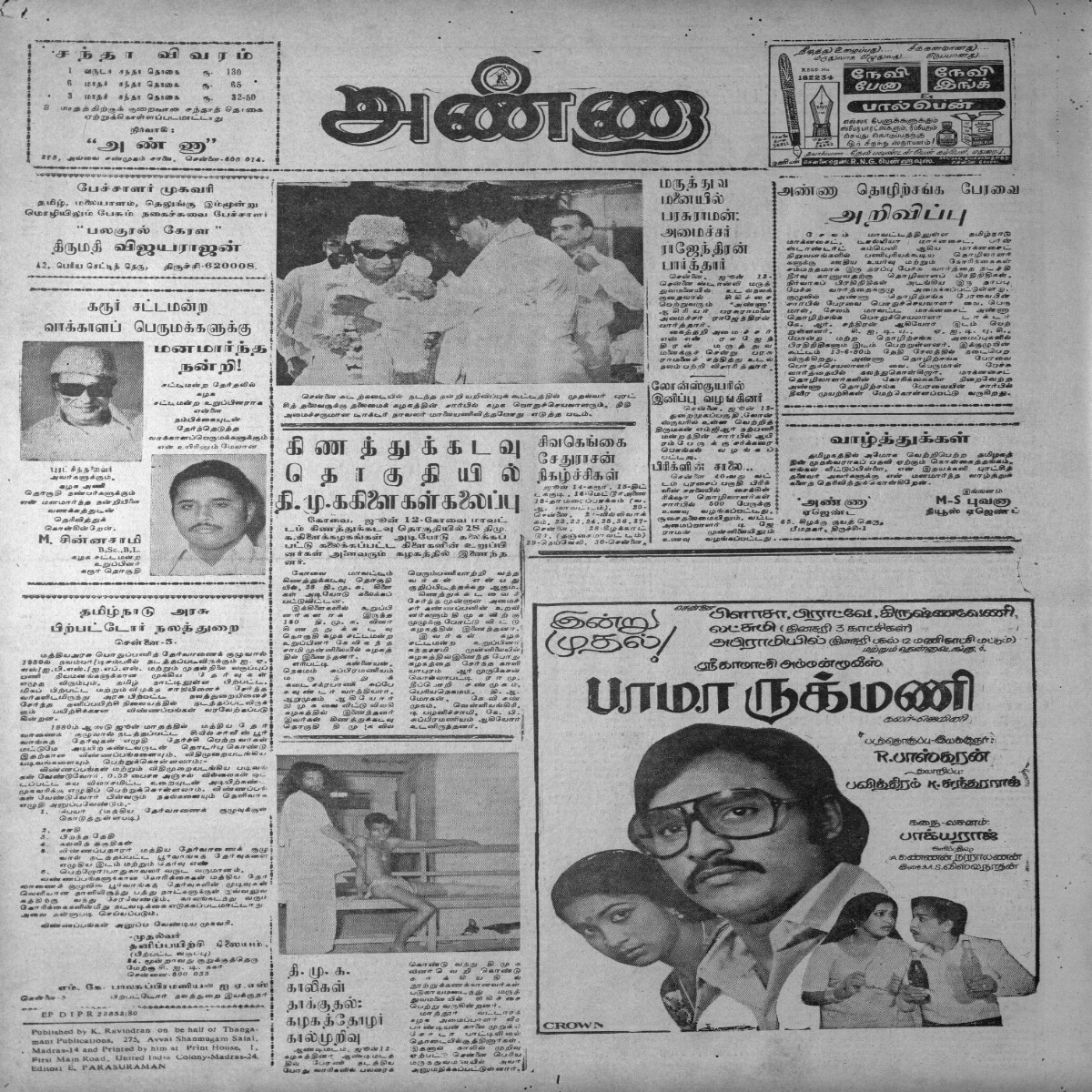
Bhama Rukmani (/bɑːmɑː/) is a 1980 Indian Tamil-language romantic comedy film directed by R. Bhaskaran and written by K. Bhagyaraj. The film stars Bhagyaraj, Radhika and Praveena. It was released on 12 June 1980.[1][2]
Plot
Nandagopal "Nandu", has been in love with Rukmani since their school days. However, his family pressures him to marry his cousin Bhama. Bhama's mother, Aandal, wants her daughter to marry Mounaguru, while Bhama's father, Ezhumalai, favours Nandu as his son-in-law. Nandu's mother, Lakshmi, also supports the idea of Nandu marrying Bhama. Feeling trapped, Nandu confides in his advocate friend, Seshadri "Seshu", who advises him to be honest about his feelings. Nandu reveals his love for Rukmani to his mother, but she threatens to commit suicide if he doesn't marry Bhama. Ezhumalai pushes for an immediate marriage between Nandu and Bhama to outmaneuver Aandal's plans.
The marriage takes place at a temple, where Rukmani happens to visit with her grandmother. Seshu successfully diverts them, but feels guilty when Rukmani affectionately refers to him as a brother. After the marriage, Nandu's mother leaves for a religious trip. Fearing Rukmani might commit suicide if she learns the truth, Nandu marries Rukmani as well, inspired by the film poster of Sri Krishna Leela, which depicts Lord Krishna's marriages to Rukmini and Satyabhama. After Nandu's second marriage to Rukmani, his uncle Ezhumalai discovers his deception and throws him out of the house. Rukmani learns about Nandu's first marriage to Bhama and chases him out of her home. Desperate for a solution, Nandu turns to Seshu, who devises various plans to unite Bhama and Rukmani. Seshu's initial plans, including using food and fake illnesses, fail miserably. Next, Seshu tries to spark possessiveness in both women by making them witness Nandu dancing with a cabaret dancer. However, Bhama and Rukmani team up to beat the dancer, Seshu, and Nandu.
Undeterred, Seshu concocts another plan, telling both women that Nandu will stay with the one who gets pregnant first. Bhama's father, Ezhumalai, pleads with Nandu to return home, but Nandu sneaks out at night to be with Rukmani. When Rukmani learns about Nandu's visit to Bhama, she chases Nandu away. As a final attempt, Seshu advises Nandu to pretend to be dead, hoping that both women will come together out of love for him. As Nandu pretends to be dead, the shared grief brings Bhama and Rukmani's families together, and they begin to bond over their sorrow. Seshu seizes this opportunity to bring Bhama and Rukmani closer, and in a moment of emotional vulnerability, they confess that they would stay united if Nandu were alive. Just as they say this, Nandu suddenly wakes up, shocking everyone. However, instead of uniting them, his ruse only angers Bhama and Rukmani further, and they separate once again.
Defeated, Nandu and Seshu witness a person trying to straighten a dog's tail, reminding them of the Tamil proverb "Naai valai nimirtha mudiyathu," (transl. A dog's tail cannot be straightened) which implies that some things, like Bhama and Rukmani's acceptance of each other, are impossible to change.
Cast
- K. Bhagyaraj as Nandagopal "Nandu"
- Radhika as Bhama
- Praveena as Rukmani
- Nagesh as Advocate Seshadhri "Seshu"
- Kallapetti Singaram as Solai
- Lakshmi Narayanan
- Usilai Mani
- Chandran Babu
- K. A. Thangavelu as Ezhumalai
- Pandari Bai as Lakshmi
- Gandhimathi as Aandal
- Sundari Bai as Rukmani's grandmother
- Y. G. Mahendran as Mounaguru (guest appearance)
- Jayamala as the cabaret dancer (guest appearance)
- Narayanan as Arulvaaku Aadhimoolam
- Loose Mohan as a teacher
- T. K. S. Natarajan
Soundtrack
The music was composed by M. S. Viswanathan.[3][4]
| Song | Lyrics | Singers |
|---|---|---|
| "Nee Oru Kodi Malar" | Chidambaranathan | S. P. Balasubrahmanyam, S Janaki |
| "Gokula Kannan" | Muthulingam | Vani Jairam |
| "Kadhava Thiradi Bhama" | Muthulingam | Malaysia Vasudevan |
| "Take Somebody" | Chidambaranathan | L. R. Eswari, Joseph Krishna |
Critical reception
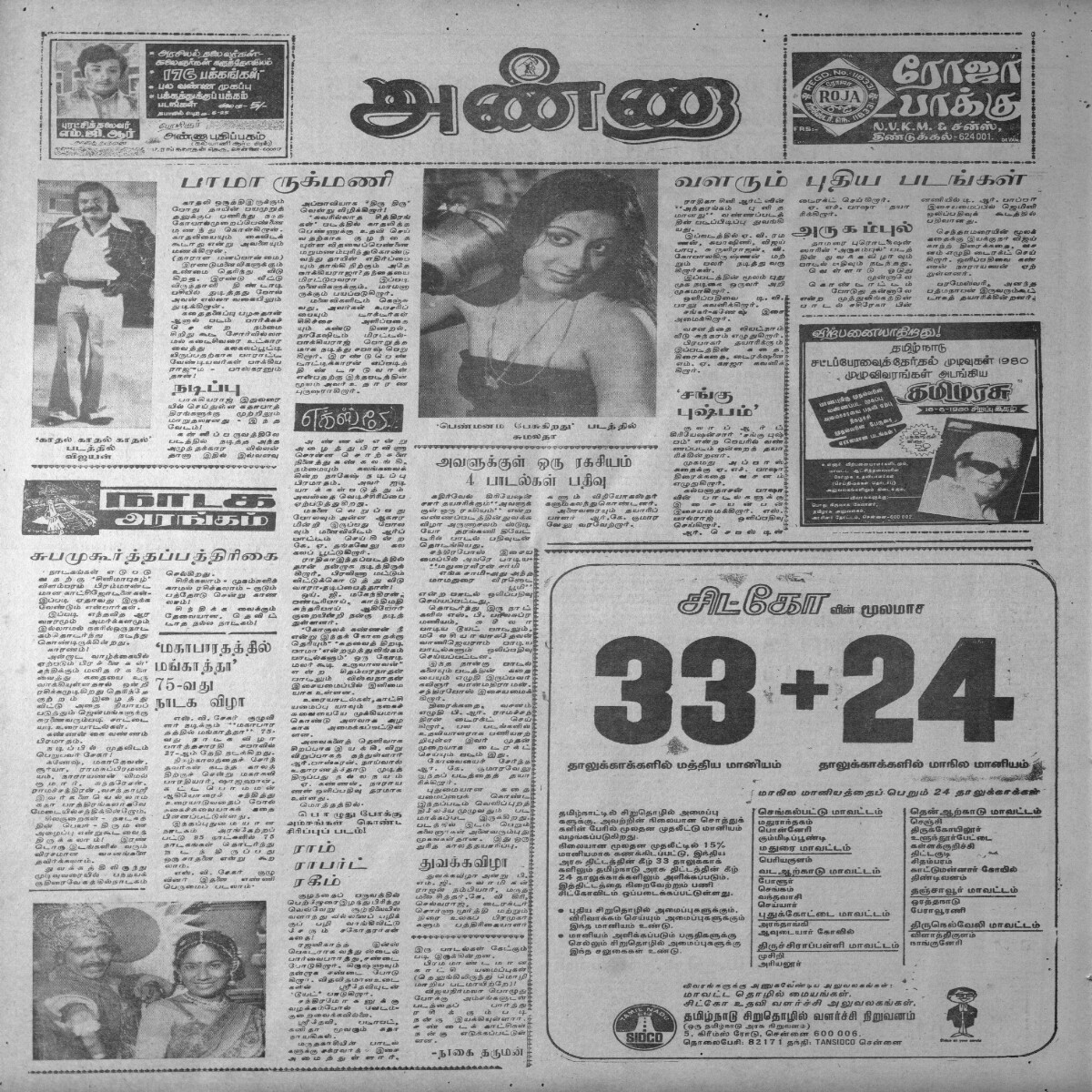
Kanthan of Kalki wrote that the film perfectly captures the drought of stories adapted for the screen.[5]Anna praised the acting, music, cinematography and direction.[6]
References
- ^"Bhama rukmani ( 1980 )". Cinesouth. Archived from the original on 4 October 2013. Retrieved 2 October 2013.
- ^"பாமா ருக்மணி". Anna (in Tamil). 12 June 1980. p. 4. Archived from the original on 28 May 2025. Retrieved 28 May 2025 – via Endangered Archives Programme.
- ^"Bhama Rukmani Tamil Film EP Vinyl Record by M S Viswanathan". Mossymart. Archived from the original on 3 April 2023. Retrieved 3 April 2023.
- ^"Bhama Rukmani". JioSaavn. 31 May 1980. Archived from the original on 17 October 2022. Retrieved 3 March 2023.
- ^காந்தன் (29 June 1980). "பாமா ருக்மணி". Kalki (in Tamil). p. 3. Archived from the original on 3 April 2023. Retrieved 3 April 2023 – via Internet Archive.
- ^"பாமா ருக்மணி". Anna (in Tamil). 22 June 1980. p. 4. Archived from the original on 28 May 2025. Retrieved 28 May 2025 – via Endangered Archives Programme.


External links
 | This article needs additional or more specific categories.(April 2024) |

- 1980 films
- 1980 romantic comedy films
- 1980 Indian films
- 1980s Tamil-language films
- Films about families
- Films about Indian weddings
- Films about polygamy
- Films scored by M. S. Viswanathan
- Films with screenplays by K. Bhagyaraj
- Indian romantic comedy films
- Polygyny in culture and art
- Tamil-language Indian films
- Tamil-language romantic comedy films