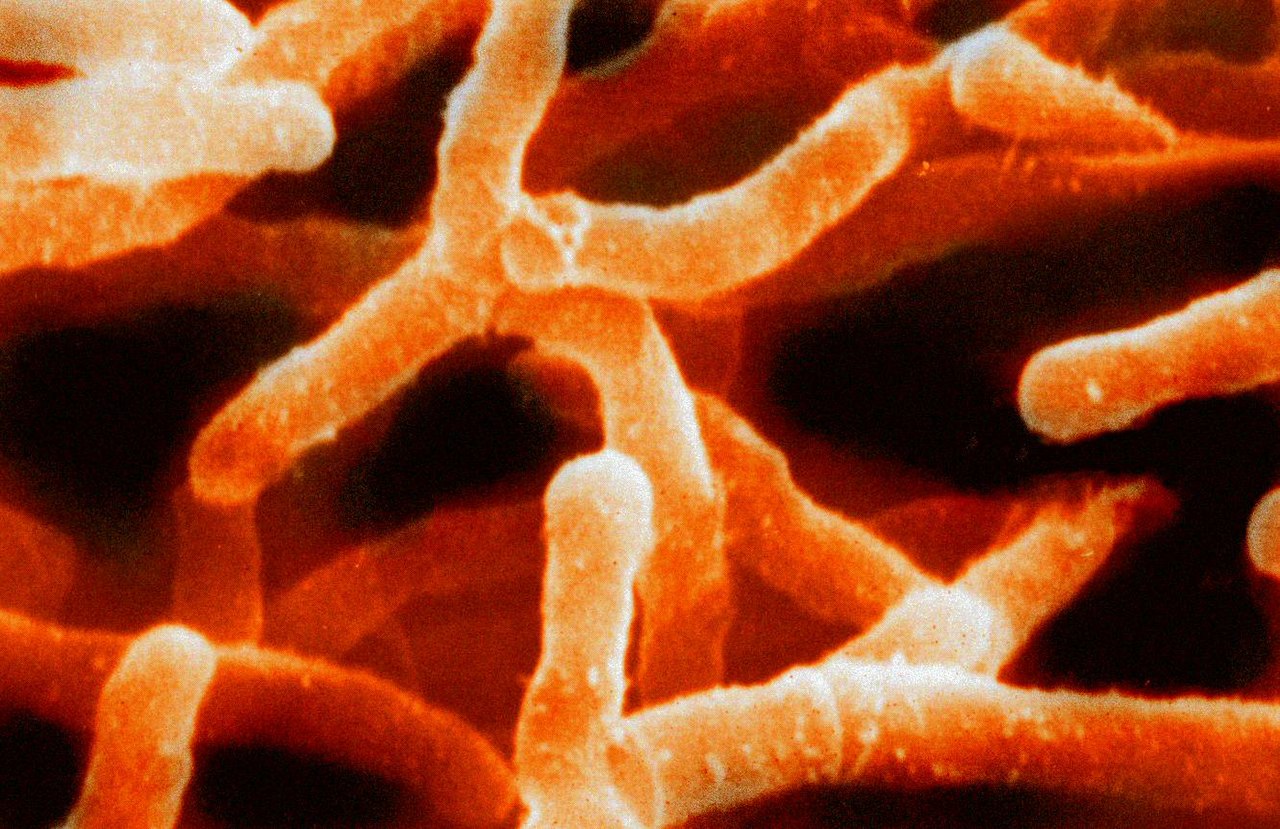
The Cryptosporangiaceae are the only family of the order Cryptosporangiales, which is a part of the phylum Actinomycetota.[2][1][3]
Phylogeny
The currently accepted taxonomy is based on the List of Prokaryotic names with Standing in Nomenclature (LPSN)[3] and National Center for Biotechnology Information (NCBI)[4]
See also
References
- ^ abZhi XY, Li WJ, Stackebrandt E (2009). "An update of the structure and 16S rRNA gene sequence-based definition of higher ranks of the class Actinobacteria, with the proposal of two new suborders and four new families and emended descriptions of the existing higher taxa". Int J Syst Evol Microbiol. 59 (Pt 3): 589–608. doi:10.1099/ijs.0.65780-0. PMID 19244447.
- ^ abNouioui I, Carro L, García-López M, Meier-Kolthoff JP, Woyke T, Kyrpides NC, Pukall R, Klenk HP, Goodfellow M, Markus Göker M (2018). "Genome-Based Taxonomic Classification of the Phylum Actinobacteria". Front. Microbiol. 9: 2007. doi:10.3389/fmicb.2018.02007. PMC 6113628. PMID 30186281.
- ^ abcA.C. Parte; et al. "Cryptosporangiaceae". List of Prokaryotic names with Standing in Nomenclature (LPSN). Retrieved 2023-09-09.
- ^Sayers; et al. "Cryptosporangiaceae". National Center for Biotechnology Information (NCBI) taxonomy database. Retrieved 2023-09-09.
- ^"The LTP". Retrieved 20 November 2023.
- ^"LTP_all tree in newick format". Retrieved 20 November 2023.
- ^"LTP_08_2023 Release Notes"(PDF). Retrieved 20 November 2023.
- ^"GTDB release 08-RS214". Genome Taxonomy Database. Retrieved 10 May 2023.
- ^"bac120_r214.sp_label". Genome Taxonomy Database. Retrieved 10 May 2023.
- ^"Taxon History". Genome Taxonomy Database. Retrieved 10 May 2023.