| スクラブファウル | |
|---|---|

| |
| オレンジ足ツチドリ | |
科学的分類 
| |
| 王国: | 動物界 |
| 門: | 脊索動物 |
| クラス: | 鳥類 |
| 注文: | キジ目 |
| 家族: | メガポディイデ科 |
| 属: | メガポディウス・ ガイマール、1823年 |
| タイプ種 | |
| メガポディウス・フレシネット ガイマール、1823年
| |
| 種 | |
|
合計 14 個、現存 12 個、本文参照。 | |

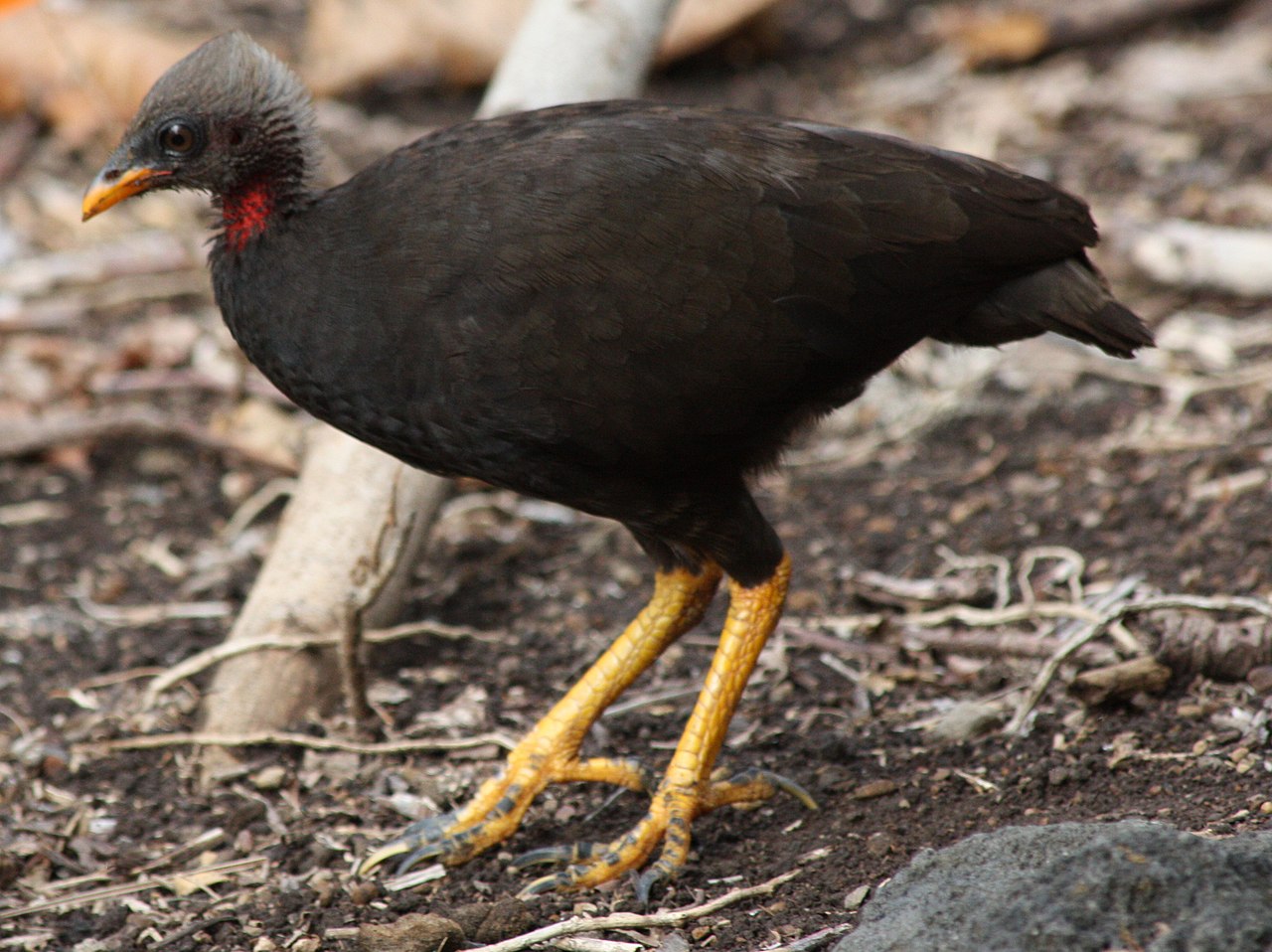
The scrubfowl are the genus Megapodius of the mound-builders, stocky, medium-large chicken-like birds with small heads and large feet in the family Megapodiidae. They are found from south-east Asia to north Australia and islands in the west Pacific.
They do not incubate their eggs with their body heat in the orthodox way, but bury them. They are best known for building a massive mound of decaying vegetation, which the male attends, adding or removing litter to regulate the internal heat while the eggs hatch.
Taxonomy
The genus Megapodius was introduced in 1823 by the French naturalist Joseph Gaimard.[1] He listed several species in his new genus but in 1840 the English naturalist Prideaux John Selby designated the type species as Megapodius freycinet Gaimard, the dusky megapode.[2][3] The genus name combines the Ancient Greek μεγας/megas, μεγαλη/megalē meaning "big" with πους/pous, ποδος/podos meaning "foot".[4]
The genus contains 12 species:[5]
| Image | Scientific name | Common name | Distribution |
|---|---|---|---|
| Megapodius pritchardii | Tongan megapode | Tonga | |
 |
Megapodius laperouse | Micronesian megapode | Palau and the Northern Mariana Islands, Guam |
| Megapodius nicobariensis | Nicobar megapode | Nicobar Islands (India) | |
 |
Megapodius cumingii | Philippine megapode | The Philippines, northeastern Borneo, and Sulawesi |
| Megapodius bernsteinii | Sula megapode | Banggai and Sula Islands between Sulawesi and the Maluku Islands in Indonesia | |
| Megapodius tenimberensis | Tanimbar megapode | Tanimbar Islands of Indonesia | |
| Megapodius freycinet | Dusky megapode | Maluku and Raja Ampat Islands in Indonesia. | |
| Megapodius geelvinkianus | Biak scrubfowl | Biak, Mios Korwar, Numfor, Manim and Mios Numin in the West Papua region of Indonesia. | |
| Megapodius eremita | Melanesian megapode | Bismarck Archipelago (Papua New Guinea) and the Solomon Islands. | |
| Megapodius layardi | Vanuatu megapode | Vanuatu | |
| Megapodius decollatus | New Guinea scrubfowl | Northern New Guinea and adjacent islands | |
 |
Megapodius reinwardt | Orange-footed scrubfowl | Lesser Sunda Islands as well as southern New Guinea and northern Australia. |


Two extinct species have been described form sub-fossil remains:
- †Pile-builder scrubfowl (Megapodius molistructor)[6]
- †Viti Levu scrubfowl (Megapodius amissus)[7]
上記のいずれにおいても、「ツチドリ」という名称は「メガポデ」と混同されることがあります。伝統的に、ほとんどの種はM. freycinetの亜種として記載されてきましたが、今日では主要な権威者全員がこれを誤りと見なしています。しかしながら、この属には未解決の問題があり、例えば、タクソンforsteniiはM. freycinetの亜種、M. cumingiiの亜種、あるいは単一種とみなされてきました。さらに、モルッカメガポデという種がMegapodiusに分類されることもありましたが、今日では多くの研究者がEulipoa属に分類しています。マレオもこれらの属と関連付けられており、これら3種は合わせて一つのグループを形成しています。
参考文献
- ^ ジョゼフ・ポール・ガイマール(1823)。 「Mémoire sur un nouveau ジャンル de Gallinacés établi sur de nom de Mégapode」。Bulletin Général et Universel des Annonces et de Nouvelles Scientifiques (フランス語)。2 : 450-451 [450]。
- ^ セルビー、プライドー・ジョン(1840年)『鳥類自然体系による分類による鳥類属および亜属タイプのカタログ』ニューカッスル:T. and J. Hodgson. p. 40.
- ^ ピーターズ、ジェームズ・リー編 (1934). Check-List of Birds of the World. 第2巻. マサチューセッツ州ケンブリッジ: ハーバード大学出版局. p. 3.
- ^ Jobling, James A. 「Megapodius」.学名キー. コーネル大学鳥類学研究所. 2025年9月29日閲覧。
- ^ フランク・ギル、デイビッド・ドンスカー、パメラ・ラスムッセン編(2025年2月)。「Megapodes、guans、guineafowl、New World quail」。IOC世界鳥類リスト バージョン15.1。国際鳥類学者連合。 2025年9月29日閲覧。
- ^ Balouet, JC; Olson, SL (1989). ニューカレドニアの第四紀後期堆積物産出の化石鳥類. スミソニアン動物学貢献誌: 469. ワシントンD.C.: スミソニアン協会出版局. pp. 9– 11.
- ^ Worthy, TH (2000). 「フィジーのメガポッド(鳥類:メガポディダエ科)の化石と新属2種の記載」ニュージーランド王立協会誌. 30 (4): 337– 364. doi : 10.1080/03014223.2000.9517627 .
外部リンク
- マウンドビルダーのビデオは、インターネットのWayback Machineで2007年9月21日にアーカイブされています。鳥のコレクション
