Pattanam | |
|---|---|
Village | |
.jpg/1280px-Pattanam_-_Muziris_excavation_museum_-_Muziris_Heritage_-_WikiSangamotsavam_2018,_Kottappuram,_Kodungalloor_(10).jpg) Site Museum, Pattanam | |
| Coordinates: 10°09′24″N 76°12′32″E / 10.15654°N 76.208982°E / 10.15654; 76.208982 | |
| Country |  India India |
| State | Kerala |
| District | Ernakulam |
| Taluk | Paravur |
| Government | |
| • Body | Chittattukara Panchayat |
| Languages | |
| • Official | |
| Time zone | UTC+5:30 (IST) |
| PIN | 683 522 |
| Telephone Code | 0484 |
| Vehicle registration | KL-42 |
| Nearest Municipal Corporation | Kochi |
| Lok Sabha Constituency | Ernakulam |
| Civic Agency | Chittattukara Panchayat |
| Climate | Tropical (Köppen) |


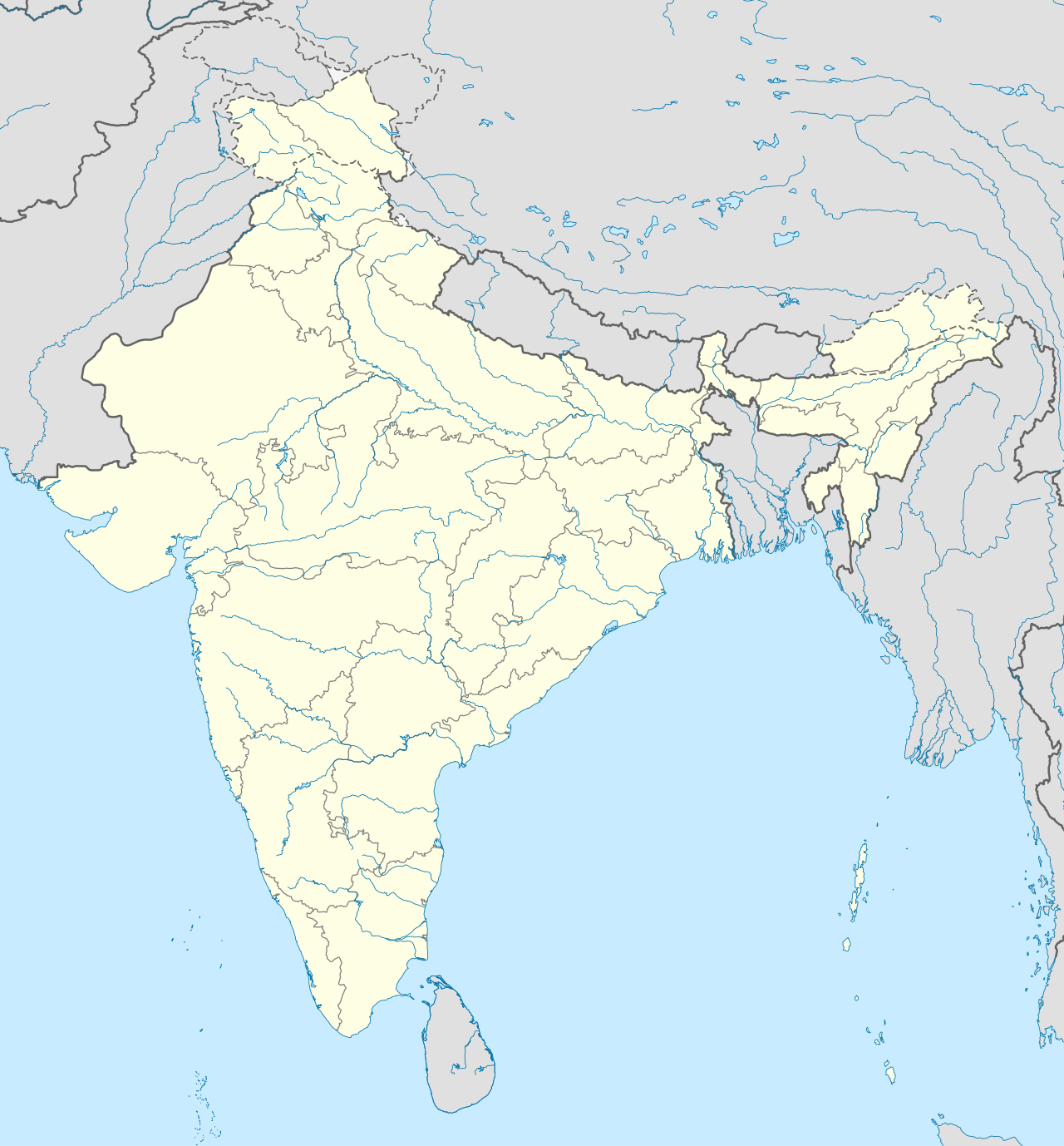
Pattanam (Malayalam: [pɐʈːɐɳɐm]) is a village located in Paravur taluk, Ernakulam district, in the southern Indian state of Kerala.[1] It is situated 2–3 km northwest of North Paravur, 3 km west of Chendamangalam, and 30 km north of Kochi (Cochin).
Pattanam, often identified with the legendary port of Muziris referenced in several Greco-Roman sources, represents one of the few archaeologically excavated sites in present-day Kerala. Most of the artifacts recovered from Pattanam are now displayed in the site museum at Pattanam.[2]
Archaeological excavations
It is estimated that the Pattanam archaeological site (10°09.434’N; 76°12.587’E) covers about 45 hectares. Owing to habitation activities, it is a highly disturbed site. Only a small portion has been excavated, while some parts have been partially or completely destroyed due to construction and sand quarrying.[3]
Multi-seasonal archaeological excavations at Pattanam have been conducted since 2007 by the Kerala Council for Historical Research (KCHR).[4][5]
Discoveries from Pattanam
Excavations at Pattanam have revealed a wide range of material remains. Structural evidence includes brick constructions made of burnt bricks, along with a wharf, a 6-metre dugout canoe crafted from anjili wood, and teak-wood bollards.[6]
Object assemblage comprises amphora fragments, terra sigillata sherds, cameo blanks made from semi-precious stones, and a large number of stone and glass beads. Botanical remains have also been recovered in significant quantity. In addition, square copper coins of the Chera dynasty, bearing the bow-and-arrow insignia and datable to the early centuries of the Christian era (early historic period), have been unearthed at the site.[6]
- Excavations carried out in 2010 at Pattanam yielded a wide variety of finds. These included beads made of semi-precious stones and glass,[7] cameo blanks, and coins — predominantly early Chera issues bearing the bow-and-arrow insignia. Objects and fragments made of iron, copper, lead, and, on rare occasions, gold were also unearthed. Pottery remains were abundant, consisting of both Indian and foreign wares. Among the notable discoveries were a broken rim inscribed with Tamil-Brahmi script and an enormous quantity of local pottery dating to the early historic period, between the 1st century BC and the 4th century AD
- The 2011 excavations produced further material, including iron and copper nails, Roman glass, terracotta artefacts, and beads made from semi-precious stones.[8]
-
Amphorae sherds, Pattanam
-
Carnelian intaglios, Pattanam
-
Tamil-Brahmi Inscription, Pattanam
-
Tubular jars, Pattanam
-
Wharf, Pattanam

,_Pattanam_Museum.jpg/1280px-Carnelian_intaglios_(with_Greek_or_Roman_goddess_and_lion),_Pattanam_Museum.jpg)


.jpg)


,_Pattanam_Museum.jpg)


Criticisms
The identification of present-day Pattanam with the legendary port of Muziris — celebrated in several Greco-Roman sources as one of the premier Indian Ocean centres of the spice trade — has been questioned by some scholars.[9][10][11]
An alternative view places Muziris at Kodungallur, located north of Pattanam. Arguments supporting this include its historical role as a medieval port or capital and the reference to the port of "Muyirikkode" in the Jewish Copper Plates. In addition, the absence of comparable excavations at other sites in Kerala, such as Kodungallur, is considered a significant gap in the debate.[6]
See also
References
- ^ Nair, C. Gouridasan (3 May 2009). "Pattanam Richest Indo-Roman Site on Indian Ocean Rim". The Hindu. Archived from the original on 10 May 2009. Retrieved 21 September 2025.
- ^ "Pattanam". Kerala Tourism. Government of Kerala.
- ^ Cherian, P. J.; Prasad, G. V. Ravi; Dutta, Koushik; Ray, Dinesh Kr.; Selvakumar, V.; Shajan, K. P. (2009). "Chronology of Pattanam: a Multi-Cultural Port site on the Malabar Coast". Current Science. 97 (2): 236–240. ISSN 0011-3891.
- ^ "Research Groups: Ports and Indian Ocean Exchanges". The British Association for South Asian Studies. 2007. Archived from the original on 12 February 2010. Retrieved 15 March 2018.
- ^ Suroor, Hasan (18 November 2016). "Recognition From UK for Pattanam Research". The Hindu.
- ^ a b c The Hindu (Thiruvananthapuram edition). 5 August 2011. p. 9.
{{cite news}}: Missing or empty|title=(help) - ^ Srivathsan, A. (14 March 2010). "More Evidence Unearthed at Ancient Port of Muziris". The Hindu.
- ^ Basheer, K. P. M. (12 June 2011). "Pattanam Finds Throw More Light on Trade". The Hindu. Archived from the original on 16 June 2011. Retrieved 20 April 2021.
- ^ "The Seventh Season Pattanam Excavation (2013)" (PDF). Kerala Council for Historical Research. 2013. Archived from the original (PDF) on 4 March 2016.
- ^ "Pattanam Throws Open Many Questions: Romila Thapar". The Hindu. 16 November 2021.
- ^ Anandan, S. (28 May 2014). "Was Pattanam an Urban Trade Centre?". The Hindu.
Further reading
- "Search for India's Ancient City". BBC News. 11 June 2006.
- Cherian, P. J.; Prasad, G. V. Ravi; Dutta, Koushik; Ray, Dinesh Kr.; Selvakumar, V.; Shajan, K. P. (2009). "Chronology of Pattanam: a Multi-Cultural Port site on the Malabar Coast". Current Science. 97 (2): 236–240. ISSN 0011-3891.
- "The Seventh Season Pattanam Excavation (2013)" (PDF). Kerala Council for Historical Research. 2013. Archived from the original (PDF) on 4 March 2016.
- Haridas, Anand (29 May 2010). "Pattanam Excavation Significant: Baby". The Hindu. Archived from the original on 3 June 2010. Retrieved 21 September 2025.
 | This article related to a location in Ernakulam district, Kerala, India is a stub. You can help Wikipedia by adding missing information. |

