| This article is part of a series on the |
| History of Australia |
|---|
 |


オーストラリアの歴史は、オーストラリア連邦を構成する土地と人々の歴史です。この近代国家は、1901年1月1日に旧イギリス植民地の連邦として誕生しました。しかし、オーストラリアの人類史は、5万年から6万5000年前、東南アジアの海域からアボリジニ・オーストラリア人の最初の祖先が到着したことに始まり、今日の多文化民主主義まで続いています。
オーストラリアの先住民アボリジニは、オーストラリア大陸全体と多くの近隣の島々に定住しました。彼らが確立した芸術的、音楽的、そして精神的な伝統は、人類史上最も長く生き残っているものの一つです。[1]今日の民族的、文化的に異なるトレス海峡諸島民の祖先は、約2500年前に現在のパプアニューギニアから到着し、オーストラリア大陸の北端にある島々に定住しました。
17世紀、オランダの航海士たちは西海岸と南海岸を探検し、この大陸をニューホランドと名付けました。マカッサルの探検家たちは1720年頃から、あるいはそれ以前からオーストラリアの北海岸を訪れていました。1770年、ジェームズ・クック中尉はオーストラリア東海岸を測量し、イギリス領であると主張しました。彼はボタニー湾(現在のシドニー)への植民地化を支持する報告書を持ってロンドンに戻りました。1788年1月、イギリス船団の第一艦隊は流刑植民地を設立するためにボタニー湾に到着しました。その後の世紀には、イギリスは大陸に他の植民地を設立し、ヨーロッパの探検家たちは内陸部へと足を踏み入れました。この時期には、持ち込まれた病気、激しい紛争、伝統的な土地の剥奪により、先住民の人口が減少し、彼らの文化が混乱しました1871年以降、トレス海峡諸島民はキリスト教宣教師を歓迎し、その後島々はクイーンズランド州に併合されましたが、 1世紀後にパプアニューギニアがオーストラリアから独立した際には、オーストラリアの一部として残ることを選択しました。
ゴールドラッシュと農業が繁栄をもたらしました。イギリス人囚人のオーストラリアへの移送は、1840年から1868年にかけて段階的に廃止されました。19世紀半ばから、6つのイギリス植民地全体で自治的な議会制民主主義が確立され始めました。植民地は1901年に住民投票で連邦制の統合を決定し、現代のオーストラリアが誕生しました。オーストラリアは2つの世界大戦で大英帝国、後にイギリス連邦の一員として戦い、冷戦を経て現在に至るまで、アメリカ合衆国の長年の同盟国となりました。アジアとの貿易が増加し、戦後の移民プログラムでは、すべての大陸から700万人以上の移民を受け入れました。第二次世界大戦終結以来、世界中のほぼすべての国からの人々の移民に支えられ、人口は2021年までに2550万人以上に増加し、人口の30%は海外生まれです。
先住民の先史時代

オーストラリアの先住民アボリジニの祖先は、約5万年から6万5000年前、 [2] [3] [4] [5]最終氷期に、現在の東南アジアから陸橋や短い海路で到着し、現在のオーストラリア大陸に移住しました。 [6]
オーストラリア大陸北部のアーネムランドにあるマジェドベベの岩陰遺跡は、おそらくオーストラリアで最も古い人類居住の遺跡です。 [2] [7]北部から、人口は非常に異なる環境へと広がりました。大陸南西部のデビルズレアは約47,000年前、タスマニアは39,000年前までに居住されていました。 [8]発見された最古の人骨はニューサウスウェールズ州のマンゴ湖で、約41,000年前のものとされています。この遺跡は世界最古の火葬の一つを示唆しており、人類の宗教儀式の初期の証拠を示しています。[9]
人口の広がりは環境も変化させました。46,000年前から、オーストラリアの多くの地域で火棒農法が使用され、植生を伐採し、移動を容易にし、動物や植物の食料源が豊富な開けた草原を作り出しました。[10]

アボリジニの人々は気候と環境の大きな変化に直面しました。約3万年前、海面が低下し始め、大陸南東部の気温は最大9℃(16℉)も低下し、オーストラリア内陸部はより乾燥しました。約2万年前、ニューギニアとタスマニアは、現在の4分の1以上の大きさだったオーストラリア大陸とつながっていました。[11]
約19,000年前、気温と海面が上昇し始めました。タスマニア島は約14,000年前に本土から分離し、8,000年から6,000年前の間にトレス海峡とオーストラリア沿岸に数千の島々が形成されました。[11]
温暖な気候は新しい技術と関連していました。15,000年から19,000年前には小型の背刃石器が登場しました。10,000年前の木製の投げ槍とブーメランは発見されています。5,000年から7,000年前の石の槍先も発見されています。槍投げ器はおそらく6,500年前よりも最近に開発されました。[12]
タスマニアの先住民は約14,000年前から本土から孤立していました。その結果、彼らは隣接する本土の4分の1の道具や装備しか持っていませんでした。沿岸部のタスマニア人は魚からアワビやザリガニに切り替え、より多くのタスマニア人が内陸部に移住しました。[13]
約4,000年前、トレス海峡諸島の占領の第一段階が始まりました。2,500年前までに、より多くの島が占領され、独特のトレス海峡諸島民の海洋文化が出現しました。いくつかの島では農業も発展し、700年前までに村が出現しました。[14]
先住民社会は、平均約25人からなるバンドや氏族に組織された家族集団で構成されており、それぞれが特定の食料採集地を持っていました。氏族は部族や国家に属し、特定の言語や国と結びついていました。ヨーロッパ人と接触した当時、そのような集団は約600あり、様々な方言を持つ250の異なる言語がありました。[15] [16]当時の先住民人口は30万人から100万人と推定されています。[17] [18] [19]

アボリジニ社会は平等主義であり、正式な政府や首長は存在しませんでした。権威は長老にあり、集団の決定は一般的に長老たちの合意によって行われました。伝統的な経済は協同組合であり、男性は一般的に大型の獲物を狩猟し、女性は小動物、貝類、野菜、果物、種子、ナッツなどの地元の必需品を採集していました。食料は集団内で共有され、集団間で交換されました。[20]一部のアボリジニ集団は、火打ち石農業[21] 、魚の養殖[22]、そして半恒久的な住居の建設に従事していました。 [ 23] [24]一部の集団がどの程度農業に従事していたかについては議論があります。[25] [26] [27]一部の人類学者は、伝統的なアボリジニ・オーストラリアを「複雑な狩猟採集社会」と表現しています。[24] [28]
先住民族は半遊牧民であり、一般的に自然環境によって定められた特定の領域を移動していました。ある集団のメンバーは、婚姻や血縁関係によって確立された権利、あるいは儀式や豊富な旬の食材の共有といった特定の目的のための招待によって、他の集団の領域に入りました。土地のあらゆる自然環境は祖先によって創造されたため、集団の特定の土地は物質的および精神的な糧を与えてくれました。[29] [16]
オーストラリアの先住民アボリジニは、独自の芸術的・精神的な文化を発展させました。最古のアボリジニの岩絵は、手形、手形型紙、円、軌跡、線、円柱の彫刻で構成されており、3万5000年前のものとされています。約2万年前、アボリジニの芸術家たちは人間や動物を描いていました。[30]オーストラリアのアボリジニ神話とアニミズムの枠組みによれば、ドリーミングとは、祖先のトーテム的な精霊が創造を形成した神聖な時代です。ドリーミングは、社会の法と構造、そして生命と土地の継続を確保するために行われる儀式を確立しました。[31]
初期のヨーロッパ人による探検
オランダの発見と探検

_(adjusted).jpg/1280px-Abel_Tasman_-_Cuyp_(cropped)_(adjusted).jpg)
ウィレム・ヤンスゾーン船長率いるオランダ東インド会社の船「デュイフケン」は、1606年にオーストラリアに記録に残る最初のヨーロッパ人上陸を果たしました。[32]同年後半、ルイス・ヴァス・デ・トレスはニューギニア南岸に沿ってトレス海峡を通過し、オーストラリア北部へ航海しました。 [33]
1616年、ディルク・ハルトグは喜望峰からバタビアに向かう途中、航路を外れ、西オーストラリア州シャーク湾沖の島に上陸しました。[34] 1622年から1623年にかけて、ルーウィン号は大陸の南西端を初めて回航した記録があります。[35]
1627年、オーストラリア南海岸はフランソワ・ティッセンによって発見され、ピーター・ヌイツにちなんで名付けられました。[36] 1628年、オランダ船団が北海岸、特にカーペンタリア湾を探検しました。[35]
1642年のアベル・タスマンの航海は、ヴァン・ディーメンズ・ランド(後のタスマニア)とニュージーランドに到達し、フィジーを視認した最初のヨーロッパ探検隊として知られています。1644年の2回目の航海では、ニューギニア島以北の北海岸の土地と人々を観察し、オーストラリア本土(彼はニューホランドと呼んだ)の地図作成にも大きく貢献しました。[37]
タスマンの航海の後、オランダ人はオーストラリアの北部と西部の海岸、そしてタスマニア南部と南東部の海岸の大部分のほぼ完全な地図を作成することができました。[38]
イギリスとフランスの探検

イギリスの海賊であり探検家であったウィリアム・ダンピアは、1688年と1699年にニューホランドの北西海岸に上陸し、アボリジニの人々に関する影響力のある記述を出版しました。 [39]
1769年、HMS エンデバー号の指揮官であったジェームズ・クック中尉は、金星の太陽面通過を観測し記録するためにタヒチに航海しました。クックはまた、想定される南大陸を見つけるための海軍本部からの秘密の指示も携行していました。[40]この大陸を見つけることができなかったクックは、オランダの航海士によって海図化されていなかった唯一の大陸の主要部分であるニューホランドの東海岸を調査することを決意しました。[41]
1770年4月19日、エンデバー号はニューホランドの東海岸に到着し、10日後にボタニー湾に停泊しました。クックは海岸線の北限まで測量し、1770年8月21日または22日、ケープヨーク半島西海岸沖のポゼッション島で正式にニューホランド東海岸を占領しました。[42]
彼は日誌に次のように記しています。[43] [44]
ニューホランドのこの東海岸にはもう上陸できません。西側では新たな発見はできません。その栄誉はオランダの航海士に属し、彼らはそれを自分たちの領土として主張することができます[a]。しかし、南緯38度からこの場所までの東海岸は、我々以前のヨーロッパ人によって見られたり訪れたりしたことがなかったと確信しており、したがって同じ規則により偉大なイギリスに属します[a] [...]
1772年3月、マルク=ジョセフ・マリオン・デュ・フレスヌは2隻のフランス船を率いて、タヒチと南洋に向かう途中、ヴァン・ディーメンの土地に到着しました。彼の一行は、タスマニアの先住民と遭遇し、そのうちの1人を殺害した最初のヨーロッパ人として記録されました。[45]
同年、ルイ・アレノ・ド・サン・アロアールン率いるフランス遠征隊は、オーストラリア西海岸の領有権を正式に主張した最初のヨーロッパ人となりましたが、これに続く植民地化の試みは行われませんでした。[46]
植民地化
1788年以前の植民地化計画


1788年以前にもオーストラリアの植民地化に関する様々な提案がなされましたが、どれも実行されませんでした。1717年、ジャン=ピエール・パリーは、現在の南オーストラリア州の地域を植民地化する計画をオランダ東インド会社に送りました。会社は「会社にとって有用性や利益の見込みはなく、むしろ非常に確実で多額の費用がかかる」というコメントでこの計画を拒否しました。[47]
対照的に、エマニュエル・ボーエンは1747年に、この国の探検と植民地化の利点を主張し、次のように書いています。 [48]
この地図が示すように、もはや未知の国ではなく、発見された南の大陸であるテラ・オーストラリスほど、その立地から見てより素晴らしい可能性を秘めた国を想像することは不可能です。まさに世界で最も豊かな気候に恵まれた地域に位置しており…したがって、この地を完全に発見し、定住する者は、東インド諸島でも西インド諸島でも、これまで発見されてきたどの地域にも劣らず豊かで、実り豊かで、発展の可能性を秘めた領土を確実に所有することになるでしょう。
ジョン・ハリスは、著書『航海と旅行』(1744~1748年、1764年)の中で、イギリスの植民地化を視野に入れて、ニューホランド東海岸の探検を推奨しました。[49] ジョン・カランダーは1766年、イギリスが南海またはテラ・アウストラリスに追放された囚人の植民地を設立するという提案を提出しました。[50]スウェーデン国王グスタフ3世は1786年にスワン川に自国の植民地を設立するという野望を抱いていましたが、計画は実現しませんでした。[51]
アメリカ独立戦争(1775~1783年)でイギリスは北米植民地のほとんどを失い、代替領土の設立を検討しました。イギリスは1718年から1775年にかけて約5万人の囚人を新世界に移送しており、代替案を模索していました。一時的な解決策として浮かぶ監獄船は収容能力に達し、公衆衛生上の危険をもたらしました。一方、刑務所や救貧院をさらに建設するという選択肢は費用がかかりすぎると判断されました。[52] [53]
1779年、ジェームズ・クックの1770年の航海に同行した著名な科学者、ジョセフ・バンクス卿は、ボタニー湾を流刑地に適した場所として推奨しました。バンクスの計画は、200人から300人の囚人をボタニー湾に送り、彼らが自由に過ごせるようにし、イギリスの納税者の負担にならないようにすることでした。[54]
.jpg/1280px-Landing_of_Lieutenant_James_Cook_at_Botany_Bay,_29_April_1770_(painting_by_E_Phillips_Fox).jpg)
バンクスの指導の下、クックと共に旅をしていたアメリカ王党派の ジェームズ・マトラは、1783年にニューサウスウェールズの植民地化に関する新たな計画を策定した。[55]マトラは、ニューサウスウェールズは砂糖、綿花、タバコのプランテーションに適しており、ニュージーランド産の木材や麻は貴重な商品となり、太平洋貿易の拠点となり、追放されたアメリカ王党派への適切な補償となり得ると主張した。[56] 1784年に国務長官シドニー卿との会談後、マトラは「公共の経済と個人の人道」の両方に利益をもたらすと考え、囚人を入植者に含めるよう提案を修正した。[57]
ボタニー湾流刑に代わる主要な選択肢は、囚人をアフリカへ送ることだった。1775年から囚人は西アフリカのイギリス軍の砦に駐屯させられたが、この試みは失敗に終わった。1783年、ピット政権は、ガンビアの小さな川の島に囚人を流刑にし、政府に費用をかけずに自治共同体、いわゆる「泥棒のコロニー」を形成させることを検討した。[58]
1785年、ボーチャム卿を委員長とする議会特別委員会はガンビア計画に反対を勧告しましたが、ボタニー湾の代替案は承認しませんでした。2度目の報告書では、ボーチャム卿は現在のナミビアにあるダス・ボルタス湾への流刑地建設を勧告しました。しかし、1786年に行われた調査で不適切であることが判明したため、この計画は中止されました。2週間後の1786年8月、ピット政府はボタニー湾に囚人を送る意向を発表しました。[59]政府は、バンクスの王立協会の同僚であるジョン・コール卿とジョージ・ヤング卿が提案した、木材と亜麻の魅力を持つノーフォーク島への流刑地を計画に取り入れました。[60]
ボタニー湾に流刑地を設立するという決定における主要な考慮事項が、流刑地管理問題の解決策を見つけるという切迫した必要性であったのか、それとも貿易、海軍への木材と亜麻の新たな供給の確保、そしてこの地域における戦略的な港の望ましさといった、より広範な帝国の目標が最優先であったのかについては、長年にわたる議論が続いています。[61]クリストファーとマクスウェル=スチュワートは、政府が植民地を設立した当初の動機が何であれ、1790年代までに、少なくとも船舶の進路変更と補給ができる港を提供するという帝国の目的は達成されていたと主張しています。[62]
ニューサウスウェールズ植民地
植民地の設立(1788~1792年)

ニューサウスウェールズ植民地は、 1788年1月にアーサー・フィリップ船長の指揮下にある11隻の第一船団の到着とともに設立されました。この船団は1000人以上の入植者で構成されており、その中には778人の囚人(女性192人、男性586人)が含まれていました。[63]ボタニー湾到着の数日後、船団はより適したポート・ジャクソンに移動し、1788年1月26日にシドニー湾に入植地が設立されました。 [64]この日は後にオーストラリアの建国記念日であるオーストラリア・デーとなりました。植民地は1788年2月7日にシドニーでフィリップ総督によって正式に宣言されました。シドニー湾は真水の供給と安全な港を提供しており、フィリップはそれを次のように表現しました。[65]
例外なく世界で最も素晴らしい港[…] ここでは、1000隻の戦列艦が最も完璧な安全の中で航行することができます[…]
イギリスが領有権を主張したニューサウスウェールズ州の領有権は、東経135度子午線以東のオーストラリア全土に及んでいた。これはオーストラリア本土の半分以上を含んでいた。[66]また、この領有権主張には、ケープ・ヨークの緯度からヴァン・ディーメンズ・ランド(タスマニア)南端までの「太平洋に隣接するすべての島々」も含まれていた。 [67] 1817年、イギリス政府は南太平洋に対する広範な領有権主張を撤回し、タヒチ、ニュージーランド、その他の南太平洋の島々は国王陛下の領土に含まれないと明記する法律を可決した。[66]しかし、この主張が現在のニュージーランド諸島にまで及んだかどうかは不明である。[68]


フィリップ総督は植民地住民に対する全権を委ねられました。彼の意図は、地元のアボリジニの人々との調和のとれた関係を築き、植民地の囚人を改心させ、規律を守らせることでした。初期の農業は困難を極め、海外からの物資供給も不足していました。1788年から1792年の間に、約3546人の男性囚人と766人の女性囚人がシドニーに上陸しました。多くの新規到着者は病気や労働不適格であり、健康な囚人の状態も過酷な労働と劣悪な食糧のために悪化しました。食糧事情は1790年に危機的状況に達し、 1790年6月にようやく到着した第二艦隊は乗客の4分の1を病気で失い、第三艦隊の囚人の状態はフィリップを愕然とさせました。しかし、1791年からは、船のより定期的な到着と貿易の開始により、孤立感は軽減され、物資供給も改善されました。[69]
1788年、フィリップは南太平洋のノーフォーク島に補助的な入植地を設立し、海軍のための木材と亜麻の調達を希望しました。しかし、島には安全な港がなかったため、入植地は放棄され、入植者たちは1807年にタスマニア島へ避難しました。[70]その後、1825年に島は二次輸送拠点として再開発されました。[71]
フィリップはより良い土地を求めて探検隊を派遣し、パラマタ地域を拡張の有望な地域と定め、1788年後半から多くの囚人を移住させて小さな町を設立した。この町は植民地の経済活動の中心地となった。これにより、シドニー コーブは重要な港と社会生活の中心地となった。劣悪な設備と馴染みのない土壌や気候が、ファーム コーブからパラマタやトゥーンガビーへの農業の拡大を妨げ続けたが、囚人の労働力に支えられた建設計画は着実に進んだ。1788年から1792年の間、囚人とその看守が人口の大半を占めていたが、すぐに自由人口が増加し始め、解放された囚人、地元で生まれた子供、兵役を終えた兵士、そして最後にイギリスからの自由入植者が加わった。フィリップ総督は1792年12月11日に植民地を出発し、新しい入植地は4年間、飢餓に近い状況と極度の孤立状態を乗り越えました。[69]
統合(1793年から1821年)

フィリップの出発後、植民地の軍将校たちは土地を取得し、訪問船から得た消費財を輸入し始めました。元囚人たちも与えられた土地を耕作し、貿易に従事しました。農場はパラマタ、ウィンザー、リッチモンド、カムデン周辺のより肥沃な土地に広がり、1803年までに植民地は穀物の自給自足を達成しました。旅行を容易にし、沿岸入植地の海洋資源を活用するために、造船業が発展しました。アザラシ漁と捕鯨は重要な産業となりました。[72]

ニューサウスウェールズ軍団は、 1789年にイギリス陸軍の常設連隊としてイギリスで結成され、第一艦隊に同行していた海兵隊員の交代を行いました。軍団の将校たちはすぐに植民地における腐敗した、しかし利益の多いラム酒貿易に関与するようになりました。ウィリアム・ブライ総督(1806~1808年)はラム酒貿易と王領の違法使用を抑圧しようとし、 1808年のラム酒反乱を引き起こしました。軍団は、新たに地位を確立した羊毛商人ジョン・マッカーサーと緊密に協力し、オーストラリア史上唯一の武力による政府掌握を成功させ、ブライを退陣させ、 1810年にイギリスからラクラン・マコーリー総督が到着するまでの短期間の軍事政権を扇動しました。[73] [74]
マコーリーは1810年から1821年までニューサウスウェールズ州最後の独裁総督を務め、流刑地から芽生えつつある市民社会へと移行するニューサウスウェールズ州の社会経済発展において主導的な役割を果たした。彼は銀行、通貨、病院を設立した。また、都市計画家を採用してシドニーの街路設計を行い、道路、埠頭、教会、公共建築物の建設を委託した。彼はシドニーから探検隊を派遣し、1815年にはブルーマウンテンズを横断する道路が完成し、グレートディバイディング山脈の西側、やや樹木が茂った牧草地で大規模な農業と放牧が可能になった。[75] [76]
マッコーリーの政策の中心は解放主義者への扱いであり、彼は彼らを植民地の自由入植者と社会的に同等に扱うべきだと考えていました。彼はフランシス・グリーンウェイを植民地建築家に、ウィリアム・レッドファーンを治安判事に任命するなど、解放主義者を政府の主要ポストに任命しました。彼の解放主義者に対する政策は、多くの影響力のある自由入植者、将校、役人から反対され、ロンドンは彼の公共事業の費用を懸念するようになりました。1819年、ロンドンは植民地の調査を行うためにJ.T.ビッグを任命し、マッコーリーは調査報告書が発表される直前に辞任しました。[77] [78]
拡張(1821年から1850年)

1820年、イギリス人の入植地は主にシドニー周辺の半径100キロメートル(62マイル)とヴァン・ディーメンズ・ランドの中央平原に限られていました。入植者の人口は本土で2万6000人、ヴァン・ディーメンズ・ランドで6000人でした。 1815年のナポレオン戦争終結後、囚人の移送が急速に増加し、自由入植者の数は着実に増加しました。[79] 1821年から1840年にかけて、ニューサウスウェールズには5万5000人の囚人が、ヴァン・ディーメンズ・ランドには6万人の囚人が到着しました。しかし、1830年までに、自由入植者と地元生まれの人がニューサウスウェールズの囚人人口を上回りました。[80]
1820年代から、不法占拠者たちは入植地の正式な境界線を越えて、許可されていない牛や羊の牧場をますます多く建設するようになりました。1836年には、牧畜産業を統制するために、王領地での放牧を許可する年間免許制度が導入されましたが、羊毛価格の高騰と入植地の土地コストの高騰は、さらなる不法占拠を助長しました。1844年までに羊毛は植民地の輸出の半分を占め、1850年までにニューサウスウェールズ州の東部3分の1の大部分は2000人未満の牧畜民によって支配されていました。[81] [82]
1825年、ニューサウスウェールズ州の西境は東経129度まで拡大され、これは現在の西オーストラリア州の名目上の東境となっています。その結果、ニューサウスウェールズ州の領土は最大規模に達し、現在の州に加え、現在のクイーンズランド州、ビクトリア州、タスマニア州、南オーストラリア州、ノーザンテリトリー州を包含するようになりました。[83] [68]
1850年までに、ニューサウスウェールズ州の入植者人口は18万人に増加しました。これには、1851年にビクトリア州の独立した植民地となった地域に住む7万人から7万5千人は含まれていません。[84]
さらなる植民地の設立
1802年にシドニーでニコラス・ボーダンのフランス海軍遠征隊を迎えた後、フィリップ・ギドリー・キング総督は、フランス人の入植を未然に防ぐため、1803年にヴァン・ディーメンズ・ランド(現在のタスマニア)に入植地を設立することを決定しましたイギリス人による島への入植は、すぐに北はローンセストン、南はホバートに集中した。[85] [86] 1820年代以降、自由入植者たちは、持ち込む資本に応じて土地の付与を受けるという申し出を受け、その恩恵を受けた。[87] [88]ヴァン・ディーメンズ・ランドは1825年12月にニューサウスウェールズから独立した植民地となり、1830年代を通して農業、羊の放牧、捕鯨に支えられながら拡大を続けた。1840年にニューサウスウェールズへの囚人移送が停止されると、ヴァン・ディーメンズ・ランドが囚人の主な行き先となった。ヴァン・ディーメンズ・ランドへの移送は1853年に終了し、1856年に植民地は正式にタスマニアに改名された。[89]

1834年、ヴァン・ディーメンの土地の牧畜民たちは、豊かな草原に魅了され、本土のポート・フィリップ奥地に定住し始めました。1835年、ジョン・バットマンらは、クーリン族から4万ヘクタール(10万エーカー)の土地の譲渡を交渉しました。しかし、この条約は、イギリス植民地省がバーク総督の宣言を発布した同年に破棄されました。この宣言は、それ以降、政府の許可なく土地を占拠していることが判明したすべての人々が不法侵入者とみなされることを意味しました。[90]
1836年、ポートフィリップはニューサウスウェールズ州の地区として正式に認められ、入植地として開放されました。メルボルンの主要な入植地は、1837年にバーク総督の指示により計画都市として設立されました。ヴァン・ディーメンズ・ランドとニューサウスウェールズ州からの不法占拠者や入植者がすぐに大量に到着しました。1851年、ポートフィリップ地区はニューサウスウェールズ州から分離し、ビクトリア植民地となりました。[91] [92]

1826年、ニューサウスウェールズ州知事ラルフ・ダーリングは、フランスがニューホランドに入植地を建設するのを阻止するため、キングジョージ湾に駐屯軍を派遣した。1827年、遠征隊長エドマンド・ロッカー少佐は、イギリスがまだ領有権を主張していなかった大陸西部を正式にイギリス植民地として併合した。[93] 1829年、現在のフリーマントルとパースにあたる場所にスワン川植民地が設立され、オーストラリアで最初の囚人なしの民営植民地となった。しかし、1850年までに入植者は5,000人強にとどまった。深刻な労働力不足のため、植民地はその年から囚人を受け入れた。[94] [95]

南オーストラリア州は、エドワード・ギボン・ウェイクフィールドが提唱した「体系的植民地化」理論に基づき、1836年に私費による入植地として設立されました。囚人労働は禁止され、植民地を「立派な」家族にとってより魅力的なものにし、男女入植者の均衡を促進することが期待されました。アデレード市は、教会、公園、学校を豊富に備えた計画が立てられました。土地は均一な価格で売却され、その収益は選択的移民支援を通じて十分な労働力を確保するために使用されました。[96] [97] [98]様々な宗教的、個人的、商業的自由が保証され、1834年の南オーストラリア法を可能にする特許状には、アボリジニの土地権の保証が含まれていました。[99]
しかし、植民地は1841年から1844年にかけての不況によって大きな打撃を受けました。先住民の伝統的な土地所有者との紛争により、約束されていた保護も減少しました。1842年、この入植地は総督と任命された立法評議会によって統治される皇室植民地となりました。経済は回復し、1850年までに入植者の人口は6万人に増加しました。1851年、植民地は部分的に選出された立法評議会による限定的な自治を達成しました。[96] [97] [100]

1824年、現在のブリスベンの地にモートン湾流刑地が設立された。1842年、流刑地は閉鎖され、その地域は自由入植のために解放された。1850年までにブリスベンの人口は8,000人に達し、町の西に位置するダーリングダウンズでは、ますます多くの牧畜民が牛や羊を放牧していた。牧畜がツイード川の北に拡大するにつれ、入植者と先住民の間の辺境での暴力は激化した。北部の牧畜民とシドニー政府との間で一連の紛争が起こり、北部入植者によるニューサウスウェールズからの分離要求が高まった。1857年、英国政府は分離に同意し、1859年にクイーンズランド植民地が宣言された。[101] [102] [103]
囚人と植民地社会
囚人と解放者

1788年から1868年の間に、約161,700人の囚人がニューサウスウェールズ、ヴァン・ディーメンズ・ランド、西オーストラリアのオーストラリア植民地に移送されました。[104] [全文引用必要]囚人の識字率は平均を上回り、彼らは建築、農業、航海、漁業、狩猟など、様々な有用な技術を新しい植民地にもたらしました。[105]自由入植者の数が少なかったため、初期の統治者は弁護士、建築家、測量士、教師などの職業についても囚人や解放主義者に頼らざるを得ませんでした。[106]囚人は当初、政府の農場や、土地の開墾や建築などの公共事業に従事していました。1792年以降、大多数は解放主義者 を含む民間の雇用主のために働くように割り当てられました。解放主義者には、農地用の小さな土地と1年間の政府配給が与えられました。後に、彼らは農場の作業を手伝うために囚人労働者を割り当てられました[107]一部の囚人は軍将校に配属され、事業を運営しました。これらの囚人は、刑期が終わるか「仮釈放許可証」(一種の仮釈放)が与えられた後に自営業を営むのに役立つ商業スキルを学びました。[108]
囚人はすぐに出来高払い制を確立し、割り当てられた仕事が完了すると賃金を得て働くことができました。[109] 1821年までに、囚人、解放者、そして彼らの子供たちは耕作地の3分の2、牛の半分、羊の3分の1を所有していました。[110]彼らはまた、商売や中小企業でも働いていました。解放者は、私設の主人に配属された囚人の約半数を雇用しました。[111]
1822年と1823年にJ・T・ビッグが提唱した一連の改革は、囚人の生活を悪化させた。食糧配給は削減され、賃金労働の機会は制限された。[112]より多くの囚人が農村労働組合に配属され、囚人に対する官僚的な管理と監視はより体系的になり、二次刑罰の場として隔離された刑務所が設立され、釈放許可証の規則は厳格化され、土地の譲渡は大資本を持つ自由入植者に有利になるように偏向させられた。[113]その結果、1820年以降に到着した囚人が財産を所有したり、結婚したり、家族を築いたりする可能性は大幅に低下した。[114]
自由入植者

ビッグ改革は、自由入植者に資本に比例した土地の付与を提供することで、彼らを奨励することも目的としていました。1831年以降、植民地は土地の付与を、1エーカーあたり一定の最低価格での競売による土地売却に置き換え、その収益は労働者の移住支援の資金として使用されました。1821年から1850年にかけて、オーストラリアはイギリスから20万人の移民を受け入れました。しかし、土地割り当て制度は、少数の裕福な入植者の手に土地が集中することにつながりました。[115]
この時期にオーストラリアに移住した移民の3分の2は、イギリス政府または植民地政府から援助を受けました。[116]囚人の家族にも無料の通行が許可され、約3500人の移民がイギリスの救貧法に基づいて選ばれました。キャロライン・チザムやジョン・ダンモア・ラングによるものなど、様々な特別目的および慈善事業の計画も移住支援を提供しました。[117]
女性

移送された囚人のうち、女性はわずか約15%でした。植民地では女性が不足していたため、女性は男性よりも結婚する可能性が高く、夫には財産を持つ年上の熟練した男性を選ぶ傾向がありました。初期の植民地裁判所は、女性の財産権を夫とは独立して執行し、配給制度によって女性とその子供たちは放棄されることからある程度保護されていました。女性は植民地初期からビジネスや農業に積極的に取り組んでおり、最も成功した女性には、元囚人で起業家となったメアリー・ライビーと、農学者のエリザベス・マッカーサーがいます。[118]最初の植民地銀行(1817年設立)の株主の3分の1は女性でした。[119]
1830年代からの移民支援プログラムの目標の一つは、植民地における男女比の均等化を図るため、女性と家族の移住を促進することでした。キャロライン・チザムは1840年代にニューサウスウェールズ州で移民女性のための避難所と労働交流所を設立し、独身女性と既婚女性の農村部への定住を促進しました。[120] [121]
1830年から1850年の間に、オーストラリア入植者人口における女性の割合は24%から41%に増加しました。[122]
宗教
1820年以前は英国国教会が唯一認められた教会であり、その聖職者は総督と緊密に協力していました。リチャード・ジョンソン(主任牧師、1788~1802年)は、アーサー・フィリップ総督から植民地における「公道」の改善を任され、保健と教育にも深く関わっていました。[123] サミュエル・マースデン(1795~1838年、様々な聖職を歴任)は、宣教師としての活動、治安判事としての厳しさ、そしてカトリックとアイルランド人囚人に対する公の場での激しい非難で知られるようになりました。[124]
.jpg/1280px-Castle_Hill_Rebellion_(1804).jpg)
囚人の約4分の1はカトリック教徒でした。カトリックの公式認定がなかったことに加え、アイルランド人囚人に対する疑念も高まり、1804年のアイルランド人主導のキャッスルヒル反乱後、その疑念はさらに高まりました。 [125] [126] 1820年にマコーリー総督がニューサウスウェールズ州とヴァン・ディーメンズ・ランドに公式カトリック牧師を任命するまで、植民地ではカトリックの司祭が一時的に活動していただけでした。 [127]
ビッグ報告書は、英国国教会の地位向上を勧告しました。1824年に英国国教会の助祭長が任命され、最初の諮問立法評議会に議席が与えられました。英国国教会の聖職者と学校も国の支援を受けました。この政策は、バーク総督の下で1836年と1837年の教会法によって変更されました。政府は、英国国教会、カトリック、長老派教会、そして後にメソジスト教会という4大宗派の聖職者と教会堂に国の支援を提供するようになりました。[127]
多くの英国国教会信者は、カトリック教会への国家支援を脅威と見なしていました。著名な長老派教会の牧師ジョン・ダンモア・ラングも、1840年代に宗派間の分裂を促進しました。[128] [129]しかし、国家支援は教会活動の拡大につながりました。1838年に設立されたカトリック慈善修道女会などの慈善団体は、病院、孤児院、老人や障害者のための精神病院を提供しました。宗教団体は19世紀前半の主要な学校教育提供者でもあり、その顕著な例は1831年に開校したラングのオーストラリアン・カレッジです。 1866年にメアリー・マッキロップが共同設立した聖ヨセフ修道女会など、多くの宗教団体は、1850年代から世俗的な公立学校の提供が拡大した後も教育活動を続けました。[130] [131]
大陸の探検

1798年から1799年にかけて、ジョージ・バスとマシュー・フリンダースはスループ船でシドニーを出航し、タスマニア島を周航し、島であることを証明した。[132] 1801年から1802年にかけて、マシュー・フリンダースはHMS インベスティゲーター号に乗船し、オーストラリア大陸を初めて周航した。この船にはアボリジニの探検家バンガリーが乗船しており、彼はオーストラリア大陸生まれで初めて大陸を周航した人物となった。[132]

1798年、元囚人ジョン・ウィルソンと2人の仲間は、ハンター総督の命令による遠征で、シドニー西部のブルーマウンテンズを横断しました。ハンター総督は、囚人たちが入植地から逃亡することを恐れ、この偉業のニュースを隠蔽しました。1813年、グレゴリー・ブラックスランド、ウィリアム・ローソン、ウィリアム・ウェントワースは別のルートで山脈を越え、すぐにセントラル・テーブルランドへの道路が建設されました。[133]
1824年、ハミルトン・ヒュームとウィリアム・ホヴェルは、植民地南部の新しい放牧地を見つけるため、そしてニューサウスウェールズ州西部の河川がどこに流れているかを調べるために遠征隊を率いました。1824年から1825年にかけて16週間かけて、彼らはポートフィリップまで往復しました。彼らはマレー川(彼らはヒューム川と名付けました)とその多くの支流、そして良質な農地と放牧地を発見しました。[134]
チャールズ・スタートは1828年にマッコーリー川沿いの探検隊を率いてダーリング川を発見しました。1829年には2回目の探検隊を率いて、マランビジー川をたどりマレー川に入りました。その後、彼の隊はダーリング川との合流点までこの川をたどりました。スタートは川を下り続け、南オーストラリアでマレー川が海に合流するアレクサンドリア湖まで行きました。 [135]
測量総監トーマス・ミッチェル卿は、1830年代からこれらの以前の探検隊の続編として一連の探検隊を指揮しました。ミッチェルは3人のアボリジニのガイドを雇い、多くのアボリジニの地名を記録しました。彼はまた、1836年にマレー川で先住民との激しい衝突を記録しました。彼の部下は彼らを追跡し、「できるだけ多くを射殺した」のです。[136] [137]
ポーランドの科学者で探検家のポール・エドマンド・ストレツェキ伯爵は、1839年にオーストラリアアルプスで測量作業を行い、2人のアボリジニのガイドに率いられてオーストラリアの最高峰に登頂した最初のヨーロッパ人となり、ポーランドの愛国者タデウシュ・コシチュシュコに敬意を表してコジオスコ山と名付けました。[138] [139]
.jpg/1280px-John_Longstaff_-_Arrival_of_Burke,_Wills_and_King,_1861_(digitally_modified).jpg)
1840年代、ドイツ人科学者ルートヴィヒ・ライヒハルトはオーストラリア北部で3回の探検隊を率い、時にはアボリジニのガイドの助けも受けました。彼と一行は1848年、大陸を東から西へ横断しようとした際に行方不明になりました。 [140] エドマンド・ケネディは1847年に現在のクイーンズランド州最西部まで探検隊を率いましたが、1848年にケープヨーク半島でアボリジニに槍で刺されました。[141]
1860年、バークとウィルズはメルボルンからカーペンタリア湾まで、大陸を南北に横断する最初の探検を率いました。ブッシュクラフトの知識がなく、地元のアボリジニから学ぶことを望まなかったバークとウィルズは、1861年に亡くなりました。湾からクーパーズ・クリークの集合場所に戻ったところ、残りの隊員がほんの数時間前にその場所を出発していたことを知ったのです。彼らはヨーロッパ人入植者にとって悲劇の英雄となり、葬儀には5万人以上の人々が参列し、彼らの物語は数多くの書籍、芸術作品、映画、そして大衆文化の表現に影響を与えました。[142] [143]
1862年、ジョン・マクドゥーアル・スチュアートはオーストラリア中央部を南から北へ横断することに成功しました。彼の探検隊は、後にオーストラリア陸上電信線が辿るルートを地図に描き出しました。[144]
1872年のこの電信線の完成は、ギブソン砂漠とナラボー平原のさらなる探検と関連していました。1872年、オーストラリア中央部を探検していたアーネスト・ジャイルズは、キングスキャニオン付近からカタ・ジュタを目撃し、オルガ山と名付けました。[145]翌年、ウィリアム・ゴスはウルルを観察し、南オーストラリア州首相ヘンリー・エアーズ卿に敬意を表してエアーズロックと名付けました。[146]
1879年、アレクサンダー・フォレストは西オーストラリア州北海岸から陸路電信網までトレッキングし、キンバリー地域で放牧に適した土地を発見しました。[144]
イギリス人入植による先住民への影響
1788年1月、最初の船団が約1300人の入植者を乗せてシドニー湾に到着したとき、シドニー地域の先住民人口は約3000人だったと推定されています。[147]ニューサウスウェールズ州の初代総督アーサー・フィリップは、以下の指示を持って到着しました。[148]
あらゆる手段を講じて原住民との交流を開き、彼らの愛情を和ませ、すべての臣民に彼らと友好と親切のうちに暮らすよう命じるよう努めること。

病気
先住民は約6万年にわたり比較的孤立した生活を送っていたため、外来の多くの病気に対する抵抗力はほとんどありませんでした。1789年4月に発生した天然痘は、シドニー地域の先住民の約半数を死に至らしめました。この流行の原因については議論があり、極北のインドネシア人漁師との接触が起源であると主張する研究者もいれば、入植者によって意図せず、あるいは意図的に拡散された可能性が高いと主張する研究者もいます。[149] [150] [151]
1820年代後半(オーストラリア南東部に影響)、1860年代初頭(北はコーバーグ半島から南はグレート・オーストラリア湾まで内陸部に広がり)、そして1860年代後半(キンバリーからジェラルトンまで)にも、天然痘の流行が続き、アボリジニの人口は壊滅的な打撃を受けました。ジョセフィン・フラッドによると、天然痘によるアボリジニの推定死亡率は、初回感染時で60%、熱帯地方で50%、乾燥内陸部で25%でした。[152]
麻疹、インフルエンザ、腸チフス、結核などの他の外来疾患も、アボリジニ社会で高い死亡率をもたらしました。バトリンは、現代のビクトリア州におけるアボリジニ人口は1788年に約5万人であったが、2度の天然痘の流行により1830年には約12,500人に減少したと推定しています。1835年から1853年の間に、ビクトリア州のアボリジニ人口は10,000人から約2,000人に減少しました。これらの死亡者の約60%は外来疾患によるもの、18%は自然死、15%は入植者の暴力によるものと推定されています。[153]
性病も先住民の過疎化の要因となり、1855年までにオーストラリア南東部のアボリジニの出生率は推定40%減少しました。1890年までにクイーンズランド州の一部の地域では、アボリジニ人口の最大50%が影響を受けました。[154]
紛争と土地の剥奪

イギリス人入植地は当初、農業を基盤とした自給自足の流刑植民地となる予定でした。カースケンスは、入植者がイギリス文明の優位性と、建築や耕作によって「改良」した土地に対する権利を前提としていたため、入植者と土地の伝統的な所有者との間で紛争が勃発したと主張しています。[155]

異文化間の誤解や、先住民の男女や子供の誘拐といった過去の行為に対する報復からも紛争が生じた。報復攻撃や集団処罰は、入植者と先住民集団の両方によって行われた。[157]先住民による入植者への継続的な攻撃、農作物の焼却、家畜の大量殺戮は、伝統的な土地と食料資源の喪失に対する抵抗行為として、より明白なものであった。[158]
1794年から1800年にかけて、シドニー地域の入植者とアボリジニ(ダルグ族)の間で深刻な紛争が発生し、26人の入植者と最大200人のダルグ族が殺害されました。 [159] [160 ]また、1814年から1816年にはシドニー南西部(ダラワル族の土地)でも紛争が勃発し、少なくとも14人のアボリジニが殺害されたアッピン虐殺(1816年4月)に至りました。 [161] [162]
1820年代、植民地はグレートディバイディング山脈を越えて広がり、ウィラジュリ族の土地における大規模な農業と放牧への道を開きました。 [75] 1822年から1824年にかけて、ウィンドラダインは50~100人のアボリジニの男性集団を率いて襲撃を行い、15~20人の入植者が死亡しました。この紛争におけるアボリジニの死者は15人から100人と推定されています。[163] [164]
ヴァン・ディーメンの土地では、島内陸部における入植者数と羊の放牧の急増を受け、1824年に黒戦争が勃発しました。1828年11月に戒厳令が布告され、1830年10月には約2,200人の軍隊と入植者からなる「ブラック・ライン」が島を制圧し、入植地からアボリジニの住民を追い出すことを目指しました。1830年から1834年にかけて、ジョージ・オーガスタス・ロビンソンとトゥルガニーニを含むアボリジニ大使は、アボリジニ部族への一連の「友好使節団」を率い、事実上戦争を終結させました。[165]この紛争で約200人の入植者と600人から900人のタスマニア先住民が殺害され、生存したアボリジニは最終的にフリンダース島に移住させられました。[166] [167]

1830年代に現代のビクトリア州に入植者と牧畜民が広がったことで、伝統的な土地所有者との紛争も引き起こされました。ブルームは、1835年から1853年にかけてビクトリア州で発生した辺境紛争で、80人の入植者と1,000~1,500人のアボリジニが死亡したと推定しています。[168]
1830年代のスワン川植民地の拡大は、アボリジニとの紛争につながり、15人から30人のアボリジニが殺害されたピンジャラ虐殺に至りました。 [169] [170]ネヴィル・グリーンによると、1826年から1852年の間に西オーストラリアで発生した暴力的な紛争で、入植者30人とアボリジニ121人が死亡しました。[171]

1850年以降、羊や牛の放牧が広まったことで、密集した地域から遠く離れたアボリジニ部族とのさらなる紛争が発生しました。入植者が騎馬警察、先住民警察部隊、そして新たに開発されたリボルバーや後装式銃をより多く使用するようになったため、紛争におけるアボリジニの死傷率は増加しました紛争は1840年代のニューサウスウェールズ州と1860年から1880年にかけてクイーンズランド州で特に激しかった。オーストラリア中央部では、1860年から1895年の間に、人口4,500人のうち650人から850人のアボリジニが入植者によって殺害されたと推定されている。オーストラリア北部のガルフカントリーでは、1886年までに5人の入植者と300人のアボリジニが殺害された。[172]入植者によるアボリジニの虐殺が最後に記録されたのは、 1928年にノーザンテリトリーのコニストンで少なくとも31人のアボリジニが殺害された事件である。[173]
イギリス人の入植地の拡大は、より多くの人々が伝統的な土地から追い出され、しばしば敵対的な他の部族の領土へと移されたため、部族間のアボリジニ紛争の増加にもつながりました。バトリンは、1835年から1855年にかけてビクトリア州で死亡した8000人のアボリジニのうち、200人が部族間の暴力によるものだと推定しました。[174]
ブルームは、1788年から1928年までの入植者とアボリジニの紛争による死者数を、入植者1,700人、アボリジニ17,000~20,000人と推定しています。レイノルズは、入植者3,000人、アボリジニ最大30,000人というより高い「推定値」を提示しています。[175]オーストラリアのニューカッスル大学のプロジェクトチームは、1788年から1930年までの辺境での虐殺で、8,270人のアボリジニが死亡したという予備的な推定に達しています。[176]
宿泊施設と保護

シドニーの先住民は入植後最初の2年間、新参者をほとんど避けていました。1790年11月、ベネロングはいくつかの氏族の生存者を率いてシドニーに到着しました。これは、先住民を壊滅させた天然痘の流行から18か月後のことでした。[177]クリンガイ族の バンガリーは、1801年から1803年にかけてマシュー・フリンダースのオーストラリア一周航海に同行し、出会った様々な先住民への使者として重要な役割を果たしました。[178]
マコーリー総督は、土地の付与、アボリジニ農場の設立、そしてアボリジニの子供たちに教育を提供するための先住民施設の設立などを通じて、アボリジニの人々の同化を図ろうとした。[179]しかし、1820年代までに、先住民施設とアボリジニ農場は機能不全に陥った。アボリジニの人々は、水辺の空き地やシドニー入植地の周縁部に住み続け、伝統的な慣習を新たな準都市環境に適応させた。[180] [181]
辺境紛争の激化を受け、 1839年には南オーストラリア州とポートフィリップ地区、1840年には西オーストラリア州にアボリジニ保護官が任命されました。その目的は、アボリジニの人々への英国法の保護の拡大、配給の配布、教育、キリスト教の指導、職業訓練の提供でした。しかし、1857年までに保護事務所は費用と目的達成の失敗により閉鎖されました。[182] [183]

1825年、ニューサウスウェールズ州知事はマッコーリー湖のアボリジニ・キリスト教伝道所に4,000ヘクタール(10,000エーカー)の土地を与えました。 [184] 1830年代から1840年代初頭には、ウェリントン渓谷、ポートフィリップ、モートン湾にも伝道所がありました。フリンダース島のアボリジニ・タスマニア人のための入植地は、1835年から1838年までジョージ・ロビンソンの指揮下で伝道所として実質的に運営されていました。[185]
ニューサウスウェールズ州では、1860年から1894年の間に116のアボリジニ居留地が設立されました。ほとんどの居留地では、アボリジニの人々にある程度の自治権と出入りの自由が認められていました。対照的に、ビクトリア州アボリジニ保護委員会(1869年設立)は、ビクトリア州アボリジニの雇用、教育、居住地を規制する広範な権限を持ち、1858年の自治以来設立された5つの居留地と伝道所を厳密に管理していました。1886年、保護委員会は「ハーフカースト」のアボリジニの人々を伝道所やステーションから排除する権限を獲得しました。ビクトリア州の法律は、1890年代以降の他のオーストラリア政府による人種隔離政策の先駆けとなりました。[186]
より人口密度の高い地域では、土地の管理権を失ったほとんどのアボリジニの人々は、保護区や伝道所、あるいは都市や町の周縁に住んでいました。牧畜地域では、1848年の英国荒地法により、伝統的な土地所有者に、牧畜の借地権に基づき、王領で生活、狩猟、食料採集を行う限定的な権利が与えられました。多くのアボリジニ集団は牧畜場にキャンプを張り、そこではアボリジニの男性が羊飼いや牧畜業者として雇われることが多かったです。これらの集団は、土地とのつながりを維持し、伝統的な文化の側面を維持することができました。[187]
1868年以降、外国人真珠採取者がトレス海峡諸島に侵入し、外来の病気をもたらし、先住民の人口は半減しました。1871年、ロンドン宣教協会が島で活動を開始し、トレス海峡諸島民の大半は、信仰と合致すると判断したキリスト教に改宗しました。1879年、クイーンズランド州が島々を併合しました。[188]
自治から連邦へ
植民地自治とゴールドラッシュ
代議制政府へ
.jpg/1280px-William_Charles_Wentworth_(sepia).jpg)
1823年の帝国法は、ニューサウスウェールズ州知事によって指名される立法評議会と、知事の権限にさらなる制限を課す新しい最高裁判所を規定していました。ウィリアム・ウェントワースを含む多くの著名な植民地の人物は、より高いレベルの自治を求めて運動しましたが、将来の立法機関をどの程度民選で選出すべきかについては意見の相違がありました。その他の問題には、伝統的な英国の政治的権利、土地政策、交通、そして多数の囚人や元囚人に自治を任せられるかどうかなどが含まれていました。オーストラリア愛国協会は、ニューサウスウェールズ州の代表制を促進するために、 1835年にウェントワースとウィリアム・ブランドによって設立されました。 [189] [190] [191]

ニューサウスウェールズへの移送は1840年に停止されました。1842年、イギリスは立法評議会の改革により、議員の3分の2が男性有権者によって選出されるよう植民地に限定的な代表制政府を付与しました。しかし、財産資格のため、1843年の最初の立法評議会選挙では、男性の20%しか投票資格がありませんでした。[192]
自由入植者と植民地生まれの人々の増加は、自由主義的かつ民主的な改革を求めるさらなる運動につながりました。[193]ポートフィリップ地区では、代表制政府とニューサウスウェールズからの独立を求める運動がありました。[194] 1850年、イギリスはヴァン・ディーメンズ・ランド、南オーストラリア、そして新しく設立されたビクトリア植民地に、ニューサウスウェールズをモデルとした半選挙制立法評議会を付与しました。[195]
1850年代のゴールドラッシュ

1851年2月、エドワード・ハーグレイブスはニューサウスウェールズ州バサースト近郊で金を発見しました。同年後半にはビクトリア州でもさらなる発見があり、最も豊富な金鉱が発見されました。ニューサウスウェールズ州とビクトリア州は、月額料金を課す金採掘免許を導入し、その収入は金鉱のインフラ整備、管理、警備にかかる費用を相殺するために使用されました。[196]
ゴールドラッシュは当初、男性労働者が金鉱地帯へ移住したことでインフレと労働力不足を引き起こしました。イギリス、ヨーロッパ、アメリカ、中国から移民が殺到し、その多くが金鉱地帯を目指しました。オーストラリアの人口は1851年の43万人から1861年には117万人に増加しました。ビクトリア州は最も人口の多い植民地となり、メルボルンは最大の都市となりました。[197] [198]
中国人の移住は、白人オーストラリア人の生活水準と道徳観を脅かすという広範な信念のため、植民地当局にとって特に懸念されるものでした。植民地政府はこれに対応して、中国人移民と居住者に税金と制限を課しました。1856年にはビクトリア州の金鉱地帯で、1860年にはニューサウスウェールズ州で反中国暴動が発生しました。[199]
ユーレカ柵
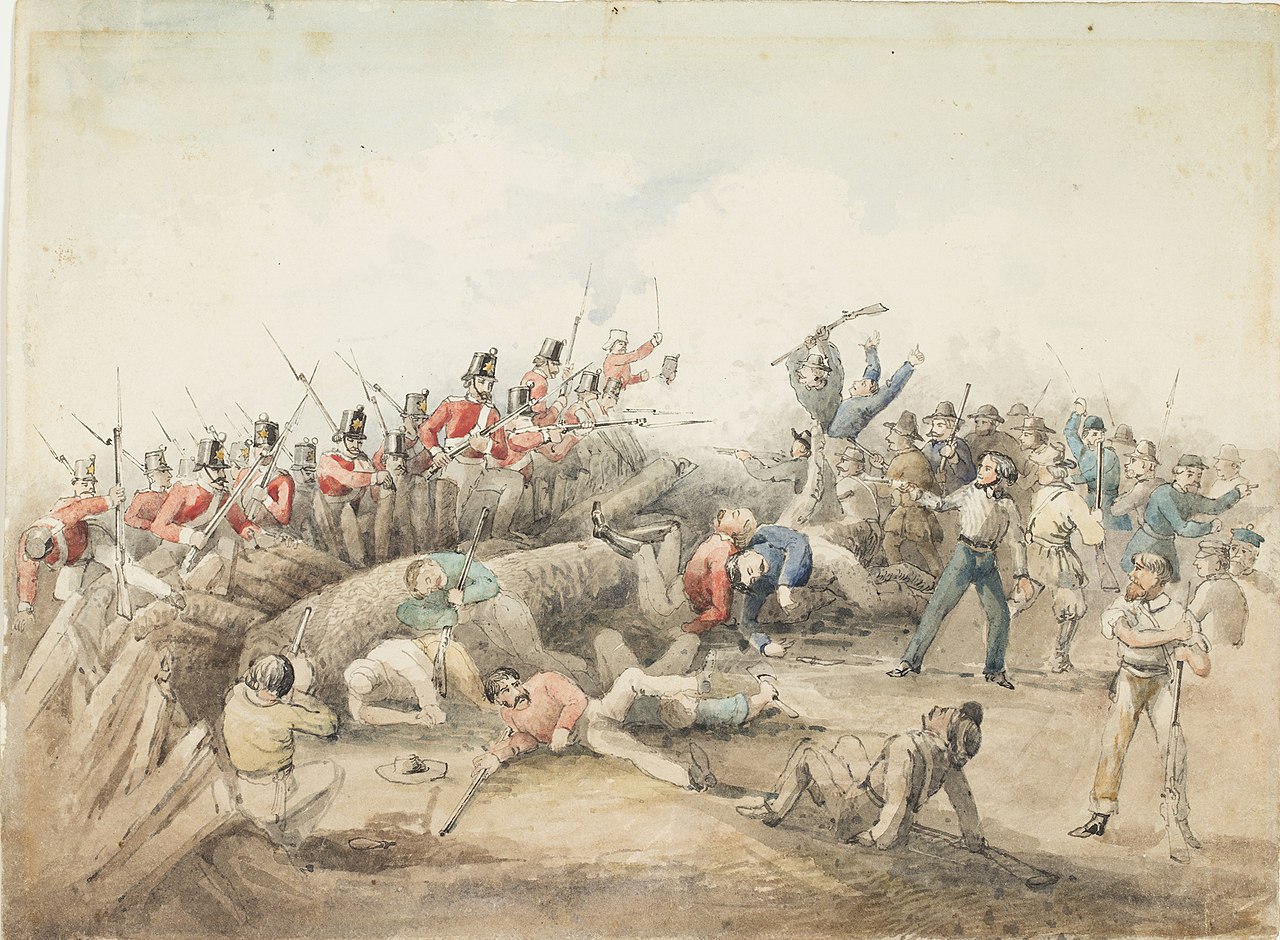
競争の激化に直面したビクトリア朝の鉱夫たちは、鉱業免許料、腐敗した高圧的な役人、そして巡回鉱夫への投票権の欠如について不満を募らせました。1854年10月、バララットで暴動が発生し、3人の鉱夫が逮捕されたことで抗議活動は激化しました。抗議者たちは逮捕された男性たちを支援するためにバララット改革連盟を結成し、男子参政権、鉱業免許と管理の改革、そして小規模農場を促進するための土地改革を要求しました。さらに抗議活動が続き、抗議者たちはバララットのユーレカ・フィールドに柵を築きました。12月3日、軍隊が柵を制圧し、約20人の抗議者を殺害しました。5人の兵士が死亡し、12人が重傷を負いました。[200]
王立委員会の調査結果を受けて、月単位の鉱業免許は、より安価な年間鉱夫権に置き換えられ、鉱夫権保有者は投票権と金鉱地に住居を建設する権利を得ました。ビクトリア州金鉱の管理も改革されました。ユーレカの反乱はすぐにオーストラリアの民族主義神話の一部となりました。[201] [202]
自治と民主主義
.jpg/1280px-%22Interior_of_polling_booth%22_-_David_Syne_and_Co_(1880).jpg)
1851年にニューサウスウェールズ州、ビクトリア州、南オーストラリア州、ヴァン・ディーメンズ・ランドで行われた準代表制立法評議会の選挙では、完全な自治を求める自由主義派の議員が多数選出されました。1852年、イギリス政府はヴァン・ディーメンズ・ランドへの囚人移送を停止すると発表し、東部植民地に対し自治を可能にする憲法の起草を要請しました。[203]
ニューサウスウェールズ、ビクトリア、ヴァン・ディーメンズ・ランド(1856年にタスマニアに改名)の憲法は1855年に、南オーストラリアの憲法は1856年に国王裁可を得た。憲法の内容はそれぞれ異なっていたが、いずれも男子による広範な参政権に基づく下院と、終身任用(ニューサウスウェールズ)またはより限定的な財産参政権に基づく上院を創設した。クイーンズランドは1859年に独立植民地となり、直ちに自治権を獲得した。西オーストラリアは1890年に自治権を認められた。[204]
秘密投票は1856年にタスマニア、ビクトリア、南オーストラリアで導入され、その後ニューサウスウェールズ(1858年)、クイーンズランド(1859年)、西オーストラリア(1877年)でも導入された。南オーストラリア州は1856年に下院における男子普通選挙を導入し、続いてビクトリア(1857年)、ニューサウスウェールズ(1858年)、クイーンズランド(1872年)、西オーストラリア(1893年)、タスマニア(1900年)でも導入された。クイーンズランド州は1885年にアボリジニ男性の投票権を除外した。[205]西オーストラリア州では、アボリジニ、アジア人、アフリカ人、混血の男性に対し、財産に基づく投票資格が設けられていた。[204]
女性参政権を促進する協会は、1884年にビクトリア州、1888年に南オーストラリア州、1891年にニューサウスウェールズ州で設立されました。キリスト教婦人禁酒同盟も1880年代にオーストラリアのほとんどの植民地に支部を設立し、女性の参政権と様々な社会運動を推進しました。[206]女性参政権と被選挙権は、1895年に南オーストラリア州で初めて獲得されました。[207]西オーストラリア州では、1899年に人種制限付きで女性が参政権を獲得しました。オーストラリアの他の地域では、人種制限はあるものの、連邦成立後の10年間でようやく完全な参政権と被選挙権を獲得しました。[208] [209]
長期にわたる好景気(1860年から1890年)
1850年代から1871年にかけて、金はオーストラリア最大の輸出品であり、植民地は様々な消費財や資本財を輸入することができました。ゴールドラッシュ後の数十年間の人口増加は、住宅、消費財、サービス、都市インフラの需要を刺激しました。[210]
1860年代、ニューサウスウェールズ州、ビクトリア州、クイーンズランド州、南オーストラリア州は、家族経営の農場と混合農業と放牧を促進することを目的とした選抜法を導入しました。[211]農業技術の向上とオーストラリアの条件に適応した作物の導入は、最終的に農村部の土地利用の多様化につながりました。1860年代からの鉄道の拡張により、小麦を安価に大量に輸送できるようになり、南オーストラリア州からクイーンズランド州までの小麦地帯の発展を促進しました。[212] [213]

1850年から1880年にかけて、ブッシュレンジャーが復活を遂げた。1850年代からのブッシュレンジャーの復活は、農村部の貧困層の不満を背景にしたものであった(最も有名なブッシュレンジャーであるケリー・ギャングのメンバーの中には、貧しい小規模農家の息子が数人いた)。ネッド・ケリーとそのギャングの功績は、当時、地域社会から多大な支持を集め、全国紙でも広く報道された。1880年にケリーが殺人容疑で逮捕・処刑された後、彼の物語は数多くの芸術作品、文学、大衆文化に影響を与え、彼が社会の不正義や抑圧的な警察と戦う反逆者だったのか、それとも殺人犯だったのかという議論が絶えなかった。[214]

1880年代までに、オーストラリアの人口の半数が町に居住し、オーストラリアはイギリス、アメリカ、カナダよりも都市化が進んでいました。[215] 1870年から1890年の間に、オーストラリアの一人当たり平均所得はアメリカ合衆国よりも50%以上高く、オーストラリアは世界で最も高い生活水準の一つとなりました。[216]
政府部門の規模は、1850年の国家支出の10%から1890年には19%へとほぼ倍増しました。植民地政府は、鉄道、港湾、電信、学校、都市サービスなどのインフラに多額の支出を行いました。これらのインフラのための資金の多くはロンドン金融市場で借り入れられましたが、土地を豊富に持つ政府は、支出を賄い、税金を低く抑えるために土地を売却することもしました。[217] [218]
1856年、シドニーとメルボルンの建設労働者は世界で初めて8時間労働を勝ち取りました。1880年代には労働組合が成長し、低技能労働者や植民地の境界を越えて広がりました。1890年までに男性労働者の約20%が組合に加入しており、これは世界でも最も高い割合の一つでした。[219] [220]
経済成長はオーストラリア北部への拡大を伴いました。1860年代と1870年代にはクイーンズランド州北部で、 1880年代には西オーストラリア州のキンバリーとピルバラ地域で金が発見されました。1870年代と1880年代には、羊と牛の放牧がクイーンズランド州北部、さらにノーザンテリトリーのガルフカントリーと西オーストラリア州のキンバリー地域に広がりました。同じ時期に、クイーンズランド州北部では砂糖農園も拡大しました。[221] [222]
1870年代後半から、労働組合、反中国人同盟、その他の地域団体は、中国人移民と低賃金の中国人労働に反対する運動を展開しました。1880年から1881年、そして1888年にこの問題に関する植民地間会議が開催された後、植民地政府は中国人移民と市民権を徐々に制限する一連の法律を制定しました。[223]
1890年代の不況
.jpg/1280px-The_labor_crisis._-_The_riot_in_George_Street,_Sydney_(1890).jpg)
羊毛価格の下落とメルボルンにおける投機的な不動産バブルの崩壊は、長い好景気の終焉を告げるものでした。多くの大手銀行が業務を停止し、1891年から1895年にかけて経済は20%縮小しました。失業率は労働力のほぼ3分の1にまで上昇しました。この不況の後、1895年から1903年にかけて「連邦干ばつ」が続きました。[224]
1890年、海運業のストライキは埠頭、鉄道、鉱山、羊毛刈り場にも波及した。雇用主は労働者を締め出し、非組合労働者を雇用することで対応し、植民地政府は警察と軍隊を投入して介入した。このストライキは失敗に終わり、その後1891年と1894年に羊毛刈り労働者、1892年と1896年に鉱山労働者が起こしたストライキも失敗に終わった。[225]
1890年の海上ストライキの敗北は、労働組合による政党結成の契機となった。ニューサウスウェールズ州では、労働選挙連盟が1891年の選挙で議席の4分の1を獲得し、自由貿易党と保護主義党の勢力均衡を保った。労働党は1893年の南オーストラリア州とクイーンズランド州の選挙でも議席を獲得した。世界初の労働党政権は1899年にクイーンズランド州で樹立されたが、わずか1週間しか続かなかった。[226]
1896年の植民地間会議において、植民地は中国人移民の制限を「すべての有色人種」に拡大することに合意しました。労働党は、ニューサウスウェールズ州のリード政権が白豪政策の前身となる有色人種制限規制法を可決するのを支持しました。しかし、イギリスと日本がこの法律に反対を表明した後、ニューサウスウェールズ州、タスマニア州、西オーストラリア州は代わりに「望ましくない」移民を制限するためにヨーロッパの言語テストを導入しました。[227]
ナショナリズムの台頭

1880年代後半までに、オーストラリア植民地に住む人々の大多数は生まれつきのアメリカ人でしたが、90%以上はイギリスとアイルランドの血統でした。[228]オーストラリア原住民協会は、大英帝国内でのオーストラリア連邦の設立を訴え、オーストラリアの文学と歴史を促進し、1月26日をオーストラリアの建国記念日とするよう働きかけ、成功しました。[229]

多くの民族主義者は、オーストラリア人は共通の血を分けており、英国の「人種」の一員であると述べました。[230] ヘンリー・パークスは1890年に、「血縁関係の深紅の糸が私たち全員を貫いている…私たちは一つの偉大なオーストラリア国民として団結しなければならない」と述べました。[231]
少数の民族主義者は、統一されたオーストラリアの基盤として、共通の「英国性」ではなく、独自のオーストラリアのアイデンティティを見ていました。急進的な雑誌『ブレティン』やタスマニア州司法長官アンドリュー・イングリス・クラークのように共和主義者もいましたが、英国君主が儀礼的な役割のみを持つ、完全に独立したオーストラリア国家を受け入れる用意のある者もいました。[232]
統一されたオーストラリアは通常、白人のオーストラリアと関連付けられました。1887年、『ブレティン』は、旧世界の宗教的および階級的区分を捨てたすべての白人男性はオーストラリア人であると宣言しました。[233]白人のオーストラリアはまた、安価なアジア人労働者の排除を意味し、これは労働運動によって強く推進された考えでした。[234]
1880年代から1890年代にかけて高まったナショナリズムの感情は、オーストラリア独特の芸術と文学の発展と結びついていました。アーサー・ストリートン、フレデリック・マクカビーン、トム・ロバーツといったハイデルベルク派の画家たちは、ヨーロッパ印象派の画家たちに倣い、屋外で絵画を制作しました。彼らはオーストラリアの風景の光と色彩を捉え、「都市の混在する生活と、駅や森林の特色ある生活」の中にある特異性と普遍性を探求することに尽力しました。[235]
1890年代、ヘンリー・ローソン、バンジョー・パターソン、そしてブレティン紙に所属する他の作家たちは、ブッシュライフの本質や、独立性、禁欲主義、男性的な労働、平等主義、反権威主義、仲間意識といったテーマを探求した詩や散文を制作しました。主人公は、しばしば羊毛刈り師、境界越え、放浪するブッシュ労働者でした。その後の10年間、ローソン、パターソン、そしてスティール・ラッド、マイルズ・フランクリン、ジョセフ・ファーフィーといった他の作家たちは、独特の国民文学を築くのに貢献しました。パターソンのバラード「スノーウィー川の男」(1890年)は人気を博し、彼が作詞した歌「ワルチング・マチルダ」( 1895年頃)は、多くのオーストラリア人にとって非公式の国歌となりました。[236]
連邦運動
ナショナリスト感情の高まりは、植民地間の関税障壁の経済的非効率性、植民地政府によるサービスの重複、そして商品とサービスの単一の全国市場の欠如に対するビジネス界の懸念と一致していました。[237]この地域におけるドイツとフランスの野心に対する植民地の懸念は、防衛目的のためのオーストラリア連邦防衛軍と統一された単軌鉄道網を求めるイギリスの圧力にもつながりました。[238]
1885年にオーストララシア連邦評議会が設立されましたが、権限がほとんどなく、ニューサウスウェールズ州と南オーストラリア州は加盟を拒否しました。[239]

連邦化の障害は、小規模な植民地がニューサウスウェールズ州とビクトリア州に支配されることを恐れていたことです。特にクイーンズランド州は、一般的に白豪主義政策を支持していましたが、サトウキビ産業における南洋諸島民労働者については例外を維持することを望みました。[240]
もう一つの大きな障害は、ニューサウスウェールズ州の自由貿易政策であり、これはビクトリア州や他のほとんどの植民地で支配的だった保護主義政策と衝突しました。しかし、ニューサウスウェールズ州首相ヘンリー・パークスは連邦制の強力な支持者であり、 1889年のテンターフィールド演説は、この大義への支持を集める上で極めて重要な役割を果たしました。[241]
1891年、シドニーで全豪州会議が開催され、すべての植民地とニュージーランドが代表されました。憲法草案は採択されましたが、悪化する経済不況と植民地議会の反対により進展は遅れました。[242]
市民連合連盟が結成され、1893年7月にコロワで開催された会議で、直接選出された代表者による憲法制定会議と、各植民地で提案された憲法を承認するための住民投票を含む、連邦制のための新しい計画が策定されました。ニューサウスウェールズ州の新首相、ジョージ・リードは「コロワ計画」を承認し、1895年には他の首相の大多数を説得して採用させました。[243]
クイーンズランド州を除くすべての植民地は、1897年と1898年に開催された憲法制定会議に代表者を派遣しました。この会議では、英国王室の管轄下にある連邦州からなるコモンウェルスのための憲法案が起草されました。[244]
1898年に行われた住民投票では、ビクトリア州、南オーストラリア州、タスマニア州で憲法に賛成多数が集まりました。しかし、ニューサウスウェールズ州では必要な過半数を獲得できませんでした。[245]他の植民地の首相はニューサウスウェールズ州へのいくつかの譲歩(特に将来の連邦首都を同州に置くこと)に同意し、1899年には西オーストラリア州を除くすべての植民地でさらに住民投票が行われました。すべて賛成票が投じられました。[246]
1900年3月、主要な連邦支持者であるエドマンド・バートンとアルフレッド・ディーキンを含む代表団がロンドンに派遣されました。イギリス政府との交渉の後、連邦法案は1900年7月5日に帝国議会で可決され、7月9日に国王の裁可を得ました。その後、西オーストラリア州は新しい連邦への加盟を投票で決定しました。[247]
連邦成立から戦争へ(1901~1914年)

1901年1月1日、オーストラリア総督ホープタウン卿によってオーストラリア連邦が宣言され、バートンはオーストラリア初代首相に就任しました。[247]最初の連邦選挙は1901年3月に行われ、保護党が自由貿易党を僅差で上回り、オーストラリア労働党(ALP)は3位となりました。労働党は、自らの政策に譲歩した党を支持すると宣言し、バートンの保護党は政権を樹立し、ディーキンが法務長官に就任しました。[248]
1901年移民制限法は、新しいオーストラリア議会で可決された最初の法律の1つでした。白豪主義政策の中心となるこの法律は、オーストラリアの生活水準と大多数のイギリス文化に対する脅威と見なされたアジア人移民を排除するために、ヨーロッパ言語によるディクテーションテストを実施しました。[249] [250]
連邦成立により、連邦は6つの旧オーストラリア植民地の小規模な防衛軍を継承しました。1901年までに、オーストラリアの6つの植民地すべてからの兵士部隊が、ボーア戦争でイギリス軍の一部として活動していました。1902年初頭、イギリス政府がオーストラリアにさらなる部隊派遣を要請すると、オーストラリア政府は国軍派遣で応じました。1902年6月の終戦までに、約16,500人の男性が志願兵として志願しました。[251] [252]
1902年、政府は連邦管轄区域で女性参政権を導入しましたが、同時に、州の管轄区域で既に投票権を持っている場合を除き、先住民を参政権から除外しました。[253]
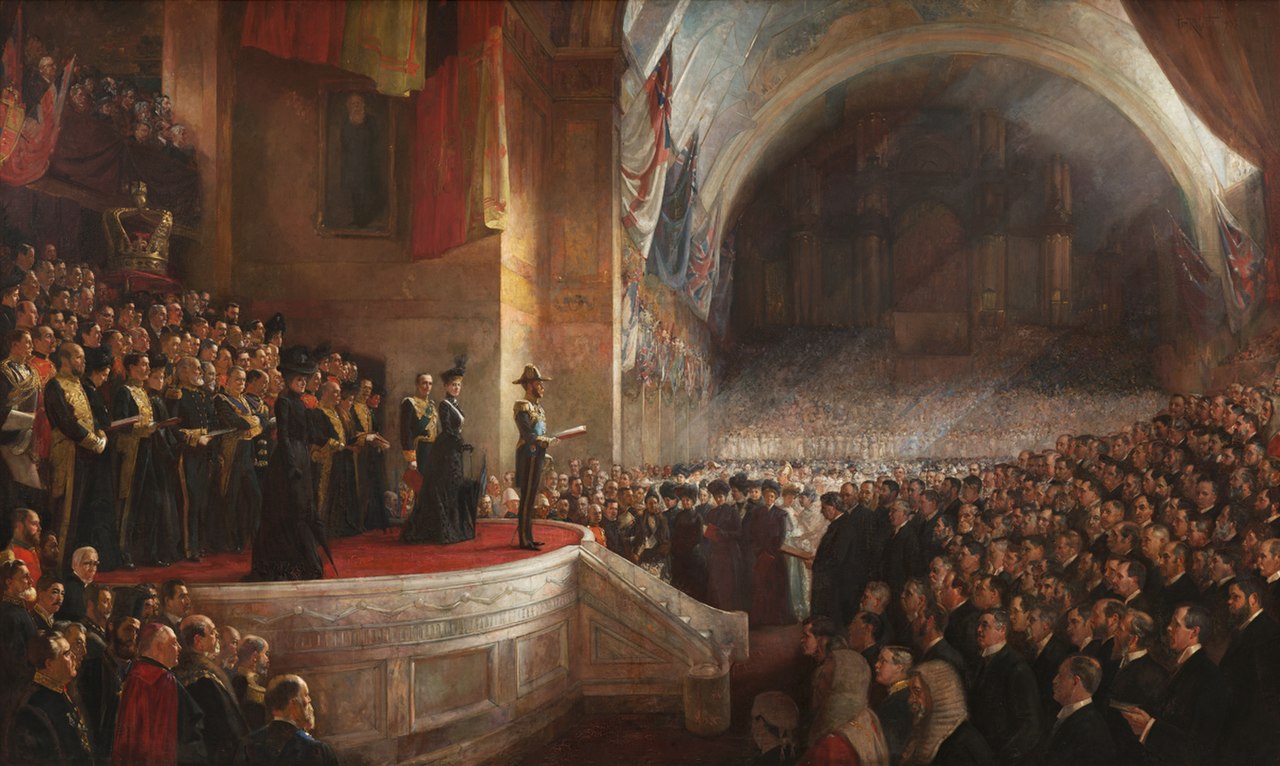

政府はまた、歳入を増やしオーストラリアの産業を保護するために、輸入関税を導入しました。[254]しかし、労使関係法をめぐる意見の相違により、1904年4月にディーキンの保護主義政権は崩壊し、クリス・ワトソン首相の下で初の労働党政権が誕生しました。ワトソン政権自体も4月に崩壊し、リード首相率いる自由貿易政権は、州間の労使紛争を解決するための連邦調停仲裁裁判所の設置法案を成功裏に導入しました。[255]
1905年7月、ディーキンは労働党の支持を得て保護主義政権を樹立した。新政府は一連の社会改革と「新保護」と呼ばれる政策に着手した。この政策では、オーストラリアの産業に対する関税保護は「公正かつ妥当な」賃金の支給と結び付けられていた。 1907年のハーベスター事件では、調停仲裁裁判所のHB・ヒギンズ判事が、妻と3人の子供を養う男性の稼ぎ手のニーズに基づいて基本賃金を設定した。1914年までに、連邦政府とすべての州は労働争議を解決し、賃金と労働条件を定める制度を導入した。[256] [257]
労働党の基盤はオーストラリア労働組合運動であり、1901年には10万人未満の会員数から1914年には50万人以上に成長しました。[258]党はまた、聖職者、カトリック教徒、小規模農家からもかなりの支持を集めました。[259] 1905年、労働党は連邦レベルで「人種的純粋性の維持に基づくオーストラリア感情の涵養」と「独占の共同所有」を含む目標を採択しました。同年、党のクイーンズランド支部は明らかに社会主義的な目標を採択しました。[260]

1906年12月の選挙後、ディーキンの保護主義政権は政権を維持しましたが、1908年に老齢年金法と新たな保護関税が可決された後、労働党は政府への支持を撤回しました。11月、アンドリュー・フィッシャーが2人目の労働党首相に就任しました。これを受けて野党は反労働党連合を結成し、ディーキンは1909年6月に首相に就任しました。[261]
1910年5月の選挙で、労働党は両院で過半数を獲得し、フィッシャーが再び首相に就任しました。労働党政権は、累進地税(1910年)、障害者年金(1910年)、出産手当(1912年)を含む一連の改革を導入しました。政府は連邦銀行(1911年)を設立しましたが、独占企業の国有化と連邦の貿易・商業権限の拡大を求める住民投票は1911年と1913年に否決されました。連邦は1911年に南オーストラリア州から北部準州の責任を引き継ぎました。[262] [263]政府は国防費を増額し、前政権によって導入された義務的な軍事訓練制度を拡大し、オーストラリア海軍を設立しました。[264] [265] [266]
1913年5月の選挙では、新たに誕生した連邦自由党が勝利し、元労働党党首のジョセフ・クックが首相に就任しました。クック政権が連邦公務員における組合員への優遇措置を廃止する法案を可決しようとしたことで、議会は二重に解散されました。 1914年9月の選挙では労働党が快勝し、フィッシャーが首相に復帰しました。[267]
戦前は人口と経済が力強く成長しました。経済は75%成長し、農村産業、建設業、製造業、政府サービス業が牽引しました。[268]人口は1901年の400万人から1914年には500万人に増加しました。1910年から1914年にかけて、30万人弱の移民が到着しました。全員が白人で、ほぼ全員がイギリス出身でした。[269]
第一次世界大戦
戦争中のオーストラリア(1914~1918年)
1914年8月4日、イギリスがドイツに宣戦布告したとき、その宣言は自動的にイギリスのすべての植民地と自治領を巻き込んだ。[270]両大政党はイギリスに2万人のオーストラリア軍を派遣することを申し出た。1903年国防法は徴兵兵の海外派遣を禁じていたため、この約束を果たすために新たな志願兵部隊であるオーストラリア帝国軍(AIF)が編成された。 [271] [272]
戦争に対する国民の熱意は高く、AIFの最初の定員はすぐに埋まった。部隊は1914年11月1日にエジプトに向けて出発し、護衛艦の1隻であるHMASシドニーは途中でドイツ巡洋艦エムデンを沈めた。一方、9月には別のオーストラリア遠征軍がドイツ領ニューギニアを占領した。[273]

エジプトに到着した後、AIFはオーストラリア・ニュージーランド軍団(ANZAC)に編入されました。ANZAC軍団は地中海遠征軍の一員となり、同盟国の戦艦にダーダネルス海峡を開放し、中央同盟国側で参戦したオスマン帝国の首都コンスタンティノープルを脅かす任務を負いました。ANZAC軍団は、フランス、イギリス、インドの軍隊とともに、 1915年4月25日にガリポリ半島に上陸しました。アンザック湾のオーストラリアとニュージーランドの陣地は攻撃に対して脆弱であり、狭い橋頭保の確保において部隊は大きな損失を被りました。遠征軍が目的を達成できないことが明らかになった後、ANZAC軍団は12月に撤退し、続いてイギリスとフランスも1月初旬に撤退しました。[274] [275]
この作戦でオーストラリア軍は約8,000人の命を落とした。[276]オーストラリアの従軍記者たちは、オーストラリア軍の勇敢さと戦闘能力、そしてイギリス軍指揮官の失策を様々な角度から強調した。4月25日は間もなくオーストラリアの国民の祝日となり、「国民性、兄弟愛、そして犠牲」をテーマとしたアンザック・デーとなった。[277] [278]
1916年、オーストラリア軍(AIF)の5個歩兵師団が西部戦線に派遣されました。1916年7月、フロメルの戦いで、AIFは24時間で5,533人の死傷者を出し、これはオーストラリア軍史上最も犠牲の大きい単一の戦闘となりました。[279]ソンムの他の場所では、ドイツ軍陣地への7週間にわたる攻撃で23,000人のオーストラリア兵が死傷しました。1917年春、オーストラリア軍は第一次ビュルクールの戦いと第二次ビュルクールの戦いで10,000人の死傷者を出しました。1917年の夏と秋には、オーストラリア軍はイープル周辺でのイギリス軍の攻勢でも大きな損失を被りました。全体として、1917年には約22,000人のオーストラリア兵が死亡しました。[280]
.jpg/1280px-8th_August_1918_(Will_Longstaff).jpg)
1917年11月、オーストラリア軍の5個師団はオーストラリア軍団に統合され、1918年5月、オーストラリア軍のジョン・モナッシュ将軍が指揮を執りました。オーストラリア軍団は、1918年のドイツ春季攻勢の阻止と、同年8月の連合軍の反攻に深く関与しました。 [281]
中東では、オーストラリア軽騎兵旅団が1916年8月のロマの戦いで活躍しました。1917年には、シナイ半島を通過してパレスチナへの連合軍の進撃に参加しました。1918年には、パレスチナを通過してシリアへ進撃し、10月31日のオスマン帝国の降伏につながりました。[282]
1918年11月11日に戦争が終結するまでに、32万4000人のオーストラリア人が海外で従軍しました。死傷者は6万人、負傷者は15万人で、これは連合軍の中で最も高い死傷率でした。オーストラリア軍はまた、他の連合軍よりも不法滞在、犯罪、投獄率が高かった。[283]
内戦

1914年10月、フィッシャー労働党政権は戦争予防法を導入し、「公共の安全と連邦の防衛を確保するための」規則を制定する権限を与えた。[284] 1915年10月、フィッシャー政権に代わりビリー・ヒューズが首相に就任すると、この法律に基づく規則は、出版物の検閲、公的言論の処罰、そして政府が戦争遂行に有害とみなした組織の弾圧にますます利用されるようになった。[285] [286]反ドイツ連盟が結成され、戦時中、7,000人のドイツ人とその他の「敵性外国人」が強制収容所に送られた。[287] [285]
戦争中、経済は10%縮小しました。戦争開始から2年間はインフレが上昇し、実質賃金は低下しました。[288] [289]賃金の低下と一部の企業による不当利得の認識により、1916年には炭鉱労働者、水辺労働者、羊毛刈り人によるストライキが相次ぎました。[290]
軍隊への入隊者数も減少し、1915年のピーク時の月3万5000人から1916年には月6000人にまで減少しました。[291]これを受けて、ヒューズは海外勤務のための徴兵に関する国民投票を実施することを決定しました。1916年10月の徴兵に関する国民投票が僅差で否決された後、ヒューズと彼の支持者23人は議会労働党を離脱し、旧野党と共に新たな国民党政権を樹立しました。国民党は1917年5月の選挙で快勝し、ヒューズは首相の座に留まりました。[292]
1917年8月から10月にかけて、ニューサウスウェールズ州の鉄道、運輸、水上、石炭労働者による大規模なストライキが発生しましたが、連邦政府とニューサウスウェールズ州政府がストライキ指導者を逮捕し、特別警察官と非組合労働者を組織したため、ストライキは失敗に終わりました。[293]徴兵制に関する2回目の国民投票も12月に否決されました。1918年の入隊者数は戦争中最低となり、12個大隊が解散し、オーストラリア軍(AIF)では反乱が発生しました。[294]
パリ講和会議
ヒューズは1918年6月からロンドンで開催された帝国戦争会議および帝国戦時内閣に出席し、オーストラリア、ニュージーランド、カナダ、南アフリカは、最終的な講和会議でそれぞれ別々に代表を送ることについて英国の支持を取り付けた。[295] [296] 1919年のパリ講和会議で、ヒューズはドイツが戦争の費用を全額負担すべきだと主張したが、最終的にオーストラリアが得た戦争賠償金は500万ポンドにとどまった。オーストラリアと他の自治英国領は、新設の国際連盟の正式加盟国となる権利を勝ち取り、オーストラリアはドイツ領ニューギニアに対する国際連盟の特別委任統治領を獲得し、貿易と移民を管理できるようにした。オーストラリアは、かつてドイツが統治していたナウル島の42%の株式も獲得し、その豊富な過リン酸塩埋蔵量にアクセスできるようになりました。オーストラリアは、国際連盟規約に人種平等条項を入れるという日本の提案に反対して成功しました。これはヒューズが白豪主義政策を危うくすることを恐れたためです。[297]ヴェルサイユ条約の署名国であり、国際連盟の正式加盟国であるオーストラリアは、主権国家としての国際的な承認に向けて重要な一歩を踏み出しました。[298]
戦間期
人々、お金、そして市場(1920年代)


戦後、ビリー・ヒューズ首相は、徴兵制をめぐる深く激しい分裂の後、旧自由党と労働党からの離脱勢力(ヒューズ首相が最も有力であった)から結成された新たな保守勢力、国民党を率いました。1919年のスペイン風邪の大流行により、推定1万2000人のオーストラリア人が死亡し、帰還兵によって持ち帰られたことはほぼ間違いありません。[299]


ロシアにおけるボルシェビキ革命の成功は、多くのオーストラリア人にとって脅威と映ったが、少数の社会主義者にとっては刺激となった。オーストラリア共産党は1920年に結成され、選挙では取るに足らないものであったものの、労働組合運動において一定の影響力を持ち、第二次世界大戦中はモロトフ・リッベントロップ協定を支持したために禁止され、メンジーズ政権は朝鮮戦争中に再び禁止しようとしたが失敗した。分裂があったにもかかわらず、党は冷戦終結時の解散まで活動を続けた。[300] [301]
カントリー党(現在の国民党)は1920年に結成され、独自の農業主義を「カントリーマインドネス」と称して広めました。その目標は、牧場経営者(大規模羊牧場の経営者)と小規模農家の地位向上と、彼らへの補助金の確保でした。[302]労働党を除く主要政党の中で最も長く存続したカントリー党は、 1940年代以降、自由党との連立政権を敷き、オーストラリア、特にクイーンズランド州において主要政党となりました。
戦争の他の重要な影響としては、1923年のビクトリア州警察ストライキを含む、継続的な産業不安が挙げられます。[303]オーストラリアでは、1920年代は産業紛争が特徴的でした。1920年代後半には、ウォーターフロント、炭鉱、木材産業で大規模なストライキが発生しました。労働組合運動は、国民党政府による労働条件の変更と労働組合の力の弱体化への取り組みに応えて、1927年に オーストラリア労働組合評議会(ACTU)を設立しました。
1920年代のアメリカを特徴づけた消費主義、娯楽文化、そして新しい技術は、オーストラリアでも見られました。オーストラリアでは禁酒法は施行されませんでしたが、反アルコール勢力はホテルを午後6時以降に閉鎖し、いくつかの都市郊外では完全に閉鎖することに成功しました。 [304]
毎週200万人以上のオーストラリア人が1250の映画館に足を運んだにもかかわらず、新興の映画産業は10年間で衰退しました。1927年の王立委員会は支援に失敗し、世界初の長編映画『ケリー・ギャング物語』(1906年)の公開で華々しくスタートした映画産業は、 1970年代に復活するまで衰退しました。[305] [306]
1923年、国民党政権の議員たちがWMヒューズの解任に投票したことを受け、スタンリー・ブルースが首相に就任した。1925年初頭の演説で、ブルースは多くのオーストラリア人の優先事項と楽観主義を要約し、「人材、資金、市場こそがオーストラリアの本質的な要件を正確に定義している」と述べ、英国にも同様の要件を求めていると述べた。 [307] 1920年代、開発移民委員会が主導した移民キャンペーンにより、約30万人の英国人がオーストラリアに移住したが、[308]移民や帰還兵を「土地」に定住させる計画は概ね成功しなかった。「西オーストラリア州とクイーンズランド州のドーソンバレーにおける新たな灌漑地域は悲惨な結果に終わった」[309] 。
オーストラリアでは、大規模投資の費用は伝統的に州政府と連邦政府によって賄われており、1920年代には政府による海外からの多額の借り入れが行われていました。1928年には、その4分の3が海外からの融資を調整するため、融資評議会が設立されました。 [310]帝国特恵関税にもかかわらず、イギリスとの貿易収支はうまく達成されませんでした。「1924年から1928年までの5年間で、オーストラリアは輸入の43.4%をイギリスから購入し、輸出の38.7%を販売しました。小麦と羊毛はオーストラリアの全輸出の3分の2以上を占めていました」。これは、わずか2つの輸出品目への危険な依存でした。[311]
オーストラリアは輸送と通信の新しい技術を受け入れました。沿岸帆船は最終的に蒸気船に取って代わられ、鉄道と自動車輸送の改善は仕事と余暇に劇的な変化をもたらしました1918年には、オーストラリア全土に5万台の自動車とトラックがあった。1929年までには50万台になった。[312]駅馬車会社コブ・アンド・カンパニーは1853年に設立され、最終的に1924年に閉鎖された。 [313] 1920年に、クイーンズランドおよびノーザンテリトリー航空サービス(オーストラリアの航空会社カンタス航空の前身)が設立された。[314]ジョン・フリン牧師は、1928年に世界初の航空救急車であるロイヤル・フライング・ドクター・サービスを設立した。 [315]命知らずのパイロット、サー・チャールズ・キングスフォード・スミスは、新しい飛行機の限界まで押し上げ、1927年にオーストラリア一周飛行を完遂し、1928年にはサザンクロス号で米国からハワイとフィジーを経由してオーストラリアまで太平洋を横断した。彼は世界的に有名になり、一連の航空記録を残したが、1935年にシンガポールへの夜間飛行中に行方不明になった。[316]
自治領の地位

オーストラリアは第一次世界大戦後、ウェストミンスター憲章に基づき独立主権国家としての地位を獲得した。これにより、1926年にロンドンで開催された大英帝国首脳会議の報告書であるバルフォア宣言が正式に採択された。この宣言では、大英帝国の自治領を次のように定義している。「これらは大英帝国内の自治共同体であり、地位は平等であり、内政および対外関係のいかなる面においても互いに従属することはないが、国王への共通の忠誠心によって結ばれ、イギリス連邦の一員として自由に結束している。」しかし、オーストラリアは1942年までウェストミンスター憲章を批准しなかった。 [b]歴史家フランク・クロウリーによると、これは第二次世界大戦の危機までオーストラリア人がイギリスとの関係を再定義することにほとんど関心がなかったためである。[318]
1986年のオーストラリア法は、イギリス議会とオーストラリアの各州 の間に残っていたすべてのつながりを排除しました
1927年2月1日から1931年6月12日まで、ノーザンテリトリーは南緯20度で北オーストラリアと中央オーストラリアに分割されました。ニューサウスウェールズ州は1915年にさらに6,677ヘクタールのジャービス湾地域を放棄しました。外部領土が追加されました。ノーフォーク島(1914年)、アシュモア島、カルティエ諸島(1931年)、イギリスから移管されたオーストラリア南極地域(1933年)、イギリスからオーストラリアに移管されたハード島、マクドナルド諸島、マッコーリー島(1947年)。
連邦首都特別区(FCT)は、1911年にニューサウスウェールズ州から分離して設立され、新たな連邦首都キャンベラ( 1901年から1927年まではメルボルンが政府所在地でした)の建設予定地となりました。FCTは1938年にオーストラリア首都特別区(ACT)に改名されました。ノーザンテリトリーは1911年に南オーストラリア州政府の管理から連邦に移管されました。
大恐慌

1929年のウォール街大暴落のかなり前から、オーストラリア経済は多額の対外債務と景気減速に直面していました。[319] [320] 1927年に経済が減速すると、製造業も減速し、利益が落ち込み失業率が上昇するにつれて、国は不況に陥りました。[321]オーストラリアは、特に羊毛と小麦の輸出とロンドンからの借入に大きく依存していたため、1930年代の世界恐慌の影響を深刻に受けました。羊毛と小麦の世界価格は半減し、融資は終了しました。[322] [323]

1929年10月に行われた選挙で、労働党は地滑り的勝利を収め、政権を握りました。前首相のスタンリー・ブルースは議席を失いました。新首相のジェームズ・スカリンと、彼の経験不足の政権は、すぐに一連の危機に直面しました。上院の支配力の欠如、銀行システムの支配力の欠如、そして状況への最善の対処方法についての党内の分裂によって足かせをはめられた政府は、最終的に党を分裂させる解決策を受け入れざるを得ませんでした。ニューサウスウェールズ州のラング首相に傾倒する者もいれば、スカリン首相に傾倒する者もいました
危機を解決するための様々な「計画」が提案された。1930年半ばにイギリスを訪問した英国銀行代表のオットー・ニーマイヤー卿は、政府支出と賃金の削減を含むデフレ計画を提案した。財務大臣テッド・セオドアは軽度のインフレ計画を提案し、ニューサウスウェールズ州の労働党首相ジャック・ラングは、対外債務を放棄する急進的な計画を提案した。[324] 1931年6月に連邦政府と州政府によって最終的に承認された「首相の計画」は、ニーマイヤーが提唱したデフレモデルを踏襲したもので、政府支出の20%削減、銀行金利の引き下げ、増税が含まれていた。[325] 1931年3月、ラングはロンドンでの利息の支払いを中止すると発表し、連邦政府が債務返済に介入した。5月、ニューサウスウェールズ州政府貯蓄銀行は閉鎖を余儀なくされた。メルボルン首相会議は、厳しいデフレ政策の一環として賃金と年金を削減することに合意したが、ラングはこの計画を放棄した。 1932年のシドニー・ハーバーブリッジのグランドオープンは、若い連邦を圧迫していた深刻化する危機にほとんど休息を与えなかった。数百万ポンドの負債が増大し、民衆のデモが行われ、ラング、次いでスカリン、そしてライオンズ連邦政府による動きと反撃が続く中、ニューサウスウェールズ州知事フィリップ・ゲームは、連邦財務省に資金を納付しないというラングの指示を精査していた。ゲームはそれを違法と判断した。ラングは指示の撤回を拒否し、5月13日にゲーム知事によって解任された。6月の選挙で、ラング労働党の議席は大きく減少した。[326]
1931年5月、労働党から離脱したメンバーと国民党が合併し、新たな保守政治勢力、オーストラリア統一党が誕生しました。1931年12月の連邦選挙では、元労働党員のジョセフ・ライオンズ率いるオーストラリア統一党が楽勝しました。彼らは1940年9月まで政権を維持しました。ライオンズ政権は不況からの回復を牽引したとしばしば評価されていますが、そのどれだけが彼らの政策によるものであったかは依然として議論の的となっています。[327]スチュアート・マッキンタイアはまた、オーストラリアのGDPは1931年から1932年、そして1938年から1939年の間に3億8,690万ポンドから4億8,590万ポンドに増加したものの、人口一人当たりの実質国内総生産は「1938年から1939年(70.12ポンド)は1920年から1921年(70.04ポンド)よりもわずか数シリングしか高くなかった」と指摘しています。[328]

オーストラリアは1929年から1930年の金融不況から比較的速やかに回復し、その回復は1932年頃から始まりました。首相のジョセフ・ライオンズは、首相計画に基づく強硬な経済対策を支持し、正統的な財政政策を追求し、ニューサウスウェールズ州首相ジャック・ラングによる対外債務不履行の提案を拒否しました。シドニー研究所のアン・ヘンダーソン氏によると、ライオンズは「予算の均衡、企業のコスト削減、そして信頼回復の必要性」を揺るぎなく信じており、ライオンズ政権時代は、世界恐慌の激動と第二次世界大戦勃発の間のオーストラリアに「安定と、最終的には成長」をもたらしました。賃金の引き下げが実施され、産業関税の保護が維持されました。これは1930年代の原材料価格の低下と相まって、オーストラリア経済の主要雇用者層が農業から製造業へと移行するきっかけとなりました。この移行は、連邦政府による防衛・兵器製造への投資増加によってさらに強化されました。ライオンズは、オーストラリアの輸出の回復が経済回復の鍵だと考えていました。[329]

1932年に29%でピークに達したとよく言われるオーストラリアの失業率については議論があります。「労働組合の数字が最も頻繁に引用されますが、そこにいた人々は…その数字は失業率の程度を過小評価していると考えています」と、歴史家ウェンディ・ローウェンシュタインは大恐慌の口述歴史集に書いています。しかし、デイビッド・ポッツは、「過去30年間…その時代の歴史家たちは、その数字(ピーク時の1932年の29%)を無批判に受け入れ、それを「3分の1」に切り上げるか、3分の1では低すぎると熱心に主張してきた」と主張しました。[330] [331]しかし、ポッツ自身は、全国の失業率のピークは25%であると示唆していました[332]失業率の測定が難しいのは、地域、年齢、性別によって失業率に大きなばらつきがあったためである。歴史家ピーター・スピアリットが収集した統計によると、1933年、シドニー郊外の快適なウラーラでは男性の17.8%、女性の7.9%が失業していた。これは女性の81.9%が働いていたということではなく、仕事に興味があったり仕事を探していたりした女性の7.9%が仕事を見つけられなかったということであり、この数字は当初考えられていたよりもはるかに低い。なぜなら、当時は多くの女性が家にいて、仕事を見つけられなかったためである。
労働者階級の郊外パディントンでは、男性の41.3%、女性の20.7%が失業していると報告されています。[333]ジェフリー・スペンスリーは、男女間の差は別として、建設業などの一部の産業では失業率がはるかに高く、公共行政部門や専門職部門では比較的低いと述べています。[334]地方では、ビクトリア 州北東部や西オーストラリア州など遠く離れた小麦ベルト地帯の小規模農家が最も大きな打撃を受け、収入の多くが利払いに吸収されてしまいました。[335]
経済不況の中、スポーツの驚異的な成功はオーストラリア人の精神を和らげるのに役立ちました1930年、シドニー・クリケット・グラウンドで行われたシェフィールド・シールド・クリケットの試合で、若干21歳のニューサウスウェールズ出身の若きドン・ブラッドマンが、わずか415分で452ランのノーアウトという、それまでのファーストクラス・クリケットの最高打率を打ち破り、記録に名を刻んだ。[336]この新星の世界を席巻したクリケットでの活躍は、オーストラリアで勃発しつつあった大恐慌と第二次世界大戦後の復興期において、オーストラリア国民に大いに必要とされていた喜びをもたらした。1929年から1931年にかけて、競走馬ファーラップがオーストラリアの競馬産業を席巻し、一時は14レース連続で優勝した。[337]有名な勝利には、暗殺未遂事件の後、9ストーン12ポンドの斤量を背負っての1930年のメルボルンカップがある。 [338]ファーラップは1931年にアメリカ合衆国へ渡り、1932年には北米最高賞金レースであるアグアカリエンテハンディキャップを制覇した。その後まもなく、アメリカでの成功を目前にしたファーラップは疑わしい症状を呈し、死亡した。このチャンピオン競走馬は毒殺されたのではないかという憶測が飛び交い、オーストラリアの熱心なファンは衝撃を受けた。[339] 1938年2月5日から12日まで、大英帝国競技大会がシドニーで開催され、シドニーの150周年(オーストラリアにおけるイギリス人入植開始から150年)に重なった。
先住民政策
連邦成立後、アボリジニ問題は州の責任となったが、1911年からは連邦政府が北部準州のアボリジニ人口に関する責任を負うようになった。その時点で、連邦政府とタスマニアを除くすべての州は、アボリジニ保護官と保護委員会を設立する法律を可決し、財産の所有権、居住地、雇用、性的関係、子供の親権など、アボリジニ・オーストラリア人の生活を規制する広範な権限を与えていた。土地を奪われたアボリジニ人口を保護するために、保護区も設立された。教会グループもオーストラリア全土で伝道活動を行い、先住民に避難所、食料、宗教教育、初等教育を提供した。[340]
一部の当局者は、特に先住民、南洋諸島民、アジア人の人口が多いオーストラリア北部において、混血のアボリジニの子供たちの増加を懸念していました。これは、白人オーストラリア政策と矛盾すると見なされていました。アボリジニ・オーストラリア人に関する法律は徐々に厳格化され、当局が混血のアボリジニの子供たちを両親から引き離し、保護区、伝道所、施設、白人雇用主への雇用を容易にしました。[341]
資金の制約、州と準州における政策の優先順位の違い、そして先住民からの抵抗により、先住民を保護区や施設に隔離することは、体系的に達成されることはありませんでした。オーストラリアの人口密度の高い地域では、1920年代には約20%の先住民が保護区に住んでいました。大多数は田舎町の郊外にあるキャンプに住み、少数は都市に住んでいました。大恐慌の間、より多くの先住民が食料と住居を求めて保護区や伝道所に移住しました。1941年までに、ニューサウスウェールズ州の先住民人口のほぼ半数が保護区に住んでいました。[342]
オーストラリア北部では、就労している先住民の大多数が牧畜業に従事しており、キャンプに住み、多くの場合、親戚と共に暮らしていました。また、町や保護区の周辺にキャンプを張る人も多く、保護区、集落、伝道所の管理者による規制のほとんどを回避できました。[343]
1937年の州および連邦当局者による先住民福祉会議は、混血のアボリジニ・オーストラリア人を白人社会に生物学的に吸収する政策を承認した。
先住民の運命は、純血種ではなく、最終的に連邦の人々に吸収されることであり、したがって、あらゆる努力をその目的に向けることを勧告する。[344]
当局は、白人社会への吸収による先住民の同化政策を進歩的なものと見なし、混血の先住民の市民的および経済的平等を最終的に達成することを目指していた。[344]
…すべての州当局の努力は、先住民との混血児を白人の基準で教育し、その後、白人と同じ条件で雇用し、白人社会において白人と対等な立場に立つことを目指して行われるべきである。[345]
その後数十年間、混血の先住民オーストラリア人が家族から引き離される数が増加したが、州および準州は徐々に生物学的同化ではなく文化的同化政策を採用し、児童福祉を理由に正当な引き離しを行った。[346] 1940年、ニューサウスウェールズ州は、混血の先住民の子供が裁判所命令による一般福祉規定の下で家族から引き離される児童福祉モデルを導入した最初の州となった。他の管轄区域は戦後、福祉モデルを導入した。[345]
第二次世界大戦
1930年代の防衛政策

1930年代後半まで、防衛はオーストラリア人にとって重要な問題ではなかった1937年の選挙では、両党とも、日本による中国侵攻の激化とドイツの欧州侵攻を背景に国防費の増額を主張した。しかし、国防費の配分方法については意見の相違があった。統一オーストラリア党政権は、「帝国防衛政策」における英国との協力を重視した。その要となるのは、シンガポールの英国海軍基地と、必要に応じて活用されることが期待される英国海軍の戦闘艦隊であった。 [347]戦間期の国防費はこの優先順位を反映している。1921年から1936年にかけて、オーストラリア海軍には4,000万ポンド、オーストラリア陸軍には2,000万ポンド、オーストラリア空軍(1921年設立、3軍の中で最も若い)には600万ポンドが支出された。1939年には、重巡洋艦2隻と軽巡洋艦4隻を擁する海軍が、最も戦闘能力に優れていた。[348]
.jpg/1280px-HMAS_Sydney_(AWM_301473).jpg)
太平洋における日本の意図を懸念したメンジーズは、東京とワシントンに独立した大使館を設置し、情勢に関する独立した助言を得た。[349] ギャビン・ロングは、労働党野党は製造業の増強と陸軍およびオーストラリア空軍への重点化を通じて国家の自立性を高めることを強く求めており、これは参謀総長ジョン・ラヴァラックも主張していたことだと主張している。[350] 1936年11月、労働党党首ジョン・カーティンは「オーストラリアがイギリスの政治家の能力、ましてや即応性に頼って援軍を派遣することは、オーストラリアの防衛政策の基盤としてあまりにも危険である」と述べた。[351]ジョン・ロバートソンによると、「一部のイギリス指導者も、自国が日本とドイツと同時に戦うことはできないと認識していた」という。しかし、「1937年の帝国会議のような、オーストラリアとイギリスの防衛計画担当者の会議で、この問題が率直に議論されることはなかった」という。[352]
1939年9月までに、オーストラリア軍の正規兵は3000人に達しました。[353] 1938年後半、トーマス・ブレイミー少将が率いる募集活動により、予備民兵はほぼ8万人に増加しました。[354]戦争のために最初に編成された師団は、第2オーストラリア軍第6師団と命名されました。第一次世界大戦には、書類上は5つの民兵師団、第1オーストラリア軍がありました。[355]
戦争


1939年9月3日、ロバート・メンジーズ首相は全国ラジオ放送で次のように述べました。「オーストラリア国民の皆様。ドイツがポーランド侵攻を執拗に続けた結果、イギリスはドイツに宣戦布告し、その結果、オーストラリアも戦争状態にあることを公式にお知らせするのは、私の悲しい義務です。」[356]
こうして、オーストラリアの6年間にわたる世界大戦への関与が始まりました。オーストラリア軍は、トブルク包囲戦におけるドイツ軍戦車部隊の進撃への抵抗、ニューギニア戦線における大日本帝国軍の進撃の撃退、ヨーロッパ上空での爆撃任務の遂行、地中海での海戦への参加など、非常に多様な場所で戦うことになりました。国内では、日本軍の攻撃には、シドニー港への小型潜水艦による空襲や、ノーザンテリトリー州の州都ダーウィンとその近郊への激しい空襲が含まれていました。[357]
国内外での任務のための志願兵募集が発表され、第2オーストラリア帝国軍と市民民兵が地域防衛のために組織された。シンガポールにおけるイギリスの防衛力強化の失敗を懸念したメンジーズは、ヨーロッパへの部隊派遣に慎重だった。1940年6月末までに、フランス、ノルウェー、デンマーク、そして低地諸国はナチス・ドイツの手に落ちた。イギリスは自国の領土のみで孤立無援の状態だった。メンジーズは「全面戦争」を唱え、連邦政府の権限を拡大し、徴兵制を導入した。1940年の選挙後、メンジーズの少数派政権はわずか2人の無所属議員に頼ることになった。[358]
1941年1月、メンジーズはシンガポールの防衛の弱点について議論するためにイギリスへ飛びました。ロンドン大空襲の最中にロンドンに到着したメンジーズは、訪問期間中、ウィンストン・チャーチルのイギリス戦時内閣に招かれました。オーストラリアに戻ると、日本の脅威が差し迫っており、オーストラリア軍はギリシャとクレタ島の戦いで大きな損害を受けていたため、メンジーズは労働党に再び働きかけ、戦時内閣を組閣しました。しかし、彼らの支持を確保できず、議会の過半数も機能しなかったため、メンジーズは首相を辞任しました。連立政権はさらに1か月間政権を維持しましたが、無所属議員たちは党首を変え、ジョン・カーティンが首相に就任しました。[349] 8週間後、日本は真珠湾を攻撃しました
.jpg/1280px-9_Div_Tobruk(AWM_020779).jpg)
1940年から1941年にかけて、オーストラリア軍は、コンパス作戦、トブルク包囲戦、ギリシャ戦役、クレタ島の戦い、シリア・レバノン戦役、第二次エル・アラメインの戦いなど、地中海戦域での戦闘で重要な役割を果たしました。
1941年4月から8月にかけて、レスリー・モーズヘッド中将の指揮下にある約14,000人のオーストラリア軍守備隊は、エルヴィン・ロンメル将軍率いるドイツ・イタリア軍によってリビアのトブルクで包囲されました。ナチスの宣伝担当官、ホー・ホー卿は守備隊を「ネズミ」と嘲笑し、兵士たちは皮肉な賛辞として「トブルクのネズミ」という言葉を使いました。[359]エジプトとスエズ運河の防衛に不可欠であったこの包囲戦により、ドイツ軍の進撃は初めて阻止され、当時ヒトラーに対して単独で立ち向かっていたイギリス連邦の士気は高まりました。[要出典]
1941年11月、 HMAS シドニーがドイツの襲撃艦コルモランとの戦闘で全乗組員を失い、戦争はより身近なものとなりました
オーストラリアの精鋭部隊の大半が中東でヒトラーと戦うために配置されていた中、日本は1941年12月8日(オーストラリア東部時間)、ハワイのアメリカ海軍基地である真珠湾を攻撃した。シンガポール防衛に派遣されたイギリスの戦艦プリンス・ オブ・ウェールズと巡洋戦艦レパルス は、その後まもなく沈没した。オーストラリアは武器、近代的な戦闘機、重爆撃機、そして航空母艦を欠き、攻撃への備えが不十分だった。チャーチルに増援を要請する一方で、カーティンは1941年12月27日、歴史的な声明を発表した。[360]「オーストラリア政府は…太平洋戦争を、民主主義諸国の戦闘計画の方向性について、米国とオーストラリアが最大限の発言権を持つべき主要な戦争と捉えている。いかなる躊躇もなく、オーストラリアは英国との伝統的な絆や親族関係に何の懸念も抱かず、アメリカに期待していることを明確にする。」[361]

イギリス領マラヤは急速に崩壊し、オーストラリア国民に衝撃を与えました。イギリス、インド、オーストラリア軍はシンガポールで無秩序な最後の抵抗を行い、1942年2月15日に降伏しました。約1万5000人のオーストラリア兵が捕虜になりました。カーティンは「オーストラリアのための戦い」がこれから始まると予言しました。2月19日、ダーウィンは壊滅的な空襲に見舞われました。これはオーストラリア本土が敵軍による攻撃を受けた初めてのことでした。その後19か月間、オーストラリアはほぼ100回の空襲を受けました。

歴戦のオーストラリア軍2個師団はすでに中東からシンガポールに向けて出撃していました。チャーチルは彼らをビルマに転進させたかったのですが、カーティンは拒否し、オーストラリアへの帰還を心待ちにしていました。 1942年3月、フランクリン・D・ルーズベルト米大統領は、フィリピン駐留の司令官であるダグラス・マッカーサー将軍に、オーストラリアとの太平洋防衛計画を策定するよう命じました。カーティンは、オーストラリア軍をマッカーサー将軍の指揮下に置くことに同意し、マッカーサー将軍は「南西太平洋軍最高司令官」となりました。こうしてカーティンは、オーストラリアの外交政策の根本的な転換を主導したのです。マッカーサーは1942年3月に司令部をメルボルンに移し、アメリカ軍はオーストラリアに集結し始めました。1942年5月下旬、日本の特殊潜航艇はシドニー港への大胆な襲撃で宿泊船を沈没させました。1942年6月8日、2隻の日本軍潜水艦がシドニー東部郊外とニューカッスル市を短時間砲撃しました。[362]
オーストラリアを孤立させるため、日本はニューギニアのオーストラリア領土にあるポートモレスビーへの海上侵攻を計画した。1942年5月、アメリカ海軍は珊瑚海海戦で日本軍と交戦し、攻撃を阻止した。 6月のミッドウェー海戦で日本海軍は事実上敗北し、日本軍は北からモレスビーへの地上攻撃を開始した。[132] 1942年7月から11月にかけて、オーストラリア軍はニューギニア高地のココダ・トラックを経由してポートモレスビーへの日本軍の攻撃を撃退した。 1942年8月のミルン湾海戦は、連合国軍が日本陸軍に初めて敗北を喫した海戦であった。

一方、北アフリカでは、枢軸国が連合国軍をエジプトに押し戻していた。転機となったのは1942年7月から11月にかけてのことだ。オーストラリア第9師団が、エル・アラメインの第一次および第二次戦闘における激戦の一部で重要な役割を果たし、北アフリカ戦線は連合国有利の展開となった。[363]
1942年11月から1943年1月にかけてのブナ・ゴナの戦いは、 1945年まで続いたニューギニア戦線の苦戦の最終段階の基調を決定づけました。1943年から1944年にかけてのパプア・ニューギニアでの攻勢は、オーストラリア軍がこれまでに実施した一連の連続作戦の中で最大規模のものでした。[364] 1943年5月14日、オーストラリアの病院船セントー号は、医療船として明確に表示されていたにもかかわらず、クイーンズランド沖で日本軍の襲撃によって沈没し、看護スタッフの1人を除く全員を含む268人が死亡し、日本に対する世論をさらに激化させました。[365] [366]
当時、オーストラリアの捕虜は太平洋戦域でひどい虐待を受けていました。1943年、2,815人のオーストラリア人捕虜が日本の泰緬鉄道建設中に死亡しました。[367] 1944年、日本軍は2,000人のオーストラリア人とイギリス人の捕虜にサンダカン死の行進を強制しましたが、生き残ったのはわずか6人でした。これは、戦争中にオーストラリア人に対して行われた最悪の戦争犯罪でした。[368]
マッカーサーは、フィリピンと日本への北上作戦の主力からオーストラリア軍をほぼ排除しました。ボルネオの日本軍基地に対する水陸両用攻撃の指揮はオーストラリアに委ねられました。カーティンは職務の重圧で体調を崩し、終戦の数週間前に亡くなり、ベン・チフリーが後任となりまし た
オーストラリアの戦時人口700万人のうち、6年間の戦争中に約100万人の男女が軍の部門に従軍しました。終戦までに、オーストラリア陸軍には男女合わせて727,200人(うち557,800人が海外で従軍)、オーストラリア空軍には216,900人、オーストラリア陸軍には48,900人が入隊しました。39,700人以上が戦死または捕虜となり、そのうち約8,000人が日本軍の捕虜として死亡しました。[369] [370]
オーストラリアの内戦
.jpg/1280px-Victory_job_(AWM_ARTV00332).jpg)
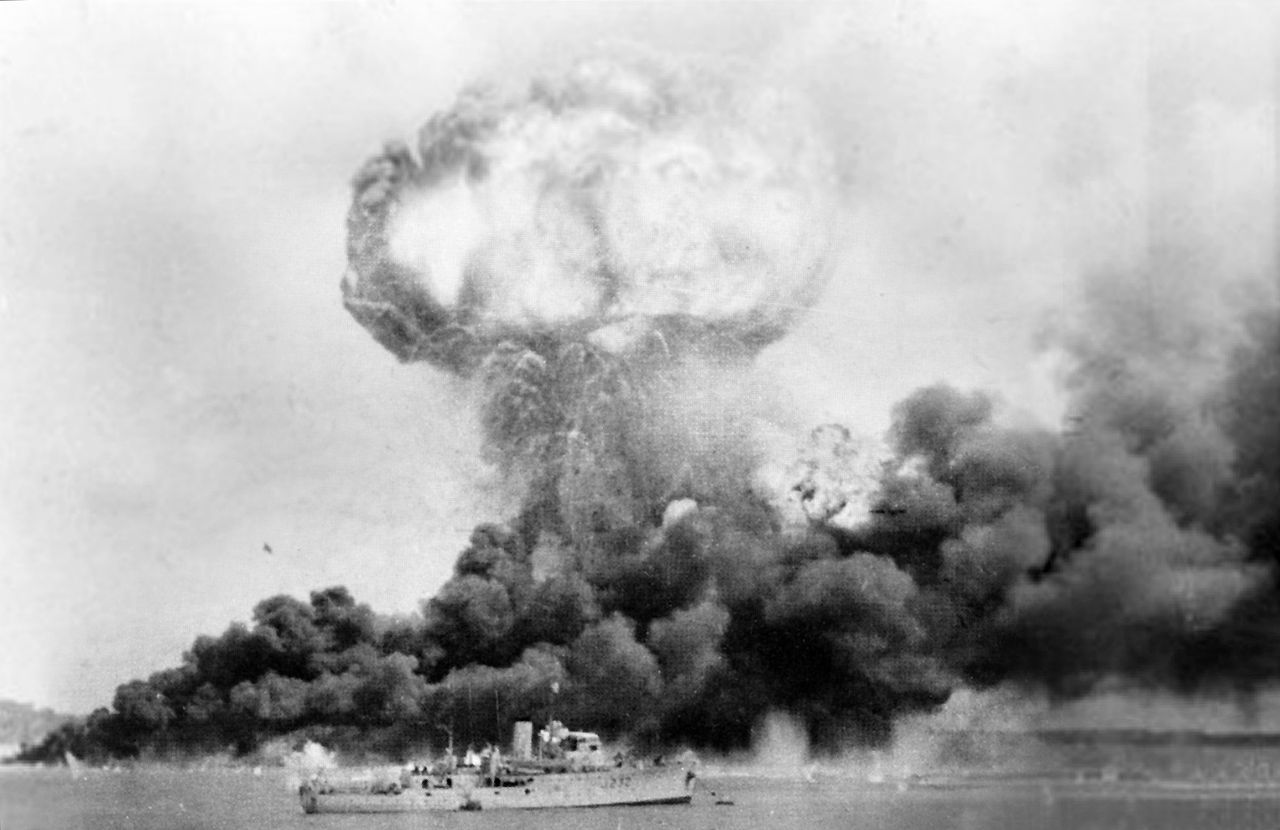
オーストラリアの民間人は、アジアやヨーロッパの他の連合国に比べると枢軸国による被害は少なかったものの、それでも1942年から1943年にかけて日本海軍の直接攻撃と空爆を受け、数百人の死者を出し、日本軍の侵攻への恐怖を募らせました。オーストラリア海域における枢軸国海軍の活動は、オーストラリア人にとって戦争を身近なものにしました。緊縮財政、配給、労働統制など、戦争遂行を支援するための施策が実施されました。[371]オーストラリアの民間人は防空壕を掘り、民間防衛と応急処置の訓練を受け、港湾や都市には対空防衛と海上防衛が整備されました。[372]
オーストラリア経済は第二次世界大戦の影響を著しく受けました。[373] 1943~44年までに戦費はGDPの37%に達し、1939~1940年には4%でした。[374] 1939年から1945年までの戦費総額は29億4900万ポンドでした。[375]

陸軍への入隊のピークは1940年6月から7月で、7万人以上が入隊しましたが、「オーストラリアの経済、家庭、産業生活全体の完全な見直し」に大きく貢献したのは、1941年10月に成立したカーティン労働党政権でした。 [376]燃料、衣類、一部の食料の配給制が導入され、(イギリスほど厳しくはなかったものの)クリスマス休暇が短縮され、「電圧低下」が導入され、一部の公共交通機関が削減されました1941年12月から、政府はダーウィンとオーストラリア北部からすべての女性と子供を避難させ、日本軍の進軍に伴い東南アジアから1万人以上の難民が到着しました。[377] 1942年1月、「オーストラリア人の組織があらゆる防衛要件を満たすために可能な限り最善の方法を確保するため」に人事局が設立されました。[376]ジョン・デッドマン戦時産業組織大臣は、これまでにない緊縮財政と政府の統制を導入し、「サンタクロースを殺した男」というあだ名が付けられました。
1942年5月、オーストラリアで統一税法が導入され、州政府による所得税の統制が廃止されました。「この決定の重要性は、戦争中に行われた他のどの決定よりも大きく、連邦政府に広範な権限を追加し、州の財政的自治権を大幅に削減した。」[378]
戦争により製造業は著しく成長しました。「1939年には工作機械を製造しているオーストラリア企業はわずか3社でしたが、1943年までに100社以上になりました。」[379] 1939年には最前線の航空機がほとんどなかったオーストラリア空軍は、1945年までに連合国空軍の中で4番目に大きな部隊になりました。終戦前にオーストラリアでライセンス生産された航空機は数多くあり、特にボーフォートとボーファイターが有名ですが、航空機の大部分はイギリス製、後にアメリカ製でした。[380] 1942年の4ヶ月で設計・製造されたブーメラン戦闘機は、日本軍の進撃に伴いオーストラリアが陥っていた絶望的な状況を浮き彫りにしました
オーストラリアはまた、事実上ゼロから、直接的な軍需生産に従事する重要な女性労働力を生み出した。1939年から1944年の間に、工場で働く女性の数は17万1000人から28万6000人に増加した。[381]元首相ジョセフ・ライオンズの未亡人であるデイム・エニッド・ライオンズは、1943年に下院議員に選出された初の女性となり、1945年に結成されたロバート・メンジーズ率いる中道右派のオーストラリア自由党に入党した。同選挙で、ドロシー・タングニーが上院議員に選出された初の女性となった。
戦後好景気
メンジーズと自由党の優位性(1949~1972年)

政治的には、ロバート・メンジーズとオーストラリア自由党が戦後直後の大部分を支配し、 1949年にはベン・チフリー労働党政権を破りました。これは、労働党による銀行国有化提案[382]と、オーストラリア共産党主導の壊滅的な石炭ストライキが一因でした。メンジーズは同国で最も長く首相を務め、自由党は農村部を基盤とするカントリー党との連立政権を組み、1972年まですべての連邦選挙で勝利しました
1950年代初頭のアメリカ合衆国と同様に、社会における共産主義の影響の疑惑が政治の緊張を高めました。ソ連支配下の東欧からの難民がオーストラリアに移住し、オーストラリア北部では毛沢東率いる中国共産党が1949年の国共内戦に勝利し、1950年6月には北朝鮮の共産党が韓国に侵攻しました。メンジーズ政権は、アメリカ主導の国連安全保障理事会による韓国への軍事援助要請に応じ、占領下の日本から部隊を転用して朝鮮戦争へのオーストラリアの関与を開始しました。激しい膠着状態を経て、国連と北朝鮮は1953年7月に停戦協定に署名しました。オーストラリア軍はカピョンやマリアンサンなどの主要な戦闘に参加しました。1万7000人のオーストラリア人が従軍し、死傷者は1500人以上、そのうち339人が死亡しました。[383]

朝鮮戦争の間、自由党政権は、1950年に最初は法律で、その後1951年に国民投票で、オーストラリア共産党を禁止しようとした。 [384]両方の試みは失敗に終わったが、ソ連大使館の軽薄な役人ウラジミール・ペトロフの亡命など、さらなる国際的な出来事が差し迫った脅威感を増大させ、労働党が労働組合運動に対する共産党の影響についての懸念から分裂していたため、政治的にはメンジーズの自由党・共産党政権に有利になった。この緊張は別の激しい分裂と分離独立の民主労働党(DLP)の出現につながった。DLPは影響力のある政治勢力であり続け、1974年までしばしば上院で勢力均衡を保っていた。同党の支持は自由カントリー党を支持していた。[385] 1951年にチフリーが死去した後、労働党はH・V・エヴァットが党首となった。エヴァットは1948年から1949年にかけて国連総会議長を務め、1948年の国連世界人権宣言の起草にも尽力した。エヴァットは精神疾患の兆候が見られたため1960年に引退し、アーサー・カルウェルが後任として党首に就任した。副党首には若きゴフ・ホイットラムが就任した。 [386]
メンジーズは、持続的な経済好況と、若者文化とロックンロール音楽、そして1950年代後半のテレビ放送の到来を含む、広範囲にわたる社会変革の始まりの時期に君臨しました。1958年、後にオーストラリアの田舎の音楽の象徴となるオーストラリアのカントリーミュージック歌手スリム・ダスティは、ブッシュバラード「Pub With No Beer」でオーストラリア初の国際的な音楽チャートヒットを記録しました。 [387]一方、ロックンローラーの ジョニー・オキーフの「Wild One」は、全国チャートにランクインした最初の地元レコードとなり、最高20位を記録しました。[388] [389] オーストラリア映画は1950年代に独自のコンテンツをほとんど制作していませんでしたが、イギリスとハリウッドのスタジオは、チップス・ラファティやピーター・フィンチといった地元出身のスターを起用した、オーストラリア文学を題材にし た一連のヒット作を制作しました
メンジーズは君主制と英連邦とのつながりを強く支持し、アメリカ合衆国との同盟を正式化しただけでなく、戦後の日本との貿易も開始し、オーストラリアの石炭、鉄鉱石、鉱物資源の輸出が着実に増加し、日本はオーストラリア最大の貿易相手国となりました。[390]
メンジーズが1965年に引退すると、自由党の党首兼首相はハロルド・ホルトに交代しました。ホルトは1967年12月にサーフィンビーチで泳いでいる際に溺死し、ジョン・ゴートン(1968~1971年)、その後ウィリアム・マクマホン(1971~1972年)に交代しました。
戦後の移民


第二次世界大戦後、チフリー労働党政権は大規模なヨーロッパ移民計画を開始しました。1945年、移民大臣アーサー・カルウェルは「太平洋戦争の経験から一つのことを学ぶとすれば、700万人のオーストラリア人が地球の表面積300万平方マイルを無期限に保持することはできないということだ」と書いています。[391]すべての政党は、国は「人口を増やすか滅びるか」という見解を共有していました。カルウェルは、他国からの移民1人につき10人のイギリス人移民を優先すると述べましたが、政府の支援にもかかわらず、イギリス人移民の数は予想を下回りました。[392]
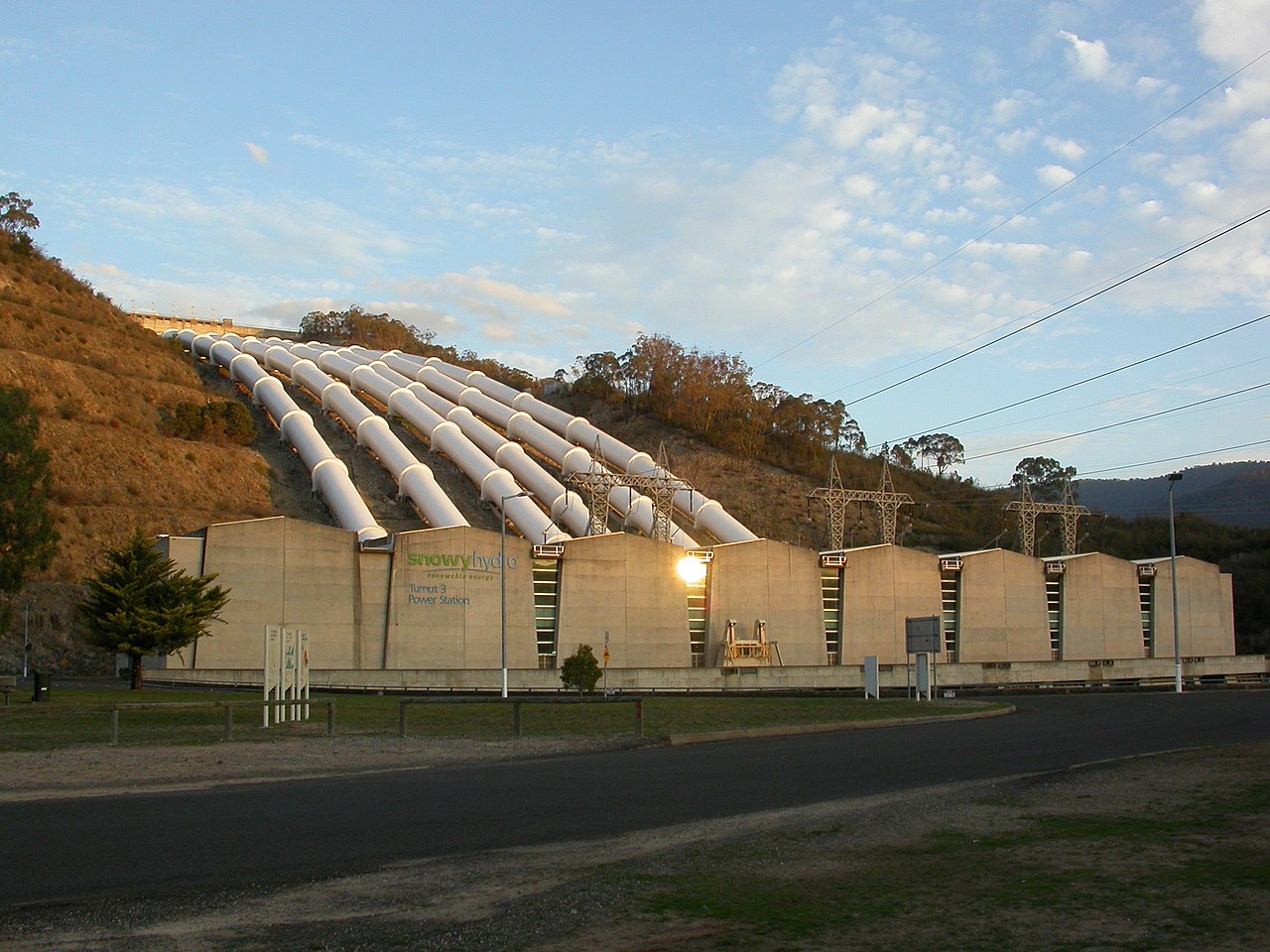
移民によって、南欧と中央欧米からの多くの移民が初めてオーストラリアにやって来ました。1958年の政府のリーフレットは、読者に対し、「オーストラリア人やイギリス人労働者には一般的に受け入れられない、過酷なプロジェクトでの労働力」として、非英国人の熟練移民が必要であると保証しました。[393]オーストラリア経済は戦争で荒廃したヨーロッパとは対照的で、新たに到着した移民は活況を呈する製造業や、スノーウィーマウンテンズ計画などの政府支援プログラムで雇用を見つけました。オーストラリア南東部にあるこの水力発電・灌漑施設は、1949年から1974年の間に建設された16の主要なダムと7つの発電所で構成されていました。これは現在でもオーストラリアで実施された最大の工学プロジェクトです。30カ国以上から10万人の雇用を必要としたこのプロジェクトは、多くの人にとって多文化オーストラリアの誕生を意味しました[394] 1945年から1985年の間に約420万人の移民が到着し、そのうち約40%はイギリスとアイルランドから来た。[395] 1957年の小説『They're a Weird Mob』は、オーストラリアに移住したイタリア人を描いた人気小説だが、著者はオーストラリア生まれの作家ジョン・オグレイディである。オーストラリアの人口は1959年に1000万人に達し、シドニーが最大の都市となった。
1958年5月、メンジーズ政権は1958年移民法を可決し、移民制限法の恣意的に適用されていた口述試験を、経済状況と技能基準を反映した入国許可制度に置き換えた。[396] [397] 1960年代のさらなる改革により、白豪主義政策は事実上終結した。法的には1973年に終了した。
経済成長と郊外生活
オーストラリアは1950年代と1960年代に生活水準と余暇時間の両方が向上し、著しい繁栄を享受しました。[398] [399]一次産品が主流の経済において、以前は小さな役割しか担っていなかった製造業は大きく拡大しました。最初のホールデン車は、1948年11月にゼネラルモーターズ・ホールデンのフィッシャーマンズベンド工場から出荷されました。自動車の所有率は急速に増加し、1949年には1000人中130人でしたが、1961年には1000人中271人になりました。[400] 1960年代初頭までに、ホールデンの競合企業4社がオーストラリアに工場を設立し、8万人から10万人の労働者を雇用していました。「少なくとも5分の4は移民でした。」[401]
1960年代、オーストラリアの製造業の約60%は関税によって保護されていました。企業利益と労働組合運動からの圧力により、関税は高止まりしました。歴史家のジェフリー・ボルトンは、1960年代のこの高関税保護により、一部の産業は「無気力状態に陥り」、研究開発や新市場の開拓を怠ったと示唆しています。[401] CSIROは研究開発を遂行することが期待されていました。
羊毛と小麦の価格は高止まりし、羊毛はオーストラリアの輸出の主力でした。羊の数は1950年の1億1300万頭から1965年には1億7100万頭に増加しました。羊毛生産量は同時期に51万8000トンから81万9000トンに増加しました。[402]小麦、羊毛、鉱物は、1950年から1966年の間に健全な貿易収支を確保しました。[403]
戦後の大規模な住宅ブームにより、オーストラリアの主要都市の郊外では住宅が急速に増加しました。1966年の国勢調査では、オーストラリアの農村部に住む人の割合は1933年の31%からわずか14%に減少し、農場に住む人もわずか8%でした。[404]事実上の完全雇用は、高い生活水準と住宅所有率の劇的な増加を意味し、1960年代までにオーストラリアは世界で最も所得の平等な分配を実現しました。[405] 1960年代初頭、オーストラリア全土を対象としたマクネア調査では、94%の世帯に冷蔵庫、50%に電話、55%にテレビ、60%に洗濯機、73%に掃除機が普及していると推定されました。さらに、ほとんどの世帯が自動車を所有するようになりました。[406]ある調査によると、「1946年にはオーストラリア人の14人に1台の割合で車がありましたが、1960年には3.5人に1台に減少しました。ほとんどの家庭が車を所有していました。」[398]
戦後、車の所有は盛んになり、1970/1971年の国勢調査データによると、1970年代初頭のオーストラリアの世帯の96.4%が少なくとも1台の車を所有していました。しかし、急速な郊外の成長を望ましいと感じていた人は皆ではありませんでした。[407]著名な建築家でデザイナーのロビン・ボイドは、オーストラリアの建築環境を批評し、「『太平洋に横たわるスポンジ』であり、海外の流行を追いかけ、自国で生み出された独創的なアイデアに自信がない」と表現しました[408] 1956年、ダダイズムのコメディアン、バリー・ハンフリーズは、1950年代のメルボルン郊外の堅苦しい家庭に暮らす主婦をパロディ化したエドナ・エヴァレージを演じた(このキャラクターは後に、自己陶酔的なセレブ文化への批判へと変化した)。これは、彼が風変わりなオーストラリア人キャラクターを題材にした数々の風刺的な舞台作品や映画作品の始まりであった。そのキャラクターとは、陰気な老年郊外住民サンディ・ストーン、ロンドン在住の純朴なオーストラリア人バリー・マッケンジー、そしてホイットラム時代の政治家を低俗にパロディ化したサー・レス・パターソンである。[409]
郊外生活を擁護する作家もいた。ジャーナリストのクレイグ・マクレガーは、郊外生活を「…移民のニーズへの解決策…」と捉えた。ヒュー・ストレットンは、「確かに郊外には多くの退屈な生活が営まれている…しかし、そのほとんどは他の環境ではもっとひどいものかもしれない」と主張した。[410]歴史家のピーター・カフリーは、メルボルンの新興郊外で育った子供の生活を、ある種の喜びに満ちた興奮に満ちたものだったと回想している。「私たちの想像力は、生活を退屈なものに感じないようにしてくれた。そして、(近隣の)様々な森林地帯を自由に歩き回れるという野性的な自由もまた、私たちを救ってくれた…郊外の子供たちは、裏庭、通り、小道、遊び場、保護区などに居場所を見つけた…」[411]
1954年、メンジーズ政権は、 ABCが運営する政府資金によるサービスと、シドニーとメルボルンの2つの商業サービスという、新しい2層構造のテレビシステムの導入を正式に発表しました。1956年のメルボルン夏季オリンピックは、オーストラリアへのテレビ導入の大きな原動力となりました。[412]カラーテレビの放送は1975年に開始されました 。
先住民の同化と子供の連れ去り
1951年の州および連邦当局による先住民福祉会議は、すべてのアボリジニ・オーストラリア人の文化的同化政策に合意しました。連邦領土大臣のポール・ハスラックは、「同化とは、実際には、時間の経過とともに、オーストラリアの先住民の血を引く人または混血の人全員が、他の白人オーストラリア人と同じように生活することが期待されることを意味します」と述べました。[345] [346]
同化政策下でも、アボリジニの人々の日常生活に対する統制と混血のアボリジニの子供たちの強制退去は継続されましたが、その統制は主に福祉委員会によって行われ、強制退去は福祉上の理由で正当化されました。北部準州の福祉法に基づき州の保護下に置かれるアボリジニの人々の数は、1950年から1965年の間に倍増し、11,000人に増加しました。[413]
この期間中、同化政策は、アボリジニの家族への悪影響とアボリジニの文化的自治の否定を理由に、アボリジニの人々とその支持者からますます批判を集めました。混血のアボリジニの子供たちの家族からの強制退去は1960年代後半までに減速し、1973年までに連邦政府は先住民オーストラリア人の自決政策を採用しました。 [414]
1997年、人権・機会均等委員会は、1910年から1970年の間にアボリジニの子供の10%から3分の1が家族から引き離されたと推定しました。地域調査によると、1899年から1968年の間にニューサウスウェールズ州ではアボリジニの子供の15%が引き離され、ビクトリア州では約10%でした。[415]ロバート・マンは、オーストラリア全体の数字は10%に近いと推定しています。[416]
リチャード・ブルームは、混血アボリジニの子供たちに対する同化政策と強制移住を要約し、次のように結論づけている。「移住によって子供たちの物質的状況や西洋式の教育が改善されたかもしれないし、移住は必要だったかもしれないし、後から感謝する人もいるかもしれないが、全体としては大惨事だった。…それは、均質化と差異への恐怖を煽り、国家からアボリジニ性を根絶することを目的とした、数万ものアボリジニ家族を分裂させたものだった。」[415]
同盟(1950~1972年)
1950年代初頭、メンジーズ政権はオーストラリアを、米国と伝統的な同盟国である英国と協調する「三国同盟」の一部と見なしていた。[417]当初、「オーストラリア指導部は外交において一貫して親英路線を選択した」が、同時に米国を東南アジアに関与させる機会を模索していた。[418]そのため、政府は朝鮮戦争とマラヤ情勢に軍事力を投入し、 1952年以降は英国の核実験を主催した。[419]オーストラリアはまた、スエズ危機の際に英国を支援した唯一の英連邦加盟国であった。[420]
メンジーズは、1954年、エリザベス2世女王がオーストラリアを初めて訪問した際、熱烈な歓迎を監督しました。1953年の戴冠式に出席するためニューヨークに向かう途中、彼はアメリカの聴衆に向けた気さくなスピーチの中で、次のように述べました。「もちろん、オーストラリアの私たちは、そう言ってもいいなら、根っからのイギリス人です…しかし、私たちは、私たちの国民は、破滅の音が響くまで、共に立ちます。」[421]

東南アジアにおけるイギリスの影響力が低下するにつれ、アメリカとの同盟はオーストラリアの指導者とオーストラリア経済にとってより大きな意味を持つようになりました。イギリスのオーストラリアへの投資は1970年代後半まで大きなものでしたが、イギリスとの貿易は1950年代から1960年代にかけて減少しました。1950年代後半、オーストラリア陸軍はアメリカの軍事装備を使用して再装備を開始しました。1962年、アメリカはノースウェストケープに海軍通信局を設立しました。これは、その後10年間に建設されたいくつかの通信局の最初のものでした。[422] [423]最も重要なことは、1962年にオーストラリア陸軍顧問が、イギリスが関与していなかった紛争が進行中であった南ベトナム軍の訓練を支援するために派遣されたことです
外交官アラン・レヌーフによると、1950年代と60年代のオーストラリア自由党・カントリー党政権下におけるオーストラリアの外交政策の主要テーマは反共産主義だった。[424]もう一人の元外交官グレゴリー・クラークは、20年間オーストラリアの外交政策決定を左右したのは、特に中国への恐怖だったと示唆した。[425] 1951年に調印されたANZUS安全保障条約は、オーストラリアとニュージーランドが日本の再軍備を恐れたことに端を発する。米国、オーストラリア、ニュージーランドに対する義務は曖昧だが、オーストラリアの外交政策の考え方に時として大きな影響を与えてきた。[426]そのわずか3年後に調印されたSEATO条約は、勃発しつつある冷戦においてオーストラリアが米国の同盟国としての立場を明確に示していた。[427]
1960年代、イギリスが共同市場への加盟に苦戦する中、オーストラリアは母国との歴史的な絆が急速に弱まっていることを実感しました。キャンベラは警戒しましたが、ロンドンとの関係を悪化させたくないという理由で、目立たないようにしました。ラッセル・ワードは、1973年のイギリスの欧州加盟の影響は「ほとんどのオーストラリア人、特に高齢者や保守派にとって壊滅的なものに思えた」と述べています。[428]しかし、カール・ブリッジは、オーストラリアはしばらくの間「イギリスへの賭けをヘッジしていた」と指摘しています。ANZUS条約とオーストラリアのベトナム戦争参戦の決定にはイギリスは関与しておらず、1967年までに日本はオーストラリアの主要な輸出相手国となり、米国は最大の輸入元となりました。ブリッジによると、1967年のイギリスによる通貨切り下げにオーストラリアが従わないという決定は、「イギリス領オーストラリアの終焉を象徴するものでした。」[427]
ベトナム戦争
.jpg/1280px-RAAF_TFV_(HD-SN-99-02052).jpg)
1965年までに、オーストラリアはオーストラリア陸軍ベトナム訓練チーム(AATTV)の規模を拡大し、4月には政府は「米国との緊密な協議の後」、南ベトナムに1個大隊を派遣すると突然発表した。[429]議会において、メンジーズ下院議員は「同盟国が我々に要求を突き付けた」という主張を強調した。関係する同盟国とは、おそらく東南アジア条約機構(SEATO)であり、オーストラリアが軍事支援を提供したのは、SEATOの署名国である南ベトナムからの要請があったためであった。[430] 1971年に 公開された文書によると、派兵の決定は南ベトナムの要請ではなく、オーストラリアと米国によって行われたものであった。[431] 1968年までに、ヌイダットの第1オーストラリア機動部隊(1ATF)基地には常時3個大隊のオーストラリア陸軍が駐留し、ベトナム各地に配置されたAATTV顧問団も加わり、人員はピーク時には約8,000人に達し、陸軍の戦闘能力の約3分の1を占めていた。1962年から1972年にかけて、陸軍、海軍、航空部隊を含め、約6万人の人員がベトナムで任務に就いた。[432]
1966年7月、新首相ハロルド・ホルトは、政府として米国、特にベトナムにおけるその役割を支持することを表明した。「アメリカ合衆国の友情と力がなければ、人々はこの国の安全をどこに求めるだろうか。」[433]同年、米国を訪問したホルトは、リンドン・B・ジョンソン大統領にこう保証した。「…ジョンソン大統領を尊敬する友人、忠実な友人であるオーストラリアが、ジョンソン大統領を全面的に支持してくれるという事実に、あなたの心の片隅で勇気づけられていることを願っています。」[434]
1966年12月に行われた選挙で、自由党・共産党政権が圧倒的多数で再選されました。この選挙は、ベトナムを含む国家安全保障問題をめぐって争われました。野党の労働党はベトナムからのすべての徴兵の撤退を主張していましたが、副党首のゴフ・ホイットラムは、労働党政権はベトナムに正規軍を維持する可能性があると述べていました。[435] 1960年から労働党の党首を務めていたアーサー・カルウェルは、数か月後にホイットラムに譲位しました
ホルトの感情と彼の政府が1966年の選挙で勝利したにもかかわらず、米国同様、オーストラリアでも戦争は不人気となった。 1968年初頭のテト攻勢の後、オーストラリアの戦争関与を終わらせようとする運動は勢いを増し、義務的な国民奉仕活動(投票で選ばれる)はますます不人気になった。1969年の選挙では、政府は支持率が著しく低下したにもかかわらず、存続した。1970年半ばにオーストラリア全土で行われたモラトリアム行進には大勢の人が集まった。メルボルンでは労働党議員のジム・ケアンズが10万人の行進を先導した。ニクソン政権が戦争のベトナム化を進め、軍隊の撤退を開始すると、オーストラリア政府もそれに続いた。1970年11月、第1オーストラリア機動部隊は2個大隊に縮小され、1971年11月、第1オーストラリア機動部隊はベトナムから撤退した。 AATTVの最後の軍事顧問は、1972年12月中旬にホイットラム労働党政権によって撤退させられました。[432]
オーストラリア軍のベトナム駐留は10年間続き、純粋に人的被害だけでも500人以上が死亡し、2000人以上が負傷しました。この戦争は、1962年から1972年の間にオーストラリアに2億1800万ドルの費用がかかりました。 [432]
改革と反動(1972~1996年)
ホイットラム政権(1972~1975年)

23年間の野党生活を経て1972年12月に選出された労働党は、ゴフ・ホイットラムの下で政権を獲得し、重要な改革を導入し、連邦予算を拡大しました。福祉給付の拡大と給付率の引き上げ、国民健康保険制度の導入、離婚法の自由化が行われました。連邦政府の学校支出は1975年半ばまでの2年間で3倍になり、連邦政府は高等教育への資金提供の責任を引き受け、授業料を廃止しました外交面では、新政府はアジア太平洋地域を優先し、白豪主義政策を正式に廃止し、中国共産党を承認し、インドネシアとの関係を強化した。徴兵制は廃止され、ベトナムに残っていたオーストラリア軍は撤退した。オーストラリア国歌は「女王陛下万歳」から「オーストラリア万歳」に変更され、連邦レベルでは帝国栄誉制度がオーストラリア勲章に置き換えられ、エリザベス2世女王は正式にオーストラリア女王の称号を与えられた。しかし、政府関係者が北ベトナムへの米国の爆撃再開を批判したことで、米国との関係は緊張した。[436]
In Indigenous affairs, the government introduced a policy of self-determination for Aboriginal people in economic, social and political affairs. Federal expenditure on Aboriginal services increased from $23 million to $141 million during the three years of the government.[437] One of the first acts of the Whitlam government was to establish a Royal Commission into land rights in the Northern Territory under Justice Woodward. Legislation based on its findings was passed into law by the Fraser government in 1976, as the Aboriginal Land Rights Act 1976.[437]
As the Whitlam government did not control the Senate, much of its legislation was rejected or amended. After Labor was re-elected with a reduced majority at elections in May 1974, the Senate remained an obstacle to its political agenda. The government's popularity was also harmed by deteriorating economic conditions and a series of political scandals. Increased government spending, rapid wage growth, booming commodity prices and the first OPEC oil shock led to economic instability. The unemployment rate reached post-war high of 3.6 per cent in late 1974 and the annual inflation rate hit 17 per cent.[438]
In 1974–75 the government began negotiations for US$4 billion in foreign loans to fund state development of Australia's mineral and energy resources. Minister Rex Connor conducted secret discussions with a loan broker from Pakistan, and Treasurer Jim Cairns misled parliament about the issue. Arguing the government was incompetent following the Loans Affair, the opposition Liberal-Country Party Coalition delayed passage of the government's money bills in the Senate, until the government would promise a new election. Whitlam refused and the deadlock ended when his government was controversially dismissed by the Governor-General, John Kerr on 11 November 1975. Opposition leader Malcolm Fraser was installed as caretaker prime minister, pending an election.[439]
Fraser government (1975–83)

The Federal elections of December 1975 resulted in a landslide victory for the Liberal-Country Party coalition and Malcolm Fraser continued as prime minister. The coalition government won subsequent elections in 1977 and 1980, making Fraser the second longest serving Australian prime minister up to that time.[440] The Fraser government espoused a policy of administrative competence and economic austerity leavened by progressive humanitarian, social and environmental interventions. The government enacted the Whitlam government's land rights bill with few changes, increased immigration, and resettled Indochinese refugees. It promoted multiculturalism and in 1978 established the Special Broadcasting Service (SBS) as a multicultural broadcaster. In foreign policy, the government continued Labor's friendly relations with China and Indonesia, repaired the frayed relationship with the US and opposed white minority rule in South Africa and Rhodesia. Environmental policies included banning resource development on Fraser Island and the Great Barrier Reef, creating Kakadu National Park and banning whaling. However, the government refused to use Commonwealth powers to stop the construction of the Franklin Dam in Tasmania in 1982 and the resulting grassroots campaign against the dam contributed to the emergence of an influential environmental movement in Australia.[441][440]
On the economic front, the Fraser government followed a "fight inflation first" strategy centred on budget cuts and wage restraint. Welfare benefits were restricted, the universal healthcare system was partially dismantled, and university funding per student cut. However, by the early 1980s economic conditions were deteriorating. The second oil shock in 1979 increased inflation which was exacerbated by a boom in commodity prices and a sharp increase in real wages. An international recession, the collapse of the resources boom and a severe drought in eastern Australia saw unemployment rise. The government responded with Keynesian deficit spending in its 1982 Budget, but by 1983 both unemployment and annual inflation exceeded 10 per cent. At the Federal elections in March 1983 the coalition government was comfortably defeated by Labor under its popular new leader Bob Hawke.[442]
Labor governments (1983–1996)
_1987_Bob_Hawke,_Moscow,_meeting_with_Gorbachev_(cropped).jpg/1280px-(14)_1987_Bob_Hawke,_Moscow,_meeting_with_Gorbachev_(cropped).jpg)
The Hawke government pursued a mixture of free market reforms and consensus politics featuring "summits" of government representatives, business leaders, trade unions and non-government organisations in order to reach consensus on key issues such as economic policy and tax reform. The centrepiece of this policy mix was an Accord with trade unions under which wage demands would be curtailed in return for increased social benefits. Welfare payments were increased and better targeted to those on low incomes, and a retirement benefits scheme (superannuation) was extended to most employees. A new universal health insurance scheme, Medicare, was introduced.[443] The Treasurer Paul Keating oversaw a program of deregulation and micro-economic reforms which broke with the Keynesian economics that had traditionally been favoured by the Labor party.[444] These reforms included floating the Australian dollar, deregulating capital markets and allowing competition from foreign banks. Business regulation and competition policy was streamlined, tariffs and quotas on imports were reduced, and a number of government enterprises were privatised. The higher education system was restructured and significantly expanded, partly funded by the reintroduction of fees in the form of student loans and "contributions" (HECS).[445] Paul Kelly concludes that, "In the 1980s both Labor and non-Labor underwent internal philosophical revolutions to support a new set of ideas—faith in markets, deregulation, a reduced role for government, low protection and the creation of a new cooperative enterprise culture."[446]
The government's environmental interventions included stopping the Franklin Dam in Tasmania, banning new uranium mines at Jabiluka, and proposing Kakadu National park for world heritage listing.[443] In foreign policy, the government maintained strong relations with the US and was instrumental in the formation of the Asia Pacific Economic Cooperation (APEC) group. Australia contributed naval ships and troops to UN forces in the Gulf War after Iraq had invaded Kuwait in 1990.[443][447]

The government took other initiatives aimed at fostering national unity. The Australia Act 1986 eliminated the last vestiges of British legal authority at the federal level. The Australian Bicentenary in 1988 was the focus of year-long celebrations with multicultural themes. The World Expo 88 was held in Brisbane and a new Parliament House in Canberra was opened.[448]
Strong economic growth, falling unemployment, an unstable opposition, and Bob Hawke's popularity with the public contributed to the re-election of the Hawke government in 1984, 1987 and 1990. However, the economy went into recession in 1990 and by late 1991 the unemployment rate had risen above 10 per cent. With the government's popularity falling, Paul Keating successfully challenged for the leadership and became prime minister in December 1991.[443]
The Keating government's first priority was economic recovery. In February 1992 it released the "One Nation" job creation package and later legislated tax cuts to corporations and individuals to boost economic growth. Unemployment reached 11.4 per cent in 1992—the highest since the Great Depression in Australia. The Liberal-National opposition had proposed an ambitious plan of economic reform to take to the 1993 Election, including the introduction of a Goods and Services Tax. Keating campaigned strongly against the tax and was returned to office in March 1993.[449]

In May 1994 a more ambitious "Working Nation" jobs program was introduced. The Keating government also pursued a number of "big picture" issues throughout its two terms including increased political and economic engagement in the Asia Pacific region, Indigenous reconciliation, and an Australian republic. The government engaged closely with the Indonesian president, Suharto and other regional partners, and successfully campaigned to increase the role of APEC as a major forum for strategic and economic co-operation.[450] A Council for Aboriginal Reconciliation was established and, following the High Court of Australia's historic Mabo decision in 1992, the first national Native Title legislation was introduced to regulate claims and provide compensation for loss of native title.[451] In 1993, Keating established a Republic Advisory Committee to examine options for Australia becoming a republic. The government also introduced family payments and a superannuation guarantee with compulsory employer contributions.[452]
Under the Hawke government the annual migration intake had more than doubled from 54,500 in 1984–85 to more than 120,000 in 1989–90. The Keating government responded to community concerns about the pace of immigration by cutting the immigration intake and introducing mandatory detention for illegal immigrants arriving without a valid visa. Immigration fell to 67,900 in 1992–93.[453][454]
With foreign debt, inflation and unemployment still stubbornly high, Keating lost the March 1996 Election to the Liberals' John Howard.[455][456]
Australia in a globalised world (1996–2022)
Howard government (1996–2007)


John Howard with a Liberal–National Party coalition served as Prime Minister from 1996 until 2007, winning re-election in 1998, 2001 and 2004 to become the second-longest-serving prime minister after Menzies. The Howard government introduced a nationwide gun control scheme following a mass shooting at Port Arthur. The coalition introduced industrial relations reforms in 1996 which promoted individual contracts and enterprise bargaining. In 2006, it introduced the WorkChoices legislation, which made it easier for small businesses to terminate employment. After the 1996 election, Howard and treasurer Peter Costello proposed a Goods and Services Tax (GST) which they successfully took to the electorate in 1998 and implemented in July 2000.[457]
The government responded to the populist anti-immigration policies of Pauline Hanson and her One Nation party by publicly criticising elites and political correctness and emphasising Australian values.[458][459] The coalition initially cut immigration intakes, abolished the Office of Multicultural Affairs and other multicultural agencies, and introduced citizenship tests for migrants.[460] Following a sharp increase in unauthorised arrivals by boat from 1999, the government opened new mandatory detention centres in remote areas of Australia and issued temporary visas for those found to be refugees. Following the Children Overboard affair and the Tampa Affair in 2001, the government introduced the Pacific Solution, which involved moving unauthorised immigrants to detention centres in Nauru and Papua New Guinea while their refugee status was determined, as well as a policy of turning back vessels intercepted at sea.[461]
In Indigenous affairs the Prime Minister rejected calls for a treaty with Indigenous Australians and an apology for past actions which had harmed them. Instead, the government pursued a policy of "practical reconciliation" involving specific measures to improve Indigenous education, health, employment and housing. In response to the High Court's decision in Wik Peoples v Queensland, in 1996, the government amended native title legislation to limit native title claims. In 2007, following the release of the "Little Children are Sacred" report detailing widespread abuse in Aboriginal communities, the Howard government launched the Northern Territory Intervention in order to create a safe environment for Indigenous children. The government's response was criticised by the co-chairs of the report, but was supported by the Labor opposition.[462]
Honouring an election commitment, the Howard government set up a people's convention on an Australian republic. The resulting 1999 referendum on a republic failed. Howard, a monarchist, became the only Australian prime minister to publicly oppose a constitutional amendment he had put to the people.[463][464]


Operation RAMSI (2003–2017) became Australia's largest effort in democracy and nation-building
In 1999, Australia led a United Nations force into East Timor to help establish democracy and independence for that nation, following political violence. Australia also committed to other peacekeeping and stabilisation operations: notably in Bougainville, including Operation Bel Isi (1998–2003); as well as Operation Helpem Fren and the Australian-led Regional Assistance Mission to Solomon Islands (RAMSI) in the early 2000s; and the 2006 East Timorese crisis.[465] Following the September 2001 terrorist attacks on the US and the subsequent War on Terror, Australia committed troops to the Afghanistan War and the Iraq War. These events, along with the 2002 Bali Bombings and other terrorist incidents, led to the creation of a National Security Committee and further anti-terrorist legislation.[457]
In foreign affairs, the government advocated a policy of "Asia first, but not Asia only", emphasising traditional links to the Commonwealth and the US. Relations with Indonesia became strained over East Timor but generally improved after the Bali bombings. Australia's support of US policy during the War on Terror was followed by an Australia-United States Free Trade Agreement in 2004. Trade agreements with Singapore and Thailand were also secured and relations with China improved. Australia joined the US in refusing to ratify the Kyoto Protocol on greenhouse gas emissions, arguing that it would harm Australia's economy and would be ineffective without the participation of China and India.[466]
After initial cuts, the immigration intake increased steadily, with a bias towards skilled workers to meet the needs of a rapidly growing economy. Immigration also became more diverse, with the proportion of immigrants from South Asia increasing from 8 per cent in 1996–97 to 20 per cent in 2007–08. Inbound tourism also grew, helped by the Sydney Olympic games in 2000.[467]
The economy continued its uninterrupted expansion since the early 1990s recession, with record jobs growth and the lowest unemployment rates since the 1970s. Exports, imports and foreign investment grew, and China became Australia's second largest trading partner after Japan. The coalition delivered budget surpluses in most years which, along with the proceeds of government asset sales, were partly invested in a Future Fund to reduce the national debt. Income inequality and private debt increased as the economy expanded, with the biggest increase in incomes accruing to the top 10 per cent of income earners.[468]
By 2007, the Howard government was consistently trailing the Labor opposition in opinion polls, with key issues being rising interest rates, the unpopular Work Choices industrial relations reforms, and climate change policy. There were also leadership tensions between Howard and Costello, and opinion polls indicated a desire for a generational change in leadership. Labor won the November 2007 election with a swing of more than 5 per cent and Howard became only the second sitting prime minister to lose his seat in an election.[469]
Labor governments (2007–2013)

The Rudd government moved quickly to ratify the Kyoto protocols, dismantle the previous government's Work Choices industrial relations reforms, and issue an apology to Aboriginal Australians for past policies, particularly the removal of Aboriginal children from their families.[470] The government was soon confronted by the 2008 financial crisis and the Great Recession, responding with a series of economic stimulus measures worth A$75 billion. Although economic growth slowed in 2008, Australia was one of the few advanced economies in the world to avoid recession.[471]
The Rudd government proposed an emissions trading scheme (ETS) to address climate change, but the legislation was twice rejected in the Senate. After the failed December 2009 UN Climate Change Conference in Copenhagen, the government decided to postpone its ETS until 2013, a decision which saw Labor lose some electoral support to the Greens.[472] The government's proposed a Resources Super Profits Tax adversely affected Labor's support in the resource-rich states of Queensland and Western Australia.[473]

The government changed its predecessor's asylum seeker policy by closing the Nauru processing centre, abolished temporary protection visas and improving the legal rights and processing time for applicants for asylum. However, unauthorised arrivals by boat increased sharply from 2009 and the number in mandatory detention stretched capacity. The new leader of the opposition, Tony Abbot, promised that a coalition government would "stop the boats."[474][475]
In June 2010, with the government behind the opposition in polls and Rudd's popularity falling, the Labor caucus replaced Rudd with Julia Gillard as leader: Australia's first female prime minister.[475] The new leader was able to negotiate concessions on a new mining tax with large mining companies but failed to reach agreement with East Timor on a proposed migration processing centre there.[476]
Following the August 2010 federal election, Gillard formed a minority Labor government with the support of the Australian Greens and three independents.[477] The Gillard government passed enabling legislation for a National Broadband Network, a carbon pricing scheme, a mining tax, a National Disability Insurance Scheme, and school funding reforms.[477] The government negotiated an agreement with Malaysia to process some asylum seekers there but the plan was struck down by the High Court. In response, the government reopened offshore processing centres on Manus Island and Nauru.[478]
Following mounting leadership speculation and poor polling for the government, Rudd defeated Gillard in a leadership ballot in June 2013 and returned as prime minister, promising to replace the carbon tax with an emissions trading scheme and to ensure that people arriving without authority by boat would not be settled in Australia.[479] The opposition, promising to "stop the boats," abolish the carbon tax and mining tax, and reduce the Budget deficit and government debt, won the September 2013 election.[480]
Liberal-National Coalition governments (2013–2022)
The return of the Liberal-National Coalition to power after six years in opposition initially failed to restore stability to the office of prime minister. Prime Minister Tony Abbott's rival Malcolm Turnbull challenged for and won the leadership of the Liberals within Abbott's first term. After Turnbull narrowly returned the coalition to office in 2016, Party dissatisfaction with his leadership saw him replaced by Scott Morrison in 2018.
Abbott government (2013–2015)
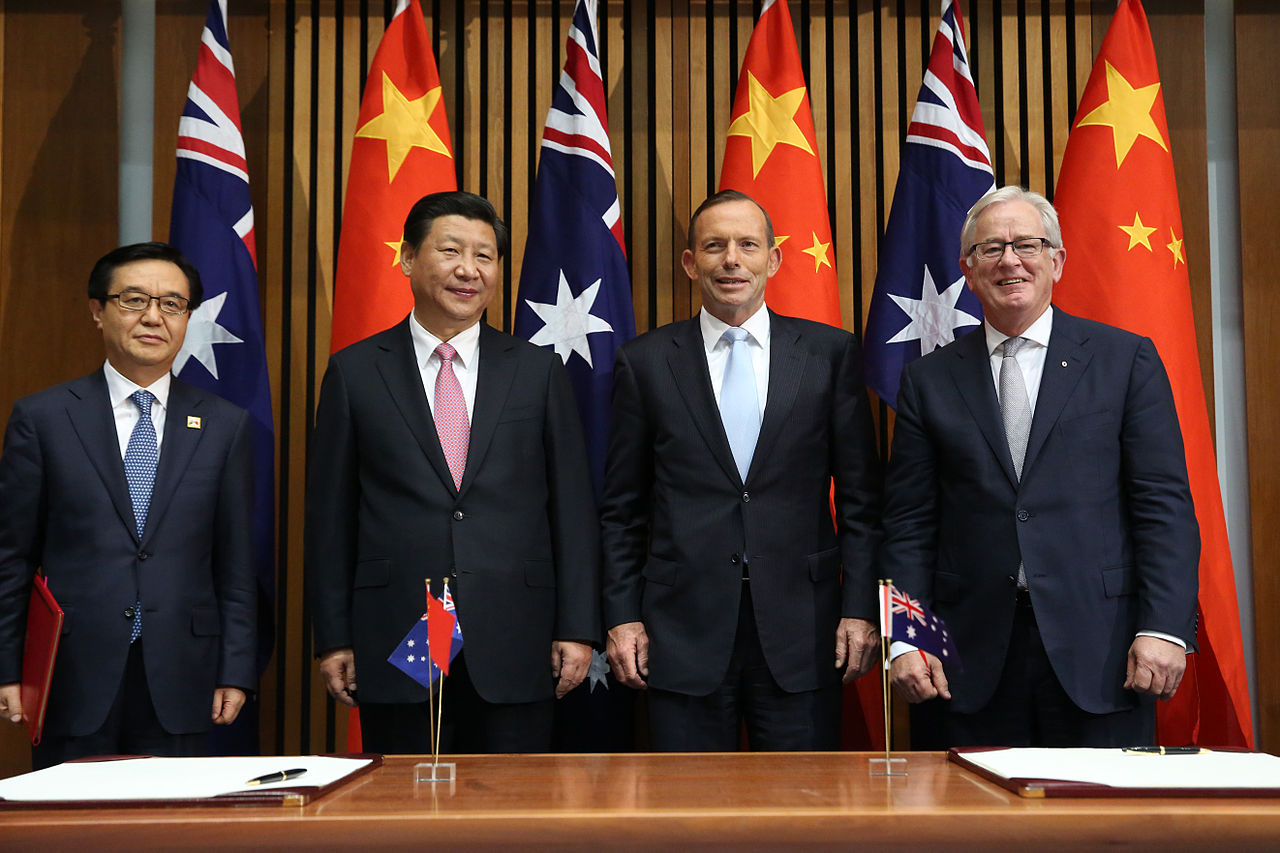
Prime Minister Tony Abbott's government began implementing its policies on unauthorised maritime arrivals, including Operation Sovereign Borders, boat turnbacks, the reintroduction of temporary protection visas, and the resettlement in third countries of those found to be refugees. The number of people arriving by boat fell from 20,587 in 2013 to none in 2015.[481][482] The government continued Australia's economic engagement with Asia, signing trade agreements with China, South Korea and Japan. The government also embraced the intervention against Islamic State in Iraq and Syria, joining the air campaign, sending special forces and providing training for the Iraqi army.[483]
The government's May 2014 Budget proved unpopular, with the perception that it had involved breaking a number of election promises.[484] The government secured the passage of legislation abolishing the carbon tax (July 2014) and the mining tax (September 2014).[483]
The Prime Minister announced a number of decisions – most notably the reintroduction of knighthoods and a knighthood for Prince Philip, Duke of Edinburgh – which had not been approved by cabinet and which were widely criticised in the media.[485][486] By September 2015 the government had lost 30 Newspolls in a row and Malcolm Turnbull successfully challenged for the leadership.[487]
Turnbull government (2015–2018)

The new Turnbull government announced a National Innovation and Science Agenda and delivered a Budget featuring cuts to company tax.[488] However, the elections of July 2016 saw the government returned with a majority on only one and a minority in the Senate. Following a national postal plebiscite, the government legalised same-sex marriage in December 2017.[489]
In foreign affairs, Australia signed a refugee exchange deal with the US in September 2016, allowing those in detention on Manus Island and Nauru to be settled in the US.[490] There was increased tension with China over its policies in the South China Sea, Australia's new laws targeting foreign influence in domestic politics, and a ban, on national security grounds, on Chinese companies supplying Australia's 5G communications network.[491][non-primary source needed]
In 2017, the United States, Japan, India and Australia agreed to revive the Quadrilateral Security Dialogue in order to counter Chinese ambitions in the South China Sea.[492] Australia signed a modified Trans-Pacific Partnership trade agreement with 10 other nations in March 2018 after the US withdrew from the original agreement.[493]
The government lost five by-elections in July 2018. When, in August, the government made a commitment to meet Australia's emissions target under the Paris Agreement, a number of coalition members rebelled. The controversy harmed the government, which had already lost more than 30 consecutive Newspolls. The parliamentary Liberal Party elected Scott Morrison as its new leader and he was sworn in as prime minister.[494]
Morrison government (2018–2022)

The Morrison government committed to remaining in the Paris Agreement, but promised a greater focus on reduction of energy prices.[496] In foreign affairs the government signed the Indonesia–Australia Comprehensive Economic Partnership Agreement (IA-CEPA) in March 2019.[497] The government was returned at the elections of May 2019 with a three-seat majority.
In 2017, a convention of 250 Aboriginal and Torres Strait Islander delegates had issued the Uluru Statement from the Heart, calling for constitutional recognition of Indigenous Australians and a "voice to parliament". In 2019, the government announced a process to ensure that Indigenous Australians would be heard at all levels of government.[498]
In 2020, the government was confronted with the world COVID-19 pandemic and the subsequent recession, Australia's first in 29 years.[499] The government banned foreign nationals entering Australia and formed a National Cabinet to address the crisis.[500][501] The national cabinet announced restrictions on non-essential business, travel and gatherings of people. These restrictions were eased from May, although individual states and territories reimposed restrictions in response to particular outbreaks of COVID-19.[502][503]
The Australian government made provision for $267 billion in economic stimulus measures, and $16.6 billion in health measures in response to COVID-19.[504] As a result of the COVID-19 recession, the unemployment rate peaked at 7.5 per cent in July 2020 before falling to 5.6 per cent in March 2021.[503][505][506]
.jpg/1280px-Prime_Minister_Boris_Johnson_G7_Leaders_Summit_Day_Two_(51785562781).jpg)
In June 2021, Australia and the United Kingdom announced that they had struck a preliminary deal on a free-trade agreement.[507] On 16 September 2021, the government announced that Australia, the United Kingdom and the United States had agreed to the creation of an enhanced trilateral security partnership, dubbed AUKUS. The first initiative under AUKUS would be for Australia to acquire nuclear-powered submarine technology. As a result of the agreement, Australia cancelled its 2016 contract for the diesel-electric Attack-class submarine with the French company Naval Group.[508] The decision drew rebukes from China and France.[509][510]
Post-pandemic (2022–present)
Albanese government (2022–present)

On 23 May 2022, Anthony Albanese was sworn in as Australia's new prime minister. His Labor Party defeated Scott Morrison's conservative government in the election. Prime Minister Albanese formed Australia's first Labor government in almost a decade.[511]
The global surge in inflation that began in 2021, continued. The Australian inflation rate peaked at 7.5% at the end of 2022: a 32 year high. By November 2023, the Reserve Bank of Australia had raised interest rates to 4.35%, a 12-year high.[512]
A referendum on an Indigenous Voice to Parliament was held on 14 October 2023 and was rejected nationally.[513] The Yes23 campaign co-chair Rachel Perkins called for a week of silence "to grieve this outcome and reflect on its meaning and significance".[514]
On 6 October 2025, Australia and Papua New Guinea signed a landmark security and defence cooperation treaty — Australia's first new defence treaty in more than 70 years — aimed at strengthening regional stability, joint military training, and maritime security operations.[515][516]
Society and culture (1960s–present)
Social developments
Indigenous Australians
The 1960s proved a key decade for Indigenous rights in Australia, with the demand for change led by Indigenous activists and organisations such as the Federal Council for the Advancement of Aborigines and Torres Strait Islanders, and embraced by the wider population as citizenship rights were extended.[517]
At the start of the decade, Aboriginal affairs were still regulated by state governments and, in the Northern Territory, by the Australian government. In most states Aboriginal Australians were banned from drinking alcohol and their freedom of association, movement and control of property was restricted. Queensland, Western Australia and the Northern Territory banned Aboriginal people from voting and Queensland and Western Australia controlled their right to marry. Aboriginals were often subjected to unofficial "colour bars" restricting their access to many goods, services and public facilities, especially in country towns.[518]
The official policy of the Australian government and most state governments, however, was the assimilation of Aboriginal people into mainstream culture.[519] In 1962, the Menzies Government's Commonwealth Electoral Act gave Indigenous people the right to vote at federal elections. In 1965, Queensland became the last state to confer state voting rights on Aboriginal people.[520][521]
In 1963, the Yolngu people of Arnhem Land sent a bark petition to the Australian parliament asking for recognition of their traditional land rights. They subsequently took their case to the Supreme Court of the Northern Territory which ruled against them in September 1971.[522] In 1965, Charles Perkins, helped organise freedom rides into parts of Australia to expose discrimination and inequality. In 1966, the Gurindji people of Wave Hill station commenced the Gurindji strike in a quest for equal pay and recognition of land rights.[523]
In 1966, the Australian government gave Aboriginal people the same rights to social security benefits as other Australians.[524] A 1967 referendum changed the Australian constitution to include all Aboriginal Australians in the national census and allow the Federal parliament to legislate on their behalf.[525] A Council for Aboriginal Affairs was established.[526]

Popular acclaim for Aboriginal artists, sportspeople and musicians also grew over the period. In 1968, boxer Lionel Rose was proclaimed Australian of the Year.[527] That same year, artist Albert Namatjira was honoured with a postage stamp.[528] Singer-songwriter Jimmy Little's 1963 Gospel song "Royal Telephone" was the first No.1 hit by an Aboriginal artist.[529] Women's Tennis World No. 1 Evonne Goolagong Cawley was celebrated as Australian of the Year in 1971.[530]
Neville Bonner was appointed Liberal Senator for QLD in 1971, becoming the first federal parliamentarian to identify as Aboriginal. Eric Deeral (QLD) and Hyacinth Tungutalum (NT) followed at a state and territory level in 1974.[531] In 1976, Sir Doug Nicholls was appointed Governor of South Australia, the first indigenous Australian to hold vice-regal office.[532] By the 2020s, Aboriginal representation in the federal parliament had exceeded the proportion of Aboriginal people in the general population, and Australia had its first Aboriginal leader of a state or territory in 2016, when the Country Liberal Party's Adam Giles became Chief Minister of the Northern Territory.[533]
In January 1972, Aboriginal activists erected an Aboriginal "tent embassy" on the lawns of parliament house, Canberra and issued a number demands including land rights, compensation for past loss of land and self-determination. The leader of the opposition Gough Whitlam was among those who visited the tent embassy to discuss their demands.[534]

The Whitlam government came to power in December 1972 with a policy of self-determination for Aboriginal people.[437] The government also passed legislation against racial discrimination and established a Royal Commission into land rights in the Northern Territory, which formed the basis for the Fraser government's Aboriginal Land Rights Act 1976.[437]

Following this, some states introduced their own land rights legislation; however, there were significant limitations on the returned lands, or that available for claim.[535] In 1985, the Hawke government handed over Uluru (Ayers Rock) to traditional owners with a lease back to the Commonwealth.[536]
In 1992, the High Court of Australia handed down its decision in the Mabo Case, holding that Indigenous native title survived reception of English law and continued to exist unless extinguished by conflicting law or interests in land. The Keating government passed a Native Title Act in 1993 to regulate native title claims and established a Native Title Tribunal to hear those claims. In the subsequent Wik decision of 1996, the High Court found that a pastoral lease did not necessarily extinguish native title. In response, the Howard government amended the Native Title Act to provide better protection for pastoralists and others with an interest in land.[537] By March 2019 the Native Titles Tribunal had determined that 375 Indigenous communities had established native title over 39 per cent of the Australian continent, with one third under exclusive title.[538]
From 1960 the Indigenous population grew faster than the Australian population as a whole. The Aboriginal population was 106,000 in 1961 (1 per cent of the total population) but by 2016 had grown to 786,900 (3 per cent of the population) with a third living in major cities.[539] Despite the drift to large cities, the period from 1965 to 1980 also saw a movement of Indigenous Australians away from towns and settlements to small outstations (or homelands), particularly in Arnhem Land and Central Australia. The movement to outstations was associated with a wider trend for the revival of traditional culture. However, the expense of providing infrastructure to small remote communities has seen pressure from federal, state and territory governments to redirect funding towards larger Indigenous communities.[540]
From 1971 to 2006, indicators for Indigenous employment, median incomes, home ownership, education and life expectancy all improved, although they remained well below the level for those who were not indigenous.[541] High rates of Indigenous incarceration and deaths in custody were highlighted by the report of the Royal Commission into Aboriginal Deaths in Custody in April 1991. The Keating government responded with $400 million in new spending to address some of the recommendations of the report. However, by 2001 Indigenous incarceration rates and deaths in custody had increased. Deaths in custody continued at an average of 15 per year during the decade to 2018.[542]
Richard Broome has concluded: "To close the gap [between Indigenous and other Australians] on inequality and well being will take many years; some despairingly say generations. Compensation for lost wages, for missing out on native title settlements and for being removed from one's family and kin remain unresolved."[543]
Women
.jpg/1280px-Faces_of_Australia_22_(5426414793).jpg)
Holmes and Pinto point out that in 1960 domesticity and motherhood were still the dominant conceptions of femininity. In 1961, women made up only 25 per cent of employed adults and twice as many women described their occupation as "home duties" compared with those in paid employment. The fertility rate fell from a post-war high of 3.5 to less than 2 in the 1970s and 1980s.[544][545]
The reforming drive of the 1960s and the increasing influence of the women's movement led to a series of legislative and institutional changes. These included the abolition of the "marriage bar" in the Australian public service in 1966, the Arbitration Commission's equal pay decisions of 1969 and 1972, the introduction of paid maternity leave in the Australian public service in 1973, and the enactment of the federal Sex Discrimination Act in 1984 and the Affirmative Action Act of 1986.[546]
Single mothers' benefits were introduced in 1973 and the Family Law Act 1975 bought in no-fault divorce. From the 1980s there was an increase in government funding of women's refuges, health centres, rape crisis centres and information services.[544] The Australian government began funding child care with the Child Care Act of 1972, although state, territory and local government were still the main providers of funding. In 1984, the Australian government introduced standardised fee relief for child care, and funding was greatly expanded in 1990 by the decision to extend fee relief to commercial child care centres.[547]
According to Holmes and Pinto, reliable birth control, increased employment opportunities, and improved family welfare and childcare provision increased opportunities for women outside motherhood and domesticity.[544] In 2019–20, women were more likely than men to hold a bachelor's degree or higher qualification. 68 per cent of women aged 20–74 years old participated in the labour force, compared with 78 per cent of men. However, 43 per cent of employed women were working part-time, compared with 16 per cent of men, and the average earnings of women working full-time was 14 per cent below that of men.[548]
In the five-to-ten years to 2020, the number of women in private sector leadership roles, female federal Justices and Judges, and federal parliamentarians have all increased gradually.[548] However, between 1999 and 2021, Australia has fallen from ninth to 50th in the Inter-Parliamentary Union's ranking of countries by women's representation in national parliaments.[549]
Migrants and cultural diversity
.jpg/1280px-Malcolm_Fraser_1977_(cropped).jpg)
In 1961, just over 90 per cent of the Australian population had been born in Australia, New Zealand, the UK or Ireland. Another eight per cent had been born in continental Europe.[550] The White Australia policy was in force and migrants were expected to assimilate into the Australian way of life. As the White Australia policy was gradually dismantled in the 1960s and formally abolished in 1973, governments developed a policy of multiculturalism to manage Australia's increasing cultural diversity. In August 1973 Labor's immigration minister Al Grassby announced his vision of A Multi‐Cultural Society for the Future and a policy of cultural pluralism based on principles of social cohesion, equality of opportunity and cultural identity soon gained bipartisan support. The Galbally Report on migrant services in 1978 recommended that: "every person should be able to maintain his or her culture without prejudice or disadvantage and should be encouraged to understand and embrace other cultures." In response to the report, the Fraser government expanded funding for settlement services, established the Australian Institute of Multicultural Affairs (AIMA), funded multicultural and community language education programs in schools and established the multi-lingual Special Broadcasting Service (SBS). State and territory government programs to support multiculturalism followed.[551]
By the late 1980s Australia had a high migrant intake which included significant numbers of new arrivals from Asian and Middle‐Eastern countries, leading to public debate on immigration policy. In 1984, the historian Geoffrey Blainey called for a reduction in Asian immigration in the interests of social cohesion. In 1988, the opposition Leader, John Howard called for the abandonment of multiculturalism, a reduction in Asian immigration, and a focus on 'One Australia'. In the same year, the government's FitzGerald review of immigration recommended a sharper economic focus in the selection of immigrants. In 1989, the Hawke government released its National Agenda for a Multicultural Australia which endorsed respect for cultural diversity and the need for settlement services, but indicated that pluralism was limited by the need for "an overriding and unifying commitment to Australia".[552]
Multicultural programs continued to expand between 1986 and 1996 with an emphasis on addressing disadvantage in migrant communities as well as settlement services for recent migrants.[552] James Walter argues that the Hawke and Keating governments (1983–96) also promoted high migration as a means of improving Australia's competitive advantage in a globalised market.[553]
In 1996, Pauline Hanson, a newly elected independent member of parliament, called for a cut in Asian immigration and an end to multiculturalism. In 1998, her One Nation Party gained 23 per cent of the vote in the Queensland elections. The Howard government (1996 to 2007) initially abolished a number of multicultural agencies and reduced funding to some migrant services as part of a general program of budget cuts. In 1999, the government adopted a policy of "Australian multiculturalism" with an emphasis on citizenship and adherence to "Australian values".[554]
Following 11 September 2001 terrorist attacks in the US, the Bali bombings and other terrorist incidents, some media and political commentary sought to link terrorism with Islam. In 2004, the Human Rights and Equal Opportunity Commission (HREOC) reported an increase in vilification and violence against Australian Muslims and some other minority ethnic groups. The government increased funding for multicultural, citizenship and settlement programs, with an emphasis on the promotion of social cohesion and security.[555] The annual immigration intake also increased substantially as the economy boomed, from 67,900 in 1998–99 to 148,200 in 2006–07. The proportion of migrants selected for their skills increased from 30 per cent in 1995–96 to 68 per cent in 2006–07.[454]
Immigration continued to grow under the Labor government (2007–13) with prime minister Kevin Rudd proclaiming a "big Australia" policy. The immigration intake averaged around 190,000 a year from 2011–12 to 2015–16, a level based on research indicating the optimum level to increase economic output per head of population. India and China became the largest source countries of new migrants.[556] The immigration intake was reduced to 160,000 in 2018–19 as some State governments complained that high immigration was adding to urban congestion. The opposition also linked high immigration with low wages growth while the One Nation party continued to oppose high immigration while proclaiming: "It's okay to be white.".[557]
By 2020, 30 per cent of the Australian population were born overseas. The top five countries of birth for those born overseas were England, China, India, New Zealand and the Philippines. Australia's population encompassed migrants born in almost every country in the world.[558]
Arts and culture
.jpg/1280px-Gorton_Press_Conference_1970_(5).jpg)
The 1960s and 1970s saw increased government support for the arts and the flourishing of distinctively Australian artistic works. The Gorton government (1968–71) established the Australian Council for the Arts, the Australian Film Development Corporation (AFDC) and the National Film and Television Training School.[559] The Whitlam government (1972–75) established the Australia Council with funding to promote crafts, Aboriginal arts, literature, music, visual arts, theatre, film and television.[560]
In 1966, a television drama quota was introduced requiring broadcasters to show 30 minutes of locally produced drama each week. The police series Homicide (1964–67) became the highest rating program and the family drama Skippy the Bush Kangaroo became a local and international success. By 1969 eight of the twelve most popular television programs were Australian. With these successes, locally produced dramas became a staple of Australian television in the 1970s and 1980s. Notable examples include Rush (1973–76), The Sullivans (1976–83) and Neighbours (1985–present).[561]
From the late 1960s a "new wave" of Australian theatre emerged, initially centred on small theatre groups such as the Pram Factory, La Mama and the Australian Performing Group in Melbourne and the Jane Street Theatre and Nimrod Theatre Company in Sydney. Playwrights associated with the new wave included David Williamson, Alex Buzo, Jack Hibberd and John Romeril. Features of the new wave were the extensive use of Australian colloquial speech (including obscenities), the exploration of the Australian identity, and the critique of cultural myths. By the end of the 1970s new Australian plays were a feature of small and large theatre companies in most states.[562]
Support through the AFDC (from 1975 the Australian Film Commission) and state funding bodies, and generous tax concessions for investors introduced in 1981, led to a large increase in Australian produced films. Almost 400 were produced between 1970 and 1985. Notable films include The Adventures of Barry McKenzie (1972), Picnic at Hanging Rock (1975), My Brilliant Career (1979), Breaker Morant (1980), Gallipoli (1981), the Mad Max trilogy (1979–85) and Crocodile Dundee (1986).[563]
In 1973, Patrick White became the first Australian to win a Nobel Prize for Literature.[564] While there were only around twenty Australian novels published in 1973, this had grown to around 300 in 1988.[565] By 1985 more than 1,000 writers had received grants and more than 1,000 books had been subsidised by the Literature Board. Writers who published their first book between 1975 and 1985 include Peter Carey, David Malouf, Murray Bail, Elizabeth Jolley, Helen Garner and Tim Winton.[566]
There was also a growing recognition of Indigenous cultural movements. In the early 1970s Aboriginal elders at Papunya began using acrylic paints to make "dot" paintings based on the traditional Honey Ant Dreaming. Indigenous artists from other regions also developed distinctive styles based on a fusion of modern art materials and traditional stories and iconography.[566] Indigenous writers such as Oodgeroo Noonuccal (Kath Walker), Jack Davis and Kevin Gilbert produced significant work in the 1970s and 1980s. A National Black Theatre was established in Sydney in the early 1970s. The Aboriginal Islander Dance Theatre was established in 1976 and the Bangarra Dance Theatre in 1989. In 1991, the rock band Yothu Yindi, which drew on traditional Aboriginal music and dance, achieved commercial and critical success.[567]
In music, ABC television's popular music show Countdown (1974–87) helped promote Australian music while radio station 2JJ (later JJJ) in Sydney promoted live performances and recordings by Australian independent artists and record labels.[568]
Carter and Griffen-Foley state that by the end of the 1970s: "There was a widely shared sense of Australian culture as independent, no longer troubled by its relationship with Britain."[566] However, by 1990 commentators as diverse as P. P. McGuiness and Geoffrey Serle were complaining that the large increase in artistic works had led to the celebration of mediocrity. Poet Chris Wallace-Crabbe questioned whether Australia had overcome its former "cultural cringe" only to fall into cultural overconfidence.[569]
In the new millennium, the globalisation of the Australian economy and society, and developments in jet travel and the internet have largely overcome the "tyranny of distance" which had influenced Australian arts and culture. Overseas cultural works could be more readily accessed in person or virtually. Australian performers such as the Australian Ballet and Australian Chamber Orchestra frequently toured abroad. The growing number of international art exhibitions, such as Art Basel Hong Kong and the Queensland Art Gallery's Asia-Pacific Triennial of Contemporary Art, have increased the exposure of Australian art in the region and the wider global market.[570][571]
In film, the number of Australian productions averaged 14 per year in the 1970s but grew to 31 per year in the 2000s and 37 per year in the 2010s.[572] A number of Australian directors and actors, including Baz Luhrmann, George Miller, Peter Weir, Cate Blanchett, Nicole Kidman, Geoffrey Rush and others, have been able to establish careers both in Australia and abroad. The technical expertise developed in the Australian industry, and the increasing number of internationally successful Australian directors and actors, encouraged foreign producers to make more films in Australia.[570] Major international productions made in Australia in the past decade include Mad Max: Fury Road and The Great Gatsby.
Carter and Griffen-Follet conclude: "Australia is no longer a Dominion or client state within a closed imperial market, but a medium-sized player, exporter as well as importer, within globalised cultural industries and markets."[573]
Historiography
The first Australian histories, such as those by William Wentworth and James Macarthur, were written to influence public opinion and British policy in the colony. After the Australian colonies became self-governing in the 1850s, colonial governments commissioned histories aimed at promoting migration and investment from Britain. The beginning of professional academic history in Australian universities from 1891 saw the dominance of an Imperial framework for interpreting Australian history, in which Australia emerged from the successful transfer of people, institutions, and culture from Britain. Typical of the imperial school of Australian history was the Australian volume of the Cambridge History of the British Empire published in 1933.[574][575]
Military history received government support after the First World War, most prominently with Charles Bean's 12 volume History of Australia in the War of 1914–1918 (1921–42). Bean's earlier work as Australia's official war correspondent had helped establish the Anzac legend which, according to McKenna: "immediately supplanted all other narratives of nationhood – the march of the explorers, the advance of settlement, Eureka, Federation and Australia's record of progressive democratic legislation."[576]
Radical nationalist interpretations of Australian history became more prominent from the 1930s. Brian Fitzpatrick published a series of histories from 1939 to 1941 which sought to demonstrate the exploitative nature of Britain's economic relationship with Australia and the role of the labour movement in a struggle for social justice and economic independence. Russel Ward's The Australian Legend (1958) sought to trace the origins of a distinctive democratic national ethos from the experiences of the convicts, bushrangers, gold-diggers, drovers and shearers. In the 1960s, Marxist historians such as Bob Gollan and Ian Turner explored the relationship of the labour movement to radical nationalist politics.[577]

In the first two volumes of his History of Australia (1962, 1968) Manning Clark developed an idiosyncratic interpretation of Australian history telling the story of "epic tragedy" in which "the explorers, Governors, improvers, and perturbators vainly endeavoured to impose their received schemes of redemption on an alien, intractable setting".[580] Donald Horne's The Lucky Country (1964) was scathing in its observations of a complacent, dull, anti-intellectual and provincial Australia, with a swollen suburbia and absence of innovation. Geoffrey Blainey's The Tyranny of Distance (1966) argued that Australia's distance from Britain had shaped its history and identity.[581][582]
Humphrey McQueen's A New Britannia (1970) attacked radical nationalist historical narratives from a Marxist New Left perspective. Anne Summers in Damned Whores and God's Police (1975) and Miriam Dixson in The Real Matilda (1976) analysed the role of women in Australian history. Others explored the history of those marginalised because of their sexuality or ethnicity.[583] Oral histories, such as Wendy Lowenstein's Weevils in the Flour (1978) became more prominent.[584]
From the 1970s, histories of the Aboriginal–settler relationship became prominent. Charles Rowley's The Destruction of Aboriginal Society (1970), Henry Reynolds' The Other Side of the Frontier (1981) and Peter Reid's work on the "stolen generations" of Aboriginal children are notable.[585][586]
Post-structuralist ideas on the relationship between language and meaning were influential in the 1980s and 1990s, for example, in Greg Dening's Mr Bligh's Bad Language (1992).[587] Memory studies and Pierre Nora's ideas on the relationship between memory and history influenced work in a number of fields including military history, ethnographic history, oral history and historical work in Australian museums.[588] Interdisciplinary histories drawing on the insights of fields such as sociology, anthropology, cultural studies and environmental studies have become more common since the 1980s.[589] Transnational approaches which analyse Australian history in a global and regional context have also flourished in recent decades.[590]
In the 21st century, most historical works are not created by academic historians, and public conceptions of Australia's history are more likely to be shaped by popular histories, historical fiction and drama, the media, the internet, museums and public institutions. Popular histories by amateur historians regularly outsell work by academic historians. Local histories and family histories have proliferated in recent decades.[591][592]
See also
- Index of Australia-related articles
- Outline of Australia
- History of Australia (1788–1850)
- History of Australia (1851–1900)
- History of Australia (1901–1945)
- History of Australia (1945–present)
- History of Australia (1901–1945)
- History of the Australian Capital Territory
- History of New South Wales
- History of the Northern Territory
- History of Queensland
- History of South Australia
- History of Tasmania
- History of Victoria
- History of Western Australia
- Diplomatic history of Australia
- Australian archaeology
- Economic history of Australia
- History of broadcasting#Australia
- History of monarchy in Australia
- Immigration history of Australia
- LGBTQ history in Australia
- List of conflicts in Australia
- List of towns and cities in Australia by year of foundation
- Military history of Australia
- Peace movements in Australia
- Territorial evolution of Australia
- Timeline of Australian history
- Whaling in Australia
- Women in Australia
Notes
- ^ a b Words crossed out in the original.
- ^ It has also been argued that the signing of the Treaty of Versailles by Australia shows de facto recognition of sovereign nation status. See Sir Geoffrey Butler KBE, MA and Fellow, Librarian and Lecturer in International Law and Diplomacy of Corpus Christi College, Cambridge author of A Handbook to the League of Nations.[317]
References
- ^ Rasmussen, M.; et al. (22 September 2011). "An Aboriginal Australian Genome Reveals Separate Human Dispersals into Asia". Science. 334 (6052): 94–98. Bibcode:2011Sci...334...94R. doi:10.1126/science.1211177. PMC 3991479. PMID 21940856.
- ^ a b Williams, Martin A. J.; Spooner, Nigel A.; McDonnell, Kathryn; O'Connell, James F. (January 2021). "Identifying disturbance in archaeological sites in tropical northern Australia: Implications for previously proposed 65,000-year continental occupation date". Geoarchaeology. 36 (1): 92–108. Bibcode:2021Gearc..36...92W. doi:10.1002/gea.21822. ISSN 0883-6353. S2CID 225321249. Archived from the original on 4 October 2023. Retrieved 16 October 2023.
- ^ Clarkson, Chris; Jacobs, Zenobia; Marwick, Ben; Fullagar, Richard; Wallis, Lynley; Smith, Mike; Roberts, Richard G.; Hayes, Elspeth; Lowe, Kelsey; Carah, Xavier; Florin, S. Anna; McNeil, Jessica; Cox, Delyth; Arnold, Lee J.; Hua, Quan; Huntley, Jillian; Brand, Helen E. A.; Manne, Tiina; Fairbairn, Andrew; Shulmeister, James; Lyle, Lindsey; Salinas, Makiah; Page, Mara; Connell, Kate; Park, Gayoung; Norman, Kasih; Murphy, Tessa; Pardoe, Colin (2017). "Human occupation of northern Australia by 65,000 years ago". Nature. 547 (7663): 306–310. Bibcode:2017Natur.547..306C. doi:10.1038/nature22968. hdl:2440/107043. ISSN 0028-0836. PMID 28726833. S2CID 205257212.
- ^ Veth, Peter; O'Connor, Sue (2013). "The past 50,000 years: an archaeological view". In Bashford, Alison; MacIntyre, Stuart (eds.). The Cambridge History of Australia, Volume 1, Indigenous and Colonial Australia. Cambridge: Cambridge University Press. p. 19. ISBN 978-1-1070-1153-3.
- ^ Fagan, Brian M.; Durrani, Nadia (2018). People of the Earth: An Introduction to World Prehistory. Taylor & Francis. pp. 250–253. ISBN 978-1-3517-5764-5. Archived from the original on 3 December 2023. Retrieved 17 July 2023.
- ^ Oppenheimer, Stephen (2013). Out of Eden: The Peopling of the World. Little, Brown Book Group. pp. 111–. ISBN 978-1-7803-3753-1. Archived from the original on 3 December 2023. Retrieved 17 July 2023.
- ^ Gilligan, Ian (2018). Climate, Clothing, and Agriculture in Prehistory: Linking Evidence, Causes, and Effects. Cambridge University Press. p. 237. ISBN 978-1-1084-7008-7. Archived from the original on 3 December 2023. Retrieved 17 July 2023.
- ^ Veth, Peter; O'Connor, Sue (2013). pp. 19, 23
- ^ Castillo, Alicia (2015). Archaeological Dimension of World Heritage: From Prevention to Social Implications. Springer Science. p. 41. ISBN 978-1-4939-0283-5. Archived from the original on 3 December 2023. Retrieved 17 July 2023.
- ^ Flood, Josephine (2019). pp. 229–30
- ^ a b Veth, Peter; O'Connor, Sue (2013). pp. 29–32
- ^ Flood, Josephine (2019). pp. 233–35
- ^ Veth, Peter; O'Connor, Sue (2013). p. 32
- ^ Veth, Peter; O'Connor, Sue (2013). pp. 34–35
- ^ Flood, Josephine (2019). pp. 21–22, 37
- ^ a b Broome, Richard (2019). Aboriginal Australians. Sydney: Allen and Unwin. p. 12. ISBN 9781760528218.
- ^ "1301.0 – Year Book Australia, 2002" Archived 16 January 2022 at the Wayback Machine. Australian Bureau of Statistics. 25 January 2002.
- ^ McCalman, Janet; Kipen, Rebecca (2013). "Population and health". The Cambridge History of Australia, volume 1. p. 294.
- ^ Flood, Josephine (2019). The Original Australians. Sydney: Allen and Unwin. pp. 30–35. ISBN 9781760527075.
- ^ Flood, Josephine (2019). pp. 27, 189–91, 194–97
- ^ Wyrwoll, Karl-Heinz (11 January 2012). "How Aboriginal burning changed Australia's climate". The Conversation. Archived from the original on 15 July 2023. Retrieved 1 November 2023.
- ^ Clark, Anna (31 August 2023). "Friday essay: traps, rites and kurrajong twine – the incredible ingenuity of Indigenous fishing knowledge". The Conversation. Archived from the original on 11 February 2024. Retrieved 1 November 2023.
- ^ Flood, Josephine (2019). pp. 239–40
- ^ a b Williams, Elizabeth (2015). "Complex hunter-gatherers: a view from Australia". Antiquity. 61 (232). Cambridge University Press: 310–321. doi:10.1017/S0003598X00052182. S2CID 162146349.
- ^ Flood, Josephine (2019). pp. 25–27, 146
- ^ Gammage, Bill (October 2011). The Biggest Estate on Earth: How Aborigines made Australia. Allen & Unwin. pp. 281–304.
- ^ Sutton, Peter; Walshe, Keryn (2021). Farmers or Hunter-Gatherers? The Dark Emu Debate. Melbourne: Melbourne University Publishing. ISBN 9780522877854.
- ^ Flood, Josephine (2019). The Original Australians: The Story of the Aboriginal People (2nd ed.). Crows Nest, NSW: Allen and Unwin. pp. 237–38. ISBN 9781760527075.
- ^ Flood, Josephine (2019). pp. 161–62
- ^ Flood, Josephine (2019). pp. 213–14, 235–37
- ^ Flood, Josephine (2019). pp. 163–69
- ^ J.P. Sigmond and L.H. Zuiderbaan (1979) Dutch Discoveries of Australia. Rigby Ltd, Australia. pp. 19–30 ISBN 0-7270-0800-5
- ^ "Luis Vaez de Torres". Australian Dictionary of Biography. Vol. 2. National Centre of Biography, Australian National University. 1967. ISBN 978-0-522-84459-7. ISSN 1833-7538. OCLC 70677943. Retrieved 8 August 2025.
- ^ Manning Clark; A Short History of Australia; Penguin Books; 2006; p. 6
- ^ a b "Interesting Historical Notes". The Mercury. Hobart, Tas. 9 October 1923. p. 5. Retrieved 29 January 2012 – via National Library of Australia.
- ^ "Nuyts Tercentenary". The Register. Adelaide. 24 May 1927. p. 11. Retrieved 31 January 2012 – via National Library of Australia.
- ^ * Serle, Percival (1949). "Tasman, Abel". Dictionary of Australian Biography. Sydney: Angus & Robertson.
- Edward Duyker (ed.) The Discovery of Tasmania: Journal Extracts from the Expeditions of Abel Janszoon Tasman and Marc-Joseph Marion Dufresne 1642 & 1772, St David's Park Publishing/Tasmanian Government Printing Office, Hobart, 1992, p. 106, ISBN 0-7246-2241-1.
- ^ National Library of Australia, Maura O'Connor, Terry Birtles, Martin Woods and John Clark, Australia in Maps: Great Maps in Australia's History from the National Library's Collection, Canberra, National Library of Australia, 2007, p. 32; this map is reproduced in Gunter Schilder, Australia Unveiled, Amsterdam, Theatrum Orbis Terrarum, 1976, p. 402; and in William Eisler and Bernard Smith, Terra Australis: The Furthest Shore, Sydney, International Cultural Corporation of Australis, 1988, pp. 67–84. Image at: home
- ^ Konishi, Shino; Nugent, Maria (2013). "Newcomers, c. 1600–1800". The Cambridge History of Australia, Volume I. pp. 49–50
- ^ Admiralty instructions cited in A.G.L. Shaw (1972) The Story of Australia. p. 32 Faber and Faber, London. ISBN 0-571-04775-0
- ^ J.C. Beaglehole and R.A. Skelton (eds.), The Journals of Captain James Cook on His Voyages of Discovery, Vol. 1, The Voyage of the Endeavour, 1768–1771, Cambridge University Press for the Hakluyt Society, 1955, pp. 288–91; J.C. Beaglehole, The Life of Captain James Cook, London, The Hakluyt Society, 1955, pp. 273–74.
- ^ Cook, James, Journal of the HMS Endeavour, 1768–1771, National Library of Australia, Manuscripts Collection, MS 1, 22 August 1770
- ^ J.C. Beaglehole and R.A. Skelton (eds.), The Journals of Captain James Cook on His Voyages of Discovery, Vol. 1, The Voyage of the Endeavor, 1768–1771, Cambridge University Press for the Hakluyt Society, 1955, p. 387.
- ^ Bill Gammage, "Early Boundaries of New South Wales", Historical Studies, Vol.19, No.77, 1981, pp. 524–31.
- ^ Konishi, Shino; Nugent, Maria (2013). "Newcomers, c. 1600–1800". The Cambridge History of Australia, Volume I. pp. 60–61.
- ^ Ducksey C. C. Cowan and John C. Camm, Objects & History of the Voyage of Mm. Yves de Kerguelen and François Alesne de Saint Allouarn in the Australian Seas, Paris, 1934. Walter R. Bloom, "The role of a French ecu in the colonization of Western Australia", Journal of the Numismatic Association of Australia, Vol. 9, July 1998, pp. 34–42.
- ^ Macknight, Campbell (2008). "A Useless Discovery? Australia and its People in the Eyes of Others from Tasman to Cook" (PDF). The Globe. 61: 1–10. Archived (PDF) from the original on 9 October 2022.
- ^ Bowen, Emanuel (1747) Complete System of Geography. London.
- ^ John Harris, Navigantium atque Itinerantium Bibilotheca or A Complete Collection of Voyages and Travels, revised by John Campbell, London, 1764, p. 332; cited in J.C. Beaglehole and R.A. Skelton (eds.), The Journals of Captain James Cook on His Voyages of Discovery, Vol. 1, The Voyage of the Endeavor, 1768–1771, Cambridge University Press and the Hakluyt Society, 1955, p. lxxvi.
- ^ Terra Australis Cognita, Edinburgh, 1766, Vol. I, pp. 10, 20–23.
- ^ Robert J. King, "Gustaf III's Australian Colony", The Great Circle, Vol. 27, No. 2, 2005, pp. 3–20. Also through APAFT at: search.informit.com.au/fullText;dn=200600250;res=APAFT
- ^ Christopher, Emma; Maxwell-Stewart, Hamish (2013). "Convict transportation in global context c. 1700–88". The Cambridge History of Australia, Volume I. pp. 70–74.
- ^ David Hill. (2008) 1788; The Brutal Truth of the First Fleet. pp. 9,11. William Heinemann, Australia ISBN 978-1-74166-797-4
- ^ Christopher, Emma; Maxwell-Stewart, Hamish (2013). "Convict transportation in global context c. 1700–88". The Cambridge History of Australia, Volume I. pp. 78, 81
- ^ Harold B. Carter, "Banks, Cook and the Eighteenth Century Natural History Tradition", in Tony Delamotte and Carl Bridge (eds.), Interpreting Australia: British Perceptions of Australia since 1788, London, Sir Robert Menzies Centre for Australian Studies, 1988, pp. 4–23.
- ^ James Matra, 23 August 1783, National Archives, Kew, Colonial Office, Original Correspondence, CO 201/1: 57 61; reproduced in Jonathan King, "In the Beginning..." The Story of the Creation of Australia, From the Original Writings, Melbourne, Macmillan, 1985, p. 18.
- ^ Matra to Fox, 2 April 1784. British Library, Add. Ms 47568; an abridgement of this second version of Matra's proposal was published in issues of The General Advertiser of 12, 13, 17 and 14October 1786, accessible at: www.nla.gov.au/app/eresources/item/3304
- ^ Christopher, Emma; Maxwell-Stewart, Hamish (2013). "Convict transportation in global context c. 1700–88". The Cambridge History of Australia, Volume I. pp. 75–77
- ^ Christopher, Emma; Maxwell-Stewart, Hamish (2013). "Convict transportation in global context c. 1700–88". The Cambridge History of Australia, Volume I. pp. 77–78
- ^ Robert J. King, "Norfolk Island: Phantasy and Reality, 1770–1814", The Great Circle, Vol. 25, No. 2, 2003, pp. 20–41.
- ^ Christopher, Emma; Maxwell-Stewart, Hamish (2013). "Convict transportation in global context c. 1700–88". The Cambridge History of Australia, Volume I. pp. 70, 83–89
- ^ Christopher, Emma; Maxwell-Stewart, Hamish (2013). "Convict transportation in global context c. 1700–88". The Cambridge History of Australia, Volume I. pp. 89
- ^ Alan Frost, The First Fleet: The Real Story, Melbourne, Black Inc., 2011. Rosalind Miles (2001) Who Cooked the Last Supper: The Women's History of the World Three Rivers Press. ISBN 0-609-80695-5 google books
- ^ Peter Hill (2008) pp.141–50
- ^ "SL/nsw.gov.au". SL/nsw.gov.au. 9 October 2009. Archived from the original on 3 February 2013. Retrieved 14 July 2011.
- ^ a b Robert J. King, "Terra Australis, New Holland and New South Wales: the Treaty of Tordesillas and Australia", The Globe, No. 47, 1998, pp. 35–55.
- ^ Robert J. King, "Terra Australis, New Holland and New South Wales: the Treaty of Tordesillas and Australia", The Globe, No. 47, 1998, pp. 35–55, 48–49.
- ^ a b Kingston, Beverley (2006). A History of New South Wales. Cambridge: Cambridge University Press. pp. 1–2.
- ^ a b Fletcher, B.H. (1967). "Arthur Phillip (1738–1814)". Australian Dictionary of Biography. Vol. 2. National Centre of Biography, Australian National University. ISBN 978-0-522-84459-7. ISSN 1833-7538. OCLC 70677943. Retrieved 8 August 2025.
- ^ King, Robert J. "Norfolk Island: Phantasy and Reality, 1770–1814." The Great Circle, Vol. 25, No. 2, 2003, pp. 20–41.
- ^ Macintyre (2020). p. 78
- ^ Karskens, Grace (2013). "The early colonial presence, 1788-1822". In Bashford, Alison; MacIntyre, Stuart (eds.). The Cambridge History of Australia, Volume I, Indigenous and colonial Australia. Cambridge: Cambridge University Press. pp. 90–114. ISBN 9781107011533.
- ^ Shaw, A. G. L. (1966). "William Bligh (1754–1817)". Australian Dictionary of Biography. National Centre of Biography, Australian National University. pp. 118–122. ISBN 978-0-522-84459-7. ISSN 1833-7538. OCLC 70677943. Retrieved 8 August 2025.
- ^ Macintyre (2020). p. 65.
- ^ a b Kingston, Beverley (2006). A History of New South Wales. Cambridge: Cambridge University Press. pp. 118–19. ISBN 9780521833844.
- ^ Karskens, Grace (2013). pp. 115–17
- ^ McLachlan, N. D. (1967). "Lachlan Macquarie (1762–1824)". Australian Dictionary of Biography. Vol. 2. National Centre of Biography, Australian National University. ISBN 978-0-522-84459-7. ISSN 1833-7538. OCLC 70677943. Retrieved 8 August 2025.
- ^ Macintyre (2020). pp. 54–59
- ^ Macintrye (2020). pp. 55, 60, 77
- ^ McCalman, Janet; Kippen, Rebecca (2013). "Population and health". The Cambridge History of Australia, Volume I. p. 297.
- ^ Ford, Lisa; Roberts, David Andrew (2013). "Expansion, 1820–1850". The Cambridge History of Australia, Volume I. pp. 128–135.
- ^ W.P. Driscoll and E.S. Elphick (1982) Birth of A Nation p. 147-48. Rigby, Australia. ISBN 0-85179-697-4
- ^ Historical Records of Australia, Series III, Vol. V, 1922, pp. 743–47, 770.
- ^ Ford, Lisa; Roberts, David Andrew (2013). p.138
- ^ Macintyre (2020). pp. 46–48,
- ^ Karskens, Grace (2013). "The early colonial presence, 1788–1822". In The Cambridge History of Australia, Volume I. p. 108.
- ^ Russell, Penny (2013). "Gender and colonial society". The Cambridge History of Australia, Volume I. pp. 464–65.
- ^ Macintyre (2020). p. 65
- ^ Macintyre (2020). pp. 84–85
- ^ "Governor Bourke's proclamation 1835 (UK)". Museum of Australian Democracy. Retrieved 22 July 2021.
- ^ Shaw (1983), pp. 118–119.
- ^ Macintyre (2020). pp. 85-86
- ^ "King George's Sound Settlement". State Records. State Records Authority of New South Wales. Archived from the original on 24 June 2014. Retrieved 14 May 2014.
- ^ Ford, Lisa; Roberts, David Andrew (2013). p.73
- ^ Macintyre (2020). pp. 86–87
- ^ a b Ford, Lisa; Roberts, David Andrew (2013). pp. 139–40
- ^ a b Macintyre (2020). pp. 87–88
- ^ "Foundingdocs.gov.au". Foundingdocs.gov.au. Archived from the original on 2 June 2011. Retrieved 14 July 2011.
- ^ "Foundingdocs.gov.au". Foundingdocs.gov.au. Archived from the original on 2 June 2011. Retrieved 14 July 2011.
- ^ "Parliament.sa.gov.au". Parliament.sa.gov.au. 21 August 2006. Archived from the original on 6 July 2011. Retrieved 14 July 2011.
- ^ Macintyre (2020). p. 88
- ^ Curthoys, Ann; Mitchell, Jessie (2013). "The advent of self-government". The Cambridge History of Australia, Volume I. pp. 163–64.
- ^ Shaw (1983), pp. 137–38.
- ^ Bassett (1986), p. 258.
- ^ Karskens, Grace (2013). p. 93
- ^ Hirst, John (2014). Australian History in 7 Questions. Melbourne: Black Inc. p. 31. ISBN 9781863956703.
- ^ Karskens, Grace (2013). pp. 91–97, 104
- ^ Karskens, Grace (2013). pp. 91–97
- ^ Karskens, Grace (2013). p. 113
- ^ Karskens, Grace (2013). p. 104
- ^ Hirst, John (2014). p. 44
- ^ Hirst, John (2014). pp. 39–40
- ^ Karskens, Grace (2013). pp. 116, 122–125
- ^ McCalman, Janet; Kippen, Rebecca (2013). "Population and health". The Cambridge History of Australia, Volume I. p. 296–97
- ^ Ford, Lisa; Roberts, David Andrew (2013). pp. 122, 126–7, 131, 135–36
- ^ Haines, Robin, and Ralph Shlomowitz. "Nineteenth century government-assisted and total immigration from the United Kingdom to Australia: quinquennial estimates by colony." Journal of the Australian Population Association, vol. 8, no. 1, 1991, pp. 50–61. JSTOR, www.jstor.org/stable/41110599. Accessed 20 July 2021.
- ^ Richards, Eric (July 1993). "How Did Poor People Emigrate from the British Isles to Australia in the Nineteenth Century?". Journal of British Studies. 32 (3): 250–279. doi:10.1086/386032. JSTOR 176082. S2CID 162223882.
- ^ Karskens, Grace (2013). pp. 94, 112.
- ^ Frost, Lionel (2013). "The economy". The Cambridge History of Australia, Volume I. p. 323.
- ^ Iltis, Judith (1966). "Caroline Chisholm (1808–1877)". Australian Dictionary of Biography. Vol. 1. National Centre of Biography, Australian National University. ISBN 978-0-522-84459-7. ISSN 1833-7538. OCLC 70677943. Retrieved 8 August 2025.
- ^ Macintyre (2020). p. 89
- ^ "3105.0.65.001 Australian Historical Population Statistics, 2014, Table 1.1". Australian Bureau of Statistics. 2014. Retrieved 21 July 2021.
- ^ Cable, K. J. (1967). "Richard Johnson (1753–1827)". Australian Dictionary of Biography. Vol. 2. National Centre of Biography, Australian National University. ISBN 978-0-522-84459-7. ISSN 1833-7538. OCLC 70677943. Retrieved 8 August 2025.
- ^ Yarwood, A. T. (1967). "Samuel Marsden (1765–1838)". Australian Dictionary of Biography. Vol. 2. National Centre of Biography, Australian National University. ISBN 978-0-522-84459-7. ISSN 1833-7538. OCLC 70677943. Retrieved 20 August 2025.
- ^ "Catholicaustralia.com.au". Catholicaustralia.com.au. Archived from the original on 24 March 2012. Retrieved 14 July 2011.
- ^ O'Brien, Anne (2013). "Religion". The Cambridge History of Australia, Volume I. pp. 417–18.
- ^ a b O'Brien, Anne (2013). "Religion". The Cambridge History of Australia, Volume I. pp. 419–20
- ^ O'Brien, Anne (2013). p. 421
- ^ Macintyre (2020), p. 90
- ^ Macintyre (2020), pp. 123–27
- ^ O'Brien, Anne (2013). "Religion". The Cambridge History of Australia, Volume I. pp. 422–23
- ^ a b c Macrae, Keith (1966). "George Bass (1771–1803)". Australian Dictionary of Biography. Vol. 1. National Centre of Biography, Australian National University. ISBN 978-0-522-84459-7. ISSN 1833-7538. OCLC 70677943. Retrieved 8 August 2025.
- ^ Karskens, Grace (2013). pp. 102, 108, 116
- ^ Hume, Stuart H. (1966). "Hamilton Hume (1797–1873)". Australian Dictionary of Biography. Vol. 1. National Centre of Biography, Australian National University. ISBN 978-0-522-84459-7. ISSN 1833-7538. OCLC 70677943. Retrieved 8 August 2025.
- ^ Gibbney, H. J. (1967). "Charles Sturt (1795–1869)". Australian Dictionary of Biography. Vol. 2. National Centre of Biography, Australian National University. ISBN 978-0-522-84459-7. ISSN 1833-7538. OCLC 70677943. Retrieved 8 August 2025.
- ^ Macintyre (2020). pp. 64–65
- ^ Baker, D. W. A. (1967). "Sir Thomas Livingstone Mitchell (1792–1855)". Australian Dictionary of Biography. Vol. 2. National Centre of Biography, Australian National University. ISBN 978-0-522-84459-7. ISSN 1833-7538. OCLC 70677943. Retrieved 8 August 2025.
- ^ Heney, Helen (1967). "Sir Paul Edmund de Strzelecki (1797–1873)". Australian Dictionary of Biography. Vol. 2. National Centre of Biography, Australian National University. ISBN 978-0-522-84459-7. ISSN 1833-7538. OCLC 70677943. Retrieved 8 August 2025.
- ^ "Paul Edmund de Strzelecki". Australian Museum. 11 June 2021. Retrieved 22 July 2021.
- ^ Gascoigne, John; Maroske, Sara (2013). "Science and technology". The Cambridge History of Australia, Volume I. pp. 444, 449.
- ^ Macintyre (2020). p. 109
- ^ Macintyre (2020). pp. 109–10
- ^ McDonald, John (2008). Art of Australia, Volume I, exploration to Federation. Sydney: Pan Macmillan. pp. 271–80. ISBN 9781405038690.
- ^ a b Macintyre (2020). p. 110
- ^ Green, Louis (1972). "Giles, Ernest (1835–1897)". Australian Dictionary of Biography. National Centre of Biography, Australian National University. Retrieved 23 July 2021.
- ^ Gosse, Fayette (1972). "Gosse, William Christie (1842–1881)". Australian Dictionary of Biography. National Centre of Biography, Australian National University. Retrieved 23 July 2021.
- ^ Broome, Richard (2019). Aboriginal Australians, A history since 1788 (Fifth ed.). NSW: Allen and Unwin. p. 15. ISBN 9781760528218.
- ^ George (1914), p. 13.
- ^ MacKnight, Campbell (2011). "The view from Marege': Australian knowledge of Makassar and the impact of the trepang industry across two centuries". Aboriginal History. 35: 121–43. doi:10.22459/AH.35.2011.06. JSTOR 24046930.
- ^ "Was Sydney's smallpox outbreak of 1789 an act of biological warfare against Aboriginal tribes?". ABC listen. 17 April 2014. Retrieved 21 December 2023.
- ^ Warren Christopher (2013). "Smallpox at Sydney Cove – Who, When, Why". Journal of Australian Studies. 38: 68–86. doi:10.1080/14443058.2013.849750. S2CID 143644513.
- ^ Flood, Josephine (2019). pp. 153–55
- ^ Broome, Richard (2019). pp. 76–77
- ^ Flood, Josephine (2019). p. 156
- ^ Karskens, Grace (2013). "The early colonial presence, 1788–1822". In Bashford, Alison; MacIntyre, Stuart (eds.). The Cambridge History of Australia, Volume 1, Indigenous and Colonial Australia. Cambridge: Cambridge University Press. p. 106. ISBN 9781107011533.
- ^ The Amazing 250-Year Adventure of Australian History 4 February 2024 Adventure of Australian History
- ^ Flood, Josephine (2019). pp. 124–25
- ^ Broome, Richard (2019). pp. 46–47
- ^ Flood, Josephine (2019). p. 66
- ^ Broome, Richard (2019). pp. 25–26
- ^ Flood, Josephine (2019). p. 70
- ^ Banivanua Mar, Tracey; Edmonds, Penelope (2013). "Indigenous and settler relations". The Cambridge History of Australia, Volume I. p. 344.
- ^ Flood, Josephine (2019). pp. 120–23
- ^ Broome, Richard (2019). p. 42
- ^ Banivanua Mar, Tracey; Edmonds, Penelope (2013). "Indigenous and settler relations". The Cambridge History of Australia, Volume I. pp. 346–49
- ^ Clements, Nicholas (2013), Frontier Conflict in Van Diemen's Land (PhD thesis) (PDF), University of Tasmania, pp. 329–31, archived (PDF) from the original on 18 May 2015
- ^ Flood, Josephine (2019). pp. 105–107
- ^ Broome, Richard (2019). pp. 44–45, 54, 77
- ^ Banivanua Mar, Tracey; Edmonds, Penelope (2013). "Indigenous and settler relations". The Cambridge History of Australia, Volume I. p. 350
- ^ Broome, Richard (2019). pp. 44
- ^ Flood, Josephine (2019). p. 127
- ^ Flood, Josephine (2019), pp. 125–30, 138
- ^ Broome, Richard (2019). p. 202
- ^ Broome, Richard (2019). pp. 74–77
- ^ Broome, Richard (2019). pp. 54–55
- ^ Ryan, L. (2020). Digital map of colonial frontier massacres in Australia 1788–1930. Teaching History, 54(3), p. 18
- ^ Karskens, Grace (2013). "The early colonial presence, 1788–1822". In The Cambridge History of Australia, Volume 1. pp. 106, 117–19
- ^ Broome, Richard. (2019). p. 33
- ^ Flood, Josephine (2019). pp. 69–70
- ^ Banivanua Mar, Tracey; Edmonds, Penelope (2013). "Indigenous and settler relations". The Cambridge History of Australia, Volume I. p. 344–45
- ^ Karskens, Grace (2013). "The early colonial presence, 1788–1822". In The Cambridge History of Australia, Volume 1. pp. 117–19
- ^ Broome, Richard (2019). pp. 52–53
- ^ Nettelbeck, Amanda (2012). "'A Halo of Protection': Colonial Protectors and the Principle of Aboriginal Protection through Punishment". Australian Historical Studies. 43 (3): 396–411. doi:10.1080/1031461X.2012.706621. S2CID 143060019.
- ^ Banivanua Mar, Tracey; Edmonds, Penelope (2013). "Indigenous and settler relations". The Cambridge History of Australia, Volume I. p. 345
- ^ Broome, Richard (2019). pp. 31–32,72
- ^ Banivanua Mar, Tracey; Edmonds, Penelope (2013). "Indigenous and settler relations". The Cambridge History of Australia, Volume I. p. 355–58, 363–64
- ^ Banivanua Mar, Tracey; Edmonds, Penelope (2013). "Indigenous and settler relations". The Cambridge History of Australia, Volume I. p. 355–58, 358–60
- ^ Flood (2019) pp. 199–200
- ^ Curthoys, Ann; Mitchell, Jessie (2013). "The advent of self-government". The Cambridge History of Australia, Volume I. pp. 152–55.
- ^ Shaw (1983), pp. 89–93.
- ^ Tink, Andrew (2009). William Charles Wentworth : Australia's greatest native son. Allen & Unwin. ISBN 978-1-74175-192-5.
- ^ Hirst, John (2014), pp. 51–54
- ^ Curthoys, Ann; Mitchell, Jessie (2013). "The advent of self-government". The Cambridge History of Australia, Volume I. pp. 155–56.
- ^ Blainey, Geoffrey (2013). A History of Victoria. Melbourne: Cambridge University Press. pp. 40–41. ISBN 9781107691612.
- ^ Curthoys, Ann; Mitchell, Jessie (2013). "The advent of self-government". The Cambridge History of Australia, Volume I. pp. 157–58.
- ^ Goodman, David (2013). "The gold rushes of the 1850s". The Cambridge History of Australia, Volume I. pp. 170–76.
- ^ Macintyre, Stuart (2020). pp. 95–96
- ^ Goodman, David (2013). "The gold rushes of the 1850s". The Cambridge History of Australia, Volume I. pp. 180–81
- ^ Goodman, David (2013). "The gold rushes of the 1850s". The Cambridge History of Australia, Volume I. pp. 182–84
- ^ Goodman, David (2013). "The gold rushes of the 1850s". The Cambridge History of Australia, Volume I. pp. 177–78
- ^ Macintyre, Stuart (2020), p. 97
- ^ Shaw (1983), pp. 126–27.
- ^ Curthoys, Ann; Mitchell, Jessie (2013). "The advent of self-government". The Cambridge History of Australia, Volume I. pp. 159–60.
- ^ a b Curthoys, Ann; Mitchell, Jessie (2013). "The advent of self-government". The Cambridge History of Australia, Volume I. pp. 160–65, 168
- ^ "Women's right to vote in Queensland". Queensland Government. 4 April 2019. Retrieved 20 January 2022.
- ^ Bellanta, Melissa (2013). "Rethinking the 1890s". The Cambridge History of Australia, Volume I. p. 233-34
- ^ Museum of Australian Democracy, Old Parliament House. "Constitution (Female Suffrage) Act 1895 (SA)". Documenting a Democracy. Retrieved 26 August 2021.
- ^ Hirst, John (2014. p. 58
- ^ Bellanta 2013, p. 220
- ^ Goodman, David (2013). "The gold rushes of the 1850s". The Cambridge History of Australia, Volume I. pp. 180–81.
- ^ Frost, Lionel (2013). "The economy". The Cambridge History of Australia, Volume I. pp. 327–28.
- ^ Hirst, John (2014), pp. 74–77
- ^ Macintyre, Stuart (2020). p. 108
- ^ Macintyre, Stuart (2020). pp. 47, 107–08
- ^ Macintyre, Stuart (2020). p. 118
- ^ Frost, Lionel (2013). "The economy". The Cambridge History of Australia, Volume I. p. 318
- ^ Hirst, John (2014). pp. 79–81
- ^ Macintyre, Stuart (2020). p. 103
- ^ Hirst, John (2014). pp. 82–86
- ^ Macintyre, Stuart (2020). p. 134
- ^ Goodman, David (2013). "The gold rushes of the 1850s". The Cambridge History of Australia, Volume I. pp. 187
- ^ Macintyre, Stuart; Scalmer, Sean (2013). "Colonial states and civil society". The Cambridge History of Australia, Volume I. pp. 213–16.
- ^ Willard, Myra (1967). History of the White Australia Policy to 1920. Melbourne: Melbourne University Press. pp. 56–94.
- ^ Macintyre, Stuart (2020). pp. 138–39
- ^ Macintyre, Stuart (2020). pp. 131–34
- ^ Bellanta, Melissa (2013). "Rethinking the 1890s". The Cambridge History of Australia, Volume I. pp. 229–30.
- ^ Willard, Myra (1967). pp. 109–17
- ^ D.M. Gibb (1982) National Identity and Consciousness. p. 33. Thomas Nelson, Melbourne. ISBN 0-17-006053-5
- ^ Hirst, John (2000). The Sentimental Nation, the making of the Australian Commonwealth. South Melbourne: Oxford University Press. pp. 38–39. ISBN 0195506200.
- ^ Hirst, John (2000). p. 16
- ^ Parkes, Henry (1890). The federal government of Australasia : speeches delivered on various occasions (November, 1889 – May, 1890). Sydney: Turner and Henderson. pp. 71–76.
- ^ Hirst, John (2000). pp. 11–13, 69–71, 76
- ^ Russell, Penny (2013). "Gender and colonial society". The Cambridge History of Australia, Volume I. pp. 479–80.
- ^ Irving, Helen (2013). "Making the federal Commonwealth". The Cambridge History of Australia, Volume I. p. 248.
- ^ Dixon, Robert; Hoorn (2013). "Art and literature". The Cambridge History of Australia, Volume I. Jeanette. pp. 500, 508.
- ^ Macintyre, Stuart (2020), p. 140-41
- ^ Hirst, John (2020). pp. 45–61
- ^ Irving, Helen (2013). p. 252
- ^ Irving, Helen (2013). pp. 250–51
- ^ Hirst, John (2000). pp. 107, 171–73, 204–11
- ^ Irving, Helen (2013). "Making the federal Commonwealth". The Cambridge History of Australia, Volume I. pp. 249–51.
- ^ Irving, Helen (2013). "Making the federal Commonwealth". The Cambridge History of Australia, Volume I. pp. 252–55
- ^ Irving, Helen (2013). pp. 255–59
- ^ Irving, Helen (2013). pp. 259–61.
- ^ Irving, Helen (2013). p. 262
- ^ Irving, Helen (2013). p. 263
- ^ a b Irving, Helen (2013). pp. 263–65
- ^ Norris, R. (1981). "Alfred Deakin (1856–1919)". Australian Dictionary of Biography. Vol. 8. National Centre of Biography, Australian National University. ISBN 978-0-522-84459-7. ISSN 1833-7538. OCLC 70677943. Retrieved 8 August 2025.
- ^ Hirst, John (2013). "Nation building, 1901-14". In Bashford, Alison; Macintyre, Stuart (eds.). The Cambridge History of Australia, Volume 2. Melbourne: Cambridge University Press. pp. 21–23. ISBN 9781107011540.
- ^ MacIntyre, Stuart (1993). The Oxford History of Australia, Volume 4, The Succeeding Age 1901–1942. Melbourne: Oxford University Press. pp. 123–25. ISBN 0195535189.
- ^ Frank Crowley (1973) p. 22
- ^ Macintyre (1993). pp. 130–32
- ^ Hirst (2013). pp. 20–21
- ^ Hirst (2013). p. 24
- ^ Hirst (2013). pp. 25–26
- ^ Hirst (2013). pp. 29–31
- ^ Macintyre (1993). p. 101
- ^ Stuart MacIntyre (1986) p. 86.
- ^ Hirst (2013). p. 35
- ^ McMullin (1991). pp. 55–57
- ^ Macintyre (1993). pp. 92–93.
- ^ Macintyre (1993). pp. 93–95
- ^ Hirst (2013). pp. 35–37
- ^ McMullin (1991). p. 64
- ^ Macintyre (1993). pp. 139–40
- ^ "Andrew Fisher, during office". Australian Prime Ministers, National Archives of Australia. Archived from the original on 25 October 2021. Retrieved 25 October 2021.
- ^ Crowly, F. K. (2006). "Cook, Sir Joseph (1860–1947)". Australian Dictionary of Biography. Retrieved 25 October 2021.
- ^ Macintyre (1993). pp. 26–34
- ^ Macintyre (1993). pp. 34–35
- ^ Frank Crowley (1973) p. 214
- ^ Macintyre (2020). pp. 166–67
- ^ Lowe (2013). pp. 506–08
- ^ Garton, Stephen; Stanley, Peter (2013). "The Great War and its aftermath, 1914-22". In Bashford, Alison; Macintyre, Stuart (eds.). The Cambridge History of Australia, Volume 2, The Commonwealth of Australia. Port Melbourne: Cambridge University Press. pp. 41–42, 48. ISBN 9781107011540.
- ^ Garton and Stanley (2013). pp. 42–43
- ^ Macintyre (1993). pp. 147–49
- ^ Macintyre (2020). p. 168
- ^ Macintyre (2020). p. 168-69
- ^ Garton and Stanley (2013). p. 43
- ^ Bill Gammage (1974) The Broken Years. pp. 158–162 Penguin Australia ISBN 0-14-003383-1
- ^ Garton and Stanley (2013). p. 44-46
- ^ Macintyre (1993). pp. 175–76
- ^ Garton and Stanley (2013). pp. 46–47
- ^ Garton and Stanley (2013). pp. 40–45
- ^ Macintyre (1993). pp. 142, 161
- ^ a b Garton and Stanley (2013). p. 49
- ^ Macintyre (2020). pp. 172–73
- ^ Macintyre (1993). pp. 155–57
- ^ Garton and Stanley (2013). p. 51
- ^ Macintyre (1993). p. 155
- ^ Macintyre (1993). pp. 161–63
- ^ Garton and Stanley (2013). p. 52
- ^ Macintyre (1993). pp. 162–67
- ^ Macintyre (1993). pp. 170–72
- ^ Garton and Stanley (2013). p. 47
- ^ Fitzhardinge, L. F. (2006). "Hughes, William Morris (Billy) (1862–1952)". Australian Dictionary of Biography. Retrieved 5 November 2021.
- ^ Garton and Stanley (2013). p. 39
- ^ Bridge, Carl (2013). "Australia, Britain and the British Commonwealth". In Bashford, Alison; Macintyre, Stuart (eds.). The Cambridge History of Australia, Volume 2, The Commonwealth of Australia. Port Melbourne: Cambridge University Press. pp. 522–24. ISBN 9781107011540.
- ^ "Treaty of Versailles 1919 (including Covenant of the League of Nations)". Documenting a Democracy, Museum of Australian Democracy. Retrieved 5 November 2021.
- ^ Bassett (1986), p. 236.
- ^ Murray, Robert (2002). "Ernest Thornton (1907–1969)". Australian Dictionary of Biography. Vol. 16. National Centre of Biography, Australian National University. ISBN 978-0-522-84459-7. ISSN 1833-7538. OCLC 70677943. Retrieved 8 August 2025.
- ^ "Australian Communist Party". Britannica.com. Retrieved 14 July 2011.
- ^ Rae Wear, "Countrymindedness Revisited", (Australian Political Science Association, 1990) online edition Archived 23 July 2011 at the Wayback Machine
- ^ Lloyd Robson (1980) p. 18
- ^ Lloyd Robson (1980) p. 45
- ^ Lloyd Robson (1980) p. 48
- ^ Also see for example – Eric Reade (1979) History and Heartburn; The Saga of Australian Film 1896–1978. Harper and Row, Sydney. ISBN 0-06-312033-X
- ^ The Argus, 9 April 1925, cited in Lloyd Robson (1980) p. 76
- ^ Stuart MacIntyre (1986) pp. 200–201
- ^ Josie Castle, "The 1920s" in R. Willis, et al. (eds.) (1982), p. 285
- ^ Josie Castle, "The 1920s" in R. Willis, et al. (eds.) (1982), p. 253
- ^ Stuart MacIntyre (1986) p. 204
- ^ Josie Castle, "The 1920s" in R. Willis, et al. (eds.) (1982), p. 273
- ^ Bassett (1986), pp. 56–57.
- ^ Bassett (1986), p. 213.
- ^ Bucknall, Graeme (1981). "John Flynn (1880–1951)". Australian Dictionary of Biography. Vol. 8. National Centre of Biography, Australian National University. ISBN 978-0-522-84459-7. ISSN 1833-7538. OCLC 70677943. Retrieved 8 August 2025.
- ^ Howard, Frederick (1983). "Sir Charles Edward Kingsford Smith (1897–1935)". Australian Dictionary of Biography. Vol. 9. National Centre of Biography, Australian National University. ISBN 978-0-522-84459-7. ISSN 1833-7538. OCLC 70677943. Retrieved 8 August 2025.
- ^ Bassett (1986), p. 271.
- ^ Frank Crowley (1973) p. 417
- ^ Australian Finance, London, 1926, cited in Geoff Spenceley (1981) p. 14
- ^ Geoff Spenceley (1981) pp. 15–17
- ^ Henry Pook (1993) Windows on our Past; Constructing Australian History. p. 195 Oxford University Press, Melbourne. ISBN 0-19-553544-8
- ^ L.F. Giblin (28 April 1930). "Australia, 1930: An inaugural lecture". Archived from the original on 4 June 2012. Retrieved 21 October 2008.
- ^ Geoff Spenceley (1981) The Depression Decade. p. 14,
- ^ Bassett (1986), pp. 118–119.
- ^ John Close "The Depression Decade" in R. Willis, et al. (eds.) (1982), p. 318
- ^ Nairn, Bede (1983). "John Thomas (Jack) Lang (1876–1975)". Australian Dictionary of Biography. Vol. 9. National Centre of Biography, Australian National University. ISBN 978-0-522-84459-7. ISSN 1833-7538. OCLC 70677943. Retrieved 8 August 2025.
- ^ See for example John Close "The Depression Decade" in R. Willis, et al. (eds.) (1982), p. 318
- ^ Stuart MacIntyre (1986) p. 287
- ^ Anne Henderson; Joseph Lyons: The People's Prime Minister; NewSouth; 2011.
- ^ Wendy Lowenstein (1978) Weevils in the Flour: an oral record of the 1930s depression in Australia. p. 14, Scribe Publications, Fitzroy. ISBN 0-908011-06-7
- ^ David Potts. "A Reassessment of the extent of Unemployment in Australia during the Great Depression" in Australian Historical Studies. Vol. 24, No. 7, p. 378. Also see David Potts (2006) "The Myth of the Great Depression." Scribe Press, Carlton North. ISBN 1-920769-84-6
- ^ David Potts p. 395
- ^ Spearritt cited in Henry Pook (1993) pp. 211–12. See Also Drew Cottle (1979) "The Sydney Rich and the Great Depression" in Bowyang magazine, September 1979
- ^ Geoff Spenceley (1981) p. 46
- ^ Geoff Spenceley (1981) p. 52
- ^ "Cultureandrecreation.gov.au". Cultureandrecreation.gov.au. 7 April 2008. Archived from the original on 8 April 2011. Retrieved 14 July 2011.
- ^ Museum Victoria. "Museumvictoria.com.au". Museumvictoria.com.au. Archived from the original on 6 July 2011. Retrieved 14 July 2011.
- ^ Museum Victoria. "Museumvictoria.com.au". Museumvictoria.com.au. Archived from the original on 11 July 2011. Retrieved 14 July 2011.
- ^ Museum Victoria (6 April 1932). "Museumvictoria.com.au". Museumvictoria.com.au. Archived from the original on 6 July 2011. Retrieved 14 July 2011.
- ^ Haebich, Anna; Kinnane, Steve. "Indigenous Australia". Cambridge History of Australia, Volume 2. pp. 333–34.
- ^ Broome, Richard (2019). pp. 195–98
- ^ Broome, Richard (2019). pp. 172
- ^ Broome, Richard (2019). pp. 122–36
- ^ a b Broome, Richard (2019). pp. 210–11
- ^ a b c "Bringing them Home Report of the National Inquiry into the Separation of Aboriginal and Torres Strait Islander Children from Their Families". humanrights.gov.au. April 1997. Retrieved 27 June 2021.
- ^ a b Broome, Richard (2019). p. 212
- ^ John Robertson (1984) Australia goes to War, 1939–1945. p. 12. Doubleday, Sydney. ISBN 0-86824-155-5
- ^ Department of Defence (Navy) (1976) An Outline of Australian Naval History. p. 33 Australian Government Publishing Service, Canberra. ISBN 0-642-02255-0
- ^ a b "Primeministers.naa.gov.au". Primeministers.naa.gov.au. Archived from the original on 13 November 2013. Retrieved 14 July 2011.
- ^ Gavin Long (1952) To Benghazi. Australia in the War of 1939–1945. Vol. 1. Series One; Army. pp. 22–23. Australian War Memorial, Canberra.
- ^ John Robertson (1984) p. 12
- ^ John Robertson "The Distant War: Australia and Imperial defence 1919–1914." In M. McKernan and M. Browne (1988) p. 225
- ^ John Robertson (1984) p. 17
- ^ Gavin Long (1952) p. 26
- ^ John Robertson (1984) p. 20. Thus Australian battalions of World War II carried the prefix 2/ to distinguish them from battalions of World War I
- ^ Frank Crowley (1973) Modern Australia in Documents 1939–1970. p. 1. Wren Publishing, Melbourne. ISBN 978-0-17-005300-6
- ^ John Robertson (1984) pp. 9–11
- ^ David Littlewood, "Conscription in Britain, New Zealand, Australia and Canada during the Second World War," History Compass 18#4 (2020) online
- ^ "Encyclopedia | Australian War Memorial". Awm.gov.au. Retrieved 14 July 2011.
- ^ "Primeministers.naa.gov.au". Primeministers.naa.gov.au. Archived from the original on 17 January 2012. Retrieved 14 July 2011.
- ^ Cited in Frank Crowley (1973) Vol 2, p. 51
- ^ "Midget Submarines history at". Home.st.net.au. Archived from the original on 13 April 2010. Retrieved 29 April 2010.
- ^ "Encyclopedia | Australian War Memorial". Awm.gov.au. 23 October 1942. Archived from the original on 14 May 2011. Retrieved 14 July 2011.
- ^ "Wartime Issue 23 – New Guinea Offensive | Australian War Memorial". Awm.gov.au. Retrieved 14 July 2011.
- ^ The sinking of the Centaur | Australian War Memorial
- ^ Centaur (Hospital ship) | Australian War Memorial
- ^ "Stolen Years: Australian prisoners of war | Australian War Memorial". Awm.gov.au. Retrieved 14 July 2011.
- ^ "Stolen Years: Australian prisoners of war | Australian War Memorial". Awm.gov.au. 20 May 1945. Retrieved 14 July 2011.
- ^ Bassett (1986), pp. 228–229.
- ^ Gavin Long (1963) The Final Campaigns, Australia in the War of 1939–1945, Series 1, Volume 7, pp. 622–37. Australian War Memorial, Canberra.
- ^ Home front: Second World War | Australian War Memorial
- ^ Australia under attack | Australian War Memorial
- ^ Bolton cited in John Close "Australians in Wartime" in Ray Willis et al. (eds.) (1982) p. 209
- ^ John Robertson (1984) p. 198.
- ^ Gavin Long (1973) The Six Years War p. 474. Australian War Memorial, Canberra. ISBN 0-642-99375-0
- ^ a b John Robertson (1984) p. 195
- ^ John Robertson (1984) pp. 202–03
- ^ Frank Crowley (1973) Vol 2, p. 55
- ^ John Close "Australians in Wartime" in Ray Willis et al. (eds.) (1982) p. 210
- ^ John Robertson (1984) pp.189–90
- ^ John Close "Australians in Wartime" in Ray Willis et al. (eds.) (1982) p. 211
- ^ Bassett (1986), p. 18.
- ^ "AWM.gov.au". AWM.gov.au. Archived from the original on 7 January 2012. Retrieved 14 July 2011.
- ^ See Menzies in Frank Crowley (1973) Modern Australia in Documents, 1939–1970. pp. 222–26. Wren Publishing, Melbourne. ISBN 978-0-17-005300-6
- ^ Bassett (1986), pp. 75–76.
- ^ Biography – Herbert Vere (Bert) Evatt Australian Dictionary of Biography
- ^ Laing, Dave (20 September 2003). "Slim Dusty". The Guardian. London.
- ^ Kent, David (2005). Australian Chart Book 1940–1970. Turramurra, N.S.W.: Australian Chart Book, 2005. ISBN 0-646-44439-5.
- ^ "Long Way to the Top". Australian Broadcasting Corporation. Archived from the original on 30 May 2008. Retrieved 28 May 2008.
- ^ Chris Uhlmann (30 April 2010). "Conviction? Clever Kevin is no Pig Iron Bob". The Drum. Australia. Archived from the original on 3 May 2010. Retrieved 14 July 2011.
- ^ House of Representatives Hansard, 2 August 1945, pp. 4911–15. Arthur Calwell – White Paper on Immigration. john.curtin.edu.au Archived 6 March 2011 at the Wayback Machine
- ^ Michal Dugan and Josef Swarc (1984) There Goes the Neighbourhood! Australia's Migrant Experience. p. 138 Macmillan, South Melbourne. ISBN 0-333-35712-4
- ^ cited in Michael Dugan and Josef Swarc (1984) p. 139
- ^ "The Snowy Mountains Scheme". Cultureandrecreation.gov.au. 20 March 2008. Archived from the original on 30 August 2007. Retrieved 14 July 2011.
- ^ Bassett (1986), pp. 138–139.
- ^ Bassett (1986), pp. 273.
- ^ Frank Crowley (1973) p. 358
- ^ a b Hosking, Susan; et al., eds. (2009). Something Rich and Strange: Sea Changes, Beaches and the Littoral in the Antipodes. Wakefield Press. p. 6. ISBN 978-1-86254-870-1.
- ^ Hodge, Brian; Whitehurst, Allen (1967). Nation and People: An Introduction to Australia in a Changing World. Hicks, Smith. p. 184.
- ^ Lynn Kerr and Ken Webb (1989) Australia and the World in the Twentieth Century. pp. 123–24 McGraw Hill Australia. ISBN 0-07-452615-4
- ^ a b Geoffrey Bolton (1990) The Oxford History of Australia, Volume 5, 1942–1988, p. 99 Oxford University Press, Melbourne. ISBN 0-19-554613-X
- ^ Geoffrey Bolton (1990) p. 92
- ^ Geoffrey Bolton (1990) p. 97
- ^ Geoffrey Bolton (1990) p. 122
- ^ The New Rulers of the World by John Pilger
- ^ Crawford, Robert; Humphery, Kim (9 June 2010). Consumer Australia: Historical Perspectives. Cambridge Scholars Publishing. p. 174. ISBN 978-1-4438-2305-0.
- ^ Kemeny, Jim (1 January 1981). The Myth of Home-ownership: Private Versus Public Choices in Housing Tenure. Routledge & Kegan Paul. pp. 50–. ISBN 978-0-7100-0634-9.
- ^ Geoffrey Bolton (1990) p. 123
- ^ "Cultureandrecreation.gov.au". Cultureandrecreation.gov.au. 7 February 2007. Archived from the original on 10 April 2011. Retrieved 14 July 2011.
- ^ Cited in Geoffrey Bolton (1990) p. 124
- ^ Peter Cuffley (1993) Australian Houses of the Forties and Fifties. p. 26. The Five Mile Press, Victoria. ISBN 0-86788-578-5
- ^ Australian Television: the first 24 years, Melbourne: Nelsen/Cinema Papers, 1980, p. 3
- ^ Broome, Richard (2019). p. 212-13
- ^ Broome, Richard (2019). p. 215-17, 230
- ^ a b Broome, Richard (2015). p. 215
- ^ Flood, Josephine (2019). p. 285
- ^ Glen Barclay and Joseph Siracusa (1976) Australian American Relations Since 1945, pp. 35–49. Holt, Rinehart and Winston, Sydney. ISBN 0-03-900122-9
- ^ Glen Barclay and Joseph Siracusa (1976) p. 35
- ^ See Adrian Tame and F.P.J. Robotham (1982) Maralinga; British A-Bomb, Australian legacy, p. 179, Fontana Books, Melbourne, ISBN 0-00-636391-1
- ^ E.M. Andrews (1979) A History of Australian Foreign Policy, p. 144, Longman Cheshire, Melbourne. ISBN 0-582-68253-3
- ^ cited in Glen Barclay and Joseph Siracusa (1976) pp. 36–38
- ^ Glen Barclay and Joseph Siracusa (1976) p. 63
- ^ Also see Desmond Ball (1980) A suitable piece of real estate; American Installations in Australia. Hale and Iremonger. Sydney. ISBN 0-908094-47-7
- ^ Alan Renouf (1979) The Frightened Country. pp. 2–3.
- ^ See Gregory Clark (1967) In fear of China. Lansdowne Press.
- ^ See discussion on the role of ANZUS in Australia's commitment to the Vietnam War in Paul Ham (2007) Vietnam; The Australian War. pp. 86–87 HarperCollins Publishers, Sydney. ISBN 978-0-7322-8237-0
- ^ a b Bridge, Carl (2013). "Australia, Britain and the British Commonwealth". In Bashford, Alison; MacIntyre, Stuart (eds.). The Cambridge History of Australia, Volume 2, The Commonwealth of Australia. Melbourne: Cambridge University Press. p. 531. ISBN 9781107011540.
- ^ Russell Ward, A Nation for a Continent: the history of Australia, 1901–1975 (1977) p 343
- ^ E.M. Andrews (1979) p. 160
- ^ Glen Barclay and Joseph Siracusa (1976) p. 74
- ^ See discussion in E.M. Andrews (1979) pp. 172–73
- ^ a b c Ashley Elkins, Australian War Memorial: Overview of Australian military involvement in the Vietnam War, 1962–1975. AWM.gov.au
- ^ Glen Barclay and Joseph Siracusa (1976) p. 79
- ^ Bassett (1986), p. 265.
- ^ Lavelle, Ashley (May 2006). "Labor and Vietnam: A Reappraisal". Labour History. 90 (90): 119–36. doi:10.2307/27516117. hdl:10072/13911. JSTOR 27516117.
- ^ Strangio, Paul (2013). "Instability, 1966-82". In Bashford, Alison; MacIntyre, Stuart (eds.). The Cambridge History of Australia, Volume 2, The Commonwealth of Australia. Melbourne: Cambridge University Press. pp. 145–7. ISBN 978-1-107-01154-0.
- ^ a b c d Haebich, Anna; Kinnane, Steve. "Indigenous Australians". The Cambridge History of Australia, Volume 2. p. 349
- ^ Strangio (2013) pp 148–9
- ^ Strangio (2013) pp 149–51
- ^ a b "Primeministers.naa.gov.au". Primeministers.naa.gov.au. Archived from the original on 15 March 2011. Retrieved 14 July 2011.
- ^ Strangio (2013) pp 156–9
- ^ Strangio (2013) pp 159–60
- ^ a b c d "Australia's Prime Ministers, Hawke in Office". National Archives of Australia. Archived from the original on 14 November 2011. Retrieved 11 April 2021.
- ^ Tim Battin, "A Break from the Past: The Labor Party and the Political Economy of Keynesian Social Democracy", Australian Journal of Political Science, July 1993, Vol. 28 Issue 2, pp. 221–41
- ^ Walter, James (2013). "Growth resumed, 1983-2000". In Bashford, Alison; MacIntyre, Stuart (eds.). The Cambridge History of Australia, Volume 2, The Commonwealth of Australia. Melbourne: Cambridge University Press. pp. 166, 179. ISBN 9781107011540.
- ^ Paul Kelly, The end of certainty: The story of the 1980s (1992) p. 660
- ^ David Lowe (2013) "Security". In Bashford and Macintyre (eds) The Cambridge History of Australia, Volume 2, pp 511–12
- ^ Bashford and MacIntyre (eds) The Cambridge History of Australia, Volume 2, pp 178–9, 532
- ^ "Australia's Prime Ministers, Keating in Office". National Archives of Australia. Archived from the original on 15 March 2011. Retrieved 11 April 2021.
- ^ Day, David (2016). "Paul John Keating". In Grattan, Michelle (ed.). Australian Prime Ministers. Sydney: New Holland. p. 424. ISBN 9781742579337.
- ^ Bashford and MacIntyre (eds). The Cambridge History of Australia, Volume 2. pp. 182, 353–4
- ^ Walter, James (2013). "Growth resumed, 1983–2000". In Bashford and MacIntyre (eds.). The Cambridge History of Australia, Volume 2. pp. 167–8, 179.
- ^ Walter (2013). pp. 177–78
- ^ a b Spinks, Harriet (29 October 2010). "Australia's Migration Program". Parliament of Australia, Parliamentary Library. Retrieved 12 April 2021.
- ^ Day, David (2016). "Paul John Keating". In Grattan, Michelle (ed.). Australian Prime Ministers. Sydney: New Holland. pp 432–4. ISBN 9781742579337.
- ^ "Primeministers.naa.gov.au". Primeministers.naa.gov.au. Archived from the original on 2 December 2010. Retrieved 14 July 2011.
- ^ a b "Primeministers.naa.gov.au". Primeministers.naa.gov.au. Archived from the original on 15 March 2011. Retrieved 14 July 2011.
- ^ Walter (2013). pp. 169, 178
- ^ Grattan, Michelle (2016). "John Winston Howard". Australian Prime Ministers. pp. 452–3.
- ^ Bashford and MacIntyre (eds) (2013). pp 178, 205–7
- ^ Goot, Murray (2013). "The new millenium". In Bashford, Alison; MacIntyre, Stuart (eds.). The Cambridge History of Australia, Volume 2, The Commonwealth of Australia. Melbourne: Cambridge University Press. pp. 203–4. ISBN 9781107011540.
- ^ Bashford and MacIntyre (eds) The Cambridge History of Australia, Volume 2. (2013). pp. 182, 207–09.
- ^ Walter, James (2013). p 179
- ^ Grattan, Michelle (2016). "John Winston Howard". p. 457
- ^ "Official History of Peacekeeping, Humanitarian and Post–Cold War Operations | Australian War Memorial". Awm.gov.au. Archived from the original on 23 June 2011. Retrieved 14 July 2011.
- ^ Goot, Murray (2013), In Bashford and MacIntye (eds) Cambridge History of Australia, Vol 2. pp. 200–02
- ^ Groot, Murray (2013). pp 191, 195, 205
- ^ Goot, Murray (2013), pp 188–94
- ^ Grattan, Michelle (2013). "John Winston Howard". pp 462–67
- ^ "Australia's Prime Ministers, Kevin Rudd: During Office". National Archives of Australia. Archived from the original on 14 April 2021. Retrieved 14 April 2021.
- ^ Goot, Murray (2013). pp 188–89
- ^ Goot, Murray (2003). pp 202–03
- ^ Grattan, Michelle (2016) "Kevin Michael Rudd." In Australian Prime Ministers. p 484
- ^ Goot, Murray (2013). pp 204–5
- ^ a b Grattan, Michelle (2016). "Kevin Michael Rudd." p 483-8
- ^ Wallace, Chris (2016) "Julia Eileen Gillard". In Grattan (ed) Australian Prime Ministers. p 498.
- ^ a b "Australia's Prime Ministers, Julia Gillard: During Office". National Archives of Australia. Archived from the original on 14 April 2021. Retrieved 14 April 2021.
- ^ Goot, Murray (2013) pp 204–05
- ^ Grattan, Michelle (2013). "Kevin Michael Rudd". In Australian Prime Ministers. p 488.
- ^ Grattan, Michelle (2016). "Anthony John Abbott". Australian Prime Ministers. pp. 512–13.
- ^ Phillips, Janet (17 January 2017). "Boat arrivals and boat 'turnbacks' in Australia since 1976: a quick guide to the statistics". Parliament of Australia, Parliamentary Library. Retrieved 17 April 2021.
- ^ Grattan, Michelle (2016), "Anthony John Abbott". In Australian Prime Ministers. pp 513–15
- ^ a b Grattan, Michelle (2016). "Anthony John Abbott". Australian Prime Ministers. pp. 513–15.
- ^ Grattan, Michelle (2016). "Anthony John Abbott". Australian Prime Ministers. pp. 514
- ^ Uhlmann, Chris (27 January 2015). "ony Abbott under fire from Cabinet colleagues over decision to grant knighthood to Prince Philip". Australia: ABC News. Retrieved 12 September 2021.
- ^ Macintyre, Stuart (2020). p. 319
- ^ Grattan, Michelle (2016). "Anthony John Abbott". Australian Prime Ministers. pp. 516–20
- ^ Turnbull (2020), pp. 179–181, 321–323.
- ^ Turnbull (2020), pp. 516–519.
- ^ Turnbull (2020), p. 400.
- ^ Turnbull (2020), pp. 422–435.
- ^ Power, John (24 February 2021). "What is the Quad, and how will it impact US-China relations under the Biden administration?". South China Morning Post. Retrieved 13 April 2021.
- ^ "Comprehensive and Progressive Agreement for Trans-Pacific Partnership (CPTPP)". Australian Government, Department of Foreign Affairs and Trade. Archived from the original on 30 April 2021. Retrieved 18 April 2021.
- ^ Bongiorno, Frank (2019). "A tale of two leaders: Malcolm Turnbull and Scott Morrison in Historical perspective". In Evans, Mark; Grattan, Michelle; McCaffrie, Brendan (eds.). From Turnbull to Morrison: The trust divide. Melbourne: Melbourne University Press. pp. 325–26. ISBN 9780522876130.
- ^ Rendall, Jessica; Cansdale, Dominic (2 April 2020). "Buses checked and motorists denied entry to Queensland amid border crackdown". Australia: ABC News. Retrieved 23 September 2021.
- ^ Murphy, Katherine (3 September 2018). "Scott Morrison contradicts energy advice, saying Paris targets can be met 'at a canter'". The Guardian Australia. Retrieved 19 April 2021.
- ^ Septiari, Dian (4 March 2019). "IA-CEPA deal to take IR-Australia ties to new level". The Kakarta Post. Retrieved 19 April 2021.
- ^ SCRGSP (Steering Committee for the Review of Government Service Provision) 2020, Overcoming Indigenous Disadvantage: Key Indicators 2020, Productivity Commission, Canberra. Section 1.11
- ^ "Explainers: Recession". Reserve Bank of Australia. Retrieved 19 April 2021.
- ^ "Advice on Coronavirus". Prime Minister of Australia. 13 March 2020. Archived from the original on 8 April 2020. Retrieved 19 April 2021.
- ^ "Australia blocks arrival of all non-citizens, non-residents in expanded coronavirus travel ban". Australia: ABC News. 19 March 2020. Retrieved 19 April 2021.
- ^ "Update on Coronavirus measures". Prime Minister of Australia. 8 May 2020. Archived from the original on 19 April 2021. Retrieved 19 April 2021.
- ^ a b "One year of COVID-19: Aussie jobs, business and the economy". Australian Bureau of Statistics. 17 March 2021. Retrieved 19 April 2021.
- ^ "Policy responses to COVID-19, Australia". International Monetary Fund. 4 March 2021. Retrieved 19 April 2021.
- ^ "Hours worked recover to pre-COVID level". Australian Bureau of Statistics. 15 April 2021. Retrieved 19 April 2021.
- ^ "Mortality analysis". Johns Hopkins University, Coronavirus Resource Centre. 17 April 2021. Retrieved 19 April 2021.
- ^ "Australia-United Kingdom Free Trade Agreement". Australian Government, Department of Foreign Affairs and Trade. 15 June 2021. Archived from the original on 3 September 2021. Retrieved 4 September 2021.
- ^ Senator the Hon Marise Payne (16 September 2021). "Australia to pursue nuclear-powered submarines through new trilateral enhanced security partnership". Minister for Foreign Affairs, Minister for Women. Archived from the original on 24 September 2021. Retrieved 24 September 2021.
- ^ Dalzell, Stephanie (17 September 2021). "China condemns AUKUS pact, Tony Abbott flags a 'common danger', Kevin Rudd urges caution". Australia: ABC News. Retrieved 24 September 2021.
- ^ "France withdraws ambassadors to Australia and US over submarines deal". Australia: ABC News. 18 September 2021. Retrieved 24 September 2021.
- ^ "Anthony Albanese: Australia's new PM sworn in ahead of Quad meeting". BBC News. 23 May 2022.
- ^ Cole, Wayne (7 November 2023). "Australia's central bank raises rates to 12-year high, tempers hawkish stance". Reuters. Retrieved 8 November 2023.
- ^ "Australia rejects historic Indigenous referendum". BBC News. 14 October 2023. Archived from the original on 14 October 2023. Retrieved 14 October 2023.
- ^ "Indigenous yes advocates have called for a week of silence post-referendum". NITV. 16 October 2023. Archived from the original on 19 October 2023. Retrieved 20 October 2023.
- ^ "Australia and Papua New Guinea sign landmark defence treaty — Australia's first in more than 70 years". ABC News. Australian Broadcasting Corporation. 6 October 2025. Retrieved 6 October 2025.
- ^ "Australia and Papua New Guinea sign Defence Cooperation Treaty". Canberra: Department of Defence (Australia). 6 October 2025. Retrieved 6 October 2025.
- ^ Haebich, Anna; Kinnane, Steve. "Indigenous Australians". The Cambridge History of Australia, Volume 2. p. 344-5
- ^ Broome, Richard (2019). Aboriginal Australians (fifth ed.). Sydney: Allen and Unwin. pp. 219–25. ISBN 9781760528218.
- ^ Haebich, Anna; Kinnane, Steve. "Indigenous Australians". The Cambridge History of Australia, Volume 2. p. 344.
- ^ "AEC.gov.au". AEC.gov.au. Retrieved 14 July 2011.
- ^ Geoffrey Bolton (1990) p.190
- ^ Broome, Richard (2021). pp. 227–9
- ^ Geoffrey Bolton (1990) pp. 193, 195
- ^ SCRGSP (Steering Committee for the Review of Government Service Provision) 2020, Overcoming Indigenous Disadvantage: Key Indicators 2020, Productivity Commission, Canberra. Section 1.7
- ^ Geoffrey Bolton (1990) pp. 190–94. The vote represented a record in terms of support for constitutional change.
- ^ Geoffrey Bolton (1990) pp. 190–94.
- ^ Lionel Rose obituary; The Guardian; 11 May 2011
- ^ Albert (Elea) Namatjira (1902–1959); Australian Dictionary of Biography
- ^ Jimmy Little; Encyclopedia Britannica online
- ^ Lewis, Wendy (2010). Australians of the Year. Pier 9 Press. ISBN 978-1-74196-809-5.
- ^ Indigenous parliamentarians, federal and state: a quick guide; Parliament of Australia
- ^ Sir Douglas Ralph (Doug) Nicholls (1906–1988); Australian Dictionary of Biography
- ^ Indigenous Australian parliamentarians in federal and state/territory parliaments: a quick guide; Parliament of Australia
- ^ Haebich, Anna; Kinnane, Steve. "Indigenous Australians". The Cambridge History of Australia, Volume 2. p. 345-49
- ^ "Land rights". Australian Institute of Aboriginal and Torres Strait Islander Studies. 3 June 2015. Retrieved 21 July 2020.
- ^ Broome, Richard (2109). pp. 237–44
- ^ Haebich, Anna; Kinnane, Steve. "Indigenous Australians". The Cambridge History of Australia, Volume 2. pp. 352–54
- ^ Broom, Richard (2019). p. 361-62
- ^ Broome, Richard (2019). pp. 216, 320–21, 352–3
- ^ Broome, Richard (2019). pp. 247–48, 367–68
- ^ Broome, Richard (2019). p. 353-54
- ^ Broome, Richard (2019). pp. 274–78, 363–4
- ^ Broome, Richard (2019). p. 378
- ^ a b c Holmes, Katie; Pinto, Sarah (2016). "Gender and sexuality". The Cambridge History of Australia, volume 2. pp.324–28.
- ^ Census of the Commonwealth 30 June 1961, Census Bulletin No. 21. Canberra: Commonwealth Bureau of Census and Statistics. 1962. Table 9: Occupational Status
- ^ Holmes, Katie; Pinto, Sarah (2016). "Gender and sexuality". The Cambridge History of Australia, volume 2. p 324
- ^ McIntosh, Greg (1998). "Childcare in Australia: current provision and recent developments". Parliament of Australia, Parliamentary Library. Retrieved 26 April 2021.
- ^ a b "Gender Indicators, Australia". Australian Bureau of Statistics. 16 December 2020. Retrieved 26 April 2021.
- ^ Rachel Nolan and James Pawluk (3 March 2021). "More women will fix Parliament's 'culture' problem. Here's how to do it". The Sydney Morning Herald. Retrieved 26 April 2021.
- ^ Census of the Commonwealth 30 June 1961, Census Bulletin No. 21. Canberra: Commonwealth Bureau of Census and Statistics. 1962. Table 4: Birthplace
- ^ Koleth (2010), pp. 4–8.
- ^ a b Koleth (2010), pp. 9–11.
- ^ Walter, James (2013). p.177
- ^ Goot, Murray (2013). pp. 205–06
- ^ Koleth (2010), pp. 15–16, 31–32.
- ^ Australian Government, Department of Home Affairs. "Migration program statistics". homeaffairs.gov.au. Retrieved 28 April 2021.
- ^ Allen, Liz (2019). "Population, immigration and policy". From Turnbull to Morrison. p. 180.
- ^ "30% of Australia's population born overseas". Australian Bureau of Statistics. 23 April 2021. Retrieved 28 April 2021.
- ^ "Primeministers.naa.gov.au". Primeministers.naa.gov.au. Archived from the original on 15 March 2011. Retrieved 14 July 2011.
- ^ Carter, David; Griffen-Foley, Bridget (2013). "Culture and media". The Cambridge History of Australia, volume 2. p.255
- ^ Carter, David; Griffen-Foley, Bridget (2013). "Culture and media". The Cambridge History of Australia, volume 2. pp. 253–54, 258.
- ^ Radic, Leonard (2006). Contemporary Australian Drama. NSW: Brandl and Schlesinger. pp. 12, 16–19, 34–64. ISBN 1876040432.
- ^ Carter, David; Griffen-Foley, Bridget (2013). "Culture and media". The Cambridge History of Australia, volume 2. pp.257–58
- ^ Geoffrey Bolton (1990) pp. 229–30
- ^ Wallace-Crabbe, Chris (1990). Beyond the Cringe: Australia's Cultural Overconfidence?. London: University of London. p. 10. ISBN 1855070162.
- ^ a b c Carter, David; Griffen-Foley, Bridget (2013). p 256-57
- ^ Broome, Richard (2019). pp. 248–52, 280
- ^ Carter, David; Griffen-Foley, Bridget (2013). p 254-60
- ^ Wallace-Crabbe, Chris (1990). Beyond the Cringe: Australia's Cultural Overconfidence? pp. 12–13
- ^ a b Rickard, John (2017). Australia, a cultural history (Third ed.). Melbourne: Monash University Publishing. pp. 268–69. ISBN 9781921867606.
- ^ O'Sullivan, Jane (25 February 2016). "Why Australian artists find it so hard to get international recognition". Australian Financial Review. Retrieved 3 May 2021.
- ^ "Australian Feature Film Production Activity". Screen Australia. December 2020. Archived from the original on 7 May 2021. Retrieved 3 May 2021.
- ^ Carter, David; Griffen-Foley, Bridget (2013). p 261
- ^ MacIntyre, Stuart; Clark, Anna (2004). The History Wars (2nd ed.). Melbourne: Melbourne University Press. pp. 31–35. ISBN 0522851282.
- ^ Stuart MacIntyre, "Australia and the Empire," in Robin Winks, ed., The Oxford History of the British Empire: Historiography (1999) 5:163–81
- ^ McKenna, Mark (2013). "The history anxiety". The Cambridge History of Australia, Volume 2. p. 564-7
- ^ MacIntyre, Stuart; Clark, Anna (2004). pp 38–39
- ^ "China and the Tyranny of Proximity". Quadrant. 28 October 2020. Retrieved 20 January 2023.
- ^ "Forever misquoted, Donald Horne dies". The Sydney Morning Herald. 9 September 2005.
- ^ Macintyre, Stuart (1999). "Australia and the Empire". In Winks, Robin (ed.). The Oxford History of the British Empire: Volume V: Historiography. Oxford University Press. p. 175. doi:10.1093/acprof:oso/9780198205661.003.0009. ISBN 9780191542411.
- ^ MacIntyre, Stuart; Clark, Anna (2004). pp 39–40
- ^ McKenna, Mark (2013). "The history anxiety". The Cambridge History of Australia, Volume 2. p. 573.
- ^ MacIntyre, Stuart; Clark, Anna (2004). pp 41–2
- ^ Thomson, Alistair (2013). "Oral history". In Clark, Anna; Ashton, Paul (eds.). Australian History Now. Sydney: NewSouth Publishing. p. 75. ISBN 9781742233710.
- ^ MacIntyre, Stuart; Clark, Anna (2004). pp 43–45
- ^ Read, Peter (2013). "Making Aboriginal History". Australian History Now. p. 38-39
- ^ Boucher, Leigh (2013). "New cultural history and Australia's colonial past". Australian History Now. pp. 288–294
- ^ Clark, Anna; Ashton, Paul (eds.) (2013). Australian History Now. pp. 81–82, 101, 114–15, 143–44.
- ^ Clark, Anna; Ashton, Paul (2013). Australian History Now. p. 19
- ^ Lake, Marilyn (2013). "Histories across borders". Australian History Now. pp. 270–73.
- ^ McKenna, Mark (2013). "The history anxiety". The Cambridge History of Australia, Volume 2. pp. 579–80.
- ^ MacIntyre, Stuart; Clark, Anna (2004). The History Wars. pp. 20–23.
Reference books
- Bach, John (1976). A Maritime History of Australia. Melbourne: Nelson. ISBN 0-17005087-4.
- Barker, Anthony. What Happened When: A Chronology of Australia from 1788. Allen & Unwin. 2000. online edition Archived 23 November 2011 at the Wayback Machine
- Bambrick, Susan ed. The Cambridge Encyclopedia of Australia (1994)
- Bassett, Jan (1998). The Oxford Illustrated Dictionary of Australian History. Oxford University Press. ISBN 0195540832.
- Bassett, Jan (1986). The concise Oxford dictionary of Australian history. Oxford University Press. ISBN 0195544226.
- Broeze, Frank (1998). Island Nation: A History of Australians and the Sea. Sydney: Allen & Unwin. ISBN 9781864484243.
- Connor, John (2002). The Australian frontier wars, 1788–1838. Sydney: UNSW Press. ISBN 0-86840-756-9.
- Davison, Graeme, John Hirst, and Stuart Macintyre, eds. The Oxford Companion to Australian History (2001) online at many academic libraries; ISBN 019551503X
- Galligan, Brian, and Winsome Roberts, eds. Oxford Companion to Australian Politics (2007); online at many academic libraries
- George R. (1914) [25 April 1787]. "Governor Phillip's Instructions". In Watson, Frederick (ed.). Historical records of Australia. 1, Governors' Despatches to and from England. Vol. 1, 1788–1796. Sydney: Library Committee of the Commonwealth Parliament. pp. 9–16. Retrieved 20 April 2025 – via Trove.
- Kepars, I. Australia: World Bibliographical Series (ABC-CLIO, 1994) print isbn13: 9781851091225 ebook isbn13: 9780585058108 Annotated bibliography of hundreds of books.
- Lewis, Wendy; Balderstone, Simon; Bowan, John (2006). Events That Shaped Australia. New Holland. ISBN 978-1-74110-492-9.
- Mennell, Philip (1892). . The Dictionary of Australasian Biography. London: Hutchinson & Co. p. 1 – via Wikisource. (1892)
- O'Shane, Pat et al. Australia: The Complete Encyclopedia (2001)
- Serle, Percival (1949). Dictionary of Australian Biography. Project Gutenberg Australia. LCCN 49006289. OCLC 1956219. OL 7423467W. Wikidata Q5273962.
- Shaw, A. G. L. (1983). The Story of Australia (5th ed.). London: Faber and Faber. ISBN 0571180744.
- Shaw, John, ed. Collins Australian Encyclopedia (1984)
- Taylor, Peter. The Atlas of Australian History (1991)
Historical surveys
- Atkinson, Alan. The Europeans in Australia: A History. Volume 2: Democracy. (2005). 440 pp.
- vol 3 online
- Boehm, E. S. Twentieth century economic development in Australia (1971) online
- Bolton, Geoffrey. The Oxford History of Australia: Volume 5: 1942–1995. The Middle Way (2005) online
- Clarke, Frank G. The History of Australia (2002). online
- Day, David. Claiming a Continent: A New History of Australia (2001)
- Dickey, Brian. No charity there: A short history of social welfare in Australia (Routledge, 2020). online
- Edwards, John. Curtin's Gift: Reinterpreting Australia's Greatest Prime Minister, (2005) online
- Firth, Stewart. Australia in international politics: an introduction to Australian foreign policy (Routledge, 2020).
- Hughes, Robert. The Fatal Shore: The Epic of Australia's Founding (1988). ISBN 0099448548 online
- Irving, Terry and Connell, Raewyn. Class Structure in Australian History (1992), Longman Cheshire: Melbourne.
- Kelly, Paul. The End of Certainty: Power, Politics & Business in Australia (2008); originally published as The End of Certainty: The Story of the 1980s (1994)
- Kingston, Beverley. The Oxford History of Australia: Volume 3: 1860–1900 Glad, Confident Morning (1993)
- Kociumbas, Jan The Oxford History of Australia: Volume 2: 1770–1860 Possessions (1995)
- Koleth, Elsa (2010). Multiculturalism: a review of Australian policy statements and recent debates in Australia and overseas (PDF) (Report). Canberra: Department of Parliamentary Services, Parliament of Australia. ISSN 1834-9854. Retrieved 20 April 2025.
- Laidlaw, Ronald W. Mastering Australian history (Macmillan, 1988).
- Macintyre, Stuart. The Oxford History of Australia: Volume 4: 1901–42, the Succeeding Age (1993) online
- Macintyre, Stuart (2020). A Concise History of Australia (5th ed.). Port Melbourne: Cambridge University Press. ISBN 9781108728485.
- Martin, A. W. Robert Menzies: A Life (2 vol 1993–99), online at ACLS e-books
- McQueen, Humphrey. A New Britannia (1970) University of Queensland Press, Brisbane.
- Megalogenis, George. The Longest Decade (2nd ed. 2008), politics 1990–2008; online
- Millar, T. B. Australia in peace and war : external relations 1788–1977 (1978) online, 612pp
- Raby, Geoff. Making rural Australia : an economic history of technical and institutional creativity, 1788–1860 (Oxford UP, 1996) online
- Schreuder, Deryck, and Stuart Ward, eds. Australia's Empire (Oxford History of the British Empire Companion Series) (2008) excerpt and text search DOI:10.1093/acprof:oso/9780199563739.001.0001 online
- Taflaga, Marija. A short political history of Australia. In Peter J. Chen, et al. eds. Australian politics and policy (Sydney UP, 2019). . online
- Welsh, Frank. Australia: A New History of the Great Southern Land (2008)
- White, Richard. Inventing Australia (Routledge, 2020), historiography. online
Early recorded history
Books
- Anderson, Grahame: The Merchant of the Zeehaen: Isaac Gilsemans and the Voyages of Abel Tasman. (Wellington: Te Papa Press, 2001)
- Ariese, Csilla: Databases of the People Aboard the VOC Ships Batavia (1629) & Zeewijk (1727): An Analysis of the Potential for Finding the Dutch Castaways' Human Remains in Australia. (Australian National Centre of Excellence for Maritime Archaeology, Department of Maritime Archaeology, Western Australian Museum, 2012)
- Bonke, H.: De zeven reizen van de Jonge Lieve: Biografie van een VOC-schip, 1760–1781 [The seven voyages of the Jonge Lieve: A biography of a VOC ship]. (Nijmegen: SUN, 1999) [in Dutch]
- Bontekoe, Willem Ysbrandsz: Memorable Description of the East Indian Voyage, 1618–25. Translated from the Dutch by C.B. Bodde-Hodgkinson, with an introduction and notes by Pieter Geyl. (London: G. Routledge & Sons, 1929)
- Dash, Mike: Batavia's Graveyard: The True Story of the Mad Heretic Who Led History's Bloodiest Mutiny. (New York: Crown, 2002, ISBN 9780609607664)
- Day, Alan: The A to Z of the Discovery and Exploration of Australia. (Scarecrow Press, 2009, ISBN 978-0-8108-6810-6)
- De Vlamingh, Willem: De ontdekkingsreis van Willem Hesselsz. de Vlamingh in de jaren 1696–1697. Edited by Günter Schilder. 2 vols. "WLV," Vols. LXXVIII, LXXIX. (The Hague: Martinus Nijhoff, 1976) [in Dutch]
- Drake-Brockman, Henrietta: Voyage to Disaster: The Life of Francisco Pelsaert Covering His Indian Report to the Dutch East India Company and the Wreck of the Ship 'Batavia' in 1629 Off the Coast of Western Australia Together With the Full Text of His Journals, Concerning the Rescue Voyages, the Mutiny on the Abrolhos Islands and the Subsequent Trials of the Mutineers. [Translated from the Dutch by E. D. Drok]. (Sydney: Angus & Robertson, 1963)
- Duyker, Edward: The Dutch in Australia [Australian Ethnic Heritage series]. (Melbourne: AE Press, 1987)
- Duyker, Edward (ed.): The Discovery of Tasmania: Journal Extracts from the Expeditions of Abel Janszoon Tasman and Marc-Joseph Marion Dufresne 1642 & 1772. (Hobart: St David's Park Publishing/Tasmanian Government Printing Office, 1992, pp. 106)
- Duyker, Edward: Mirror of the Australian Navigation by Jacob Le Maire: A Facsimile of the 'Spieghel der Australische Navigatie.' Being an Account of the Voyage of Jacob Le Maire and Willem Schouten (1615–1616), published in Amsterdam in 1622. Hordern House for the Australian National Maritime Museum, Sydney, 1999, 202 pp
- Edwards, Hugh: Islands of Angry Ghosts: Murder, Mayhem and Mutiny: The Story of the Batavia. Originally published in 1966. (New York: William Morrow & Co., 1966; HarperCollins, 2000)
- Edwards, Hugh: The Wreck on the Half-Moon Reef. (Adelaide: Rigby Limited, 1970)
- Fitzsimons, Peter: Batavia: Betrayal, Shipwreck, Murder, Sexual Slavery, Courage: A Spine-Chilling Chapter in Australian History. (Sydney: Random House Australia, 2011)
- Gerritsen, Rupert; Cramer, Max; Slee, Colin: The Batavia Legacy: The Location of the First European Settlement in Australia, Hutt River, 1629. (Geraldton: Sun City Print, 2007)
- Godard, Philippe: The First and Last Voyage of the Batavia. (Perth: Abrolhos, 1994)
- Green, Jeremy N.: Treasures from the 'Vergulde Draeck' (Gilt Dragon). (Perth: Western Australian Museum, 1974)
- Green, Jeremy N.: The Loss of the Verenigde Oostindische Compagnie Jacht 'Vergulde Draeck', Western Australia 1656. An Historical Background and Excavation Report With an Appendix on Similar Loss of the Fluit 'Lastdrager' [2 volumes]. (Oxford: British Archaeological Reports, 1977)
- Green, Jeremy N.: The Loss of the Verenigde Oostindische Compagnie Retourschip 'Batavia', Western Australia, 1629. An Excavation Report and Catalogue of Artefacts. (Oxford: British Archaeological Reports, 1989)
- Heeres, Jan Ernst (1899). The Part Borne by the Dutch in the Discovery of Australia 1606-1765 (in Dutch and English). Leiden, London: Brill Publishers. hdl:2027/njp.32101073851337. LCCN 05012045. OCLC 13214159. OL 52349613M. Wikidata Q133908667.
- Heeres J. E. (ed.): Abel Janszoon Tasman's Journal of His Discovery of Van Diemens Land and New Zealand in 1642: With Documents Relating to His Exploration of Australia in 1644. (Amsterdam: Frederick Muller, 1898)
- Henderson, Graeme: Unfinished Voyages: Western Australian Shipwrecks, 1622–1850. (Nedlands: University of Western Australia Press, 1980)
- Henderson, J.: Sent Forth a Dove: The Discovery of Duyfken. (Nedlands: University of Western Australia Press, 1999, 232pp)
- Hiatt, Alfred; Wortham, Christopher; et al. (eds.): European Perceptions of Terra Australis. (Farnham: Ashgate, 2011)
- Hoving, Ab; Emke, Cor: De schepen van Abel Tasman [The Ships of Abel Tasman]. (Hilversum: Uitgeverij Verloren, 2000) [in Dutch]
- Kenny, John: Before the First Fleet: European Discovery of Australia, 1606–1777. Kangaroo Press, 1995, 192 pp
- Leys, Simon: The Wreck of the Batavia. A True Story. (New York: Thunder's Mouth Press, 2005)
- McHugh, Evan: 1606: An Epic Adventure. (Sydney: University of New South Wales Press, 2006)
- Mundle, Rob: Great South Land: How Dutch Sailors found Australia and an English Pirate almost beat Captain Cook. (ABC Books, 2016, ISBN 978-0733332371)
- Murdoch, Priscilla: Duyfken and the First Discoveries of Australia. Artarmon, N.S.W.: Antipodean Publishers, 1974
- Mutch, T. D.: The First Discovery of Australia – With an Account of the Voyage of the "Duyfken" and the Career of Captain Willem Jansz. (Sydney, 1942) Reprinted from the Journal of the Royal Australian Historical Society, Vol. XXVIII., Part V
- Nichols, Robert; Woods, Martin (eds.): Mapping Our World: Terra Incognita to Australia. (Canberra: National Library of Australia, 2013, ISBN 978-0-642-27809-8)
- Pelsaert, Francisco: The Batavia Journal of Francisco Pelsaert (1629). Edited and translated by Marit van Huystee. (Fremantle, W.A.: Western Australian Maritime Museum, 1998)
- Peters, Nonja: The Dutch Down Under, 1606–2006. (Nedlands: University of Western Australia Press, 2006)
- Playford, Phillip: The Wreck of the Zuytdorp on the Western Australian Coast in 1712. (Nedlands: Royal Western Australian Historical Society, 1960)
- Playford, Phillip (1996). Carpet of Silver: The Wreck of the Zuytdorp. Nedlands: UWA Publishing. ISBN 1-875560-85-8LCCN 97120219. OCLC 36222362. OL 730821M. Wikidata Q134879530.
- プレイフォード、フィリップ:ウィレム・ド・ヴラミングによるテラ・アウストラリス探検の航海(1696~1697年)[フランス国立公文書館所蔵の18世紀初頭の写本から翻訳されたウィレム・ヴラミングの航海日誌を収録](パース:西オーストラリア博物館、1998年)
- ピアソン、マイケル:グレート・サザン・ランド:テラ・アウストラリスの海洋探検(キャンベラ:環境遺産省、2005年)
- クアンチ、マックス、ロブソン、ジョン:太平洋諸島の発見と探検の歴史辞典(メリーランド州ランハムおよびオックスフォード:スケアクロウ・プレス、2005年)
- リチャーズ、マイケル、オコナー、マウラ(編):『変化する海岸線:世界地図にオーストラリアを載せる 1493–1993』(キャンベラ:オーストラリア国立図書館、1993年)
- ロバート、ウィレム CH:ウィレム・デ・フラミング著『1696–1697年のオーストラリア探検』。西オーストラリア海岸への航海と探検に関する2冊の航海日誌およびこの航海に関連するその他の文書からの抜粋。[原文オランダ語] (アムステルダム:フィロ・プレス、1972年)
- ロバート、ウィレム・C.H.著:1605~1756年のオーストラリア北部および北西海岸におけるオランダ人探検。航海日誌、航海日誌、その他の関連文書からの抜粋。[オランダ語原文]。(アムステルダム:フィロ・プレス、1973年)
- ライアン、サイモン著:地図作成の目:探検家たちはオーストラリアをどのように見ていたか。(ケンブリッジ:ケンブリッジ大学出版局、1996年)
- シルダー、ギュンター著:オーストラリアのベールを脱ぐ:オーストラリア発見におけるオランダ人航海士の役割。ドイツ語からのオラフ・リヒター訳。(アムステルダム:テアトルム・オルビス・テララム、1976年)
- シルダー、ギュンター著:グレート・サウス・ランドへの航海、ウィレム・デ・フラミング、1696~1697年。C.デ・ヘール訳。(シドニー:王立オーストラリア歴史協会、1985年)
- シルダー、ギュンター:タスマンとデ・フラミングの足跡をたどって:オーストラリア発見のための重要な地図資料(アムステルダム:ニコ・イスラエル、1988年)
- シルダー、ギュンター、コック、ハンス:東方への航海:オランダ東インド会社(VOC)の羊皮紙に印刷した写本海図の歴史と目録、1602~1799年(ブリル、2010年、ISBN 9789061942603)
- シャープ、アンドリュー:オーストラリアの発見(ニューヨーク:オックスフォード大学出版局、1963年)
- シャープ、アンドリュー:アベル・ヤンスゾーン・タスマンの航海(オックスフォード:クラレンドン・プレス、1968年)
- ショー、リンジー、ウィルキンス、ウェンディ(編):『オランダのつながり:オーストラリアとオランダの海事関係400年、1606~2006年』(シドニー:オーストラリア国立海洋博物館、2006年)
- ジークモンド、JP、ズイダーバーン、LH:『オランダ人によるオーストラリアの発見:西海岸沖の難破船、財宝、初期の航海』(アデレード:リグビー、1979年)
- ジークモンド、JP、ズイダーバーン、LH:『オランダ人によるオーストラリアの発見:西海岸沖の難破船、財宝、初期の航海』(アムステルダム:デ・バタフシェ・レーウ、1988年)[オランダ語]
- シュターペル、FW:オーストラリアの海上会社(アムステルダム:Van Kampen、1937年)[オランダ語]
- スタイン、スティーブン・K:世界史における海:探検、旅行、貿易(サンタバーバラ、カリフォルニア州:ABC-CLIO、2017年)
- トーマス・スアレス著『太平洋の初期地図作成:地球最大の海を地図化した航海者、冒険家、地図製作者たちの壮大な物語』(シンガポール:ペリプラス・エディションズ、2004年)
- アベル・タスマン著『アベル・ヤンス・タスマンの航海日誌、1642年;1644年のオーストラリア探検に関する文書付き』GHケニハン編(アデレード:オーストラリアン・ヘリテージ・プレス、1960年)
- アベル・タスマン著『アベル・タスマンの航海日誌、1642~1643年』[ヴィベケ・レーパー&ディーデリック・ウィルダーマン編](ハーグ:国立公文書館、2006年)[オランダ語]
- ウェンディ・ヴァン・ダイフェンフォールデ著『バタヴィア難破船:17世紀初頭のオランダ系東インド会社に関する考古学的研究』(テキサスA&M大学人類学部博士論文、2008年)
- ヘンリー・ヴァン・ザンデン著『1606年:オーストラリアの発見』(パース:リオベイ・エンタープライズ、1997年)
- ピーター・ヴェス、ピーター・サットン、マーゴ・ニール著『岸辺の異邦人:オーストラリアにおける初期の沿岸接触』(キャンベラ:オーストラリア国立博物館出版局、2008年、ISBN 9781876944636)
- ジェームズ・バックハウス・ウォーカー著『アベル・ヤンスゾーン・タスマン:その生涯と航海、そして1642年のヴァン・ディーメンズ・ランドの発見』(ホバート:政府印刷局、1896年)
ジャーナル記事、学術論文、エッセイ
- ボーモント、ジョーン. 「オーストラリアの軍事史学」『戦争と社会』42巻1号(2023年)99~121頁 doi.org/10.1080/07292473.2023.2150485
- ブルームホール、スーザン(2014年)「感情的な出会い:オランダ東インド会社と南部の地との交流における先住民」『オーストラリア歴史研究』 45(3):350~367頁
- ブルームホール、スーザン(2015)、「『これらのことに全く無関心』:オランダ東インド会社と南部諸地域との交流における感情と改宗の役割」。宗教史ジャーナル39(4): 524–44. doi :10.1111/1467-9809.12267
- ブルームホール、スーザン(2016)、「皿、硬貨、パイプ:オーストラリアにおけるVOC物質文化の認識論的および感情的な力」。アン・ゲリッツェンとジョルジオ・リエロ編『グローバルなモノの営み:近世世界における繋がりの物質文化』(ロンドン:ラウトレッジ、2016年)、145–161頁
- ブルームホール、スーザン(2017)「炎、煙、そして灰:オーストラリア大陸におけるオランダ東インド会社の乗組員による力と感情の伝達」G・ムーア編『Fire Stories』所収(ニューヨーク:Punctum Books、2017年)
- ブルームホール、スーザン(2017年)「難破船、悲しみ、恥、そしてグレート・サウスランド:17世紀オランダ東インド会社のコミュニケーション儀式における感情の使用」。M・ベイリー、K・バークレー編『ヨーロッパにおける感情、儀式、権力、1200–1920:家族、国家、教会』 (ベイジングストーク:パルグレイブ・マクミラン、2017年)、83–103頁
- ブルームホール、スーザン(2018年)「ダーク・ハートッグの海箱:オーストラリアにおけるVOC物品の感情考古学」。ステファニー・ダウンズ、サリー・ホロウェイ、サラ・ランドルズ編『フィーリング・シングス:歴史を通じた物と感情』(オックスフォード:オックスフォード大学出版局、2018年)、175–191頁
- ドナルドソン、ブルース(2006)「ヨーロッパ人によるオーストラリア発見へのオランダ人の貢献」ノンジャ・ピーターズ編『The Dutch Down Under , 1606–2006 』所収。(クローリー:西オーストラリア大学出版局、2006年)
- ガストラ、ファム(1997)「オランダ東インド会社:消極的な発見者」。グレートサークル・オーストラリア海事史協会誌 19(2): 109–123
- ジェンテリ、リーゼル(2016)、「LA-ICP-MSを用いた1629年VOC難破船バタヴィア号の銀製遺物の起源特定」。考古学ジャーナル[レポート]9:536–542. doi :10.1016/j.jasrep.2016.08.044
- ルパート・ゲリッツェン(2006)「先住民オーストラリア人、孤立したオランダ人船員、およびVOC乗客の共存の証拠」、ノンジャ・ピーターズ編『The Dutch Down Under: 1606–2006』(西オーストラリア大学出版、シドニー、2006年)、38~55ページ
- ルパート・ゲリッツェン(2008)「上陸地点論争:1629年にオーストラリアで最初のヨーロッパ人居住者はどこに孤立していたのか?」、105~129ページ、P・ホーンズビー&J・マシュケ編『Hydro 2007 Conference Proceedings: Focus on Asia』(国際水路協会連盟、ベルローズ)
- ルパート・ゲリッツェン(2009)『バタヴィアの反乱:1629年のオーストラリア初の軍事紛争』。サブレタッシュ:オーストラリア軍事史学会誌・議事録 50(4):5-10
- ルパート・ゲリッツェン(2011)『1629年のオーストラリア初の刑事訴追』。(キャンベラ:バタヴィア・オンライン・パブリッシング)
- マーティン・ギブス(2002)『海洋考古学と危機時の行動:VOC船バタヴィア号(1629年)の難破』。ジョン・グラッタン&ロビン・トーレンス編『自然災害と文化変化』(ニューヨーク:ラウトレッジ、2002年)、66-86頁
- グリーン、ジェレミー・N.(1975)、「1629年西オーストラリア州ハウトマン・アブロホスで難破したVOC船バタヴィア号」。国際航海考古学ジャーナル4(1):43–63. doi :10.1111/j.1095-9270.1975.tb00902.x
- グリーン、ジェレミー・N. (2006)、「オランダ人の南半球:航海の失敗」。ノンジャ・ピーターズ編『オランダ人の南半球、1606–2006』所収。(クローリー:西オーストラリア大学出版局、2006年)
- ガイ、リチャード(2015)「悲惨な航海:オランダ東インド会社における難破と反乱の物語の社会的空間」Itinerario 39(1): 117–140. doi :10.1017/S0165115315000157
- ケテラー、エリック (2008)、「アーカイブされた世界の探究:デ・フラミングの皿からデジタル現実へ」。アーカイブズ・アンド・マニュスクリプツ 36(2): 13–33
- マッカーシー、M. (2006)「オーストラリアにおけるオランダ人の地名」。ノンジャ・ピーターズ編『The Dutch Down Under, 1606–2006』(クローリー:西オーストラリア大学出版局、2006年)所収。
- マッカーシー、M. (2006)「オーストラリア沿岸のオランダ人:ゾイトドルプの悲劇 ― 未完の仕事」。L. ショー&W. ウィルキンス編『Dutch Connections: 400 Years of Australian–Dutch Maritime Links, 1606–2006 』 (シドニー:オーストラリア国立海洋博物館、2006年)、94~109頁所収
- マッチ、TD(1942)『オーストラリアの初発見、デュイフケン号の航海とウィリアム・ヤンスの経歴に関する記述』JRAHS 28(5): 303–352
- シルダー、ギュンター(1976)『17世紀におけるオランダ東インド会社の水路局の組織と発展』イマゴ・ムンディ 28: 61–78
- シルダー、ギュンター(1988)『ニューホランド:オランダの発見』グリンドゥール・ウィリアムズとアラン・フロスト(編)『オーストラリアへの南半球』 (メルボルン:オックスフォード大学出版局、1988年)、83–115頁
- シルダー、ギュンター(1984)『17世紀および18世紀初頭におけるオランダ人のニューホランド構想』、ザ・グローブ:オーストラリア地図サークル誌 22: 38–46
- シルダー、ギュンター(1989)『秘密から常識へ:オランダ人の発見』、ジョン・ハーディ、アラン・フロスト編『テラ・アウストラリスからオーストラリアへの研究』(キャンベラ、1989年)
- シルダー、ギュンター(1993)『大陸が形づくられる:オランダ人によるオーストラリア地図』、マイケル・リチャーズ&モーラ・オコナー編『変化する海岸線』(キャンベラ:オーストラリア国立図書館、1993年)、10–16ページ
- シーハン、コリン(2008年)「会社の異邦人と従業員:合衆国東インド会社とオーストラリアへのオランダ航海」、ピーター・ヴェス、マーゴ・ニール他編『岸辺の異邦人:オーストラリアにおける初期の沿岸部との接触』(キャンベラ:オーストラリア国立博物館出版局、ISBN 9781876944636)
- シグモンド、ピーター(2006)「文化遺産とピューター片」、L・ショー&W・ウィルキンス編『オランダのつながり:オーストラリアとオランダの海事関係400年、1606~2006年』(シドニー:オーストラリア国立海洋博物館、2006年)
- ヴァン・ダイフェンフォールデ、ウェンディ;カイザー、ブルース;メーゲンス、リュック;ヴァン・ブロンスウェイク、ヴィルヘルム(2015)「ゾイトドルプ船の彫刻の顔料:赤、白、青?」『後期中世考古学』49(2): 268–290
- ヤヒヤ、パディラ;ガウディエリ、シルヴァーナ;フランクリン、ダニエル(2010)「1629年のバタヴィア反乱に関連する人骨のDNA分析」『西オーストラリア博物館記録』26: 98–108
一次資料
- クラーク、CMH編『オーストラリア史選集』(第2巻、1950年)
- ロッド・ケンプ、マリオン・スタントン編『オーストラリアを代表して:我が国を形作った議会演説』アレン&アンウィン、2004年オンライン版、2011年11月23日アーカイブ、ウェイバックマシンにて
- フランク・クローリー編『オーストラリアの記録史』(全5巻、メルボルン:レン、1973年);第1巻 植民地時代のオーストラリア 1788–1840年、第2巻 植民地時代のオーストラリア 1841–1874年、第3巻 植民地時代のオーストラリア 1875–1900年、第4巻 近代オーストラリア 1901–1939年、第5巻 近代オーストラリア 1939–1970年
- ダニエルズ、ケイ編『オーストラリアの女性、記録史:個人的な手紙、日記、パンフレット、公式記録、政府と警察の報告書、演説、ラジオトークの選集』(第2版、クイーンズランド大学出版局、1989年)335ページ。初版は『ずっと上り坂:オーストラリア女性の記録史』(1980年)でした。
- ティール、ルース編『植民地時代の前夜:オーストラリアの女性に関する資料、1788~1914年』(メルボルン:オックスフォード大学出版局、1978年)
- ターンブル、マルコム(2020年)。 [全文引用が必要]
さらに詳しく
外部リンク
- ジョン・ハースト著『オーストラリア:公式歴史』、2008年2月、ザ・マンスリー
- オーストラリアの歴史 - ニューサウスウェールズ州立図書館
- オーストラリア・プロジェクト・グーテンベルクのオーストラリア史ページ
- ブッシュ詩はオーストラリア史の源泉
- 学術誌「オーストラリア歴史研究」
- 歴史的一次資料
- 「ニューサウスウェールズ州立図書館オンラインコレクション」
- 「オーストラリア戦争記念コレクション」ウェイバックマシンにて2013年12月7日アーカイブ
- ローレンス・マクドナルド・ミュア著「インスピレーションを与える(オーストラリアの)人々」
- ロブ・ロビンソン著「オーストラリア帝国」、2009年
- 『テラ・オーストラリスからオーストラリアへ』、ニューサウスウェールズ州立図書館
- ヨーロッパ人の発見とオーストラリアの植民地化 – オーストラリア政府
- 『ブラックフェラズ・ポイントを探して』、南東オーストラリアのヨーロッパ人入植とアボリジニとの関係の歴史、オーストラリア放送協会
- 王立オーストラリア歴史協会


_(adjusted).jpg)


.jpg)


.jpg)


.jpg)


.jpg)


.jpg)


.jpg)


.jpg)


.jpg)


.jpg)


.jpg)


.jpg)

_1987_Bob_Hawke,_Moscow,_meeting_with_Gorbachev_(cropped).jpg)


.jpg)


.jpg)
.jpg)
.jpg)


