| 中华人民共和国国务院 Zhōnghuá Rénmín Gònghéguó Guówùyuàn | |
.svg/1280px-National_Emblem_of_the_People's_Republic_of_China_(2).svg.png) | |
The State Council's First Conference Room | |
| Agency overview | |
|---|---|
| Formed | 27 September 1954 (1954-09-27) |
| Preceding agency |
|
| Type | Executive body of the National People's Congress Highest organ of State administration |
| Jurisdiction | Government of the People's Republic of China |
| Headquarters | State Council Office Secretariat, Zhongnanhai, Beijing |
| Agency executives | |
| Child agencies | |
| Website | english.www.gov.cn |
| State Council of China | |||||||||
|---|---|---|---|---|---|---|---|---|---|
| Simplified Chinese | 中华人民共和国国务院 | ||||||||
| Traditional Chinese | 中華人民共和國國務院 | ||||||||
| Literal meaning | "People's Republic of China State Affairs Court" | ||||||||
| |||||||||
| State Council (commonly used abbreviation) | |||||||||
| Simplified Chinese | 国务院 | ||||||||
| Traditional Chinese | 國務院 | ||||||||
| Literal meaning | "The Court of State Affairs" | ||||||||
| |||||||||
| Central People's Government (Constitutional synonym[1]) | |||||||||
| Chinese | 中央人民政府 | ||||||||
| Literal meaning | Central People Government | ||||||||
| |||||||||

_cap_insignia.svg/1280px-Chinese_People's_Armed_Police_Force_(CAPF)_cap_insignia.svg.png)
.png/1280px-Emblem_of_China_Coast_Guard_(2024).png)
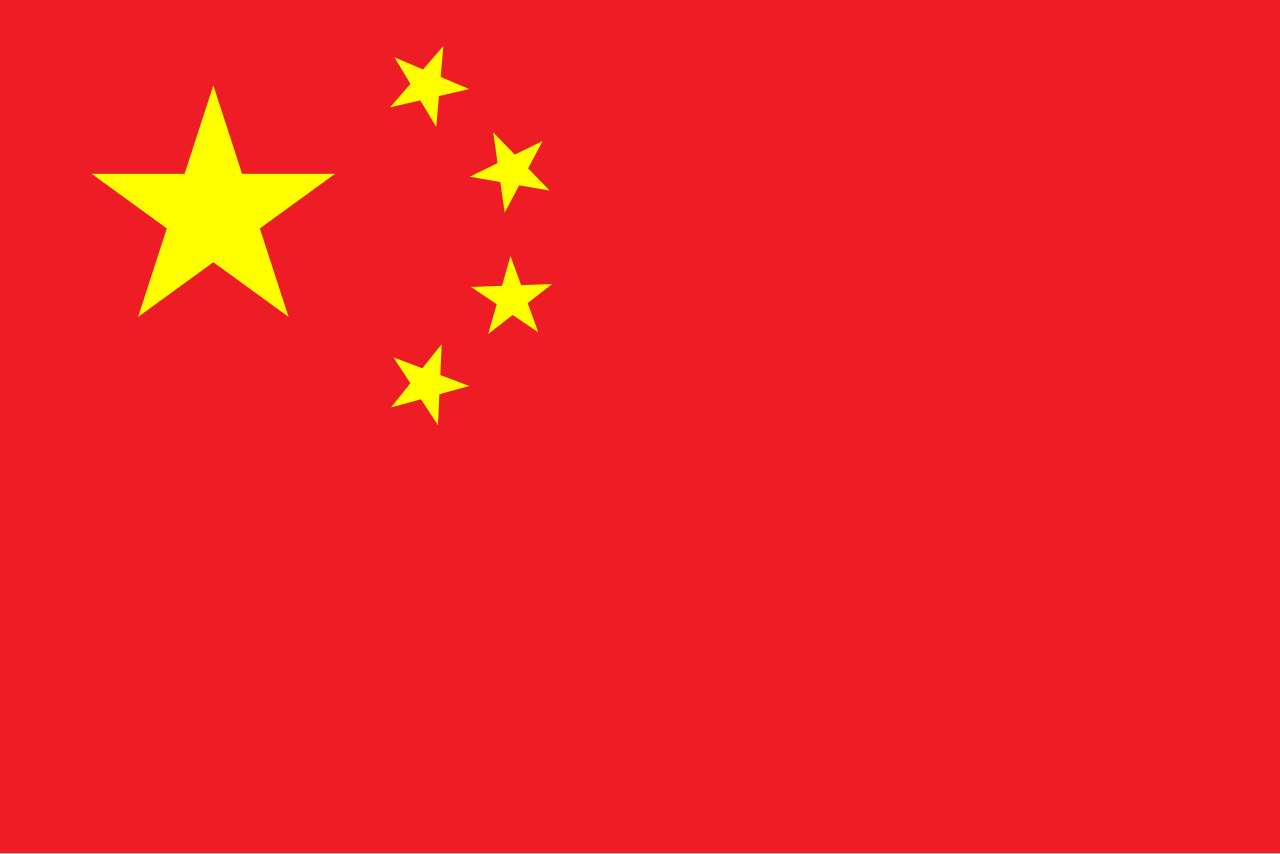
The State Council of the People's Republic of China, synonymous with Central People's Government, is the supreme administrative organ of the country's unified state apparatus and the executive organ of the National People's Congress (NPC), the supreme organ of state power. It is composed of a premier, vice premiers, state councilors, ministers, chairpersons of commissions, an auditor-general, the governor of the People's Bank of China, and a secretary-general.
The Government Administration Council of the Central People's Government was established in 1949 with the proclamation of the People's Republic of China. Under the 1954 constitution, the Government Administration Council was succeeded by the State Council, which became the supreme administrative organ of the state. Since 1982, the State Council has undergone institutional reforms every five years. The main functions of the State Council are to formulate administrative measures, issue decisions and orders, and monitor their implementation; draft legislative bills for submission to the NPC or its Standing Committee; and prepare the economic plan and the state budget for deliberation and approval by the NPC.
The premier of the State Council is responsible for the State Council and exercises overall leadership of its work. The secretary-general of the State Council, under the leadership of the premier, is responsible for handling the daily work of the State Council and heads the General Office of the State Council. The premier is appointed by the NPC after a nomination from the president; the premier then nominates members of the State Council for appointment by the NPC or its Standing Committee. The executive meeting of the State Council, consisting of the premier, vice-premiers, state councilors, and the secretary-general, is held two to three times a month, while the plenary meeting, consisting of all members of the State Council, is held every six months.
The State Council directly oversees provincial-level People's Governments, and in practice maintains membership with top levels of the Chinese Communist Party (CCP). The State Council is constitutionally accountable to the NPC and its Standing Committee. The Organic Law of the State Council outlines that the State Council acts under the leadership of the CCP Central Committee and follows CCP ideology. Aside from a few, members of the State Council are also members of the CCP Central Committee.
History
The predecessor of the State Council was the Government Administration Council of the Central People's Government, which was established on 1 October 1949 with the proclamation of the People's Republic of China. However, the Government Administration Council was lower in status and had a smaller scope of authority than the State Council; the State Council is equal to the Central People's Government, while the Government Administration Council was only a constituent body of the Central People's Government. The Government Administration Council did not have the authority to manage military affairs, so it did not have a Ministry of National Defense under it.[2]
In September 1954, the first session of the 1st National People's Congress adopted the Constitution of China and the Organic Law of the State Council, among other things. According to the constitution, the National People's Congress (NPC) is the supreme organ of state power; the State Council is the executive organ of the NPC and the highest administrative organ of the state.[2] Since 1982, the State Council has undergone several institutional reforms, with adjustments made on average every five years to coincide with each change of government. The most recent adjustment was in 2023. The number of departments under the State Council has been reduced from 100 before 1982 to 26 today.[3]
Organization
The State Council is described by the Chinese constitution as the executive organ of the National People's Congress (NPC), as well as the "highest state administrative organ".[4] Constitutionally, the main functions of the State Council are to formulate administrative measures, issue decisions and orders, and monitor their implementation; draft legislative bills for submission to the NPC or its Standing Committee; and prepare the economic plan and the state budget for deliberation and approval by the NPC.[4] The State Council has flexibility in decision-making, especially with regard to economic matters, but the Politburo has ultimate authority.[5] According to the Organic Law of the State Council, the CCP Central Committee exercises leadership over the State Council.[6][7] The law also stipulates the State Council must follow the CCP's ideology and policies.[6]
Composition
The State Council is composed of the premier, several vice premiers, several state councillors, ministers of ministries, directors of committees, the auditor general, and the secretary-general. The premier leads the State Council[8]: 58 and is appointed by the NPC upon the nomination by the president,[4] though in practice the premier is chosen within the CCP leadership, including the Politburo Standing Committee.[9] The vice premiers (one executive and generally three others), state councillors, and a secretary-general (who normally also serves as a state councillor) all assist the premier.[10] The premier leads the Leading Party Members Group, which responsible for overseeing the implementation of CCP Central Committee policies in the State Council.[11]
Each vice premier oversees certain areas of administration in support of the premier.[12] In practice, the vice premiers and State Councillors assume responsibility for one or more sectors or issues, and remain in contact with the various bodies responsible for policy related to that area. This allows the Standing Committee to oversee a wide range of government functions.[13] Each State Councillor performs duties as designated by the Premier. The secretary-general heads the General Office which handles the day-to-day work of the State Council.[10]
The State Council includes 26 constituent departments, and oversees the province-level governments throughout China.[5] Each ministry supervises one sector. Commissions outrank ministries and set policies for and coordinate the related activities of different administrative organs. Offices deal with matters of ongoing concern. The establishment, dissolution, or merger of the constituent departments are proposed by the premier and decided by the NPC or its Standing Committee.[10] Bureaus and administrations rank below ministries. In addition to the ministries, there are 38 centrally administered government organizations that report directly to the state council. The heads of these organizations attend full meetings of the state committee on an irregular basis.[citation needed]
The State Council controls the Ministry for National Defense but does not control the People's Liberation Army, which is instead controlled by the Central Military Commission (CMC).[14] The State Council previously had joint command over the People's Armed Police (PAP) together with the CMC, principally through the Ministry of Public Security, though 2018 reforms placed the PAP solely under CMC command.[15]: 15
Meetings
The plenary meeting of the State Council meets every six months, composed of all members of the State Council. Between meetings it is guided by an executive meeting of the State Council which is held two to three times a month, and can be called at the discretion of the premier.[16] The Executive Meeting is composed of the premier, vice premiers, state councilors, and the secretary-general.[10]
Members
Executive Meeting
| # | Office | Portrait | Name | Party | Party memberships | |
|---|---|---|---|---|---|---|
| 1 | Premier | 
|
Li Qiang
李强 |
CCP | Politburo Standing Committee
Secretary, Leading Party Members Group | |
| 2 | Vice Premier
(first-ranked) |
.jpg/1280px-Ding_Xuexiang_(20230313).jpg)
|
Ding Xuexiang
丁薛祥 |
CCP | Politburo Standing Committee
Deputy Secretary, Leading Party Members Group | |
| 3 | Vice Premier | 
|
He Lifeng
何立峰 |
CCP | Politburo | |
| 4 | Vice Premier | .jpg/1280px-Zhang_Guoqing_(20230313).jpg)
|
Zhang Guoqing
张国清 |
CCP | Politburo | |
| 5 | Vice Premier | .jpg/1280px-Liu_Guozhong_(20230313).jpg)
|
Liu Guozhong
刘国中 |
CCP | Politburo | |
| 6 | State Councillor | .jpg/1280px-Minister_Wang_Xiaohong_of_China_in_Vienna,_Austria_on_18_February_2024_(cropped).jpg)
|
Wang Xiaohong
王小洪 |
CCP | Secretariat
Deputy Secretary, Central Political and Legal Affairs Commission Leading Party Members Group | |
| 7 | State Councillor | Wu Zhenglong
吴政隆 |
CCP | Leading Party Members Group
Secretary, State Council Organs Party Group | ||
| 8 | State Councillor | 
|
Shen Yiqin
谌贻琴 |
CCP | Leading Party Members Group | |
Constitution departments
The 14th State Council has 26 constituent departments.[17][18][19]


The Ministry of Education retains the external nameplate of the National Language Working Committee. The Ministry of Industry and Information Technology retains the external nameplates of China National Space Administration and of China Atomic Energy Authority. The Ministry of Human Resources and Social Security is supplemented with the nameplate of the State Administration of Foreign Experts Affairs. The Ministry of Natural Resources retains the external nameplate of the State Oceanic Administration. The Ministry of Ecology and Environment retains the external nameplate of the National Nuclear Safety Administration. The Ministry of Agriculture and Rural Affairs is supplemented with the nameplate of the National Rural Revitalization Administration.[20]
See also

.svg)

_cap_insignia.svg)
.png)

.jpg)

.jpg)
.jpg)
.jpg)


- Department of State Affairs in the Three Departments and Six Ministries system
- Ming dynasty: Central Secretariat → Grand Secretariat
- Qing dynasty: Grand Secretariat → Grand Council → Cabinet
- Republic of China: State Council (1912–28) → Executive Yuan (1928–present)
- People's Republic of China: Government Administration Council of the Central People's Government (1949–54); Constituent departments of the PRC
- Government of Hong Kong
- Government of Macau
References
- ^ Article 85 of the Constitution of the People's Republic of China
- ^ a b "Inside the Chinese Bureaucracy: Reading the State Council's Gazette". Wilson Center. 2021-03-29. Retrieved 2025-07-05.
- ^ Guobin, Zhu; Kinglun, Ngok (2007-06-30). "Marketization, Globalization and Administrative Reform in China: A Zigzag Road to a Promising Future". International Review of Administrative Sciences. Archived from the original on 2021-05-08.
- ^ a b c "Constitution of the People's Republic of China". National People's Congress. Archived from the original on 2022-01-03. Retrieved 2022-08-08.
- ^ a b Cheng, Li; Prytherch, Mallie (7 March 2023). "China's new State Council: What analysts might have missed". Brookings Institution. Archived from the original on 19 June 2023. Retrieved 19 June 2023.
- ^ a b Zheng, William (2024-03-06). "Xi's dominance in Chinese politics to grow with change to State Council: expert". South China Morning Post. Archived from the original on 2024-03-07. Retrieved 2024-03-10.
It includes specific clauses saying the council will closely follow the Communist Party's ideology, leadership and instructions, further defining its role as faithful policy implementer of the ruling party.
- ^ Chu, Mei Mei; Chen, Laurie (March 11, 2024). "China passes law granting Communist Party more control over cabinet". Reuters. Retrieved March 11, 2024.
- ^ Li, David Daokui (2024). China's World View: Demystifying China to Prevent Global Conflict. New York, NY: W. W. Norton & Company. ISBN 978-0393292398.
- ^ "China's backroom power brokers block reform candidates". South China Morning Post. 21 November 2012. Archived from the original on 13 April 2023. Retrieved 26 September 2021.
- ^ a b c d Wei, Changhao (2024-03-11). "NPC 2024: Annotated Translation of the Revised State Council Organic Law". NPC Observer. Retrieved 2024-04-15.
- ^ He, Alex (December 2018). "The Emerging Model of Economic Policy Making under Xi Jinping" (PDF). Centre for International Governance Innovation. Retrieved 8 March 2025.
- ^ He, Laura (4 March 2023). "Meet the 4 men tapped to run China's economy". CNN. Archived from the original on 19 June 2023. Retrieved 19 June 2023.
- ^ Thomas, Neil (5 April 2023). "What are the Policy Assignments of China's New State Council Leadership?". Asia Society. Archived from the original on 13 April 2023. Retrieved 19 June 2023.
- ^ Boswell, Matthew (2009). "Media Relations in China's Military: The Case of the Ministry of National Defense Information Office". Asia Policy (8): 97–120. ISSN 1559-0968. JSTOR 24904949. Archived from the original on 2023-11-03. Retrieved 2023-10-24.
- ^ Wuthnow, Joel (16 April 2019). China's Other Army: The People's Armed Police in an Era of Reform (PDF). Washington: Institute for National Strategic Studies. Archived (PDF) from the original on 4 July 2020. Retrieved 3 October 2019.
- ^ Zheng, William (28 March 2023). "New work rules for China's State Council put the party firmly in charge". South China Morning Post. Archived from the original on 19 June 2023. Retrieved 19 June 2023.
- ^ "China's new State Council: What analysts might have missed". Brookings Institution. Retrieved 2023-10-25.
- ^ Wei, Changhao; Hu, Taige; Liao, Zewei (Whiskey) (2023-03-07). "A Guide to China's 2023 State Council Restructuring". NPC Observer. Retrieved 2023-10-25.
- ^ "The State Council of the People's Republic of China" (PDF). Freeman Chair in China Studies Center for Strategic and International Studies. Archived (PDF) from the original on 2023-10-29. Retrieved 2023-10-24.
- ^ "国务院组织机构 – 中国政府网 Organizational Structure of the State Council – China Government Web". 中华人民共和国中央人民政府 Central People's Government of the People's Republic of China. Archived from the original on 2023-10-24. Retrieved 2023-10-24.
External links
- Official website
