.jpg/1280px-Portrait_of_a_woman_holding_a_baby_(I0024828).jpg)

母親とは、子どもの親である女性 です。女性は、出産、実子であるか否かに関わらず子どもを育てること、あるいは代理出産の場合に受精のために卵子を提供することによって、母親とみなされます。
実母とは、性交または卵子提供を通じて、乳児の誕生に遺伝的に寄与した女性のことです。実母は、自分が育てていない子供に対して、金銭的扶養義務などの法的義務を負う場合があります。養母とは、養子縁組という法的手続きによって子供の親になった女性のことです。推定上の母親とは、子供との生物学的な関係があると主張されているが、まだ証明されていない女性のことです。継母とは、子供の既存の親と結婚した非生物学的な女性の親であり、家族単位を形成することはできますが、通常、子供に対する親の法的権利と責任を持ちません。
父親は母親の男性版です。妊娠している女性は、妊婦または母になる女性と呼ばれます。[1] [2]母親になる過程は「マトレセンス(母性化)」と呼ばれます。[3]
形容詞「maternal」は母親を指し、「paternal」は父親を指し、比較級として「paternal」に相当します。動詞「to mother」は、子供をもうける、子供をもうける、あるいは子供の世話をするという意味で、この動詞から名詞「mothering」も派生しています。[4]関連する愛称には、mom(ママ、マミー)、mum(マミー)、mumsy (マムシー) 、mamacita(マ、マム)、mammy(マミー)などがあります。子供が尊敬できる女性のロールモデルは、時に「 mother-figure(母親像)」と呼ばれます。
母性のタイプ

,_OWID.png/1280px-Share_of_births_by_age_of_mother,_Europe_(UN),_OWID.png)

実母
ヒトの生物学的母性は、他の哺乳類と同様に、妊娠した雌が受精卵(「卵子」)を妊娠した時に成立します。排卵が始まった後、雌は性交によって妊娠する可能性があります。栄養状態の良い女子の場合、初潮(最初の月経)は通常12歳または13歳頃に起こります。[6]
通常、胎児は生存可能な接合子から発育し、胚になります。妊娠は、胎児(満期まで妊娠した場合)が出産できるほど十分に発育するまで、女性の子宮内で行われます。ヒトの妊娠期間は多くの場合約9ヶ月で、その後、女性は陣痛を経験し、出産します。しかし、常にそうであるとは限らず、早産、遅延出産、または死産の場合は妊娠期間を生き延びられない赤ちゃんもいます。通常、赤ちゃんが生まれると、母親は授乳過程によって乳を生産します。母親の母乳は乳児の免疫システムの抗体の源であり、一般的に新生児が他の食物を食べ消化できるようになるまでの唯一の栄養源です。月齢の高い乳児や幼児は、生後約6ヶ月から他の食品と組み合わせて母乳を飲み続けることができます。[7]
無子状態とは、子供を持たない状態です。無子状態には、個人的、社会的、あるいは政治的な意味合いがあります。無子状態は、自らの選択による自発的な無子状態の場合もあれば、健康上の問題や社会的状況などにより非自発的に無子状態になる場合もあります。母性は通常は自発的ですが、強姦による妊娠など、強制的な妊娠の結果である場合もあります。望まない母性状態は、特に強制結婚や児童婚が行われている文化圏で多く見られます。
非生物学的母親
「母親」は、実の親以外の女性、特にその女性が子供の養育において主要な社会的役割を果たしている場合によく用いられます。これは通常、養母または継母(子供の父親と生物学的に血縁関係のないパートナー)のいずれかです。「その他の母親」または「その他の母親」という用語は、文脈によっては、実の親ではない子供を、その子供の主たる母親に加えて養育する女性を指すこともあります。
Adoption, in various forms, has been practiced throughout history, even predating human civilization.[8] Modern systems of adoption, arising in the 20th century, tend to be governed by comprehensive statutes and regulations. In recent decades, international adoptions have become more and more common.
Adoption in the United States is common and relatively easy from a legal point of view (compared to other Western countries).[9] In 2001, with over 127,000 adoptions, the US accounted for nearly half of the total number of adoptions worldwide.[10]
Surrogate mother
A surrogate mother is a woman who bears a child that came from another woman's fertilized ovum on behalf of a couple unable to give birth to children. Thus the surrogate mother carries and gives birth to a child that she is not the biological mother of. Surrogate motherhood became possible with advances in reproductive technologies, such as in vitro fertilization.
Not all women who become pregnant via in vitro fertilization are surrogate mothers. Surrogacy involves both a genetic mother, who provides the ovum, and a gestational (or surrogate) mother, who carries the child to term.
Lesbian and bisexual motherhood
The possibility for lesbian and bisexual women in same-sex relationships to become mothers has increased over the past few decades[when?] due to technological developments. Modern lesbian parenting originated with women who were in heterosexual relationships who later identified as lesbian or bisexual, as changing attitudes provided more acceptance for non-heterosexual relationships. Other ways for such women to become mothers is through adopting, foster parenting or in vitro fertilization.[11][12]
Transgender motherhood
Transgender women may have biological children with a partner by utilizing their sperm to fertilize an egg and form an embryo.[13][14] For transgender women, there is currently no accessible way to carry a child. However, research is being done on uterus transplants, which could potentially allow transgender women to carry and give birth to children through Caesarean section. Other types of motherhood include adoption or foster parenting. However, adoption agencies often refuse to work with transgender parents or are reluctant to do so.[15][16]
Social role


母性に関する社会的役割は、時代、文化、社会階級によって様々である。[18]歴史的に、女性の役割はある程度、母と妻であることに限定されており、女性はこれらの役割にエネルギーの大部分を注ぎ、家事に多くの時間を費やすことが期待されていた。多くの文化において、女性はこれらの役割を遂行する上で、義母や実母といった年上の女性親族から多大な支援を受けていた。[19]

労働力に加わる女性に関して、母親は完全な「キャリアウーマン」というよりは、 「ママトラック」を辿ることが多いと言われている。母親は専業主婦の場合もあれば、働く母親の場合もある。ここ数十年では、専業主婦の父親も増加している。こうした状況に対する社会的見方は、文化によって大きく異なる。例えばヨーロッパでは、ドイツ語圏の国では、母親が労働力から退いて主婦になるという根強い伝統がある。[21]母親は歴史的に子育ての主要な役割を果たしてきたが、20世紀後半以降、西側諸国の一部では、父親の育児における役割がより重要視され、社会的に受け入れられるようになった。[22] [23] 20世紀には、有給労働に就く女性もますます増えた。労働力における母親の権利には、産休と育児休暇が含まれる。
母親の社会的役割と経験は、場所によって大きく異なります。母親は父親よりも、子供に同化や親睦を深める行動パターンを促す傾向があります。[24]母親は父親よりも、会話における子供の貢献を認める傾向があります。[25] [26] [27] [28]母親が子供に話しかける方法(「マザーズ」)は、父親よりも、幼い子供が(基準となる英語の文脈において)会話を理解しようとする努力をサポートするのに適しています。[25]
Since the 1970s, in vitro fertilization has made pregnancy possible at ages well beyond "natural" limits, generating ethical controversy and forcing significant changes in the social meaning of motherhood.[29][30] This is, however, a position highly biased by Western world locality: outside the Western world, in-vitro fertilization has far less prominence, importance or currency compared to primary, basic healthcare, women's basic health, reducing infant mortality and the prevention of life-threatening diseases such as polio, typhus and malaria.
Traditionally, and still in most parts of the world today, a mother was expected to be a married woman, with birth outside of marriage carrying a strong social stigma. Historically, this stigma not only applied to the mother, but also to her child. This continues to be the case in many parts of the developing world today, but in many Western countries the situation has changed radically, with single motherhood being much more socially acceptable now. For more details on these subjects, see Legitimacy (family law) and single parent.
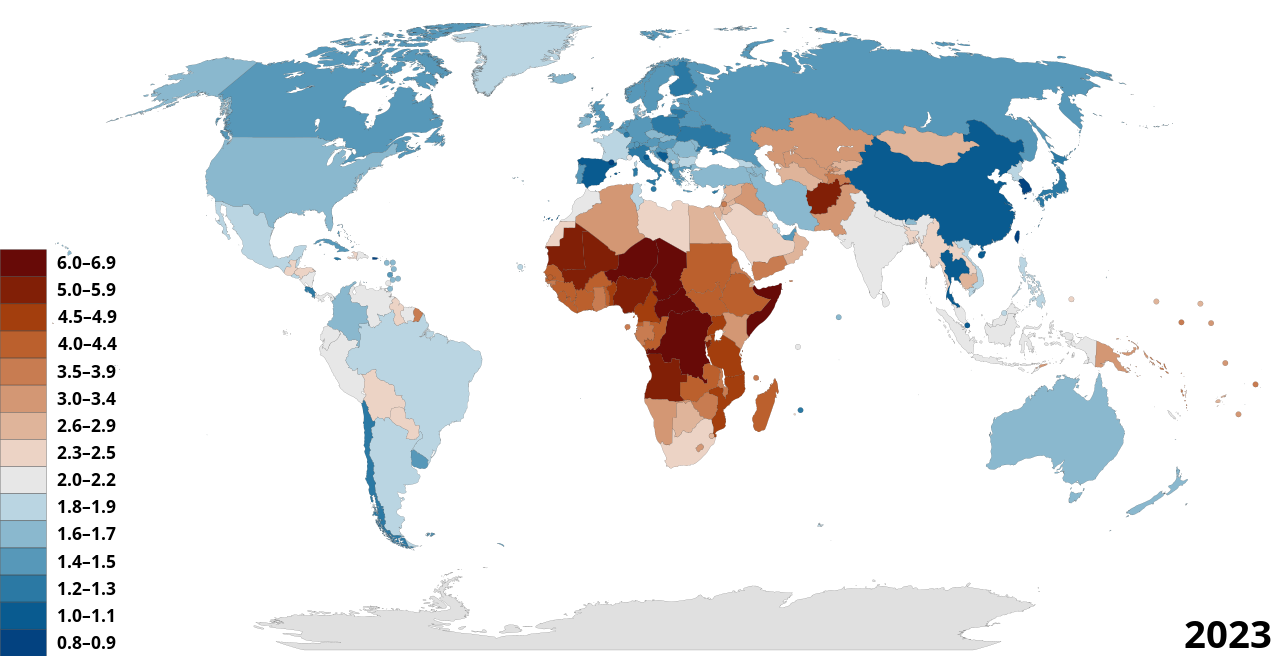
The total fertility rate (TFR), that is, the number of children born per woman, differs greatly from country to country. The TFR in 2013 was estimated to be highest in Niger (7.03 children born per woman) and lowest in Singapore (0.79 children/woman).[31]
In the United States, the TFR was estimated for 2013 at 2.06 births per woman.[31] In 2011, the average age at first birth was 25.6 and 40.7% of births were to unmarried women.[32]
Health

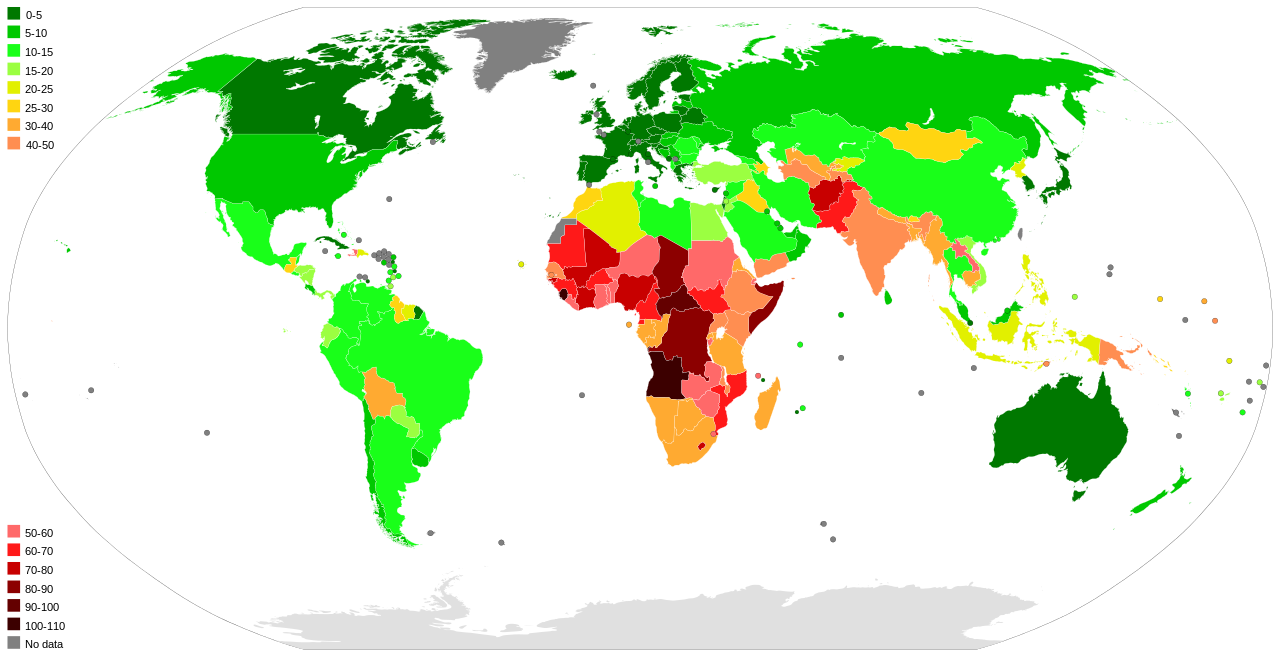
A maternal death is defined by WHO as "the death of a woman while pregnant or within 42 days of termination of pregnancy, irrespective of the duration and site of the pregnancy, from any cause related to or aggravated by the pregnancy or its management but not from accidental or incidental causes".[33]
About 56% of maternal deaths occur in Sub-Saharan Africa and another 29% in South Asia.[34]
2006年にセーブ・ザ・チルドレンという組織が世界の国々をランク付けしたところ、スカンジナビア諸国は出産するのに最も安全な場所であるのに対し、サハラ以南のアフリカ諸国は出産するのに最も安全でないことがわかりました。[35]この研究は、下位10カ国の母親が妊娠中または出産中に死亡する可能性は、上位10カ国の母親と比較して750倍以上高く、下位10カ国の母親が1歳の誕生日を迎える前に子どもの死亡に立ち会う可能性は28倍高いと主張しています。
最新のデータによると、妊産婦死亡率の点ではイタリア、スウェーデン、ルクセンブルクが最も安全な国であり、アフガニスタン、中央アフリカ共和国、マラウイが最も危険な国であることが示唆されている。[36] [37]
効果的な死亡削減策がなければ、出産は危険なプロセスとなり得ます。これらの対策が全く講じられていない場合、妊産婦死亡率は10万出生あたり1,500人程度に達すると推定されています。 [38]現代医学は出産のリスクを大幅に軽減しました。現代の西洋諸国では、現在の妊産婦死亡率は10万出生あたり約10人です。[39]
宗教的

世界のほぼすべての宗教は、宗教法、あるいは重要な宗教行事に奉仕した母親の称揚を通して、母親の役割や役割を定義しています。母親と女性に関する宗教法の例は数多くあります。
母親について言及している特定の宗教法や宗教文書を持つ世界の主要な宗教には、キリスト教[40] 、ユダヤ教[41]、イスラム教[42]などがあります。母性を尊重する例としては、聖母マリアを神の母として崇拝することや、箴言の中で母親としての積極的な女性らしさについて何度も肯定的に言及していることなどが挙げられます。
ヒンズー教の母なる女神や、キリスト教以前の古代ギリシャの信仰における デメテルも母親である。
母子間の暴力
_-_Google_Art_Project.jpg/1280px-Orestes_Pursued_by_the_Furies_by_William-Adolphe_Bouguereau_(1862)_-_Google_Art_Project.jpg)
歴史には母と子の間の多くの争いが記録されています。エジプトのクレオパトラ3世と息子プトレマイオス10世の争いのように、殺人にまで至ったケースもありました。
現代文化において、母殺し(母親殺害)と子殺し(息子または娘殺害)は研究されてきましたが、十分に理解されていません。精神病と統合失調症は、どちらの原因にも共通しており[43] [44] 、家庭内暴力の経歴を持つ若い貧困層の母親は、子殺しを犯す可能性がわずかに高くなります[44] [45] 。子供が8歳以下の場合、母親は父親よりも子殺しを犯す可能性が高くなります[46]。母殺しは、成人した息子によって最も頻繁に犯されます[47] 。
2012年のアメリカ合衆国では、母子殺害事件が130件(人口100万人あたり0.4件)、子殺害事件が383件(人口100万人あたり1.2件)発生しており、1日あたり1.4件の事件数となっている。[48]
芸術においては
_-_Charity_(1878).jpg/1280px-William-Adolphe_Bouguereau_(1825-1905)_-_Charity_(1878).jpg)

.jpg/1280px-Brooklyn_Museum_50.124_Mother_with_Child_Lupingu_lwa_Cibola_(3).jpg)
歴史を通じて、母親は絵画、彫刻、文章などさまざまな芸術作品に描かれており、それらは「母親」の文化的意味や母性の 理想やタブーを定義するのに役立ってきました。
ロードス島の4世紀の墓のレリーフには母親と子供が描かれていた。[49]
フランスでは、母と子を描いた絵画の伝統が長く続いています。18世紀には、これらの作品は啓蒙思想における強い家族の絆と母子の関係への強い関心を体現していました。[50]
19 世紀末、メアリー・カサットは母親の肖像画でよく知られた画家でした。
American poet, essayist and feminist Adrienne Rich has noted "the disjuncture between motherhood as patriarchal institution and motherhood as complexly and variously lived experience".[51] The vast majority of works depicting motherhood in western art history have been created by artists who are men, with very few having been created by women or mothers themselves, and these often focus on the "institution of motherhood" rather than diverse lived experiences.[52] At the same time, art concerning motherhood has been historically marginalized within the feminist art movement, though this is changing with an increasing number of feminist publications addressing this topic.[53]
The institution of motherhood in western art is often depicted through "the myth of the all-loving, all-forgiving and all-sacrificing mother" and related ideals.[52] Examples include works featuring the Virgin Mary, an archetypal mother and a key historical basis for depictions of mothers in western art from the European Renaissance onwards.[54] Mothers depicted in dominant art works are also primarily white, heterosexual, middle class and young or attractive.[51]
These ideals of motherhood have been challenged by artists with lived experience as mothers. An example in western contemporary art is Mary Kelly's Post-Partum Document. Bypassing typical themes of tenderness or nostalgia, this work documents in extensive detail the challenges, complexities and day-to-day realities of the mother-child relationship.[55] Other artists have addressed similar aspects of motherhood that fall outside dominant ideals, including maternal ambivalence, desire, and the pursuit of self-fulfillment.[53] While the ideal of maternal self-sacrifice and the 'good mother' forms an important part of many works of art relating to the Holocaust, other women's Holocaust and post-Holocaust art has engaged more deeply with mothers' trauma, taboos, and the experiences of second and third-generation Holocaust survivors.[56] For example, works by first-generation survivors of the Holocaust such as Ella Liebermann-Shiber and Shoshana Neuman have depicted mothers abandoning and suffocating their children in an effort to stay alive themselves.
Increasingly diverse representations of motherhood can be found in contemporary works of art. Catherine Opie's self-portrait photographs, including of herself nursing, reference the existing Virgin Mary archetype while subverting its norms around sexuality by centering her identity as a lesbian.[51] Rather than attempting to make her experience of motherhood fit into existing norms, Opie's photographs are "non-traditional and non-apologetic representations".[57]
In her 2020 photography collection, Solana Cain explored the meaning of joy for Black mothers to challenge the lack of images in mainstream media that represent Black motherhood.[58] Renee Cox's Yo Mama series of nude self-portraits challenge historical representations of both the black female body and of maternity and slavery in the US, the latter of which is often characterized by the "extreme passivity and devalued love" typically associated with motherhood.[59]
Synonyms and translations


The proverbial "first word" of an infant often sounds like "ma" or "mama". This strong association of that sound with "mother" has persisted in nearly every language on earth, countering the natural localization of language.
Familiar or colloquial terms for mother in English are:
- Ma(মা), Mata (মাতা), Amma (আম্মা), Ammu (আম্মু) used in Bangladesh, India.
- Aama, Mata used in Nepal
- Mom and mommy are used in the United States, Canada, South Africa, and parts of the West Midlands including Birmingham in the United Kingdom.
- Inay, Nanay, Mama, Ma, Mom, Mommy are used in the Philippines
- Mum and mummy and mama are used in the United Kingdom, Canada, Singapore, Australia, New Zealand, India, Pakistan, Hong Kong and Ireland.
- Ma, mam, and mammy are used in Netherlands, Ireland, the Northern areas of the United Kingdom, and Wales; it is also used in some areas of the United States.
- Mama was imported into Japan from American influence post–World War II, and is a less formal term for mother.[60]
In many other languages, similar pronunciations apply:
- Amma (அம்மா) or Thai (தாய்) in Tamil.
- Bi-ma (बिमा) in Bodo.
- Maa, aai, amma, and mata are used in languages of India like Assamese, Bengali, Hindi, Marathi, Tamil, Telugu etc.
- Mamá, mama, ma, and mami in Spanish
- Mama in Polish, German, Dutch, Russian and Slovak
- Māma (妈妈/媽媽) in Chinese
- Máma in Czech and in Ukrainian
- Maman in French and Persian
- Ma, mama in Indonesian
- Mamaí, mam in Irish
- Mamma in Italian, Icelandic, Latvian and Swedish
- Māman or mādar in Persian
- Mamãe or mãe in Portuguese
- Mā̃ (ਮਾਂ) in Punjabi
- Mõujì in Kashmiri
- Maa (ମା), Bou/Bau (ବୋଉ/ବଉ) in Odia
- Mama in Swahili
- Em (אם) in Hebrew
- A'ma (ܐܡܐ) in Aramaic
- Má or mẹ in Vietnamese
- Mam in Welsh
- Eomma (엄마, pronounced [ʌmma]) in Korean
- Mma in Tyap
- In many south Asian cultures and the Middle East, the mother is known as amma, oma, ammi or "ummi", or variations thereof. Many times, these terms denote affection or a maternal role in a child's life.
Etymology

The modern English word is from Middle English moder, from Old English mōdor, from Proto-Germanic *mōdēr (cf. East Frisian muur, Dutch moeder, German Mutter), from Proto-Indo-European *méh₂tēr (cf. Irish máthair, Tocharian A mācar, B mācer, Lithuanian mótė). Other cognates include Latin māter, Greek μήτηρ, Common Slavic *mati (thence Russian мать (mat')), Persian مادر (madar), and Sanskrit मातृ (mātṛ).
Notable mothers in mythology
Zoology
In zoology, particularly in mammals, a mother fills many similar biological functions as a human mother.
Mammals
Many other mammal mothers also have numerous commonalities with humans.[which?]
Primates
The behavior and role of mothers in non-human species is most similar in species most closely related to humans. This means great apes are most similar, then the broader superfamily of all apes, then all primates.
See also
- Father
- Advanced maternal age
- Attachment parenting
- Baby planner
- Blessed Virgin Mary
- Breastfeeding
- Jungian archetypes
- Lactation
- Maternal bond
- Maternity package
- Matriarch
- Matricide
- Matrilocal residence
- Mother goddess
- Mother insult
- Motherhood penalty
- Mother's Day
- Mothers' rights
- Nuclear family
- Oedipus complex
- Othermother
- Parenting
- Single-parent
References
- ^ "definition of mother from Oxford Dictionaries Online". Oxford Dictionaries. Oxford University Press. Archived from the original on August 15, 2011.
- ^ "Define Mother at Dictionary.com". Dictionary.com.
- ^ Sacks, Alexandra (8 May 2017). "The Birth of a Mother". The New York Times. Archived from the original on 7 September 2018. Retrieved 9 September 2018.
- ^ "Definition of MOTHER". Merriam-Webster. Archived from the original on 2022-04-16. Retrieved 2022-02-12.
- ^ "Share of births by age of mother". Our World in Data. Retrieved 25 May 2025.
- ^ Mishra, Gita D.; Cooper, Rachel; Tom, Sarah E.; Kuh, Diana (2009). 「幼少期の状況と初経・閉経への影響」Medscape 5(2). Women's Health. pp. 175– 190. 2009年6月6日時点のオリジナルよりアーカイブ。 2018年8月27日閲覧。
- ^ 「赤ちゃんの最初の固形食」nhs.uk 2017年12月21日. 2012年3月18日時点のオリジナルよりアーカイブ。2018年12月17日閲覧。
- ^ ピーター・コン(2013年1月28日)『養子縁組:社会文化史』パルグレイブ・マクミラン、 25~ 64頁。ISBN 978-1-137-33390-2。
- ^ Jardine, Cassandra (2007年10月31日). 「アメリカではなぜ養子縁組がこんなに簡単なのか」 . Telegraph . 2022年1月11日時点のオリジナルよりアーカイブ。
- ^ 「児童養子縁組:動向と政策」(PDF) . Un.org. 2022年3月24日時点のオリジナルよりアーカイブ(PDF) . 2015年7月1日閲覧。
- ^ 「レズビアンの子育て:問題点、強み、そして課題」 。 2011年1月25日閲覧。
- ^ Mezey, Nancy J (2008). 『新たな選択、新たな家族:レズビアンが母性についてどう決断するか』 ボルチモア:ジョンズ・ホプキンス大学出版局. ISBN 978-0-8018-9000-0。
- ^ Halim, Shakera (2019年8月5日). 「研究は、トランスジェンダー女性の精子生産はまだ可能である可能性を示している」Health Europa . 2021年12月12日時点のオリジナルよりアーカイブ。 2021年12月12日閲覧。
- ^ 「トランスジェンダーの生殖に関する選択肢」Yale Medicine . 2021年12月12日時点のオリジナルよりアーカイブ。 2021年12月12日閲覧。
- ^ キンクラー、ロリ・A.; ゴールドバーグ、アビー・E. (2011年10月1日). 「私たちが持っているものを活用する:小規模都市圏の同性養子縁組カップルにおける障壁と支援の認識」.ファミリー・リレーションズ. 60 (4): 387– 403. doi :10.1111/j.1741-3729.2011.00654.x. ISSN 0197-6664. PMC 3176589. PMID 21949461 .
- ^ Montero, Darrel (2014年5月20日). 「同性養子縁組と子育てに対する態度:16カ国における調査の分析」. Advances in Social Work . 15 (2): 444– 459. doi : 10.18060/16139 . ISSN 2331-4125. 2021年12月12日時点のオリジナルよりアーカイブ。 2021年12月12日閲覧。
- ^ 「米国における非婚姻出産パターンの変化」CDC/国立健康統計センター2009年5月13日. 2011年9月6日時点のオリジナルよりアーカイブ。2011年9月24日閲覧。
- ^ アレンデル、テリー (2000). 「母性の構想と探究:10年間の学術研究」『結婚と家族ジャーナル』62 (4): 1192– 1207. doi :10.1111/j.1741-3737.2000.01192.x.
- ^ 「北米哺乳類学における女性の役割の変化」(PDF) Biology.unm.edu. 2016年3月4日時点のオリジナルよりアーカイブ(PDF) 。 2015年7月1日閲覧。
- ^ ウェブサイトリスト 2011年3月23日アーカイブWayback Machine
- ^ 「ヨーロッパで無子人口はピークを迎えたか?」(PDF) . Ined.fr . 2017年2月21日時点のオリジナルよりアーカイブ(PDF) . 2017年12月17日閲覧。
- ^ [1] 2013年8月15日アーカイブ、Wayback Machine
- ^ "ucgstp.org". Ucgstp.org. 2008年2月25日時点のオリジナルよりアーカイブ。2015年7月1日閲覧。
- ^ Ann M. Berghout Austin1とTJ Braeger2 (1990年10月1日). 「親による兄弟姉妹間の交流促進における性差:個人前提システムの構築への影響」. First Language . 10 (30). Fla.sagepub.com: 181– 197. doi :10.1177/014272379001003001. 2008年9月4日時点のオリジナルよりアーカイブ。 2011年10月27日閲覧。
{{cite journal}}: CS1 maint: numeric names: authors list (link) - ^ ab 「父親が子供に話す言葉:完璧な音感か、それとも耳が聞こえないだけか?」Thefreelibrary.com。2012年10月19日時点のオリジナルよりアーカイブ。 2011年10月27日閲覧。
- ^ Hladik, E.; Edwards, H. (1984). 「自然主義的な家庭環境における母親と父親の会話の比較」. Journal of Psycholinguistic Research . 13 : 321– 332. doi :10.1007/bf01068149. S2CID 144226238.
- ^ Leaper, C.; Anderson, K.; Sanders, P. (1998). 「親の子どもへの話し方におけるジェンダー効果の調整因子:メタ分析」.発達心理学. 34 (1): 3– 27. doi :10.1037/0012-1649.34.1.3. PMID 9471001.
- ^ Mannle, S.; Tomasello, M. (1987). "Fathers, siblings, and the bridge hypothesis". In Nelson, K. E.; vanKleeck, A. (eds.). Children's language. Vol. 6. Hillsdale, NJ: Erlbaum. pp. 23–42.
- ^ "Motherhood: Is It Ever Too Late? | Jacob M. Appel". Huffingtonpost.com. 2009-08-15. Archived from the original on 2015-07-02. Retrieved 2015-07-01.
- ^ "Getting Pregnant After 50: Risks, Rewards". Huffingtonpost.com. 2009-08-17. Archived from the original on 2015-07-02. Retrieved 2015-07-01.
- ^ a b "The World Factbook". cia.gov. Archived from the original on June 13, 2007.
- ^ "FastStats". cdc.gov. 20 October 2021. Archived from the original on 12 November 2019. Retrieved 10 September 2017.
- ^ "WHO - Maternal mortality ratio (per 100 000 live births)". who.int. Archived from the original on May 7, 2013.
- ^ "Over 99 percent of maternal deaths occur in developing countries". worldbank.org. Archived from the original on 2013-10-02. Retrieved 2013-09-21.
- ^ [2] Archived October 12, 2007, at the Wayback Machine
- ^ Kevin Spak (14 April 2010). "Safest Place to Give Birth? Italy". Newser. Archived from the original on 20 February 2012. Retrieved 1 March 2012.
- ^ Rogers, Simon (2010-04-13). "Maternal mortality: how many women die in childbirth in your country?". The Guardian. Archived from the original on 2017-12-22. Retrieved 2016-12-15.
- ^ Van Lerberghe W, De Brouwere V. Of blind alleys and things that have worked: history's lessons on reducing maternal mortality. In: De Brouwere V, Van Lerberghe W, eds. Safe motherhood strategies: a review of the evidence. Antwerp, ITG Press, 2001 (Studies in Health Services Organisation and Policy, 17:7–33). "Where nothing effective is done to avert maternal death, "natural" mortality is probably of the order of magnitude of 1,500/100,000."
- ^ ibid, p10
- ^ "What The Bible Says About Mother". Mothers Day World. Archived from the original on 2008-12-19. Retrieved 2008-11-24.
- ^ Katz, Lisa. "Religious Obligations of Jewish women". About.com. Archived from the original on 2008-09-26. Retrieved 2008-11-24.
- ^ アリ・アル・ハシミ、ムハンマド。「理想のムスリマ:クルアーンとスンナで定義されたムスリム女性の真のイスラーム的人格」ウィズダム・エンリッチメント財団。2002年3月2日時点のオリジナルよりアーカイブ。 2008年11月24日閲覧。
- ^ Bourget, Dominique; Gagné, Pierre; Labelle, Mary-Eve (2007年9月). 「Parricide: A Comparative Study of Matricide Versus Patricide」. Journal of the American Academy of Psychiatry and the Law . 35 (3): 306– 312. PMID 17872550. 2015年10月16日時点のオリジナルよりアーカイブ。 2015年7月2日閲覧。
- ^ ab West, Sara G. (2007年2月). 「子殺しの概要」.精神医学. 4 (2): 48– 57. PMC 2922347. PMID 20805899 .
- ^ Friedman, SH; Horwitz, SM; Resnick, PJ (2005年9月). 「母親による子どもの殺害:現状の知識と研究課題の批判的分析」. American Journal of Psychiatry . 162 (9): 1578–87 . doi :10.1176/appi.ajp.162.9.1578. PMID 16135615.
- ^ Greenfeld, Lawrence A., Snell, Tracy L. (1999年2月12日、2000年3月10日更新). 「女性犯罪者」. NCJ 175688. 米国司法省
- ^ Heide, KM (2013年3月). 「母殺しと継母殺しの被害者と加害者:米国の逮捕データの実証分析」. 『行動科学と法』 . 31 (2): 301–14 . doi :10.1002/bsl.2056. PMID 23558726.
- ^ 「アメリカ合衆国の犯罪:関係性別の殺人状況、2012年」米国連邦捜査局。2015年7月4日時点のオリジナルよりアーカイブ。 2015年7月3日閲覧。
- ^ 古代の法と社会における女性、犯罪、罰、 234ページ、Googleブックス
- ^ 『親密な出会い:18世紀フランスにおける愛と家庭生活』 p. 87、Googleブックス
- ^ abc Heath, Joanne (2013年12月). 「母性との交渉:母性、フェミニズム、そして芸術」 . Art Journal . 72 (4): 84– 86. doi :10.1080/00043249.2013.10792867. ISSN 0004-3249. S2CID 143550487.
- ^ a b Epp Buller, Rachel (2012). "Introduction". In Epp Buller, Rachel (ed.). Reconciling Art and Mothering. Burlington, VT, USA: Ashgate Publishing Company. pp. 1–12. ISBN 978-1-4094-2613-4.
- ^ a b Chernick, Myrel; Klein, Jennie (2011). "Introduction". In Chernick, Myrel; Klein, Jennie (eds.). The M Word: Real Mothers in Contemporary Art. Bradford, Canada: Demeter Press. pp. 1–17. ISBN 978-0-9866671-2-1.
- ^ Thurer, Shari (1995). The myths of motherhood : how culture reinvents the good mother. Penguin. ISBN 0-14-024683-5. OCLC 780801259.
- ^ "Mary Kelly, Post-Partum Document (article)". Khan Academy. Archived from the original on 2022-03-03. Retrieved 2022-03-03.
- ^ Mor Presiado (2018). "The Expansion and Destruction of the Symbol of the Victimized and Self-Sacrificing Mother in Women's Holocaust Art". Nashim: A Journal of Jewish Women's Studies & Gender Issues (33): 177. doi:10.2979/nashim.33.1.09. ISSN 0793-8934. S2CID 165961732.
- ^ Barnett, Erin (2012). "Lesbian, Pervert, Mother: Catherine Opie's Photographic Transgressions". In Epp Buller, Rachel (ed.). Reconciling Art and Mothering. Burlington, VT, USA: Ashgate Publishing Company. pp. 85–93. ISBN 978-1-4094-2613-4.
- ^ Quammie, Bee (May 5, 2021). "The tenderness and tenacity of Black motherhood". Maclean's. Archived from the original on March 3, 2022. Retrieved Mar 3, 2022.
- ^ Liss, Andrea (2012). "Making the Black Maternal Visible: Renee Cox's Family Portraits". In Epp Buller, Rachel (ed.). Reconciling Art and Mothering. Burlington, VT, USA: Ashgate Publishing Company. pp. 71–84. ISBN 978-1-4094-2613-4.
- ^ Shoji, Kaori (2004-10-28). "For Japanese, family names are the worst growing pains". The Japan Times. Archived from the original on 2022-06-09. Retrieved 2022-06-09.
Further reading
- Atkinson, Clarissa W. The Oldest Vocation: Christian Motherhood in the Medieval West (Cornell University Press, 2019).
- カウリング、カミリア他「奴隷の母親:大西洋岸奴隷社会における母性、無子、そして子どもの養育に関する比較視点」『奴隷制と廃止』38巻2号(2017年):223-231ページ。オンラインアーカイブ(2021年3月10日、Wayback Machine)
- 杜悦(ドゥ・ユエ)「清朝中国(1644-1911)における妾制と母性:儀礼、法律、そして財産管理権」『家族史ジャーナル』 42.2(2017年):162-183。
- 江澤亜矢著『現代日本におけるシングルマザー:母性、階級、そして生殖実践』 (2016年)オンラインレビュー、Wayback Machineに2021年3月10日アーカイブ
- フェルドスタイン、ルース著『アメリカ史における白黒の母性』(コーネル大学出版、2018年)。
- グリフィン、エマ。「母性の価値:ヴィクトリア朝イギリスにおける母親の不在から母性を理解する」Past & Present 246.Supplement_15(2020):167-185。
- ヒーリー=クランシー、メーガン。「南アフリカ女性連盟の家族政治:女性の反人種差別運動における公的母性の歴史」『Signs: Journal of Women in Culture and Society』 42.4 (2017): 843-866 オンラインアーカイブ、2021年3月10日、 Wayback Machineより。
- ハーディ、サラ・ブラッファー著『母なる自然:母性本能とそれが人類を形作る仕組み』
- ナイト、RJ「南北戦争以前の南部における愛人、母性、そして母親の搾取」女性史評論27.6(2018):990-1005(米国)。
- ラーナー、ジョヴァンナ・ファレスキーニ、ダメリオ・マリア・エレナ編『スクリーン上のイタリアの母性』(シュプリンガー、2017年)。
- マッカーシー、ヘレン著『二重生活:働く母親の歴史』(ブルームズベリー、2020年)、英国に焦点を当てる
- マンネ、アン. 母性 ― 私たちはどのように子どもを育てるべきか?
- マッセル、グレゴリー J. 『代理プロレタリアート:ソビエト中央アジアにおけるイスラム教徒女性と革命戦略、1919-1929』(プリンストン大学出版、1974年)。
- Njoku, CO, AN Njoku. 「産科瘻孔:安全でない母性の苦悩。ナイジェリアの経験のレビュー」Journal of Advances in Medicine and Medical Research (2018): 1-7 online、 Wayback Machineに2021年3月18日アーカイブ。
- ファビエンヌ・ポルティエ=ル・コック編『現代国際的視点における母性:継続と変化』(ラウトレッジ、2019年)。
- ラーマス、アイシャス・シャマ、ライハナ・モハメド・マイディン、ルジー・スリザ・ハシム。「典型的な母性と国家アジェンダ:インド・ムスリム女性の事例」『スペース・アンド・カルチャー』インド誌7.4 (2020): 12-31 オンラインアーカイブ。2021年7月30日、 Wayback Machineにアーカイブ。
- アレハンドラ・ラム、ジャスミン・ギデオン共著『ラテンアメリカにおける母性、社会政策、そして女性の活動』(シュプリンガー、2020年)。
- ロメロ、マルガリータ・サンチェス、ローザ・マリア・シド・ロペス編『古代地中海における母性と幼児期』(オックスフォード:オックスボウ・ブックス、2018年)。
- ライ、ギル他編『文学と文化における母性:ヨーロッパからの学際的視点』(テイラー&フランシス、2017年)。
- タクシェバ、タチアナ。「母性研究とフェミニスト理論:省略と交差」『母性研究とコミュニティ関与のためのジャーナル』 9.1(2018年)オンライン版。Wayback Machineに2021年3月10日アーカイブ。
- ソーンヒル、ランディ; ガンゲスタッド、スティーブン W. 人間の女性の性的行動の進化生物学。
- ヴァルマ、マヒマ「インドにおける養子縁組の母性:エンパワーメントと平等のための国家介入」Contemporary Social Sciences 28#3 (2019): 88–101. オンラインアーカイブ(2021年3月10日、Wayback Machineにて)
- ヴァシャギナ、ナタリア・N.、アイダー・M.・カリムリン。「ロシアにおける母性の社会的・文化的意味に関する回顧的分析」『ヨーロッパ研究』第7巻第5号(2015年):61-65頁。
- ウィリアムズ、サマンサ著『大都市における未婚の母性、1700~1850年』(シュプリンガー、2018年)ロンドン所蔵。抜粋 2022年3月10日、Wayback Machineにアーカイブ
- ウッド、エリザベス・A. 『ババと同志:革命ロシアにおけるジェンダーと政治』(インディアナ大学出版、1997年)、オンラインレビュー、Wayback Machineで2021年3月18日にアーカイブ
外部リンク


.jpg)


,_OWID.png)


_-_Google_Art_Project.jpg)
_-_Charity_(1878).jpg)

.jpg)


