国際宇宙ステーション(ISS)は、 NASA(米国)、ロスコスモス(ロシア)、ESA(欧州)、JAXA(日本) 、 CSA (カナダ)の5つの宇宙機関とその契約機関によって建設され、地球低軌道上で維持されている大型宇宙ステーションです。これまでに建設された最大の宇宙ステーションであり、主に微小重力下での科学実験や宇宙環境の研究を行うためのプラットフォームとして機能しています。[13]
ISSは、ロスコスモスが開発したロシア軌道セグメント(ROS)と、NASA、ESA、JAXA、CSAが建設した米国軌道セグメント(USOS)の2つの主要セクションに分かれています。ISSの際立った特徴は、統合トラス構造で、ステーションの巨大な太陽電池パネルとラジエーターのシステムを与圧モジュールに接続しています。これらのモジュールは、科学研究、乗組員の居住、保管、宇宙船の制御、エアロックの操作など、さまざまな機能をサポートしています。ISSには、訪問する宇宙船のためのドッキングおよびバースポートが8つあります。ステーションは平均高度400キロメートル(250マイル) [14]で地球を周回し、約93分で地球を一周し、1日に15.5周します。[15]
ISS計画は、以前に計画されていた2つの有人地球周回宇宙ステーション、すなわち米国のフリーダム宇宙ステーションとソビエト連邦のミール2宇宙ステーションを組み合わせたものである。最初のISSモジュールは1998年に打ち上げられ、主要コンポーネントはプロトンロケット、ソユーズロケット、そしてスペースシャトルによって運ばれた。長期滞在は2000年11月2日、第1次長期滞在クルーの到着とともに始まった。それ以来、ISSは25年24日間継続的に居住されており、これは宇宙における人類の連続滞在としては最長記録である。2025年8月現在、26カ国から290人がISSを訪れた。[16] [update]
ISSの将来計画には、少なくとも1つのモジュール、アクシオム・スペース社のペイロード電力熱モジュールの追加が含まれています。ISSは2030年末まで運用を継続し、その後は米国の軌道離脱機(Deorbit Vehicle)によって軌道から外される予定です。[17]
概念
1970年代初頭、宇宙開発競争が終焉に近づくにつれ、アメリカとソ連は宇宙における様々な協力の可能性を検討し始めました。その成果は、1975年のアポロ・ソユーズテスト計画に結実しました。これは、異なる宇宙開発国同士の宇宙船が初めてドッキングしたプロジェクトでした。このASTPは成功とみなされ、さらなる共同ミッションの実施も検討されました。
そのような構想の一つが国際スカイラブで、アポロとソユーズの有人宇宙船を複数回訪問させるミッションのために、予備のスカイラブB宇宙ステーションを打ち上げるというものでした。 [18]より野心的な構想は、スカイラブBをソ連のサリュート宇宙ステーションにドッキングさせるというスカイラブ・サリュート宇宙実験室でした。しかし、1970年代後半の予算削減と冷戦の緊張の高まりにより、これらの構想は、スペースシャトルをサリュート宇宙ステーションにドッキングさせるという別の計画とともに、頓挫しました。[19]
1980年代初頭、NASAはサリュート宇宙ステーションとミール宇宙ステーションに対抗するモジュール型宇宙ステーション「フリーダム」の打ち上げを計画しました。1984年、ESAはフリーダム宇宙ステーションへの参加を招請され、1987年までにコロンバス実験室の建設を承認しました。 [20] 1982年のNASAの要請に応えて、フリーダム宇宙ステーションの一部として、日本実験棟(JEM)、通称「きぼう」が1985年に発表されました。
1985年初頭、欧州宇宙機関(ESA)加盟国の科学大臣らは、当時ESAが実施した宇宙開発計画の中で最も野心的なコロンバス計画を承認した。ドイツとイタリアが主導したこの計画には、フリーダムに搭載され、世紀末までに本格的な欧州軌道上基地へと発展する能力を備えたモジュールが含まれていた。[21]
1990年代初頭、コストの増大により、これらの計画は危うくなりました。議会はフリーダムの建造と運用に必要な資金を十分に提供することを望まず、NASAに対し、増大するコストを賄うために国際的な参加を増やすよう要求しました。さもなければ、プロジェクト全体を中止すると脅しました。[22]
同時に、ソ連はミール2宇宙ステーションの計画を進めており、1980年代半ばまでにモジュールの建設を開始していました。しかし、ソ連の崩壊により計画は大幅に縮小され、ミール2はまもなく打ち上げられる可能性が高まりました。[23]両宇宙ステーション計画が危機に瀕したため、アメリカとロシアの当局者は会談し、両計画を統合することを提案しました。[24]
1993年9月、アメリカ副大統領アル・ゴアとロシア首相ヴィクトル・チェルノムイルジンは、後に国際宇宙ステーションとなる新しい宇宙ステーションの計画を発表しました。[25]また、この新しいプロジェクトの準備として、アメリカがミール計画(アメリカのシャトルのドッキングを含む)に参加することに合意しました。[ 26 ]目的
ISSは当初、実験室、観測所、工場としての機能に加え、輸送、メンテナンス、そして将来の月、火星、小惑星探査ミッションのための低軌道上中継基地としての役割も担うことが想定されていました。しかし、 NASAとロスコスモスの間で締結された当初の覚書で想定されていた用途の全てが実現されたわけではありません。[27] 2010年の米国国家宇宙政策では、ISSに商業、外交、[28]教育目的という追加的な役割が与えられました。[29]
科学研究
ISSは、実験を支援するための電力、データ、冷却、そして乗組員を備えた科学研究を行うためのプラットフォームを提供します。小型の無人宇宙船も、特に無重力や宇宙空間への曝露を伴う実験のためのプラットフォームを提供できますが、宇宙ステーションは、数十年にわたる研究を実施できる長期的な環境を提供し、人間の研究者が容易にアクセスできる環境も備えています。[30] [31]
ISSでは、実験グループが同じ打ち上げと乗組員の時間を共有できるようにすることで、個々の実験を簡素化しています。研究は、宇宙生物学、天文学、物理学、材料科学、宇宙天気、気象学、宇宙医学や生命科学を含む人類の研究など、多岐にわたる分野で行われています。[32] [33] [34] [35]地球上の科学者は、タイムリーにデータにアクセスし、乗組員に実験の修正を提案することができます。追加実験が必要な場合は、定期的に予定されている補給船の打ち上げにより、比較的容易に新しいハードウェアを打ち上げることができます。[31]乗組員は数ヶ月に及ぶ遠征飛行を行い、6人の乗組員で週約160時間の労働を提供します。しかし、乗組員のかなりの時間はステーションのメンテナンスに費やされています。[36]
おそらくISSで最も注目すべき実験は、アルファ磁気分光計(AMS)でしょう。これは暗黒物質を検出し、宇宙に関するその他の根本的な疑問に答えることを目的としています。NASAによると、AMSはハッブル宇宙望遠鏡と同等の重要性を持っています。現在ISSにドッキングされているAMSは、その電力と帯域幅の要件から、自由飛行衛星プラットフォームに容易に収容することはできませんでした。[37] [38] 2013年4月3日、科学者たちはAMSによって暗黒物質の兆候が検出された可能性があると報告しました。 [39] [40] [41 ] [42] [43] [44]科学者たちによると、「宇宙搭載アルファ磁気分光計からの最初の結果は、地球に向かう宇宙線中に説明のつかない高エネルギー陽電子の過剰が存在することを裏付けています」[45] 。
宇宙環境は生命にとって過酷です。宇宙空間での無防備な生活は、強力な放射線場(主に太陽風からの陽子やその他の亜原子荷電粒子、そして宇宙線)、高真空、極度の温度、そして微小重力によって特徴づけられます。[46]極限環境生物と呼ばれる単純な生命体[47]やクマムシと呼ばれる小型無脊椎動物[48]は、乾燥によって極度に乾燥した状態でもこの環境で生存することができます。
医学研究は、筋萎縮、骨量減少、体液移動など、長期宇宙滞在が人体に及ぼす影響に関する知識を深めます。これらのデータは、長期間の有人宇宙飛行や宇宙植民地化の実現可能性を判断するために活用されます。2006年には、骨量減少と筋萎縮に関するデータから、火星への旅行に必要な6ヶ月間のような長期の惑星間航行を終えた宇宙飛行士が惑星に着陸した場合、骨折や運動障害のリスクが著しく高まることが示唆されました。[49] [50]
ISSでは、国立宇宙生物医学研究所(NSBRI)の委託により医学研究が行われています。中でも注目すべきは、微小重力下における先進的超音波診断研究です。この研究では、宇宙飛行士が遠隔地の専門家の指導の下で超音波スキャンを実施します。この研究では、宇宙における病状の診断と治療を検討しています。通常、ISSには医師が搭乗しておらず、病状の診断は困難です。遠隔誘導超音波スキャンは、訓練を受けた医師の診察が難しい緊急時や僻地での医療現場で地球上で応用されることが期待されています。[51] [52] [53]
2020年8月、科学者たちは国際宇宙ステーションで行われた研究に基づき、地球由来の細菌、特に環境ハザードに対する耐性が高いデイノコッカス・ラジオデュランスが宇宙空間で3年間生存することを確認したと報告した。これらの発見は、生命が宇宙塵、流星体、小惑星、彗星、小惑星、汚染された宇宙船など、様々な形で宇宙全体に分布しているというパンスペルミア仮説を支持するものであった。[54] [55]
2011年に米国軌道セグメントが完成した後、2010年代にはISSによる地球のリモートセンシング、天文学、深宇宙の研究が大幅に増加しました。 20年以上にわたるISSプログラムを通じて、ISS搭乗員と地上の研究者は、地球の大気中のエアロゾル、オゾン、雷、酸化物、および宇宙の太陽、宇宙線、宇宙塵、反物質、暗黒物質を調査しました。 ISSで飛行した地球観測リモートセンシング実験の例としては、軌道上炭素観測衛星3号、ISS-RapidScat、ECOSTRESS、全球生態系ダイナミクス調査、雲エアロゾル輸送システムなどがあります。 ISSに設置されている天文望遠鏡や実験には、SOLAR、中性子星内部組成探査機、熱量測定電子望遠鏡、全天X線画像モニター(MAXI)、アルファ磁気分光計などがある。[32] [56]
自由落下


研究者たちは、宇宙ステーションのほぼ無重力環境が植物や動物の進化、発達、成長、そして内部プロセスに及ぼす影響を調査しています。NASAは、これらのデータの一部に基づき、微小重力が三次元的なヒトのような組織の成長や、宇宙で形成される可能性のある珍しいタンパク質結晶に及ぼす影響を調査したいと考えています。[32]
微小重力下における流体の物理現象を研究することで、流体の挙動に関するより優れたモデルが得られるでしょう。微小重力下では流体がほぼ完全に混ざり合うため、物理学者は地球上では混ざりにくい流体を研究しています。低重力と低温によって遅くなる反応を調べることで、超伝導に関する理解が深まるでしょう。[32]
材料科学の研究はISSの重要な研究活動であり、地球上で使用されている技術の改善を通じて経済的利益を得ることを目的としています。[57]その他の関心分野としては、低重力が燃焼に及ぼす影響について、燃焼効率や排出物および汚染物質の制御に関する研究が挙げられます。これらの研究成果は、エネルギー生産に関する知識を向上させ、経済的および環境的利益につながる可能性があります。[32]
探検

国際宇宙ステーション(ISS)は、月や火星への長期ミッションに必要な宇宙船システムを試験するための、比較的安全な低地球軌道上の場所を提供します。これにより、軌道上での運用、保守、修理・交換活動の経験が得られます。これは、地球から遠く離れた場所で宇宙船を運用するための必須スキルの開発、ミッションリスクの低減、そして惑星間宇宙船の能力向上に役立ちます。[58]地球上で実施される乗組員隔離実験であるMARS-500実験について、ESAは「ISSは無重力、放射線、その他の宇宙特有の要因の影響に関する疑問に答えるために不可欠ですが、長期の隔離や閉じ込めの影響といった側面は、地上でのシミュレーションによってより適切に対処できます」と述べています。[59]ロシア宇宙機関ロスコスモスの有人宇宙飛行プログラム責任者であるセルゲイ・クラスノフ氏は、2011年に、MARS-500の「短縮版」をISSで実施する可能性を示唆しました。[60]
2009年、セルゲイ・クラスノフはパートナーシップの枠組み自体の価値を指摘し、「パートナーが個別に行動する場合と比較して、相互に補完的な能力と資源を開発することで、宇宙探査の成功と安全性をより確実に保証できる。ISSは、地球近傍宇宙探査のさらなる発展と、月や火星を含む太陽系の将来的な研究・探査プログラムの実現に貢献している」と記した。[61] 火星への有人ミッションは、現在のISSパートナーシップに参加していない宇宙機関や国々を含む多国間の取り組みとなる可能性がある。2010年、ESAのジャン=ジャック・ドルダン事務局長は、中国、インド、韓国をISSパートナーシップに招待するよう、他の4つのパートナーに提案する用意があると述べた。[62] NASAのチャールズ・ボールデン長官は2011年2月、「火星へのいかなるミッションも、世界的な取り組みとなる可能性が高い」と述べた。 [63]現在、米国連邦法は、FBIと議会の承認なしにNASAが中国と宇宙プロジェクトで協力することを禁じている。[64]
教育と文化普及

ISSの乗組員は、学生が開発した実験を実行したり、教育的なデモンストレーションを行ったり、ISSの実験を教室で再現したものに学生が参加できるようにしたり、ラジオや電子メールを使って学生と直接関わったりすることで、地球上の学生に機会を提供しています。[65] [66] ESAは、教室で使用できるようにダウンロードできる幅広い無料の教材を提供しています。 [67]ある授業では、学生はISSの内部と外部の3Dモデルを操作し、自発的な課題にリアルタイムで取り組むことができます。[68]
宇宙航空研究開発機構(JAXA)は、子どもたちに「ものづくりへの情熱」を育み、「生命の大切さと社会における責任への意識」を高めることを目指しています。[69]一連の教育ガイドを通して、生徒たちは有人宇宙飛行の過去と近い将来、そして地球と生命の未来についてより深い理解を深めます。[70] [71] JAXAの「宇宙の種」実験では、ISSに約9ヶ月間滞在したヒマワリの種子を栽培することで、宇宙飛行がISSに搭載された植物の種子に及ぼす突然変異の影響を調査しています。2008年から2010年半ばにかけての「きぼう」利用第一期では、12以上の日本の大学の研究者が多様な分野で実験を行いました。[72]
文化活動はISSプログラムのもう一つの主要目的です。JAXA宇宙環境利用センター長の田中哲夫氏は、「宇宙には、科学に興味がない人でも心を揺さぶる何かがある」と述べています。[73]
国際宇宙ステーションアマチュア無線(ARISS)は、世界中の学生が国際宇宙ステーション(ISS)の乗組員とアマチュア無線通信する機会を通じて、科学、技術、工学、数学の分野でのキャリアを追求することを奨励するボランティア・プログラムです。ARISSは、ヨーロッパ諸国を含む9カ国、日本、ロシア、カナダ、アメリカ合衆国の代表団で構成される国際ワーキンググループです。無線機器が使用できない地域では、スピーカーフォンで学生と地上局を接続し、地上局から宇宙ステーションへの通話が行われます。[74]
『ファースト・オービット』は、2011年に公開された長編ドキュメンタリー映画で、地球を周回した初の有人宇宙飛行であるボストーク1号に関するものである。地上経路と時刻において、国際宇宙ステーションの軌道をボストーク1号の軌道に可能な限り一致させることで、ドキュメンタリー映画監督のクリストファー・ライリーと欧州宇宙機関(ESA)の宇宙飛行士パオロ・ネスポリは、ユーリイ・ガガーリンが先駆的な軌道宇宙飛行で見た景色を撮影することができた。この新しい映像は、ロシア国立公文書館に所蔵されているオリジナルのボストーク1号ミッションの音声録音と組み合わせて編集された。ネスポリは、/第27次長期滞在中にほとんどの映像を自ら録音したため、このドキュメンタリー映画の撮影監督としてクレジットされている。 [75]この映画は、ウェブサイトfirstorbit.orgを通じて無料ライセンスの下で2011年にYouTubeで世界初公開された。 [76]
2013年5月、クリス・ハドフィールド船長はISS内でデヴィッド・ボウイの「スペース・オディティ」のミュージックビデオを撮影し、YouTubeで公開した。 [77] [78]これは宇宙で撮影された初のミュージックビデオとなった。[79]
2017年11月、国際宇宙ステーション(ISS)の第52次/第53次長期滞在に参加していたパオロ・ネスポリは、 Wikipediaの記事で使用するために、自身の音声を2つ(1つは英語、もう1つは母国語のイタリア語)録音しました。これは、Wikipediaのために宇宙で作成された最初のコンテンツでした。[80] [81]
2021年11月には、ISSでの生活を特集したバーチャルリアリティ展示「The Infinite」が発表されました。 [82]
国際協力

5つの宇宙計画と15カ国[83]が関与する国際宇宙ステーションは、歴史上最も政治的かつ法的に複雑な宇宙探査計画です。[83] 1998年の宇宙ステーション政府間協定は、関係機関間の国際協力の主要な枠組みを定めています。その後、管轄権の問題から訪問宇宙飛行士の行動規範に至るまで、宇宙ステーションのその他の側面については、一連の協定が規定しています。[84]
ブラジルもこのプログラムへの参加を招待された唯一の開発途上国となった。協定の枠組みでは、ブラジルは6つのハードウェアを提供することと引き換えにISSの利用権を取得することになっていた。しかし、資金不足と国内の政治的優先順位により、ブラジルはいずれの要素も提供することができなかった。ブラジルは2007年に正式にISSプログラムから脱退した。[85] [86]
2022年のロシアによるウクライナ侵攻を受けて、国際宇宙ステーション(ISS)におけるロシアと他国との継続的な協力が疑問視されている。ロスコスモスのドミトリー・ロゴジン事務局長は、ロシアの撤退により、ISSが再ブースト能力の不足により軌道から外れる可能性を示唆し、一連のツイートで「もし我々との協力を阻止すれば、誘導されずに軌道から外れ、米国や欧州の領土に衝突するISSを誰が救うのか?インドや中国にある500トンの建造物が衝突する恐れもある。そんな可能性で彼らを脅かすのか?ISSはロシア上空を飛行しないので、すべてのリスクはあなた方にある。覚悟はできているか?」と投稿した。[87](この後者の主張は真実ではない。ISSは地球の北緯51.6度から南緯51.6度(サラトフの緯度とほぼ同じ)の間を飛行している。)ロゴジン氏は後に、ISSパートナー間の正常な関係は制裁が解除されて初めて回復できるとツイートし、ロスコスモスがロシア政府に協力終了の提案を提出する意向を示した。[88] NASAは、必要であれば、米国企業ノースロップ・グラマンがISSを軌道上に維持するための再ブースト能力を提供していると述べた。 [89]
2022年7月26日、ロスコスモスのトップとしてロゴジンの後任となったユーリ・ボリソフは、2024年以降のプログラムからの撤退計画をロシアのプーチン大統領に提出した。[90]しかし、宇宙ステーションの責任者であるNASAのロビン・ガテンスは、NASAはロスコスモスから撤退計画に関する正式な通知を受けていないと回答した。[91]
参加国
.svg/1280px-Flag_of_Canada_(Pantone).svg.png)

.svg/1280px-Flag_of_Belgium_(civil).svg.png)








.svg/1280px-Flag_of_Switzerland_(Pantone).svg.png)




工事
製造業

国際宇宙ステーションは世界的な協力の成果であり、その部品は世界中で製造されています。
ザーリャとズヴェズダを含むロシア軌道セグメントのモジュールは、モスクワのフルニチェフ国立研究生産宇宙センターで製造された。ズヴェズダは1985年にミール2宇宙ステーションのコンポーネントとして最初に製造されたが、ミール2宇宙ステーションは打ち上げられなかった。[92] [93]
デスティニーモジュールとユニティモジュール、統合トラス構造、太陽電池パネルを含む米国の軌道セグメントの大部分は、アラバマ州ハンツビルにあるNASAのマーシャル宇宙飛行センターとニューオーリンズのミショー組立施設で製造された。[92]これらの部品は、フロリダ州ケネディ宇宙センターの運用チェックアウトビルと宇宙ステーション処理施設(SSPF)で、打ち上げに向けて最終的な組み立てと処理が行われた。[94]
米国軌道セグメントには、欧州宇宙機関(ESA)が提供しドイツで製造されたコロンバスモジュール、日本が提供し筑波宇宙センターと宇宙科学研究所で製造されたきぼうモジュール、そしてカナダアーム2と米国とカナダの共同プロジェクトであるデクスターも搭載されている。これらのコンポーネントはすべて、打ち上げ準備のためにSSPFに輸送された。[92] [95]
組み立て

宇宙建築における主要な取り組みである国際宇宙ステーションの組み立ては、1998年11月に始まりました。[10]
ロシアセグメントのモジュールは、ラスヴェットを除き、自律的に打ち上げられ、ドッキングされた。その他のモジュールとコンポーネントはスペースシャトルによって運ばれ、その後、宇宙飛行士がロボットアームを用いた遠隔操作、あるいは船外活動(EVA)と呼ばれる船外活動によって設置された。2011年6月5日までに、宇宙飛行士はISSにコンポーネントを設置するために159回以上のEVAを実施し、宇宙滞在時間は合計1,000時間を超えた。[96] [97]

ISSの軌道上における中核的役割の始まりは、1998年11月20日にロシア製のザーリャ・モジュールがプロトンロケットに搭載されて打ち上げられたことでした。ザーリャは推進力、姿勢制御、通信、そして電力を提供しました。2週間後の1998年12月4日、アメリカ製のユニティがSTS-88でスペースシャトル・ エンデバー号に搭載され、ザーリャと結合しました。ユニティはISSのロシア側とアメリカ側のセグメントを繋ぎ、将来のモジュールや訪問宇宙船を接続するためのポートも提供することになります。
かつて激しいライバル関係にあった両国が、異なる大陸に建設した2つのモジュールを接続することは画期的な出来事でしたが、当初の2つのモジュールには生命維持装置が搭載されておらず、ISSはその後2年間無人のままでした。当時、ロシアの宇宙ステーション「ミール」にはまだ有人がいました。
転機は2000年7月、ズヴェズダ・モジュールの打ち上げによって訪れた。居住区と生命維持装置を備えたズヴェズダは、 ISSでの継続的な人類の滞在を可能にした。最初のクルーである第1次長期滞在クルーは、同年11月にソユーズTM-31で到着した。[98] [99]
ISS はその後数年間にわたり着実に成長し、モジュールはロシアのロケットとスペースシャトルの両方によって運ばれました。
第1次長期滞在は、スペースシャトルのミッションSTS-92とSTS-97の飛行の中間に到着した。これらの2回の飛行ではそれぞれ、ステーションの統合トラス構造のセグメントが追加され、これによりステーションはKuバンド通信、USOSの追加質量に必要な追加の姿勢制御、および追加の太陽電池アレイを利用できるようになりました。[100]その後2年間、ステーションは拡張を続けました。ソユーズUロケットがピアースドッキングコンパートメントを運びました。ディスカバリー、アトランティス、エンデバーの各スペースシャトルは、アメリカのデスティニー実験室とクエストエアロックに加えて、ステーションのメインロボットアームであるカナダアーム2と、統合トラス構造のさらにいくつかのセグメントを運びました。
2003年にスペースシャトルコロンビア号が失われる という悲劇が起こり、残りのスペースシャトルは飛行停止となり、ISSの建設は中止となった。

組み立ては2006年にSTS-115のアトランティス号の到着とともに再開され、ISSの2番目の太陽電池アレイセットが運ばれました。さらにいくつかのトラスセグメントと3番目のアレイセットがSTS-116、STS-117、STS-118で運ばれました。ISSの発電能力が大幅に拡張された結果、より多くのモジュールを収容できるようになり、米国のハーモニーモジュールとコロンバス欧州実験室が追加されました。これに続いてすぐに、日本のきぼう実験室の最初の2つのコンポーネントが続きました。2009年3月、STS-119で統合トラス構造が完成し、4番目で最後の太陽電池アレイセットが設置されました。きぼうの最後のセクションは2009年7月にSTS-127で運ばれ、その後にロシアのポイスクモジュールが運ばれました。米国のトランキリティモジュールは、キューポラとともに2010年2月のSTS-130で運ばれ、続いてロシアの最後から2番目のモジュールであるラスヴェットが2010年5月に運ばれた。ラスヴェットは、1998年に米国が資金提供したザーリャモジュールをロシアのプロトンが運んだのと引き換えに、STS-132でスペースシャトルアトランティスによって運ばれた。[101] USOSの最後の与圧モジュールであるレオナルドは、ディスカバリー号の最終飛行であるSTS-133で2011年2月にステーションに運ばれた。[102]
ロシアの新しい主要研究モジュール「ナウカ」は、2021年7月にドッキングしました。[103]同時に、宇宙ステーションのロシアモジュールのさまざまな場所に自ら移動できる欧州ロボットアームもドッキングしました。[104]ロシアの最新のモジュールである「プリチャル」は、2021年11月にドッキングしました。[105]
2025年6月現在、nasa.govによれば、ISSには43の異なるモジュールと要素が設置されている。[106]
構造
ISS はモジュール式の宇宙ステーションとして機能し、構造にモジュールを追加したり削除したりして適応性を高めることができます。
-
ISSの設計図(2018年時点)
-
ISSのレンダリング画像(2023年時点)
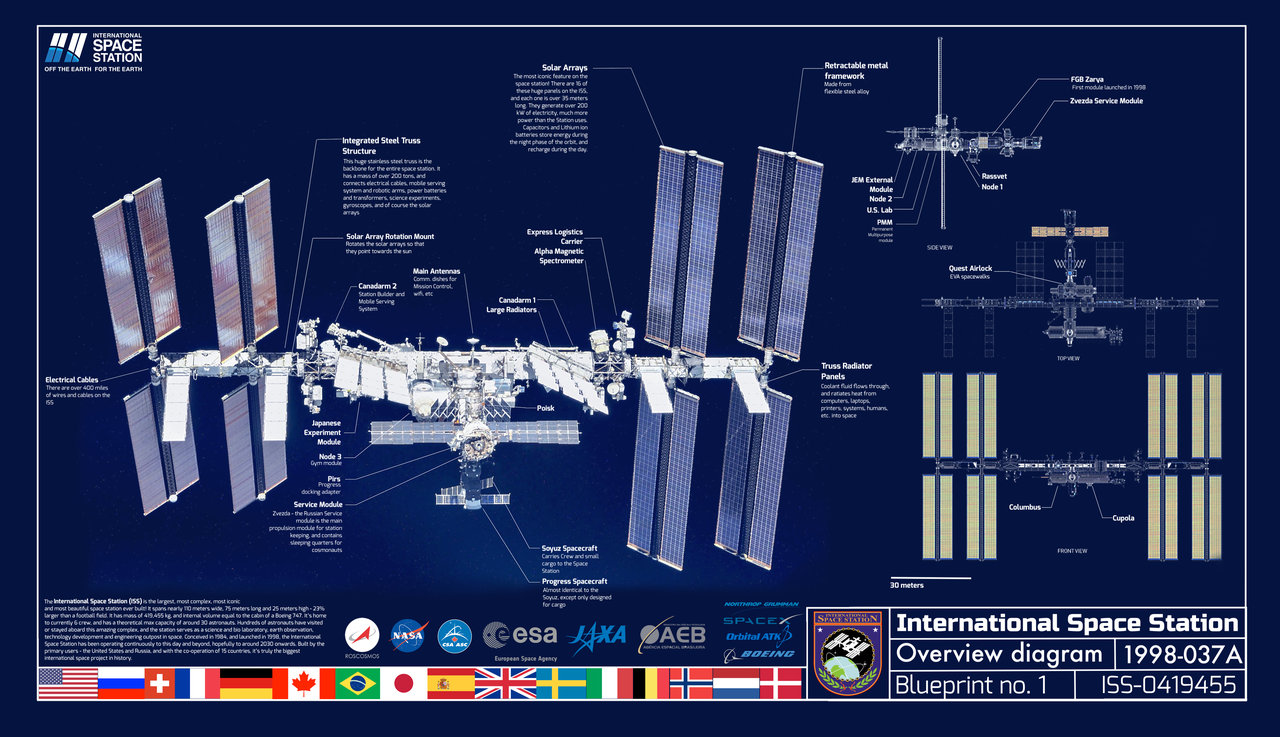

以下はステーションの主要コンポーネントの図です。ユニティノードはデスティニー研究所に直接接続されていますが、分かりやすくするために分離して表示しています。構造の他の部分にも同様のケースが見られます。
ボックスの背景色の説明:
- 宇宙服を着用せずに乗組員がアクセスできる加圧部品
- ドッキング/バースポート。訪問宇宙船が存在するときに加圧されます。
- エアロック、加圧環境と非加圧環境の間で人や物を移動させる
- 非加圧ステーション上部構造
- 非加圧コンポーネント
- 一時的に機能停止または非稼働のコンポーネント
- 以前の、現在はインストールされていないコンポーネント
- 将来、まだインストールされていないコンポーネント
加圧モジュール
ザリア

ザーリャ(ロシア語:Заря、直訳すると 「日の出」[e])は、機能貨物ブロック(ロシア語:Функционально-грузовой блок)としても知られ、ISSの最初の構成要素でした。1998年に打ち上げられ、当初はISSの電源、貯蔵、推進、誘導システムとして機能しました。ISSの拡張に伴い、ザーリャの役割は主に内部および外部燃料タンクへの貯蔵へと移行しました。[108]
サリュート計画で使用されたTKS宇宙船の後継機であるザーリャは、ロシアで建造されましたが、現在はアメリカ合衆国が所有しています。その名称は、国際宇宙協力の新たな時代の幕開けを象徴しています。[109]
団結

ユニティは、ノード1としても知られ、ISSの最初の米国製コンポーネントです。[110] [111]ロシアと米国のセグメントの接続として機能するこの円筒形のモジュールには、追加のモジュールを取り付けるための6つの共通結合機構(前方、後方、左舷、右舷、天頂、天底)があります。直径4.57メートル(15.0フィート)、長さ5.47メートル(17.9フィート)のユニティは、ボーイング社によってNASAのためにアラバマ州ハンツビルのマーシャル宇宙飛行センターで鋼鉄で建造されました。これは、ISSの米国セグメントの構造的バックボーンを形成する3つの接続ノード(ユニティ、ハーモニー、トランクウィリティ)の最初のものでした。[112]
ズヴェズダ

ズヴェズダ(ロシア語:Звезда、直訳すると 「星」 )は、2000年7月に打ち上げられ、 ISSのロシア軌道セグメントの中核を担っています。当初は基本的な居住区と生命維持システムを提供し、ISSでの初の継続的な有人滞在を可能にしました。追加モジュールの導入によりISSの能力は拡張されましたが、ズヴェズダはロシアセグメントの指揮統制センターとしての役割を担い、緊急時にはクルーが集合する場所となっています。[113] [114] [115]
サリュート計画のDOS宇宙船の後継機であるズヴェズダは、RKKエネルギア社によって建造され、プロトンロケットで打ち上げられた。[116]
運命
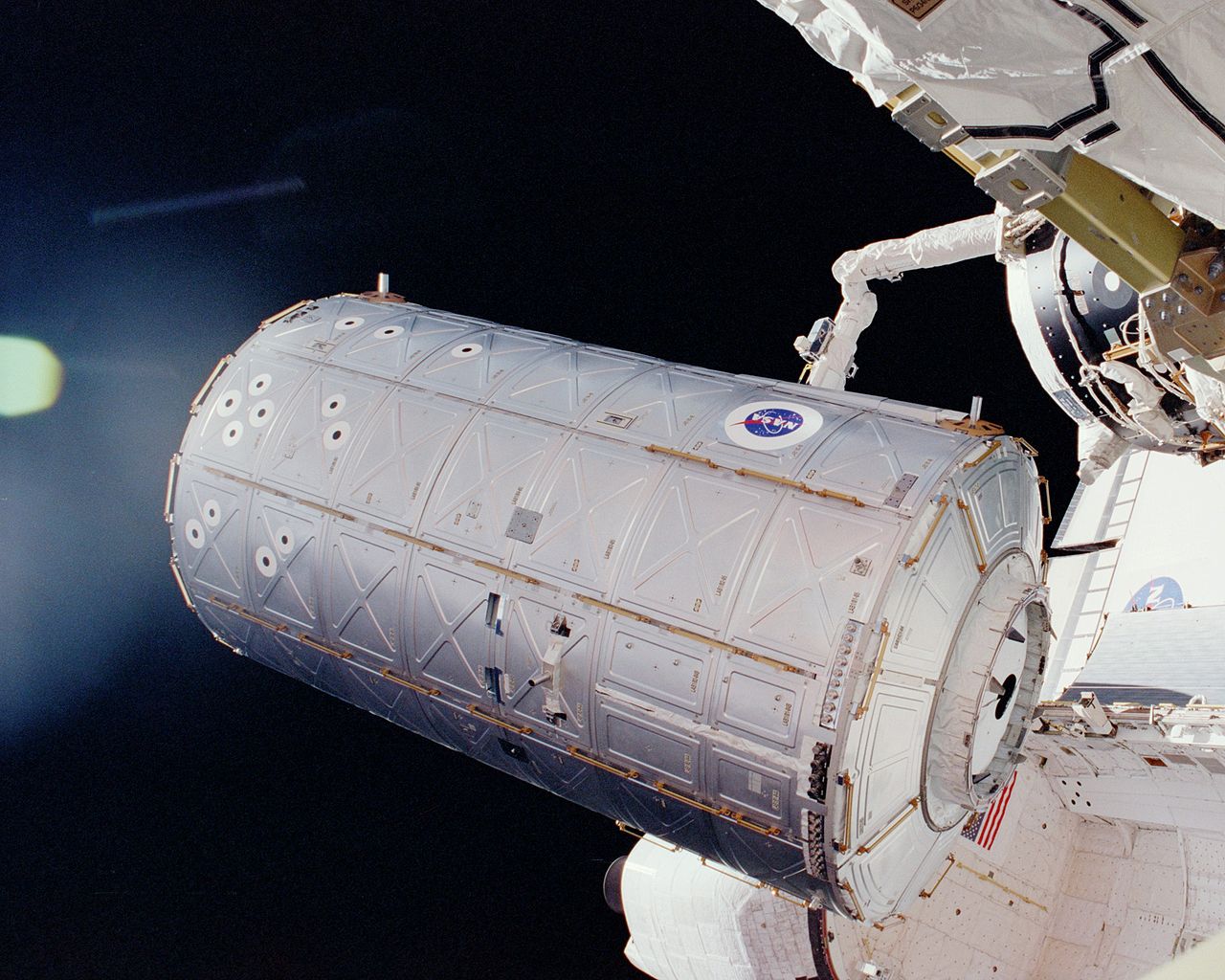
デスティニー実験室は、 ISSにおける米国の実験のための主要な研究施設です。スカイラブ以来、NASA初の恒久的な軌道上研究ステーションであるこのモジュールは、ボーイング社によって建造され、STS-98でスペースシャトル・ アトランティスに搭載されて打ち上げられました。 2001年2月に5日間かけてユニティに接続され、それ以来、デスティニーは科学研究の拠点となっています。[117] [118] [119]
デスティニーでは、宇宙飛行士が医学、工学、バイオテクノロジー、物理学、材料科学、地球科学などの分野で実験を行っています。世界中の研究者がこれらの研究の恩恵を受けています。また、このモジュールには酸素発生システムを含む生命維持システムも搭載されています。[120]
クエストジョイントエアロック

クエストジョイントエアロックは、米国の船外活動ユニット(EMU)またはロシアのオーラン宇宙服を使用した船外活動(EVA)を可能にします。[121]
設置前は、ISSからの船外活動(EVA)は、様々なシステムや設計の違いにより困難を極めていました。ズヴェズダモジュールのトランスファーチャンバー(専用のエアロックではなかった)からはオルランスーツしか使用できず、EMUは訪問中のスペースシャトルのエアロックからしか使用できませんでしたが、そのエアロックにはオルランスーツは搭載されていませんでした。[122]
クエストは、2001年7月にスペースシャトル アトランティスのSTS-104で打ち上げられ、ユニティモジュールに取り付けられた、ボーイング社製の全長6.1メートル(20フィート)、幅4.0メートル(13フィート)の構造物です。[123]宇宙飛行士の脱出用の乗組員用エアロックと宇宙服保管用の機器用エアロックが設置されており、減圧症の予防のための夜間の呼吸前処置中に宇宙飛行士を収容する設備も備えています。[122]
スペースシャトルから派生したクルーエアロックには、照明、手すり、そして最大2着の宇宙服に同時に生命維持装置と通信システムを提供するアンビリカルインターフェースアセンブリ(UIA)などの必須装備が備わっています。これらの宇宙服は、EMU2着、オーランスーツ2着、またはそれぞれの設計を1着ずつ搭載できます。
ポイスク

ポイスク(ロシア語:По́иск、直訳すると 「探索」)は、ミニ研究モジュール2(ロシア語:Малый исследовательский модуль 2)としても知られ、ISSのロシアセグメントの二次エアロックとして機能し、ソユーズ宇宙船とプログレス宇宙船のドッキングをサポートし、後者からの燃料移送を容易にします。[124] 2009年11月10日に、プログレスM-MIM2と呼ばれる改造されたプログレス宇宙船に取り付けられて打ち上げられました。[125] [126]
ポイスクにはオルラン宇宙服の整備設備があり、2つの内開きハッチが装備されている。これはミールからの設計変更である。ミールではエアロック内に微量の空気圧が残っていたため、外開きハッチが急激に開き、危険な状況に陥った。[127] 2021年にピアースが離脱して以来、ポイスクはロシアセグメントで唯一のエアロックとなっている。
調和

ハーモニー(Node 2)は、ISSの米国セグメントの中央接続ハブであり、米国、欧州、日本の実験モジュールを接続しています。ISSの重要な電力、データ、生命維持システムを供給するため、「ユーティリティハブ」とも呼ばれています。また、このモジュールには4人の乗組員のための寝室も設置されています。[128]
ハーモニーは2007年10月23日にスペースシャトル ディスカバリー号のSTS-120で打ち上げられ、[129] [130]当初はユニティに結合されていましたが[131] [132]、2007年11月14日にデスティニー実験室の正面の恒久的な位置に移設されました。[133]この拡張によりISSの居住スペースが大幅に拡張され、米国セグメントの建設における重要なマイルストーンとなりました。
静けさ

トランクウィリティ( Node 3とも呼ばれる)は、ISSのモジュールの一つです。環境制御システム、生命維持システム、トイレ、運動器具、観測キューポラなどが設置されています。
欧州宇宙機関(ESA)とイタリア宇宙機関(ITA)は、タレス・アレニア・スペース社にトランクウィリティの製造を委託した。2009年11月20日の式典で、このモジュールの所有権はNASAに移譲された。[134] 2010年2月8日、NASAはスペースシャトルSTS-130ミッションでこのモジュールを打ち上げた。
コロンブス

コロンバスは ISS の一部である科学実験室であり、欧州宇宙機関による国際宇宙ステーションへの最大の単一貢献です。
ハーモニーおよびトランクウィリティモジュールと同様に、コロンバス実験室はイタリアのトリノでタレス・アレニア・スペースによって建造されました。実験室の機能的な機器とソフトウェアは、ドイツのブレーメンにあるEADSによって設計されました。コロンバス実験室は、エアバス・ベルーガジェット機でフロリダのケネディ宇宙センターに運ばれる前に、ブレーメンで統合されました。 2008年2月7日、スペースシャトルアトランティスに搭載され、 STS-122便で打ち上げられました。10年間の運用を想定して設計されています。コロンバス実験室は、ドイツの ミュンヘン近郊オーバープファッフェンホーフェンにあるドイツ航空宇宙センターの一部であるドイツ宇宙運用センターにあるコロンバス管制センターによって管制されています。
欧州宇宙機関は、コロンバスの建造に14億ユーロ(約16億米ドル)を費やしており、これには搭載する実験装置とそれを運用するために必要な地上管制インフラが含まれている。[135]
希望

きぼう(日本語:きぼう、文字通り「希望」) は、国際宇宙ステーション(ISS)における日本の研究施設です。ISS最大のモジュールであり、与圧実験室、宇宙環境で実験を行うための曝露部、2つの収納室、そしてロボットアームで構成されています。ハーモニーモジュールに接続されたきぼうは、 STS-123、STS-124、そしてSTS-127の3回のスペースシャトルミッションを経て宇宙で組み立てられました。[136]
キューポラ
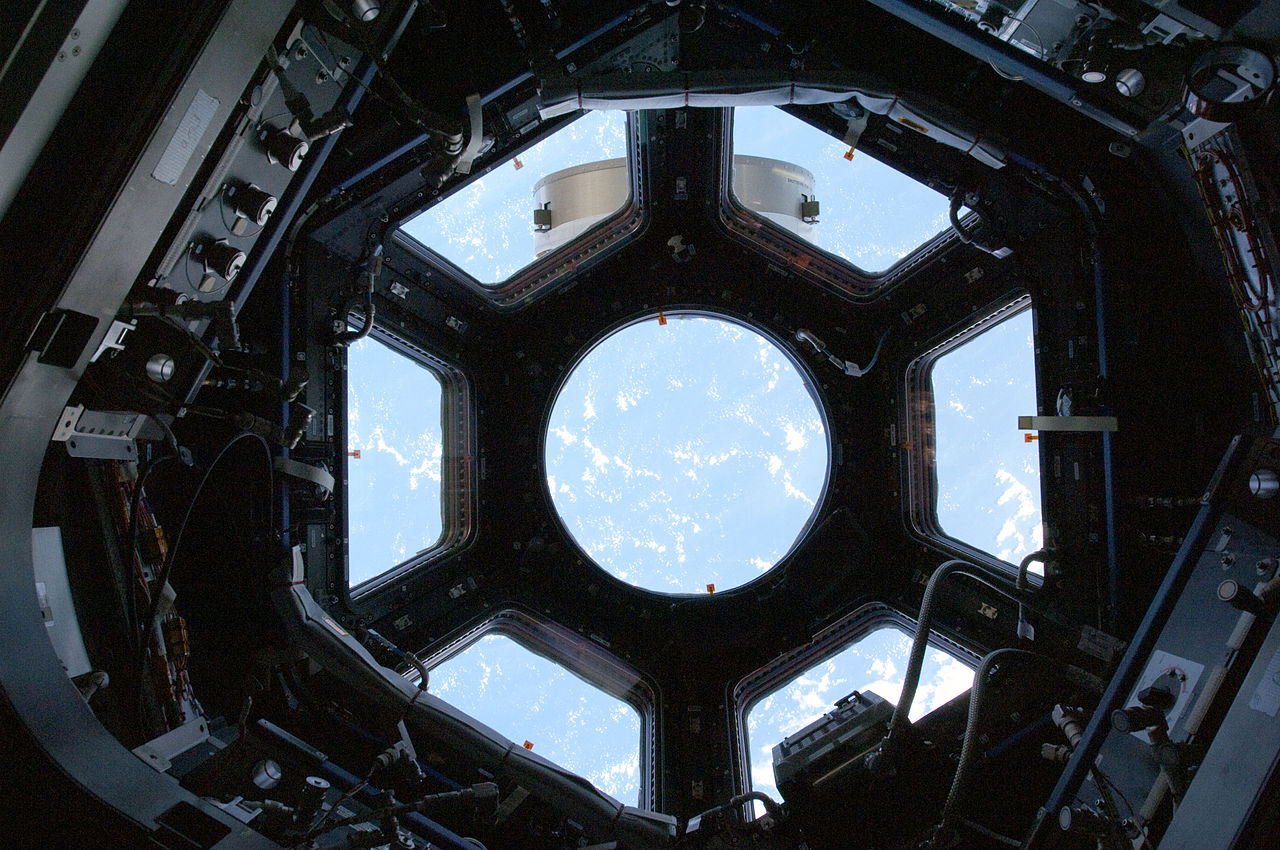
キューポラは、 ESA(欧州宇宙機関)が建造した国際宇宙ステーション(ISS)の観測モジュールです。その名称はイタリア語で「ドーム」を意味する「cupola 」に由来しています。7つの窓は、実験、ドッキング、そして地球の観測に使用されます。キューポラは2010年2月8日にスペースシャトルSTS-130ミッションで打ち上げられ、トランクウィリティ(第3結合部)モジュールに取り付けられました。キューポラが取り付けられた時点で、ISSの組み立ては85%完了しました。キューポラの中央窓の直径は80cm(31インチ)です。[137]
ラスヴェット

ラスヴェット(ロシア語:Рассвет、直訳すると 「最初の光」)は、ミニ研究モジュール1(ロシア語:Малый исследовательский модуль 1)とも呼ばれ、以前はドッキング貨物モジュールとして知られていました。主に貨物の保管と、ISSのロシアセグメントへの訪問宇宙船のドッキングポートとして使用されます。ラスヴェットは、キャンセルされたドッキング・ストレージ・モジュールの代替として、1995年に製造されたミール・ドッキング・モジュールを主にベースとした設計を採用しました。
ラスヴェットは、 1998年に米国が資金提供したザーリャモジュールをロシアのプロトンが引き渡すのと引き換えに、2010年5月14日にスペースシャトル アトランティスSTS-132で運ばれました。 [138]その後まもなく、ラスヴェットはザーリャに取り付けられました。[139]
レオナルド

レオナルド恒久多目的モジュール (PMM) は、 2011年2月24日のSTS-133でスペースシャトルディスカバリー号に搭載されて宇宙に打ち上げられ、3月1日に設置されました。レオナルドは主に、それまで宇宙ステーション内のさまざまな場所に保管されていたISSのスペアパーツ、補給品、廃棄物の保管に使用されます。また、米国軌道セグメントに居住する宇宙飛行士の個人衛生エリアでもあります。レオナルドPMMは、2011年以前は多目的物流モジュール(MPLM) でしたが、現在の構成に改造されました。以前は、スペースシャトルでISSとの間で貨物を輸送するために使用されていた2つのMPLMのうちの1つでした。このモジュールは、イタリアの博学者レオナルド・ダ・ヴィンチにちなんで名付けられました。
Bigelow 拡張可能アクティビティモジュール

ビゲロー拡張活動モジュール(BEAM)は、ビゲロー・エアロスペースがNASAとの契約に基づき開発した実験的な拡張型宇宙ステーションモジュールで、2016年から少なくとも2020年まで国際宇宙ステーション(ISS)の臨時モジュールとして試験することを目的としている。2016年4月10日にISSに到着し、[140] 4月16日に静かの結節点3でISSに係留され、2016年5月28日に拡張および加圧された。2021年12月、ビゲローの活動停止に伴い、ビゲロー・エアロスペースはモジュールの所有権をNASAに譲渡した。[141]
国際ドッキングアダプター
国際ドッキングアダプタ(IDA)は、APAS-95をNASAドッキングシステム(NDS)に接続するために開発された宇宙船ドッキングシステムアダプタです。IDAは、ISSの2つの開放型与圧結合アダプタ(PMA)のそれぞれに取り付けられ、どちらもハーモニーモジュールに接続されています。
現在、ISSには2基の国際ドッキングアダプター(IDA-1)が設置されている。当初、IDA-1はハーモニーの前方ポートに位置するPMA-2に、 IDA-2はハーモニーの天頂に位置するPMA-3に設置される予定だった。IDA-1が打ち上げ事故で破壊された後、IDA-2は2016年8月19日にPMA-2に設置され、[142] 、 IDA-3は2019年8月21日にPMA-3に設置された。[143]
ビショップエアロックモジュール

ナノラックス・ビショップ・エアロック・モジュールは、2020年12月6日にスペースX CRS-21で国際宇宙ステーションに向けて打ち上げられた商業資金によるエアロック・モジュールである。 [144] [145]このモジュールは、ナノラックス、タレス・アレニア・スペース、ボーイングによって製造された。 [146]このモジュールは、NASA、 CASIS 、その他の民間および政府機関の顧客向けに、キューブサット、小型衛星、その他の外部ペイロードを展開するために使用される。[147]
ナウカ

ナウカ(ロシア語: Наука、直訳すると 「科学」)は、多目的実験モジュール・アップグレード(ロシア語: Многоцелевой лабораторный модуль, усоверше́нствованный)としても知られる、ロスコスモスが資金提供した国際宇宙ステーション(ISS)の構成要素であり、2021年7月21日14時58分(UTC)に打ち上げられた。当初のISS計画では、ナウカはドッキング・アンド・ストウェッジ・モジュール(DSM)の位置を使用する予定だったが、DSMは後にラスヴェット・モジュールに置き換えられ、ザーリャの天底ポートに移動された。ナウカは2021年7月29日13時29分(UTC)にズヴェズダの天底ポートにドッキングし、ピアースモジュールと交換されました。
プリチャル到着まで、有人・無人ミッション用に天底ポートに仮のドッキングアダプターが取り付けられていたが、到着直前に離陸するプログレス宇宙船によって取り外された。[148]
プリシャル
プリチャル(ロシア語: Причал、直訳すると 「桟橋」)は、国際宇宙ステーションのロシアセグメントのドッキングハブとして機能する4トン(8,800ポンド)の球形モジュールです。2021年11月に打ち上げられたプリチャルは、ソユーズ宇宙船とプログレス宇宙船、および将来のモジュールのための追加のドッキングポートを提供します。プリチャルには、前方、後方、左舷、右舷、天頂、天底の6つのドッキングポートがあります。これらのポートの1つは、アクティブハイブリッドドッキングシステムを備えており、ナウカモジュールとのドッキングを可能にしました。残りの5つのポートはパッシブハイブリッドで、ソユーズ、プログレス、およびより重いモジュール、および改良されたドッキングシステムを備えた将来の宇宙船とのドッキングを可能にしています。2024年の時点で、前方、後方、左舷、右舷のドッキングポートは覆われたままです。プリチャルは当初、現在は中止された軌道上有人組立・実験施設の一部となる予定でした。[149] [150] [151] [152]
非加圧要素
ISSには、与圧を必要としない外部コンポーネントが多数存在します。その中で最大のものは、統合トラス構造(ITS)で、ISSの主太陽電池アレイと放熱器が取り付けられています。[153] ITSは10個の独立したセグメントで構成され、長さ108.5メートル(356フィート)の構造を形成しています。[10]
ステーションには、6 本のロボット アーム、3 つの外部収納プラットフォーム(ESP)、4 つのExPRESS 補給キャリア(ELC) など、いくつかの小さな外部コンポーネントを設置することが計画されていました。[154] [155]これらのプラットフォームは、電力を供給し、実験データを現地で処理することで、宇宙空間の真空中で実験 ( MISSE、STP-H3、およびロボット燃料補給ミッションを含む) を展開して実施できますが、その主な機能は予備の軌道交換ユニット(ORU) を保管することです。ORU は、ポンプ、貯蔵タンク、アンテナ、およびバッテリー ユニットなど、故障したり設計寿命を過ぎたりした場合に交換できる部品です。このようなユニットは、船外活動 (EVA) 中に宇宙飛行士またはロボット アームによって交換されます。[156] STS-129、[157] STS-133 [158]および STS-134を含むいくつかのシャトル ミッションは、ORU の配送専用でした。 [159] 2011年1月現在[update]、ORUの輸送手段として使用されたのは、 曝露パレット(EP)を介してFHRCとCTC-2を輸送した日本の貨物船HTV-2のみであった。 [160] [更新が必要]
実験モジュールに直接取り付けられた小型の曝露施設もある。きぼう船外 実験プラットフォームは、きぼう複合施設の外部「ポーチ」として機能し、[161]欧州コロンバス研究所の施設は、欧州技術曝露施設[162] [163]や宇宙原子時計アンサンブル[164]などの実験に電力とデータ接続を提供している。リモートセンシング機器のSAGE III-ISSは、2017年2月にCRS-10でステーションに運ばれ、[ 165 ] NICER実験は、2017年6月にCRS-11で運ばれた。[166] ISS に外部搭載された最大の科学ペイロードは、アルファ磁気スペクトロメータ (AMS) で、2011年5月に STS-134 で打ち上げられ、ITS に外部搭載された素粒子物理学実験である。AMS は宇宙線を測定し、暗黒物質と反物質の証拠を探している。[167] [168]
エアバス社製の商用バルトロメオ外部ペイロードホスティングプラットフォームは、2020年3月6日にCRS-20で打ち上げられ、欧州モジュール「コロンバス」に取り付けられました。これにより、ExPRESS補給キャリアの8基、きぼうの10基、コロンバスの4基に加え、12基の外部ペイロードスロットが追加されます。このシステムはロボットによるメンテナンスが可能な設計で、宇宙飛行士の介入は不要です。クリストファー・コロンブスの弟にちなんで名付けられました。[169] [170] [171]
MLM用装備
2010年5月、NASAとの合意に基づき、ナウカ用の機器がSTS-132で打ち上げられ、スペースシャトル・アトランティスによって運ばれた。重量1.4トンのこの機器は、ラスヴェット(MRM-1)の外側に取り付けられた。機器には、ナウカと共に打ち上げられた欧州ロボットアーム(ERA)用の予備肘関節、船外活動(EVA)で使用されるERA可搬式作業柱、RTOd用追加放熱器、与圧実験エアロックに沿った内部ハードウェアが含まれていた。[172]
RTOdラジエーターはNaukaに追加の冷却機能を追加し、モジュールでより多くの科学実験を行うことを可能にします。[172]
ERAは、RTOdラジエーターをラスヴェットから取り外すために使用され、 VKD-56船外活動中にナウカに移送されました。その後、ERAはVKD-58船外活動で起動され、完全に展開されました。 [173]このプロセスには数ヶ月かかりました。2023年8月のVKD-60船外活動中にも、可搬式作業プラットフォームが移送されました。このプラットフォームはERAの先端に取り付けることができ、宇宙飛行士は船外活動中にアームの先端に「乗る」ことができます。[174] [175]しかし、数ヶ月にわたる船外活動とRTOd放熱器の設置を経てもなお、6ヶ月後、ナウカの実稼働開始前にRTOdラジエーターが故障しました(RTOdの設置目的は、ナウカの実験からの熱を放熱することです)。この故障、つまり漏れにより、RTOdラジエーターはナウカで使用できなくなりました。これは、ソユーズMS-22とプログレスMS-21のラジエーター漏れに続く、ISSにおける3度目のラジエーター漏れです。予備のRTOdが利用できない場合、ナウカの実験はナウカのメイン打ち上げラジエーターに頼らざるを得なくなり、モジュールの能力をフルに活用することは不可能になる。[176] [177]
MLM艤装のもう一つは、大型ペイロード接続手段(Sredstva Krepleniya Krupnogabaritnykh Obyektov、SKKO)と呼ばれる4セグメントの外部ペイロードインターフェースである。[178]モジュール起動艤装プロセスの一環として、プログレスMS-18(LCCS部品)とプログレスMS-21(SCCCS部品)によって2つの部品に分割されてナウカに搬送された。 [179] [180] [181] [182]これはVKD-55船外活動中にナウカのERA後方基点に持ち出され設置された。[183] [184] [185] [186]
ロボットアームと貨物クレーン
統合トラス構造 (ITS) は、ステーションの主要なリモート マニピュレータ システムであるモバイル サービス システム(MSS)の基盤として機能し、次の3 つの主要コンポーネントで構成されています。
- ISS最大のロボットアームであるカナダアーム2は、質量が1,800キログラム(4,000ポンド)で、USOS上の宇宙船とモジュールのドッキングと操作、船外活動中の乗組員と機器の固定、およびタスクを実行するためのデクスターの移動に使用されます。 [187]
- デクスターは1,560kg(3,440ポンド)のロボットマニピュレーターで、2本の腕と回転する胴体を持ち、電動工具、ライト、ビデオを備えており、軌道交換ユニット(ORU)の交換や細かい制御を必要とするその他の作業を実行します。[188]
- モバイルベースシステム(MBS)は、ステーションのメイントラスの長さに沿ってレール上を走行するプラットフォームで、カナダアーム2とデクスターの移動基地として機能し、ロボットアームがUSOSのあらゆる部分に到達できるようにします。[189]
STS-134ではザーリャにグラップル固定具が追加され、カナダアーム2がROSにインチワームで登れるようになった。[159]また、STS-134では15メートル(50フィート)のオービターブームセンサーシステム(OBSS)も設置された。これはスペースシャトルのミッションで耐熱シールドタイルを検査するために使用されており、ステーションで使用することでMSSの到達範囲を広げることができる。[159]地球やISSのスタッフは遠隔操作でMSSのコンポーネントを操作し、船外活動を必要とせずにステーションの外で作業を行うことができる。
きぼう船外実験プラットフォームのサービスを提供する日本の遠隔操作システム[190]は、 STS-124で打ち上げられ、きぼう与圧実験室[191]に取り付けられています。このアームは、一方の端が恒久的に取り付けられ、もう一方の端には標準的なグラップル固定具用のラッチエンドエフェクタが付いている点で、スペースシャトルのアームに似ています。
ROSの保守作業を行う欧州ロボットアームは、ナウカモジュールと同時に打ち上げられた。[ 192 ] ROSは宇宙船やモジュールの操作を必要としない。すべての宇宙船とモジュールは自動的にドッキングし、同じ方法で廃棄できるからである。乗組員は船外活動(EVA)中に2台のストレラ(ロシア語:Стрела́、直訳すると 「矢」)貨物クレーンを使用して、ROS内で乗組員と機器を移動させる。ストレラクレーン1台の質量は45kg(99ポンド)である。
以前のモジュール
ピルス
ピアース(ロシア語: Пирс、直訳すると「桟橋」)は、2001年9月14日にISS組立ミッション4Rとして、ロシアのソユーズUロケットで打ち上げられた。上段にはプログレス宇宙船の改造版であるプログレスM-SO1が使用された。ピアースは2021年7月26日10:56 UTCにプログレスMS-16によって切り離され、同日14:51 UTCに軌道から離脱し、ナウカモジュールをISSに取り付けるためのスペースを確保した。出発前、ピアースはISSにおけるロシアの主要なエアロックとして機能し、ロシアのオルラン宇宙服の保管と修理に使用されていた。
計画されているコンポーネント
公理セグメント

2020年1月、NASAはアクシオム・スペース社にISS向け商用モジュールの建造契約を授与しました。この契約はNextSTEP2プログラムに基づくものです。NASAはアクシオム社と、ISSのハーモニー(ノード2)モジュールの前方ポートに取り付けられるモジュールの建造と納入について、固定価格契約で交渉しました。NASAが委託したのはモジュール1つだけですが、アクシオム社はノードモジュール、軌道上研究製造施設、乗組員居住施設、そして「大型窓付き地球観測装置」を含む5つのモジュールからなるセグメント全体の建造を計画していました。アクシオム・セグメントは、宇宙ステーションの能力と価値を大幅に向上させ、より多くの乗組員と他の組織による民間宇宙飛行を可能にすることが期待されていました。アクシオム社は、ISSの退役後、このセグメントを独立型の宇宙ステーションに転換し、ISSの後継機としての役割を担う計画でした。[193] [194] [195]カナダアーム2は、2030年にISSが退役した後もアクシオムステーションで運用を継続する予定です。[196] 2024年12月、アクシオムスペースはステーションの組み立て計画を改訂し、独立した軌道上でアクシオムステーションを組み立てる前に、ISSにドッキングするモジュールを1つだけ必要とするようにしました。[197]
2024年12月現在[update]、アクシオム・スペースは、ペイロード電力熱モジュール(PPTM)というモジュールを2027年以降にISSに打ち上げる予定です。[197] PPTMは、約1年後にアクシオムのハビタット1(Hab-1)モジュールが打ち上げられるまでISSに留まり、その後ISSから分離してHab-1と合流する予定です。[197]
米国の軌道離脱機
米国軌道離脱機(USDV)は、NASAが提供する宇宙船で、2030年の運用寿命終了後にISSを制御下で軌道離脱させ、廃棄することを目的とします。2024年6月、NASAはSpaceX社に軌道離脱機の製造契約を授与しました。[198] NASAは、軌道上で「最低限の能力」、すなわち「USDVと少なくとも1つの商用ステーション」が揃い次第、ISSを軌道離脱させる予定です。[199]
キャンセルされたコンポーネント
ISSプログラムの過程で、開発または計画されていたいくつかのモジュールがキャンセルされた。理由としては、予算上の制約、モジュールが不要になったこと、2003年のコロンビア号の事故後のステーションの再設計などが挙げられる。米国の遠心分離機収容モジュールは、さまざまなレベルの人工重力下で科学実験を行う予定だった。[200]米国の居住モジュールは、ステーションの居住区として機能する予定だった。しかし、居住区は現在、ステーション全体に分散している。[201]米国の暫定制御モジュールとISS推進モジュールは、打ち上げ失敗の際にズヴェズダの機能を代替する予定だった。 [202] 2つのロシアの研究モジュールが科学研究用に計画されていた。 [ 203 ] これらはロシアの汎用ドッキングモジュールにドッキングする予定だった。[204]ロシアの科学電力プラットフォームは、 ITS太陽電池アレイとは独立してロシアの軌道セグメントに電力を供給する予定だった。
科学電源モジュール 1 および 2 (再利用コンポーネント)
科学電力モジュール1(SPM-1 、 NEM-1とも呼ばれる)と科学電力モジュール2(SPM-2 、 NEM-2とも呼ばれる)は、当初2024年以降にISSに到着し、ナウカモジュールにドッキングしているプリチャルモジュールにドッキングする予定だったモジュールです。[152] [205] 2021年4月、ロスコスモスはNEM-1をロシア軌道サービスステーション(ROSS)のコアモジュールとして再利用し、2027年以降に打ち上げられ、自由飛行するナウカモジュールにドッキングすると発表した。[ 207] [208] NEM-2は別のコア「ベース」モジュールに改造される可能性があり、2028年に打ち上げられる予定である。[209]
Xベース
ビゲロー・エアロスペース社が設計。2016年8月、ビゲロー社はNASAと、次世代宇宙技術探査パートナーシップの第2フェーズの一環として、B330をベースにした実物大の地上プロトタイプの深宇宙居住施設を開発するための契約を交渉した。このモジュールは、ビゲロー社が国際宇宙ステーションに取り付けて試験することを望んでいたため、拡張型ビゲロー先進ステーション拡張モジュール(XBASE)と名付けられた。しかし、2020年3月にビゲロー社は従業員88人全員を解雇し、2024年2月時点で[update]同社は休眠状態にあり、倒産したとみなされているため、[210] [211]、 XBASEモジュールが打ち上げられる可能性は低いと思われる。
ノーチラスX遠心分離機のデモンストレーション
2011年には、人工的な部分重力効果を発現させるための十分な規模の遠心分離機を宇宙で初めて実証する提案が提出されました。これはISS乗組員の睡眠モジュールとなるように設計されていましたが、予算の制約により他のプロジェクトが優先され、中止されました。[212]
車載システム
生命維持装置
重要なシステムは、大気制御システム、給水システム、食料供給設備、衛生設備、火災検知・消火設備です。ロシア軌道セグメントの生命維持システムは、ズヴェズダ・サービスモジュールに搭載されています。これらのシステムの一部は、USOSの機器によって補完されています。ナウカ実験室には、完全な生命維持システム一式が備えられています。
大気制御システム

国際宇宙ステーション(ISS)の大気は地球の大気と類似している。[213] ISSの通常の気圧は101.3 kPa(14.69 psi)であり、[214]地球の海面気圧と同じである。地球に似た大気は乗組員の快適性を高め、アポロ1号の乗組員の死因となったような火災のリスクが高まるため、純酸素の大気よりもはるかに安全である。[215] [より詳細な情報源が必要]ロシアとソ連のすべての宇宙船では、地球に似た大気条件が維持されている。[216]
ズヴェズダのエレクトロンシステムとデスティニーの同様のシステムは、ステーション内で酸素を生成する。[217]乗組員は、ボンベ式酸素と固体燃料酸素発生装置(SFOG)キャニスター(化学酸素発生システム)というバックアップオプションを備えている。[218]二酸化炭素はズヴェズダのヴォズドゥフシステムによって空気から除去される。腸管からのメタンや汗からのアンモニアなど、人間の代謝によるその他の副産物は、活性炭フィルターによって除去される。[218]
ROS大気制御システムの一部は酸素供給である。エレクトロンユニット、固体燃料発生器、そして貯蔵酸素によって三重の冗長性が確保されている。酸素の主な供給源はエレクトロンユニットであり、水の電気分解によって酸素と水素を生成し、水素を船外に排出する。1kW(1.3馬力)のシステムは、乗組員1人あたり1日約1リットルの水を使用する。この水は地球から供給されるか、他のシステムからリサイクルされる。ミールは、酸素生成にリサイクル水を使用した最初の宇宙船である。二次酸素供給は、酸素生成用ビカカートリッジ(ISS ECLSSも参照)の燃焼によって行われる。各「キャンドル」は450~500℃(842~932°F)で5~20分かけて分解し、600リットル(130英ガロン、160米ガロン)の酸素を生成する。このユニットは手動で操作される。 [ 219 ]
USOS(米国軌道セグメント)には、2001年に納入されたクエスト・エアロック・モジュールの加圧貯蔵タンクからの冗長酸素供給があり、10年後にはESAが構築したトランクウィリティ・モジュール(ノード3)の高度閉ループシステム(ACLS)によって電気分解で酸素が生成され、それが補完されました。[220]生成された水素はキャビンの大気中の二酸化炭素と結合し、水とメタンに変換されます。
電力と熱の制御
両面太陽電池アレイはISSに電力を供給します。これらの両面太陽電池は、片側で直射日光を、もう片側で地球からの反射光を集めます。地球で一般的に使用されている片側太陽電池よりも効率が高く、低温で動作します。[221]
ISSのロシアセグメントは、他の多くの宇宙船と同様に、 ズヴェズダに搭載された2つの回転式太陽電池アレイから供給される28Vの 低電圧 DC電力を使用しています。USOSは、USOSのPVアレイから供給される130~180VのDC電力を使用しています。電力は160V DCで安定化・配電され、ユーザーが必要とする124V DCに変換されます。配電電圧が高いため、乗組員の安全性は犠牲になりますが、導体はより小型で軽量です。2つのステーションセグメントは、コンバータを介して電力を共有しています。
USOSの太陽電池アレイは4枚の翼対で構成され、合計75~90キロワットの電力を発電します。[5]これらのアレイは通常、太陽を追尾して発電量を最大化します。各アレイの面積は約375平方メートル(4,036平方フィート)、長さは58メートル(190フィート)です。完全な構成では、太陽電池アレイはアルファジンバルを軌道ごとに1回転させることによって太陽を追跡します。ベータジンバルは、軌道面に対する太陽の角度のより緩やかな変化に追従します。ナイトグライダーモードでは、夜間に太陽電池アレイを地面と平行にすることで、ステーションの比較的低い軌道高度における大きな空気抵抗を軽減します。[222]
当初、ISSは充電式ニッケル水素電池(NiH2 )を使用していました。これは、地球に隠される90分の軌道周回周期の45分間、継続的な電力供給に使用されていました。電池は軌道の昼側で充電されます。電池の寿命は6.5年(37,000回以上の充放電サイクル)で、ISSの想定寿命である20年間にわたって定期的に交換されていました。[223] 2016年からは、ニッケル水素電池はリチウムイオン電池に交換され、ISSプログラムの終了まで持続すると予想されています。[224]
宇宙ステーションの大型太陽電池パネルは、ステーションと電離層の間に高い電位差を発生させます。これにより、宇宙船のプラズマシースによってイオンが加速され、絶縁表面をアーク放電させたり、導電表面をスパッタリングさせたりする可能性があります。これを軽減するため、プラズマ接触ユニットがステーションと周囲の宇宙プラズマの間に電流経路を形成します。[225]

国際宇宙ステーションのシステムと実験は大量の電力を消費し、そのほとんどは熱に変換される。内部温度を動作可能な範囲内に保つため、受動熱制御システム(PTCS)が外部表面材料、MLIなどの断熱材、ヒートパイプから構成されている。PTCSが熱負荷に対応できない場合は、外部能動熱制御システム(EATCS)が温度を維持する。EATCSは、大気を冷却・除湿するために使用される内部の無毒の水冷却ループで構成され、集められた熱を外部の液体アンモニアループに転送する。熱交換器から、アンモニアは赤外線として熱を放射する外部ラジエーターに送り込まれ、その後、アンモニアは国際宇宙ステーションに循環して戻される。[226] EATCSは、きぼうやコロンバスを含む米国のすべての与圧モジュールと、S0、S1、P1トラスの主要電力分配電子機器を冷却する。EATCSは最大70kWまで放射することができる。これは、 STS-105で打ち上げられP6トラスに設置された初期アンモニアサービサー(EAS)を介した初期外部アクティブ熱制御システム(EEATCS)の14kWをはるかに上回るものである。 [227]
通信とコンピュータ
国際宇宙ステーション(ISS)は、国際宇宙ステーション(ISS)とミッションコントロールセンター間のテレメトリおよび科学データリンクを提供するために、様々な無線通信システムに依存しています。無線リンクは、ランデブーおよびドッキング手順、そして乗組員、フライトコントローラー、そして家族間の音声およびビデオ通信にも使用されます。そのため、ISSには、様々な目的で使用される内部および外部通信システムが装備されています。[228]
ロシア軌道セグメントは、地上との直接通信に主にズヴェズダに搭載されたリラアンテナを使用している。 [65] [229]また、ルーチデータ中継衛星システムを利用する能力もあった。 [65]このシステムは、ステーション建設当時は荒廃していたが、[65] [230] [231] 2011年と2012年にルーチ5Aとルーチ5Bの打ち上げにより運用状態に復旧した。[232]さらに、ボスホートMシステムは、地上管制への内部電話通信とVHF無線リンクを提供している。[233]
米国軌道セグメント(USOS)は、 Sバンド(音声、テレメトリ、コマンド - P1/S1トラスに配置)とKuバンド(音声、ビデオ、データ - Z1トラスに配置)の2つの独立した無線リンクを使用しています。これらの通信は、静止軌道上の米国追跡データ中継衛星システム(TDRSS)を介してルーティングされ、テキサス州ヒューストンにあるクリストファー・C・クラフト・ジュニアミッションコントロールセンター(MCC-H)とのほぼ継続的なリアルタイム通信が可能になっています。[65] [234] [228]カナダアーム2、欧州のコロンバス実験室、日本のきぼうモジュールのデータチャネルも、当初はSバンドとKuバンドシステムを介してルーティングされていましたが、欧州データ中継システムと同様の日本のシステムが、最終的にはこの役割でTDRSSを補完することを目的としていました。[234] [235]
UHF無線は、船外活動(EVA)を行う宇宙飛行士や、ステーションにドッキングしたり、ステーションからドッキング解除したりする他の宇宙船によって使用されます。[65]自動化された宇宙船には独自の通信機器が搭載されており、ATVは宇宙船に取り付けられたレーザーとズヴェズダに取り付けられた近接通信装置を使用して、ステーションに正確にドッキングしました。[236] [237]
ISSの米国軌道セグメントには、WindowsまたはLinuxを搭載した市販のノートパソコンが約100台搭載されています。 [238]これらの機器は、ISSの28V直流電源システムを使用するように改造されており、機器から発生する熱が無重力環境で滞留する可能性があるため、換気装置が追加されています。NASAはノートパソコンの共通性を高く保つことを重視しており、宇宙飛行士が必要に応じてノートパソコンを修理できるよう、スペアパーツをISSに保管しています。[239]
ラップトップは、ポータブル コンピュータ システム (PCS) とステーション サポート コンピュータ (SSC) の 2 つのグループに分かれています。
PCSラップトップはLinuxで動作し、 Debian Linuxで動作するステーションのプライマリコマンド&コントロールコンピュータ(C&C MDM)への接続に使用されます。[240]これは、信頼性と柔軟性のために2013年にWindowsからスイッチとして製造されました。[241]プライマリコンピュータは、ステーションを軌道に乗せ、生命を支える重要なシステムを監視します。[238]プライマリコンピュータにはディスプレイもキーボードもないため、宇宙飛行士はPCSラップトップをUSBから1553アダプタを介してリモートターミナルとして接続します。[242]プライマリコンピュータは、2001年、[243] 2007年、[244] 2017年に故障しました。2017年の故障では、外部コンポーネントを交換するために船外活動が必要でした。[245]
SSCラップトップは、手順の確認、科学実験の管理、電子メールやビデオチャットでのコミュニケーション、ダウンタイム中の娯楽など、ISSでのその他のあらゆる用途に使用されます。[238] SSCラップトップはWi-Fi経由でステーションの無線LANに接続し、 Kuバンド経由で地上に接続します。当初、ステーションからのダウンロード速度は10Mbit /s、アップロード速度は3Mbit/sでしたが、[246] NASAは2019年にシステムをアップグレードし、速度を600Mbit/sに向上させました。[247] ISSの乗組員はインターネットにアクセスできます。[248] [249]
オペレーション
遠征
各常駐クルーには、エクスペディション番号が付与されます。エクスペディションは打ち上げからドッキング解除まで最長6ヶ月間行われ、「インクリメント」と呼ばれる期間も同期間ですが、貨物宇宙船とすべての活動が含まれます。エクスペディション1から6までは3人乗りのクルーで構成されていました。NASAのスペースシャトル「コロンビア」が破壊された後、エクスペディション7から12までは、ロシアの小型貨物宇宙船プログレスではクルーの補給が不足していたため、ステーションの維持管理を行う「ケアテイカー」クルー2人乗りに縮小されました。[250]スペースシャトルが再び飛行を開始した後、第13次長期滞在から3人乗りのクルーもISSに帰還した。スペースシャトルの飛行によりステーションが拡張されるにつれ、クルーの人数も増え、2010年頃には6人に達した。[251] [252] 2020年から大型の米国商業宇宙船のクルーが到着し、 [253]クルーの人数はISSが当初設計された人数である7人に増加した。[254] [255]
ロスコスモスのオレグ・コノネンコは、ISSおよび宇宙滞在期間の最長記録保持者であり、ISSにおける5回の長期滞在ミッション(第17次長期滞在、第30/31次長期滞在、第44/45次長期滞在、第57/58/59次長期滞在、第69/70/71次長期滞在)を通じて、合計約1,111日間の宇宙滞在を経験した。また、3回船長を務めた(第31次長期滞在、第58/59次長期滞在、第70/71次長期滞在)。[256]
NASAとアクシオム・スペースのペギー・ウィットソンは、アメリカ人の中で最も長い時間を宇宙で過ごしており、第5次、第16次、第50/51/52次長期滞在とアクシオム・ミッション2および4に参加して、 675日以上を宇宙で過ごした。[257] [258]
プライベートフライト
宇宙への旅費を自費で支払う旅行者は、ロスコスモスとNASAによって宇宙飛行参加者と呼ばれ、「宇宙旅行者」と呼ばれることもあるが、彼らはこの用語を一般的に嫌っている。 [f] 2023年6月現在[update]、13人の宇宙旅行者がISSを訪れている。9人はロシアのソユーズ宇宙船でISSに輸送され、4人はアメリカのスペースX社のドラゴン2宇宙船で輸送された。旅行者1人のミッションでは、ソユーズの3席で割り切れない人数で専門職クルーが交代し、短期滞在クルーが派遣されない場合、ミールコープはスペース・アドベンチャーズを通じて空席を販売する。2011年にスペースシャトルが退役し、ISSのクルーが6人に削減されたため、パートナーはISSへのアクセスにロシアの輸送席に依存していたため、宇宙旅行は停止された。ソユーズの飛行スケジュールは2013年以降増加し、必要な長期滞在クルーは2回(12席)で、ソユーズ5回(15席)の飛行が可能になった。[266]残りの座席は、健康診断に合格した一般の人々に、1席あたり約4,000万ドルで販売される予定でした。ESAとNASAはISSの設立当初、民間宇宙飛行を批判し、NASAは当初、 ISSへの旅費を自費で支払った最初の人物であるデニス・ティトーの訓練に抵抗しました。[g]
アヌーシェ・アンサリは、 ISSに自費で飛行した初の女性宇宙飛行士であり、イラン人宇宙飛行士としても初の人物となった。関係者は、彼女の教育と経験は単なる観光客以上の存在であり、訓練での成果は「優秀」だったと報告している。[267]彼女は10日間の滞在中に、ロシアとヨーロッパで医学と微生物学に関する研究を行った。2009年のドキュメンタリー映画『スペース・ツーリスト』は、彼女がISSへ向かう旅を追ったもので、そこで彼女は「人類の長年の夢、つまり『普通の人間』として地球を離れ、宇宙へ旅立つこと」を実現した。[268]
2008年、宇宙飛行士リチャード・ギャリオットは飛行中に国際宇宙ステーションにジオキャッシュを設置しました。 [269]これは史上初の地球外ジオキャッシュです。[270]同時に、 8つのデジタル化された人間のDNA配列の電子記録であるイモータリティ・ドライブが国際宇宙ステーションに設置されました。[271]
12年間の中断の後、ISSへの最初の2回の完全に宇宙観光専用の民間宇宙飛行が実施されました。ソユーズMS-20は2021年12月に打ち上げられ、民間企業スペースアドベンチャーズの支援の下、ロスコスモスの宇宙飛行士アレクサンダー・ミスルキンと2人の日本人宇宙旅行者を乗せました。[272] [273] 2022年4月、アクシオムスペース社はスペースXドラゴン2宇宙船をチャーターし、自社の従業員宇宙飛行士マイケル・ロペス=アレグリアと3人の宇宙旅行者をアクシオムミッション1でISSに送りました。[274] [275] [276] 続いて2023年5月には、もう1人の観光客ジョン・ショフナーが従業員宇宙飛行士ペギー・ウィットソンと2人のサウジアラビア人宇宙飛行士と共にアクシオムミッション2に送りました。[277] [278]
NASAの民間宇宙飛行士ミッション
ISSへの最初の民間宇宙飛行士ミッション(PAM)は、2022年4月に打ち上げられたアクシオム・ミッション1でした。 [279] NASAは、民間宇宙飛行士を含む過去のISSへの飛行と、民間宇宙飛行士のみを含む最初の3回の飛行を評価した後、PAMを提供する団体に対する要件を更新しました。[280] 2025年8月時点で[update]最新のミッションはアクシオム・ミッション4でした。NASAは年間最大2回のPAMの機会を提供する予定です。[281]
艦隊の運用
様々な有人・無人宇宙船がISSの運用を支援してきました。ISSへの飛行実績には、プログレス93回、[h]ソユーズ72回、スペースXドラゴン50回、 [i]スペースシャトル37回、シグナス21回、HTV9回、ATV5回、ボーイング・スターライナー2回が含まれています。[282]
現在、訪問宇宙船用のドッキングポートは8つあり、さらに4つのポートが設置されているが、まだ運用されていない。[283]
- ハーモニーフォワード( PMA 2およびIDA 2を使用)
- ハーモニーゼニス(PMA 3およびIDA 3付き)
- ハーモニー・ナディール(CBMポート)
- ユニティナディール( CBMポート)
- プリシャル後部[j]
- プリシャルフォワード[j]
- プリチャル・ナディール
- プリチャル港[j]
- プリシャル右舷[j]
- ポイスクの頂点
- ラスヴェット・ナディール
- ズヴェズダ後部
前方ポートは、通常の方向と進行方向において、ステーションの前方にあります。後方ポートはその反対、後方にあります。天底は地球に向けられ、天頂は地球とは反対方向を指します。足を地球に向け、進行方向である前方を向いているとき、左舷は左、右舷は右を指します。
ステーションの軌道再ブーストを実行する貨物宇宙船は、通常、後方、前方、または天底を向いたポートにドッキングします。
有人
2025年8月4日現在[ref]、国際宇宙ステーション(ISS)には26カ国から290人が訪れており、政府支援の宇宙飛行士と民間資金による宇宙飛行参加者の両方が含まれている。これらの訪問者のうち、米国は170人、ロシアは64人、日本は11人、カナダは9人だった。イタリアは6人、フランスとドイツはそれぞれ4人ずつだった。サウジアラビア、スウェーデン、アラブ首長国連邦はそれぞれ2人がISSを訪れた。ベラルーシ、ベルギー、ブラジル、デンマーク、ハンガリー、インド、イスラエル、カザフスタン、マレーシア、オランダ、ポーランド、南アフリカ、韓国、スペイン、トルコ、英国からはそれぞれ1人がISSを訪れた。[284]
現在の乗組員リスト

無人
無人宇宙飛行は、主に宇宙ステーションへの物資輸送に用いられます。物資輸送には、乗組員への補給物資、科学調査、船外活動用機器、宇宙船のハードウェア、推進剤、水、ガスなどが含まれます。物資補給ミッションでは、ロシアのプログレス宇宙船、現在は退役した欧州宇宙機関(AATV)、日本の宇宙ステーション補給機(HTV)、そしてアメリカのドラゴン宇宙船とシグナス宇宙船が使用されてきました。さらに、ロシアのモジュールが無人ロケットで打ち上げられ、ISSに自律的にドッキングした例もいくつかあります。
現在停泊中

すべての日付はUTCです。出発日は可能な限り早い日付 ( NET ) であり、変更される可能性があります。
予定されているミッション
すべての日付はUTCです。打ち上げ日は可能な限り早い日付 ( NET ) であり、変更される可能性があります。
宇宙船のドッキングと着艦
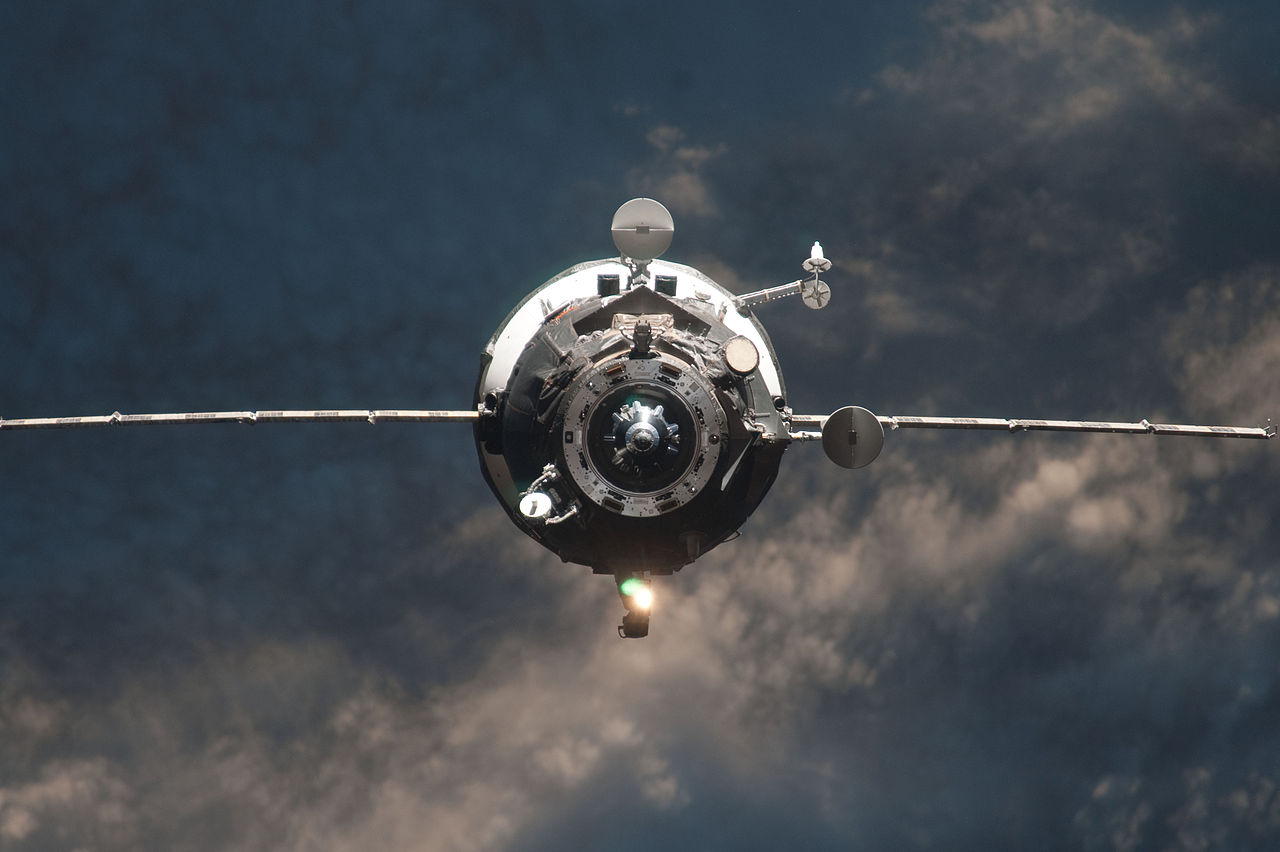
ロシアの宇宙船は、人間の介入なしに自律的に国際宇宙ステーションにランデブー・ドッキングすることができる。約200キロメートル(120マイル)以内に接近すると、宇宙船はクルス・ドッキング・ナビゲーション・システムを起動し、国際宇宙ステーションのビーコンと無線信号を交換して軌道操作を誘導する。接近するにつれて、より高精度のトランシーバーが宇宙船をドッキングポートに位置合わせし、最終接近を制御する。乗組員はこの手順を監視し、必要に応じてTORU(遠隔ロボット操作ランデブーユニット)システムを用いて介入することができる。[286]自動ドッキングは1967年からソ連の計画で使用されており、クルスは1986年にミールに導入され、その後改良が続けられてきた。開発にはコストがかかるものの、その信頼性と標準化されたコンポーネントは長期的な大幅な節約をもたらしてきた。[287]
アメリカのスペースX社が開発したドラゴン2貨物・有人宇宙船は、人間の介入なしに自律的に国際宇宙ステーションにランデブー・ドッキングすることができます。しかし、有人ドラゴンミッションでは、宇宙飛行士が介入して手動で宇宙船を操縦する能力があります。[288]
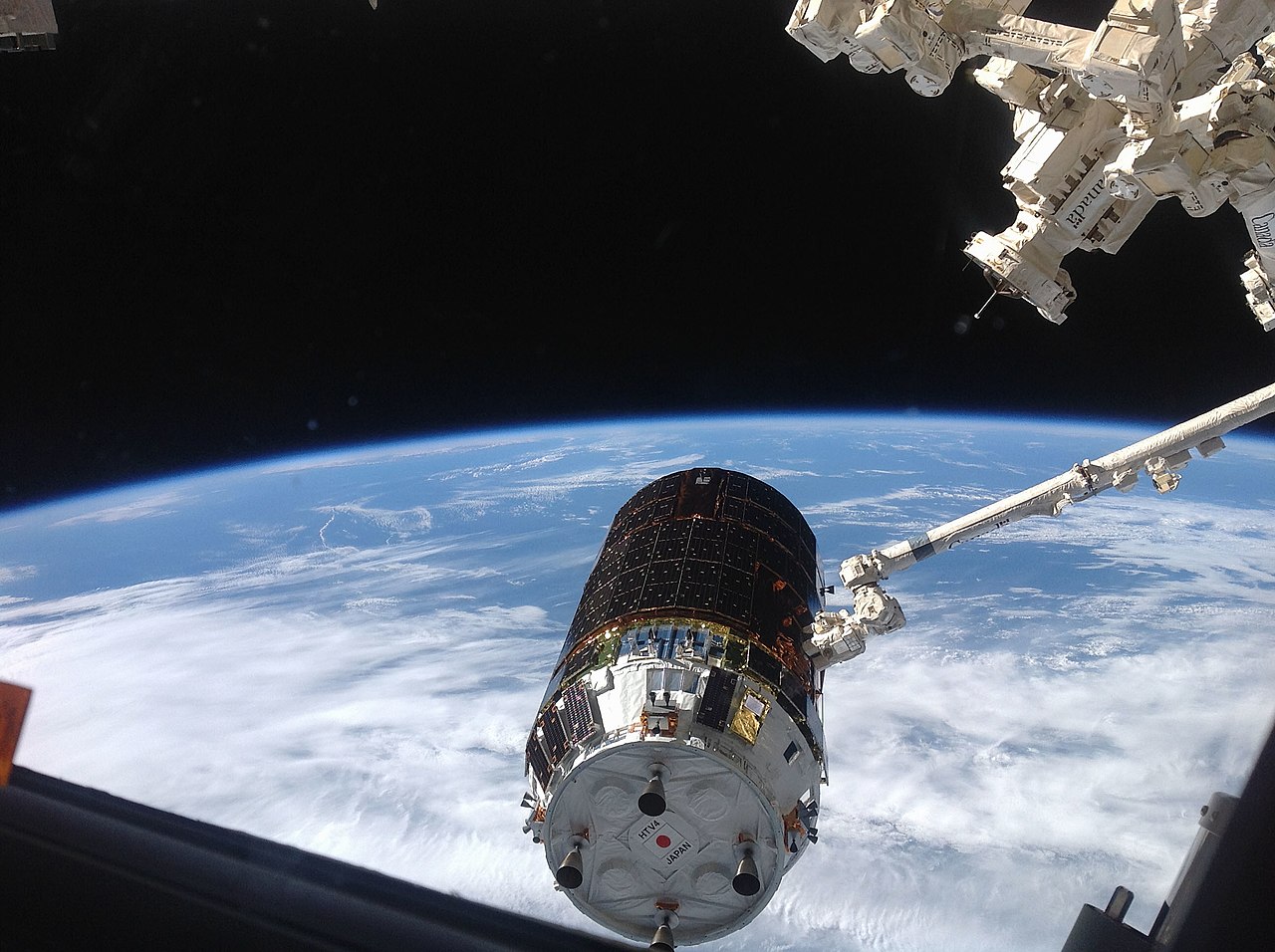
その他の自動貨物宇宙船は、通常、国際宇宙ステーションへの到着および出発時に半自動プロセスを採用しています。これらの宇宙船は、国際宇宙ステーションに接近し、近くに駐機するよう指示されます。宇宙船に搭乗している乗組員の準備が整うと、宇宙船は国際宇宙ステーションに接近するよう指示され、宇宙飛行士がモバイル・サービス・システムのロボットアームを使用して掴むことができます。宇宙船と国際宇宙ステーションの最終的な結合は、ロボットアームを使用して行われます(このプロセスはバーシングと呼ばれます)。この半自動プロセスを採用している宇宙船には、アメリカのシグナス号や日本のHTV-Xなどがあります。現在は退役したアメリカのスペースXドラゴン1号、欧州のATV、日本のHTVもこのプロセスを採用していました。
起動とドッキングウィンドウ
宇宙船が国際宇宙ステーション(ISS)にドッキングする前に、航法・姿勢制御(GNC)は宇宙船の母国である地上管制局に引き継がれます。GNCは、スラスタを噴射したりジャイロスコープを使って旋回したりするのではなく、宇宙空間を漂うように設定されます。ISSの太陽電池パネルは、到着する宇宙船に対して側面を向いているため、スラスタの残留物が太陽電池を損傷することはありません。スペースシャトルの退役前は、スペースシャトルの打ち上げがソユーズよりも優先されることがよくありましたが、乗組員や生物学的実験材料などの緊急性の高い貨物を積んだソユーズが到着する場合でも、優先されることがありました。[289]
修理


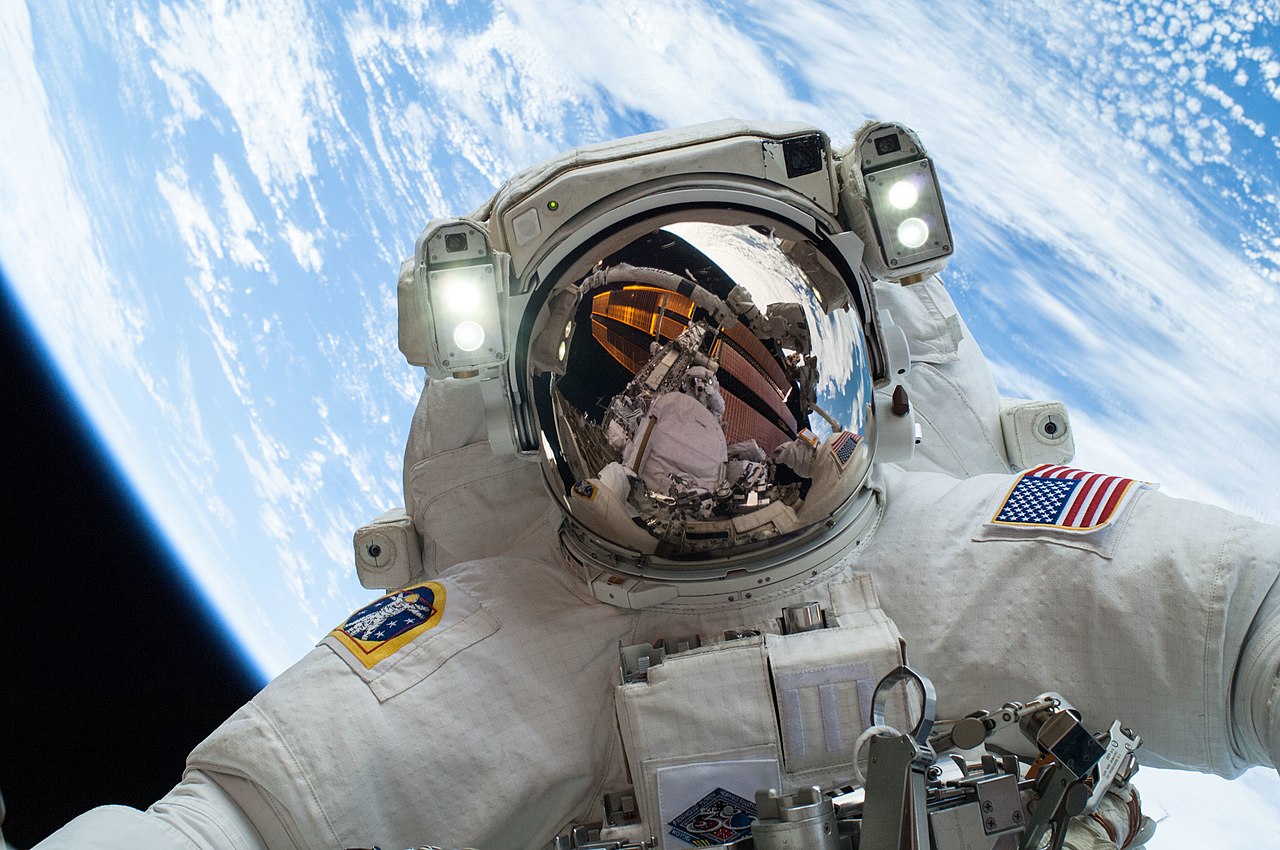
軌道交換ユニット(ORU) は、設計寿命が過ぎたり故障したりした場合に容易に交換できる予備部品です。ORU の例としては、ポンプ、貯蔵タンク、制御ボックス、アンテナ、バッテリー ユニットなどがあります。一部のユニットはロボット アームを使用して交換できます。ほとんどのユニットは、ExPRESS 補給キャリア(ELC) と呼ばれる小型パレットか、科学実験も搭載される外部保管プラットフォーム(ESP)と呼ばれる大型プラットフォームを共有して、ステーションの外に保管されます。どちらの種類のパレットも、宇宙の寒さで損傷する可能性があり加熱が必要となる多くの部品に電力を供給します。大型の補給キャリアには、実験に接続するためのテレメトリ用のローカル エリア ネットワーク (LAN) 接続も備わっています。NASA のシャトル プログラムが終了する前の 2011 年頃から、USOS に ORU を積載することに重点が置かれるようになりました。これは、商用代替機であるシグナスとドラゴンが、スペースシャトルの 10 分の 1 から 4 分の 1 のペイロードしか搭載していないためです。
予期せぬ問題や故障がISSの組み立てスケジュールや作業スケジュールに影響を与え、機能低下の期間を招き、場合によっては安全上の理由からISSの放棄を余儀なくされる可能性もあった。深刻な問題としては、2004年のUSOSからの空気漏れ[290] 、2006年のElektron製酸素発生器からの煙の放出[291] 、そして2007年のSTS-117中に発生したROSのコンピューター故障(スラスター、Elektron、Vozdukh、その他の環境制御システムの運用不能)などが挙げられる。後者のケースでは、根本原因は電気コネクタ内の結露による短絡であることが判明した[292] 。
2007年のSTS-120では、P6トラスと太陽電池パネルの再配置後、展開中に太陽電池パネルが破れ、適切に展開していないことが確認された。[293]スコット・パラジンスキーが船外活動(EVA)を遂行し、ダグラス・ホイーロックが補助した。修理は太陽電池パネルが日光にさらされた状態で行われたため、感電の危険を減らすための特別な予防措置が講じられた。[294]同じ年、太陽電池パネルの問題に続いて、ステーションの右舷側で太陽電池パネルを回転させる右舷ソーラーアルファ回転ジョイント(SARJ)にも問題が発生した。太陽電池パネル駆動モーターに過度の振動と高電流スパイクが見られ、原因が解明されるまで右舷SARJの動きを大幅に制限するという決定がなされた。 STS-120とSTS-123の船外活動中の検査で、大型駆動ギアに金属の削りくずや破片による広範な汚染が見られ、大型金属ベアリング面の損傷も確認されたため、ジョイントはさらなる損傷を防ぐためにロックされた。[295] [296]ジョイントの修理はSTS-126中に行われ、ジョイントの潤滑と12個のトランドルベアリングのうち11個の交換が行われた。[297] [298]
2008年9月、ソユーズ宇宙船の画像でS1ラジエーターの損傷が初めて確認された。当初、この問題は深刻ではないと考えられていた。[299]画像では、1つのサブパネルの表面が、その下にある中央構造から剥がれていることが示された。これは微小隕石またはデブリの衝突によるものと考えられる。2009年5月15日、損傷したラジエーターパネルのアンモニアチューブは、コンピューター制御のバルブ閉鎖によって、冷却システムの残りの部分から機械的に遮断された。その後、同じバルブを使用して損傷したパネルからアンモニアを排出し、アンモニア漏れの可能性を排除した。[299]また、2008年の船外活動中に切り離されたサービスモジュールのスラスタカバーがS1ラジエーターに衝突したことも判明しているが、その影響があったかどうかは不明である。
2010年8月1日早朝、2つの外部冷却ループのうち1つである冷却ループA(右舷側)に故障が発生し、ステーションの冷却能力は通常の半分しか発揮できず、一部のシステムの冗長性は完全に失われました。[300] [301] [302]問題は、アンモニア冷却液を循環させるアンモニアポンプモジュールに発生したとみられます。4基のCMGのうち2基を含む複数のサブシステムが停止しました。
ISSでの計画されていた運用は、冷却システムの問題に対処するため、一連の船外活動(EVA)により中断されました。2010年8月7日に行われた最初のEVAは、故障したポンプモジュールの交換を目的としていましたが、4つのクイックディスコネクトのうち1つからアンモニアが漏れたため、完了しませんでした。8月11日の2回目のEVAで、故障したポンプモジュールが除去されました。[303] [304]ループAを通常の機能に戻すために、3回目のEVAが必要となりました。[305] [306]
USOSの冷却システムは主に米国企業ボーイング社によって製造されており[307] 、同社は故障したポンプの製造元でもある[300] 。
S0トラスにある4台のメインバススイッチングユニット(MBSU)は、4つの太陽電池パネルからISSの他の部分への電力経路を制御している。各MBSUには2つの電力チャネルがあり、太陽電池パネルからの160V DCを2台のDC-DC電力変換器(DDCU)に供給し、DDCUがステーションで使用される124V電力を供給する。2011年後半、MBSU-1はコマンドに応答しなくなり、健全性を確認するデータの送信も行わなくなった。電力経路はまだ正しく機能していたが、次の船外活動(EVA)で交換される予定だった。予備のMBSUはすでに搭載されていたが、2012年8月30日の船外活動は、予備ユニットの取り付けを完了するために締め付けていたボルトが電気接続が固定される前に詰まったため、完了できなかった。[308] MBSU-1の喪失により、ステーションは通常の電力容量の75%に制限され、問題が解決されるまで通常業務に若干の制限が必要となった。
2012年9月5日、2回目の6時間の船外活動で、宇宙飛行士のスニータ・ウィリアムズと星出彰彦はMBSU-1の交換に成功し、ISSの電力を100%に回復させた。[309]
2013年12月24日、宇宙飛行士たちはISSの冷却システムに新しいアンモニアポンプを設置した。故障した冷却システムは同月初めに故障し、ISSの多くの科学実験が中断されていた。宇宙飛行士たちは新しいポンプを設置する間、アンモニアの「ミニブリザード」に耐えなければならなかった。これはNASA史上2度目のクリスマスイブの船外活動であった。[310]
ミッションコントロールセンター
ISSのコンポーネントは、世界中のミッションコントロールセンターにあるそれぞれの宇宙機関によって運用および監視されています。主にヒューストンのクリストファー・C・クラフト・ジュニア・ミッションコントロールセンターとモスクワのRKAミッションコントロールセンター(TsUP)が担当し、日本の筑波宇宙センター、米国アラバマ州ハンツビルのペイロード運用統合センター、ドイツのミュンヘンのコロンバスコントロールセンター、およびケベック州サン=テュベールにあるカナダ宇宙庁本部のモバイルサービスシステムコントロールの支援を受けています。
軌道、デブリ、視界
高度と軌道傾斜角
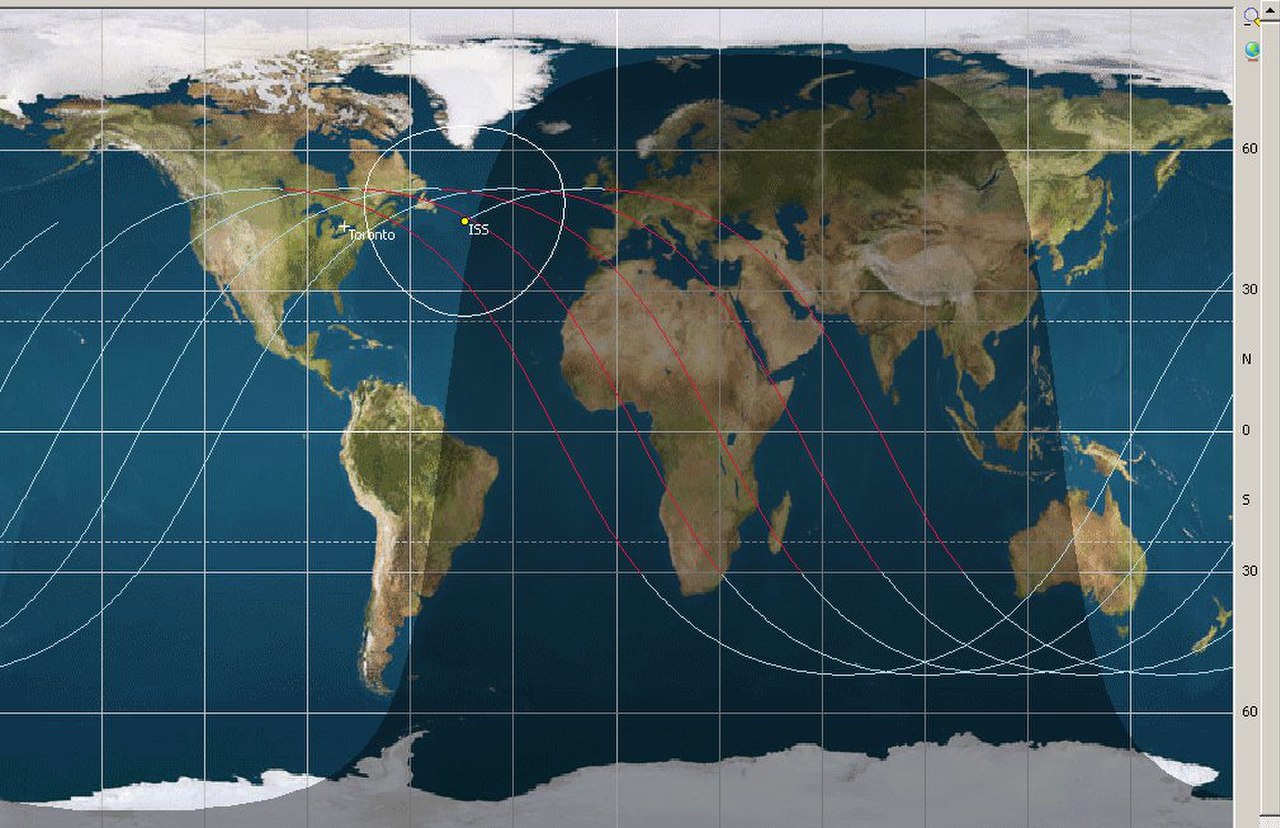
国際宇宙ステーションは現在、最低平均高度370km(230マイル)、最高高度460km(290マイル)のほぼ円形の軌道上に維持されており、[311]熱圏の中心、地球の赤道に対する傾斜角は51.6度、 [312]離心率は0.0002267である。[313] [更新が必要]この軌道が選ばれたのは、北緯46度のバイコヌール宇宙基地から打ち上げられたロシアのソユーズ宇宙船とプログレス宇宙船が、中国上空を通過せず、居住地域に使用済みロケット段を投下することなく、直接到達できる最低の傾斜角だからである。[314] [315]平均速度は時速28,000キロメートル(時速17,000マイル)で移動し、1日に15.5周回する(1周あたり93分)。[6] [316] NASAのシャトルの飛行時には、より重い荷物をステーションに輸送できるよう、ステーションの高度を下げることが許可されていた。シャトルの退役後、ステーションの公称軌道高度は約350kmから約400kmに引き上げられた。[317] [318]より頻繁に打ち上げられる他の補給宇宙船は、はるかに高性能であるため、このような調整は不要である。[31] [319]
大気抵抗により、高度は平均して月に約2km低下します。軌道ブーストは、ズヴェズダ・サービスモジュールに搭載された2基のメインエンジン、またはズヴェズダの後部ポートにドッキングしたロシアまたはヨーロッパの宇宙船によって行うことができます。自動移送機(ATV)は、後端に2つ目のドッキングポートを追加できるように設計されており、他の宇宙船がドッキングしてISSをブーストすることができます。より高い高度へのブーストが完了するには、約2周(3時間)かかります。 [319] ISSの高度維持には、年間約7.5トンの化学燃料が消費され[320]、年間約2億1000万ドルの費用がかかります。[321]
ロシア軌道セグメントにはデータ管理システムが含まれており、これはステーション全体の誘導、航法および制御(ROS GNC)を処理します。[322]当初、ロシアのサービスモジュールZvezdaがドッキングして制御が引き継がれるまで、ステーションの最初のモジュールであるZaryaがステーションを制御していました。Zvezdaには、ESAが構築したDMS-Rデータ管理システムが含まれています。[323] 2つのフォールトトレラントコンピューター(FTC)を使用して、Zvezdaは冗長化された地球地平線センサー、太陽地平線センサー、太陽と星の追跡装置を使用して、ステーションの位置と軌道を計算します。FTCにはそれぞれ、並列に動作する3つの同一の処理ユニットが含まれており、多数決による高度な障害マスキングを提供します。
オリエンテーション
ズヴェズダはジャイロスコープ(リアクションホイール)とスラスタを用いて自転する。ジャイロスコープは推進剤を必要とせず、代わりに電気を用いてフライホイールに運動量を「蓄える」。これはステーションの動きと逆方向に回転する。USOSは、余分な質量を処理するために独自のコンピュータ制御ジャイロスコープを搭載している。ジャイロスコープが「飽和」すると、スラスタが蓄えられた運動量を相殺する。2005年2月の第10次長期滞在において、ステーションのコンピュータに誤ったコマンドが送信され、不具合が認識・修正されるまでに約14キログラムの推進剤が使用された。ROSとUSOSの姿勢制御コンピュータが正常に通信できない場合、稀に「フォースファイト」が発生する。ROSのGNCコンピュータは、スラスタを持たないUSOSのGNCコンピュータを無視しなければならない。[324] [325] [326]
ドッキングされた宇宙船は、トラブルシューティングや、ステーションの電子機器に電力とデータインターフェースを提供するS3/S4トラスの設置時など、ステーションの姿勢を維持するためにも使用されます。 [327]
軌道デブリの脅威
国際宇宙ステーション( ISS)の軌道上の低高度には、使用済みロケットの段階、機能停止した衛星、爆発の破片(対衛星兵器実験の物質を含む)、ペイントの破片、固体ロケットモーターのスラグ、米国の原子力衛星から放出された冷却剤など、様々な宇宙ゴミが存在する。これらの物体は、天然の微小隕石に加えて[329]、重大な脅威となる。ISSを破壊するほどの大きさの物体は追跡可能であるため、より小さなゴミほど危険ではない。[330] [331]光学機器やレーダー機器で検知できないほど小さな物体、約1cmから顕微鏡サイズまで、その数は数兆個に上る。これらの物体は小さくても、その運動エネルギーとISSに対する方向によって脅威となる場合がある。宇宙服を着用して船外活動を行う乗組員も、宇宙服が損傷し、その結果真空にさらされる危険にさらされる。[332]
マイクロメテオライトシールドとも呼ばれる防弾パネルは、与圧部や重要システムを保護するため、ステーションに組み込まれている。これらのパネルの種類と厚さは、予想される損傷の程度によって決まる。ステーションのシールドと構造は、ROSとUSOSで設計が異なっている。USOSでは、ホイップルシールドが使用されている。米国セグメントのモジュールは、1.5~5.0cm(0.59~1.97インチ)の厚さのアルミニウム製の内層、10cm(3.9インチ)のケブラーおよびネクステル(セラミック繊維)製の中間層[333] 、およびステンレス鋼製の外層で構成されており、これにより物体は船体に衝突する前に雲状に砕け散り、衝撃のエネルギーが分散される。ROSでは、船体から一定の間隔を置いて炭素繊維強化ポリマーのハニカムスクリーンが配置され、さらにそこからさらに一定の間隔を置いてアルミニウムのハニカムスクリーンが配置され、スクリーン真空断熱カバーとガラスクロスで覆われている。[334]
宇宙ゴミは地上から遠隔で追跡され、ISSの乗組員に通知される。[335]必要に応じて、ロシア軌道セグメントのスラスタによってISSの軌道高度を変更し、ゴミを回避することができる。このようなデブリ回避操作(DAM)は珍しくなく、計算モデルによってデブリが一定の脅威距離内に接近することが示された場合に実行される。2009年末までに10回のDAMが実施された。[336] [337] [338]通常、軌道速度を1~2キロメートル上昇させるには、軌道速度を1メートル/秒程度上昇させる。必要に応じて高度を下げることも可能だが、このような操作は燃料を浪費する。[337] [339]軌道デブリの脅威がDAM(デブリ除去ミッション)を安全に実施するには遅すぎると判断された場合、ISSの乗組員はISS内のすべてのハッチを閉じ、宇宙船内に退避する。これは、ISSがデブリによって深刻な被害を受けた場合に避難できるようにするためである。ISSの部分的な避難は、2009年3月13日、2011年6月28日、2012年3月24日、2015年6月16日、[340] 2021年11月、[341 ] 2024年6月27日に実施された。[342]
2021年11月の避難はロシアの対衛星兵器実験によって引き起こされた。[343] [344] NASA長官ビル・ネルソンは、ロシアが自国の宇宙飛行士を含むISSの全員の命を危険にさらすとは考えられないと述べた。[345]
-
国際宇宙ステーションの軌道速度である秒速7キロメートル(秒速23,000フィート)で発射された重さ7グラムの物体(中央に表示)が、アルミニウムの固体ブロックに直径15センチメートル(5.9インチ)のクレーターを作りました。
-
リスク管理の例: 国際宇宙ステーションの衝突リスクが高い地域を示すNASAのモデル


地球からの可視性
ISSは、薄暮、つまり日没後から日の出前の数時間、地球の影の外側でステーションが太陽光に照らされているが地面と空が暗いときに、空を横切って太陽に照らされているときは、肉眼で動く明るい白い点として空に見えます。[346] ISSは両極地域の間の緯度で空を横切ります。[347] 空を横切る経路によって、ステーションが地平線を横切ったり、地平線から地平線へ移動したりするのにかかる時間は、短い場合もあれば最大10分かかる場合もありますが、地球の影に出入りするため、その間は目に見えるのはその一部だけである可能性があります。その後、約90分ごとに戻りますが、空を横切る時刻は数週間かけて変化し、そのため薄暮と目に見える照明に戻る前に変化します。
国際宇宙ステーションは、その反射面積の大きさから、空で最も明るい人工物体(他の衛星フレアを除く)であり、太陽光の下で真上にあるときの最大等級はおよそ-4(金星に類似)で、最大視角は63秒角である。[348]
Heavens-Above (下記のライブ視聴を参照)などの多くのウェブサイトや、軌道データと観測者の経度と緯度を使用して、ISSがいつ見えるか(天候が許せば)、ステーションが昇る場所、地平線からどのくらいの高度に達するか、ステーションが地平線の下に沈むか地球の影に入るまでどのくらいの期間通過するかを示すスマートフォンアプリなどによってツールが提供されています。[349] [350] [351] [352]
2012年11月、NASAは「Spot the Station」サービスを開始しました。これは、宇宙ステーションが住民の町の上空を通過する予定時刻をテキストメッセージとメールで知らせるサービスです。[353]宇宙ステーションは地球上の居住可能な陸地の95%から見ることができますが、極北や極南の緯度からは見ることができません。[314]
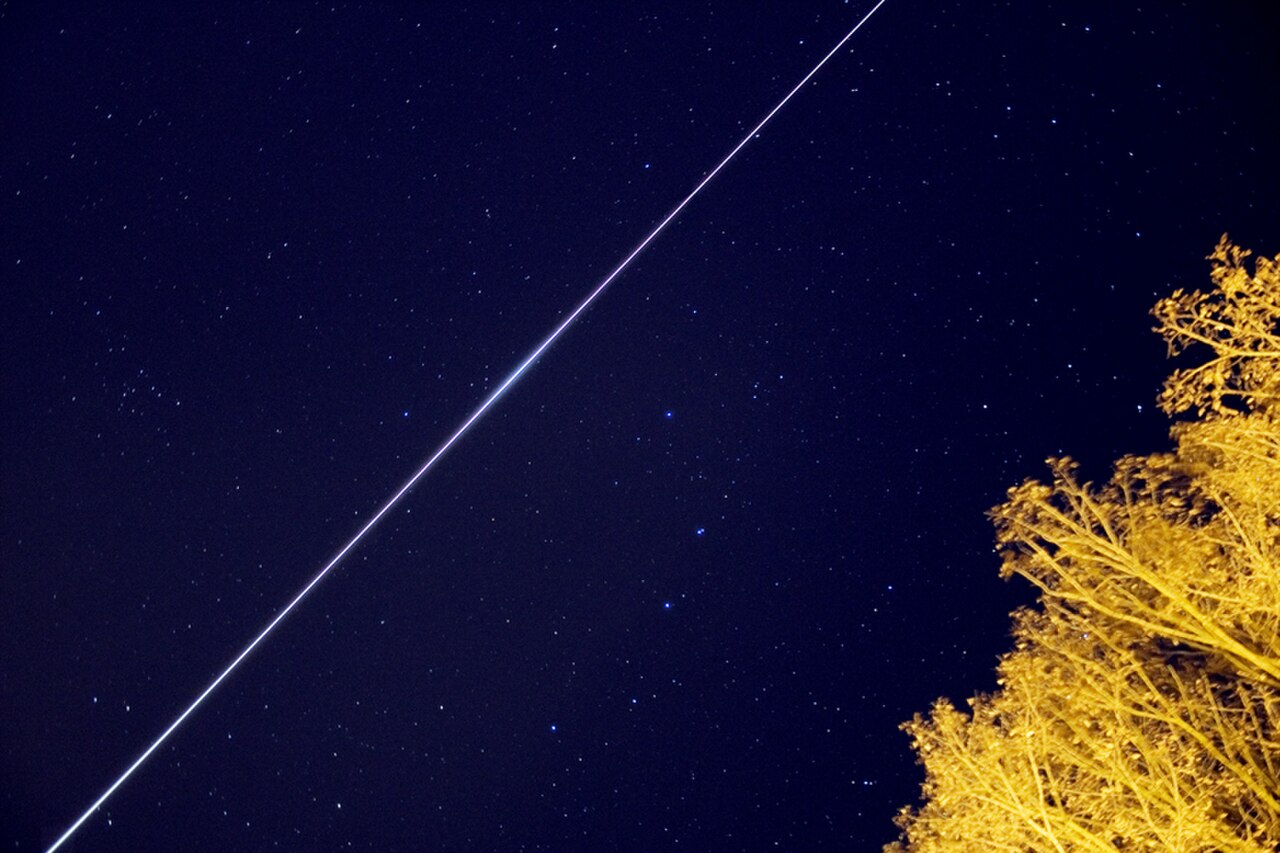
特定の条件下では、ISSは連続5周回で夜間観測が可能です。これらの条件とは、1) 観測者が中緯度に位置すること、2) 夏至の時刻付近であること、3) 現地時間深夜付近にISSが観測者から見て極方向を通過することです。3枚の写真は、2014年6月5日~6日の5周回のうち、最初、中間、最後の周回を示しています。
-
スカイトラックによるISSの長時間露光
-
2014年6月、日没直後にISSがほぼ頭上を通過する夜間初通過。
-
2014年6月、現地時間の深夜近く、ISSが北上する3回目の通過の様子。
-
2014年6月の日の出前の夜に5回目の西通過をするISS


天体写真

望遠鏡に取り付けられたカメラを使ってISSを撮影することは天文学者の間で人気の趣味であり、[354]、搭載されたカメラを使って地球や星を撮影することも乗組員の間で人気の趣味である。[355]望遠鏡や双眼鏡を使用すれば、日中にISSを観察することができる。[356]

国際宇宙ステーションが太陽の前を通過する現象、特に日食の際(地球、太陽、月、国際宇宙ステーションがほぼ一直線に並ぶ)は、アマチュア天文家にとって特に興味深いものです。[357] [358]
環境、安全、乗組員の健康
環境
自由落下環境
国際宇宙ステーションの高度における重力は地球表面の約90%の強さであるが、軌道上の物体は継続的に自由落下しているため、見かけ上は無重力状態となる。[359]この無重力状態は、以下の5つの影響によって乱される。[360]
- 残留大気から引きずり出します。
- 機械システムと乗組員の動きによる振動。
- 搭載姿勢制御モーメントジャイロスコープの作動。
- 姿勢または軌道の変更のためのスラスタの噴射。
- 重力勾配効果、別名潮汐効果。ISS内の異なる場所にある物体は、もしステーションに接続されていなければ、わずかに異なる軌道を描きます。これらの物体は機械的に接続されているため、ステーションを剛体として動かし続ける小さな力を受けます。
放射線
ISSは地球の磁場によって宇宙環境から部分的に保護されています。地球表面から平均約7万キロメートル(4万3000マイル)の距離から、太陽活動の状況にもよりますが、磁気圏は地球とISSの周囲に太陽風を偏向させ始めます。太陽フレアは依然として乗組員にとって危険なものであり、警告は数分前にしか届かないこともあります。2005年、X-3クラスの太陽フレアによる最初の「陽子嵐」が発生した際、第10次長期滞在クルーは、この目的のために設計されたROS(宇宙ステーション)のより遮蔽性の高い部分に避難しました。[361] [362]
宇宙線や太陽風に含まれる陽子などの亜原子荷電粒子は、通常、地球の大気圏に吸収されます。これらの粒子が十分な量で相互作用すると、その影響はオーロラと呼ばれる現象として肉眼で確認できます。地球の大気圏外で、国際宇宙ステーションの乗組員は1日あたり約1ミリシーベルト(地球上での自然被曝量の約1年分)に被曝し、がんのリスクが高まります。放射線は生体組織を貫通し、リンパ球のDNAや染色体に損傷を与える可能性があります。リンパ球は免疫系の中心であるため、これらの細胞への損傷は宇宙飛行士の免疫力低下の一因となる可能性があります。放射線はまた、宇宙飛行士の白内障発生率の上昇とも関連付けられてきました。防護シールドと薬剤の使用により、リスクを許容レベルまで低減できる可能性があります。[49]
国際宇宙ステーション(ISS)の放射線量は1日あたり12~28.8ミリラド[363]で、航空機の乗客や乗組員が浴びる放射線量の約5倍です。これは、地球の電磁場が成層圏とほぼ同程度の太陽光やその他の放射線に対する防護効果を発揮するためです。例えば、12時間の飛行で航空機の乗客は0.1ミリシーベルトの放射線、つまり1日あたり0.2ミリシーベルトの放射線を浴びますが、これは低軌道(LEO)の宇宙飛行士が浴びる放射線量の5分の1に相当します。さらに、航空機の乗客は数時間の飛行中にこのレベルの放射線を浴びますが、ISSの乗組員は滞在中ずっと被曝します。[364]
微生物学的環境ハザード
宇宙ステーションでは、空気や水のフィルターを汚染する有害なカビが発生する可能性があります。カビは金属、ガラス、ゴムを劣化させる酸を生成する可能性があり、乗組員の健康にも有害です。微生物学的危険性に対処するため、一般的な細菌やカビを、サンプルを地球に送り返す必要がある標準的な培養方法よりも迅速に特定できるLOCAD-PTS(携帯型検査システム)が開発されました。 [365] 2018年の研究者らは、ISSで5種類のエンテロバクター・ブガンデンシス(いずれもヒトに病原性はありません)の細菌株の存在を検出した後、宇宙飛行士にとって医学的に健康な環境を継続的に確保するために、ISS内の微生物を注意深く監視する必要があると報告しました。[366] [367]
宇宙ステーションにおける汚染は、湿度の低下、防カビ剤を含む塗料の使用、消毒液の使用によって防ぐことができます。ISSで使用されるすべての材料は、真菌に対する耐性が試験されています。[ 368 ] 2016年以降、ESAが後援する一連の実験が実施され、様々な材料の抗菌特性が試験されています。その目的は、特定の状況に最適な方法を用いて、細菌の増殖を複数の方法で抑制する「スマートサーフェス」の開発です。「革新的な表面における微生物エアロゾルテザリング」(MATISS)と呼ばれるこのプログラムでは、異なる試験コーティングで覆われたガラスの正方形の配列を含む小さなプレートを展開します。プレートは6ヶ月間ISSに留まり、その後分析のために地球に持ち帰られます。[369]このシリーズの最新かつ最後の実験は、2023年6月5日にSpaceX社のCRS-28貨物ミッションでISSに打ち上げられ、4枚のプレートで構成されました。このシリーズのこれまでの実験は光学顕微鏡による分析に限られていたが、今回の実験では純粋なシリカでできた石英ガラスを使用することで分光分析が可能になった。2枚のプレートは8ヶ月後に、残りの2枚は16ヶ月後に返却された。[370]
2019年4月、NASAは国際宇宙ステーション(ISS)に存在する微生物と真菌に関する包括的な調査を実施したと発表しました。この実験は14ヶ月間にわたり、3つの異なる飛行ミッションで実施され、ISS内の8つの所定の場所からサンプルを採取し、分析のために地球に持ち帰りました。以前の実験では、分析は培養ベースの方法に限られていたため、培養できない微生物が見落とされていました。今回の研究では、培養に加えて分子ベースの方法も用い、より包括的なカタログを作成しました。この結果は、宇宙飛行士の健康と安全環境の改善に役立つだけでなく、製薬業界や医療業界で使用されているクリーンルームなど、地球上の他の閉鎖環境の理解を深めるのに役立つ可能性があります。[371] [372]
ノイズ
宇宙飛行は本来静かというわけではなく、騒音レベルはアポロ計画の頃から音響基準を超えている。[373] [374]このため、NASAと国際宇宙ステーションの国際パートナーは、乗組員の健康プログラムの一環として、騒音制御と難聴予防の目標を策定した。具体的には、これらの目標は、ISSの組み立てと運用が始まった当初から、ISS多国間医療運用パネル(MMOP)音響サブグループの主要な焦点となっている。[375] [376]この取り組みには、NASA、ロスコスモス、欧州宇宙機関(ESA)、宇宙航空研究開発機構(JAXA)、カナダ宇宙機関(CSA)からサブグループのメンバーとして参加する音響技術者、聴覚学者、産業衛生士、医師の貢献が含まれている。
地上環境と比較すると、ISSの宇宙飛行士が経験する騒音レベルは取るに足らないように思えるかもしれません。通常、労働安全衛生局(OSHA)が大きな懸念事項としないレベルであり、85dBAに達することは稀です。しかし、現在のミッションは平均6ヶ月間続き、乗組員は1日24時間、週7日、このようなレベルの騒音にさらされています。このような騒音レベルは、睡眠の妨害やコミュニケーション、警報の聞き取りやすさの低下といった形で、乗組員の健康とパフォーマンスにもリスクをもたらします。
ISSの19年以上の歴史の中で、ISS上の騒音レベルを制限し、低減するために多大な努力が払われてきた。設計および飛行前活動において、音響サブグループのメンバーは音響制限値と検証要件を文書化し、設計について協議し、利用可能な最も静かなペイロードを選択し、打ち上げ前に音響検証テストを実施した。[375] :5.7.3 宇宙飛行中、音響サブグループは、多数の車両および科学実験の騒音源によって発生するISSの各モジュールの飛行中の音響レベルを評価し、厳格な音響基準への準拠を確保した。ISSの建設中にモジュールが追加されたり、追加の宇宙船がISSに到着したりすると、ISS上の音響環境は変化した。音響サブグループは、騒音レベルを低減するために音響カバー、吸音材、防音壁、振動絶縁装置を設計および採用することに成功することで、この動的な運用スケジュールに対応してきた。さらに、ポンプ、ファン、換気システムが老朽化し、騒音レベルが上昇すると、この音響サブグループは ISS マネージャに、古くて騒音の大きい機器を静かなファンとポンプの技術に交換するように指導し、周囲の騒音レベルを大幅に削減します。
NASAは、すべての乗組員を保護するために、最も保守的な損傷リスク基準(米国国立労働安全衛生研究所および世界保健機関の勧告に基づく)を採用しています。MMOP音響サブグループは、地上での難聴予防のアプローチを適用または修正して、この特殊な環境での騒音リスク管理への取り組みを調整し、これらの保守的な制限を設定しました。革新的な取り組みの1つがNASAの騒音暴露推定ツール(NEET)です。これは、タスクベースの取り組みで騒音暴露を計算し、聴覚保護装置(HPD)の必要性を判断するものです。HPDの使用に関するガイダンス(義務的使用または推奨)は、騒音ハザードインベントリに文書化され、ミッション中の乗組員の参照用に掲載されます。音響サブグループはまた、宇宙船の騒音超過を追跡し、工学的制御を適用し、乗組員の騒音暴露を減らすための聴覚保護装置を推奨します。最後に、ミッション中は軌道上で聴力閾値が監視されます。
ISSミッション運用開始から20年近く、あるいは約17万5000時間の作業時間を経ても、米国軌道セグメントのクルー(JAXA、CSA、ESA、NASA)において、ミッションに関連した持続的な聴力閾値の変化は報告されていません。2020年には、MMOP音響サブグループは、騒音による健康への影響を軽減するための共同の取り組みが評価され、 Safe-In-Soundイノベーション賞を受賞しました。[377]
火災と有毒ガス
船内火災や有毒ガス漏れも潜在的な危険です。アンモニアは宇宙ステーションの外部ラジエーターに使用されており、加圧モジュールに漏れる可能性があります。[378]
全体的な健康への影響
2019年4月12日、NASAは宇宙飛行士双子研究の医学的結果を発表しました。スコット・ケリー宇宙飛行士は国際宇宙ステーション(ISS)で1年間過ごし、彼の一卵性双生児は地球で同じ1年間を過ごしました。双子の片方ともう片方を比較したところ、DNAや認知機能の変化など、いくつかの長期的な変化が観察されました。 [379] [380]
2019年11月、研究者らは、11人の健康な宇宙飛行士を対象とした6ヶ月間の研究に基づき、ISS滞在中に宇宙飛行士が深刻な血流障害と血栓症を経験したと報告した。研究者らによると、この結果は火星探査を含む長期宇宙飛行に影響を与える可能性があるという。[381] [382]
ストレス
心理社会的ストレス要因が乗組員の士気とパフォーマンスを最適に保つ上で最も重要な障害の一つであるという証拠は数多くある。 [383]宇宙飛行士ヴァレリー・リューミンは、サリュート6号宇宙ステーションでの特に困難な時期に日誌に次のように記している。「二人の男を5.5メートル×6メートルの船室に閉じ込め、2ヶ月間一緒に放置すれば、殺人に必要な条件はすべて揃う。」
NASAは、有人ミッション開始当初から宇宙旅行に伴う精神的ストレスに関する研究に着目していましたが、ロシアの宇宙ステーション「ミール」の宇宙飛行士と合流したことで、その関心が再燃しました。初期の米国ミッションにおける一般的なストレス源には、世間の監視下で高いパフォーマンスを維持することや、同僚や家族から孤立することなどがありました。後者は、ISSにおいて依然としてしばしばストレスの原因となっており、例えばNASA宇宙飛行士ダニエル・タニの母親が自動車事故で亡くなった場合や、マイケル・フィンクが第二子の出産に立ち会えなかった場合などが挙げられます。
最長の宇宙飛行に関する研究では、最初の3週間は環境の急激な変化に適応する必要があるため、注意力が悪影響を受ける重要な期間であると結論付けられました。[384] ISSの乗組員の飛行は通常約5〜6か月続きます。
国際宇宙ステーションの作業環境には、異なる文化や言語を持つ人々と、窮屈な環境で生活し、働くことによる更なるストレスが伴います。第一世代の宇宙ステーションでは、乗組員は単一の言語しか話しませんでしたが、第二世代と第三世代の宇宙ステーションでは、様々な文化や言語を持つ乗組員が働いています。宇宙飛行士は英語とロシア語を話さなければならず、さらに他の言語も話せればなおさらです。[385]
重力がないため、混乱が頻繁に発生します。宇宙には上下がないにもかかわらず、乗組員の中にはまるで上下逆さまに感じてしまう人もいます。また、距離を測るのが難しい場合もあります。これは、宇宙ステーション内で迷子になったり、スイッチを間違った方向に引いてしまったり、ドッキング中に接近する宇宙船の速度を誤って判断したりするなどの問題を引き起こす可能性があります。[386]
医学

長期にわたる無重力状態による生理学的影響には、筋萎縮、骨格の劣化(骨粗鬆症)、体液の再分配、心血管系の機能低下、赤血球産生の低下、バランス障害、免疫力の低下などがあります。軽微な症状としては、体重減少や顔面のむくみなどがあります。[49]
ISSでは、宇宙船の着陸や離陸といったミッションの要求により、睡眠が定期的に妨げられます。ステーション内の騒音レベルは避けられないほど高くなります。大気は自然に熱サイフォンを起こすことができないため、自由落下(無重力)環境で滞留する空気を処理するために、常時ファンを稼働させる必要があります。
身体への悪影響を防ぐため、宇宙ステーションには、2台のTVISトレッドミル(COLBERTを含む)、宇宙飛行士の骨密度の低下を補うことなく筋肉を増強する様々なウェイトトレーニングを可能にするARED(高度抵抗運動装置)[387]、そしてエアロバイクが備え付けられています。各宇宙飛行士は、毎日少なくとも2時間、これらの装置で運動します。[388] [389]宇宙飛行士はバンジーコードを使ってトレッドミルに固定します。[390] [391]
船上での生活
居住区

国際宇宙ステーション(ISS)の居住・作業スペースは6つの寝室がある家よりも広く、7つの個室、3つのバスルーム、2つのダイニングルーム、ジム、そして360度のパノラマビューが楽しめる出窓が備わっています。[392]
国際宇宙ステーションは長期滞在クルー専用のクルー宿舎を提供しています。ズヴェズダに2室、ナウカに1室、ハーモニーに4室あります。[393] [394] [395] [396]これらの防音仕様の個室は、プライバシーと換気を確保し、寝袋、読書灯、私物収納などの基本的なアメニティを備えています。[388] [389] [397]ズヴェズダの宿舎には小さな窓がありますが、換気と防音性は劣ります。[398]
訪問クルーは、壁面の空きスペースや宇宙船内に固定された寝袋を使用します。自由に浮いて眠ることも可能ですが、繊細な機器との衝突を防ぐため、通常は避けられます。[399]適切な換気は非常に重要です。吐き出した二酸化炭素が頭の周りに泡状に溜まると、宇宙飛行士は酸素欠乏の危険にさらされます。[388]
ステーションの照明システムは調整可能で、乗組員の活動や休息をサポートするために、調光、消灯、色温度の変更が可能です。[400] [401]
乗組員の活動

国際宇宙ステーション( ISS)は協定世界時(UTC)に基づいて運用されています。[402] ISSでの典型的な一日は、午前6時に起床、就寝後のルーティン、そしてステーションの朝の点検から始まります。朝食後、乗組員はミッションコントロールセンターと日次計画会議を行い、午前8時10分頃に作業を開始します。午前中の作業には、予定されている運動、科学実験、メンテナンス、または運用業務が含まれます。13時5分に1時間の昼休みを挟んだ後、乗組員は午後の作業と運動のスケジュールを再開します。夕食と乗組員会議を含む就寝前の活動は午後6時30分に始まり、予定されている睡眠時間は午後9時30分に始まります。[403]
乗組員は平日に約10時間、土曜日に約5時間勤務し、残りの時間は休息や任務の完了に充てられます。自由時間は、個人的な趣味を楽しんだり、家族と交流したり、宇宙ステーションの窓から地球を眺めたりすることに費やされます。[403]乗組員は宇宙ステーション内でテレビを見ることができます。[404]
スペースシャトルが運用されていたとき、ISSの乗組員はシャトルの打ち上げに基づいた柔軟なスケジュールであるシャトル乗組員のミッション経過時間に合わせていました。 [405] [406] [407]
ISS は軌道速度により毎日 16 回の日の出と日の入りを経験するため、夜間の状態をシミュレートするために、指定された睡眠期間中はステーションの窓が覆われます。
反省と物質文化
個人や乗組員の個性の反映は、特に宇宙ステーションの装飾や、宗教といった一般的な表現に見られる。[408]宗教は、宇宙ステーションと特にロシアとの間に一定の物質的な経済性を生み出した。[409]
宇宙ステーションのミクロ社会、そしてより広い社会、そしておそらくは独特な宇宙ステーション文化の出現[410]は、芸術から塵の蓄積まで、また考古学的にISSの物質がどのように廃棄されてきたかまで、多くの側面を分析することによって研究されています。[411]
食べ物

国際宇宙ステーション(ISS)の食事は、長期保存に耐え、廃棄物を最小限に抑え、ステーションシステムの汚染を防ぐために保存・包装されています。微小重力下では味覚が鈍るため、食事は地球上よりも濃い味付けになることが多いです。[388]クルーは特に補給ミッションを楽しみにしており、新鮮な果物や野菜などの生鮮食品を補給します。パンくずやこぼれによる機器の損傷リスクを軽減するため、食事は専用の包装で調理され、粉末調味料よりも液体調味料が好まれ、容器はマジックテープや磁石で固定されます。飲み物は水で溶かす粉末で提供され、スープや飲み物はプラスチック袋からストローで飲みます。[389] [397]固形食は、磁石でトレイに固定された食器で食べられます。食べ残した食べ物は、エアフィルターなどのシステムの詰まりを防ぐため、回収する必要があります。[397]
最初のギャレーはズヴェズダに設置され、電気抵抗式の缶ウォーマーと温水と常温水の両方が使えるウォーターディスペンサーが備え付けられました。ロシアの食事の多くは今でも缶詰で提供されており、そのまま食べられます。また、ウォーターディスペンサーで水分を補給した レトルトパウチで提供されるものもあります。

ユニティには後に、ISSの乗組員数の増加に対応するため、2つ目のギャレーが増設されました。このギャレーには、ブリーフケース型のフードウォーマー2台、冷蔵庫(2008年に追加)、ウォーターディスペンサーが設置されています。[389]米国軌道セグメントの食料のほとんどはレトルトパウチに包装されており、必要に応じて水分を補給し、フードウォーマーや冷蔵庫で温めたり冷やしたりすることができます。
ユニティでは、特に休日や特別な機会にクルーが集まって食事をすることもあります。しかし、スケジュールが異なるため、少人数のグループで食事をすることが多いです。ロシア人宇宙飛行士は、缶ウォーマーが設置されているズヴェズダで個別に食事をすることもできます。NASAの宇宙飛行士団の多様性が高まり、国際宇宙ステーション(ISS)に滞在する外国人宇宙飛行士の数が増えたことで、提供される食事の種類は大幅に増えました。宇宙飛行士の文化的背景や個人の好みを反映した食事を提供するよう努めており、クルー間で食事がシェアされることも少なくありません。[412]
ISSでは、軌道上で新鮮な野菜を栽培する実験も行われている。[413]これらの研究は、宇宙飛行士の食事に栄養素を補給し、心理的なメリットを提供し、月や火星への長期ミッションに必要な宇宙農業技術を進歩させることを目的としている。[413] 2023年現在、栽培されている作物には、3種類のレタス、白菜、水菜、赤ロシアンケールなどがある。[413]植物の一部は収穫されて乗組員によって食べられ、残りは分析のために地球に持ち帰られた。将来的には、NASAはトマトやピーマンを栽培し、最終的にはベリー類、豆類、その他の栄養価の高い食品を栽培する計画である。このような作物は、栄養価の向上だけでなく、それを摂取する乗組員を宇宙放射線から保護する可能性もある。[413]
個人衛生
ISSには、ズヴェズダ、トランクウィリティ、ナウカの3つのロシア設計のトイレが設置されています。[389] [414]これらの「廃棄物・衛生室」の中で、使用者は便座にしっかりと固定されます。便座にはバネ式の固定バーが備えられており、しっかりと密閉されます。[388]レバーを操作すると強力なファンが作動し、便器の底にある吸引口が開き、気流によって排泄物が排出されます。固形の排泄物は、アルミニウム製のコンテナに収納された個別の袋に保管され、後に再突入時に燃焼する貨物宇宙船に輸送されます。[389] [415]液体の排泄物は、男女共用のシステムとして、解剖学的に設計された漏斗アダプター付きのホースを通して回収されます。尿は水回収システムに送られ、飲料水に加工されます。[397]
宇宙ステーションにシャワーが初めて導入されたのは、1970年代初頭のスカイラブとサリュート 3号でした。[416] : 139 しかし、乗組員はシャワーの煩雑さに不満を抱き、 1980年代初頭のサリュート6号の頃には、シャワーは月に一度の入浴にまで縮小されました。[417] ISSには、その後のロシアの宇宙ステーションと同様にシャワーがありません。代わりに、宇宙飛行士はウェットティッシュやウォータージェット、そして歯磨き粉のようなチューブから出てくる石鹸を使って体を洗います。また、節水のため、洗い流さないシャンプーと食べられる歯磨き粉も提供されています。[399] [418]
ミッション終了
もともと、ISSは15年間のミッションとして計画されていました。[419] そのため、ミッションの終了に向けて作業が進められていましたが、[420]ステーションの運用に対する成功と支援により、数回延期されました。[421]その結果、ISSの最も古いモジュールは20年以上も軌道上にあり、信頼性が低下しています。[420]代わりに、例えば月への再帰還などに資金を使用することが提案されています。[421]宇宙条約によれば、締約国は打ち上げたすべての宇宙船またはモジュールに対して法的責任を負います。[422]メンテナンスされていないステーションは、軌道上および再突入の危険をもたらすでしょう。
ロシアは2025年以降ISSプログラムから撤退する予定であると発表している。[423]しかし、ロシアのモジュールは2028年まで軌道上のステーションキーピングを提供する予定である。[420]
米国は2009年に、2016年にISSを軌道から外す計画を立てた。[421]しかし、2015年9月30日、ISSの主契約者としてのNASAとのボーイングの契約が2020年9月30日まで延長された。契約に基づくボーイングのサービスの一部は、ステーションの主要構造ハードウェアを2020年を過ぎて2028年末まで延長することに関係していた。[424] 2018年7月、2018年宇宙フロンティア法は、ISSの運用を2030年まで延長することを目的としていた。この法案は上院で全会一致で承認されたが、米国下院では可決されなかった。[425] [426] 2018年9月、ISSの運用を2030年まで延長する目的で有人宇宙飛行主導法が導入され、2018年12月に承認されました。[427] [428] [429]その後、議会はCHIPSおよび科学法で同様の条項を可決し、 2022年8月9日にジョー・バイデン大統領によって署名され、法律として発効しました。[430] [431]
2031年までに商業LEO目的地プロバイダーがNASAのプロジェクトに対応するのに十分でない場合、NASAはISSの運用を2031年以降に延長することを提案している。[432]
NASAの廃棄計画

NASAは当初、いくつかの廃棄オプションを検討していた。スカイラブのように軌道が自然に減衰してランダムに再突入する、ステーションをより高い高度に打ち上げる(再突入を遅らせる)、遠隔の海域をターゲットにした制御された軌道離脱などである。[433]
NASAは、ランダムな再突入は人や財産に衝突する可能性のある危険な宇宙ゴミを生み出す受け入れがたいリスクを伴い、また、ステーションの再ブーストにはコストがかかり、危険も生み出す可能性があると判断した。
2010年以前は、ISSの軌道離脱にプログレス宇宙船を若干改造する計画が検討されていました。しかし、NASAはプログレス宇宙船ではこの任務には不十分であると判断し、この任務のために特別に設計された宇宙船の使用を決定しました。[434]


2022年1月、NASAは2031年1月に「US Deorbit Vehicle(軌道離脱機)」を用いてISSを軌道離脱させ、残骸を南太平洋の「宇宙船の墓場」として知られる遠隔地に送り込む予定を発表した。[435] NASAは2030年に軌道離脱機を打ち上げ、ハーモニーの前方ポートにドッキングさせる計画である。[436]軌道離脱機はISSの軌道が自然に220km(140マイル)まで低下するまで、約1年間はISSに取り付けられたまま休止状態となる。その後、宇宙船は1回以上のオリエンテーション噴射を行い、近地点高度を150km(93マイル)まで下げ、その後、最終的な軌道離脱噴射を行う。[437] [438]
NASAは、ロシアがISSから突然撤退し、他のパートナーに制御された再突入の有力な選択肢がほとんど残されないことを懸念し、軌道離脱機の計画を開始した。[439] 2024年6月、NASAはSpaceX社に米国の軌道離脱機の開発を委託した。契約額は8億4,300万ドルに上る可能性がある。この機体は既存のカーゴドラゴン宇宙船と、大幅に延長されたトランクモジュールを組み合わせたものになる。トランクモジュールにはドラコスラスタ(通常の16基ではなく)が装備され、通常の約6倍にあたる3万kg(6万6,000ポンド)の推進剤を搭載する。NASAは現在も、軌道離脱機の建造、打ち上げ、運用に必要な資金を確保するために取り組んでいる。[17] [439]
2025年2月20日、スペースXのCEOでありトランプ大統領の上級顧問でもあるイーロン・マスク氏は、ツイートの中で、国際宇宙ステーション(ISS)は「その目的を果たした」ため「今後2年以内に」軌道から外すべきだと示唆した。マスク氏は、ISSは「その有用性はほとんどない」と考えている。しかしながら、大統領は軌道からの離脱日の前倒しについてまだ公式決定を下していない。[440] [441]
ミッション提案と計画の投稿
NASAのプログラム/戦略の後継は、民間企業が独自の宇宙ステーションを建設・維持し、NASAが顧客としてアクセスを獲得できるようにする商業LEO目的地プログラムであり、2028年から開始されます。 [442]同様に、ESAは、ISSから軌道サービスを提供し、物質を回収するための新しい民間宇宙ステーションを求めています。[443] [444] アクシオムステーションは、2027年にISSに一時的にホストされる単一のモジュールとして開始される予定です。[197]さらに、商業宇宙業界では、ISSが政府機関によって退役した後、宇宙ホテルに変えることも含め、ISSを商業運用に転換するという提案があります。[445 ] [421]
ロシアは以前、ISSの退役後、自国の軌道セグメントをOPSEKステーションの建設に使用する計画を立てていた。現在のISSから撤去が検討されているモジュールには、2021年7月に打ち上げられた多目的実験モジュール(ナウカ、MLM )と、ナウカへの取り付けが提案されている他の新しいロシア製モジュールが含まれていた。これらの新しく打ち上げられたモジュールは、2024年時点でもまだ耐用年数内に収まっている。[446] 2011年末には、探査ゲートウェイプラットフォームのコンセプトで、残ったUSOSハードウェアとズヴェズダ2を地球-月ラグランジュ点の1つに位置する燃料補給基地およびサービスステーションとして使用することも提案された。しかし、USOS全体は分解できるように設計されておらず、廃棄される予定である。[447]
西側諸国の宇宙産業は、2022年にISSを軌道サルベージ能力を開発するためのプラットフォームとして利用することを提案しており、CisLunar Industriesなどの企業は宇宙ゴミを燃料として利用することに取り組んでいる[448]。[423]
NASAは、2024年7月までにISSまたはその一部の再利用に関する実行可能な提案は見つかっていないと述べている。[432]
料金
国際宇宙ステーション(ISS)は、これまで建設された中で最も高価な建造物と言われている。[449] 2010年時点で、総費用は1500億ドルだった。これには、1985年から2015年までのNASAの予算587億ドル(2021年の価値で897億3000万ドル)、ロシアの120億ドル、ヨーロッパの50億ドル、日本の50億ドル、カナダの20億ドル、そしてISS建設のための36回のシャトル飛行費用(1回あたり14億ドルと推定)、合計504億ドルが含まれる。2000年から2015年にかけて2人から6人のクルーで2万人日使用すると仮定すると、1人日あたり750万ドルとなり、これはスカイラブのインフレ調整後1人日あたり1960万ドル(インフレ前550万ドル)の半分以下となる。 [ 450]
文化の中で
ISSは人類の能力、特に人類の協力と科学の国際的な象徴となり、[451]迫り来る商業化・軍事化された惑星間世界ではなく、協力的な国際的アプローチと期間を定義しています。[452]
膜
2002年のIMAXドキュメンタリー『スペースステーション3D』 [453]や2016年の『美しい惑星』 [454]、映画『アポジー・オブ・フィアー』(2012年)[455]や『ヨルキ5』(2016年)[456] [457]などの数多くのドキュメンタリーのほかにも、ISSは長編映画の題材となっており、2004年の『デイ・アフター・トゥモロー』 [458] 、『ラブ』(2011年)[459] 、中国の宇宙ステーション天宮1号を題材にした『ゼロ・グラビティ』 (2013年)[460]、『ライフ』 (2017年) [461 ]、『ISS』 (2023年) [462]などがある。
2022年には映画『ザ・チャレンジ(ドクター・ハウス・コール)』がISSで撮影され、プロの俳優と監督が宇宙で一緒に仕事をした初の長編映画として注目された。[463]
文学
ニール・スティーヴンソンの2015年の小説『セブンイーヴス』は、第一部と第二部の大部分が国際宇宙ステーションを舞台としています。国際宇宙ステーションは、小説執筆当時とほぼ同じ姿で描かれていますが、捕獲された巨大な小惑星がステーションに取り付けられているという点が異なります。
イギリス人作家サマンサ・ハーヴェイの2023年の小説『オービタル』は宇宙ステーションを舞台にしており、2024年のブッカー賞を受賞した[464] [465]。
セリドウェン・ダヴェイの『オンリー・ザ・アストロノーツ』は2024年の短編集で、各話の語り手は宇宙の無生物であり、国際宇宙ステーションが登場する。[466]
ビデオゲーム
コール オブ デューティ モダン・ウォーフェア2のミッション「セカンド・サン」で、キャプテン・プライスというキャラクターが地球の大気圏に向けて大陸間弾道ミサイルを発射し、その衝撃波でISSが破壊されるという場面でISSは爆破される。[467]
国際宇宙ステーションは『ファークライ ニュードーン』では核戦争中に地球に落ちた探検地として登場する。[468]
参照


- 美しい惑星(2016年) - 地球の風景と国際宇宙ステーションでの宇宙飛行士の生活を映したIMAXドキュメンタリー映画
- 宇宙科学推進センター– 国際宇宙ステーション(ISS)の米国国立研究所を運営
- 国際宇宙ステーションに関連する事故と事件のリスト
- 国際宇宙ステーションの司令官一覧
- 国際宇宙ステーションへの有人宇宙飛行のリスト
- 国際宇宙ステーションの遠征リスト
- 国際宇宙ステーションの船外活動リスト
- 国際宇宙ステーションへの訪問者リスト
- 宇宙ステーションのリスト
- 国際宇宙ステーションから放出された宇宙船のリスト
- 宇宙の政治
- 科学外交
- スペースステーション3D(2002) - カナダのドキュメンタリー
- 天宮宇宙ステーション– 低軌道で運用されているもう一つの恒久的な有人宇宙ステーション
注記
- ^ 標準; [2]最小値2以上; 最大値13以上[3]
- ^最初のモジュール 「ザリア」の発売とともに
- ^ ピアースは、現在ナウカが占領しているズヴェズダの最下層の港とつながっていた。
- ^ 一部撤回
- ^ 「ザーリャ」にはいくつかの意味がある。「夜明け」や「夜明け」(朝)、「残光」、「夕焼け」や「日没」(夕方)などだが、NASAとロスコスモスは「日の出」と翻訳している。[107]
- ^ この用語に異議を唱えた私費旅行者には、最初の旅行者であるデニス・ティト、[259] ウブントゥの創設者マーク・シャトルワース、[260]グレゴリー・オルセン、リチャード・ギャリオットなどがいる。[261] [262]カナダ人宇宙飛行士ボブ・サースクは、シルク・ドゥ・ソレイユの創設者で同僚のギー・ラリベルテに言及し、この用語は不適切だと述べた。[263]アヌーシェ・アンサリは観光客であることを否定し、 [264]この用語に腹を立てた。[265]
- ^ ESA長官イェルク・フォイステル=ビューヒルは2001年、ロシアにはISSに「アマチュア」を送る権利はないと述べた。ジョンソン宇宙センターでは、タルガト・ムサバエフ司令官とNASA長官ロバート・カバナの間で「にらみ合い」が起こり、カバナはムサバエフの乗組員でありユーリ・バトゥリンと共にいたデニス・チトーの訓練を拒否した。ムサバエフはチトーが昨年700時間の訓練を行っており、NASAの宇宙飛行士と同等の資格を有していると主張し、チトー抜きでUSOSでの乗組員の訓練を拒否した。カバナは訓練開始を認めず、司令官は乗組員と共にホテルに戻った。
- ^ 改造されたDC-1、M-MIM2、M-UMモジュール輸送機を含む
- ^ 有人ミッションと無人ミッションの両方を含む
- ^ abcd プリチャルの船尾、船首、左舷、右舷の舷窓にはまだ保護カバーが装着されており、モジュールが最初にステーションにドッキングされて以来、まだ使用されていません。
参考文献
- ^ 「ISSロゴ概要」www.esa.int .欧州宇宙機関. 2024年3月23日時点のオリジナルよりアーカイブ。 2024年12月4日閲覧。
- ^ 「国際宇宙ステーションの事実と数字」NASA 2024年7月16日. 2025年10月21日閲覧。
- ^ 「国際宇宙ステーションの宇宙飛行士記録保持者」NASA 2025年8月5日. 2025年10月22日閲覧。
- ^ “ISS: International Space Station”. 2023年8月10日時点のオリジナルよりアーカイブ。
- ^ abcde Garcia, Mark (2023年1月5日). 「宇宙ステーションについて:事実と数字」NASA . 2023年2月6日時点のオリジナルよりアーカイブ。 2023年1月13日閲覧。
- ^ abcdef Peat, Chris (2021年5月21日). 「ISS – Orbit」. Heavens-Above . 2018年12月25日時点のオリジナルよりアーカイブ。 2021年5月21日閲覧。
- ^ “Live Space Station Tracking Map”. NASA . 2024年5月10日時点のオリジナルよりアーカイブ。 2024年5月2日閲覧。
- ^ Holman, Joseph (2022年10月12日). 「ISS (ZARYA)」. 衛星追跡. 2022年10月12日時点のオリジナルよりアーカイブ。 2022年10月12日閲覧。
- ^ ab “ARISS TLE”. ARISS TLE . 2023年8月16日. 2023年4月2日時点のオリジナルよりアーカイブ。2023年8月16日閲覧。
- ^ abc 「軌道上の要素」(PDF) NASA. 2010年2月18日. 2009年10月29日時点のオリジナル(PDF)からアーカイブ。 2010年6月19日閲覧。
- ^ “STS-132 プレスキット” (PDF) . NASA . 2010年5月7日. 2023年10月12日時点のオリジナルよりアーカイブ(PDF) . 2010年6月19日閲覧。
- ^ “STS-133 FD 04 実行パッケージ” (PDF) . NASA . 2011年2月27日. 2020年11月27日時点のオリジナル(PDF)からアーカイブ。 2011年2月27日閲覧。
- ^ “ISS”. nasa.gov . 2023年5月23日. 2024年5月16日時点のオリジナルよりアーカイブ。2024年5月9日閲覧。
- ^ “NASA – 高度上昇でステーションの燃費が向上”. nasa.gov . 2019年2月14日. 2021年12月25日時点のオリジナルよりアーカイブ。 2019年5月29日閲覧。
- ^ 「現在のISS追跡データ」NASA 2008年12月15日. 2015年12月25日時点のオリジナルよりアーカイブ。2009年1月28日閲覧。
 この記事には、パブリック ドメインであるこのソースからのテキストが組み込まれています。
- ^ “International Space Station Visitors by Country”. NASA . 2025年7月28日時点のオリジナルよりアーカイブ。 2025年8月6日閲覧。
- ^ ab 「NASA、国際宇宙ステーションの米国軌道離脱車両を選択」NASA 2024年6月26日2024年6月26日閲覧。
- ^ フリーリング、トーマス. 「スカイラブB:未飛行ミッション、失われた機会」.クエスト. 5 (4): 12–21 .
- ^ Portree, David SF (2012年3月26日). “Skylab-Salyut Space Laboratory (1972)”. WIRED . 2023年8月10日時点のオリジナルよりアーカイブ。
- ^ ESA – コロンバス
- ^ “国際宇宙ステーション”. Astronautix.com . 2002年4月9日時点のオリジナルよりアーカイブ。2012年5月1日閲覧。
- ^ リアリー、ウォーレン・E. (1993年6月8日). 「宇宙ステーションの運命は、すべての選択肢が目標コストを超過しているため疑わしい」 .ニューヨーク・タイムズ. 2015年5月26日時点のオリジナルよりアーカイブ。
- ^ “Mir-2”. Astronautix. 2016年8月20日時点のオリジナルよりアーカイブ。2011年2月12日閲覧。
- ^ 「米国、ロシアとの宇宙ステーション統合を提案」ワシントン・ポスト、1993年11月5日。
- ^ Heivilin, Donna (1994年6月21日). 「宇宙ステーション:拡大したロシアの役割が資金と研究に与える影響」(PDF) .会計検査院. 2011年7月21日時点のオリジナル(PDF)からアーカイブ。 2006年11月3日閲覧。
- ^ Dismukes, Kim (2004年4月4日). 「シャトル・ミール計画の歴史/背景/フェーズ1の開始経緯」NASA . 2001年11月16日時点のオリジナルよりアーカイブ。 2007年4月12日閲覧。
- ^ 「米国航空宇宙局とロシア宇宙機関の間の民間国際宇宙ステーションにおける協力に関する覚書」NASA。2015年12月15日時点のオリジナルよりアーカイブ。 2009年4月19日閲覧。 この記事には、パブリック ドメインであるこのソースからのテキストが組み込まれています。
- ^ Payette, Julie (2012年12月10日). 「地球上空350キロメートルにおける研究と外交:国際宇宙ステーションからの教訓」『科学と外交』1 (4). 2013年3月6日時点のオリジナルよりアーカイブ。
- ^ 「アメリカ合衆国の国家宇宙政策」(PDF) .ホワイトハウス. 2010年6月28日. 2023年10月27日時点のオリジナルよりアーカイブ(PDF) . 2011年7月20日閲覧。 この記事には、パブリック ドメインであるこのソースからのテキストが組み込まれています。
- ^ トリニダード、キャサリン、ハンフリーズ、ケリー(2008年11月17日)「世界各国が国際宇宙ステーション開設10周年を祝う」(プレスリリース)NASA . 08-296. 2022年5月21日時点のオリジナルよりアーカイブ。 2009年3月6日閲覧。 この記事には、パブリック ドメインであるこのソースからのテキストが組み込まれています。
- ^ abc Oberg, James (2005). 「国際宇宙ステーション」. ワールドブックオンラインリファレンスセンター. 2016年4月3日閲覧。[永久リンク切れ]
- ^ abcde 「研究分野」NASA. 2007年6月26日. 2008年1月23日時点のオリジナルよりアーカイブ。
- ^ “Getting on Board”. NASA . 2007年6月26日. 2007年12月8日時点のオリジナルよりアーカイブ。 この記事には、パブリック ドメインであるこのソースからのテキストが組み込まれています。
- ^ “全天X線画像モニター(MAXI)”. JAXA. 2008年. 2011年7月22日時点のオリジナルよりアーカイブ。 2011年3月12日閲覧。
- ^ “SOLAR: three years observation and ready for solar maximum”. ESA . 2011年3月11日. 2023年8月10日時点のオリジナルよりアーカイブ。 2023年6月4日閲覧。
- ^ Hartevelt-Velani, Shamim; Walker, Carl; Elmann-Larsen, Benny (2009年11月23日), The International Space Station: life in space, Science in School, 2023年2月3日時点のオリジナルよりアーカイブ。2009年2月17日閲覧。
- ^ “AMS to Focus on Invisible Universe”. NASA . 2011年3月18日. 2023年3月5日時点のオリジナルよりアーカイブ。 2011年10月8日閲覧。 この記事には、パブリック ドメインであるこのソースからのテキストが組み込まれています。
- ^ “In Search of Antimatter Galaxies”. NASA . 2009年8月14日. 2023年1月14日時点のオリジナルよりアーカイブ。 2011年10月8日閲覧。 この記事には、パブリック ドメインであるこのソースからのテキストが組み込まれています。
- ^ Aguilar, M. et al. (AMS Collaboration) (2013年4月3日). 「国際宇宙ステーションのアルファ磁気スペクトロメータによる初の成果:0.5~350 GeVの一次宇宙線における陽電子分率の精密測定」(PDF) . Physical Review Letters . 110 (14) 141102. Bibcode :2013PhRvL.110n1102A. doi : 10.1103/PhysRevLett.110.141102 . ISSN 0031-9007. PMID 25166975. 2023年8月10日時点のオリジナルより アーカイブ(PDF) .
- ^ スタッフ (2013年4月3日). 「アルファ磁気スペクトロメーター実験の最初の結果」. AMSコラボレーション. 2013年4月8日時点のオリジナルよりアーカイブ。2013年4月3日閲覧。
- ^ Heilprin, John; Borenstein, Seth (2013年4月3日). 「科学者、宇宙から暗黒物質のヒントを発見」. Associated Press. 2013年5月10日時点のオリジナルよりアーカイブ。 2013年4月3日閲覧。
- ^ Amos, Jonathan (2013年4月3日). 「アルファ磁気分光計が暗黒物質に焦点を絞る」BBCニュース. 2023年8月12日時点のオリジナルよりアーカイブ。 2013年4月3日閲覧。
- ^ Perrotto, Trent J.; Byerly, Josh. 「NASA TV Briefing Discusses Alpha Magnetic Spectrometer Results」(プレスリリース)NASA . M13-054. 2023年11月9日時点のオリジナルよりアーカイブ。 2013年4月3日閲覧。 この記事には、パブリック ドメインであるこのソースからのテキストが組み込まれています。
- ^ オーバーバイ、デニス (2013年4月3日). 「暗黒物質の謎を探る魅力的な新たな手がかり」ニューヨーク・タイムズ. 2017年8月20日時点のオリジナルよりアーカイブ。 2013年4月3日閲覧。
- ^ AMSコラボレーション; Aguilar, M.; Alberti, G.; Alpat, B.; Alvino, A.; Ambrosi, G.; Andeen, K.; Anderhub, H.; Arruda, L.; Azzarello, P.; Bachlechner, A.; Barao, F.; Baret, B.; Barrau, A.; Barrin, L. (2013年4月3日). 「国際宇宙ステーションのアルファ磁気分光計による初の成果:0.5~350 GeVの一次宇宙線における陽電子分率の精密測定」. Physical Review Letters . 110 (14) 141102. Bibcode :2013PhRvL.110n1102A. doi :10.1103/PhysRevLett.110.141102. hdl : 10281/44680 . PMID 25166975.
- ^ Horneck, Gerda; Klaus, David M.; Mancinelli, Rocco L. (2010年3月). "Space Microbiology" (PDF) . Microbiology and Molecular Biology Reviews . 74 (1). American Society for Microbiology : 121– 156. Bibcode :2010MMBR...74..121H. doi :10.1128/MMBR.00016-09. PMC 2832349. PMID 20197502. 2011年8月30日時点の オリジナル(PDF)からアーカイブ。 2011年6月4日閲覧。 122ページの「宇宙環境」を参照してください。
- ^ エイモス、ジョナサン (2010年8月23日). 「ビール微生物はISSの外で553日間生存」BBCニュース. 2023年8月11日時点のオリジナルよりアーカイブ。 2011年6月4日閲覧。
- ^ Ledford, Heidi (2008年9月8日). 「『ミズベアー』にとって宇宙服はオプション」「ネイチャー.doi :10.1038/news.2008.1087. 」
- ^ abc Buckey, Jay (2006年2月23日). 『宇宙生理学』. オックスフォード大学出版局. ISBN 978-0-19-513725-5。
- ^ Grossman, List (2009年7月22日). 「イオンエンジンはいつか火星への39日間の旅を可能にする可能性がある」. New Scientist . 2023年10月15日時点のオリジナルよりアーカイブ。 2010年1月8日閲覧。
- ^ Boen, Brooke (2009年5月1日). 「Advanced Diagnostic Ultrasound in Microgravity (ADUM)」NASA . 2009年10月29日時点のオリジナルよりアーカイブ。 2009年10月1日閲覧。 この記事には、パブリック ドメインであるこのソースからのテキストが組み込まれています。
- ^ Rao, Sishir; et al. (2008年5月). 「ウェイン州立大学医学部における包括的超音波教育のパイロットスタディ」. Journal of Ultrasound in Medicine . 27 (5): 745– 749. doi : 10.7863/jum.2008.27.5.745 . PMID 18424650. S2CID 30566494.
- ^ Fincke, E. Michael; et al. (2005年2月). 「宇宙における肩関節の完全性の評価:国際宇宙ステーションにおける筋骨格USの初報告」. Radiology . 234 (2): 319– 322. doi :10.1148/radiol.2342041680. PMID 15533948.
- ^ Strickland, Ashley (2020年8月26日). 「地球由来のバクテリアは宇宙でも生存でき、火星への旅にも耐えられる可能性がある、と新たな研究が示唆」CNN. 2023年8月11日時点のオリジナルよりアーカイブ。 2020年8月26日閲覧。
- ^ 川口優子、他 (2020年8月26日). 「宇宙空間への3年間の曝露におけるデイノコッカス細胞ペレットのDNA損傷と生存時間経過」. Frontiers in Microbiology . 11 2050. doi : 10.3389/fmicb.2020.02050 . PMC 7479814. PMID 32983036. S2CID 221300151.
- ^ “Earth Science & Remote Sensing Missions on ISS”. NASA . 2023年8月10日時点のオリジナルよりアーカイブ。 2020年12月9日閲覧。
- ^ “Materials Science 101”. NASA . 1999年9月15日. 2009年6月14日時点のオリジナルよりアーカイブ。 2009年6月18日閲覧。 この記事には、パブリック ドメインであるこのソースからのテキストが組み込まれています。
- ^ “ISS研究プログラム”. NASA. 2009年2月13日時点のオリジナルよりアーカイブ。2009年2月27日閲覧。
- ^ “Mars500: study overview”.欧州宇宙機関. 2011年6月4日. 2023年8月19日時点のオリジナルよりアーカイブ。
- ^ 「宇宙ステーション、次期模擬火星ミッションの拠点となる可能性」ニューサイエンティスト、2011年11月4日。2017年7月11日時点のオリジナルよりアーカイブ。 2017年9月1日閲覧。
- ^ 「2015年以降のISSの持続可能な利用」(PDF)国際宇宙会議。2012年4月26日時点のオリジナル(PDF)からアーカイブ。 2011年12月15日閲覧。
- ^ de Selding, Peter B. (2010年2月3日). 「ESA長官、宇宙ステーションと地球科学への米国の新たなコミットメントを称賛」. Space News .
- ^ Chow, Denise (2011年4月8日). 「NASA長官、火星探査には宇宙ステーションが不可欠と発言」Space.com . 2023年8月11日時点のオリジナルよりアーカイブ。
- ^ Seitz, Virginia A. (2011年9月19日). 「科学技術政策局法務顧問宛意見書」(PDF) . justice.gov .米国司法省. p. 3. 2012年7月13日時点のオリジナル(PDF)からアーカイブ。 2012年5月23日閲覧。
- ^ abcdef Kitmacher, Gary (2006).国際宇宙ステーション リファレンスガイド. Apogee Books Space Series. カナダ: Apogee Books . pp. 71– 80. ISBN 978-1-894959-34-6. ISSN 1496-6921.
- ^ Sandal, Gro M.; Manzey, Dietrich (2009年12月). 「宇宙活動における異文化問題:欧州宇宙機関地上職員を対象とした調査研究」. Acta Astronautica . 65 ( 11–12 ): 1520–1529 . Bibcode :2009AcAau..65.1520S. doi :10.1016/j.actaastro.2009.03.074. ISSN 0094-5765.
- ^ 「オンライン資料」. 欧州宇宙機関. 2023年8月11日時点のオリジナルよりアーカイブ。2016年4月3日閲覧。
- ^ 「ISS 3-D Teaching Tool: Spaceflight Challenge I」.欧州宇宙機関. 2011年5月24日. 2023年8月11日時点のオリジナルよりアーカイブ。 2011年10月8日閲覧。
- ^ 宇宙教育を通じた若者の心の平和構築(PDF) . 宇宙空間平和利用委員会. 第53巻. オーストリア・ウィーン:JAXA . 2010年6月. 2023年8月11日時点のオリジナルよりアーカイブ(PDF) 。
- ^ 「JAXA宇宙飛行シーズキッズI:宇宙飛行ひまわりの種~花を咲かせよう!宇宙と比べるだけで地球環境を新鮮に学ぼう」JAXA 2006年。2012年3月18日時点のオリジナルよりアーカイブ。
- ^ 「JAXA Seeds in Space I 宇宙飛行アサガオ・ミヤコグサの種子を栽培し、変異体を特定しよう!」JAXA 2006年。2012年3月18日時点のオリジナルよりアーカイブ。
- ^ 村上啓二 (2009年10月14日). 「JEM利用概要」(PDF) . JAXA. 宇宙における生物・物理科学の10年計画運営委員会. 2011年11月29日時点のオリジナル(PDF)からアーカイブ。 2011年9月27日閲覧。
- ^ タナカ、テツオ。 「きぼう:日本初の有人宇宙施設」。 JAXA。 2011 年 11 月 29 日のオリジナルからアーカイブ。2011 年10 月 8 日に取得。
- ^ “Amateur Radio on the International Space Station”. 2011年6月6日. 2011年5月27日時点のオリジナルよりアーカイブ。 2011年6月10日閲覧。
- ^ ライリー、クリストファー (2011年4月11日). 「ユーリ・ガガーリンが見たもの:ボストーク1号からの眺めを明らかにする最初の軌道フィルム」ガーディアン. 2023年8月10日時点のオリジナルよりアーカイブ。
- ^ 「ユーリ・ガガーリンの初軌道飛行 – FAQ」firstorbit.org . The Attic Room Ltd. 2023年8月10日時点のオリジナルよりアーカイブ。 2012年5月1日閲覧。
- ^ Warr, Philippa (2013年5月13日). 「ハドフィールド司令官、RedditにインスパイアされたボウイのカバーでISSに別れを告げる」Wired . 2013年10月12日時点のオリジナルよりアーカイブ。 2013年10月22日閲覧。
- ^ “宇宙飛行士がボウイのカバーバージョンで別れを告げる(ビデオ付き)”. BBCニュース. 2013年5月13日. 2023年8月11日時点のオリジナルよりアーカイブ。2020年9月24日閲覧。
- ^ Davis, Lauren (2013年5月12日). 「クリス・ハドフィールドが宇宙初のミュージックビデオで『スペース・オディティ』を歌う」Gizmodo . 2023年8月11日時点のオリジナルよりアーカイブ。
- ^ Mabbett, Andy (2017年11月29日). 「Wikipediaのような接近遭遇:宇宙からWikipediaに具体的に貢献した初の宇宙飛行士」. Diff . ウィキメディア財団. 2023年6月4日時点のオリジナルよりアーカイブ。 2017年12月4日閲覧。
- ^ ペトリス、アントネッラ (2017 年 12 月 1 日)。 「Primo contributo 'extraterrestre' su Wikipedia: è di Nespoli」 [ウィキペディアへの最初の「地球外」寄稿: ネスポリによるもの]。Meteo Web (イタリア語)。 2023 年 8 月 11 日のオリジナルからアーカイブ。2017 年12 月 4 日に取得。
- ^ パールマン、ロバート・Z. (2021年11月23日). 「『The Infinite』VR宇宙ステーションツアー、ヒューストンで宇宙遊泳を初公開」Space.com . 2023年8月10日時点のオリジナルよりアーカイブ。 2021年11月27日閲覧。
- ^ ab “International Cooperation”. NASA . 2015年3月25日. 2023年11月20日時点のオリジナルよりアーカイブ。 2020年4月12日閲覧。
- ^ Farand, André. 「国際宇宙ステーションにおける宇宙飛行士の行動:規制の枠組み」(PDF) . UNESCO . 2006年9月13日時点のオリジナル(PDF)からアーカイブ。
- ^ ヘンリケス・ダ・シルバ、ダーリー(2005年2月1日)「ブラジルの国際宇宙ステーション(ISS)計画への参加:コミットメントか、それとも妥協か?」宇宙政策誌21 (1): 55– 63. Bibcode :2005SpPol..21...55H. doi :10.1016/j.spacepol.2004.11.006. ISSN 0265-9646.
- ^ Ansdell, M.; Ehrenfreund, P.; McKay, C. (2011年6月1日). 「地球規模の宇宙探査に向けた足がかり」 . Acta Astronautica . 68 (11): 2098– 2113. Bibcode :2011AcAau..68.2098A. doi :10.1016/j.actaastro.2010.10.025. ISSN 0094-5765.
- ^ Berger, Eric (2022年2月25日). 「ロシアのウクライナ侵攻は宇宙飛行に多大な影響を及ぼすだろう」Ars Technica . 2023年9月5日時点のオリジナルよりアーカイブ。 2022年3月4日閲覧。
- ^ Berger, Eric (2022年4月2日). 「ロシアはISSを救うためにNASAに制裁解除を求めたが、西側は動じなかった」Ars Technica . 2023年8月10日時点のオリジナルよりアーカイブ。
- ^ “NASA、ロシアの支援なしで国際宇宙ステーションを軌道上に維持する方法を探る”.ガーディアン.フランス通信社. 2022年3月1日. 2023年10月5日時点のオリジナルよりアーカイブ。 2022年4月30日閲覧。
- ^ Harwood, William (2022年7月26日). 「ロシア、2024年以降に国際宇宙ステーションから撤退すると発表」CBSニュース. 2023年8月10日時点のオリジナルよりアーカイブ。 2022年7月26日閲覧。
- ^ ルーレット、ジョーイ、ブルンストロム、デイビッド、ハニカット、スティーブ・ゴーマン(2022年7月27日)。ウィル・ダナム、マーク・ポーター、ジョナサン・オーティス、マルゲリータ・チョイ(編)「ロシアが宇宙ステーションからの撤退を示唆、NASAはまだ正式ではない」ロイター。2023年10月10日時点のオリジナルよりアーカイブ。 2022年7月26日閲覧。
- ^ abc 「Building ISS」.米国国立公文書館 & DVIDS . 2021年10月28日時点のオリジナルよりアーカイブ。 2021年10月28日閲覧。 この記事には、パブリック ドメインであるこのソースからのテキストが組み込まれています。
- ^ “ISS Zvezda”. 2016年8月20日時点のオリジナルよりアーカイブ。2019年7月5日閲覧。
- ^ Harbaugh, Jennifer編 (2016年2月19日). 「国際宇宙ステーションの主要部品の製造:団結と運命」NASA . 2023年11月24日時点のオリジナルよりアーカイブ。 2019年2月15日閲覧。
- ^ Shiflett, Kim (2008年4月22日). "KSC-08pd0991". NASA画像・動画ライブラリ. フロリダ州ケープカナベラル. 2023年11月24日時点のオリジナルよりアーカイブ。2019年7月5日閲覧。NASA
ケネディ宇宙センターの宇宙ステーション整備施設で、天井クレーンが「きぼう」日本実験棟与圧部をペイロードキャニスター(右下)に向けて移動させている。キャニスターは、スペースシャトル・ディスカバリー号のSTS-124ミッションのペイロードの一部であるこのモジュールを39A発射台に運ぶ。ミッションでは、STS-124の乗組員が「きぼう」モジュールと日本の遠隔操作ロボットシステムを国際宇宙ステーションに輸送し、「きぼう」実験室を完成させる。ディスカバリー号の打ち上げは5月31日を予定している。
- ^ “The ISS to Date”. NASA. 2011年3月9日. 2015年6月11日時点のオリジナルよりアーカイブ。 2011年3月21日閲覧。
- ^ Dismukes, Kim (2002年12月1日). 「Mission Control Answers Your Questions: STS-113 Q17」. spaceflight.nasa.gov . NASA. 2020年7月24日時点のオリジナルよりアーカイブ。 2009年6月14日閲覧。
- ^ 「NASA Facts. サービスモジュール:ロシア国際宇宙ステーションモジュールの礎」(PDF) . spaceflight.nasa.gov . NASA. 1999年1月. IS-1999-09-ISS019JSC. 2020年8月23日時点のオリジナル(PDF)からアーカイブ。
- ^ “STS-88”. Science.ksc.nasa.gov. 2011年6月6日時点のオリジナルよりアーカイブ。2011年4月19日閲覧。
- ^ “STS-92”. Science.ksc.nasa.gov. 2011年3月5日時点のオリジナルよりアーカイブ。 2011年4月19日閲覧。
- ^ “Mini-Research Module 1 (MIM1) Rassvet (MRM-1)”. RussianSpaceWeb . 2011年8月25日時点のオリジナルよりアーカイブ。 2011年7月12日閲覧。
- ^ “STS-133”. NASA . 2023年11月20日時点のオリジナルよりアーカイブ。2014年9月1日閲覧。
- ^ “有人宇宙船、ISSのモジュール「ナウカ」に初めてドッキング”. TASS . 2011年9月28日. 2023年8月10日時点のオリジナルよりアーカイブ。2021年10月11日閲覧。
- ^ “Рогозин подтвердил, что на модуль "Наука" поставят баки от разгонного блока "Фрегат"" [ロゴジンはモジュール「サイエンス」が戦車を上段から配置したことを確認した「フリゲート艦」] (ロシア語)。タス。 2019年3月25日。2023年8月10日のオリジナルからアーカイブ。2019 年3 月 31 日に取得。
- ^ “Новый модуль воbol в состав российского сегмента МКС” [新しいモジュールが ISS のロシア部分の構成に加わった] (プレスリリース) (ロシア語)。ロスコスモス。 2021年11月26日。2021年11月27日のオリジナルからアーカイブ。2022 年5 月 6 日に取得。
- ^ Bowman, Abigail (2025年6月6日). Mark Garcia (編). 「国際宇宙ステーション組立部品」. NASA . 2025年6月25日閲覧。
- ^ ブライアン (2016年1月25日). 「NASAジョンソン宇宙センターのザーリャの模型と「Sunrise」の翻訳を示す画像」.ウィキメディア・コモンズ. 2024年11月20日閲覧。
- ^ “ザーリャ・モジュール”. NASA . 2023年11月18日時点のオリジナルよりアーカイブ。2014年4月19日閲覧。
- ^ Zak, Anatoly (2008年10月15日). 「ロシアセグメント:エンタープライズ」. RussianSpaceWeb . 2023年8月11日時点のオリジナルよりアーカイブ。2012年8月4日閲覧。
- ^ “NASA – NSSDCA – Spacecraft – Details”. nssdc.gsfc.nasa.gov . NASA . 1998-069F. 2023年4月23日時点のオリジナルよりアーカイブ。 2022年5月6日閲覧。
- ^ Loff, Sarah (2018年11月15日). 「Unity」. NASA . 2022年6月5日時点のオリジナルよりアーカイブ。 2022年5月6日閲覧。
- ^ Roy, Steve (2009年10月20日). 「ET-134のミッション、STS-130:トランキリティの打ち上げ」NASA . 2023年3月22日時点のオリジナルよりアーカイブ。 2023年11月23日閲覧。
- ^ ウィリアムズ、スニ(プレゼンター)(2015年7月3日)。宇宙ステーションの司令官が軌道実験室を案内(動画)。NASA。イベントは17時46分から18時26分に発生。2021年8月14日時点のオリジナルよりアーカイブ。 2019年9月1日閲覧。
- ^ Roylance, Frank D. (2000年11月11日). 「宇宙ステーションの宇宙飛行士が太陽放射から避難」. The Baltimore Sun. Tribune Publishing. 2019年9月1日時点のオリジナルよりアーカイブ。 2019年9月1日閲覧。
- ^ Stofer, Kathryn (2013年10月29日). 「Tuesday/Wednesday Solar Punch」NASA . 2020年12月2日時点のオリジナルよりアーカイブ。 2019年9月1日閲覧。
- ^ “Service Module | RuSpace”. suzymchale.com . 2020年9月21日時点のオリジナルよりアーカイブ。2020年11月10日閲覧。
- ^ Boeing (2008). 「Destiny Laboratory Module」. Boeing . 2008年10月11日時点のオリジナルよりアーカイブ。 2008年10月7日閲覧。
- ^ 「US Destiny Laboratory」NASA 2003年。2007年7月9日時点のオリジナルよりアーカイブ。 2008年10月7日閲覧。
- ^ “STS-98”. NASA. 2001年. 2013年8月30日時点のオリジナルよりアーカイブ。2008年10月7日閲覧。
- ^ クリス・バーギン (2007年7月12日). 「ISS搭載の酸素発生システムが起動」NASASpaceflight.com . 2010年1月25日閲覧。
- ^ “Quest Airlock”. NASA . 2023年10月24日時点のオリジナルよりアーカイブ。 2023年11月24日閲覧。
- ^ ab Stockman, Bill; Boyle, Joe; Bacon, John (2010). 国際宇宙ステーションシステムエンジニアリングケーススタディ(PDF) (技術レポート).アメリカ空軍pp. 36– 38. 2023年11月24日時点のオリジナルよりアーカイブ(PDF) 。 2023年11月24日閲覧。
- ^ Uri, John (2021年7月14日). “Space Station 20th: STS-104 Brings Quest Joint Airlock to the Space Station”. NASA . 2023年11月24日時点のオリジナルよりアーカイブ。 2023年11月24日閲覧。
- ^ “Pirs Docking Compartment”. NASA. 2006年5月10日. 2005年10月25日時点のオリジナルよりアーカイブ。2009年3月28日閲覧。
- ^ “2009年8月28日 SPコロリョフ RSCエネルギア、コロリョフ、モスクワ地方”. RSCエネルギア. 2009年8月28日. 2020年9月21日時点のオリジナルよりアーカイブ。 2009年9月3日閲覧。
- ^ Clark, Stephen (2009年11月10日). 「Poisk launches to add new room for space station」. Spaceflight Now . 2023年8月10日時点のオリジナルよりアーカイブ。 2009年11月11日閲覧。
- ^ Zak, Anatoly. 「ミール危機一髪」RussianSpaceWeb . 2023年8月11日時点のオリジナルよりアーカイブ。 2012年5月1日閲覧。
- ^ Williams, Suni(プレゼンター)(2013年5月19日). ステーションツアー:ハーモニー、トランキリティ、ユニティ(動画). NASA. イベントは0.06~0.35で発生。2021年12月11日時点のオリジナルよりアーカイブ。 2019年8月31日閲覧。
これが第2ノード…私たち6人のうち4人が寝る場所です。
- ^ NASA (2007年10月23日). “STS-120 MCC Status Report #01”. NASA. 2007年10月28日時点のオリジナルよりアーカイブ。 2019年9月22日閲覧。
- ^ Johnson, Jr., John (2007年10月24日). 「シャトルが忙しいミッションに乗り出す」ロサンゼルス・タイムズ. 2023年8月12日時点のオリジナルよりアーカイブ。 2007年10月23日閲覧。
- ^ Harwood, William (2007年10月26日). 「ハーモニー・モジュール、貨物室から引き出される」CBSニュース. 2021年9月17日時点のオリジナルよりアーカイブ。 2007年10月26日閲覧。
- ^ Schwartz, John (2007年10月26日). 「宇宙ステーションに新たな部屋が追加」 . The New York Times . 2023年8月11日時点のオリジナルよりアーカイブ。2007年10月26日閲覧。
- ^ NASA (2007). 「PMA-3の移転」NASA . 2007年10月12日時点のオリジナルよりアーカイブ。2007年9月28日閲覧。
- ^ “NASA – NASA Receives Tranquility”. Nasa.gov. 2010年10月23日. 2023年8月11日時点のオリジナルよりアーカイブ。 2013年8月12日閲覧。
- ^ Harwood, William (2008年2月11日). 「ステーションアームがコロンバスモジュールを貨物室から引き抜く」. Spaceflight Now . 2016年5月7日時点のオリジナルよりアーカイブ。 2009年8月7日閲覧。
- ^ 神谷節子 (2009年6月30日). 「日本は宇宙開発競争において目立たない存在」 .ジャパンタイムズ. p. 3. 2013年8月13日時点のオリジナルよりアーカイブ。
- ^ “Thales Alenia Space and ISS modules – Cupola: a window over the Earth”. 2010年7月26日. オリジナルより2010年7月26日時点のアーカイブ。
- ^ Gebhardt, Chris (2009年4月9日). 「STS-132: PRCB、アトランティスのミッションをロシアのMRM-1搭載機のベースラインに」NASASpaceFlight.com . 2023年4月12日時点のオリジナルよりアーカイブ。 2009年11月12日閲覧。
- ^ “STS-132 MCCステータスレポート #09”. NASA . 2010年5月18日. 2013年4月8日時点のオリジナルよりアーカイブ。2010年7月7日閲覧。 この記事には、パブリック ドメインであるこのソースからのテキストが組み込まれています。
- ^ パールマン、ロバート (2016年4月10日). 「SpaceX Dragonが宇宙ステーションに到着、インフレータブルルームのプロトタイプを配達」. Space.com . 2023年6月11日時点のオリジナルよりアーカイブ。 2016年4月11日閲覧。
- ^ Foust, Jeff (2022年1月21日). 「Bigelow Aerospace、BEAM宇宙ステーションモジュールをNASAに譲渡」. SpaceNews . 2024年2月13日閲覧。
- ^ Harwood, William (2016年8月19日). 「宇宙遊泳者が商業用車両用のドッキングアダプターを宇宙ステーションに取り付ける」. Spaceflight Now . 2023年8月10日時点のオリジナルよりアーカイブ。 2021年1月24日閲覧。
- ^ Garcia, Mark (2019年8月21日). 「宇宙飛行士、第2商業ドッキングポートの設置を完了」NASA宇宙ステーション. 2020年6月2日時点のオリジナルよりアーカイブ。 2021年1月24日閲覧。
- ^ 「Thales Alenia Space、NanoRacksのエアロックモジュールで重要なマイルストーンを達成」(プレスリリース). トリノ、イタリア:Thales Alenia Space . 2019年3月20日. 2023年8月10日時点のオリジナルよりアーカイブ。 2019年8月22日閲覧。
- ^ Clark, Stephen (2019年8月2日). 「SpaceX、来年から新たな貨物補給契約に基づき飛行開始」. Spaceflight Now . 2023年6月2日時点のオリジナルよりアーカイブ。 2019年8月22日閲覧。
- ^ 「NanoRacksとボーイング、初の商用ISSエアロックモジュールを製造」(プレスリリース)NanoRacks . 2017年2月6日. 2023年8月11日時点のオリジナルよりアーカイブ。 2019年8月22日閲覧。
- ^ Garcia, Mark (2017年2月6日). 「宇宙ステーション初の商用エアロック建設が進展中」NASA . 2020年11月12日時点のオリジナルよりアーカイブ。 2019年8月22日閲覧。
- ^ Zak, Anatoly (9 February 2021). "Progress MS-17 lifts off to prepare Prichal module arrival". RussianSpaceWeb. Archived from the original on 11 August 2023. Retrieved 21 October 2021.
- ^ Zak, Anatoly (22 June 2020). "Prichal Node Module, UM". RussianSpaceWeb. Archived from the original on 20 November 2023. Retrieved 23 June 2020.
- ^ Clark, Stephen (25 July 2019). "New docking port, spacesuit and supplies en route to space station". Spaceflight Now. Archived from the original on 10 August 2023. Retrieved 17 August 2019.
- ^ "News January 13, 2011" (Press release). Energia. 13 January 2011. Archived from the original on 2 July 2017. Retrieved 8 October 2011.
- ^ a b Atkinson, Ian (19 August 2020). "Russia's Nauka ISS module arrives at Baikonur for final launch preparations". NASASpaceFlight.com. Archived from the original on 10 August 2023. Retrieved 20 August 2020.
- ^ "Spread Your Wings, It's Time to Fly". NASA. 26 July 2006. Archived from the original on 11 January 2023. Retrieved 21 September 2006. This article incorporates text from this source, which is in the public domain.
- ^ "Consolidated Launch Manifest". NASA. 2008. Archived from the original on 7 March 2009. Retrieved 8 July 2008. This article incorporates text from this source, which is in the public domain.
- ^ "EXPRESS Racks 1 and 2 fact sheet". 1 February 2001. FS-2001-02-34-MSFC. Archived from the original on 29 August 2008. Retrieved 4 October 2009. This article incorporates text from this source, which is in the public domain.
- ^ "Soyuz TMA-03M docks to ISS, returns station to six crewmembers for future ops". NASASpaceFlight.com. 23 December 2011. Archived from the original on 11 August 2023. Retrieved 1 May 2012.
- ^ Welsch, L. D. (30 October 2009). "EVA Checklist: STS-129 Flight Supplement" (PDF). NASA. Archived from the original (PDF) on 29 November 2011. Retrieved 9 July 2011. This article incorporates text from this source, which is in the public domain.
- ^ "Space Shuttle Mission: STS-133 Press Kit" (PDF). NASA. February 2011. Archived (PDF) from the original on 12 October 2023. Retrieved 9 July 2011. This article incorporates text from this source, which is in the public domain.
- ^ a b c "Space Shuttle Mission: STS-134" (PDF). NASA. April 2011. Archived from the original (PDF) on 26 December 2018. Retrieved 9 July 2011. This article incorporates text from this source, which is in the public domain.
- ^ "HTV2: Mission Press Kit" (PDF). Japan Aerospace Exploration Agency. 20 January 2011. Archived (PDF) from the original on 11 August 2023.
- ^ "Exposed Facility:About Kibo". JAXA. 29 August 2008. Archived from the original on 3 August 2009. Retrieved 9 October 2009.
- ^ "NASA–European Technology Exposure Facility (EuTEF)". NASA. 6 October 2008. Archived from the original on 19 October 2008. Retrieved 28 February 2009. This article incorporates text from this source, which is in the public domain.
- ^ "European Technology Exposure Facility (EuTEF)". European Space Agency. 13 January 2009. Archived from the original on 12 August 2023. Retrieved 28 February 2009.
- ^ "Atomic Clock Ensemble in Space (ACES)". ESA. Archived from the original on 9 June 2009. Retrieved 9 October 2009.
- ^ Gebhardt, Chris (10 March 2017). "SpaceX science – Dragon delivers experiments for busy science period". NASASpaceFlight.com. Archived from the original on 10 August 2023. Retrieved 11 January 2019.
- ^ Graham, William (3 June 2017). "Falcon 9 launches with CRS-11 Dragon on 100th 39A launch". NASASpaceFlight.com. Archived from the original on 10 August 2023. Retrieved 11 January 2019.
- ^ "The Alpha Magnetic Spectrometer Experiment". CERN. 21 January 2009. Archived from the original on 11 August 2023. Retrieved 6 March 2009.
- ^ Bergin, Chris (4 April 2013). "Endeavour's ongoing legacy: AMS-02 proving its value". NASASpaceFlight.com. Archived from the original on 10 August 2023. Retrieved 11 January 2019.
- ^ "ESA and Airbus sign partnership agreement for new ISS commercial payload platform Bartolomeo". SpaceDaily. 9 February 2018. Archived from the original on 11 August 2023. Retrieved 10 February 2018.
- ^ "Airbus and ESA to partner on Bartolomeo platform". Aerospace Technology. 8 February 2018. Archived from the original on 10 August 2023. Retrieved 10 February 2018.
- ^ "ISS: Bartolomeo". eoPortal. European Space Agency. 26 October 2016. Archived from the original on 12 August 2023. Retrieved 10 February 2018.
- ^ a b "Многоцелевой лабораторный модуль "Наука"" [Multipurpose Laboratory Module 'Nauka'] (in Russian). Roscosmos. Archived from the original on 14 July 2021. Retrieved 14 July 2021.
- ^ Garcia, Mark (12 May 2023). "Cosmonauts Deploy Radiator and Complete Spacewalk". NASA Blogs. NASA. Archived from the original on 31 July 2023. Retrieved 12 May 2023.
- ^ "European Robotic Arm Brochure" (PDF). European Space Agency. p. 9. Archived (PDF) from the original on 10 August 2023.
- ^ Harwood, William (9 August 2023). "Russian cosmonauts make spacewalk at International Space Station". Spaceflight Now. Archived from the original on 12 August 2023. Retrieved 10 August 2023.
- ^ "Russian space station laboratory module appears to spring coolant leak – Spaceflight Now". Spaceflight Now. 9 October 2023. Archived from the original on 14 October 2023. Retrieved 10 October 2023.
- ^ "Госкорпорация "Роскосмос"". Telegram (in Russian). Archived from the original on 11 November 2023. Retrieved 10 October 2023.
- ^ "Sredstva Krepleniya Krupnogabaritnykh Obyektov, SKKO" (in Russian). Archived from the original on 6 July 2022. Retrieved 4 April 2022.
- ^ "The Russian Nauka/Multipurpose Laboratory Module (MLM) General Thread". forum.nasaspaceflight.com. Archived from the original on 15 October 2022. Retrieved 15 October 2022.
- ^ "Schedule of ISS flight events (part 2)". forum.nasaspaceflight.com. Archived from the original on 31 July 2022. Retrieved 31 July 2022.
- ^ "The Russian Nauka/Multipurpose Laboratory Module (MLM) General Thread". forum.nasaspaceflight.com. Archived from the original on 4 April 2022. Retrieved 25 March 2022.
- ^ Zak, Anatoly. "Russia to bump its ISS crew back to three". RussianSpaceWeb. Archived from the original on 11 August 2023. Retrieved 25 March 2022.
- ^ Garcia, Mark (16 November 2022). "Cosmonauts Prep for Thursday Spacewalk, Dragon Targets Monday Launch". NASA Blogs. NASA. Archived from the original on 10 August 2023. Retrieved 16 November 2022.
- ^ Lavelle, Heidi (17 November 2022). "Cosmonauts Begin First in a Series of Spacewalks for Station Maintenance". NASA Blogs. NASA. Archived from the original on 10 August 2023. Retrieved 17 November 2022.
- ^ Garcia, Mark (17 November 2022). "Cosmonauts Finish Spacewalk for Work on Science Module". NASA Blogs. NASA. Archived from the original on 29 March 2023. Retrieved 17 November 2022.
- ^ Pearlman, Robert Z. (17 November 2022). "Russian cosmonauts complete station spacewalk to ready radiator for move". Space.com. Archived from the original on 24 November 2023. Retrieved 23 November 2022.
- ^ "Canadarm2 and the Mobile Servicing System". NASA. 8 January 2013. Archived from the original on 23 March 2009. Retrieved 22 June 2015.
- ^ "Dextre, the International Space Station's Robotic Handyman". Canadian Space Agency. 18 April 2011. Archived from the original on 5 April 2023. Retrieved 22 June 2015.
- ^ "Mobile Base System". Canadian Space Agency. Archived from the original on 27 March 2023. Retrieved 22 June 2015.
- ^ "Remote Manipulator System: About Kibo". JAXA. 29 August 2008. Archived from the original on 20 March 2008. Retrieved 4 October 2009.
- ^ "International Space Station Status Report #02-03". NASA. 14 January 2002. Archived from the original on 11 March 2010. Retrieved 4 October 2009.
- ^ "Russia postpones launch of Nauka research module to orbital outpost to 2021". TASS. 2 April 2020. Archived from the original on 10 August 2023. Retrieved 1 March 2021.
- ^ Clark, Stephen (28 January 2020). "Axiom wins NASA approval to attach commercial habitat to space station". Spaceflight Now. Archived from the original on 21 November 2023. Retrieved 29 January 2020.
- ^ Etherington, Darrell (27 January 2020). "NASA taps startup Axiom Space for the first habitable commercial module for the Space Station". TechCrunch. Archived from the original on 28 January 2020. Retrieved 29 January 2020.
- ^ Boyle, Alan (27 January 2020). "NASA clears Axiom Space to put commercial habitat on space station, with Boeing on the team". GeekWire. Archived from the original on 6 April 2023. Retrieved 29 January 2020.
- ^ "Axiom Station Assembly Sequence – Axiom Space Axiom Space". Axiom Space. Archived from the original on 10 August 2023. Retrieved 9 August 2021.
- ^ a b c d Foust, Jeff (18 December 2024). "Axiom Space revises space station assembly plans". SpaceNews. Retrieved 18 December 2024.
- ^ "Russia's Soyuz MS-24 launches crew for up to yearlong stay on space station". collectSPACE.com. Archived from the original on 6 October 2023. Retrieved 15 September 2023.
- ^ Foust, Jeff (16 October 2024). "NASA weighing options for continuous human presence in LEO after ISS". SpaceNews. Retrieved 17 October 2024.
- ^ "CAM – location?". NASA Spaceflight Forums. Archived from the original on 11 October 2012. Retrieved 12 October 2009.
- ^ Malik, Tariq (14 February 2006). "NASA Recycles Former ISS Module for Life Support Research". Space.com. Archived from the original on 12 August 2023. Retrieved 11 March 2009.
- ^ "Russian Research Modules". Boeing. Archived from the original on 8 February 2010. Retrieved 21 June 2009.
- ^ Zak, Anatoly. "Russian segment of the ISS". RussianSpaceWeb. Archived from the original on 6 April 2023. Retrieved 3 October 2009.
- ^ Zak, Anatoly (22 June 2020). "Russian space program in 2024". RussianSpaceWeb. Archived from the original on 2 November 2023. Retrieved 23 June 2020.
- ^ "Russia to set up national orbital outpost in 2027 – Roscosmos". TASS. 24 January 2023. Archived from the original on 9 June 2023. Retrieved 31 January 2023.
- ^ "Роскосмос примет решение о пути развития российской орбитальной станции до конца июля" [Roscosmos to decide development path of Russian orbital station by end of July] (in Russian). TASS. 19 July 2021. Archived from the original on 10 August 2023. Retrieved 20 July 2021.
- ^ Zak, Anatoly (16 April 2021). "Russian Orbital Service Station, ROSS". RussianSpaceWeb. Archived from the original on 14 August 2023. Retrieved 26 April 2021.
- ^ "Научно-энергетический модуль запустят на "Ангаре" с Восточного" [The Science Power Module will be launched on an Angara from Vostochny] (in Russian). Roscosmos. 24 April 2021. Archived from the original on 22 August 2022. Retrieved 26 April 2021.
- ^ Foust, Jeff (23 March 2020). "Bigelow Aerospace lays off entire workforce". SpaceNews. Archived from the original on 24 March 2020. Retrieved 2 December 2023.
- ^ Clark, Stephen (4 August 2023). "Trans-Atlantic joint venture aims to build new "international" space station". Ars Technica. Archived from the original on 27 February 2024. Retrieved 15 February 2024.
- ^ Hollingham, Richard (18 November 2014). "The rise and fall of artificial gravity". BBC Home. Retrieved 22 July 2024.
- ^ Freudenrich, Craig (20 November 2000). "How Space Stations Work". Howstuffworks. Archived from the original on 12 December 2008. Retrieved 23 November 2008.
- ^ "5–8: The Air Up There". NASAexplores. NASA. Archived from the original on 18 December 2004. Retrieved 31 October 2008.
- ^ Anderson, Clinton P.; et al. (30 January 1968). Apollo 204 Accident: Report of the Committee on Aeronautical and Space Sciences, United States Senate (PDF) (Report). Washington, D.C.: US Government Printing Office. p. 8. Report No. 956. Archived (PDF) from the original on 10 August 2023.
- ^ Davis, Jeffrey R.; Johnson, Robert & Stepanek, Jan (2008). Fundamentals of Aerospace Medicine. Vol. XII. Philadelphia, Pennsylvania, USA: Lippincott Williams & Wilkins. pp. 261–264.
- ^ Malik, Tariq (15 February 2006). "Air Apparent: New Oxygen Systems for the ISS". Space.com. Archived from the original on 14 August 2023. Retrieved 21 November 2008.
- ^ a b Barry, Patrick L. (13 November 2000). "Breathing Easy on the Space Station". NASA. Archived from the original on 21 September 2008. Retrieved 21 November 2008.
- ^ "RuSpace | ISS Russian Segment Life Support System". Suzymchale.com. Archived from the original on 9 August 2011. Retrieved 8 October 2011.
- ^ "Breathing Easy on the Space Station". NASA. 13 November 2000. Archived from the original on 11 March 2019. Retrieved 8 October 2011.
- ^ Cuevas, Andrés (January 2005). The early history of bifacial solar cell. European Photovoltaic Solar Energy Conference. Vol. 20. WIP Renewable Energies. hdl:1885/84487. Archived from the original on 5 April 2023. Retrieved 14 August 2012.
- ^ G. Landis; C-Y. Lu (1991). "Solar Array Orientation Options for a Space Station in Low Earth Orbit". Journal of Propulsion and Power. 7 (1): 123–125. doi:10.2514/3.23302.
- ^ Miller, Thomas B. (24 April 2000). "Nickel-Hydrogen Battery Cell Life Test Program Update for the International Space Station". grc.nasa.gov. Research & Technology. NASA / Glenn Research Center. Archived from the original on 25 August 2009. Retrieved 27 November 2009.
- ^ Clark, Stephen (13 December 2016). "Japanese HTV makes battery delivery to International Space Station". Spaceflight Now. Archived from the original on 10 August 2023. Retrieved 29 January 2017.
- ^ Patterson, Michael J. (18 June 1999). "Cathodes Delivered for Space Station Plasma Contactor System". grc.nasa.gov. Research & Technology. NASA / Lewis Research Center. Archived from the original on 5 July 2011.
- ^ スティーブ・プライス、トニー・フィリップス、ギル・クニアー(2001年3月21日)「ISSでクールに過ごす」NASA。2023年2月3日時点のオリジナルよりアーカイブ。 2016年7月22日閲覧。
- ^ アクティブ熱制御システム(ATCS)の概要(PDF)(技術レポート)。ボーイング。 2023年10月16日時点のオリジナルよりアーカイブ(PDF) 。 2011年10月8日閲覧。
- ^ ab 「通信と追跡」。統合防衛システム。ボーイング。2008年6月11日時点のオリジナルよりアーカイブ。 2009年11月30日閲覧。
- ^ Mathews, Melissa; Hartsfield, James (2005年3月25日). 「国際宇宙ステーション状況報告書:SS05-015」NASAニュース. NASA. 2012年1月11日時点のオリジナルよりアーカイブ。 2010年1月11日閲覧。
- ^ ハーランド、デイヴィッド (2004). 『ミール宇宙ステーション物語』ニューヨーク: シュプリンガー・フェアラーク・ニューヨーク・インコーポレイテッド. ISBN 978-0-387-23011-5。
- ^ ハーヴェイ、ブライアン(2007年)『ロシア宇宙計画の復活:スプートニク50年後、新たな境地』シュプリンガー・プラクシス・ブックス、263頁。ISBN 978-0-387-71354-0。
- ^ Zak, Anatoly (2010年1月4日). 「2011年の宇宙探査」. RussianSpaceWeb . 2010年6月26日時点のオリジナルよりアーカイブ。2010年1月12日閲覧。
- ^ “ISS On-Orbit Status 05/02/10”. NASA. 2010年5月2日. 2012年1月19日時点のオリジナルよりアーカイブ。2010年7月7日閲覧。
- ^ ab キャッチポール、ジョン・E.(2008年)『国際宇宙ステーション:未来のための建設』Springer-Praxis. ISBN 978-0-387-78144-0。
- ^ 「米国航空宇宙局と日本政府との間の国際宇宙ステーションにおける協力に関する覚書」NASA、1998年2月24日。2012年1月11日時点のオリジナルよりアーカイブ。2009年4月19日閲覧。
- ^ 「ソユーズ宇宙船におけるISS/ATV通信システムの飛行」EADSアストリウム、2005年2月28日。 2009年11月30日閲覧。
- ^ Bergin, Chris (2009年11月10日). “STS-129 ready to support Dragon communication demo with ISS”. NASASpaceFlight.com . 2023年8月11日時点のオリジナルよりアーカイブ。2009年11月30日閲覧。
- ^ abc Heath, Nick (2016年5月23日). 「Windows 10、Linux、iPad、iPhoneからHoloLensまで:ISSで宇宙飛行士が使用するテクノロジー」TechRepublic . 2016年5月26日時点のオリジナルよりアーカイブ。 2018年6月29日閲覧。
- ^ Zell, Martin; Suenson, Rosita (2013年8月13日). 「ESA ISS Science & System – Operations Status Report #150 Increment 36: 13–26 July 2013」.欧州宇宙機関. 2023年8月12日時点のオリジナルよりアーカイブ。 2018年7月11日閲覧。
- ^ Thomson, Iain (2013年5月10日). 「ペンギンがスパアアア!ISSがラップトップPCにWindowsを廃止しLinuxを採用」The Register . 2023年8月11日時点のオリジナルよりアーカイブ。 2013年5月15日閲覧。
- ^ Gunter, Joel (2013年5月10日). 「国際宇宙ステーション、WindowsではなくLinuxを大胆に採用へ」デイリー・テレグラフ. 2022年1月10日時点のオリジナルよりアーカイブ。 2013年5月15日閲覧。
- ^ Keeter, Bill (2019年4月30日). 「2019年4月 – ISS軌道上状況レポート」. blogs.nasa.gov . NASA . 2023年8月10日時点のオリジナルよりアーカイブ。 2021年11月5日閲覧。
- ^ Burt, Julie (2001年6月1日). 「STS-100におけるコンピュータ問題の克服」(PDF) .宇宙センター・ラウンドアップ. NASA. 2016年12月23日時点のオリジナル(PDF)からアーカイブ。 2018年7月11日閲覧。
- ^ Klotz, Irene (2007年6月13日). 「NASA、宇宙ステーションのコンピューター故障と戦う」ロイター. 2023年8月10日時点のオリジナルよりアーカイブ。2018年7月11日閲覧。
- ^ Klotz, Irene (2017年5月22日). 「NASA、国際宇宙ステーションの主要コンピューターの交換に向け緊急船外活動を計画」Huffpost . ロイター. 2023年8月11日時点のオリジナルよりアーカイブ。 2018年7月11日閲覧。
- ^ Smith, Will (2012年10月19日). 「ISSのインターネット速度は?(その他宇宙に関する質問への回答)」Tested.com . 2014年4月29日時点のオリジナルよりアーカイブ。 2014年4月29日閲覧。
- ^ ウィリアムズ、マット(2019年8月25日)「アップグレードされたISS、600メガビット/秒のインターネット接続を実現」ユニバース・トゥデイ。2023年9月6日時点のオリジナルよりアーカイブ。 2020年6月23日閲覧。
- ^ Kuksov, Igor (2019年9月13日). 「宇宙のインターネット:火星にネットはあるのか?」Kaspersky Daily . Kaspersky Lab . 2023年8月31日時点のオリジナルよりアーカイブ。 2022年12月5日閲覧。
- ^ 「ISSの最新アップグレードにより、インターネット環境は私たちのほとんどよりも向上」ScienceAlert、2019年8月26日。2023年11月2日時点のオリジナルよりアーカイブ。 2022年12月5日閲覧。
- ^ Harwood, William (2003年2月27日). 「オキーフ氏、2人体制のケアテイカー乗組員のためのステーション設置を発表」. Spaceflight Now . CBSニュース. 2024年12月11日時点のオリジナルよりアーカイブ。 2024年11月5日閲覧。
- ^ “International Space Station Expeditions”. NASA. 2009年4月10日. 2011年8月14日時点のオリジナルよりアーカイブ。 2009年4月13日閲覧。
- ^ NASA (2008). 「国際宇宙ステーション」NASA. 2005年9月7日時点のオリジナルよりアーカイブ。 2008年10月22日閲覧。
- ^ “SpaceX、緊急乗員脱出操作を完了”. BBCニュース. 2020年1月19日. 2023年8月11日時点のオリジナルよりアーカイブ。
- ^ Morring, Frank (2012年7月27日). 「ISS研究は乗務員の不足によって阻害される」. Aviation Week . 2013年5月1日時点のオリジナルよりアーカイブ。 2012年7月30日閲覧。
商業利用が可能になれば、現在使用されている3人乗りのロシア製ソユーズ宇宙船に加えて、緊急脱出用の4人乗り宇宙船を提供することで、ISSの乗務員を6人から7人に増やすことができる。
- ^ Hoversten, Paul (2011年4月). 「組立完了(ほぼ)完了」. Air & Space .スミソニアン協会. 2023年6月7日時点のオリジナルよりアーカイブ。2011年5月8日閲覧。
実際、米国側では4人の乗組員を想定して設計されています。ISSの設計は実際には7人用です。私たちが6人で運用するのは、第一に6人ですべての作業を完了できること、第二に7人目の乗組員を乗せられる宇宙船がないためです。現在設計中の新しい宇宙船には4人乗りの宇宙船が必要です。そのため、乗組員数は減少するとは考えていません。むしろ増加すると考えています。
- ^ 「宇宙飛行士の伝記:オレグ・D・コノネンコ」. spacefacts.de . 2024年11月5日閲覧。
- ^ “米国宇宙飛行士の伝記:ウィットソン”. Spacefacts. 2023年6月18日時点のオリジナルよりアーカイブ。 2023年6月18日閲覧。
- ^ 「記録保持者の宇宙飛行士ペギー・ウィットソンとミッションパイロットのジョン・ショフナーが、Axiom SpaceのAx-2ミッションを率いて宇宙での新たな研究を可能にする」(プレスリリース)Axiom Space . 2021年5月25日。2023年11月11日時点のオリジナルよりアーカイブ。
- ^ AP通信、2001年5月8日
- ^ Associated Press, The Spokesman Review、2002年1月6日、A4ページ
- ^ シュワルツ、ジョン(2008年10月10日)「ロシア、軌道上への有料旅行で宇宙観光をリード」ニューヨーク・タイムズ。2016年7月22日時点のオリジナルよりアーカイブ。
- ^ ボイル、アラン (2005年9月13日). 「宇宙飛行士オルセン、自らの責任を果たす」NBCニュース. 2023年8月12日時点のオリジナルよりアーカイブ。
- ^ “宇宙飛行が夢を燃え上がらせた | St. Catharines Standard”. Stcatharinesstandard.ca. 2012年9月12日時点のオリジナルよりアーカイブ。 2012年5月1日閲覧。
- ^ 「私は観光客ではありません」。欧州宇宙機関。2007年2月16日。2023年11月26日時点のオリジナルよりアーカイブ。2012年5月1日閲覧。
- ^ Goudarzi, Sara (2006年9月15日). 「女性初の宇宙旅行者、アヌーシェ・アンサリ氏へのインタビュー」Space.com . 2023年8月11日時点のオリジナルよりアーカイブ。 2012年5月1日閲覧。
- ^ Harwood, William (2011年1月12日). 「ソユーズ観光飛行の再開を発表」. CBSニュース向けSpaceflight Now . 2023年8月10日時点のオリジナルよりアーカイブ。 2012年5月1日閲覧。
- ^ Maher, Heather (2006年9月15日). 「米国:イラン系アメリカ人、宇宙飛行した初の女性民間人になる」. Radio Free Europe/Radio Liberty. 2023年9月6日時点のオリジナルよりアーカイブ。 2012年5月1日閲覧。
- ^ “Space Tourists – A Film By Christian Frei”. Space-tourists-film.com. 2023年8月10日時点のオリジナルよりアーカイブ。 2012年5月1日閲覧。
- ^ 「Geocaching – 公式グローバルGPSキャッシュハントサイト」geocaching.com . 2014年12月2日時点のオリジナルよりアーカイブ。 2013年2月27日閲覧。
- ^ Cook, John (2011年8月29日). 「宇宙から海底まで、Geocaching.comは現在150万以上の隠された宝物を誇ります」. Geekwire.com . 2023年8月11日時点のオリジナルよりアーカイブ。 2013年2月27日閲覧。
- ^ “American game designer follows dad into orbit”. ABC News. 2008年10月12日. 2023年8月10日時点のオリジナルよりアーカイブ。 2016年5月16日閲覧。
- ^ Jefferson, Mark (2018年1月9日). 「Space Station Experience」. Space Adventures . 2018年9月25日時点のオリジナルよりアーカイブ。 2023年6月18日閲覧。
- ^ “ロスコスモス、ISSへの宇宙旅行者2名の飛行に関する新契約を締結”. TASS . 2019年2月19日. 2023年8月10日時点のオリジナルよりアーカイブ。
- ^ Ralph, Eric (2020年3月9日). 「SpaceXの宇宙観光構想はCrew Dragon初の民間契約で実現」Teslarati . 2023年8月10日時点のオリジナルよりアーカイブ。
- ^ 「Axiom Space、国際宇宙ステーションへの初の完全民間有人宇宙飛行ミッションを計画」(プレスリリース)Axiom Space . 2020年3月5日。2023年8月12日時点のオリジナルよりアーカイブ。
- ^ “Meet Ax-1, The Beginning of a New Era”. Axiom Space . 2023年11月24日時点のオリジナルよりアーカイブ。 2023年6月18日閲覧。
- ^ Sheetz, Michael (2021年6月2日). 「Axiom Space、SpaceXとの民間宇宙船打ち上げ契約を拡大、宇宙ステーションへのミッションは合計4回」CNBC . 2023年5月29日時点のオリジナルよりアーカイブ。 2022年8月2日閲覧。
- ^ “Ax-2:国際宇宙ステーションへの2度目の民間ミッション”. Axiom Space . 2023年11月24日時点のオリジナルよりアーカイブ。 2023年6月18日閲覧。
- ^ 「Axiomの民間宇宙飛行士が国際宇宙ステーションへ向かう - NASA」。
- ^ 「民間宇宙飛行士ミッション産業デー」(PDF) . sam.gov . NASA . 2025年10月1日閲覧。
- ^ 「ISS利用のための研究機会」(PDF)nspires.nasaprs.com . NASA. 2025年7月30日時点のオリジナルよりアーカイブ。 2025年10月1日閲覧。
{{cite web}}: CS1 maint: bot: original URL status unknown (link) - ^ Thompson, Amy (2021年8月10日). 「アンタレスロケット、NASAのために史上最重量のシグナス貨物船を宇宙ステーションに打ち上げる」Space.com . 2023年4月5日時点のオリジナルよりアーカイブ。 2021年8月11日閲覧。
- ^ Cook, John; Aksamentov, Valery; Hoffman, Thomas; Bruner, Wes (2011年9月). ISSインターフェース機構とその歴史(PDF) . AIAA Space. テキサス州ヒューストン: Boeing . 2023年8月10日時点のオリジナルよりアーカイブ(PDF) 。 2015年3月31日閲覧。
ドッキングとは、1機の宇宙船が別の宇宙船とランデブーし、インターフェース機構を整合させて噛み合わせるように、制御された衝突軌道を飛行することです。宇宙船のドッキング機構は通常、いわゆるソフトキャプチャ状態に入り、次に荷重減衰段階を経て、宇宙船間の気密な構造的接続を確立するハードドッキング位置に入ります。一方、バーシングとは、接近する宇宙船がロボットアームで掴まれ、そのインターフェース機構が固定されたインターフェース機構のすぐ近くに配置されることです。その後、通常はキャプチャ プロセス、大まかな位置合わせ、細かい位置合わせ、そして構造的な取り付けが行われます。
- ^ Garcia, Mark A. (2025年8月4日). 「国別ステーション訪問者数」NASA . 2025年8月4日閲覧。
- ^ 「ロケット打ち上げスケジュール」。Next Spaceflight 。 2024年8月7日閲覧。
- ^ ザック、アナトリー (2024 年 3 月 11 日)。 「ソユーズMS宇宙船用クルスNAランデブーシステム」。ロシアンスペースウェブ.com 。2025 年9 月 8 日に取得。
- ^ Woffinden, David C.; Geller, David K. (2007年7月). 「自律軌道ランデブーへの道」. Journal of Spacecraft and Rockets . 44 (4): 898– 909. Bibcode :2007JSpRo..44..898W. doi :10.2514/1.30734.
- ^ Burghardt, Thomas (2019年3月3日). 「Crew Dragon、ISSとの初ドッキングに成功」NASASpaceFlight.com . 2024年8月7日閲覧。
- ^ Trinidad, Katherine; Thomas, Candrea (2009年5月22日). 「NASAのスペースシャトル着陸、天候により遅延」NASA. 2016年3月7日時点のオリジナルよりアーカイブ。 2015年6月26日閲覧。
- ^ Oberg, James (2004年1月6日). 「宇宙ステーションの漏洩事故で乗組員が犯人を発見」NBCニュース. 2023年8月12日時点のオリジナルよりアーカイブ。 2010年8月22日閲覧。
- ^ Harwood, William (2006年9月18日). 「酸素発生器の問題でステーションの警報が鳴る」. CBSニュース向けSpaceflight Now . 2023年8月11日時点のオリジナルよりアーカイブ。 2008年11月24日閲覧。
- ^ Reindl, JC (2008年10月4日). 「トレド大学の卒業生が宇宙ステーションの救助に尽力」 . Toledo Blade . オハイオ州トレド. 2023年8月11日時点のオリジナルよりアーカイブ。 2019年7月31日閲覧。
- ^ Savage, Sam (2007年10月30日). 「宇宙飛行士、ソーラーパネルの破れを発見」redOrbit.com . Associated Press . 2023年8月13日時点のオリジナルよりアーカイブ。2007年10月30日閲覧。
- ^ Stein, Rob (2007年11月4日). 「宇宙ステーションの損傷したパネルが修復される」ワシントン・ポスト. 2011年6月29日時点のオリジナルよりアーカイブ。 2007年11月4日閲覧。
- ^ Harwood, William (2008年3月25日). 「宇宙ステーション長、共同問題について詳細な最新情報を提供」. CBSニュース向けSpaceflight Now . 2023年8月11日時点のオリジナルよりアーカイブ。 2008年11月5日閲覧。
- ^ Harik, Elliot P.; et al. (2010). 国際宇宙ステーション太陽アルファ回転ジョイント異常調査(PDF) . 第40回航空宇宙メカニズムシンポジウム. 2010年5月12~14日. フロリダ州ココアビーチ. JSC-CN-19606. 2023年4月6日時点のオリジナルよりアーカイブ(PDF) .
- ^ “STS-126のクルー拡張準備、SARJ修理の焦点”. NASA. 2008年10月30日. 2008年11月28日時点のオリジナルよりアーカイブ。2008年11月5日閲覧。
- ^ Harwood, William (2008年11月18日). 「宇宙飛行士、シャトル飛行初の宇宙遊泳に備える」. CBSニュース向けSpaceflight Now . 2023年8月10日時点のオリジナルよりアーカイブ。 2008年11月22日閲覧。
- ^ ab Bergin, Chris (2009年4月1日). 「ISSのS1ラジエーターに関する懸念:シャトルミッションによる交換が必要の可能性あり」NASASpaceFlight.com . 2023年8月11日時点のオリジナルよりアーカイブ。 2009年4月3日閲覧。
- ^ ab Harwood, William (2010年7月31日). 「宇宙遊泳は宇宙ステーションの冷却問題を解決するために必要」. CBSニュース向けSpaceflight Now . 2023年8月11日時点のオリジナルよりアーカイブ。 2010年11月16日閲覧。
- ^ “ISS On-Orbit Status 08/01/10” (プレスリリース). NASA . 2023年6月. 2023年9月17日時点のオリジナルよりアーカイブ。2010年11月16日閲覧。
- ^ 「国際宇宙ステーションのアクティブ熱制御システム」ボーイング、2006年11月21日。2010年3月30日時点のオリジナルよりアーカイブ。 2010年11月16日閲覧。
- ^ Harwood, William (2010年8月10日). “Wednesday spacewalk to remove failed coolant pump”. Spaceflight Now for CBS News . 2023年8月10日時点のオリジナルよりアーカイブ。
- ^ Gebhardt, Chris (2010年8月11日). 「故障したポンプモジュールが除去され、2回目の船外活動は大成功」NASASpaceFlight.com . 2023年8月10日時点のオリジナルよりアーカイブ。
- ^ Harwood, William (2010年8月11日). 「ステーションの不良ポンプが除去され、今後さらに宇宙遊泳が続く」. CBSニュースのSpaceflight Now . 2023年8月10日時点のオリジナルよりアーカイブ。
- ^ Bergin, Chris (2010年8月18日). 「ISSの冷却構成が正常に戻り、ETCS PMの成功を確認」NASASpaceFlight.com . 2010年10月24日時点のオリジナルよりアーカイブ。
- ^ Chow, Denise (2010年8月2日). 「冷却システムの不具合が宇宙ステーションの複雑さを浮き彫りにする」Space.com . 2023年8月11日時点のオリジナルよりアーカイブ。
- ^ ハーディング、ピート(2012年8月30日)「宇宙飛行士2人組、シャトル離陸後初のISSでの挑戦的な宇宙遊泳を完了」NASASpaceFlight.com。2023年8月11日時点のオリジナルよりアーカイブ。 2013年10月22日閲覧。
- ^ Boucher, Marc (2012年9月5日). 「重要な宇宙ステーションの船外活動は成功」. SpaceRef .
- ^ 「宇宙飛行士、クリスマスイブに珍しい宇宙遊泳を完了」Leaker . Associated Press. 2013年12月24日. 2013年12月26日時点のオリジナルよりアーカイブ。2013年12月24日閲覧。
- ^ Garcia, Mark (2016年4月28日). 「国際宇宙ステーションの概要」NASA . 2023年11月20日時点のオリジナルよりアーカイブ。 2021年3月28日閲覧。
- ^ 「衛星軌道」www.teledyne.com . 2025年6月29日閲覧。
- ^ “ISS - 軌道”. heavens-above.com . 2025年6月29日閲覧。
- ^ ab ジム・クーニー. 「ミッションコントロールがあなたの質問にお答えします」. テキサス州ヒューストン. 2009年6月27日時点のオリジナルよりアーカイブ。 2011年6月12日閲覧。
ジム・クーニー ISS軌道運用担当官
- ^ ペルト、ミシェル・ヴァン(2009年)『ひもで太陽系へ:宇宙テザーと宇宙エレベーター』(第1版)ニューヨーク、ニューヨーク:シュプリンガー・ニューヨーク、p.133。ISBN 978-0-387-76555-6。
- ^ 「現在のISS追跡データ」NASA 2008年12月15日. 2015年12月25日時点のオリジナルよりアーカイブ。2009年1月28日閲覧。 この記事には、パブリック ドメインであるこのソースからのテキストが組み込まれています。
- ^ “ヨーロッパのATV-2がISSを出発し、ロシアのプログレスM-11Mに道を譲る”. NASASpaceFlight.com . 2011年6月20日. 2023年8月11日時点のオリジナルよりアーカイブ。 2012年5月1日閲覧。
- ^ Simberg, Rand (2008年7月29日). 「国際宇宙ステーションの不確かな未来:分析」.ポピュラーメカニクス. 2009年3月31日時点のオリジナルよりアーカイブ。2009年3月6日閲覧。
- ^ ab 「ISS環境」ジョンソン宇宙センター。2008年2月13日時点のオリジナルよりアーカイブ。2007年10月15日閲覧。
- ^ Shiga, David (2009年10月5日). 「ロケット会社が世界最強のイオンエンジンをテスト」. New Scientist . 2023年8月10日時点のオリジナルよりアーカイブ。 2017年8月10日閲覧。
- ^ 「エグゼクティブサマリー」(PDF) Ad Astra Rocket Company. 2010年1月24日. 2010年3月31日時点のオリジナル(PDF)からアーカイブ。 2010年2月27日閲覧。
- ^ Reimers, Claus; Guyomard, Daniel (2004年8月). 「DMS-R運用49ヶ月間の管制活動」(PDF) .宇宙ステーションにて. 第17巻.欧州宇宙機関. 2023年8月11日時点のオリジナルよりアーカイブ(PDF) .
- ^ 「ロシアと米国のGNC部隊の戦闘」(PDF) pims.grc.nasa.govグレン研究センター2003年10月7日 オリジナル(PDF)より2012年7月20日時点のアーカイブ。 2012年5月1日閲覧。
- ^ 「国際宇宙ステーション状況報告書 #05-7」NASA 2005年2月11日. 2005年3月17日時点のオリジナルよりアーカイブ。 2008年11月23日閲覧。
- ^ Roithmayr, Carlos M.; Karlgaard, Christopher D.; Kumar, Renjith R.; Seywald, Hans; Bose, David M. (2003年4月). フライホイールと制御モーメントジャイロスコープを用いた宇宙船の姿勢・出力・運動量のダイナミクスと制御(PDF) (技術レポート). バージニア州ハンプトン: NASA . TP-2003-212178. 2023年8月10日時点のオリジナルよりアーカイブ(PDF) . 2011年7月12日閲覧。
- ^ Bergin, Chris (2007年6月14日). 「アトランティス、ISSのトラブルシューティング支援準備完了」NASASpaceFlight.com . 2010年1月31日時点のオリジナルよりアーカイブ。2009年3月6日閲覧。
- ^ ホフマン、マイケル(2009年4月3日)「National Space Symposium 2009: It's getting confused up there」『Defense News 』、 2009年10月7日閲覧。[リンク切れ]
- ^ Whipple, FL (1949). 「微小流星体理論」.ポピュラー・アストロノミー. 第57巻. p. 517.書誌コード:1949PA.....57..517W.
- ^ Bergin, Chris (2011年6月28日). 「STS-135: FRR、アトランティスの打ち上げ日を7月8日に決定 – デブリはISSを通過せず」NASASpaceFlight.com . 2023年8月11日時点のオリジナルよりアーカイブ。 2011年6月28日閲覧。
- ^ Nahra, Henry (1989年4月24日~29日). 微小隕石と宇宙デブリの衝突が宇宙ステーション・フリーダムのソーラーアレイ表面に及ぼす影響(PDF) . Spring Meeting of the Materials Research Society. San Diego, CA: NASA . TM-102287. 2023年11月25日時点のオリジナルよりアーカイブ(PDF) . 2009年10月7日閲覧。
- ^ 「宇宙服の穴あけと減圧」アルテミス計画。2017年6月15日時点のオリジナルよりアーカイブ。 2011年7月20日閲覧。
- ^ Plain, Charlie (2004年7月16日). 「スーパーヒーローセラミックス!」NASA . 2008年1月23日時点のオリジナルよりアーカイブ。
- ^ “国際宇宙ステーション”.ロスコスモス. 2021年6月27日時点のオリジナルよりアーカイブ。2020年5月14日閲覧。
- ^ Jorgensen, Kira; Johnson, Nicholas. 「軌道上デブリ教育パッケージ」(PDF) . NASA . 2008年4月8日時点のオリジナル(PDF)からアーカイブ。 2012年5月1日閲覧。
- ^ Courtland, Rachel (2009年3月16日). 「宇宙ステーションはデブリを避けるために移動する可能性がある」. New Scientist . 2023年8月12日時点のオリジナルよりアーカイブ。 2010年4月20日閲覧。
- ^ ab 「ロシア の破片デブリを避けるためのISS操縦」(PDF)。Orbital Debris Quarterly News。12( 4):1&2。2008年10月。 2010年5月27日時点のオリジナル(PDF)からアーカイブ。 2010年4月20日閲覧。
- ^ 「2009年の衛星衝突の回避」(PDF) . Orbital Debris Quarterly News . 14 (1): 2. 2010年1月. オリジナル(PDF)から2010年5月27日時点のアーカイブ。 2010年4月20日閲覧。
- ^ 「ATVがISSで初のデブリ回避操作を実施」(プレスリリース)欧州宇宙機関(ESA)2008年8月28日。2022年9月29日時点のオリジナルよりアーカイブ。 2010年2月26日閲覧。
- ^ “ISSの乗組員、宇宙ゴミ警報でカプセルからの脱出へ”. BBCニュース. 2012年3月24日. 2023年11月7日時点のオリジナルよりアーカイブ。2012年3月24日閲覧。
- ^ Tétrault-Farber, Gabrielle (2021年12月3日). Coghill, Kim; Jones, Gareth (編). “International Space Station swerves to dodge space junk”. Reuters . 2023年8月10日時点のオリジナルよりアーカイブ。 2021年12月3日閲覧。
- ^ 「ロシアの衛星が宇宙に破片を爆発させ、ISSの宇宙飛行士をシェルターに避難させる」CNBC、2024年6月27日。 2024年6月27日閲覧。
- ^ Grush, Loren (2021年11月15日). 「ロシアが衛星を爆破、宇宙に危険なデブリ雲を生成」The Verge . 2023年10月5日時点のオリジナルよりアーカイブ。
- ^ 「ロシアの対衛星ミサイル実験は脅威ではない - モスクワ」BBCニュース、2021年11月16日。2021年11月17日時点のオリジナルよりアーカイブ。2021年11月19日閲覧。
- ^ アトウッド、カイリー、シュート、ジム、フィッシャー、クリスティン、ガウエット、ニコール。「米国はロシアの『無謀で危険な』対衛星ミサイル実験を『容認しない』と表明」CNN。2021年11月19日時点のオリジナルよりアーカイブ。 2021年11月20日閲覧。
- ^ プライス、パット(2005年)『裏庭の星空観察:望遠鏡の有無にかかわらず天体観測をする初心者のための完全ガイド』マサチューセッツ州グロスター:クォーリーブックス、140ページ。ISBN 978-1-59253-148-6。
- ^ リトヴィノフ、ニキータ(2024年7月10日)「ウクライナでISSの夏季視認シーズンが始まりました」Universe Space Tech 2024年7月22日閲覧。
- ^ 「問題346:国際宇宙ステーションと太陽黒点:角度スケールの探究」(PDF) . Space Math @ NASA ! . 2018年8月19日. 2023年8月10日時点のオリジナルよりアーカイブ(PDF) . 2022年5月20日閲覧。
- ^ “International Space Station Sighting Opportunities”. NASA. 2008年7月2日. 2015年12月21日時点のオリジナルよりアーカイブ。 2009年1月28日閲覧。
- ^ “ISS – 情報”. Heavens-Above.com. 2010年6月24日時点のオリジナルよりアーカイブ。 2010年7月8日閲覧。
- ^ ウィーバー、ハロルド・F. (1947). 「光学補助なしでの星の可視性」.太平洋天文学会刊行物. 59 (350): 232.書誌コード:1947PASP...59..232W. doi :10.1086/125956. S2CID 51963530.
- ^ “ISS visible during the daytime”. Spaceweather.com. 2009年6月5日. 2023年8月11日時点のオリジナルよりアーカイブ。 2009年6月5日閲覧。
- ^ 「国際宇宙ステーションがあなたの地域に来たら通知を受け取る」3 News NZ、2012年11月6日。2013年10月12日時点のオリジナルよりアーカイブ。 2013年1月21日閲覧。
- ^ “Satellite Watching”. HobbySpace. 2023年8月11日時点のオリジナルよりアーカイブ。 2012年5月1日閲覧。
- ^ “Space StationAstrophotography – NASA Science”. NASA . 2003年3月24日. 2023年8月11日時点のオリジナルよりアーカイブ。 2012年5月1日閲覧。
- ^ 「[ビデオ] 真昼間に撮影されたISSとアトランティス・シャトル」Zmescience.com、2011年7月20日。2012年8月20日時点のオリジナルよりアーカイブ。 2012年5月1日閲覧。
- ^ “宇宙ステーションが2017年日食を通過、私の脳は機能停止 – Smarter Every Day 175”. 2017年8月22日. オリジナルより2021年12月11日時点のアーカイブ。 – YouTube経由。
- ^ Grossman, Lisa (2011年1月5日). “Moon and Space Station Eclipse the Sun”. WIRED . 2023年8月10日時点のオリジナルよりアーカイブ。
- ^ May, Sandra (2012年2月15日). 「What Is Microgravity?」NASA Knows! (Grades 5–8). NASA . 2023年11月7日時点のオリジナルよりアーカイブ。 2018年9月3日閲覧。 この記事には、パブリック ドメインであるこのソースからのテキストが組み込まれています。
- ^ 「低重力プラットフォームに関する欧州ユーザーガイド」欧州宇宙機関(ESA)2005年12月6日。2013年4月2日時点のオリジナルよりアーカイブ。 2013年3月22日閲覧。
- ^ Than, Ker (2006年2月23日). 「太陽フレアが地球と火星に衝突」. Space.com . 2023年8月11日時点のオリジナルよりアーカイブ。
- ^ 「新しい種類の太陽嵐」NASA、2005年6月10日。2017年5月16日時点のオリジナルよりアーカイブ。2017年7月12日閲覧。
- ^ Frost, Robert (2018年11月13日). 「ISSの宇宙飛行士はどれくらいの放射線にさらされているのか?」Forbes . 2023年8月10日時点のオリジナルよりアーカイブ。 2022年9月4日閲覧。
- ^ 「飛行中に受信された銀河放射線」FAA民間航空医学研究所。2010年3月29日時点のオリジナルよりアーカイブ。 2010年5月20日閲覧。
- ^ Bell, Trudy E. (2007年5月11日). 「Preventing "Sick" Spaceships」NASA. 2017年5月14日時点のオリジナルよりアーカイブ。2015年3月29日閲覧。
- ^ Korn, Anne (2018年11月23日). 「ISSの微生物は宇宙飛行士の健康への脅威を回避するために監視されるべき」(プレスリリース)BioMed Central . 2023年8月10日時点のオリジナルよりアーカイブ。 2019年1月11日閲覧。
- ^ Singh, Nitin K.; et al. (2018年11月23日). 「国際宇宙ステーションから分離された多剤耐性エンテロバクター・ブガンデンシス種とヒト病原性株との比較ゲノム解析」BMC Microbiology . 18 (1): 175. Bibcode :2018BMCMb..18..175S. doi : 10.1186/s12866-018-1325-2 . PMC 6251167. PMID 30466389 .
- ^ Barry, Patrick L. (2000). 「ISSの微小な密航者」. 2015年3月2日時点のオリジナルよりアーカイブ。 2015年3月29日閲覧。
- ^ “ISS: MATISS”. eoportal.org .欧州宇宙機関. 2023年6月30日. 2023年8月10日時点のオリジナルよりアーカイブ。 2023年6月11日閲覧。
- ^ Khadilkar, Dhananjay (2023年6月8日). 「国際宇宙ステーションにおける抗菌表面のテスト」Ars Technica . 2023年11月8日時点のオリジナルよりアーカイブ。 2023年6月11日閲覧。
- ^ Korn, Anne (2019年4月7日). 「NASAの研究者が国際宇宙ステーションのすべての微生物と菌類をカタログ化」(プレスリリース)BioMed Central . 2023年8月10日時点のオリジナルよりアーカイブ。 2021年8月30日閲覧。
- ^ Sielaff, Aleksandra Checinska; et al. (2019年4月8日). 「国際宇宙ステーション表面における細菌・真菌群集の全体的および生存可能な状態」. Microbiome . 7 (50) 50. doi : 10.1186/s40168-019-0666-x . PMC 6452512. PMID 30955503 .
- ^ Limardo, José G.; Allen, Christopher S.; Danielson, Richard W. (2013年7月14日). 「国際宇宙ステーションにおける乗組員の騒音曝露評価」.第43回国際環境システム会議. コロラド州ベイル: アメリカ航空宇宙学会. doi :10.2514/6.2013-3516. ISBN 978-1-62410-215-8。
- ^ Nakashima, Ann; Limardo, José; Boone, Andrew; Danielson, Richard W. (2020年1月31日). 「国際宇宙ステーションにおけるインパルスノイズの騒音線量測定への影響」. International Journal of Audiology . 59 (sup1): S40 – S47 . doi : 10.1080/14992027.2019.1698067 . ISSN 1499-2027. PMID 31846378. S2CID 209407363.
- ^ ab 「国際宇宙ステーション医療運用要件文書(ISS MORD)、SSP 50260改訂B」(PDF) . emits.sso.esa.int . NASA. 2003年5月. 2020年2月20日時点のオリジナルよりアーカイブ(PDF) 。
- ^ Allen, Christopher S.; Denham, Samuel A. (2011年7月17日). 国際宇宙ステーションの音響 – 現状報告(PDF) . 国際環境システム会議. ntrs.nasa.gov . オレゴン州ポートランド. hdl : 2060/20150010438 . JSC-CN-24071 / JSC-CN-22173. 2023年11月18日時点のオリジナルよりアーカイブ(PDF) .
- ^ “Safe in Sound Winners”. safeinsound.us . 2020年. 2020年6月25日時点のオリジナルよりアーカイブ。
- ^ Williams, Suni (presenter) (3 July 2015). Departing Space Station Commander Provides Tour of Orbital Laboratory (video). NASA. Event occurs at 18.00–18.17. Archived from the original on 14 August 2021. Retrieved 1 September 2019.
And some of the things we have to worry about in space are fire ... or if we had some type of toxic atmosphere. We use ammonia for our radiators so there is a possibility that ammonia could come into the vehicle.
- ^ Zimmer, Carl (11 April 2019). "Scott Kelly Spent a Year in Orbit. His Body Is Not Quite the Same". The New York Times. Archived from the original on 22 May 2020. Retrieved 12 April 2019.
NASA scientists compared the astronaut to his earthbound twin, Mark. The results hint at what humans will have to endure on long journeys through space.
- ^ Garrett-Bakeman, Francine E.; et al. (12 April 2019). "The NASA Twins Study: A multidimensional analysis of a year-long human spaceflight". Science. 364 (6436) eaau8650. Bibcode:2019Sci...364.8650G. doi:10.1126/science.aau8650. PMC 7580864. PMID 30975860.
- ^ Strickland, Ashley (15 November 2019). "Astronauts experienced reverse blood flow and blood clots on the space station, study says". CNN. Archived from the original on 11 August 2023. Retrieved 16 November 2019.
- ^ Marshall-Goebel, Karina; et al. (13 November 2019). "Assessment of Jugular Venous Blood Flow Stasis and Thrombosis During Spaceflight". JAMA Network Open. 2 (11): e1915011. doi:10.1001/jamanetworkopen.2019.15011. PMC 6902784. PMID 31722025.
- ^ Suedfeld, Peter; Wilk, Kasia E.; Cassel, Lindi (2011). "Flying with Strangers: Postmission Reflections of Multinational Space Crews". In Vakoch, Douglas A. (ed.). Psychology of Space Exploration, Contemporary Research in Historical Perspective. CreateSpace Independent Publishing Platform. pp. 143–176. ISBN 978-1-46999770-4.
- ^ Manzey, D.; Lorenz, B.; Poljakov, V. (1998). "Mental performance in extreme environments: Results from a performance monitoring study during a 438-day spaceflight". Ergonomics. 41 (4): 537–559. doi:10.1080/001401398186991. PMID 9557591.
- ^ "Behind the Scenes: The Making of an Astronaut". NASA. 23 August 2004. Archived from the original on 19 July 2016. Retrieved 29 June 2018.
- ^ Robson, David (7 October 2014). "Why astronauts get the 'space stupids'". BBC. Archived from the original on 11 August 2023.
- ^ Schneider, S. M.; Amonette, W. E.; Blazine, K.; Bentley, J.; c. Lee, S. M.; Loehr, J. A.; Moore, A. D.; Rapley, M.; Mulder, E. R.; Smith, S. M. (2003). "Training with the International Space Station Interim Resistive Exercise Device". Medicine & Science in Sports & Exercise. 35 (11): 1935–1945. doi:10.1249/01.MSS.0000093611.88198.08. PMID 14600562.
- ^ a b c d e "Daily life". European Space Agency. 19 July 2004. Archived from the original on 12 August 2023. Retrieved 28 October 2009.
- ^ a b c d e f Mansfield, Cheryl L. (7 November 2008). "Station Prepares for Expanding Crew". NASA. Archived from the original on 4 December 2008. Retrieved 17 September 2009.
- ^ "Bungee Cords Keep Astronauts Grounded While Running". NASA. 16 June 2009. Archived from the original on 15 August 2009. Retrieved 23 August 2009.
- ^ Kauderer, Amiko (19 August 2009). "Do Tread on Me". NASA. Archived from the original on 21 August 2009. Retrieved 23 August 2009.
- ^ Howell, Elizabeth (24 August 2022). "International Space Station: Facts, History & Tracking". Space.com. Archived from the original on 1 April 2019. Retrieved 27 April 2024.
- ^ "Новости. Космонавт рассказал, кто может первым заселиться в модуль "Наука" на МКС" [A cosmonaut explained who can be the first to settle in the 'Nauka' module on the ISS] (in Russian). Roscosmos. 11 August 2021. Archived from the original on 22 August 2022. Retrieved 12 August 2021.
- ^ "At Home with Commander Scott Kelly (Video)". International Space Station: NASA. 6 December 2010. Archived from the original on 11 December 2021. Retrieved 8 May 2011.
- ^ "Nauka module prelaunch booklet" (PDF). Roscosmos. Archived from the original (PDF) on 22 August 2022.
- ^ Broyan, James Lee; Borrego, Melissa Ann; Bahr, Juergen F. (2008). International Space Station USOS Crew Quarters Development (PDF). International Conference on Environmental Systems. Vol. 38. San Francisco, California: SAE International. 08ICES-0222. Archived (PDF) from the original on 18 November 2023. Retrieved 8 May 2011.
- ^ a b c d "Living and Working on the International Space Station" (PDF). CSA. Archived from the original (PDF) on 19 April 2009. Retrieved 28 October 2009.
- ^ Broyan, Jr., James Lee; Borrego, Melissa Ann; Bahr, Juergen F. (2008). International Space Station USOS Crew Quarters Development (PDF) (Report).
- ^ a b Malik, Tariq (27 July 2009). "Sleeping in Space is Easy, But There's No Shower". Space.com. Archived from the original on 12 August 2023. Retrieved 29 October 2009.
- ^ Bedtime in space. Event occurs at [time needed]. Archived from the original on 11 December 2021. Retrieved 21 September 2019 – via YouTube.
- ^ "STEMonstrations: Sleep Science" (AV media). NASA Image and Video Library. NASA. 13 December 2018. jsc2018m000902-STEMonstrations_Sleep_Science_MP4. Archived from the original on 25 November 2023. Retrieved 13 June 2020.
- ^ Mitchell, Gareth. "What time zone do they use on the International Space Station?". BBC Science Focus. Archived from the original on 24 March 2023. Retrieved 26 May 2021.
- ^ a b "ISS Crew Timeline" (PDF). NASA. 5 November 2008. Archived from the original (PDF) on 30 July 2016. Retrieved 5 November 2008.
- ^ Novak, Matt (4 August 2024). "Every TV Show Astronauts Can Watch on the ISS Right Now". Gizmodo (Digital). Retrieved 13 February 2025.
- ^ "NASA – Time in Space, A Space in Time". nasa.gov. Archived from the original on 20 April 2015. Retrieved 5 May 2015.
- ^ "A Slice of Time Pie". 17 March 2013. Archived from the original on 17 March 2013. Retrieved 5 May 2015.
- ^ "Human Space Flight (HSF) – Crew Answers". spaceflight.nasa.gov. Archived from the original on 21 July 2011. Retrieved 5 May 2015.
- ^ Archaeology, ISS (11 November 2017). "Religious life on ISS". ISS Archaeology. Retrieved 22 July 2024.
- ^ Salmond, Wendy; Walsh, Justin; Gorman, Alice (17 November 2020). "Eternity in Low Earth Orbit: Icons on the International Space Station". Religions. 11 (11): 611. doi:10.3390/rel11110611. ISSN 2077-1444.
- ^ Walsh, Justin St. P.; Gorman, Alice C.; Salmond, Wendy (1 December 2021). "Visual Displays in Space Station Culture: An Archaeological Analysis". Current Anthropology. 62 (6): 804–818. doi:10.1086/717778. ISSN 0011-3204.
- ^ "Life and culture on the International Space Station". News. 10 October 2021. Retrieved 22 July 2024.
- ^ Uri, John (14 August 2020). "Space Station 20th: Food on ISS". NASA. Retrieved 21 September 2025.
- ^ a b c d Sempsrotti, Danielle (8 December 2023). "Growing Plants in Space". NASA. Retrieved 21 September 2025.
- ^ Pesquet, Thomas (18 August 2021). Thomas tours the MLM module (in French with English subtitles available). ESA. Archived from the original on 11 December 2021. Retrieved 29 August 2021 – via YouTube.
- ^ Lu, Ed (8 September 2003). "Greetings Earthling". NASA. Archived from the original on 1 September 2012. Retrieved 1 November 2009.
- ^ Benson, Charles Dunlap; Compton, William David (January 1983). "Living and Working in Space: A History of Skylab". NASA. SP-4208. Archived from the original on 24 November 2023.
- ^ Portree, David S. F. (March 1995). Mir Hardware Heritage (PDF) (Technical report). NASA. p. 86. OCLC 755272548. Reference Publication 1357. Archived (PDF) from the original on 10 August 2023.
- ^ Nyberg, Karen (12 July 2013). Karen Nyberg Shows How You Wash Hair in Space. NASA. Archived from the original on 11 December 2021. Retrieved 6 June 2015 – via YouTube.
- ^ "Future Plans for the International Space Station". NASA. 24 July 2022. Retrieved 20 July 2024.
- ^ a b c "What will replace the International Space Station?". BBC Sky at Night Magazine. 7 December 2023. Retrieved 20 July 2024.
- ^ a b c d "The ISS was never supposed to end like this". NBC News. 22 February 2018. Retrieved 20 July 2024.
- ^ United Nations Treaties and Principles on Outer Space (PDF). New York: United Nations. 2002. ISBN 92-1-100900-6. ST/SPACE/11. Archived (PDF) from the original on 7 November 2023. Retrieved 8 October 2011.
- ^ a b O'Callaghan, Jonathan (3 May 2023). "A fiery end? How the ISS will end its life in orbit". BBC Home. Retrieved 20 July 2024.
- ^ Maass, Ryan (30 September 2015). "NASA extends Boeing contract for International Space Station". Space Daily. UPI. Archived from the original on 24 August 2023. Retrieved 2 October 2015.
- ^ "Commercial space bill dies in the House". SpaceNews.com. 22 December 2018. Retrieved 18 March 2019.
- ^ Cruz, Ted (21 December 2018). "S.3277 – 115th Congress (2017–2018): Space Frontier Act of 2018". United States Congress. Archived from the original on 9 January 2019. Retrieved 18 March 2019.
- ^ Nelson, Bill [@SenBillNelson] (20 December 2018). "The Senate just passed my bill to help commercial space companies launch more than one rocket a day from Florida! This is an exciting bill that will help create jobs and keep rockets roaring from the Cape. It also extends the International Space Station to 2030!" (Tweet). Archived from the original on 6 June 2020 – via Twitter.
- ^ "House joins Senate in push to extend ISS". SpaceNews. 27 September 2018. Archived from the original on 21 February 2023. Retrieved 9 May 2021.
- ^ Babin, Brian (26 September 2018). "H.R.6910 – 115th Congress (2017–2018): Leading Human Spaceflight Act". United States Congress. Archived from the original on 12 January 2019. Retrieved 18 March 2019.
- ^ Johnson, Lamar (9 August 2022). "Biden ends slog on semiconductor bill with signature". Politico. Archived from the original on 21 June 2023. Retrieved 24 August 2022.
- ^ Errick, Kirsten (4 August 2022). "NASA Authorization Act Aims to Strengthen U.S. Space Exploration". Nextgov.com. Archived from the original on 10 August 2023. Retrieved 24 August 2022.
- ^ a b International Space Station Deorbit Analysis Summary (PDF) (Technical report). NASA. July 2024. Retrieved 21 July 2024.
- ^ Final Tier 2 Environmental Impact Statement for International Space Station (PDF) (Technical report). NASA. May 1996. TM-111720. Archived (PDF) from the original on 7 April 2023. Retrieved 12 July 2011. This article incorporates text from this source, which is in the public domain.
- ^ Davis, Jason (21 November 2023). "How NASA plans to deorbit the International Space Station". The Planetary Society. Retrieved 8 June 2024.
- ^ "NASA plans to take International Space Station out of orbit in January 2031 by crashing it into 'spacecraft cemetery'". Sky News. 1 February 2022. Archived from the original on 10 October 2023. Retrieved 1 February 2022.
- ^ Harwood, William (18 July 2024). "NASA plans for space station's demise with new SpaceX 'Deorbit Vehicle'". Spaceflight Now. Retrieved 9 August 2024.
- ^ Foust, Jeff (9 May 2023). "NASA proposes 'hybrid' contract approach for space station deorbit vehicle". SpaceNews. Retrieved 10 May 2023.
- ^ Casillas, Beverly (25 July 2024). "NASA, SpaceX Share Updates on ISS Deorbit Vehicle". Space Scout. Retrieved 9 August 2024.
- ^ a b Foust, Jeff (1 May 2024). "Nelson lobbies Congress to fund ISS deorbit vehicle in supplemental spending bill". SpaceNews. Retrieved 3 May 2024.
- ^ Foust, Jeff (20 February 2025). "Musk calls for deorbiting ISS "as soon as possible"". SpaceNews. Retrieved 1 March 2025.
- ^ Kekatos, Mary (22 February 2025). "Elon Musk calls for deorbiting of the ISS. Here's what the space station does". ABC News. Retrieved 1 March 2025.
- ^ "How NASA plans to deorbit the International Space Station". The Planetary Society. 21 November 2023. Retrieved 20 July 2024.
- ^ Lea, Robert (14 November 2023). "European Space Agency signs on to upcoming 'Starlab' space station". Space.com. Retrieved 20 July 2024.
- ^ Speed, Richard (23 May 2024). "ESA to fetch stuff from space before ISS takes the plunge". The Register. Retrieved 20 July 2024.
- ^ Grush, Loren (24 January 2018). "Trump administration wants to end NASA funding for the International Space Station by 2025". The Verge. Archived from the original on 10 August 2023. Retrieved 24 April 2018.
- ^ Zak, Anatoly (22 May 2009). "Russia 'to save its ISS modules'". BBC News. Archived from the original on 24 June 2023. Retrieved 23 May 2009.
- ^ "DC-1 and MIM-2". RussianSpaceWeb. Archived from the original on 10 February 2009. Retrieved 12 July 2011.
- ^ Manov, Elyse (16 May 2023). "Neumann Drive to fuel US Space Force project – SASIC". SASIC. Retrieved 21 July 2024.
- ^ "What Is The Most Expensive Object Ever Built?". Zidbits.com. 6 November 2010. Archived from the original on 5 August 2021. Retrieved 22 October 2013.
- ^ Lafleur, Claude (8 March 2010). "Costs of US piloted programs". The Space Review. Archived from the original on 1 August 2023. Retrieved 18 February 2012. See author correction in comments.
- ^ "The International Space Station (ISS), humanity's shared orbital…". The Planetary Society. 14 March 2019. Retrieved 22 July 2024.
- ^ McNulty, Stephen (28 July 2022). "The International Space Station was a symbol of solidarity. Its impending doom should worry us". America Magazine. Retrieved 22 July 2024.
- ^ "Space Station 3D". IMDb. Archived from the original on 19 March 2022. Retrieved 20 March 2022.
- ^ "A Beautiful Planet – Experience Earth Like Never Before". abeautifulplanet.imax.com. Archived from the original on 21 April 2016. Retrieved 20 March 2022.
- ^ Wall, Mike. "Richard Garriott's "Apogee of Fear," First Sci Fi Movie Ever Shot in Space, Fails To Launch". HuffPost. Archived from the original on 10 April 2023.
- ^ "Бекмамбетов: фильм "Елки-5" могут включить в книгу Гиннесса" [Bekmambetov: the movie 'Yolki-5' might be included in the Guinness Book of Records] (in Russian). RIA Novosti. 12 December 2016. Archived from the original on 27 April 2023.
- ^ Ёлки 5 в 720HD (in Russian), archived from the original on 30 October 2023, retrieved 30 October 2023
- ^ Shaw, Debra Benita (2008). Technoculture: The Key Concepts. Bloomsbury Academic. p. 67. ISBN 978-1-84520-298-9.
- ^ "Love". IMDb. Archived from the original on 20 March 2022. Retrieved 20 March 2022.
- ^ "Gravity". IMDb. Archived from the original on 21 March 2022. Retrieved 21 March 2022.
- ^ "Life". Sony Pictures. Sony Pictures. Archived from the original on 10 August 2023. Retrieved 20 March 2022.
- ^ Coggan, Devan (4 December 2023). "Ariana DeBose is an astronaut at war in trailer for space-set thriller I.S.S." Entertainment Weekly. Archived from the original on 16 January 2024. Retrieved 22 January 2024.
- ^ Kramer, Andrew E. (16 September 2021). "Russia to Open New Frontier in Space, Shooting First Full-Length Movie". The New York Times. Archived from the original on 10 August 2023.
- ^ "'Orbital' by Samantha Harvey wins 2024 Booker Prize". NPR. 12 November 2024.
- ^ "Science Fiction Novel Wins The Booker Prize". Starburst Magazine. 15 November 2024.
- ^ Dumont, Adele (16 May 2024). "Only the Astronauts by Ceridwen Dovey review – playful and deeply moving close encounters". The Guardian. Retrieved 13 March 2025.
- ^ Warren, Richard (6 June 2022). "The Most Memorable Moments of the Original Call of Duty: Modern Warfare 2". Gamerant.com. Valnet. Retrieved 6 July 2025.
- ^ Corrigan, Hope (21 February 2019). "I.S.S. Crash Site". IGN.com. IGN. Retrieved 6 July 2025.
Attributions
 This article incorporates public domain material from websites or documents of the National Aeronautics and Space Administration.
This article incorporates public domain material from Building ISS. National Archives and Records Administration.
Further reading
- Reference Guide to the International Space Station (PDF) (Utilization ed.). NASA. September 2015. NP-2015-05-022-JSC. Archived (PDF) from the original on 4 May 2021. Retrieved 11 January 2018.
- Reference Guide to the International Space Station (PDF) (Assembly Complete ed.). NASA. 2010. ISBN 978-0-16-086517-6. NP-2010-09-682-HQ. Archived (PDF) from the original on 3 May 2021. Retrieved 9 January 2018.
- O'Sullivan, John. European Missions to the International Space Station: 2013 to 2019 (Springer Nature, 2020).
- Ruttley, Tara M.; Robinson, Julie A.; Gerstenmaier, William H. (2017). "The International Space Station: Collaboration, Utilization, and Commercialization". Social Science Quarterly. 98 (4): 1160–1174. doi:10.1111/ssqu.12469. ISSN 0038-4941.
External links


- Official website
- ISS Location Archived 14 August 2021 at the Wayback Machine
Agency ISS websites
- Canadian Space Agency Archived 4 April 2009 at the Wayback Machine
- European Space Agency Archived 13 May 2020 at the Wayback Machine
- Centre national d'études spatiales (National Centre for Space Studies) Archived 28 February 2020 at the Wayback Machine
- German Aerospace Center. Archived 7 November 2020 at the Wayback Machine.
- Italian Space Agency Archived 9 August 2020 at the Wayback Machine
- Japan Aerospace Exploration Agency Archived 20 July 2011 at the Wayback Machine
- S.P. Korolev Rocket and Space Corporation Energia. Archived 27 June 2017 at the Wayback Machine.
- Russian Federal Space Agency. Archived 27 June 2021 at the Wayback Machine.
- National Aeronautics and Space Administration Archived 7 September 2005 at the Wayback Machine


.jpg)
.jpg/1280px-Zvezda_(tight_crop).jpg)


.jpg)
.jpg/1280px-Russian_Spacewalkers_dwarfed_by_the_Nauka_and_Prichal_modules_2_(cropped).jpg)


Research
- NASA: Daily ISS Reports Archived 3 March 2019 at the Wayback Machine
- NASA: Station Science Archived 16 August 2018 at the Wayback Machine
- ESA: Columbus
- RSC Energia: Science Research on ISS Russian Segment. Archived 11 January 2018 at the Wayback Machine.
Live viewing
- Live ISS webcam Archived 19 October 2013 at the Wayback Machine by NASA at uStream.tv
- Live HD ISS webcams Archived 29 December 2016 at the Wayback Machine by NASA HDEV at uStream.tv
- Sighting opportunities Archived 25 August 2021 at the Wayback Machine at NASA.gov
- Complete Orbital Position Archived 12 October 2022 at the Wayback Machine at KarhuKoti.com
- Real-time position Archived 27 August 2021 at the Wayback Machine at Heavens-above.com
- Real-time tracking and position Archived 17 August 2021 at the Wayback Machine at uphere.space
Multimedia
- Johnson Space Center image gallery Archived 16 August 2021 at the Wayback Machine at Flickr
- ISS tour with Sunita Williams Archived 14 August 2021 at the Wayback Machine by NASA (on YouTube)
- Journey to the ISS Archived 18 August 2021 at the Wayback Machine by ESA (on YouTube)
- The Future of Hope, Kibō module documentary Archived 18 August 2021 at the Wayback Machine by JAXA (on YouTube)
- Seán Doran's compiled videos of orbital photography from the ISS:
- Orbit – Remastered Archived 17 August 2021 at the Wayback Machine
- Orbit: Uncut Archived 18 August 2021 at the Wayback Machine
- The Four Seasons Archived 21 August 2021 at the Wayback Machine
- Nocturne – Earth at Night Archived 19 August 2021 at the Wayback Machine
- Earthbound Archived 18 August 2021 at the Wayback Machine
- The Pearl Archived 10 March 2022 at the Wayback Machine (see Flickr album Archived 15 August 2021 at the Wayback Machine for more)
- Amateur Radio ISS Contact with Harrogate Ladies College in 2002 Archived 17 October 2023 at the Wayback Machine
- ISS in Real Time, an interactive portal presenting 25 years of communications, photos, and videos from the ISS